
Spring扩展点之BeanPostProcessor
前言
BeanPostProcessor接口是Spring中一个非常重要的接口,它的接口定义如下
public interface BeanPostProcessor {

    Object postProcessBeforeInitialization(Object bean, String beanName) throws BeansException;

    Object postProcessAfterInitialization(Object bean, String beanName) throws BeansException;

}
当你实现了这个接口的时候,Spring会保证在每一个bean对象初始化方法调用之前调用postProcessBeforeInitialization方法,在初始化方法调用之后调用postProcessAfterInitialization
BeanPostProcessor的注册
看过我之前写的IOC源码分析系列文章的同学应该对这个都比较有印象
)
Spring在执行到这的时候会把所有实现BeanPostProcessor接口的实现类都注册到BeanFactory中,一起来看一下实现的细节
	protected void registerBeanPostProcessors(ConfigurableListableBeanFactory beanFactory) {

		PostProcessorRegistrationDelegate.registerBeanPostProcessors(beanFactory, this);

	}

public static void registerBeanPostProcessors(

			ConfigurableListableBeanFactory beanFactory, AbstractApplicationContext applicationContext) {

		//获取所有BeanPostProcessor的实现类

		String[] postProcessorNames = beanFactory.getBeanNamesForType(BeanPostProcessor.class, true, false);

		int beanProcessorTargetCount = beanFactory.getBeanPostProcessorCount() + 1 + postProcessorNames.length;

		beanFactory.addBeanPostProcessor(new BeanPostProcessorChecker(beanFactory, beanProcessorTargetCount));

	      // 这里把实现PriorityOrdered接口,Ordered 接口的BeanPostProcessors 和其他类型的BeanPostProcessors 区分开

		List<BeanPostProcessor> priorityOrderedPostProcessors = new ArrayList<>();

		List<BeanPostProcessor> internalPostProcessors = new ArrayList<>();

		List<String> orderedPostProcessorNames = new ArrayList<>();

		List<String> nonOrderedPostProcessorNames = new ArrayList<>();

		for (String ppName : postProcessorNames) {

			if (beanFactory.isTypeMatch(ppName, PriorityOrdered.class)) {

				BeanPostProcessor pp = beanFactory.getBean(ppName, BeanPostProcessor.class);

				priorityOrderedPostProcessors.add(pp);

				if (pp instanceof MergedBeanDefinitionPostProcessor) {

					internalPostProcessors.add(pp);

				}

			}

			else if (beanFactory.isTypeMatch(ppName, Ordered.class)) {

				orderedPostProcessorNames.add(ppName);

			}

			else {

				nonOrderedPostProcessorNames.add(ppName);

			}

		}

		//对实现了PriorityOrdered接口的按优先级排序

		sortPostProcessors(beanFactory, priorityOrderedPostProcessors);

       //这里就是注册了,下面会说

		registerBeanPostProcessors(beanFactory, priorityOrderedPostProcessors);

		List<BeanPostProcessor> orderedPostProcessors = new ArrayList<>();

		for (String ppName : orderedPostProcessorNames) {

			BeanPostProcessor pp = beanFactory.getBean(ppName, BeanPostProcessor.class);

			orderedPostProcessors.add(pp);

			if (pp instanceof MergedBeanDefinitionPostProcessor) {

				internalPostProcessors.add(pp);

			}

		}

		sortPostProcessors(beanFactory, orderedPostProcessors);

       //注册

		registerBeanPostProcessors(beanFactory, orderedPostProcessors);

		List<BeanPostProcessor> nonOrderedPostProcessors = new ArrayList<>();

		for (String ppName : nonOrderedPostProcessorNames) {

			BeanPostProcessor pp = beanFactory.getBean(ppName, BeanPostProcessor.class);

			nonOrderedPostProcessors.add(pp);

			if (pp instanceof MergedBeanDefinitionPostProcessor) {

				internalPostProcessors.add(pp);

			}

		}

 		//注册

		registerBeanPostProcessors(beanFactory, nonOrderedPostProcessors);

		// 最后注册常规的

		sortPostProcessors(beanFactory, internalPostProcessors);

		registerBeanPostProcessors(beanFactory, internalPostProcessors);

		beanFactory.addBeanPostProcessor(new ApplicationListenerDetector(applicationContext));

	}
可以看到上方的代码就是把这些BeanPostProcessor分为了几类,然后分别根据规则排序后注册进BeanFactory中,而BeanFactory中其实就只是维护了一个BeanPostProcessor的列表而已
  private final List<BeanPostProcessor> beanPostProcessors = new ArrayList();

private static void registerBeanPostProcessors(

			ConfigurableListableBeanFactory beanFactory, List<BeanPostProcessor> postProcessors) {

		for (BeanPostProcessor postProcessor : postProcessors) {

			beanFactory.addBeanPostProcessor(postProcessor);

		}

	}

public void addBeanPostProcessor(BeanPostProcessor beanPostProcessor) {

        Assert.notNull(beanPostProcessor, "BeanPostProcessor must not be null");

        this.beanPostProcessors.remove(beanPostProcessor);

        this.beanPostProcessors.add(beanPostProcessor);

        if (beanPostProcessor instanceof InstantiationAwareBeanPostProcessor) {

            this.hasInstantiationAwareBeanPostProcessors = true;

        }

        if (beanPostProcessor instanceof DestructionAwareBeanPostProcessor) {

            this.hasDestructionAwareBeanPostProcessors = true;

        }

    }
执行原理
我们知道Bean的初始化是在定义在容器的刷新过程中,而具体的实现则是由AbstractAutowireCapableBeanFactory.initializeBean()方法完成的。在这个方法中就包含了BeanPostProcessor的调用逻辑
protected Object initializeBean(final String beanName, final Object bean, RootBeanDefinition mbd) {

		if (System.getSecurityManager() != null) {

			AccessController.doPrivileged(new PrivilegedAction<Object>() {

				@Override

				public Object run() {

					invokeAwareMethods(beanName, bean);

					return null;

				}

			}, getAccessControlContext());

		}

		else {

			invokeAwareMethods(beanName, bean);

		}

		Object wrappedBean = bean;

		if (mbd == null || !mbd.isSynthetic()) {

            // BeanPostProcessors 的Before 方法

			wrappedBean = applyBeanPostProcessorsBeforeInitialization(wrappedBean, beanName);

		}

		try {

            // 调用初始化方法

			invokeInitMethods(beanName, wrappedBean, mbd);

		}

		catch (Throwable ex) {

			throw new BeanCreationException(

					(mbd != null ? mbd.getResourceDescription() : null),

					beanName, "Invocation of init method failed", ex);

		}

		if (mbd == null || !mbd.isSynthetic()) {

            // BeanPostProcessors 的After方法

			wrappedBean = applyBeanPostProcessorsAfterInitialization(wrappedBean, beanName);

		}

		return wrappedBean;

	}
而这里面的执行逻辑我们也可以猜到,无非就是循环遍历所有的BeanPostProcessor,然后一一执行
public Object applyBeanPostProcessorsBeforeInitialization(Object existingBean, String beanName)

        throws BeansException {

    Object result = existingBean;

    for (BeanPostProcessor beanProcessor : getBeanPostProcessors()) {

        result = beanProcessor.postProcessBeforeInitialization(result, beanName);

        if (result == null) {

            return result;

        }

    }

    return result;}
其中applyBeanPostProcessorsAfterInitialization的实现内容跟这个是一样的
但是这里面有一个主意的点,那就是如果具体的实现一但返回null,那么就会跳出for循环,后面的就得不到机会执行了
常见用例
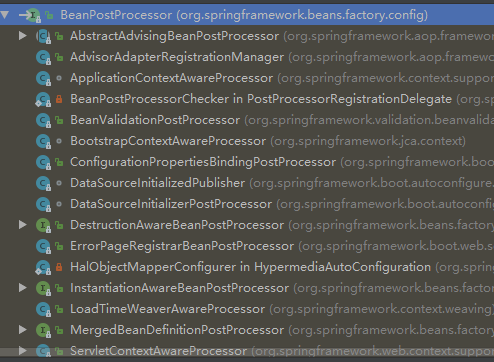
查看这个接口的继承体系,可以看到这个接口的实现类是非常多的,各个实现类的功能如果感兴趣大家可以去慢慢挖掘一下
Spring扩展点之BeanPostProcessor的更多相关文章
- Spring扩展点之Aware接口族
引言 Spring中提供了各种Aware接口,方便从上下文中获取当前的运行环境,比较常见的几个子接口有:BeanFactoryAware,BeanNameAware,ApplicationContex ...
- Spring扩展点-v5.3.9
Spring 扩展点 **本人博客网站 **IT小神 www.itxiaoshen.com 官网地址****:https://spring.io/projects/spring-framework T ...
- Spring扩展点之BeanFactoryPostProcessor
前言 BeanFactoryPostProcessor接口是Spring中一个非常重要的接口,它的接口定义如下 public interface BeanFactoryPostProcessor { ...
- Spring扩展点之FactoryBean接口
前言 首先看一下接口定义 public interface FactoryBean<T> { /** * 返回对象实例 */ @Nullable T getObject() throws ...
- spring扩展点之PropertyPlaceholderConfigurer
原理机制讲解 https://leokongwq.github.io/2016/12/28/spring-PropertyPlaceholderConfigurer.html 使用时多个配置讲解 ht ...
- Spring中的扩展点
Spring作为一个常用的IOC框架,在设计上预留了很多的扩展点,很多第三方开源框架,包括Spring自身也是基于这些扩展点实现的,这很好的体现了对修改关闭.对扩展开放的原则.总的来说Spring的扩 ...
- Spring系列14:IoC容器的扩展点
Spring系列14:IoC容器的扩展点 回顾 知识需要成体系地学习,本系列文章前后有关联,建议按照顺序阅读.上一篇我们详细介绍了Spring Bean的生命周期和丰富的扩展点,没有阅读的强烈建议先阅 ...
- 三万字盘点Spring/Boot的那些常用扩展点
大家好,我是三友. Spring对于每个Java后端程序员来说肯定不陌生,日常开发和面试必备的.本文就来盘点Spring/SpringBoot常见的扩展点,同时也来看看常见的开源框架是如何基于这些扩展 ...
- Spring Boot 中如何使用 Dubbo Activate 扩展点
摘要: 原创出处 www.bysocket.com 「泥瓦匠BYSocket 」欢迎转载,保留摘要,谢谢! 『 公司的核心竞争力在于创新 – <启示录> 』 继续上一篇:< Spri ...
随机推荐
- 爬虫---Beautiful Soup 通过添加不同的IP请求
上一篇爬虫写了如何应付反爬的一些策略也简单的举了根据UA的例子,今天写一篇如何根据不同IP进行访问豆瓣网获取排行版 requests添加IP代理 如果使用代理的话可以通过requests中的方法pro ...
- pytest中怎么实现参数化?
我们在组自动化项目中,肯定会遇到需要数据驱动的地方,在unittest中我们直接采用ddt的方式,但是在pytest中我们不能用ddt来实现,所以我们采用了参数化的方式来实现 那么具体怎么完成这个参数 ...
- 《SQL Server 2008 R2》 收缩数据库日志文件
USE [master] GO /****** Object: StoredProcedure [dbo].[pro_Shrink_Log] Script Date: 2019/8/16 16:56: ...
- Unity Built-In Shader造成的运行时内存暴涨
在某个PC项目中使用了大量的材质球, 并且都使用了自带的Standard Shader, 在编辑器运行的时候, 一切良好, 运行内存只在1G左右, 然而在进行AssetBundle打包之后, EXE运 ...
- JWT权限设计思维导图
- idea中怎么忽略(ignore)掉 .idea等文件
idea需要下载一个专门的plugins 来ignore .idea *.iml等文件 可以在https://plugins.jetbrains.com/idea/plugin/7495–ignore ...
- html图片和html实体
img标签 <img src="../imgs/msn1.jpg" alt="这是一张图片" title="图片" width=&qu ...
- K12
K12,教育类专用名词(kindergarten through twelfth grade),是学前教育至高中教育的缩写,现在普遍被用来代指基础教育. K-12教育是美国基础教育的统称.“K12”中 ...
- [LeetCode] 786. K-th Smallest Prime Fraction 第K小的质分数
A sorted list A contains 1, plus some number of primes. Then, for every p < q in the list, we co ...
- [LeetCode] 305. Number of Islands II 岛屿的数量之二
A 2d grid map of m rows and n columns is initially filled with water. We may perform an addLand oper ...