
Spring扩展点之BeanFactoryPostProcessor
前言
BeanFactoryPostProcessor接口是Spring中一个非常重要的接口,它的接口定义如下
public interface BeanFactoryPostProcessor {

	void postProcessBeanFactory(ConfigurableListableBeanFactory beanFactory) throws BeansException;

}
当你实现了这个接口的时候,可以对还没有初始化的bean的属性进行修改或添加
BeanFactoryPostProcessor注册
与BeanPostProcessor的统一注册不同,BeanFactoryPostProcessor的注册是留给具体的业务实现的。它的维护是在AbstractApplicationContext类中
    private final List<BeanFactoryPostProcessor> beanFactoryPostProcessors =

new ArrayList<>();

	public void addBeanFactoryPostProcessor(BeanFactoryPostProcessor postProcessor) {

		Assert.notNull(postProcessor, "BeanFactoryPostProcessor must not be null");

		this.beanFactoryPostProcessors.add(postProcessor);

	}
执行原理
调用逻辑在AbstractApplicationContext.invokeBeanFactoryPostProcessors方法中
这个方法比较长,可以重点关注我添加注释的地方
protected void invokeBeanFactoryPostProcessors(ConfigurableListableBeanFactory beanFactory) {

		PostProcessorRegistrationDelegate.invokeBeanFactoryPostProcessors(beanFactory, getBeanFactoryPostProcessors());

		if (beanFactory.getTempClassLoader() == null && beanFactory.containsBean(LOAD_TIME_WEAVER_BEAN_NAME)) {

			beanFactory.addBeanPostProcessor(new LoadTimeWeaverAwareProcessor(beanFactory));

			beanFactory.setTempClassLoader(new ContextTypeMatchClassLoader(beanFactory.getBeanClassLoader()));

		}

	}

public static void invokeBeanFactoryPostProcessors(

        ConfigurableListableBeanFactory beanFactory, List<BeanFactoryPostProcessor> beanFactoryPostProcessors) {

    Set<String> processedBeans = new HashSet<String>();

    // 1.判断beanFactory是否为BeanDefinitionRegistry,在这里普通的beanFactory是DefaultListableBeanFactory,而DefaultListableBeanFactory实现了BeanDefinitionRegistry接口,因此这边为true

    if (beanFactory instanceof BeanDefinitionRegistry) {

        BeanDefinitionRegistry registry = (BeanDefinitionRegistry) beanFactory;

        List<BeanFactoryPostProcessor> regularPostProcessors = new LinkedList<BeanFactoryPostProcessor>();

        List<BeanDefinitionRegistryPostProcessor> registryProcessors = new LinkedList<BeanDefinitionRegistryPostProcessor>();

        // 2.处理入参beanFactoryPostProcessors

        for (BeanFactoryPostProcessor postProcessor : beanFactoryPostProcessors) {

            if (postProcessor instanceof BeanDefinitionRegistryPostProcessor) {

                BeanDefinitionRegistryPostProcessor registryProcessor =

                        (BeanDefinitionRegistryPostProcessor) postProcessor;

               // 如果是BeanDefinitionRegistryPostProcessor则直接执行BeanDefinitionRegistryPostProcessor接口的postProcessBeanDefinitionRegistry方法

                registryProcessor.postProcessBeanDefinitionRegistry(registry);

                registryProcessors.add(registryProcessor);

            } else {

                regularPostProcessors.add(postProcessor);

            }

        }

        List<BeanDefinitionRegistryPostProcessor> currentRegistryProcessors = new ArrayList<BeanDefinitionRegistryPostProcessor>();

        // 3找出所有实现BeanDefinitionRegistryPostProcessor接口的Bean的beanName

        String[] postProcessorNames =

                beanFactory.getBeanNamesForType(BeanDefinitionRegistryPostProcessor.class, true, false);

        for (String ppName : postProcessorNames) {

            // 校验是否实现了PriorityOrdered接口

            if (beanFactory.isTypeMatch(ppName, PriorityOrdered.class)) {

                //  获取对应的bean实例, 添加到currentRegistryProcessors中,

                currentRegistryProcessors.add(beanFactory.getBean(ppName, BeanDefinitionRegistryPostProcessor.class));

                processedBeans.add(ppName);

            }

        }

        // 排序(根据是否实现PriorityOrdered、Ordered接口和order值来排序)

        sortPostProcessors(currentRegistryProcessors, beanFactory);

        registryProcessors.addAll(currentRegistryProcessors);

        // 遍历currentRegistryProcessors, 执行postProcessBeanDefinitionRegistry方法

        invokeBeanDefinitionRegistryPostProcessors(currentRegistryProcessors, registry);

        // 清空currentRegistryProcessors

        currentRegistryProcessors.clear();

        // 4.与上边3的流程差不多,这是这里处理的是实现Ordered接口

        postProcessorNames = beanFactory.getBeanNamesForType(BeanDefinitionRegistryPostProcessor.class, true, false);

        for (String ppName : postProcessorNames) {

            if (!processedBeans.contains(ppName) && beanFactory.isTypeMatch(ppName, Ordered.class)) {

                currentRegistryProcessors.add(beanFactory.getBean(ppName, BeanDefinitionRegistryPostProcessor.class));

                processedBeans.add(ppName);

            }

        }

        sortPostProcessors(currentRegistryProcessors, beanFactory);

        registryProcessors.addAll(currentRegistryProcessors);

        invokeBeanDefinitionRegistryPostProcessors(currentRegistryProcessors, registry);

        currentRegistryProcessors.clear();

        // 5.调用所有剩下的BeanDefinitionRegistryPostProcessors

        boolean reiterate = true;

        while (reiterate) {

            reiterate = false;

            // 找出所有实现BeanDefinitionRegistryPostProcessor接口的类

            postProcessorNames = beanFactory.getBeanNamesForType(BeanDefinitionRegistryPostProcessor.class, true, false);

            for (String ppName : postProcessorNames) {

                // 跳过已经执行过的

                if (!processedBeans.contains(ppName)) {

                    currentRegistryProcessors.add(beanFactory.getBean(ppName, BeanDefinitionRegistryPostProcessor.class));

                    processedBeans.add(ppName);

                    reiterate = true;

                }

            }

            sortPostProcessors(currentRegistryProcessors, beanFactory);

            registryProcessors.addAll(currentRegistryProcessors);

            // 5遍历currentRegistryProcessors, 执行postProcessBeanDefinitionRegistry方法

            invokeBeanDefinitionRegistryPostProcessors(currentRegistryProcessors, registry);

            currentRegistryProcessors.clear();

        }

        // 6.调用所有BeanDefinitionRegistryPostProcessor的postProcessBeanFactory方法

        invokeBeanFactoryPostProcessors(registryProcessors, beanFactory);

        // 7.最后, 调用入参beanFactoryPostProcessors中的普通BeanFactoryPostProcessor的postProcessBeanFactory方法

        invokeBeanFactoryPostProcessors(regularPostProcessors, beanFactory);

    } else {

        invokeBeanFactoryPostProcessors(beanFactoryPostProcessors, beanFactory);

    }

    // 到这里 , 入参beanFactoryPostProcessors和容器中的所有BeanDefinitionRegistryPostProcessor已经全部处理完毕,

    // 下面开始处理容器中的所有BeanFactoryPostProcessor

    // Do not initialize FactoryBeans here: We need to leave all regular beans

    // uninitialized to let the bean factory post-processors apply to them!

    // 8.找出所有实现BeanFactoryPostProcessor接口的类

    String[] postProcessorNames =

            beanFactory.getBeanNamesForType(BeanFactoryPostProcessor.class, true, false);

    // Separate between BeanFactoryPostProcessors that implement PriorityOrdered,

    // Ordered, and the rest.

    // 用于存放实现了PriorityOrdered接口的BeanFactoryPostProcessor

    List<BeanFactoryPostProcessor> priorityOrderedPostProcessors = new ArrayList<BeanFactoryPostProcessor>();

    // 用于存放实现了Ordered接口的BeanFactoryPostProcessor的beanName

    List<String> orderedPostProcessorNames = new ArrayList<String>();

    // 用于存放普通BeanFactoryPostProcessor的beanName

    List<String> nonOrderedPostProcessorNames = new ArrayList<String>();

    // 8.1 遍历postProcessorNames, 将BeanFactoryPostProcessor按实现PriorityOrdered、实现Ordered接口、普通三种区分开

    for (String ppName : postProcessorNames) {

        // 8.2 跳过已经执行过的

        if (processedBeans.contains(ppName)) {

            // skip - already processed in first phase above

        } else if (beanFactory.isTypeMatch(ppName, PriorityOrdered.class)) {

            // 8.3 添加实现了PriorityOrdered接口的BeanFactoryPostProcessor

            priorityOrderedPostProcessors.add(beanFactory.getBean(ppName, BeanFactoryPostProcessor.class));

        } else if (beanFactory.isTypeMatch(ppName, Ordered.class)) {

            // 8.4 添加实现了Ordered接口的BeanFactoryPostProcessor的beanName

            orderedPostProcessorNames.add(ppName);

        } else {

            // 8.5 添加剩下的普通BeanFactoryPostProcessor的beanName

            nonOrderedPostProcessorNames.add(ppName);

        }

    }

    // First, invoke the BeanFactoryPostProcessors that implement PriorityOrdered.

    // 9.调用所有实现PriorityOrdered接口的BeanFactoryPostProcessor

    // 9.1 对priorityOrderedPostProcessors排序

    sortPostProcessors(priorityOrderedPostProcessors, beanFactory);

    // 9.2 遍历priorityOrderedPostProcessors, 执行postProcessBeanFactory方法

    invokeBeanFactoryPostProcessors(priorityOrderedPostProcessors, beanFactory);

    // Next, invoke the BeanFactoryPostProcessors that implement Ordered.

    // 10.调用所有实现Ordered接口的BeanFactoryPostProcessor

    List<BeanFactoryPostProcessor> orderedPostProcessors = new ArrayList<BeanFactoryPostProcessor>();

    for (String postProcessorName : orderedPostProcessorNames) {

        // 10.1 获取postProcessorName对应的bean实例, 添加到orderedPostProcessors, 准备执行

        orderedPostProcessors.add(beanFactory.getBean(postProcessorName, BeanFactoryPostProcessor.class));

    }

    // 10.2 对orderedPostProcessors排序

    sortPostProcessors(orderedPostProcessors, beanFactory);

    // 10.3 遍历orderedPostProcessors, 执行postProcessBeanFactory方法

    invokeBeanFactoryPostProcessors(orderedPostProcessors, beanFactory);

    // Finally, invoke all other BeanFactoryPostProcessors.

    // 11.调用所有剩下的BeanFactoryPostProcessor

    List<BeanFactoryPostProcessor> nonOrderedPostProcessors = new ArrayList<BeanFactoryPostProcessor>();

    for (String postProcessorName : nonOrderedPostProcessorNames) {

        // 11.1 获取postProcessorName对应的bean实例, 添加到nonOrderedPostProcessors, 准备执行

        nonOrderedPostProcessors.add(beanFactory.getBean(postProcessorName, BeanFactoryPostProcessor.class));

    }

    // 11.2 遍历nonOrderedPostProcessors, 执行postProcessBeanFactory方法

    invokeBeanFactoryPostProcessors(nonOrderedPostProcessors, beanFactory);

    // Clear cached merged bean definitions since the post-processors might have

    // modified the original metadata, e.g. replacing placeholders in values...

    // 12.清除元数据缓存(mergedBeanDefinitions、allBeanNamesByType、singletonBeanNamesByType),

    // 因为后处理器可能已经修改了原始元数据,例如, 替换值中的占位符...

    beanFactory.clearMetadataCache();

}
细心的同学可能会发现上方还出现了一个BeanDefinitionRegistryPostProcessor,这个东东其实是BeanFactoryPostProcessor的特殊实习,观察调用它的方法可以看到它需要一个参数:BeanDefinitionRegistry,通过这个参数可以更为方便的去做一些自定义bean的操作
总结一下上方的逻辑:
- 将
BeanFactoryPostProcessor和BeanDefinitionRegistryPostProcessor,分别放入两个集合 - 分别进行排序处理
- 按照优先级分别调用
invokeBeanDefinitionRegistryPostProcessors和invokeBeanFactoryPostProcessors方法 - 这两个invoke方法相信你可以想象的到无非就是循环调用这些实现类对应的方法
Spring的实现
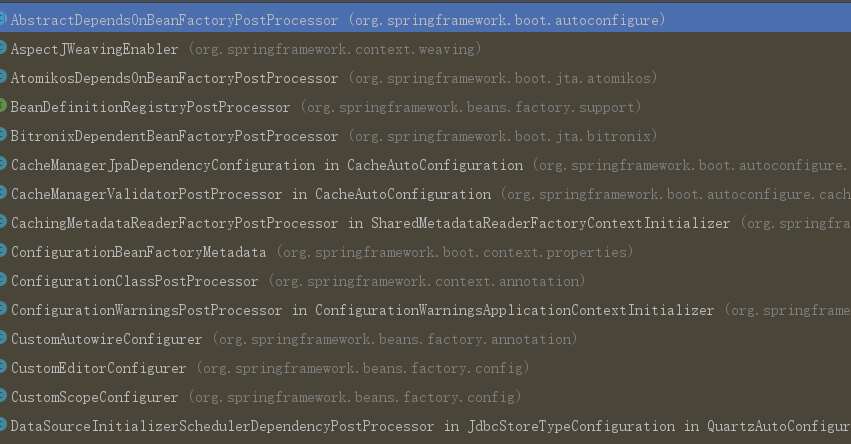
查看这个接口的继承体系,可以看到这个接口的实现类是非常多的,各个实现类的功能如果感兴趣大家可以去慢慢挖掘一下
Spring扩展点之BeanFactoryPostProcessor的更多相关文章
- Spring扩展点之Aware接口族
引言 Spring中提供了各种Aware接口,方便从上下文中获取当前的运行环境,比较常见的几个子接口有:BeanFactoryAware,BeanNameAware,ApplicationContex ...
- Spring扩展点-v5.3.9
Spring 扩展点 **本人博客网站 **IT小神 www.itxiaoshen.com 官网地址****:https://spring.io/projects/spring-framework T ...
- Spring扩展点之BeanPostProcessor
前言 BeanPostProcessor接口是Spring中一个非常重要的接口,它的接口定义如下 public interface BeanPostProcessor { Object postPro ...
- Spring扩展点之FactoryBean接口
前言 首先看一下接口定义 public interface FactoryBean<T> { /** * 返回对象实例 */ @Nullable T getObject() throws ...
- spring扩展点之PropertyPlaceholderConfigurer
原理机制讲解 https://leokongwq.github.io/2016/12/28/spring-PropertyPlaceholderConfigurer.html 使用时多个配置讲解 ht ...
- Spring-IOC 扩展点 BeanFactoryPostProcessor及其子接口解析
BeanFactoryPostProcessor 接口的英文描述: Allows for custom modification of an application context's bean de ...
- Spring中的扩展点
Spring作为一个常用的IOC框架,在设计上预留了很多的扩展点,很多第三方开源框架,包括Spring自身也是基于这些扩展点实现的,这很好的体现了对修改关闭.对扩展开放的原则.总的来说Spring的扩 ...
- Spring源码系列 — BeanDefinition扩展点
前言 前文介绍了Spring Bean的生命周期,也算是XML IOC系列的完结.但是Spring的博大精深,还有很多盲点需要摸索.整合前面的系列文章,从Resource到BeanDefinition ...
- Spring系列14:IoC容器的扩展点
Spring系列14:IoC容器的扩展点 回顾 知识需要成体系地学习,本系列文章前后有关联,建议按照顺序阅读.上一篇我们详细介绍了Spring Bean的生命周期和丰富的扩展点,没有阅读的强烈建议先阅 ...
随机推荐
- E09【餐厅】Can I have the bill,please?
核心句型: Can I have the bill ,please? 请给我账单,好吗? 场景对话: A:Excuse me. Can I have the bill ,please? 你好,请给我账 ...
- CentOS7创建启动脚本
文件内容解释 [Unit]:服务的说明 Description:描述服务 After:描述服务类别 [Service]服务运行参数的设置 Type=forking是后台运行的形式 ExecStart为 ...
- Pycharm中使用from appium import webdriver时报错:ModuleNotFoundError: No module named 'appium'
此时先检查一下有没有安装Appium-Python-Client,如果没有安装Appium-Python-Client就在控制台输入pip install Appium-Python-Client进行 ...
- loadrunner12 Runtime Settings位置
- javascript专题系列--尾调用和尾递归
最近在看<冴羽的博客>,讲真,确实受益匪浅,已经看了javascript 深入系列和专题系列的大部分文章,可是现在才想起来做笔记.所以虽然很多以前面试被问得一脸懵逼的问题都被“一语惊醒梦中 ...
- streamsets 测试框架说明
streamsets 团队为了方便进行sdc以及sdh 的测试基于streamsets python sdk 开发了 streamsets Test Framework 安装 注意python 3.7 ...
- DP问题(2) : hdu 1421
题目转自hdu 1421,题目传送门 题目大意: 给你n个物品,你要搬走2*k个(也就是搬k次) 每次搬需要花费v,v=(ai-aj)2 (i表示左手拿的物品重量,j表示右手拿的物品的重量) 要求所有 ...
- python实现的WebSocket客户端
code #coding=utf- import json import time from websocket import create_connection ws = create_connec ...
- intellij idea安装教程
1. 双击ideaIU-12.1.1.exe,点击下一步,安装目录改为d:\Program Files\JetBrains\IntelliJ IDEA,其他项都默认即可(此处更改目录方便重做系统,不用 ...
- 关于App收集个人信息基本规范,这里公开征求你的意见!
关于App收集个人信息基本规范,这里公开征求你的意见! https://www.thepaper.cn/newsDetail_forward_4122573 以后国家开始规范App收集个信息基本规范, ...