
python:Asyncio模块处理“事件循环”中的异步进程和并发执行任务
python模块Asynico提供了管理事件、携程、任务和线程的功能已经编写并发代码的同步原语。
组成模块:
事件循,Asyncio 每个进程都有一个事件循环。
协程,子例程概念的泛化,可以暂停任务,等待哇爱不处理程序完成再从暂停之处返回。
Futures:定义了futures对象。
任务tasks:是Asyncio的一个子类,用于封装并管理并行模式下的协程。
管理事件循环的方法:
loop = asyncio.get_event_loop()  获得当前上下文事件循环
loop.call_later(time_delay,caallback,argument) 在给定时间time_delay秒后,调用某个回调对象。
loop.call_soon(callback,argument) 该方法马上安排一个被调用的回调对象。
loop.time()  以浮点数形式返回根据事件循环的内部时钟确定的当前时间。
asyncio.set_event_loop()  将当前上下文的时间循环设置为3给定循环。
asyncio.new_event_loop()  根据此函数的规则创建并返回一个新的时间循环对象。
loop.run_forever() 一直执行知道调用stop()为止。

异步调用子例程
import asyncio

def fun_1(end_time,loop):

    print("fun1__callback")

    if (loop.time() + 1.0) < end_time:

        loop.call_later(1,fun_2,end_time,loop)

        print("fun1print")

    else:

        loop.stop()

def fun_2(end_time, loop):

    print("fun2__callback")

    if (loop.time() + 1.0) < end_time:

        loop.call_later(1, fun_3, end_time, loop)

    else:

        loop.stop()

def fun_3(end_time, loop):

    print("fun3__callback")

    if (loop.time() + 1.0) < end_time:

        loop.call_later(1, fun_1, end_time, loop)

    else:

        loop.stop()

loop = asyncio.get_event_loop()

end_loop = loop.time() + 9.0

loop.call_soon(fun_1,end_loop,loop)

loop.run_forever()

loop.close()

结果:

fun1__callback

fun1print

fun2__callback

fun3__callback

fun1__callback

fun1print

fun2__callback

fun3__callback

fun1__callback

fun1print

fun2__callback

fun3__callback
从输出结果上我们可以看到这个任务调用是完全异步的,开始loop.call_soon(fun_1,end_loop,loop) 立刻调用fun_1 当if条件成立时延迟一秒执行fun_2 但是fun_1的下一句print依然直接输出。但是我后来又测试他实际上还是要等fun_1里的其他语句执行完才会切换到fun_2。
总结:只是在fun_1 1S后调用fun_2期间他会执行fun_1中的其他语句,但是如果需要的时间过长就会等待fun_1所有语句执行完毕才会切换到fun_2不仅仅等一秒。
使用Asyncio处理协程
与子例程相似但是不存在用于协调结果的主程序,协程之间可以相互连接形成一个管道,不需要任何监督函数来按顺序调用协程。谢承忠可以暂停执行,同时保存干预时的本地状态,便于后续继续执行任务。有了协程池,协程计算就能够相互交错。
特点:
协程支持多个进入点,可以多次生成。
协程能够将执行转移至任意其他协程。
下方实现了一个有限状态机。
如图:系统有5个状态 ,start 、s1、s2、s3、end
这里s1-s3是自动循环切换。开始通过start进入状态机从end退出状态机。
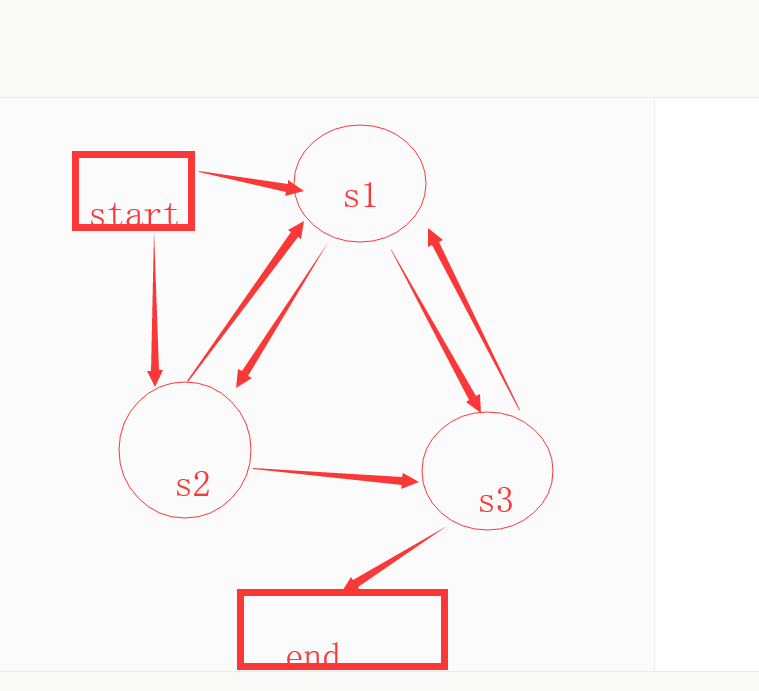
实现代码如下
import asyncio

import time

from random import randint

@asyncio.coroutine

def StartState():

    print("start state call \n")

    input_value = randint(0,1)

    time.sleep(1)

    if (input_value == 0):

        result = yield from start1(input_value)

    else:

        result = yield from start2(input_value)

    print("start + " + result)

    return result

@asyncio.coroutine

def start1(value):

    v = str(value)

    input_value = randint(0,1)

    if input_value == 0:

        result = yield from start2(input_value)

    else:

        result = yield from start3(input_value)

    print("1 end +" + result)

    return v

@asyncio.coroutine

def start2(value):

    v = str(value)

    input_value = randint(0, 1)

    if input_value == 0:

        result = yield from start1(input_value)

    else:

        result = yield from start3(input_value)

    print("2 end +"  + result)

    return v

@asyncio.coroutine

def start3(value):

    v = str(value)

    input_value = randint(0, 1)

    if input_value == 0:

        result = yield from endy(input_value)

    else:

        result = yield from start1(input_value)

    print("3 end +"+ result)

    return v

@asyncio.coroutine

def endy(value):

    v = str(value)

    print("end +" +v )

    return v

if __name__ == "__main__":

    print("开始")

    loop = asyncio.get_event_loop()

    loop.run_until_complete(StartState())
是否切换下一个状态由input_value决定,而他是由python的random模块中的randint(0,1)函数定义的。该函数随机返回值0或1.通过这种方法,可以随机决定有限状态机被传递哪个状态。
利用Asyncio 并发协程
Asyncio提供了一个处理任务计算的方法,asynico.Task(coroutine).该方法用于调度协程的执行,任务负责执行时间循环中的协程对象。一个事件循环只执行一个任务,也就是添加进Task中的每个任务都通过线程并发处理。
import asyncio

@asyncio.coroutine

def task1(number):

    f =

    for i in range(number):

        f += i

        print("task1 + %d" % i)

        yield from asyncio.sleep()

    print("task1 the end number =%d" % f)

@asyncio.coroutine

def task2(number):

    f =

    for i in  range(number):

        f *= i

        print("task2 * %d" % i)

        yield from asyncio.sleep()

    print("task2 the end number = %d" % f)

@asyncio.coroutine

def task3(number):

    f =

    for i in range(number):

        f -= i

        print("task2 - %d" % i)

        yield from asyncio.sleep()

    print("task2 the end number = %d" % f)

if __name__ == "__main__":

    tasks = [asyncio.Task(task1()),

             asyncio.Task(task2()),

             asyncio.Task(task3())

             ]

    loop = asyncio.get_event_loop()

    loop.run_until_complete(asyncio.wait(tasks))  #wait 等协程结束后返回

    loop.close()

输出结果:

task1 +

task2 *

task2 -

task1 +

task2 *

task2 -

task1 +

task2 *

task2 -

task1 +

task2 *

task2 -

task1 +

task2 *

task2 -

task1 +

task2 *

task2 -

task1 +

task2 *

task2 -

task1 +

task2 *

task2 -

task1 +

task2 *

task2 -

task1 +

task2 *

task2 -

task1 the end number =

task2 the end number =

task2 the end number = -
使用Asyncio和Futures
future = asyncio.Future()
future.cancel() 取消future,并安排回调函数。
future.result() 返回future锁代表的结果
future.exception() 返回fture上设置的异常
future.add_done_callback() 添加一个在future执行时运行的回调函数
future.remove_done_callback() 从借宿后调用列表中溢出一个回调对象的所有实例
future.set_result() 将future标记为已完成并设置其结果
future.set_exception() 将future标记为已完成,并设置一个异常
import asyncio

@asyncio.coroutine

def firest_coroutine(future):

    count =

    for i in range():

        count += i

    yield from asyncio.sleep()

    future.set_result("first corountine sum %d" % count)

@asyncio.coroutine

def second_coroutine(future):

    count =

    for i in range(,):

        count *= i

    yield from asyncio.sleep()

    future.set_result("second corountine sum %d" % count)

def callback_result(future):

    print(future.result())

if __name__ == "__main__":

    loop = asyncio.get_event_loop()

    future1 = asyncio.Future()

    future2 = asyncio.Future()

    tasks = [

        firest_coroutine(future1),

        second_coroutine(future2)

    ]

    future1.add_done_callback(callback_result)

    future2.add_done_callback(callback_result)

    loop.run_until_complete(asyncio.wait(tasks))

    loop.close()
总结一下:主要就是通过线程和协程 实现的事件编程,通过不同事件不同状态的调用,最后这段代码主要是添加了事件中可回调对象的操作。
python:Asyncio模块处理“事件循环”中的异步进程和并发执行任务的更多相关文章
- python——asyncio模块实现协程、异步编程
我们都知道,现在的服务器开发对于IO调度的优先级控制权已经不再依靠系统,都希望采用协程的方式实现高效的并发任务,如js.lua等在异步协程方面都做的很强大. Python在3.4版本也加入了协程的概念 ...
- Python 协程与事件循环
Table of Contents 前言 协程 async & await 事件循环 asyncio 的事件循环 结语 参考链接 前言 Python 标准库 asyncio 是我目前接触过的最 ...
- python之模块copy_reg(在python3中为copyreg,功能基本不变)
# -*- coding: utf-8 -*-#python 27#xiaodeng#python之模块copy_reg(在python3中为copyreg,功能基本不变) import copy_r ...
- 简单的node爬虫练手,循环中的异步转同步
简单的node爬虫练手,循环中的异步转同步 转载:https://blog.csdn.net/qq_24504525/article/details/77856989 看到网上一些基于node做的爬虫 ...
- Python进阶----计算机基础知识(操作系统多道技术),进程概念, 并发概念,并行概念,多进程实现
Python进阶----计算机基础知识(操作系统多道技术),进程概念, 并发概念,并行概念,多进程实现 一丶进程基础知识 什么是程序: 程序就是一堆文件 什么是进程: 进程就是一个正在 ...
- Python asyncio 模块
Python 3.4 asyncio是Python 3.4版本引入的标准库,直接内置了对异步IO的支持. asyncio的编程模型就是一个消息循环.我们从asyncio模块中直接获取一个EventLo ...
- Python - Asyncio模块实现的生产消费者模型
[原创]转载请注明作者Johnthegreat和本文链接 在设计模式中,生产消费者模型占有非常重要的地位,这个模型在现实世界中也有很多有意思的对应场景,比如做包子的人和吃包子的人,当两者速度不匹配时, ...
- libuv事件循环中的三种句柄
1.说明 本文会简单介绍 libuv 的事件循环,旨在入门级别的使用,而不做深入探究,简单来说就是,会大概用就行,先用熟练了,再去探究原理和源码 下图为官网的 libuv 的不同部分及其涉及的子系统的 ...
- for循环中进行联网请求数据、for循环中进行异步数据操作,数据排序错乱问题解决;
for循环中进行联网请求数据,由于网络请求是异步的,第一个网络请求还没有回调,第二次第三次以及后续的网络请求又已经发出去了,有可能后续的网络请求会先回调:这时我们接收到的数据的排序就会错乱:怎么才能让 ...
随机推荐
- 在Spring Boot项目中使用Spock测试框架
本文首发于个人网站:在Spring Boot项目中使用Spock测试框架 Spock框架是基于Groovy语言的测试框架,Groovy与Java具备良好的互操作性,因此可以在Spring Boot项目 ...
- 百万年薪python之路 -- JS基础介绍及数据类型
JS代码的引入 方式1: <script> alert('兽人永不为奴!') </script> 方式2:外部文件引入 src属性值为js文件路径 <script src ...
- SpringBoot与MybatisPlus整合之活动记录(十五)
活动记录和正常的CRUD效果是一样的,此处只当一个拓展,了解即可 pom.xml <dependencies> <dependency> <groupId>org. ...
- 设计模式C++描述----05.职责链(Chain of Responsibility)模式
一. 概述 职责链模式: 使多个对象都有机会处理请求,从而避免请求的发送者和接收者之间的耦合关系.将这些对象连成一条链,并沿着这条链传递该请求,直到有一个对象处理它为止. 二. 举个例子 员工要求加薪 ...
- [springboot 开发单体web shop] 2. Mybatis Generator 生成common mapper
Mybatis Generator tool 在我们开启一个新项目的研发后,通常要编写很多的entity/pojo/dto/mapper/dao..., 大多研发兄弟们都会抱怨,为什么我要重复写CRU ...
- Flutter学习笔记--Dart基础
前言 Flutter使用Dart语言开发, Dart是面向对象编程语言, 由Google2011年推出, 目前最新版本是2.4.0. 工欲善其事,必先利其器. 为了更好的开发Flutter应用, 我们 ...
- python3 自己写的一个小算法(比对中文文本相似度)
函数使用说明: 函数的三个参数分别是“匹配语句”,“匹配语料”,“相关度”: 匹配语句,和匹配预料中的语句匹配的语句,必须为字符串: 匹配语料,被匹配语句来匹配的语句列表,必须为列表: 相关度,函数只 ...
- 20190723_C中使用API函数
学习关于API函数的格式 #include <stdlib.h> #include <string.h> #include <stdio.h> #pragma wa ...
- Django学习day7——简单的使用数据库和模型
Django支持的数据库 PostgreSQL SQLite 3 MySQL Oracle 其中SQLite 3不需要安装,因为SQLite使用文件系统上的独立文件来存储数据 这里我们用SQLite ...
- TCP/IP协议指南
分组: packet 通常用来表示任何类型的报文. 数据报: datagram 表示网络分层技术,它也经常用于表示在OSI参考模型较高层上的发送报文. 帧: frame 特别常见用于数据链路层上的报文 ...