
Two kinds of item classification model architecture
Introduction:
Introduction to Fusing-Probability model:
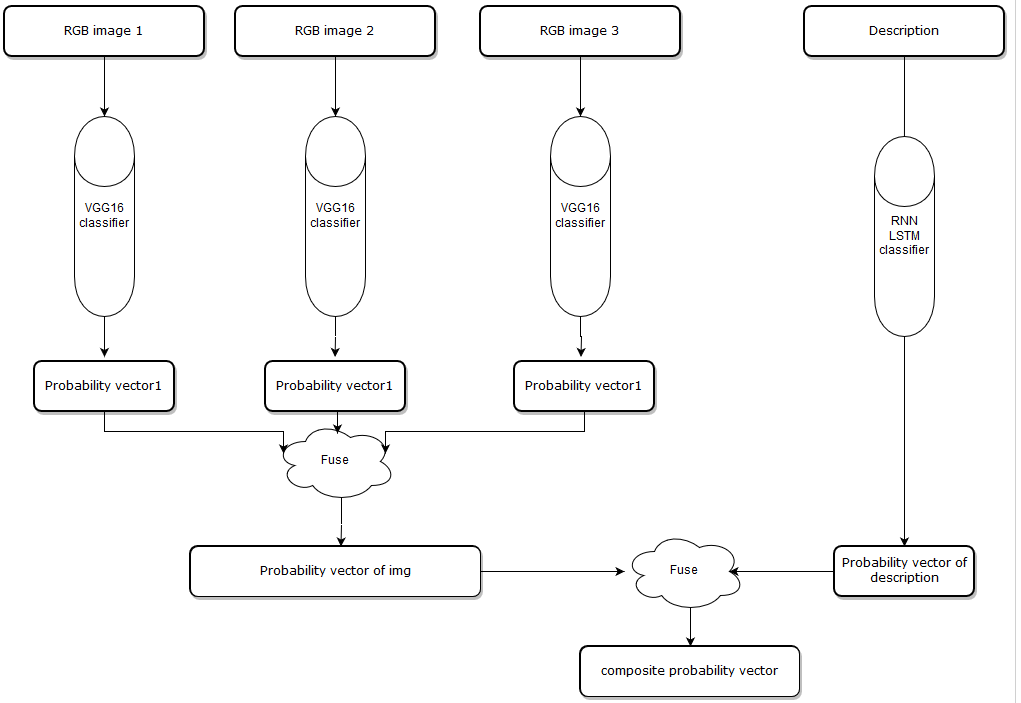
Cause the input has two parts, one is item images, the number of images can be 1 to N, one is item description contains several words. The main idea of Fusing-Probability is predicting on these features individually, and we have two classifiers, on the image side, we use VGG16 deep learning architecture which is a convolutional neural network to produce a probability for each image, and in the description side, we use an LSTM network to train a model to classify the text features. Then I use an algorithm to put all probability vectors together, finally, we get a composite probability vector, more about the algorithm can be found here https://github.com/solitaire2015/Machine-Learning-kernels/blob/master/composite-score/Composite_Score_Solution.ipynb.
Introduction to Multi-Task model:
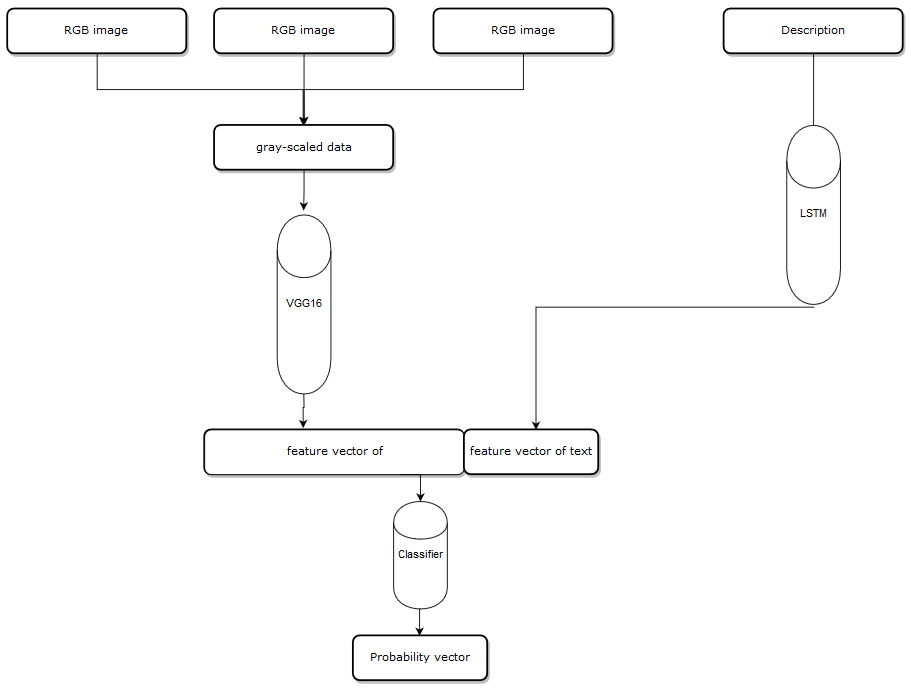
The main difference between these two models is we combine all features first, and put it into a single classifier, first, I choose first 3 images and convert them into gray-scale image, the shape of an RGB image is (width,height,3) because there are three channels in an RGB image, and the shape of gray-scaled image is (width,height) there is only one channel, and I combine three gray-scaled images into one data block which has shape(width,height,3). Then, we put it in the VGG16 model, instead of getting a probability vector, we get the feature vector after the last pooling layer, now we get a feature vector from the images, on the description side, same as before ,we put the description into the LSTM model, we get text feature before the model produce a probability vector, and we combine two feature vectors. then put the vector to a classifier and get the final probability vector.
Multi-Task model architecture:
Fusing-Probability model architecture:
Validation:
I test two architectures on the same data set. the data set has 10 classes:
'Desktop_CPU',
'Server_CPU',
'Desktop_Memory',
'Server_Memory',
'AllInOneComputer',
'CellPhone',
'USBFlashDrive',
‘Keyboard',
‘Mouse',
‘NoteBooks',
And the data set contains 5487 items, the Fusing-Probability model gets 93.87% accuracy, the Multi-Task model gets 93.38% accuracy, I have several figures to show the difference between two architectures.
1. Items that model predict successfully and the probability distribution.
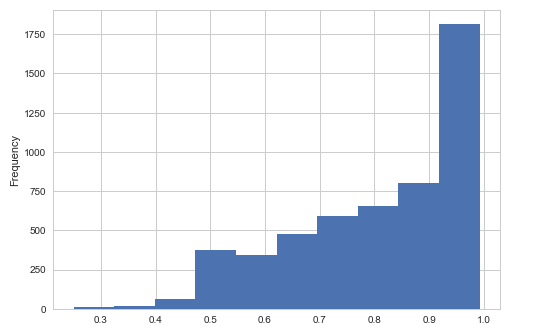
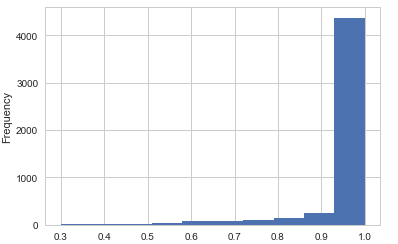
Fusing-Probability Multi-Task
2. Items that model doesn't predict success and the probability distribution.
Fusing-Probability Multi-Task
3. Fraction map of the accuracy on each class.

Fusing-Probability Multi-Task
4.Curve figure.
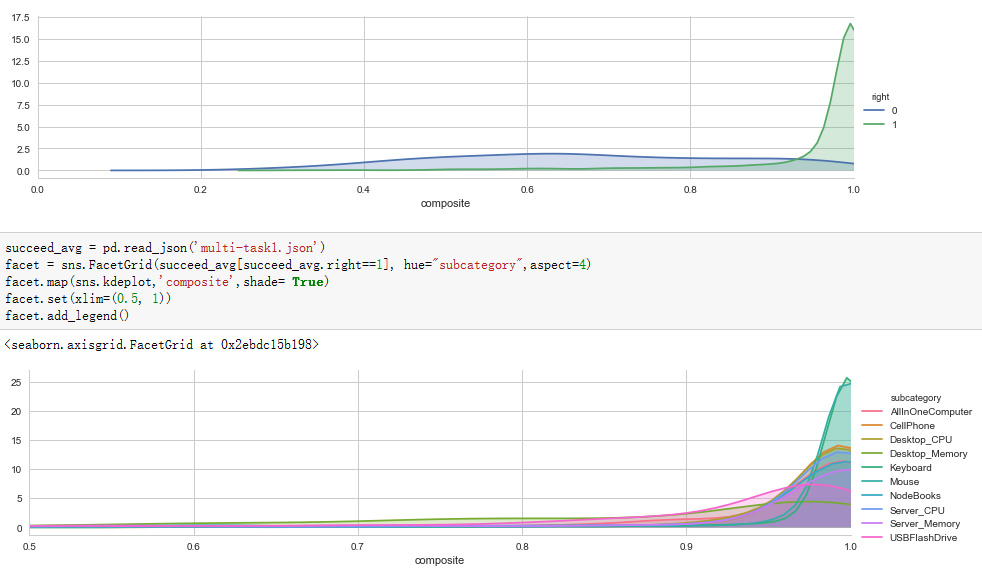
Fusing-Probability Multi-Task
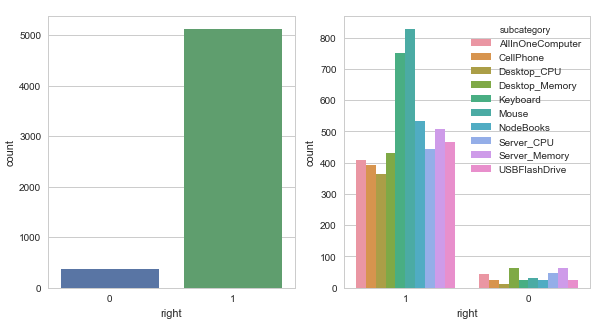
5. Histogram.
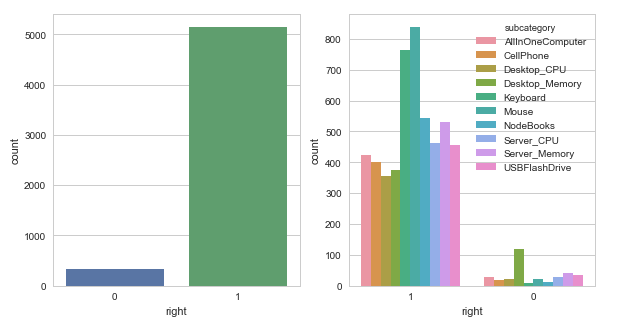
Fusing-Probability
Multi-Task
Analysis of the figures:
First,
let's look at the first couple of figures, the figure in left panel is
the histogram of the probability the Fusing-Probability model
successfully predicted, the right panel figure comes from the Multi-Task
model, most right answers have a probability greater than 0.9 in the
Multi-Task model, but in Fusing-Probability model there are some right
answers have a lower probability. From this view Multi-Task model is
better.
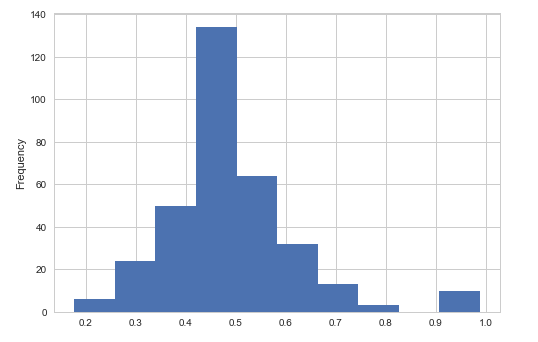
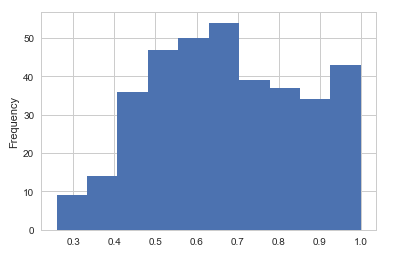
Second, we can get some information from a second couple
of figures, it shows the histogram of the probability that models
predict a wrong result. The probability centralizes on about 0.5 from
the Fusing-Probability model, I need to mention that some results get a
high probability greater than 0.9, they are really wrong, the data is
not so clean and has some misclassified items. Look at the right panel,
we can't find any relationship. So, Fusing-Probability model is better.
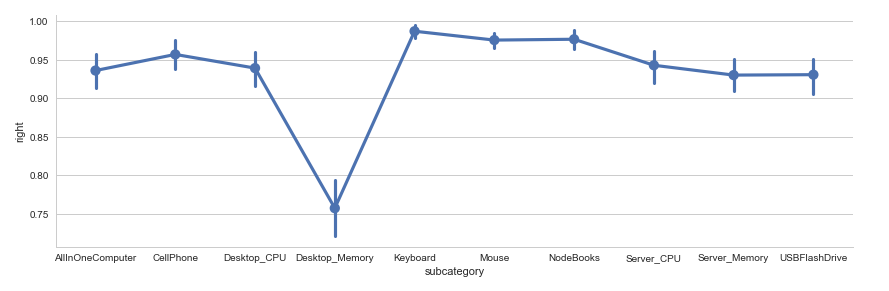
3th,
a fraction map shows model accuracy on each class, we can find that the
desktop-memory has the lowest accuracy in both models, there are some
items really hard to say if it's a desktop memory or server memory even
for a real person. But on other classes, the Fusing-Probability model
has higher accuracy than another model, Fusing-Probability is better.
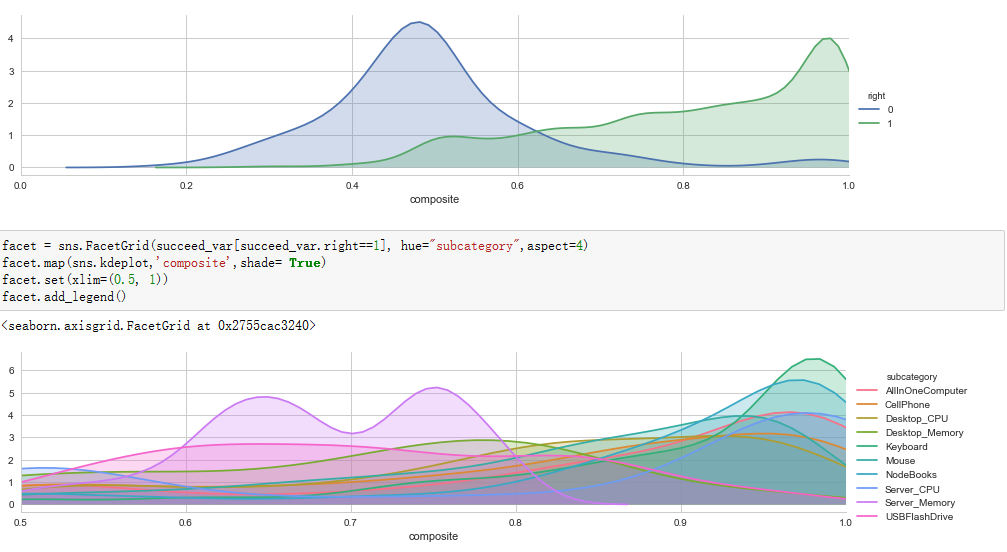
4th,
it's a couple of curve figures of right and wrong predictions, we can
easily find a reasonable threshold from the left panel, because most
wrong predictions has about 0.5 probability, we can use a threshold as
0.63 when we use the model to divide all predictions in to certain and
not sure group, but in Multi-Task model we can't get a very meaningful
threshold. So, Fusing-Probability model is better.
5th, a couple
of histograms, the Fusing-Probability model gets higher accuracy, except
desktop-memory class, the model works fine, the reason why the Mouse
and Keyboard class have most right predictions are we have more samples
on these two sets.
Finally, we can find the Fusing-Probability model works better than Multi-Task model.
Pros & cons:
Multi-Task model:
Easily
to train, get higher probability when it predicts right, but when we
have a very limit data set we can't do data augmentation on the data
set, because there is not a good way to produce more data on text, if we
only do data augmentation on images, the text will be more important,
the image will be useless. The model easily gets overfitting. the image
input part is a set of images, the order would not influence the result,
but this model treats the first image more important, and we can have
at most 3 images, we will lose some information if there are more than 3
images. we convert the RGB image into gray-scaled image we may miss
some important features.
Fusing-Probability model:
We
can do data augmentation separately because we train different models
on image input and text input, we can find a more reasonable threshold
for each class, base on the probability fusing algorithm, we can have
any number of images, and the model won't consider the order of
images.The model has more flexibility.
Two kinds of item classification model architecture的更多相关文章
- 分类模型的性能评价指标(Classification Model Performance Evaluation Metric)
二分类模型的预测结果分为四种情况(正类为1,反类为0): TP(True Positive):预测为正类,且预测正确(真实为1,预测也为1) FP(False Positive):预测为正类,但预测错 ...
- Image Classification
.caret, .dropup > .btn > .caret { border-top-color: #000 !important; } .label { border: 1px so ...
- Undo/Redo for Qt Tree Model
Undo/Redo for Qt Tree Model eryar@163.com Abstract. Qt contains a set of item view classes that use ...
- [notes] ImageNet Classification with Deep Convolutional Neual Network
Paper: ImageNet Classification with Deep Convolutional Neual Network Achievements: The model address ...
- 论文笔记:Fast Neural Architecture Search of Compact Semantic Segmentation Models via Auxiliary Cells
Fast Neural Architecture Search of Compact Semantic Segmentation Models via Auxiliary Cells 2019-04- ...
- (转)Illustrated: Efficient Neural Architecture Search ---Guide on macro and micro search strategies in ENAS
Illustrated: Efficient Neural Architecture Search --- Guide on macro and micro search strategies in ...
- ASP.NET Core 中文文档 第二章 指南(4.4)添加 Model
原文:Adding a model 作者:Rick Anderson 翻译:娄宇(Lyrics) 校对:许登洋(Seay).孟帅洋(书缘).姚阿勇(Mr.Yao).夏申斌 在这一节里,你将添加一些类来 ...
- MVC5 DBContext.Database.SqlQuery获取对象集合到ViewModel集合中(可以利用这个方法给作为前台视图页cshtml页面的@model 源)
首先我们已经有了一个Model类: using System;using System.Data.Entity;using System.ComponentModel.DataAnnotations; ...
- .NET/ASP.NETMVC 大型站点架构设计—迁移Model元数据设置项(自定义元数据提供程序)
阅读目录: 1.需求背景介绍(Model元数据设置项应该与View绑定而非ViewModel) 1.1.确定问题域范围(可以使用DSL管理问题域前提是锁定领域模型) 2.迁移ViewModel设置到外 ...
随机推荐
- 【python全栈开发】初识python
本人最开始接触python是在2013年接触,写过hello word!在此之前对开发类没有多大兴趣,不知道重要性,属于浑浑噩噩,忙忙乎乎,跌跌撞撞的.随后选择了Linux运维作为就业主攻方向. 经过 ...
- Multiple plot function
From: http://www.cookbook-r.com/Graphs/Multiple_graphs_on_one_page_(ggplot2)/ library(ggplot2) multi ...
- cocos2dx取真正随机数
由于c++的随机数其实是用了一张随机表,所以不是真正意义上的随机,cocos2dx中操作的时候会发现每次 重新获取都会得到同样的值,那么解决办法采用置随机数种子,利用时间函数(时间唯一性),操作如下 ...
- docker安装mysql容器后,是用navicat连接报client does not support authentication protocol requested by server consider upgrading mysql client
#进入容器 docker exec -it mysql bash#进入mysqlmysql -u root -p#重置密码ALTER USER 'root'@'%' IDENTIFIED WITH m ...
- Qt学习2---信号与槽
connect(&b1,&QPushButton::pressed,this,&MainWidget::close); &b1:信号发出者,指针类型 &QPus ...
- javaWeb-Servlet工作原理
1.客户发出请求—>Web 服务器转发到Web容器Tomcat: 2.Tomcat主线程对转发来用户的请求做出响应创建两个对象:HttpServletRequest和HttpServletRes ...
- Linux下安装Python3的django并配置mysql作为django默认数据库(转载)
我的操作系统为centos6.5 1 首先选择django要使用什么数据库.django1.10默认数据库为sqlite3,本人想使用mysql数据库,但为了测试方便顺便要安装一下sqlite开发包 ...
- Web前端学习第三天(cookie 二)
HttpOniy Cookie机制 在http层面传输cookie,当设置HttpOnly标志后,客户端脚本就无法读写该cookie.可以用此防止xss攻击获取cookie <?php setc ...
- 学习笔记CB010:递归神经网络、LSTM、自动抓取字幕
递归神经网络可存储记忆神经网络,LSTM是其中一种,在NLP领域应用效果不错. 递归神经网络(RNN),时间递归神经网络(recurrent neural network),结构递归神经网络(recu ...
- macbook远程连接报错no matching cipher found
在.ssh/目录下添加config文件 Host xxx.xxx.xxx.xxx Ciphers 3des-cbc KexAlgorithms +diffie-hellman-group1-sha1 ...