
IPC之PIPE
管道是一种只允许用在有亲属关系的进程间通信的方式,由函数pipe创建一个管道,read,write进行读写操作。
       #include <unistd.h>

       int pipe(int pipefd[]);
参数pipefd[2]数组返回打开的读写描述符,pipefd[0]为读,pipefd[1]为写。
第一个问题:文件描述符怎么会出现一个只能读,一个只能写呢?猜想是对一个文件打开了2次,一个以只读打开,一个以只写打开。使用fcntl来验证下:
       #include <unistd.h>

       #include <fcntl.h>

       int fcntl(int fd, int cmd, ... /* arg */ );
       F_GETFL (void)

              Get the file access mode and the file status flags; arg is ignored.
cmd为F_GETFL时,最后一个参数arg被忽略。测试代码:
 #include <sys/types.h>

 #include <sys/stat.h>

 #include <stdio.h>

 #include <fcntl.h>

 #include <signal.h>

 #include <unistd.h>

 #include <stdlib.h>

 int main(void)

 {

     int flags;

     int fd[];

     if (pipe(fd) < )

     {

         perror("pipe error");

     }

     flags = fcntl(fd[], F_GETFL,);

     if ( flags <  )

     {

         perror("fcntl");

         close(fd[]);

         close(fd[]);

     }

     switch (flags & O_ACCMODE)

     {

         case O_RDONLY:

             printf("read only\n");

             break;

         case O_WRONLY:

             printf("write only\n");

             break;

         case O_RDWR:

             printf("read write\n");

             break;

         default:

             printf("unknown access mode\n");

     }

     flags = fcntl(fd[], F_GETFL,);

     if ( flags <  )

     {

         perror("fcntl");

         close(fd[]);

         close(fd[]);

     }

     switch (flags & O_ACCMODE)

     {

         case O_RDONLY:

             printf("read only\n");

             break;

         case O_WRONLY:

             printf("write only\n");

             break;

         case O_RDWR:

             printf("read write\n");

             break;

         default:

             printf("unknown access mode\n");

     }

     close(fd[]);

     close(fd[]);

     exit();

 }
运行结果:
read only

write only
与猜想相符。
数据的流向:

从图中可以看出,进程可以以pipefd[1]写完,然后以pipefd[0]读,自己写自己读,这条数据流是通的。 验证:
 #include <sys/types.h>

 #include <sys/stat.h>

 #include <stdio.h>

 #include <fcntl.h>

 #include <signal.h>

 #include <unistd.h>

 #include <stdlib.h>

 #define MAXLINE     4096

 int main(void)

 {

     int flags;

     int fd[], n;

     char buf[MAXLINE];

     if (pipe(fd) < )

     {

         perror("pipe error");

     }

     n = write(fd[], "hello world\n", MAXLINE);

     if ( n <  )

     {

         perror("write");

         goto end;

     }

     n = read(fd[],buf, n);

     if ( n <  )

     {

         perror("read");

         goto end;

     }

     printf("read:%s\n",buf);

 end:

     close(fd[]);

     close(fd[]);

     exit();

 }
输出:
read:hello world
既然是进程间通信,那么管道在同一个进程中读写基本是没什么意义的,管道常用的方式是,先创建一个管道,然后fork,父子进程就共享了这个管道了。数据流向如图:

这样,管道的写端有2个进程操作,读端有2个进程操作。但是这样一来就出现了一个问题,假设父进程读,那么这个数据是它自己写进去的呢?还是子进程写进去的?无法区分。通常一个进程关闭它的读,另一个进程关闭它的写,这样,数据流向就只有一个方向了,数据来自谁就显而易见了。如图:
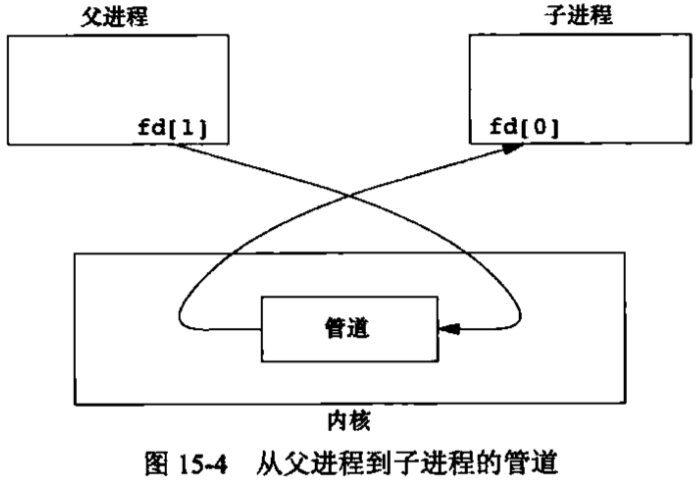
测试代码:
 #include <sys/types.h>

 #include <sys/stat.h>

 #include <stdio.h>

 #include <fcntl.h>

 #include <signal.h>

 #include <unistd.h>

 #include <stdlib.h>

 #include <string.h>

 #define MAXLINE     4096

 int main(void)

 {

     int n;

     int fd[];

     pid_t pid;

     char line[MAXLINE];

     if (pipe(fd) < )

         perror("pipe error");

     if ((pid = fork()) < )

     {

         perror("fork error");

     }

     else if (pid > )          /* parent */

     {

         close(fd[]);

         write(fd[], "hello world\n", );

     }

     else                      /* child */

     {

         close(fd[]);

         n = read(fd[], line, MAXLINE);

         write(STDOUT_FILENO, line, n);

     }

     exit();

 }
结果:
hello world
读一个空的管道或者写一个满的管道都将导致阻塞,不过可以通过fcntl的F_SETFL设置为O_NONBLOCK,从而不阻塞。
当管道一端被关闭后,有下列2条规则:
1.当读一个写端所有文件描述符引用都已被关闭的管道时,在所有数据被读完后,read将返回0。表示无数据可读。
2.当写一个读端所有文件描述符引用都已被关闭的管道时,将产生SIGPIPE信号,write返回-1。
混淆的东西,管道的容量和管道的缓冲区大小。
管道的容量:指管道满时装的字节数,自2.6.11内核后,容量为64k。管道满了就会导致写操作产生阻塞。
管道缓冲区大小:由PIPE_BUF指定,指的是保证管道写操作为原子操作的最大值,如果一次写入的内容超过这个值,那么这次的写操作就不是原子的。什么意思呢?就是指,可能存在多个进程写同一个管道,如果一次写入的字节数大于缓冲区大小,则可能会出现A进程写入的内容中插入了B进程写入的内容。
下面是出现这种情况的代码:
 #include <sys/types.h>

 #include <sys/stat.h>

 #include <stdio.h>

 #include <fcntl.h>

 #include <signal.h>

 #include <unistd.h>

 #include <stdlib.h>

 #include <string.h>

 #define MAXLINE     4096+100

 int main(void)

 {

     int n;

     int fd[];

     pid_t pid;

     char line[MAXLINE];

     if (pipe(fd) < )

     {

         perror("pipe error");

     }

     if ((pid = fork()) < )

     {

         perror("fork error");

     }

     else if (pid > )          /* parent */

     {

         close(fd[]);

         while (  )

         {

             n = read(fd[], line, MAXLINE);

             write(STDOUT_FILENO, line, n);

             write(STDOUT_FILENO, "\n\n\n", );

         }

     }

     else                      /* child */

     {

         if ((pid = fork()) < )

         {

             perror("fork error");

         }

         else if (pid > )

         {

             close(fd[]);

             while ()

             {

                 memset(line, 'a',MAXLINE);

                 write(fd[], line, MAXLINE);

             }

         }

         else

         {

             close(fd[]);

             while (  )

             {

                 memset(line, 'b',MAXLINE);

                 write(fd[], line, MAXLINE);

             }

         }

     }

     exit();

 }
IPC之PIPE的更多相关文章
- Linux IPC BSD Pipe
mkfifo() //创建有名管道(FIFO special file),创建完了就像普通文件一样open(),再读写,成功返回0,失败返回-1设errno.VS$man 3 mkfifo #incl ...
- Unix IPC之pipe
pipe创建函数: #include <unistd.h> /* Create a one-way communication channel (pipe). If successful, ...
- linux IPC的PIPE
一.PIPE(无名管道) 函数原型: #include <unistd.h> ]); 通常,进程会先调用pipe,接着调用fork,从而创建从父进程到子进程的IPC通道. 父进程和子进程之 ...
- CVE-2017-7494 Linux Samba named pipe file Open Vul Lead to DLL Execution
catalogue . 漏洞复现 . 漏洞代码原理分析 . 漏洞利用前提 . 临时缓解 && 修复手段 1. 漏洞复现 . SMB登录上去 . 枚举共享目录,得到共享目录/文件列表,匿 ...
- 【APUE】Chapter16 Network IPC: Sockets & makefile写法学习
16.1 Introduction Chapter15讲的是同一个machine之间不同进程的通信,这一章内容是不同machine之间通过network通信,切入点是socket. 16.2 Sock ...
- 高级IPC DBus
What is IPC IPC [Inter-Process Communication] 进程间通信,指至少两个进程或线程间传送数据或信号的一些技术或方法.在Linux/Unix中,提供了许多IPC ...
- (转)解决 ORA-12514: TNS: 监听程序当前无法识别连接描述符中请求的服务
下面操作默认在安装Oralce数据库的服务器上运行. 1)确保Oracle 基本服务都已启动 OracleDBConsoleorcl OracleOraDb11g_home1TNSListener O ...
- python高级之多进程
python高级之多进程 本节内容 多进程概念 Process类 进程间通讯 进程同步 进程池 1.多进程概念 multiprocessing is a package that supports s ...
- oracle 监听启动、停止、查看命令
1.su oracle 然后启动监听器 1.lsnrctl start 会看到启动成功的界面; 1.lsnrctl stop 停止监听器命令. 1.lsnrctl status 查看监听器命令. ...
随机推荐
- 2016年5月11日摘自知乎的一些Redis大概了解
1. 知乎日报的基础数据和统计信息是用 Redis 存储的,这使得请求的平均响应时间能在 10ms 以下.其他数据仍然需要存放在另外的地方,其实完全用 Redis 也是可行的,主要的考量是内存占用.就 ...
- jquery实现网页选项卡
这个功能在现在的网站中使用较为普遍,就是以选项卡的形式来对一些内容做了分类.,比如下面的天猫商城. 下面的源码是仿照天猫写的一个选项卡,实现起来的效果如下. 主要是利用我们在点击相应板块是触发它的单击 ...
- Studio for Winforms FlexGrid:导出到 PDF 文件
本篇文章主要介绍如何导出 FlexGrid 到 PDF 格式文件.本文源于论坛用户,有多个用户提出如何把 FlexGrid 导出到 PDF 文件的需求.在这里共享给大家. 当前,ComponentOn ...
- .net多线程的发展
APM和EAP是在async/await之前的两种不同的异步编程模式. APM如果不阻塞主线程,那么完成通知(回调)就会执行在另外一个线程中,从而给我们更新UI带来一定的问题. EAP的通知事件是在主 ...
- uml中的几种关系
这是一堂关于UML基础知识的补习课:现在我们做项目时间都太紧了,基本上都没有做过真正的class级别的详细设计,更别提使用UML来实现规范建模了:本篇主要就以前自己一直感觉很迷糊的几种class之间的 ...
- YII页面跳转
$criteria = new CDbCriteria; $criteria->select = array('ziduan"); $res = Model::model()-> ...
- Servlet3.0 Test
1. Servlet3.0 Test and Annotation used 你可以从tomcat7中lib文件夹中找到servlet-api.jar package com.goodfan.serv ...
- 总结一下SQL的全局变量
SQL Server 2008中的全局变量及其用法 T-SQL程序中的变量分为全局变量和局部变量两类,全局变量是由SQL Server系统定义和使用的变量.DBA和用户可以使用全局变量的值,但不能自己 ...
- webpack学习(入门基础)
webpack的学习webpack是什么?1:加载模块(将JS.sass/less.图片等作为模块来处理使用) 2:进行打包 webpack的优势?1:webpack以commonJS(JS的规范)的 ...
- AJAX请求中含有数组解决办法
当我们发送AJAX请求的数据中带有数组时,是不能像普通JSON数据一样,直接放在data里发送给后台,比如有这样一个数据需要发送给后台: { "orderId": 22, &quo ...