
iOS 使用两个tableview的瀑布流
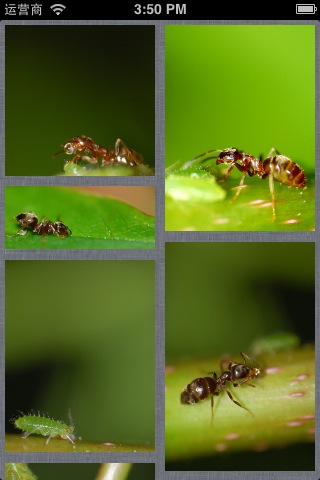
代码
|
1
2
3
4
5
6
7
8
9
10
11
12
13
14
15
16
17
18
19
20
21
22
23
24
25
26
27
28
29
30
31
32
33
34
35
36
37
38
39
40
41
42
43
44
45
46
47
48
49
50
51
52
53
54
55
56
57
58
59
60
61
62
63
64
65
66
67
68
69
70
71
72
73
74
75
76
77
78
79
80
81
82
83
84
85
86
87
88
89
90
91
92
93
94
95
96
97
98
99
100
101
102
103
104
105
106
107
108
109
110
111
112
113
114
115
116
117
118
119
120
121
122
123
124
125
126
127
128
129
130
131
132
133
134
135
136
137
138
139
140
141
142
143
144
145
146
147
148
149
150
151
|
//// DocViewController.m// getrightbutton////#import "DocViewController.h"#define heightofimage(image) image.size.height*150.0/image.size.width@interface DocViewController (){ NSMutableArray *arrdata; NSMutableArray *arrdata1; NSMutableArray *arrdata2; NSMutableArray *arrdata1_1; NSMutableArray *arrdata2_1; float he1,he2;}@property (weak, nonatomic) IBOutlet UITableView *tableview01;@property (weak, nonatomic) IBOutlet UITableView *tableview02;@end@implementation DocViewController@synthesize tableview01,tableview02;- (void)viewDidLoad{ [super viewDidLoad]; // Do any additional setup after loading the view, typically from a nib. [[NSNotificationCenter defaultCenter] addObserver:self selector:@selector(Backhome) name:@"Back" object:nil]; he1 = 0.0; he2 = 0.0; arrdata1 = [[NSMutableArray alloc] initWithCapacity:1]; arrdata2 = [[NSMutableArray alloc] initWithCapacity:1]; arrdata1_1 = [[NSMutableArray alloc] initWithCapacity:1]; arrdata2_1 = [[NSMutableArray alloc] initWithCapacity:1]; for (int i = 1; i < 11; i++) { UIImage *image = [UIImage imageNamed:[NSString stringWithFormat:@"%d.jpeg",i]]; float hecu = image.size.height*150.0/image.size.width; if (he2 >= he1) { he1 = he1 + hecu; NSArray *arr = [[NSArray alloc] initWithObjects:[NSString stringWithFormat:@"%d",i],[NSString stringWithFormat:@"%f",hecu], nil];// [arrdata1_1 addObject:[NSString stringWithFormat:@"%d",i]];// [arrdata1_1 addObject:[NSString stringWithFormat:@"%f",hecu]]; [arrdata1 addObject:arr]; }else{ he2 = he2 + hecu; NSArray *arr = [[NSArray alloc] initWithObjects:[NSString stringWithFormat:@"%d",i],[NSString stringWithFormat:@"%f",hecu], nil]; [arrdata2 addObject:arr]; } NSLog(@"%f(h1 = %f,,,,h2 = %f)",hecu,he1,he2); } tableview01.showsVerticalScrollIndicator = NO; tableview02.showsVerticalScrollIndicator = NO; NSLog(@"%@+++++++%@",arrdata1,arrdata2);}- (NSInteger)tableView:(UITableView *)tableView numberOfRowsInSection:(NSInteger)section{// return 100; if (tableView == tableview01) { return [arrdata1 count]; }else{ return [arrdata2 count]; } return 0;}- (UITableViewCell *)tableView:(UITableView *)tableView cellForRowAtIndexPath:(NSIndexPath *)indexPath{ NSInteger row = indexPath.row; if (tableView == tableview01) {// tableview02// [tableview02 setContentOffset:tableview01.contentOffset]; static NSString *id1 = @"sd1"; UITableViewCell *cell = [tableView dequeueReusableCellWithIdentifier:id1]; if (cell == nil) { NSArray *nib = [[NSBundle mainBundle] loadNibNamed:@"CellView" owner:self options:nil]; if (nib > 0) { cell = _ccell; } } UIImage *image = [UIImage imageNamed:[NSString stringWithFormat:@"%d.jpeg",[[[arrdata1 objectAtIndex:row] objectAtIndex:0] integerValue]]]; UIImageView *imageview = (UIImageView *)[cell viewWithTag:101]; [imageview setImage:image]; CGRect rect = imageview.frame; rect.size.height = [[[arrdata1 objectAtIndex:row] objectAtIndex:1] floatValue]; imageview.frame = rect; return cell; }else{// [tableview01 setContentOffset:tableview02.contentOffset]; static NSString *id = @"sd"; UITableViewCell *cell = [tableView dequeueReusableCellWithIdentifier:id]; if (cell == nil) { NSArray *nib = [[NSBundle mainBundle] loadNibNamed:@"CellView" owner:self options:nil]; if (nib > 0) { cell = _ccell; } } UIImage *image = [UIImage imageNamed:[NSString stringWithFormat:@"%d.jpeg",[[[arrdata2 objectAtIndex:row] objectAtIndex:0] integerValue]]]; UIImageView *imageview = (UIImageView *)[cell viewWithTag:101]; [imageview setImage:image]; CGRect rect = imageview.frame; rect.size.height = [[[arrdata2 objectAtIndex:row] objectAtIndex:1] floatValue]; imageview.frame = rect; return cell; } return nil;}- (float)tableView:(UITableView *)tableView heightForRowAtIndexPath:(NSIndexPath *)indexPath{ NSInteger row = indexPath.row; if (tableView == tableview01) { return [[[arrdata1 objectAtIndex:row] objectAtIndex:1] floatValue] +10; }else{ return [[[arrdata2 objectAtIndex:row] objectAtIndex:1] floatValue] +10; } return 0.0;}- (void)tableView:(UITableView *)tableView didSelectRowAtIndexPath:(NSIndexPath *)indexPath{ DocwebViewController *controller = [[DocwebViewController alloc] init]; [self presentModalViewController:controller animated:YES];}- (void)Backhome{ [self dismissModalViewControllerAnimated:YES];}- (void)scrollViewDidScroll:(UIScrollView *)scrollView{ if (scrollView == tableview01) { [tableview02 setContentOffset:tableview01.contentOffset]; }else{ [tableview01 setContentOffset:tableview02.contentOffset]; } }- (void)didReceiveMemoryWarning{ [super didReceiveMemoryWarning]; // Dispose of any resources that can be recreated.}@end |
iOS 使用两个tableview的瀑布流的更多相关文章
- iOS 两个tableview的 瀑布流
iOS 两个tableview的 瀑布流1. [代码]Objective-C //// DocViewController.m// getrightbutton//// Created ...
- ios 让两个tableView同时处于选中状态
- (void)tableView:(UITableView *)tableView didHighlightRowAtIndexPath:(NSIndexPath *)indexPath { [_l ...
- iOS瀑布流实现(Swift)
这段时间突然想到一个很久之前用到的知识-瀑布流,本来想用一个简单的方法,发现自己走入了歧途,最终只能狠下心来重写UICollectionViewFlowLayout.下面我将用两种方法实现瀑布流,以及 ...
- IOS 瀑布流
本篇博客应该算的上CollectionView的高级应用了,从iOS开发之窥探UICollectionViewController(一)到今天的(五),可谓是由浅入深的窥探了一下UICollectio ...
- IOS 瀑布流UICollectionView实现
IOS 瀑布流UICollectionView实现 在实现瀑布流之前先来看看瀑布流的雏形(此方法的雏形 UICollectionView) 对于UICollectionView我们有几点注意事项 它和 ...
- iOS横向瀑布流的封装
前段时间, 做一个羡慕, 需要使用到瀑布流! 说道瀑布流, 或许大家都不陌生, 瀑布流的实现也有很多种! 从scrollView 到 tableView 书写的瀑布流, 然后再到2012年iOS6 苹 ...
- iOS 瀑布流之栅格布局
代码地址如下:http://www.demodashi.com/demo/14760.html 一 .效果预览 二.确定需求 由下面的需求示意图可知模块的最小单位是正方形,边长是屏幕宽除去边距间隔后的 ...
- iOS开发:一个瀑布流的设计与实现(已实现缓存池功能,该功能使得瀑布流cell可以循环利用)
一个瀑布流的实现有三种方式: 继承自UIScrollView,仿写UITableView的dataSource和delegate,创造一个缓存池用来实现循环利用cell 写多个UITableview( ...
- iOS开发:代码通用性以及其规范 第一篇(附带,自定义UITextView\进度条\双表显示\瀑布流 代码设计思路)
在iOS团队开发中,我见过一些人的代码,也修改过他们的代码.有的人的代码写的非常之规范.通用,几乎不用交流,就可以知道如何修改以及在它基础上扩展延生.有的人的代码写的很垃圾,一眼看过去,简直会怀疑自己 ...
随机推荐
- #array_parents #parents的区别
https://www.drupal.org/node/279246 #array_parents => 一定会反映表单的物理结构 就是该是哪个下面就是哪个下面 不来虚的#parents = ...
- ScrollVIew 边界阴影效果
一.删除android ScrollView边界阴影方法方法 1) 在xml中添加:android:fadingEdge=”none” 2) 代码中添加:ScrollView.setHorizonta ...
- 晒幸福, qq空间晒法
qq空间晒法 1.成为老婆之后,还是说新交的女朋友,这会让女朋友感动
- Android GC 那点事
版权声明:本文由陈昱全原创文章,转载请注明出处: 文章原文链接:https://www.qcloud.com/community/article/170 来源:腾云阁 https://www.qclo ...
- selenium+python笔记9
#!/usr/bin/env python # -*- coding: utf-8 -*- """ @desc: delete mail 我们多添加一些测试场景,比如:删 ...
- 《javascript高级程序设计》第七章 递归recursion
7.1 递归7.2 闭包 7.2.1 闭包与变量 7.2.2 关于this 对象 7.2.3 内存泄漏 7.3 模仿块级作用域7.4 私有变量 7.4.1 静态私有变量 7.4.2 模块模式 7.4. ...
- [转]用Python读写Excel文件
[转]用Python读写Excel文件 转自:http://www.gocalf.com/blog/python-read-write-excel.html#xlrd-xlwt 虽然天天跟数据打交 ...
- hdu----(4513)吉哥系列故事——完美队形II(manacher(最长回文串算法))
吉哥系列故事——完美队形II Time Limit: 3000/1000 MS (Java/Others) Memory Limit: 65535/32768 K (Java/Others)To ...
- iOS开发之——从零开始完成页面切换形变动画
前言 某天我接到了UI发给我的两张图: 需求图.png 看到图的时候我一脸懵逼,显然我需要做一个页面切换的指示动画.老实说,从大三暑假开始做iOS开发也一年有余了,但是遇到复杂动画总是唯恐避之不及,只 ...
- thinkjs——空对象判断
使用thinkjs来做后台的项目开发时,总免不了进行一些数据的唯一性校验,比如说:有这么一个页面,需要对钢厂的名称做一个校验,于是自己在后台做条件搜索时,一不小心用到了两种方法: 一个是find(), ...