
HashTable源码解读
一:总述
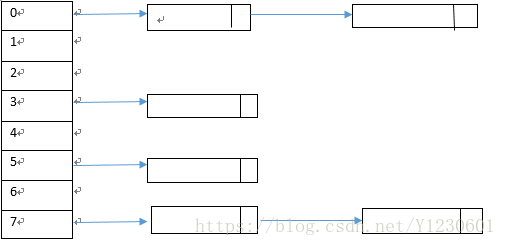
底层实现原理是用数组+链表,与HashMap一样,但HashTable是线程安全的,HashMap是非线程安全的
下面是其结构图(与hashMap类似)
二:属性说明
    /**

     * The hash table data.

     */

    private transient Entry<?,?>[] table;//数据保存的数组,与HashMap一样

    /**

     * The total number of entries in the hash table.

     */

    private transient int count;//总条数

    /**

     * The table is rehashed when its size exceeds this threshold.  (The

     * value of this field is (int)(capacity * loadFactor).)

     *

     * @serial

     */

    private int threshold;//加载因子,默认为0.75

    /**

     * The load factor for the hashtable.

     *

     * @serial

     */

    private float loadFactor;//扩容门槛相对于 数组的比例计算公式 table.length * loadFactor = threshold

    /**

     * The number of times this Hashtable has been structurally modified

     * Structural modifications are those that change the number of entries in

     * the Hashtable or otherwise modify its internal structure (e.g.,

     * rehash).  This field is used to make iterators on Collection-views of

     * the Hashtable fail-fast.  (See ConcurrentModificationException).

     */

    private transient int modCount = 0;
三:构造方法
由构造方法可得知,hashtable没有size规定默认为11,在hashMap中默认为16,并且hashMap必须是大于16的2的次方(特殊指定除外,但是hashMap自动会计算得出大于指定值得2的次方)
    /**

     * Constructs a new, empty hashtable with the specified initial

     * capacity and the specified load factor.

     *

     * @param      initialCapacity   the initial capacity of the hashtable.

     * @param      loadFactor        the load factor of the hashtable.

     * @exception  IllegalArgumentException  if the initial capacity is less

     *             than zero, or if the load factor is nonpositive.

     */

    public Hashtable(int initialCapacity, float loadFactor) {

        if (initialCapacity < 0)

            throw new IllegalArgumentException("Illegal Capacity: "+

                                               initialCapacity);

        if (loadFactor <= 0 || Float.isNaN(loadFactor))

            throw new IllegalArgumentException("Illegal Load: "+loadFactor);

        if (initialCapacity==0)

            initialCapacity = 1;

        this.loadFactor = loadFactor;

        table = new Entry<?,?>[initialCapacity];

        threshold = (int)Math.min(initialCapacity * loadFactor, MAX_ARRAY_SIZE + 1);

    }

    /**

     * Constructs a new, empty hashtable with the specified initial capacity

     * and default load factor (0.75).

     *

     * @param     initialCapacity   the initial capacity of the hashtable.

     * @exception IllegalArgumentException if the initial capacity is less

     *              than zero.

     */

    public Hashtable(int initialCapacity) {

        this(initialCapacity, 0.75f);

    }

    /**

     * Constructs a new, empty hashtable with a default initial capacity (11)

     * and load factor (0.75).

     */

    public Hashtable() {
     //默认数组大小为11,加载因子为0.75

        this(11, 0.75f);

    }
四:扩容方法
rehash()
他也是和hashmap差不多 就是直接扩容两倍,但是hashTable中会在加1,并且扩容后要重新计算每个元素对应的数组位子,相对于hashMap来说性能会有点差距,hashMap少一步取余的计算,他们在插入数据时都是放在链表的头位子上。
    /**

     * Increases the capacity of and internally reorganizes this

     * hashtable, in order to accommodate and access its entries more

     * efficiently.  This method is called automatically when the

     * number of keys in the hashtable exceeds this hashtable's capacity

     * and load factor.

     */

    @SuppressWarnings("unchecked")

    protected void rehash() {

        int oldCapacity = table.length;

        Entry<?,?>[] oldMap = table;


     // todo hashMap中的length 都市2的次方倍数并且扩容都是 * 2的 但是hashTable 实在原来的基础上* 2 还要加1

        // overflow-conscious code

        int newCapacity = (oldCapacity << 1) + 1;

        if (newCapacity - MAX_ARRAY_SIZE > 0) {

            if (oldCapacity == MAX_ARRAY_SIZE)

                // Keep running with MAX_ARRAY_SIZE buckets

                return;

            newCapacity = MAX_ARRAY_SIZE;

        }

        Entry<?,?>[] newMap = new Entry<?,?>[newCapacity];

        modCount++;
     // 这里计算 下次扩容的门槛数量

        threshold = (int)Math.min(newCapacity * loadFactor, MAX_ARRAY_SIZE + 1);

        table = newMap;

        for (int i = oldCapacity ; i-- > 0 ;) {

            for (Entry<K,V> old = (Entry<K,V>)oldMap[i] ; old != null ; ) {

                Entry<K,V> e = old;

                old = old.next;

          // 这里是重新计算hash 但是hashMap中优化的比较好,不需要重新计算, 根据二进制来 判断hash和老长度 与运算 是否

                int index = (e.hash & 0x7FFFFFFF) % newCapacity;
          // 这里相同hashMap和 hashTable都是放在第一个

                e.next = (Entry<K,V>)newMap[index];

                newMap[index] = e;

            }

        }

    }
五:addEntry方法
这里面就是实际的插入过程,但是这里面判断了是否需要扩容,没有判断是否已经包含,是否包含都是在调用这个方法前判断的。
    private void addEntry(int hash, K key, V value, int index) {

        modCount++;

        Entry<?,?> tab[] = table;

        if (count >= threshold) {

            // Rehash the table if the threshold is exceeded

            rehash();

            tab = table;

            hash = key.hashCode();

            index = (hash & 0x7FFFFFFF) % tab.length;

        }

        // Creates the new entry.

        @SuppressWarnings("unchecked")

        Entry<K,V> e = (Entry<K,V>) tab[index];

        tab[index] = new Entry<>(hash, key, value, e);

        count++;

    }
六:put()方法
方法前加了synchronized。所有对外提供的方法上基本独有这个关键字。hashTable中value不能为空,HashMap中是可以的。而且如果key已经存在就直接覆盖老的value
    /**

     * Maps the specified <code>key</code> to the specified

     * <code>value</code> in this hashtable. Neither the key nor the

     * value can be <code>null</code>. <p>

     *

     * The value can be retrieved by calling the <code>get</code> method

     * with a key that is equal to the original key.

     *

     * @param      key     the hashtable key

     * @param      value   the value

     * @return     the previous value of the specified key in this hashtable,

     *             or <code>null</code> if it did not have one

     * @exception  NullPointerException  if the key or value is

     *               <code>null</code>

     * @see     Object#equals(Object)

     * @see     #get(Object)

     */

    public synchronized V put(K key, V value) {

        // Make sure the value is not null

        //不能插入空值

        if (value == null) {

            throw new NullPointerException();

        }


       // 查找key对应的数组下标 以便获取所在的链表

        // Makes sure the key is not already in the hashtable.

        Entry<?,?> tab[] = table;

        int hash = key.hashCode();

        int index = (hash & 0x7FFFFFFF) % tab.length;

     //这里判断是否存在当前key

        @SuppressWarnings("unchecked")

        Entry<K,V> entry = (Entry<K,V>)tab[index];

        for(; entry != null ; entry = entry.next) {
       // 这里也不太一样 hashMap中可以设置判断value是否相等类判断是否覆盖老value
         // hashMap中相当于 就有一个cas的原理可供选择

            if ((entry.hash == hash) && entry.key.equals(key)) {

                V old = entry.value;

                entry.value = value;

                return old;

            }

        }

        addEntry(hash, key, value, index);

        return null;

    }
七:get()方法
比较简单,就是根据key计算数组下标,在遍历链表查找是否相同的key
    /**

     * Returns the value to which the specified key is mapped,

     * or {@code null} if this map contains no mapping for the key.

     *

     * <p>More formally, if this map contains a mapping from a key

     * {@code k} to a value {@code v} such that {@code (key.equals(k))},

     * then this method returns {@code v}; otherwise it returns

     * {@code null}.  (There can be at most one such mapping.)

     *

     * @param key the key whose associated value is to be returned

     * @return the value to which the specified key is mapped, or

     *         {@code null} if this map contains no mapping for the key

     * @throws NullPointerException if the specified key is null

     * @see     #put(Object, Object)

     */

    @SuppressWarnings("unchecked")

    public synchronized V get(Object key) {

        Entry<?,?> tab[] = table;

        int hash = key.hashCode();

        int index = (hash & 0x7FFFFFFF) % tab.length;

        for (Entry<?,?> e = tab[index] ; e != null ; e = e.next) {

            if ((e.hash == hash) && e.key.equals(key)) {

                return (V)e.value;

            }

        }

        return null;

    }
八:remove()方法
根据key计算数组下标,在遍历链表并记录当前元素的上一个元素,查找是否相同的key,将上一个元素的next节点=当前元素的下一个节点(将当前元素的next节点赋值给上一个节点的next节点)
/**

     * Removes the key (and its corresponding value) from this

     * hashtable. This method does nothing if the key is not in the hashtable.

     *

     * @param   key   the key that needs to be removed

     * @return  the value to which the key had been mapped in this hashtable,

     *          or <code>null</code> if the key did not have a mapping

     * @throws  NullPointerException  if the key is <code>null</code>

     *

     *

     * 删除 置顶key的元素  源码相对hashMap简单很多

     */

    public synchronized V remove(Object key) {

        Entry<?,?> tab[] = table;

        int hash = key.hashCode();

        int index = (hash & 0x7FFFFFFF) % tab.length;

        @SuppressWarnings("unchecked")

        Entry<K,V> e = (Entry<K,V>)tab[index];

        for(Entry<K,V> prev = null; e != null ; prev = e, e = e.next) {

            if ((e.hash == hash) && e.key.equals(key)) {

                modCount++;

                if (prev != null) {

                    prev.next = e.next;

                } else {

                    tab[index] = e.next;

                }

                count--;

                V oldValue = e.value;

                e.value = null;

                return oldValue;

            }

        }

        return null;

    }
九:与hashMap的区别
HashMap允许key和value为null,Hashtable不允许。 HashMap的默认初始容量为16,Hashtable为11。 HashMap的扩容为原来的2倍,Hashtable的扩容为原来的2倍加1。 HashMap是非线程安全的,Hashtable是线程安全的。
HashTable源码解读的更多相关文章
- 源码解读—HashTable
在上一篇学习过HashMap(源码解读—HashMap)之后对hashTable也产生了兴趣,随即便把hashTable的源码看了一下.和hashMap类似,但是也有不同之处. public clas ...
- HashTable、HashMap与ConCurrentHashMap源码解读
HashMap 的数据结构 hashMap 初始的数据结构如下图所示,内部维护一个数组,然后数组上维护一个单链表,有个形象的比喻就是想挂钩一样,数组脚标一样的,一个一个的节点往下挂. 我们可以 ...
- jdk1.8.0_45源码解读——HashMap的实现
jdk1.8.0_45源码解读——HashMap的实现 一.HashMap概述 HashMap是基于哈希表的Map接口实现的,此实现提供所有可选的映射操作.存储的是<key,value>对 ...
- jdk1.8.0_45源码解读——Map接口和AbstractMap抽象类的实现
jdk1.8.0_45源码解读——Map接口和AbstractMap抽象类的实现 一. Map架构 如上图:(01) Map 是映射接口,Map中存储的内容是键值对(key-value).(02) A ...
- SDWebImage源码解读之SDWebImageDownloaderOperation
第七篇 前言 本篇文章主要讲解下载操作的相关知识,SDWebImageDownloaderOperation的主要任务是把一张图片从服务器下载到内存中.下载数据并不难,如何对下载这一系列的任务进行设计 ...
- SDWebImage源码解读 之 NSData+ImageContentType
第一篇 前言 从今天开始,我将开启一段源码解读的旅途了.在这里先暂时不透露具体解读的源码到底是哪些?因为也可能随着解读的进行会更改计划.但能够肯定的是,这一系列之中肯定会有Swift版本的代码. 说说 ...
- SDWebImage源码解读 之 UIImage+GIF
第二篇 前言 本篇是和GIF相关的一个UIImage的分类.主要提供了三个方法: + (UIImage *)sd_animatedGIFNamed:(NSString *)name ----- 根据名 ...
- SDWebImage源码解读 之 SDWebImageCompat
第三篇 前言 本篇主要解读SDWebImage的配置文件.正如compat的定义,该配置文件主要是兼容Apple的其他设备.也许我们真实的开发平台只有一个,但考虑各个平台的兼容性,对于框架有着很重要的 ...
- SDWebImage源码解读_之SDWebImageDecoder
第四篇 前言 首先,我们要弄明白一个问题? 为什么要对UIImage进行解码呢?难道不能直接使用吗? 其实不解码也是可以使用的,假如说我们通过imageNamed:来加载image,系统默认会在主线程 ...
随机推荐
- return view 详解 MVC
1.return View(); 返回值 类型:System.Web.Mvc.ViewResult将视图呈现给响应的 View() 结果. 注释 View() 类的此方法重载将返回一个具有空 View ...
- 创建服务消费者(Ribbon)
概述 在微服务架构中,业务都会被拆分成一个独立的服务,服务与服务的通讯是基于 http restful 的.Spring cloud 有两种服务调用方式,一种是 ribbon + restTempla ...
- 每日一问:到底为什么属性动画后 View 在新位置还能响应事件
在 Android 开发中,我们难免会使用动画来处理各种各样的动画效果,以满足 UI 的高逼格设计.对于比较复杂的动画效果,我们通常会采用著名的开源库:lottie-android,或许你会对 lot ...
- kubernetes实战篇之nexus oss服务器部署及基于nexus的docker镜像仓库搭建
系列目录 Nexus oss仓库管理平台搭建 Nexus是一款仓库管理工具,支持Npm,bower,maven,nuget,apt,yum甚至docker,helm等各种仓库,说的通俗以下,就是私服镜 ...
- Laravel --- 部署Laravel项目到vps主要步骤以及遇到的问题记录
买了一个国外的vps,然后搭建环境并且跑了下laravel,折腾了一天半左右,遇到的问题和操作在此记录下: 1.我把本地的代码用git方式上传到github,然后在vps用git下载代码,步骤如下 - ...
- 5分钟学会Java9-Java11的七大新特性
现在Java有多元化的发展趋势,既有JS又有C++还有C#的影子,不学习那是不行滴. 来来来,花5分钟看看Java9-Java11的七大新特性,还有代码样例. Java11 发布了,然而很多公司还在用 ...
- MCtalk对话抱抱星英语:从Diss在线英语教学乱象到回归教育本原
在百度搜索输入“在线英语”四字,清一色的线上英语培训品牌琳琅满目,“免费英语学习”.“外教口语一对一培训”.“四级听力”.“专属外教”,竞争之激烈可见一斑,创业公司绞尽脑汁挖掘细分市场,试图在一片红海 ...
- Arm架构下VUE环境的安装
最近因为项目需要在arm环境下搭建vue环境,网上有基于Linux的 教程,路径略有不同,现整理如下 1.安装文件下载 1.下载地址:http://nodejs.cn/download/ 2.选择一个 ...
- java中更新文件时,指定原文件的编码格式,防止编码格式不对,造成乱码
1.pom中添加引入cpdetector(一个可以自动检测文本编码格式的项目) //pom中添加引入cpdetector(一个可以自动检测文本编码格式的项目) <dependency> & ...
- CentOS 7更新系统时间
Linux系统在安装的时候,总是会出现时区,时间的错误. 将Linux系统时间和本地区网络时间同步,ntpdate可以从网络同步时间, 需要安装sudo yum install ntp ntpdate ...