
ThreadPoolExecutor使用方法
构造方法
ThreadPoolExecutor共4个构造方法:

直接看参数最多的7个参数分别代表:
public ThreadPoolExecutor(int corePoolSize, int maximumPoolSize, long keepAliveTime,  TimeUnit unit,

                              BlockingQueue<Runnable> workQueue,

                              ThreadFactory threadFactory,

                              RejectedExecutionHandler handler)
- corePoolSize: 线程池核心线程数
- maximumPoolSize:线程池最大数
- keepAliveTime: 空闲线程存活时间
- unit: 时间单位
- workQueue: 线程池所使用的缓冲队列
- threadFactory:线程池创建线程使用的工厂
- handler: 线程池对拒绝任务的处理策略
- CallerRunsPolicy:由调用execute方法提交任务的线程来执行这个任务
- AbortPolicy:抛出异常RejectedExecutionException拒绝提交任务
- DiscardPolicy:直接抛弃任务,不做任何处理
- DiscardOldestPolicy:去除任务队列中的第一个任务,重新提交
RejectedExecutionHandler来处理;ThreadPoolExecutor内部有实现4个拒绝策略,默认为AbortPolicy策略:
1.当池中正在运行的线程数(包括空闲线程数)小于corePoolSize时,新建线程执行任务
 public static void main(String[] args) {

        ThreadPoolExecutor pool = new ThreadPoolExecutor(2, 3, 60L, TimeUnit.SECONDS, new LinkedBlockingQueue<>(1));

        // 任务1

        pool.execute(() -> {

            try {

                Thread.sleep(3 * 1000);

                System.out.println("--helloWorld_001--" + Thread.currentThread().getName());

            } catch (InterruptedException e) {

                e.printStackTrace();

            }

        });

        //任务2

        pool.execute(() -> System.out.println("--helloWorld_002--" + Thread.currentThread().getName()));

}

结论:线程1 结束后 没有继续线程1 而是启动线程2
2.当池中正在运行的线程数(包括空闲线程数)大于等于corePoolSize时,新插入的任务进入workQueue排队(如果workQueue长度允许),等待空闲线程来执行。
    public static void main(String[] args) {

        ThreadPoolExecutor pool = new ThreadPoolExecutor(2, 3, 60L, TimeUnit.SECONDS, new LinkedBlockingQueue<>(1));

        // 任务1

        pool.execute(() -> {

            try {

                Thread.sleep(3 * 1000);

                System.out.println("--helloWorld_001--" + Thread.currentThread().getName());

            } catch (InterruptedException e) {

                e.printStackTrace();

            }

        });

        // 任务2

        pool.execute(() -> {

            try {

                Thread.sleep(5 * 1000);

                System.out.println("--helloWorld_002--" + Thread.currentThread().getName());

            } catch (InterruptedException e) {

                e.printStackTrace();

            }

        });

        // 任务3

        pool.execute(() -> System.out.println("--helloWorld_003--" + Thread.currentThread().getName()));

}

结论:任务2在运行过程中,任务3启动不会新建线程,因为有一个队列是空的,maximumPoolSize=3这个参数不起作用。
3.当队列里的任务达到上限,并且池中正在进行的线程小于maxinumPoolSize,对于新加入的任务,新建线程。
 public static void main(String[] args) {

        ThreadPoolExecutor pool = new ThreadPoolExecutor(2, 3, 60L, TimeUnit.SECONDS, new LinkedBlockingQueue<>(1));

        // 任务1

        pool.execute(() -> {

            try {

                Thread.sleep(3 * 1000);

                System.out.println("--helloWorld_001--" + Thread.currentThread().getName());

            } catch (InterruptedException e) {

                e.printStackTrace();

            }

        });

        // 任务2

        pool.execute(() -> {

            try {

                Thread.sleep(5 * 1000);

                System.out.println("--helloWorld_002--" + Thread.currentThread().getName());

            } catch (InterruptedException e) {

                e.printStackTrace();

            }

        });

        // 任务3

        pool.execute(() -> System.out.println("--helloWorld_003--" + Thread.currentThread().getName()));

        // 任务4

        pool.execute(() -> System.out.println("--helloWorld_004--" + Thread.currentThread().getName()));

    }
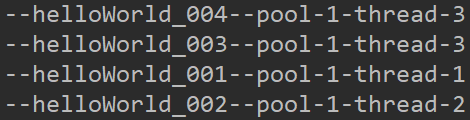
结果:任务1,2启动后 任务3在队列 ,队列就满了,由于正在进行的线程数是2<maximumPoolSize,只能新建一个线程了 然后任务4就进了新线程-3,任务4结束,队列里的任务3在线程3 进行。
4.队列里的任务达到上限,并且池中正在运行的线程等于maximumPoolSize,对于新加入的任务,执行拒绝策略(线程池默认的策略是抛异常)。
public static void main(String[] args) {

        ThreadPoolExecutor pool = new ThreadPoolExecutor(2, 3, 60L, TimeUnit.SECONDS, new LinkedBlockingQueue<>(1));

        // 任务1

        pool.execute(() -> {

            try {

                Thread.sleep(3 * 1000);

                System.out.println("--helloWorld_001--" + Thread.currentThread().getName());

            } catch (InterruptedException e) {

                e.printStackTrace();

            }

        });

        // 任务2

        pool.execute(() -> {

            try {

                Thread.sleep(5 * 1000);

                System.out.println("--helloWorld_002--" + Thread.currentThread().getName());

            } catch (InterruptedException e) {

                e.printStackTrace();

            }

        });

        // 任务3

        pool.execute(() -> System.out.println("--helloWorld_003--" + Thread.currentThread().getName()));

        // 任务4

        pool.execute(() -> {

            try {

                Thread.sleep(2 * 1000);

            } catch (InterruptedException e) {

                e.printStackTrace();

            }

            System.out.println("--helloWorld_004--" + Thread.currentThread().getName());

        });

        // 任务5

        pool.execute(() -> System.out.println("--helloWorld_005--" + Thread.currentThread().getName()));

    }
运行结果:

Exception in thread "main" java.util.concurrent.RejectedExecutionException: Task ExecutorDemo$$Lambda$5/999966131@7699a589 rejected from java.util.concurrent.ThreadPoolExecutor@58372a00[Running, pool size = 3, active threads = 3, queued tasks = 1, completed tasks = 0]

    at java.util.concurrent.ThreadPoolExecutor$AbortPolicy.rejectedExecution(ThreadPoolExecutor.java:2063)

    at java.util.concurrent.ThreadPoolExecutor.reject(ThreadPoolExecutor.java:830)

    at java.util.concurrent.ThreadPoolExecutor.execute(ThreadPoolExecutor.java:1379)

    at ExecutorDemo.main(ExecutorDemo.java:40)

--helloWorld_004----pool-1-thread-3

--helloWorld_003--pool-1-thread-3

--helloWorld_001--pool-1-thread-1

--helloWorld_002--pool-1-thread-2
结论:队列达到上限,线程池达到最大值,故抛出异常。
关闭线程
分为两种方式:
pool.shutdown();//平缓关闭,不允许新的线程加入,正在运行的都跑完即可关闭。

pool.shutdownNow();//暴力关闭。不允许新的线程加入,且直接停到正在进行的线程。
ThreadPoolExecutor使用方法的更多相关文章
- 12.ThreadPoolExecutor线程池原理及其execute方法
jdk1.7.0_79 对于线程池大部分人可能会用,也知道为什么用.无非就是任务需要异步执行,再者就是线程需要统一管理起来.对于从线程池中获取线程,大部分人可能只知道,我现在需要一个线程来执行一个任 ...
- ThreadPoolExecutor机制探索-我们到底能走多远系列(41)
我们到底能走多远系列(41) 扯淡: 这一年过的不匆忙,也颇多感受,成长的路上难免弯路,这个世界上没人关心你有没有变强,只有自己时刻提醒自己,不要忘记最初出发的原因. 其实这个世界上比我们聪明的人无数 ...
- java线程API学习 线程池ThreadPoolExecutor(转)
线程池ThreadPoolExecutor继承自ExecutorService.是jdk1.5加入的新特性,将提交执行的任务在内部线程池中的可用线程中执行. 构造函数 ThreadPoolExecut ...
- 《java.util.concurrent 包源码阅读》12 线程池系列之ThreadPoolExecutor 第二部分
接着说worker线程是如何工作的.ThreadPoolExecutor有一个成员类叫Worker,所起到的作用就是线程池worker线程的作用. private final class Worker ...
- JAVA线程池学习,ThreadPoolTaskExecutor和ThreadPoolExecutor有何区别?
初学者很容易看错,如果没有看到spring或者JUC源码的人肯定是不太了解的. ThreadPoolTaskExecutor是spring core包中的,而ThreadPoolExecutor是JD ...
- 自定义 ThreadPoolExecutor 处理线程运行时异常
自定义 ThreadPoolExecutor 处理线程运行时异常 最近看完了ElasticSearch线程池模块的源码,感触颇深,然后也自不量力地借鉴ES的 EsThreadPoolExecutor ...
- java内置线程池ThreadPoolExecutor源码学习记录
背景 公司业务性能优化,使用java自带的Executors.newFixedThreadPool()方法生成线程池.但是其内部定义的LinkedBlockingQueue容量是Integer.MAX ...
- Java线程池ThreadPoolExecutor使用和分析(二) - execute()原理
相关文章目录: Java线程池ThreadPoolExecutor使用和分析(一) Java线程池ThreadPoolExecutor使用和分析(二) - execute()原理 Java线程池Thr ...
- 多线程相关-ThreadPoolExecutor
应用层面: ThreadPoolExecutor: 创建多线程池执行器:new ThreadPoolExecutor(),创建方法最终都是走的以下这个构造方法: /** * Creates a new ...
随机推荐
- 豆瓣电影TOP250和书籍TOP250爬虫
豆瓣电影 TOP250 和书籍 TOP250 爬虫 最近开始玩 Python , 学习爬虫相关知识的时候,心血来潮,爬取了豆瓣电影TOP250 和书籍TOP250, 这里记录一下自己玩的过程. 电影 ...
- Laravel 从入门到精通 创建并运行一个新的 Laravel 项目
创建一个新的 Laravel 项目 正如官方文档所言,有两种方式可以创建一个新的 Laravel 项目,这两种创建方式都是从命令行执行的:第一种是通过全局的 Laravel 安装器,另一种是通过 Co ...
- C++中类型强制转换
C++中强制类型转换有四种: 1.static_cast 格式:static_cast<Type>(Value); --用于基本类型间的转换,但不能用于基本类型指针间的转换: int i ...
- CF #579 (Div. 3) C.Common Divisors
C.Common Divisors time limit per test2 seconds memory limit per test256 megabytes inputstandard inpu ...
- 基于python的scrapy环境搭建
0.1安装python软件 32位机的电脑安装python-3.6.3.exe 64位机的电脑安装python-3.6.3-amd64.exe 0.1.1 python环境搭建 执行安装程序 选择Ad ...
- 如何把安全证书导入到java中的cacerts证书库
每一步:进入某个https://www.xxx.com开头的网站,把要导入的证书下载, 在该网页上右键 >> 属性 >> 点击"证书" >> 再 ...
- 小鸟初学Shell编程(七)变量引用及作用范围
变量引用 那么定义好变量,如何打印变量的值呢?举例下变量引用的方式. ${变量名}称作为对变量的引用 echo ${变量名}查看变量的值 ${变量名}在部分情况下可以省略成 $变量名 [root@li ...
- line-height属性
line-height属性的细节 与大多数CSS属性不同,line-height支持属性值设置为无单位的数字.有无单位在子元素继承属性时有微妙的不同. 语法 line-height: normal | ...
- 机器学习回顾篇(6):KNN算法
1 引言 本文将从算法原理出发,展开介绍KNN算法,并结合机器学习中常用的Iris数据集通过代码实例演示KNN算法用法和实现. 2 算法原理 KNN(kNN,k-NearestNeighbor)算法, ...
- 国庆佳节第四天,谈谈我月收入增加 4K 的故事
01.起承 在我下定决心改变的这将近 1 年的时间里,遇到了很多很多有故事的人,以及有趣的事.自我的认知改变特别大!尤其是收入,比去年同时期增加了 4K. 4K,可能也就买 100 斤猪肉.但是对于身 ...