
Netty入门(1) - 简介
什么是Netty?
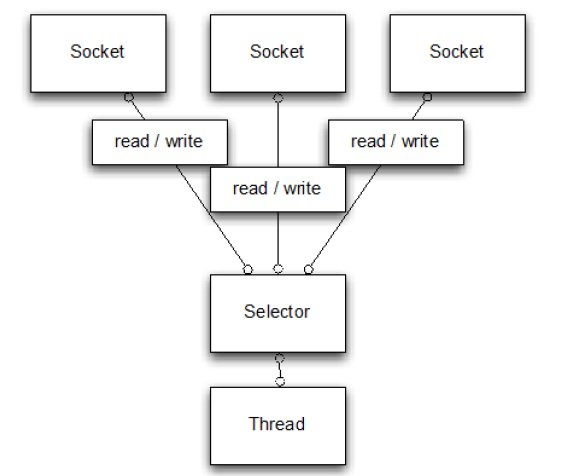
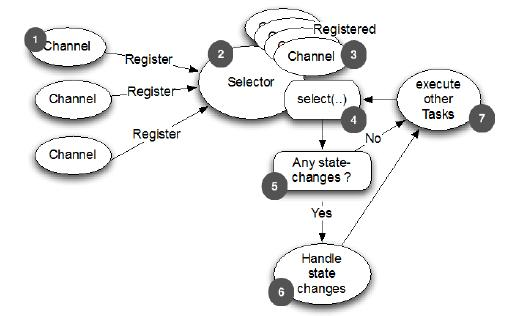
Netty 是一个利用 Java 的高级网络的能力,隐藏其背后的复杂性而提供一个易于使用的 API 的客户端/服务器框架。
Tomcat和Netty有什么区别?
Netty有什么优点?
并发高
传输快
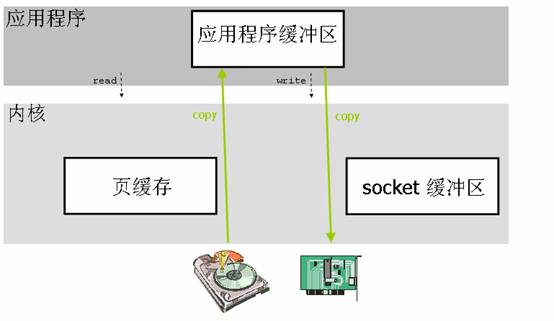
Java的内存有堆内存、栈内存和字符串常量池等等,其中堆内存是占用内存空间最大的一块,也是Java对象存放的地方,一般我们的数据如果需要从IO读取到堆内存,中间需要经过Socket缓冲区,也就是说一个数据会被拷贝两次才能到达他的的终点,如果数据量大,就会造成不必要的资源浪费。Netty针对这种情况,使用了NIO中的另一大特性——零拷贝,当他需要接收数据的时候,他会在堆内存之外开辟一块内存,数据就直接从IO读到了那块内存中去,在netty里面通过ByteBuf可以直接对这些数据进行直接操作,从而加快了传输速度。
public class NettyNioServer {

    public void server(int port) throws Exception {

        final ByteBuf buf = Unpooled.unreleasableBuffer(

                Unpooled.copiedBuffer("Hi!\r\n", Charset.forName("UTF-8")));

        EventLoopGroup group = new NioEventLoopGroup();

        try {

            ServerBootstrap b = new ServerBootstrap();

            b.group(group)

             .channel(NioServerSocketChannel.class)

             .localAddress(new InetSocketAddress(port))

             .childHandler(new ChannelInitializer<SocketChannel>() {

                 @Override

                 public void initChannel(SocketChannel ch)

                     throws Exception {

                     ch.pipeline().addLast(new ChannelInboundHandlerAdapter() {

                         @Override

                         public void channelActive(ChannelHandlerContext ctx) throws Exception {

                             ctx.writeAndFlush(buf.duplicate()).addListener(ChannelFutureListener.CLOSE);

                         }

                     });

                 }

             });

            ChannelFuture f = b.bind().sync();

            f.channel().closeFuture().sync();

        } finally {

            group.shutdownGracefully().sync();

        }

    }

}
相关概念
Channel,表示一个连接,可以理解为每一个请求,就是一个Channel。
ChannelHandler,核心处理业务就在这里,用于处理业务请求。
ChannelHandlerContext,用于传输业务数据。
ChannelPipeline,用于保存处理过程需要用到的ChannelHandler和ChannelHandlerContext。
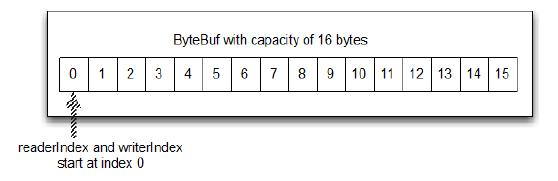
ByteBuf,是一个存储字节的容器,最大特点就是使用方便,它既有自己的读索引和写索引,方便你对整段字节缓存进行读写,也支持get/set,方便你对其中每一个字节进行读写,他的数据结构如下图所示:
Heap Buffer 堆缓冲区
堆缓冲区是ByteBuf最常用的模式,他将数据存储在堆空间。
Direct Buffer 直接缓冲区
直接缓冲区是ByteBuf的另外一种常用模式,他的内存分配都不发生在堆,jdk1.4引入的nio的ByteBuffer类允许jvm通过本地方法调用分配内存,这样做有两个好处
通过免去中间交换的内存拷贝, 提升IO处理速度; 直接缓冲区的内容可以驻留在垃圾回收扫描的堆区以外。
DirectBuffer 在 -XX:MaxDirectMemorySize=xxM大小限制下, 使用 Heap 之外的内存, GC对此”无能为力”,也就意味着规避了在高负载下频繁的GC过程对应用线程的中断影响.
Composite Buffer 复合缓冲区
复合缓冲区相当于多个不同ByteBuf的视图,这是netty提供的,jdk不提供这样的功能。
Codec,Netty中的编码/解码器,通过他你能完成字节与pojo、pojo与pojo的相互转换,从而达到自定义协议的目的。在Netty里面最有名的就是HttpRequestDecoder和HttpResponseEncoder了。
下面用一个简单的例子来入门:
核心业务开发:
package io.netty.example.discard;

import io.netty.buffer.ByteBuf;

import io.netty.channel.ChannelHandlerContext;

import io.netty.channel.ChannelInboundHandlerAdapter;

/**

 * Handles a server-side channel.

 */

public class DiscardServerHandler extends ChannelInboundHandlerAdapter { // (1)

    @Override

    public void channelRead(ChannelHandlerContext ctx, Object msg) { // (2)

        // Discard the received data silently.

        ((ByteBuf) msg).release(); // (3)

    }

    @Override

    public void exceptionCaught(ChannelHandlerContext ctx, Throwable cause) { // (4)

        // Close the connection when an exception is raised.

        cause.printStackTrace();

        ctx.close();

    }

}
注意,Bytebuf是一个引用计数的对象,使用完后需要finally块手动释放,如:
ReferenceCountUtil.release(msg);

或者
((ByteBuf) msg).release();
启动Server:
package io.netty.example.discard;

import io.netty.bootstrap.ServerBootstrap;

import io.netty.channel.ChannelFuture;

import io.netty.channel.ChannelInitializer;

import io.netty.channel.ChannelOption;

import io.netty.channel.EventLoopGroup;

import io.netty.channel.nio.NioEventLoopGroup;

import io.netty.channel.socket.SocketChannel;

import io.netty.channel.socket.nio.NioServerSocketChannel;

/**

 * Discards any incoming data.

 */

public class DiscardServer {

    private int port;

    public DiscardServer(int port) {

        this.port = port;

    }

    public void run() throws Exception {

        EventLoopGroup bossGroup = new NioEventLoopGroup(); // (1)

        EventLoopGroup workerGroup = new NioEventLoopGroup();

        try {

            ServerBootstrap b = new ServerBootstrap(); // (2)

            b.group(bossGroup, workerGroup)

             .channel(NioServerSocketChannel.class) // (3)

             .childHandler(new ChannelInitializer<SocketChannel>() { // (4)

                 @Override

                 public void initChannel(SocketChannel ch) throws Exception {

                     ch.pipeline().addLast(new DiscardServerHandler());

                 }

             })

             .option(ChannelOption.SO_BACKLOG, 128)          // (5)

             .childOption(ChannelOption.SO_KEEPALIVE, true); // (6)

            // Bind and start to accept incoming connections.

            ChannelFuture f = b.bind(port).sync(); // (7)

            // Wait until the server socket is closed.

            // In this example, this does not happen, but you can do that to gracefully

            // shut down your server.

            f.channel().closeFuture().sync();

        } finally {

            workerGroup.shutdownGracefully();

            bossGroup.shutdownGracefully();

        }

    }

    public static void main(String[] args) throws Exception {

        int port;

        if (args.length > 0) {

            port = Integer.parseInt(args[0]);

        } else {

            port = 8080;

        }

        new DiscardServer(port).run();

    }

}
option() is for the NioServerSocketChannel that accepts incoming connections.
childOption() is for the Channels accepted by the parent ServerChannel, which is NioServerSocketChannel in this case.
我们来打印一下内容:
public class BussinessHandler extends ChannelInboundHandlerAdapter {

    @Override

    public void channelRead(ChannelHandlerContext ctx, Object msg) throws Exception {

        super.channelRead(ctx, msg);

        try {

            ByteBuf in = (ByteBuf) msg;

            System.out.println(in.toString(CharsetUtil.US_ASCII));

        } finally {

            ReferenceCountUtil.release(msg);

        }

        ((ByteBuf) msg).release();  // ReferenceCountUtil.release(msg);

    }

    @Override

    public void exceptionCaught(ChannelHandlerContext ctx, Throwable cause) throws Exception {

        super.exceptionCaught(ctx, cause);

        cause.printStackTrace();

        ctx.close();

    }

}
回应消息:
    @Override

    public void channelRead(ChannelHandlerContext ctx, Object msg) {

        ctx.write(msg); // (1)

        ctx.flush(); // (2)
     // ctx.writeAndFlush(msg);

    }
package io.netty.example.time;

public class TimeServerHandler extends ChannelInboundHandlerAdapter {

    @Override

    public void channelActive(final ChannelHandlerContext ctx) { // (1)

        final ByteBuf time = ctx.alloc().buffer(4); // (2)

        time.writeInt((int) (System.currentTimeMillis() / 1000L + 2208988800L));

        final ChannelFuture f = ctx.writeAndFlush(time); // (3)

        f.addListener(new ChannelFutureListener() {

            @Override

            public void operationComplete(ChannelFuture future) {

                assert f == future;

                ctx.close(); // it returns a ChannelFuture.

            }

        }); // (4)

    }

    @Override

    public void exceptionCaught(ChannelHandlerContext ctx, Throwable cause) {

        cause.printStackTrace();

        ctx.close();

    }

}
写一个客户端:
public class TimeClientHandler extends ChannelInboundHandlerAdapter {

    @Override

    public void channelRead(ChannelHandlerContext ctx, Object msg) {

        ByteBuf m = (ByteBuf) msg; // (1)

        try {

            long currentTimeMillis = (m.readUnsignedInt() - 2208988800L) * 1000L;

            System.out.println(new Date(currentTimeMillis));

            ctx.close();

        } finally {

            m.release();

        }

    }

    @Override

    public void exceptionCaught(ChannelHandlerContext ctx, Throwable cause) {

        cause.printStackTrace();

        ctx.close();

    }

}
public class TimeClient {

    public static void main(String[] args) throws Exception {

        String host = args[0];

        int port = Integer.parseInt(args[1]);

        EventLoopGroup workerGroup = new NioEventLoopGroup();

        try {

            Bootstrap b = new Bootstrap(); // (1)

            b.group(workerGroup); // (2)

            b.channel(NioSocketChannel.class); // (3)

            b.option(ChannelOption.SO_KEEPALIVE, true); // (4)

            b.handler(new ChannelInitializer<SocketChannel>() {

                @Override

                public void initChannel(SocketChannel ch) throws Exception {

                    ch.pipeline().addLast(new TimeClientHandler());

                }

            });

            // Start the client.

            ChannelFuture f = b.connect(host, port).sync(); // (5)

            // Wait until the connection is closed.

            f.channel().closeFuture().sync();

        } finally {

            workerGroup.shutdownGracefully();

        }

    }

}
关于拆包和黏包的解决:
public class TimeClientHandler extends ChannelInboundHandlerAdapter {

    private ByteBuf buf;

    @Override

    public void handlerAdded(ChannelHandlerContext ctx) {

        buf = ctx.alloc().buffer(4); // (1)

    }

    @Override

    public void handlerRemoved(ChannelHandlerContext ctx) {

        buf.release(); // (1)

        buf = null;

    }

    @Override

    public void channelRead(ChannelHandlerContext ctx, Object msg) {

        ByteBuf m = (ByteBuf) msg;

        buf.writeBytes(m); // (2)

        m.release();

        if (buf.readableBytes() >= 4) { // (3)

            long currentTimeMillis = (buf.readUnsignedInt() - 2208988800L) * 1000L;

            System.out.println(new Date(currentTimeMillis));

            ctx.close();

        }

    }

    @Override

    public void exceptionCaught(ChannelHandlerContext ctx, Throwable cause) {

        cause.printStackTrace();

        ctx.close();

    }

}
package io.netty.example.time;

public class TimeDecoder extends ByteToMessageDecoder { // (1)

    @Override

    protected void decode(ChannelHandlerContext ctx, ByteBuf in, List<Object> out) { // (2)

        if (in.readableBytes() < 4) {

            return; // (3)

        }

        out.add(in.readBytes(4)); // (4)

    }

}
public class TimeDecoder extends ReplayingDecoder<Void> {

    @Override

    protected void decode(

            ChannelHandlerContext ctx, ByteBuf in, List<Object> out) {

        out.add(in.readBytes(4));

    }

}
传输POJO对象:
定义对象
public class UnixTime {

    private final long value;

    public UnixTime() {

        this(System.currentTimeMillis() / 1000L + 2208988800L);

    }

    public UnixTime(long value) {

        this.value = value;

    }

    public long value() {

        return value;

    }

    @Override

    public String toString() {

        return new Date((value() - 2208988800L) * 1000L).toString();

    }

}
client定义decoder:
@Override

protected void decode(ChannelHandlerContext ctx, ByteBuf in, List<Object> out) {

    if (in.readableBytes() < 4) {

        return;

    }

    out.add(new UnixTime(in.readUnsignedInt()));

}
client定义handler:
@Override

public void channelRead(ChannelHandlerContext ctx, Object msg) {

    UnixTime m = (UnixTime) msg;

    System.out.println(m);

    ctx.close();

}
server定义handler:
@Override

public void channelActive(ChannelHandlerContext ctx) {

    ChannelFuture f = ctx.writeAndFlush(new UnixTime());

    f.addListener(ChannelFutureListener.CLOSE);

}
server定义encoder:
public class TimeEncoder extends MessageToByteEncoder<UnixTime> {

    @Override

    protected void encode(ChannelHandlerContext ctx, UnixTime msg, ByteBuf out) {

        out.writeInt((int)msg.value());

    }

}
停止应用:
    EventLoopGroup bossGroup = new NioEventLoopGroup(); // (1)

        EventLoopGroup workerGroup = new NioEventLoopGroup();

        try {

            ServerBootstrap b = new ServerBootstrap(); // (2)

            b.group(bossGroup, workerGroup)

             .channel(NioServerSocketChannel.class) // (3)

             .childHandler(new ChannelInitializer<SocketChannel>() { // (4)

                 @Override

                 public void initChannel(SocketChannel ch) throws Exception {

                     ch.pipeline().addLast(new DiscardServerHandler());

                 }

             })

             .option(ChannelOption.SO_BACKLOG, 128)          // (5)

             .childOption(ChannelOption.SO_KEEPALIVE, true); // (6)

            // Bind and start to accept incoming connections.

            ChannelFuture f = b.bind(port).sync(); // (7)

            // Wait until the server socket is closed.

            // In this example, this does not happen, but you can do that to gracefully

            // shut down your server.

            f.channel().closeFuture().sync();

        } finally {
       // 异步的,返回future

            workerGroup.shutdownGracefully();

            bossGroup.shutdownGracefully();

        }
Netty入门(1) - 简介的更多相关文章
- Netty入门之客户端与服务端通信(二)
Netty入门之客户端与服务端通信(二) 一.简介 在上一篇博文中笔者写了关于Netty入门级的Hello World程序.书接上回,本博文是关于客户端与服务端的通信,感觉也没什么好说的了,直接上代码 ...
- Netty入门之HelloWorld
Netty系列入门之HelloWorld(一) 一. 简介 Netty is a NIO client server framework which enables quick and easy de ...
- Netty入门(一)之webSocket聊天室
一:简介 Netty 是一个提供 asynchronous event-driven (异步事件驱动)的网络应用框架,是一个用以快速开发高性能.高可靠性协议的服务器和客户端. 换句话说,Netty 是 ...
- Java网络编程 -- Netty入门
Netty简介 Netty是一个高性能,高可扩展性的异步事件驱动的网络应用程序框架,它极大的简化了TCP和UDP客户端和服务器端网络开发.它是一个NIO框架,对Java NIO进行了良好的封装.作为一 ...
- GBDT(MART) 迭代决策树入门教程 | 简介
GBDT(MART) 迭代决策树入门教程 | 简介 http://blog.csdn.net/w28971023/article/details/8240756
- jQuery的入门与简介
jQuery的入门与简介<思维导图> <初学者请各位高手指点指点> jQuery是继Prototype之后又一个优秀的JavaScript库,在JavaScript基础上我 ...
- Netty入门
一.NIO Netty框架底层是对NIO的高度封装,所以想要更好的学习Netty之前,应先了解下什么是NIO - NIO是non-blocking的简称,在jdk1.4 里提供的新api,他的他的特性 ...
- netty入门(一)
1. netty入门(一) 1.1. 传统socket编程 在任何时候都可能有大量的线程处于休眠状态,只是等待输入或者输出数据就绪,这可能算是一种资源浪费. 需要为每个线程的调用栈都分配内存,其默认值 ...
- Netty入门(三)之web服务器
Netty入门(三)之web服务器 阅读前请参考 Netty入门(一)之webSocket聊天室 Netty入门(二)之PC聊天室 有了前两篇的使用基础,学习本文也很简单!只需要在前两文的基础上稍微改 ...
随机推荐
- idea编译器光标变为insert状态
idea鼠标变成inset状态,不能复制.粘贴使用快捷键 1.打开设置 点击 plugins 输入ideavim 把 这个勾去掉!这个是插件的配置问题. 2.如果上面的不管用,那么检查editor- ...
- 设计模式笔记:策略模式(Strategy)
1. 策略模式简介 1.1 定义 策略是为达到某一目的而采取的手段或方法,策略模式的本质是目标与手段的分离,手段不同而最终达成的目标一致.客户只关心目标而不在意具体的实现方法,实现方法要根据具体的环境 ...
- Delphi中封装ADO之我重学习记录
delphi adodataset ctstatic 数据是缓存在服务器端还是客户端 答:客户端,开启本地缓存功能后,就能数据在本地批量修改后,再批量提交,减少了网络传送 原创,专业,图文 Del ...
- delphi创建动态菜单
1.动态生成菜单项 varFirstItem: TMenuItem;SecondItem: TMenuItem; begin FirstItem := TMenuItem.Create(Self); ...
- jquery stop()、callback、鏈接
stop(stopAll,goToEnd) stop適用於所有的效果,包括顯示隱藏.滑動.淡入淡出和動畫. stopAll默認值為false,清除當前動畫,可以向後執行下一動畫調用,黨改為true,清 ...
- Sightseeing tour HDU - 1956(混合欧拉回路)
题意: 有n个点,m条边,其中有单向边和双向边,求是否存在欧拉回路 解析: 刚开始想...判断一下每个点的度数不就好了...emm..还是年轻啊.. 判断是解决不了问题的,因为可能会有某两个点冲突,比 ...
- 树剖模板(洛谷P3384 【模板】树链剖分)(树链剖分,树状数组,树的dfn序)
洛谷题目传送门 仍然是一个板子. 不过蒟蒻去学了一下BIT维护区间修改区间求和,常数果真十分优秀 设数列为\(a_i\),差分数组\(d_ i=a_ i-a_ {i-1}\),前缀和\(s_i=\su ...
- OneProxy 管理
-----client-----------haproxy---------mysql1----------mysql2------192.168.1.250 192.168.1.1 192.168. ...
- luogu2312 [NOIp2015]解方程 (秦九韶)
秦九韶算法:多项式$a_0+a_1x+a_2x^2+...+a_nx^n=a_0+x(a_1+x(a_2+...+(xa_n))..)$,这样对于一个x,可以在O(n)求出结果 为了避免高精度,我们同 ...
- wechat 网页版通信全过程
想要记录总结一下自己在这个小项目中所遇到的坑,以及解决问题的思路. 首先我觉得这个小项目挺有实际市场的,市场上有一定的需求量,这个就是驱动力吧.这个小项目的关键点是wechat网页版通信全过程,讲真挺 ...