
MyBatis学习(二)---数据表之间关联
想要了解MyBatis基础的朋友可以通过传送门:
MyBatis学习(一)---配置文件,Mapper接口和动态SQL http://www.cnblogs.com/ghq120/p/8322302.html
本文主要介绍了用MyBatis实现数据表之间的各种关系,例如一对多,多对一,一对一和多对多。
一对多和多对一
本项目的例子为公司的部门和员工之间的关系,即一个部门对应多个员工,反过来多个员工对应一个部门即为多对一。
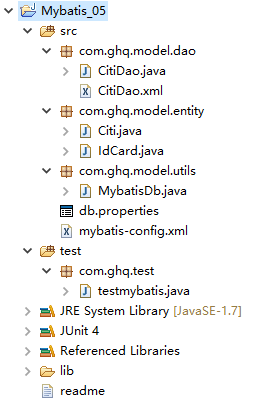
项目的目录为

本项目依旧使用Oracle数据库,对应的表为employee和department
employee表的列

department表

表对应的实体类分别为
Employee.java
package com.ghq.model.entity;

public class Employee {

    private Integer id;

    private String empName;

    private Department dept;

    public Employee(Integer id, String empName, Department dept) {

        super();

        this.id = id;

        this.empName = empName;

        this.dept = dept;

    }

    public Employee(String empName, Department dept) {

        super();

        this.empName = empName;

        this.dept = dept;

    }

    public Employee() {

    }

    //此处省略setter/getter方法

    @Override

    public String toString() {

        return "Employee [id=" + id + ", empName=" + empName + ", dept=" + dept

                + "]";

    }

}
Department.java
package com.ghq.model.entity;

import java.util.List;

public class Department {

    private Integer id;

    private String deptname;

    //部门下所有员工

    private List<Employee> emps;

    public Department(Integer id, String deptname, List<Employee> emps) {

        super();

        this.id = id;

        this.deptname = deptname;

        this.emps = emps;

    }

    public Department(String deptname, List<Employee> emps) {

        super();

        this.deptname = deptname;

        this.emps = emps;

    }

    public Department() {

    }

    //此处省略setter/getter方法

    @Override

    public String toString() {

        return "Department [id=" + id + ", deptname=" + deptname + ", emps="

                + emps + "]";

    }

}
配置文件仍为mybatis-config.xml,其中定义了别名,指定了连接池和注册映射文件。
<?xml version="1.0" encoding="UTF-8" ?>

<!DOCTYPE configuration

  PUBLIC "-//mybatis.org//DTD Config 3.0//EN"

  "http://mybatis.org/dtd/mybatis-3-config.dtd">

<configuration>

    <!-- 加载db.properties文件 -->

    <properties resource="db.properties"></properties>

    <!-- 在配置文件中定义别名,可以在映射文件中使用别名 -->

    <typeAliases>

        <!-- 为该包下的实体类定义别名 -->

        <package name="com.ghq.model.entity"/>

    </typeAliases>

    <!-- 指定了默认的环境为development -->

  <environments default="development">

      <!-- 指出了环境的唯一标识 -->

    <environment id="development">

        <!-- 指出了事务管理器 -->

      <transactionManager type="JDBC"/>

      <!-- 指出了连接池,并指出了连接数据库的驱动,url,用户名,密码 -->

      <dataSource type="POOLED">

        <property name="driver" value="${db.driver}"/>

        <property name="url" value="${db.url}"/>

        <property name="username" value="${db.username}"/>

        <property name="password" value="${db.password}"/>

      </dataSource>

    </environment>

  </environments>

  <!-- 注册映射文件 -->

  <mappers>

    <package name="com.ghq.model.dao"/>

  </mappers>

</configuration>
db.properties文件中
db.driver=oracle.jdbc.driver.OracleDriver

db.url=jdbc:oracle:thin:@127.0.0.1:1521:orcl

db.username=scott

db.password=itcast
工具类下MybatisDb.java获取获取SqlSessionFactory以及SqlSession的对象,SqlSession中具有对数据表增删改查的方法
package com.ghq.model.utils;

import java.io.IOException;

import java.io.InputStream;

import org.apache.ibatis.io.Resources;

import org.apache.ibatis.session.SqlSession;

import org.apache.ibatis.session.SqlSessionFactory;

import org.apache.ibatis.session.SqlSessionFactoryBuilder;

public class MybatisDb {

    private static String config = "mybatis-config.xml";

    private static SqlSessionFactory sqlSessionFac;

    static{

        try {

            //读取配置文件

            InputStream inputstream = Resources.getResourceAsStream(config);

            //获取SqlSessionFactory对象

            sqlSessionFac = new SqlSessionFactoryBuilder().build(inputstream);

        } catch (IOException e) {

            e.printStackTrace();

        }

    }

    //获取SqlSession对象,并且开启了事务

    public static SqlSession getSession(){

        return sqlSessionFac.openSession();

    }

}
dao组件中
DeptDao主要是获取指定部门下的员工信息
public interface DeptDao {

    //获取部门下员工信息(部门信息和员工信息)

    public List<Department> getDeptEmployee();

}
EmpDao是获取每个员工的部门信息
public interface EmpDao {

    //获取每个员工的部门信息

    public List<Employee> getEmployeeDept();

}
Department中获取所有的员工的属性时集合类型的,在配置文件中使用的元素是<collection>,该元素必须添加property和ofType属性, property指出集合属性名,ofType指出集合元素的类型
Employee中员工对应的部门信息是实体类类型,在配置文件中使用<association>元素,该元素必须指定property和javaType,property指出的是实体的属性名,javaType指出了该属性的类型
DeptDao的配置文件为DeptDao.xml
<?xml version="1.0" encoding="UTF-8" ?>

<!DOCTYPE mapper

  PUBLIC "-//mybatis.org//DTD Mapper 3.0//EN"

  "http://mybatis.org/dtd/mybatis-3-mapper.dtd">

<mapper namespace="com.ghq.model.dao.DeptDao">

  <resultMap type="Department" id="deptMap">

    <id column="did" property="id"/>

    <result column="deptname" property="deptname"/>

    <!-- 映射集合使用的元素是Collection,该元素必须添加property和ofType属性,

    property指出集合属性名,ofType指出集合元素的类型 -->

    <collection property="emps" ofType="Employee">

      <id column="eid" property="id"/>

      <result column="empname" property="empName"/>

    </collection>

  </resultMap>

    <select id="getDeptEmployee" resultMap="deptMap">

       SELECT d.id did, d.deptname, e.id eid, e.empname

    FROM department d LEFT JOIN employee e

    ON d.id = e.deptid

    </select>

</mapper>
EmpDao的配置文件为EmpDao.xml
<?xml version="1.0" encoding="UTF-8" ?>

<!DOCTYPE mapper

  PUBLIC "-//mybatis.org//DTD Mapper 3.0//EN"

  "http://mybatis.org/dtd/mybatis-3-mapper.dtd">

<mapper namespace="com.ghq.model.dao.EmpDao">

  <!-- 用于完成查询出的列名和相应实体属性的映射 -->

  <resultMap type="Employee" id="empMap">

    <!-- 用于映射主键列 -->

    <id column="eid" property="id"/>

    <!-- 用于映射普通列 -->

    <result column="empname" property="empName"/>

    <!-- association元素必须指定property和javaType,property指出的是实体的属性名,javaType指出了该属性的类型 -->

    <association property="dept" javaType="Department">

      <id column="did" property="id"/>

      <result column="deptname" property="deptname"/>

    </association>

  </resultMap>

  <!-- 查询出的列名和实体的属性名不一致,所以应该使用resultMap -->

    <select id="getEmployeeDept" resultMap="empMap">

       SELECT e.id eid, e.empname, d.id did, d.deptname

    FROM employee e LEFT JOIN department d

    ON d.id = e.deptid

    </select>

</mapper>
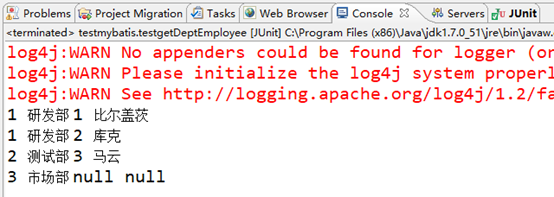
使用单元测试
public class testmybatis {

    //此方法对应DeptDao,为测试获取部门下所有员工的方法

@Test

    public void testgetDeptEmployee(){

        SqlSession session = MybatisDb.getSession();

        DeptDao deptDao = session.getMapper(DeptDao.class);

        List<Department> depts = deptDao.getDeptEmployee();

        session.close();

        if (depts != null && depts.size() > 0) {

            for (Department d : depts) {

                List<Employee> emps = d.getEmps();

                if (emps !=null && emps.size() > 0) {

                    for (Employee e : emps) {

                        System.out.println(d.getId()+" "+d.getDeptname()+" "+e.getId()+" "+e.getEmpName());

                    }

                } else{

                    System.out.println(d.getId()+" "+d.getDeptname()+" "+null+" "+null);

                }

            }

        }else {

            System.out.println("沒有部门");

        }

    }

}
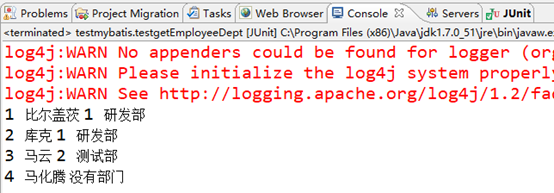
//此方法对应EmpDao,为测试员工对应部门的方法

    @Test

    public void testgetEmployeeDept(){

        SqlSession session = MybatisDb.getSession();

        EmpDao empDao = session.getMapper(EmpDao.class);

        List<Employee> emps = empDao.getEmployeeDept();

        session.close();

        if (emps != null && emps.size() > 0) {

            for (Employee e : emps) {

                if (e.getDept() == null) {

                    System.out.println(e.getId()+" "+e.getEmpName()+" "+"没有部门");

                }else{

                    System.out.println(e.getId()+" "+e.getEmpName()+" "+e.getDept().getId()+" "+e.getDept().getDeptname());

                }

            }

        }

    }
一对一
本项目为公民和身份证之间的关系,即一个公民对应一张身份证
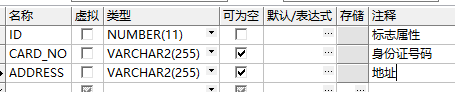
对应的表分别为citi_tb和card_tb
citi_tb表

card_tb表
表对应的实体类分别为
Citi.java
package com.ghq.model.entity;

public class Citi {

    private Integer id;

    private String citiName;

    private IdCard card;

    public Citi(Integer id, String citiName, IdCard card) {

        super();

        this.id = id;

        this.citiName = citiName;

        this.card = card;

    }

    public Citi(String citiName, IdCard card) {

        super();

        this.citiName = citiName;

        this.card = card;

    }

    public Citi() {

    }

    //此处省略setter/getter方法

}
IdCard.java
package com.ghq.model.entity;

public class IdCard {

    private Integer id;

    private String cardNo;

    private String address;

    private Citi citi;

    public IdCard(Integer id, String cardNo, String address, Citi citi) {

        super();

        this.id = id;

        this.cardNo = cardNo;

        this.address = address;

        this.citi = citi;

    }

    public IdCard(String cardNo, String address, Citi citi) {

        super();

        this.cardNo = cardNo;

        this.address = address;

        this.citi = citi;

    }

    public IdCard() {

        super();

        // TODO Auto-generated constructor stub

    }

    //此处省略setter/getter方法

}
工具类和配置文件都没有发生改变
dao组件中CitiDao
public interface CitiDao {

    //获取每个公民的身份证信息

    public List<Citi> getCitiIdCard();

}
CitiDao的配置文件CitiDao.xml
<?xml version="1.0" encoding="UTF-8" ?>

<!DOCTYPE mapper

  PUBLIC "-//mybatis.org//DTD Mapper 3.0//EN"

  "http://mybatis.org/dtd/mybatis-3-mapper.dtd">

<mapper namespace="com.ghq.model.dao.CitiDao">

  <resultMap type="Citi" id="citiMap">

    <id column="citiid" property="id"/>

    <result column="citi_name" property="citiName"/>

    <association property="card" javaType="IdCard">

      <id column="cardid" property="id"/>

      <result column="card_no" property="cardNo"/>

      <result column="address" property="address"/>

    </association>

  </resultMap>

    <select id="getCitiIdCard" resultMap="citiMap">

       SELECT citi.id citiid, citi.citi_name, card.id cardid, card.card_no, card.address

    FROM citi_tb citi LEFT JOIN card_tb card

    ON citi.id = card.id

    </select>

</mapper>
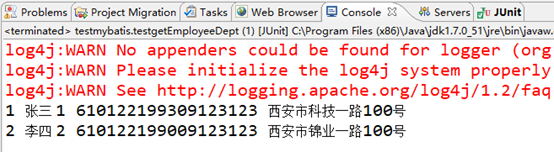
单元测试的方法
public class testmybatis {

    @Test

    public void testgetCitiIdCard(){

        SqlSession session = MybatisDb.getSession();

        CitiDao citiDao = session.getMapper(CitiDao.class);

        List<Citi> citis = citiDao.getCitiIdCard();

        session.close();

        if (citis != null && citis.size() > 0) {

            for (Citi c : citis) {

                System.out.println(c.getId()+" "+c.getCitiName()+" "+c.getCard().getId()+" "+c.getCard().getCardNo()+" "+c.getCard().getAddress());

            }

        }

    }

}
多对多
本项目为学生信息表,选课表,选课成绩表之间的关系,即每一个学生可以选多门课,一门课对应多个学生。
项目的目录结构

Oracle中对应的表为
学生表stu_tbl2

课程表cour_tbl2

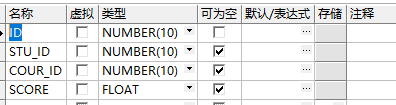
学生选课表stu_cour_tbl2
表所对应的实体类为
Stu.java
//学生实体类

public class Stu {

    //标识属性

    private Integer id;

    //学生名

    private String stuName;

    //选修的课程

    private List<StuCource> stuCources;

    //省略有参构造和无参构造函数,setter/getter方法

}
Course.java
//课程实体类

public class Cource {

    //标识属性

    private Integer id;

    //课程名字

    private String courceName;

    //对应的选课记录

    private  List<StuCource> stuCources;

    //省略有参构造和无参构造函数,setter/getter方法

}
StuCource.java
//选课实体

public class StuCource {

    //标识属性

    private Integer id;

    //对应的学生

    private Stu stu;

    //对应的课程

    private Cource cource;

    //对应的成绩

    private double score;

    //省略有参构造和无参构造函数,setter/getter方法

}
dao组件中
public interface StuDao {

    //获取每个学生选修课程信息以及成绩  包含了学生信息 课程信息 成绩信息

    public List<Stu> getStuCource();

}
StuDao的配置文件StuDao.xml
<?xml version="1.0" encoding="UTF-8" ?>

<!DOCTYPE mapper

  PUBLIC "-//mybatis.org//DTD Mapper 3.0//EN"

  "http://mybatis.org/dtd/mybatis-3-mapper.dtd">

<mapper namespace="com.ghq.model.dao.StuDao">

  <resultMap type="Stu" id="stuMap">

    <id column="sid" property="id"/>

    <result column="stu_name" property="stuName"/>

    <collection property="stuCources" ofType="StuCource">

      <id column="scid" property="id"/>

      <result column="score" property="score"/>

      <association property="cource" javaType="Cource">

        <id column="cid" property="id"/>

        <result column="cour_name" property="courceName"/>

      </association>

    </collection>

  </resultMap>

    <select id="getStuCource" resultMap="stuMap">

        SELECT s.id SID,s.stu_name,c.id cid,c.cour_name,sc.id scid,sc.score

    FROM stu_cour_tbl2 sc,stu_tbl2 s, cour_tbl2 c

    WHERE sc.stu_id(+) = s.id AND sc.cour_id = c.id(+)

    </select>

</mapper>
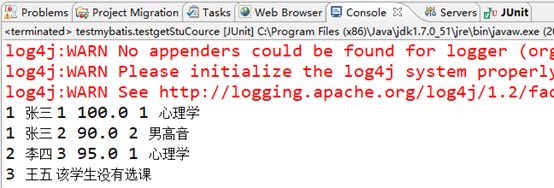
单元测试中的方法
public class testmybatis {

    @Test

    public void testgetStuCource(){

        SqlSession session = MybatisDb.getSession();

        StuDao studao = session.getMapper(StuDao.class);

        List<Stu> stus = studao.getStuCource();

        session.close();

        if (stus != null && stus.size() > 0) {

            for (Stu stu : stus) {

                List<StuCource> stuCources = stu.getStuCources();

                if (stuCources !=null && stuCources.size() > 0) {

                    for (StuCource stuCource : stuCources) {

                        System.out.println(stu.getId()+" "+stu.getStuName()+" "+stuCource.getId()+" "+stuCource.getScore()

                                +" "+stuCource.getCource().getId()+" "+stuCource.getCource().getCourceName());

                    }

                }else {

                    System.out.println(stu.getId()+" "+stu.getStuName()+" 该学生没有选课");

                }

            }

        }else {

            System.out.println("没有学生");

        }

    }

}
MyBatis学习(二)---数据表之间关联的更多相关文章
- linq查询数值为null的问题以及数据表的关联计算问题
说明:下面实例都是我进行项目开发时的真实部分代码,毫无保留 一.数据表的关联计算 //把当前年度的分差计算出来,建立两个关联的数据表 try { using(TransactionScope scop ...
- SpringBoot+Mybatis 自动创建数据表(适用mysql)
Mybatis用了快两年了,在我手上的发展史大概是这样的 第一个阶段 利用Mybatis-Generator自动生成实体类.DAO接口和Mapping映射文件.那时候觉得这个特别好用,大概的过程是这样 ...
- mybatis学习(五)----实现关联表查询
一.一对一的表查询 查询班级表中班级号为1的对应的记录(包括教师的具体信息) 1.首先建立数据表 数据表class和techear,class表中只有一个外键techear_id,sql脚本如下: C ...
- SQL学习之Insert的特殊用法(插入检索出的数据,表之间的数据复制)
1.插入检索出的数据 select * from dbo.Customers_1
- MyBatis学习(二)
前言 昨天的博客简单的记录了MyBatis的起源.作用.配置以及一个简单的查询例子.写到一半的时候,觉得已经学会了MyBatis,可是全写完的时候才发现,如果多个参数查询,如何表的名字与类字段名不一样 ...
- [转] PostgreSQL学习手册(数据表)
from: http://www.cnblogs.com/stephen-liu74/archive/2012/04/23/2290803.html 一.表的定义: 对于任何一种关系型数据库而言,表都 ...
- PostgreSQL学习手册(数据表)<转>
一.表的定义: 对于任何一种关系型数据库而言,表都是数据存储的最核心.最基础的对象单元.现在就让我们从这里起步吧. 1. 创建表: CREATE TABLE products ( ...
- MyBatis学习之多表查询
一对多需求:即一张表class中又含有多张表(teacher,student)内容.现根据class_id 来获取对应的班级信息(包括学生和老师信息) 方式一:嵌套结果 使用嵌套结果映射来处理重复的联 ...
- (原创)mybatis学习二,spring和mybatis的融合
mybatis学习一夯实基础 上文介绍了mybatis的相关知识,这一节主要来介绍mybaits和spring的融合 一,环境搭建 1,jar包下载,下载路径为jar包 2,将包导入到java工程中 ...
随机推荐
- How to write date range query in Nest ElasticSearch client?
Looking at the source code, there are two overloads of the OnField method. When I use the the that t ...
- Spring Boot Cookbook 中文笔记
Spring Boot Cookbook 一.Spring Boot 入门 Spring Boot的自动配置.Command-line Runner RESTful by Spring Boot wi ...
- 聊聊Postgres中的IPC之SI Message Queue
在 PostgreSQL中,每一个进程都有属于自己的共享缓存(shared cache).例如,同一个系统表在不同的进程中都有对应的Cache来缓存它的元组(对于RelCache来说缓存的是一个Rel ...
- python3的嵌套函数
背景 最近在学python3 嵌套函数 顾名思义,即使在函数中还有函数,实现了函数的多级嵌套 def test1(): age = 10 print(age) def test2(): te = 5 ...
- C#-MVC基础-模型(Model)、视图(View)和控制器(Controller)
搜狗百科:http://baike.sogou.com/v25227.htm?fromTitle=MVC MVC全名是Model View Controller,是软件工程中的一种软件架构模式,把软件 ...
- prim /kruskal 最小生成树
#include<iostream> #include<cstdio> #include<cstring> #include<cstdlib> #inc ...
- 【实战】Tomcat管理后台Getshell
一.制作war包 1.xiaoma.jsp压缩成xiaoma.zip格式,然后修改为xiaoma.war 2.修仙之百度大法 二.部署war包(选择文件,上传即可,不啰嗦啦) 三.C刀连接:http: ...
- Mac 10.12安装窗口快速缩放到一定比例的工具Moom
说明:比如想要窗口只占用屏幕的一半时,我们的做法就是手动调节,而这款软件已经有快速按钮点一下即可. 下载: (链接: https://pan.baidu.com/s/1gfguJth 密码: wqjb ...
- try -catch-finally一些要点
try -catch-finally是处理程序异常时使用,当程序正常时,先走try然后到finally语句,不正常时:程序先走try,然后到catch里面的语句,最后到finally;从上面可以看出, ...
- TryParse用法
int.Parse()是一种类型转换:表示将数字内容的字符串转为int类型. 如果字符串为空,则抛出ArgumentNullException异常: 如果字符串内容不是数字,则抛出FormatExce ...