
[转载]Three Trending Computer Vision Research Areas, 从CVPR看接下来几年的CV的发展趋势
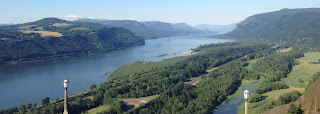

2) Mid-level patch discovery is a hot research topic. Saurabh Singh from CMU introduced this idea in his seminal ECCV 2012 paper, and Carl Doersch applied this idea to large-scale Google Street-View imagery in the “What makes Paris look like Paris?” SIGGRAPH 2012 paper. The idea is to automatically extract mid-level patches (which could be objects, object parts, or just chunks of stuff) from images with the constraint that those are the most informative patches.
Carl Doersch, Saurabh Singh, Abhinav Gupta, Josef Sivic, and Alexei A. Efros. What Makes Paris Look like Paris? In SIGGRAPH 2012. [pdf]
At CVPR 2013, it was evident that the idea of "learning mid-level parts for scenes" is being pursued by other top-tier computer vision research groups. Here are some CVPR 2013 papers which capitalize on this idea:
Blocks that Shout: Distinctive Parts for Scene Classification. Mayank Juneja, Andrea Vedaldi, CV Jawahar, Andrew Zisserman. In CVPR, 2013. [pdf]
Representing Videos using Mid-level Discriminative Patches. Arpit Jain, Abhinav Gupta, Mikel Rodriguez, Larry Davis. CVPR, 2013. [pdf]
Part Discovery from Partial Correspondence. Subhransu Maji, Gregory Shakhnarovich. In CVPR, 2013. [pdf]
3) Deep-learning and feature learning are on the rise within the Computer Vision community.
It seems that everybody at Google Research is working on Deep-learning. Will it solve all vision problems? Is it the one computational ring to rule them all? Personally, I doubt it, but the rising presence of deep learning is forcing every researcher to brush up on their l33t backprop skillz. In other words, if you don't know who Geoff Hinton is, then you are in trouble.
[转载]Three Trending Computer Vision Research Areas, 从CVPR看接下来几年的CV的发展趋势的更多相关文章
- Computer Vision: OpenCV, Feature Tracking, and Beyond--From <<Make Things See>> by Greg
In the 1960s, the legendary Stanford artificial intelligence pioneer, John McCarthy, famously gave a ...
- Computer Vision Tutorials from Conferences (3) -- CVPR
CVPR 2013 (http://www.pamitc.org/cvpr13/tutorials.php) Foundations of Spatial SpectroscopyJames Cogg ...
- paper 156:专家主页汇总-计算机视觉-computer vision
持续更新ing~ all *.files come from the author:http://www.cnblogs.com/findumars/p/5009003.html 1 牛人Homepa ...
- inception_v2版本《Rethinking the Inception Architecture for Computer Vision》(转载)
转载链接:https://www.jianshu.com/p/4e5b3e652639 Szegedy在2015年发表了论文Rethinking the Inception Architecture ...
- (转) WTF is computer vision?
WTF is computer vision? Posted Nov 13, 2016 by Devin Coldewey, Contributor Next Story Someon ...
- Computer Graphics Research Software
Computer Graphics Research Software Helping you avoid re-inventing the wheel since 2009! Last update ...
- Analyzing The Papers Behind Facebook's Computer Vision Approach
Analyzing The Papers Behind Facebook's Computer Vision Approach Introduction You know that company c ...
- Computer Vision Algorithm Implementations
Participate in Reproducible Research General Image Processing OpenCV (C/C++ code, BSD lic) Image man ...
- Computer Vision Resources
Computer Vision Resources Softwares Topic Resources References Feature Extraction SIFT [1] [Demo pro ...
随机推荐
- Configuring Network in CentOS 6.3 Virtual Box + Screenshots
Configuring Network in CentOS 6.3 Virtual Box + Screenshots Posted: May 23, 2013 in Uncategorized Ta ...
- Hibernate ManyToOne, OneToMany的理解
User to Group, Many to One的关系 Test Case 1: session.beginTransaction(); user.setGroup(group); session ...
- 利用cytoscape做网络图
首先做出下面的基因间相互关系图 1.准备sif文件 data.sif 网络数据文件 gene1 pp gene2 gene3 gene4 gene5 gene6 gene7 gene8 gene9 n ...
- 将JSON对象带有格式的写出到文件中
需求:将一个JSON对象写出到文件中,要求文件中的JSON数据带有简单的格式.代码的实现参考了Java算法中的栈处理括号匹配问题.好了,不多说了,下面是代码的实现. 代码: package gemu. ...
- YYCache设计思路及源码学习
设计思路 利用YYCache来进行操作,实质操作分为了内存缓存操作(YYMemoryCache)和硬盘缓存操作(YYDiskCache).内存缓存设计一般是在内存中开辟一个空间用以保存请求的数据(一般 ...
- 微软亚洲实验室一篇超过人类识别率的论文:Delving Deep into Rectifiers: Surpassing Human-Level Performance on ImageNet Classification ImageNet Classification
在该文章的两大创新点:一个是PReLU,一个是权值初始化的方法.下面我们分别一一来看. PReLU(paramter ReLU) 所谓的PRelu,即在 ReLU激活函数的基础上加入了一个参数,看一个 ...
- Asp.Net_Mvc_@Html.xxx()的扩展
/// <summary> /// 生成分类下拉-列表框,选中指定的项 /// </summary> /// <param name="html"&g ...
- 什么是UART中的FIFO
FIFO是先进先出缓冲区的意思,即串口接收到的数据可以先进入FIFO,不必马上进入中断服务程序接收,这样可以节省CPU时间.对于发送数据也一样可以把要发送的数据一起写入FIFO,串口控制器按照写入的顺 ...
- Java-用switch判断季节
import java.util.*;class Demo3 { public static void main(String[] args) { //需求 :输入一个月份 ,判断月份属于哪一个季节 ...
- cocos2d-x的CCAffineTransform相关变换实现原理
稍有opengl或3d基础的都知道平移/旋转/缩放这几个基本模型视图变换的实现原理, 最近看了下cocos2d-x相关部分的实现, 了解了这些实现那些各种坐标变换基本不在话下了, cocos2d-x本 ...