
Thinking in Java——集合(Collection)
一、ArrayList的使用(略)
二、容器的基本概念
(一)、Collection是集合类的基本接口
主要方法:
public interface Collection<E>{

  boolean add(E element);//向集合中添加元素,E代表泛型

  Iterator<E> iterator();//返回实现了Iterator接口的对象

}
关于:Iterator之后讲解。
(二)、实现了Collection的子类:
List:按照顺序插入保存元素。 Set:该容器内不能有重复的元素 Queue:按照队列的规则决定对象的顺序
(三)、Map接口
定义:一组成对的“键值对”对象,使用key查找value
注:Map这是单独的接口,不属于Collection,所以以map结尾的类都不属于Collection
(四)、根据上诉分析使用容器
1、ArrayList向上转型为Collection,并通过Collection添加处理数据。(运用到的技术:父类引用指向子类对象,调用子类的方法)
public class UpToCollection {

    public static void main(String [] args){

        ArrayList<Integer> arrayList = new ArrayList();

        for(int i=0; i<5; ++i){

            arrayList.add(i);

        }

        Collection<Integer> collection = arrayList;

        collection.add(5);

        //这里使用了foreach循环,只要实现了Iterator接口就能够使用foreach

        //Collection没有List的get方法,需要用Iterator来进行遍历

        for(Integer i: collection){

            System.out.println(i);

        }

    }

}
2、添加一组元素
public class AddElementToCollection {

    public static void main(String[]args){

        Collection<Integer> collection = new ArrayList<Integer>(Arrays.asList(1,2,3,4,5,6));

        //知识点1:利用Arrays这个静态类,将数组,或者一列数字转换为List

        //知识点2:ArrayList可以嵌套List创建

        /*知识点3:为什么不可以Collection<Integer> collection =

         * Arrays.asList(1,2,3,4,5,6);,发现创建并没有问题,但是到下文的时候使用

         * collection.addAll(Arrays.asList(datas));是会报错的

         * 原因:因为Arrays.asList(1,2,3,4,5,6)创建的List是固定长度的List

         * 所以是无法执行add()方法的。

         */

        Integer [] datas = {7,8,9,10};

        /*知识点4:必须使用Integer作为类,不能使用int,否则会报错

         *因为之前Collection<Integer> collection,已经将泛型定为Integer

         *所以不能使用引用类型,得到输入的泛型是什么,就需要建立什么类的数组

        */

        collection.addAll(Arrays.asList(datas));

        for(Integer i: collection){

            System.out.println(i);

        }

        //上文为通过Collection往List中添加一组数据(数组,或者自定义的数据),下文介绍另一种方法

        Collections.addAll(collection, 11,12,13,14,15,16);

        Collections.addAll(collection, datas);

        //注:这是Collections类不是Collection类

    }

}
AddElementToCollection
Collection添加元素的方法 优点:方法运行效率快。 缺点:但是需要创建一个Collection类,来作为对象
Collections添加元素的方法 优点:方便,不需要创建Collection类。
3、Collection类型的作用:统一类型添加,删除。。。(统一遍历是由Iterator确定的)
public class CollectionEffect {

    //统一各种容器,只需要一种方法就能添加,删除

    public static void main(String[] args){

        print(fill(new ArrayList<String>()));

        print(fill(new HashSet<String>()));

        print(fill(new HashMap<String,String>()));

    }

    //Collection接口的集合

    public static Collection<String> fill(Collection<String> c){

        c.add("dog");

        c.add("cat");

        c.add("pig");

        return c;

    }

    //重载fill方法,提供Map接口

    public static Map<String,String> fill(Map<String,String> map){

        map.put("dog", "pig");

        map.put("cat","small");

        return map;

    }

    public static void print(Collection<String> c){

    }

    public static void print(Map<String,String> map){

    }

}
CollectionEffect
三、迭代器(Iterator)
作用:统一遍历各种容器
接口方法:
public interface Iterator<E>{

  E next();//获取下一个元素

  boolean hasNext();//查看是否存在下一个元素

  void remove();//移除元素

}
Iterator
注意:1.在使用next()方法前需要使用hasNext();
2.next()和remove()是成对存在的。
使用:
public class UseIterator {

    public static void main(String[]args){

        ArrayList<Integer> arrayList = new ArrayList();

        for(int i=0; i<5; ++i){

            arrayList.add(i);

        }

        //获取Iterator,该方法是从Collection接口继承下来的

        Iterator<Integer> iterator = arrayList.iterator();

        //使用

        while(iterator.hasNext()){

            Integer x = iterator.next();

            System.out.println(x);

            iterator.remove();

        }

    }

}
UseIterator
统一遍历:修改CollectionEffect.java中的print方法,
//...接上文

public static void print(Iterator<String> iterator){

    while(iterator.hasNext()){

        System.out.println(iterator.next());

    }

}
CollectionEffect
四、具体的集合
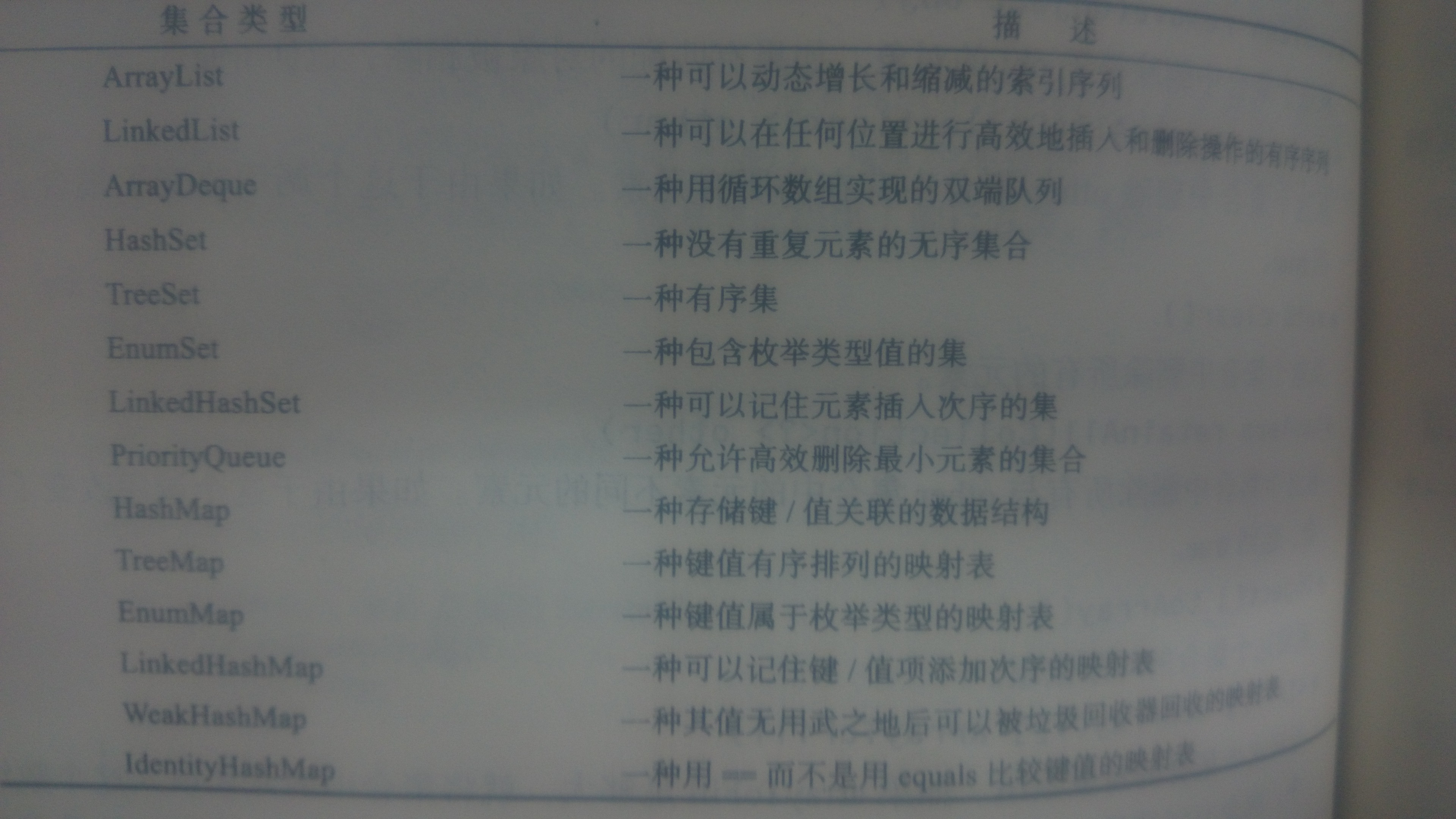
①、ArrayList:可动态增长和缩减的数组,便于搜索,不利于插入和删除。 详解:略。
②、LinkedList:由链表组成的序列,便于插入,和删除,不利于查找。LinkedList还提供了使用其做栈和队列或双端队列的方法。导致LinkedList的Iterator与其他集合不同,所以等会会统一介绍。
让LinkedList实现Stack(已经有了Stack这个类,但是LinkedList可以产生更好的Stack):
public class LinkedListStack<T> {

    private LinkedList<T> mLinkedList;

    public LinkedListStack(){

        mLinkedList = new LinkedList<T>();

    }

    //入栈

    public void push(T view){

        mLinkedList.add(view);

    }

    //获取栈顶元素

    public T peek(){

        return mLinkedList.getFirst();

    }

    //移除栈顶元素

    public T pop(){

        return mLinkedList.removeFirst();

    }

    public boolean isEmpty(){

        return mLinkedList.isEmpty();

    }

    public String toString(){

         return mLinkedList.toString();

    }

}
LinkedListStack
其他暂不实现。
LinkedList的迭代器ListIterator
1、只能用于各种List类的方法。
2、作用:Iterator只能向前移动,ListIterator可以双向移动。
public class UseListIterator {

    public static void main(String[] args){

        LinkedList<Integer> linkedList = new LinkedList<Integer>();

        for(int i=0; i<10; ++i){

            linkedList.add(i);

        }

        //获取ListIterator

        ListIterator<Integer> listIterator = linkedList.listIterator();

        //linkedList.listIterator(3); 让Iterator从第三这个位置开始遍历

        while(listIterator.hasNext()){

            int i = listIterator.next();

            System.out.println(i);

            //新特性 1:能够修改当前位置的数据

            listIterator.set(5);

            //特性2:能够向前移动,并获取数据

            listIterator.hasPrevious();

            listIterator.previous();

        }

    }

}
UseListIterator
③、Set:不保存重复的元素。
散列集(Hasing):读取数据不按照存储数据时候的排序(随机排序),能够快速查找到所需要的对象。
原理:散列表为每个对象计算一个整数,称为散列码。散列码是由对象实例域产生的整数(具体产生的算法不管)、
注:如果是自定义类,就要负责实现这个类的hashCode,自己实现的hashCode方法要与equals方法兼容(就是如果有一个返回true则全都应该返回true)
在JAVA中散列表由链表数组实现(就是有一串数组,每个数组存放的是一个链表),这串数组中的每个位置叫做“桶”。
桶的作用:解决散列码相同的情况、当散列码相同的时候就将该数据放入桶的链表中。之后查询到该桶的时候遍历该桶的链表。
小知识:当插入的数据太多,有可能导致桶被沾满的情况,所以当桶被占用超过75%的时候,就会进行再散列(创建新的表增加桶的数量,将旧表的数据移到新表)。
树集(Tree):是一个有序集合,可以用任何顺序将元素插入到集合中,但遍历取出的时候,每个值自动按照排序后的顺序实现。(每将一个元素添加到树中,都被放置到正确的位置)
问:Tree如何知道希望每个元素怎样排列?
重写Comparator接口,并传入到TreeSet<E>中。
public class UseTreeSet {

    public static void main(String[]args){

        //为TreeSet添加比较的逻辑

        Comparator<Integer> compatator = new Comparator(){

            @Override

            public int compare(Object o1, Object o2) {

                // TODO Auto-generated method stub

                //这里写逻辑

                return 0;

            }

        };

        TreeSet<Integer> treeSet = new TreeSet(compatator);

    }

}
UseTreeSet
所以说:要使用TreeSet的步骤是①、创建类并实重写equal()和hashCode()②、创建Comparator接口,并重写coparator()方法 ③、将Comparator对象传入TreeSet中
队列(Queen):ArrayDeque和LinkedList实现。且这两个类都实现了双端队列(就是在链表的头尾都可进行添加和删除),LinkedList实现了Queue接口ArrayDeque实现了Deque接口。同时还有一个特殊的队列“优先级队列(Priority queue)”,任意插入,按照优先级的排列进行读取。(优先级是跟Tree一样,通过重写Coparator接口来进行排序的,如果没有重写Coparator则进行自然排序——调用对象equal()方法)。
映射表(Map):通过自己设置的键(key)查找对应的值(value)。因为Map不属于Collection那么,如何遍历Map的key,或Map的value,还有key与value同时遍历
1、遍历键的信息
HashMap<String,String> map = new HashMap();

        map.put("123","asda");

        map.put("234","zxczxc");

        map.put("asd", "zxcdd");

        //遍历Map中的所有键

        Set<String> set = map.keySet();//通过获取Set映射表中的所有的键

        //注:该Set不是HashSet也不是TreeSet,只是实现了Set接口的类

        for (String str : set){

            System.out.println(str);

        }
遍历键的信息
2、遍历值的信息
//接上

        //遍历所有值

        Collection<String> collection = map.values();//获取Collection获取值

        for (String str : collection){

            System.out.println(str);

        }
遍历值
3、全部遍历
        //全部遍历

        for (Map.Entry<String,String> mapData : map.entrySet()){

            String key = mapData.getKey();

            String value = mapData.getValue();

        }
五、自定义Collection和Iterator
1、通过继承Collection接口实现方法 缺点:Collection需要重写的方法太多了,需要耗费大量的精力
2、所以JAVA提供了AbstactCollection方法,完成了大部分Collection方法 缺点:当一个类已经继承其他类的时候,必须重写Collection。
3、直接重写Iterator接口。
Thinking in Java——集合(Collection)的更多相关文章
- java集合——Collection接口
Collection是Set,List接口的父类接口,用于存储集合类型的数据. 2.方法 int size():返回集合的长度 void clear():清除集合里的所有元素,将集合长度变为0 Ite ...
- Java 集合Collection与List的详解
1.什么是集合 存储对象的容器,面向对象语言对事物的体现都是以对象的形式,所以为了方便对多个对象的操作,存储对象,集合是存储对象最常用的一种方式. 集合的出现就是为了持有对象.集合中可以存储任意类型的 ...
- Java 集合-Collection接口和迭代器的实现
2017-10-30 00:30:48 Collection接口 Collection 层次结构 中的根接口.Collection 表示一组对象,这些对象也称为 collection 的元素.一些 c ...
- Java集合Collection基本方法
jdk1.7 api中的方法摘要: 参考java集合大全图:https://www.cnblogs.com/xkzhangsanx/p/10889114.html Collection为List.Se ...
- JAVA集合--Collection接口
本文首发于cartoon的博客 转载请注明出处:https://cartoonyu.github.io/cartoon-blog 在概述里面也说过:Collection是jav ...
- 「 深入浅出 」java集合Collection和Map
本系列文章主要对java集合的框架进行一个深入浅出的介绍,使大家对java集合有个深入的理解. 本篇文章主要具体介绍了Collection接口,Map接口以及Collection接口的三个子接口Set ...
- java: 集合collection
collection是集合层次结构中的根接口,一些集合允许重复元素,而其他集合不允许. 有些collection是有序的,而另一些是无序的. JDK不提供此接口的任何直接实现:它提供了更具体的子接口的 ...
- Java集合 Collection、Set、Map、泛型 简要笔记
集合 什么是集合 概念 对象的容器,实现了对对象常用的操作 和数组的区别 数组长度固定,集合长度不固定 数组可以存储基本类型和引用类型,集合只能存储引用类型 位置 java.util.*; Colle ...
- Java 集合Collection——初学者参考,高手慎入(未完待续)
1.集合简介和例子 Collection,集合.和数学定义中的集合类似,把很多元素放在一个容器中,方便我们存放结果/查找等操作. Collection集合实际上是很多形式集合的一个抽象. 例如十九大就 ...
随机推荐
- spring2.5IOC控制反转详解
spring2.5IOC控制反转详解 19. 五 / J2EE / 一条评论 基本的代码结构 1 IOC包下 基本的spring创建对象 将类添加到配置文件中,由容器创建. Source code ...
- [转]Cocos2d-x建工程时避免copy文件夹和库
原文链接: http://www.cnblogs.com/andyque/archive/2011/09/27/2192920.html 在上一篇教程中,我们演示了如何使用VS2010来新建一个工程 ...
- python运维开发(二十)----models操作、中间件、缓存、信号、分页
内容目录 select Form标签数据库操作 models操作F/Q models多对多表操作 Django中间件 缓存 信号 分页 select Form标签补充 在上一节中我们可以知道Form标 ...
- 负载均衡集群之LVS的DR模型详解(Diretor Routing)
LVS的默认模型:默认模型DR DR模型原理图--> 在讲DR模型要点之前,需要了解网络的相关知识: 接收的报文拆解顺序:帧(MAC)-->数据包(IP)-->数据报文(port) ...
- opencv + numpy for python
OpenCV的全称是:Open Source Computer Vision Library.OpenCV是一个基于(开源)发行的跨平台计算机视觉库,可以运行在Linux.Windows和Mac OS ...
- 嵌入式系统USB CDROM虚拟光驱驱动程序开发
带U盘功能的的USB接口设备已经越来越常见了.如果能够把产品说明书或者产品设备驱动程序做成一个USB CDROM,那该多方便.假设:你已经有了USB mass storage驱动.你的任务是在此基础上 ...
- bzoj2100 [Usaco2010 Dec]Apple Delivery
Description Bessie has two crisp red apples to deliver to two of her friends in the herd. Of course, ...
- LeeCode(Database)-Employees Earning More Than Their Managers
The Employee table holds all employees including their managers. Every employee has an Id, and there ...
- cocos2dx lua 学习笔记(二)
安装开发环境 sublime - http://www.sublimetext.com/2 package control - http://packagecontrol.io/installatio ...
- H5实现图片优化上传
一,HTML部分 <input type="file" accept="images/*"> <input class="url&q ...