
Spring Security探究之路之开始
前言
在Spring Security介绍中,我们分析到了根据请求获取匹配的SecurityFilterChain,这个类中包含了一组Filter
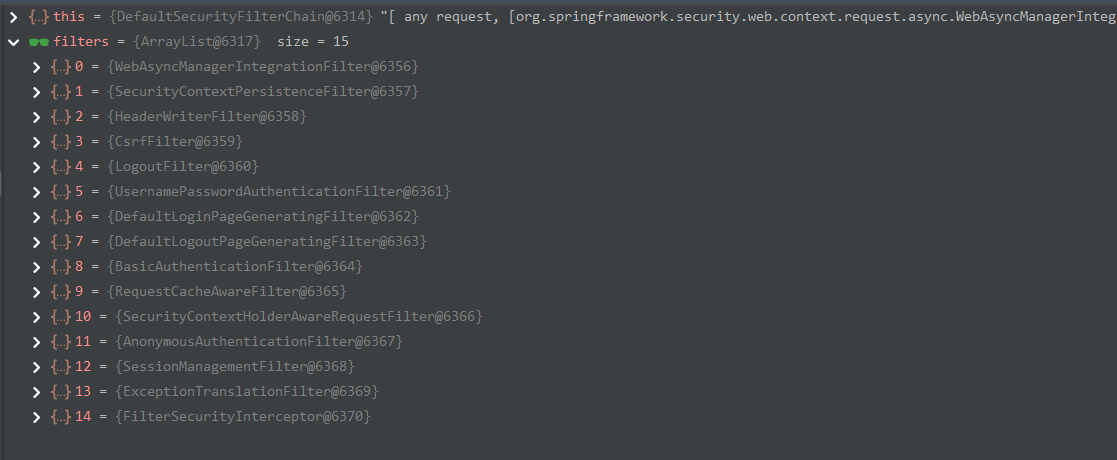
接下来我们从这些Filter开始探究之旅
Spring Security Filter简介
AuthenticationFilter中的attemptAuthentication方法调用AuthenticationManager(interface)的authenticate方法,AuthenticationManager的实际是现实ProvideManager
ProviderManager 有一个配置好的认证提供者列表(AuthenticationProvider), ProviderManager 会把收到的 UsernamePasswordAuthenticationToken 对象传递给列表中的每一个 AuthenticationProvider 进行认证.
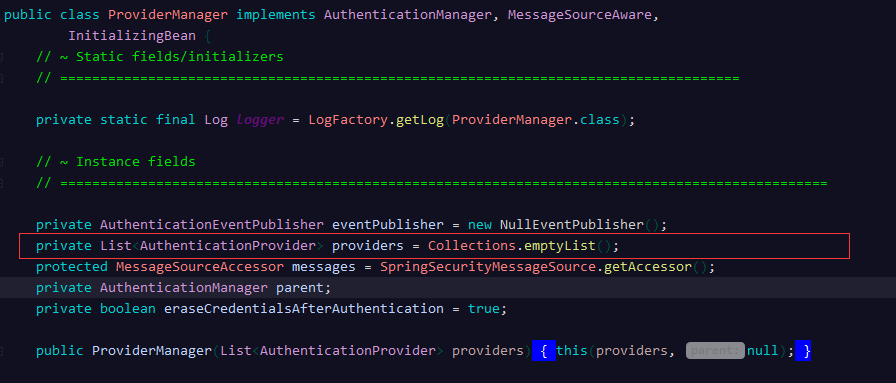
认证过程
AuthenticationProvider接口
public interface AuthenticationProvider {

	// ~ Methods

	// ========================================================================================================

	/**

	 * Performs authentication with the same contract as

	 * {@link org.springframework.security.authentication.AuthenticationManager#authenticate(Authentication)}

	 * .

	 *

	 * @param authentication the authentication request object.

	 *

	 * @return a fully authenticated object including credentials. May return

	 * <code>null</code> if the <code>AuthenticationProvider</code> is unable to support

	 * authentication of the passed <code>Authentication</code> object. In such a case,

	 * the next <code>AuthenticationProvider</code> that supports the presented

	 * <code>Authentication</code> class will be tried.

	 *

	 * @throws AuthenticationException if authentication fails.

	 */

	Authentication authenticate(Authentication authentication)

			throws AuthenticationException;

	/**

	 * Returns <code>true</code> if this <Code>AuthenticationProvider</code> supports the

	 * indicated <Code>Authentication</code> object.

	 * <p>

	 * Returning <code>true</code> does not guarantee an

	 * <code>AuthenticationProvider</code> will be able to authenticate the presented

	 * instance of the <code>Authentication</code> class. It simply indicates it can

	 * support closer evaluation of it. An <code>AuthenticationProvider</code> can still

	 * return <code>null</code> from the {@link #authenticate(Authentication)} method to

	 * indicate another <code>AuthenticationProvider</code> should be tried.

	 * </p>

	 * <p>

	 * Selection of an <code>AuthenticationProvider</code> capable of performing

	 * authentication is conducted at runtime the <code>ProviderManager</code>.

	 * </p>

	 *

	 * @param authentication

	 *

	 * @return <code>true</code> if the implementation can more closely evaluate the

	 * <code>Authentication</code> class presented

	 */

    // 支持的Authentication(interface)

    /**

    |-Authentication

      |--UsernamePassowrdAuthentication

      |--CasAuthentication

      |-- ...........

    **/

	boolean supports(Class<?> authentication);

}
ProviderManager的authencate方法:
// 依次调用AuthencationProvider

public Authentication authenticate(Authentication authentication)

			throws AuthenticationException {

		Class<? extends Authentication> toTest = authentication.getClass();

		AuthenticationException lastException = null;

		Authentication result = null;

		boolean debug = logger.isDebugEnabled();

    	// 遍历 AuthenticationProvider

		for (AuthenticationProvider provider : getProviders()) {

            // 当前的AuthenticationProvider是否支持Authentication

			if (!provider.supports(toTest)) {

				continue;

			}

			if (debug) {

				logger.debug("Authentication attempt using "

						+ provider.getClass().getName());

			}

			try {

				result = provider.authenticate(authentication);

                // 认证结果中如果不为null(验证成功),则遍历结束,拷贝认证后的结果到authentication对象

				if (result != null) {

					copyDetails(authentication, result);

					break;

				}

			}

			catch (AccountStatusException e) {

				prepareException(e, authentication);

				// SEC-546: Avoid polling additional providers if auth failure is due to

				// invalid account status

				throw e;

			}

			catch (InternalAuthenticationServiceException e) {

				prepareException(e, authentication);

				throw e;

			}

			catch (AuthenticationException e) {

				lastException = e;

			}

		}

		if (result == null && parent != null) {

			// Allow the parent to try.

			try {

				result = parent.authenticate(authentication);

			}

			catch (ProviderNotFoundException e) {

				// ignore as we will throw below if no other exception occurred prior to

				// calling parent and the parent

				// may throw ProviderNotFound even though a provider in the child already

				// handled the request

			}

			catch (AuthenticationException e) {

				lastException = e;

			}

		}

		if (result != null) {

			if (eraseCredentialsAfterAuthentication

					&& (result instanceof CredentialsContainer)) {

				// Authentication is complete. Remove credentials and other secret data

				// from authentication

				((CredentialsContainer) result).eraseCredentials();

			}

			eventPublisher.publishAuthenticationSuccess(result);

			return result;

		}

		// Parent was null, or didn't authenticate (or throw an exception).

		if (lastException == null) {

			lastException = new ProviderNotFoundException(messages.getMessage(

					"ProviderManager.providerNotFound",

					new Object[] { toTest.getName() },

					"No AuthenticationProvider found for {0}"));

		}

		prepareException(lastException, authentication);

		throw lastException;

	}
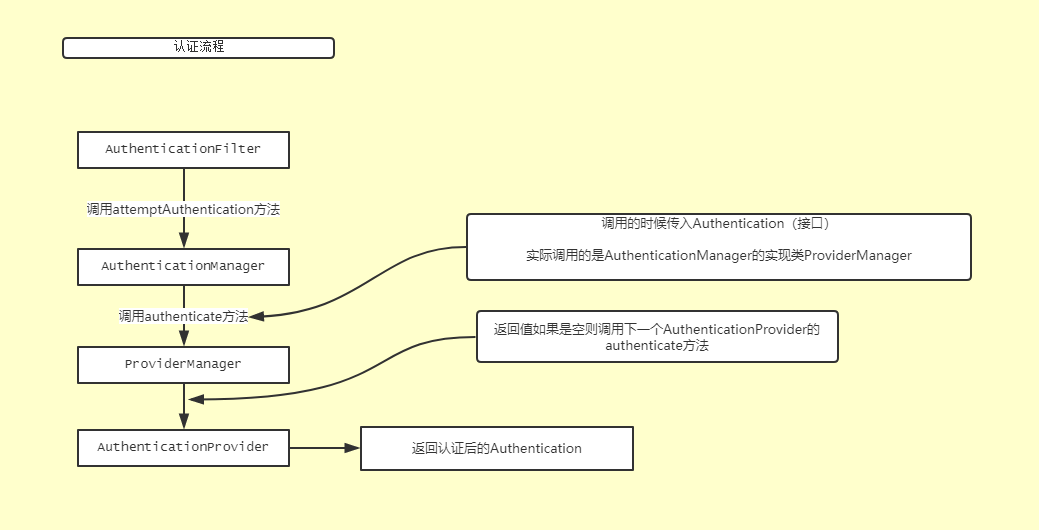
授权
前面有filter处理了登录问题,接下来是否可访问指定资源的问题就由FilterSecurityInterceptor来处理了。而FilterSecurityInterceptor是用了AccessDecisionManager来进行鉴权。
来看看他干了什么
/**

	 * Method that is actually called by the filter chain. Simply delegates to the

	 * {@link #invoke(FilterInvocation)} method.

	 *

	 * @param request the servlet request

	 * @param response the servlet response

	 * @param chain the filter chain

	 *

	 * @throws IOException if the filter chain fails

	 * @throws ServletException if the filter chain fails

	 */

public void doFilter(ServletRequest request, ServletResponse response,

                     FilterChain chain) throws IOException, ServletException {

    FilterInvocation fi = new FilterInvocation(request, response, chain);

    invoke(fi);

}

public void invoke(FilterInvocation fi) throws IOException, ServletException {

    if ((fi.getRequest() != null)

        && (fi.getRequest().getAttribute(FILTER_APPLIED) != null)

        && observeOncePerRequest) {

        // filter already applied to this request and user wants us to observe

        // once-per-request handling, so don't re-do security checking

        fi.getChain().doFilter(fi.getRequest(), fi.getResponse());

    }

    else {

        // first time this request being called, so perform security checking

        if (fi.getRequest() != null && observeOncePerRequest) {

            fi.getRequest().setAttribute(FILTER_APPLIED, Boolean.TRUE);

        }

        // 调用前

        // 该过程中会调用 AccessDecisionManager 来验证当前已认证成功的用户是否有权限访问该资源

        InterceptorStatusToken token = super.beforeInvocation(fi);

        try {

            fi.getChain().doFilter(fi.getRequest(), fi.getResponse());

        }

        finally {

            super.finallyInvocation(token);

        }

        // 调用后

        super.afterInvocation(token, null);

    }

}
Spring Security探究之路之开始的更多相关文章
- spring security 关于 http.sessionManagement().maximumSessions(1);的探究
1.前言 spring security 支持对session的管理 , http.sessionManagement().maximumSessions(1);的意思的开启session管理,ses ...
- spring security 4 filter 顺序及作用
Spring Security 有两个作用:认证和授权 一.Srping security 4 filter 别名及顺序 spring security 4 标准filter别名和顺序,因为经常要用就 ...
- 从源码看Spring Security之采坑笔记(Spring Boot篇)
一:唠嗑 鼓捣了两天的Spring Security,踩了不少坑.如果你在学Spring Security,恰好又是使用的Spring Boot,那么给我点个赞吧!这篇博客将会让你了解Spring S ...
- Spring Security OAuth2实现单点登录
1.概述 在本教程中,我们将讨论如何使用 Spring Security OAuth 和 Spring Boot 实现 SSO(单点登录). 本示例将使用到三个独立应用 一个授权服务器(中央认证机制) ...
- Spring Security +Oauth2 +Spring boot 动态定义权限
Oauth2介绍:Oauth2是为用户资源的授权定义了一个安全.开放及简单的标准,第三方无需知道用户的账号及密码,就可获取到用户的授权信息,并且这是安全的. 简单的来说,当用户登陆网站的时候,需要账号 ...
- Spring Security 入门原理及实战
目录 从一个Spring Security的例子开始 创建不受保护的应用 加入spring security 保护应用 关闭security.basic ,使用form表单页面登录 角色-资源 访问控 ...
- Ajax登陆,使用Spring Security缓存跳转到登陆前的链接
Spring Security缓存的应用之登陆后跳转到登录前源地址 什么意思? 用户访问网站,打开了一个链接:(origin url)起源链接 请求发送给服务器,服务器判断用户请求了受保护的资源. 由 ...
- 笔记43 Spring Security简介
基于Spittr应用 一.Spring Security简介 Spring Security是为基于Spring的应用程序提供声明式安全保护的安全 性框架.Spring Security提供了完整的安 ...
- Spring Security原理篇(一) 启动原理
1.概述 spring security有参考的中文翻译文档https://springcloud.cc/spring-security-zhcn.html 在学习spring security的时候 ...
随机推荐
- 初识python: 自定义函数
什么是函数? 函数是组织好的,可重复使用的,用来实现单一,或相关联功能的代码段.函数能提高应用的模块性,和代码的重复利用率. 函数的定义方法: def test(x): '函数定义方法' x+=1 r ...
- 基于CentOS7.x gitlab环境搭建,卸载,汉化 --汉化篇
gitlab环境搭建,卸载,汉化--汉化篇 注意gitlab的版本需和汉化版本一致 安装git yum install -y git 下载最新的汉化包 cd git clone https://git ...
- mysql5.7初始化密码报错 ERROR 1820 (HY000): You must reset your password using ALTER USER statement
mysql初始化密码常见报错问题 1,mysql5.6是密码为空直接进入数据库的,但是mysql5.7就需要初始密码 cat /var/log/mysqld.log | grep password 2 ...
- 基于LNMP环境的Zabbix监控安装
一.准备LNMP环境 1.使用putty或类似的SSH工具登陆VPS或服务器: 登陆后运行:screen -S lnmp 如果提示screen: command not found 命令不存在可以执行 ...
- Backbone.js 0.9.2 源码分析收藏
Backbone 为复杂Javascript应用程序提供模型(models).集合(collections).视图(views)的结构.其中模型用于绑定键值数据和自定义事件:集合附有可枚举函数的丰富A ...
- Jarvis OJ--PHPINFO
一道浙大的题目 题目地址:http://web.jarvisoj.com:32784 拿到这道题目, 是一道反序列化的题目,题目源码很简单,当创建OowoO()这个类的对象时,会自动调用__const ...
- WebRTC本地选择codec(web本地模拟)
视频编码后,再进行发送.WebRTC建立视频连接前,可以选择codec.一般来说支持多种codec,以VP8和H264为代表. Codec: 编码译码器,编解码器 示例代码 写一个示例,用户可以在发送 ...
- JVM调优-1
JVM运行参数 在jvm中有很多的参数可以进行设置,这样可以让jvm在各种环境中都能够高效的运行.绝大部分的参数保持默认即可. 三种参数类型 标准参数 -help -version -X参数(非标准参 ...
- STC8H开发(五): SPI驱动nRF24L01无线模块
目录 STC8H开发(一): 在Keil5中配置和使用FwLib_STC8封装库(图文详解) STC8H开发(二): 在Linux VSCode中配置和使用FwLib_STC8封装库(图文详解) ST ...
- MacBookPro2021 M1-MAX电脑问题锦集
MacBook2021 M1-MAXPro电脑问题锦集 问题1: 开启硬盘加密,开机闪屏 问题详述: 在系统偏好设置中,打开安全与隐私,在弹出窗口中切换到第二个页签(文件保险箱),启用文件保险箱功能, ...