
【Java】 大话数据结构(5) 线性表之双向链表
本文根据《大话数据结构》一书,实现了Java版的双向链表。
在每个数据结点中都有两个指针,分别指向直接后继和直接前驱,这样的链表称为双向链表。
双向链表的结构如图所示:
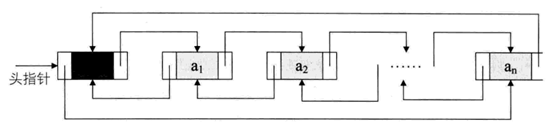
- 查找元素可以根据元素的位置,分别沿正向和反向查找。
双向链表实现程序:
package DuLinkList;

public class DuLinkList<E> {

	private Node<E> head;

	private int count;

	/**

	 * 结点

	 */

	class Node<E> {

		E data;

		Node<E> prior;

		Node<E> next;

		public Node(E data, Node<E> prior, Node<E> next) {

			this.data = data;

			this.prior = prior;

			this.next = next;

		}

	}

	/**

	 * 线性表的初始化

	 */

	public DuLinkList() {

		head = new Node<E>(null, null, null);

		head.prior = head.next = head;

		count = 0;

	}

	/**

	 * 获取第i个元素

	 */

	public Node<E> getElement(int i) {

		if (count == 0)

			throw new RuntimeException("空表,无法查找!");

		if (i < 1 || i > count)

			throw new RuntimeException("查找位置错误!");

		Node<E> node = head.next;

		for (int j = 1; j < i; j++) {

			node = node.next;

		}

		return node;

	}

	/**

	 * 在第i个位置插入元素

	 */

	public void listInsert(int i, E data) {

		if (i < 1 || i > count + 1)

			throw new RuntimeException("插入位置错误!");

		Node<E> node = new Node<E>(data, null, null);

		if (i == 1) {

			node.next = head.next;

			node.prior = head;

			head.next.prior = node;

			head.next = node;

		} else {

			Node<E> pNode = getElement(i - 1);

			node.next = pNode.next;

			node.prior = pNode;

			pNode.next.prior = node;

			pNode.next = node;

		}

		count++;

	}

	/**

	 * 删除第i个元素

	 */

	public E listDelete(int i) {

		if (i < 1 || i > count)

			throw new RuntimeException("删除位置错误!");

		Node<E> node = getElement(i);

		E e = node.data;

		if (i == 1) {

			head.next = node.next;

			node.next.prior = node.prior;

			node = null;

		} else {

			node.next.prior = node.prior;

			node.prior.next = node.next;

			node = null;

		}

		count--;

		return e;

	}

	public int listLength() {

		return count;

	}

}
测试程序:
package DuLinkList;

public class DuLinkListTest {

	public static void main(String[] args) {

		DuLinkList<Student> students = new DuLinkList<Student>();

		System.out.println("——————————插入1到5,并读取内容——————————");

		Student[] stus = { new Student("小A", 11), new Student("小B", 12), new Student("小C", 13), new Student("小D", 14),

				new Student("小E", 151) };

		for (int i = 1; i <= 5; i++)

			students.listInsert(i, stus[i - 1]);

		System.out.println("表长:" + students.listLength());

		Student stu;

		for (int i = 1; i <= 5; i++) {

			stu = students.getElement(i).data;

			System.out.println("第" + i + "个位置为:" + stu.name);

		}

		System.out.println("——————————删除小A、小E——————————");

		stu = students.listDelete(1);

		System.out.println("已删除:" + stu.name);

		stu = students.listDelete(4);

		System.out.println("已删除:" + stu.name);

		System.out.println("当前表长:" + students.listLength());

		for (int i = 1; i <= students.listLength(); i++) {

			stu = students.getElement(i).data;

			System.out.println("第" + i + "个位置为:" + stu.name);

		}

	}

}

class Student {

	public Student(String name, int age) {

		this.name = name;

		this.age = age;

	}

	String name;

	int age;

}
——————————插入1到5,并读取内容——————————

表长:5

第1个位置为:小A

第2个位置为:小B

第3个位置为:小C

第4个位置为:小D

第5个位置为:小E

——————————删除小A、小E——————————

已删除:小A

已删除:小E

当前表长:3

第1个位置为:小B

第2个位置为:小C

第3个位置为:小D
DuLinkListTest
——————————————————————————
在阅读过他人的博客后,发现自己的查找方法没有利用好双链表的特性,重写查找方法如下:
	/**

	 * 获取第i个元素

	 */

	public Node<E> getElement(int i) {

		if (count == 0)

			throw new RuntimeException("空表,无法查找!");

		if (i < 1 || i > count)

			throw new RuntimeException("查找位置错误!");

		if (i <= count / 2) { // 正向查找

			Node<E> node = head.next;

			for (int j = 1; j < i; j++) {

				node = node.next;

			}

			return node;

		} else {             // 反向查找

			Node<E> node = head.prior;

			int k = count - i;

			for (int j = 0; j < k; j++) {

				node = node.prior;

			}

			return node;

		}

	}
本文中只编写了查找和删除部分的程序,完整的双向链表程序可参阅这篇博客:数组、单链表和双链表介绍 以及 双向链表的C/C++/Java实现
【Java】 大话数据结构(5) 线性表之双向链表的更多相关文章
- 【Java】 大话数据结构(1) 线性表之顺序存储结构
本文根据<大话数据结构>一书,实现了Java版的顺序存储结构. 顺序存储结构指的是用一段地址连续的存储单元一次存储线性表的数据元素,一般用一维数组来实现. 书中的线性表抽象数据类型定义如 ...
- 【Java】 大话数据结构(2) 线性表之单链表
本文根据<大话数据结构>一书,实现了Java版的单链表. 每个结点中只包含一个指针域的链表,称为单链表. 单链表的结构如图所示: 单链表与顺序存储结构的对比: 实现程序: package ...
- 【Java】 大话数据结构(3) 线性表之静态链表
本文根据<大话数据结构>一书,实现了Java版的静态链表. 用数组描述的链表,称为静态链表. 数组元素由两个数据域data和cur组成:data存放数据元素:cur相当于单链表中的next ...
- 【Java】 大话数据结构(4) 线性表之循环链表
本文稍微介绍了一下循环链表. 将单链表终端结点的指针域由空指针改为指向头结点,形成一个环,这种头尾相接的单链表称为循环列表. 循环列表的结构如下图所示: 循环链表的优点:可以从任意一个结点出发,遍历所 ...
- [数据结构 - 第3章] 线性表之双向链表(C语言实现)
一.什么是双向链表? 双向链表(double linked list)是在单链表的每个结点中,再设置一个指向其前驱结点的指针域.所以在双向链表中的结点都有两个指针域,一个指向直接后继,另一个指向直接前 ...
- c/c++ 线性表之双向链表
c/c++ 线性表之双向链表 线性表之双向链表 不是存放在连续的内存空间,链表中的每个节点的next都指向下一个节点,每个节点的before都指向前一个节点,最后一个节点的下一个节点是NULL. 真实 ...
- 用C#学习数据结构之线性表
什么是线性表 线性表是最简单.最基本.最常用的数据结构.线性表是线性结构的抽象(Abstract),线性结构的特点是结构中的数据元素之间存在一对一的线性关系.这种一对一的关系指的是数据元素之间的位置关 ...
- 数据结构之线性表(python版)
数据结构之线性表(python版) 单链表 1.1 定义表节点 # 定义表节点 class LNode(): def __init__(self,elem,next = None): self.el ...
- C语言数据结构-顺序线性表的实现-初始化、销毁、长度、查找、前驱、后继、插入、删除、显示操作
1.数据结构-顺序线性表的实现-C语言 #define MAXSIZE 100 //结构体定义 typedef struct { int *elem; //基地址 int length; //结构体当 ...
随机推荐
- luogu1084 [NOIp2012]疫情控制 (二分答案+倍增+dfs序)
先二分出一个时间,把每个军队倍增往上跳到不能再跳 然后如果它能到1号点,就记下来它跳到1号点后剩余的时间:如果不能,就让它就地扎根,记一记它覆盖了哪些叶节点(我在这里用了dfs序+差分,其实直接dfs ...
- (转)JDK工具-javadoc命令
背景:最近在学习java基础知识,看到文档注释部分,一种是在dos命令下生成api文件,另一种是在eclipse下生成api文件.dos方式在<疯狂java讲义>中有详细的说明,eclip ...
- 在c语言中嵌入汇编语句,对于我来说相当难。
今天早上在csdn论坛上看到一个帖子http://topic.csdn.net/u/20120917/14/82f42e17-977a-4824-95bd-7b79db15d283.html:“C语言 ...
- 基于CMS的组件复用实践
目前前端项目大多基于Vue.React.Angular等框架来实现,这一类框架都有一个明显的特点:基于模块化以及组件化思维.所以,开发者在使用上述框架时,实际上是在写一个一个的组件,并且组件与组件之间 ...
- bzoj千题计划267:bzoj3129: [Sdoi2013]方程
http://www.lydsy.com/JudgeOnline/problem.php?id=3129 如果没有Ai的限制,就是隔板法,C(m-1,n-1) >=Ai 的限制:m减去Ai &l ...
- PythonCharm 配置本地反向代理激活
以下方法仅做学习使用,如果条件允许,请自行购买正版软件,做开发的都知道软件开发出来不容易,能够支持就支持正版吧 首先去官网 下载 自己需要的 PYCHARM 版本 安装完启动会提示要激活, 选择 li ...
- JavaScript继承详解(四)
在本章中,我们将分析Douglas Crockford关于JavaScript继承的一个实现 - Classical Inheritance in JavaScript. Crockford是Java ...
- 如何使用ASP.NET开发基于推技术的聊天室?
public class Content : System.Web.UI.Page{private void Page_Load(object sender, System.EventArgs e){ ...
- 关于Asp.Net中的编程实现下载
经常在论坛看见有人求Asp.Net中编程实现下载的代码,有些还希望能断点续传什么的.其实问题的关键在于权限.B/S和C/S不仅仅是外观上的区别而已. 下载,顾名思义是客户端要下,所以载.你硬塞給人家那 ...
- [机器学习&数据挖掘]SVM---核函数
1.核函数概述: 核函数通俗的来说是通过一个函数将向量的低维空间映射到一个高维空间,从而将低维空间的非线性问题转换为高维空间的线性问题来求解,从而再利用之前说的一系列线性支持向量机,常用的核函数如下: ...