
源码分析(5)-ArrayList、Vector和LinkedList(JDK1.8)
一、概述
1、线程安全:ArrayList和LinkedList非线程安全的、Vector线程安全的。
2、底层数据结构:ArrayList和Vector底层数据结构是数组;LinkedList双向链表。
3、时间复杂度是否受插入和删除元素位置影响:ArrayList和Vector受影响,add(E e)方法时间复杂度O(1)和add(int index, E element)方法时间复杂度O(n-index);LinkedList受影响,add(E e)方法时间复杂度O(1)和add(int index, E element)方法时间复杂度O(n)。
4、是否支持随机访问:ArrayList和Vector支持;LinkedList不支持。
5、内存空间占用:ArrayList和Vector空间浪费主要体现在在list列表的结尾会预留一定的容量空间;LinkedList空间花费则体现在每一个元素都需要消耗更多的空间(因为要存放直接后继和直接前驱以及数据)。
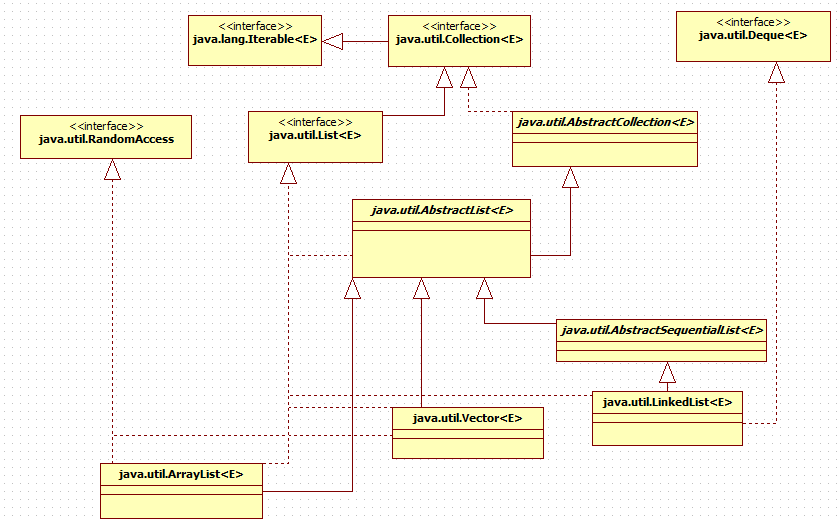
二、集合UML类图
ArrayList和LinkedList继承和实现相同,LinkedList实现java.util.Deque<E>接口和继承java.util.AbstractSequentialList<E>抽象类。
三、ArrayList源码分析
1、重要成员变量
//数组,存储数据

transient Object[] elementData;

//数组长度

private int size;
//数组结构变更次数
protected transient int modCount = 0;
2、插入
//添加元素

public boolean add(E e) {

        ensureCapacityInternal(size + 1);//确认容量足够

        elementData[size++] = e;

        return true;

}

private void ensureCapacityInternal(int minCapacity) {

        ensureExplicitCapacity(calculateCapacity(elementData, minCapacity));

}

//计算容量

private static int calculateCapacity(Object[] elementData, int minCapacity) {

        if (elementData == DEFAULTCAPACITY_EMPTY_ELEMENTDATA) {

            return Math.max(DEFAULT_CAPACITY, minCapacity);//初始化容量10,返回初始容量和需要最小容量选择最大值

        }

        return minCapacity;

    }

//

private void ensureExplicitCapacity(int minCapacity) {

        modCount++;

        // overflow-conscious code

        if (minCapacity - elementData.length > 0)//最小需要容量大于数组长度,进行扩容

            grow(minCapacity);

}

//扩容

private void grow(int minCapacity) {

        // overflow-conscious code

        int oldCapacity = elementData.length;

        int newCapacity = oldCapacity + (oldCapacity >> 1);扩容1.5倍

        if (newCapacity - minCapacity < 0)//扩容后容量和需要的最小容量

            newCapacity = minCapacity;

        if (newCapacity - MAX_ARRAY_SIZE > 0)

            newCapacity = hugeCapacity(minCapacity);//设置最大容量

        // minCapacity is usually close to size, so this is a win:

        elementData = Arrays.copyOf(elementData, newCapacity);//复制数组

}
//指定位置添加数组

public void add(int index, E element) {

        rangeCheckForAdd(index);

        ensureCapacityInternal(size + 1);  // Increments modCount!!

        System.arraycopy(elementData, index, elementData, index + 1, size - index);//复制插入数组

        elementData[index] = element;

        size++;

}
3、删除
//删除元素

public E remove(int index) {

        rangeCheck(index);

        modCount++;

        E oldValue = elementData(index);

        int numMoved = size - index - 1;

        if (numMoved > 0)

            System.arraycopy(elementData, index+1, elementData, index, numMoved);数组复制,index位置以后的元素前移1个位置

        elementData[--size] = null; // clear to let GC do its work

        return oldValue;

}
四、Vector源码分析
成员方法和ArrayList相似,不同之处在于方法都是synchronized同步锁修饰。
1、重要成员变量
//数组,存储数据和ArrayList相同

protected Object[] elementData;

//数组长度,等同于ArrayList的size

protected int elementCount;

//扩容量

protected int capacityIncrement;
2、插入
//添加元素

    public synchronized boolean add(E e) {

        modCount++;

        ensureCapacityHelper(elementCount + 1);//确保容量

        elementData[elementCount++] = e;//尾部添加元素

        return true;

    }

//

    private void ensureCapacityHelper(int minCapacity) {

        // overflow-conscious code

        if (minCapacity - elementData.length > 0)

            grow(minCapacity);//扩容

    }

//

    private void grow(int minCapacity) {

        // overflow-conscious code

        int oldCapacity = elementData.length;

        int newCapacity = oldCapacity + ((capacityIncrement > 0) ? capacityIncrement : oldCapacity);//默认扩容2倍

        if (newCapacity - minCapacity < 0)

            newCapacity = minCapacity;

        if (newCapacity - MAX_ARRAY_SIZE > 0)

            newCapacity = hugeCapacity(minCapacity);

        elementData = Arrays.copyOf(elementData, newCapacity);//复制数组

    }
五、LinkedList源码分析
1、重要成员变量
//双向链表节点长度

transient int size = 0;

//头结点

transient Node<E> first;

//尾结点

transient Node<E> last;
2、数据结构
    private static class Node<E> {

        E item;//数据

        Node<E> next;//下一个节点

        Node<E> prev;//前一个节点

        Node(Node<E> prev, E element, Node<E> next) {

            this.item = element;

            this.next = next;

            this.prev = prev;

        }

    }
3、插入
  //插入到头部

    public void addFirst(E e) {

        linkFirst(e);

    }

//

    private void linkFirst(E e) {

        final Node<E> f = first;//头结点

        final Node<E> newNode = new Node<>(null, e, f);

        first = newNode;

        if (f == null)//头结点为空

            last = newNode;

        else

            f.prev = newNode;//原头结点的前一个节点指向新节点

        size++;

        modCount++;

    }
//尾部添加节点

    public void addLast(E e) {

        linkLast(e);

    }

//

    void linkLast(E e) {

        final Node<E> l = last;//尾结点

        final Node<E> newNode = new Node<>(l, e, null);

        last = newNode;

        if (l == null)//尾结点为空,此时头尾节点都是空

            first = newNode;

        else

            l.next = newNode;//尾结点执行新节点

        size++;

        modCount++;

    }
 //插入节点默认在尾部添加

    public boolean add(E e) {

        linkLast(e);

        return true;

    }
//指定位置添加节点

    public void add(int index, E element) {

        checkPositionIndex(index);

        if (index == size)

            linkLast(element);//尾部添加节点

        else

            linkBefore(element, node(index));

    }

//

    void linkBefore(E e, Node<E> succ) {

        // assert succ != null;

        final Node<E> pred = succ.prev;

        final Node<E> newNode = new Node<>(pred, e, succ);

        succ.prev = newNode;

        if (pred == null)

            first = newNode;

        else

            pred.next = newNode;

        size++;

        modCount++;

    }
//

    Node<E> node(int index) {

        // assert isElementIndex(index);

        if (index < (size >> 1)) {//插入位置小于0.5*size,正向遍历

            Node<E> x = first;

            for (int i = 0; i < index; i++)//查询待插入位置节点

                x = x.next;

            return x;

        } else {

            Node<E> x = last;

            for (int i = size - 1; i > index; i--)//逆向遍历

                x = x.prev;

            return x;

        }

    }
4、删除
//删除指定位置元素

    public E remove(int index) {

        checkElementIndex(index);

        return unlink(node(index));//遍历查询index位置元素

    }

//

    E unlink(Node<E> x) {//删除数据

        // assert x != null;

        final E element = x.item;

        final Node<E> next = x.next;

        final Node<E> prev = x.prev;

        if (prev == null) {

            first = next;

        } else {

            prev.next = next;

            x.prev = null;

        }

        if (next == null) {

            last = prev;

        } else {

            next.prev = prev;

            x.next = null;

        }

        x.item = null;

        size--;

        modCount++;

        return element;

    }
其他方法不再讲解。
源码分析(5)-ArrayList、Vector和LinkedList(JDK1.8)的更多相关文章
- 集合源码分析[3]-ArrayList 源码分析
历史文章: Collection 源码分析 AbstractList 源码分析 介绍 ArrayList是一个数组队列,相当于动态数组,与Java的数组对比,他的容量可以动态改变. 继承关系 Arra ...
- java读源码 之 list源码分析(ArrayList)---JDK1.8
java基础 之 list源码分析(ArrayList) ArrayList: 继承关系分析: public class ArrayList<E> extends AbstractList ...
- 【集合框架】JDK1.8源码分析之ArrayList详解(一)
[集合框架]JDK1.8源码分析之ArrayList详解(一) 一. 从ArrayList字表面推测 ArrayList类的命名是由Array和List单词组合而成,Array的中文意思是数组,Lis ...
- 源码分析(2)-LinkedHashMap(JDK1.8)
1.概述 LinkedHashMap继承自HashMap:在HashMap基础上,通过维护一条双向链表,解决了HashMap键值对遍历顺序和插入顺序一致的问题. 想了解LinkedHashMap源码, ...
- 【集合框架】JDK1.8源码分析之ArrayList(六)
一.前言 分析了Map中主要的类之后,下面我们来分析Collection下面几种常见的类,如ArrayList.LinkedList.HashSet.TreeSet等.下面通过JDK源码来一起分析Ar ...
- Java集合源码分析之ArrayList
ArrayList简介 从上图可以看到,ArrayList是集合框架中List接口的一个实现类,它继承了AbstractList类,实现了List, RandomAccess, Cloneable, ...
- JDK源码学习笔记——ArrayList/Vector
一.类定义 public class ArrayList<E> extends AbstractList<E> implements List<E>, Random ...
- 源码分析(4)-ConcurrentHashMap(JDK1.8)
一.UML类图 ConcurrentHashMap键值不能为null:底层数据结构是数组+链表/红黑二叉树:采用CAS(比较并交换)和synchronized来保证并发安全. CAS文章:https: ...
- 源码分析(1)-HashMap(JDK1.8)
UML类图 java.util.Map<K, V>接口,有4个实现类:HashMap.Hashtable.LinkedHashMap和TreeMap. 1.说明 (1)HashMap除允许 ...
- 源码分析二(ArrayList与LinkedList的区别)
一:首先看一下ArrayList类的结构体系: public class ArrayList<E> extends AbstractList<E> implements Lis ...
随机推荐
- Spring AOP实现接口验签
因项目需要与外部对接,为保证接口的安全性需要使用aop进行方法的验签; 在调用方法的时候,校验外部传入的参数进行验证, 验证通过就执行被调用的方法,验证失败返回错误信息: 不是所有的方法都需要进行验签 ...
- mybatis多对一与一对多
步骤: 1.创建maven项目 2.编写工具类 3.编写实体类 4.编写mapper接口 5.配置xml 6.测试 多对一:多个学生关联一个老师 工具类: //sqlSessionFactory -- ...
- mysql小白系列_04 datablock
1.为什么创建一个InnoDB表只分配了96K而不是1M? 2.解析第2行记录格式?(用下面的表定义和数据做测试) mysql> create table gyj_t3 (),name2 var ...
- Java Number & Math类
java Number类 Java的内置数据类型有byte.int.long.double等. Java 语言为每一个内置数据类型提供了对应的包装类. int对应的包装类为Integer long对应 ...
- 从零开始搭建一个PaaS平台 - 我们要做什么
前言 从最开始的小公司做小网站,到现在进入现在的公司做项目,发现小公司里很多很多工作都是重复的劳动(增删改查),不过想想也是,业务软件最基础的东西不就是增删改查吗. 但是很多时候,这种业务逻辑其实没有 ...
- 基于postman测试接口(整套接口测试)
基于postman测试接口(整套接口测试) 可以解决的问题 几百个接口人工测试接口过于繁杂 大多测试无法使用请求结果当参数 可以使用随机参数 支持swagger信息导入 随账号持久化保存数据 对集合一 ...
- SpringBoot踩坑日记
1.Closing JPA EntityManagerFactory for persistence unit 'default'错误导致springboot启动后终止 --------------- ...
- 《机器学习_08_代价敏感学习_添加sample_weight支持》
简介 这一节主要是为模型打补丁,在这之前笔者已经介绍并实现了几种典型的机器学习模型,比如线性回归.logistic回归.最大熵.感知机.svm等,但目前它们都有一个共性,那就是构造的损失函数对每个样本 ...
- PHP 连接数据库基础操作
<?phpheader('Content-type:text/html;charset=utf-8');//1建立 或者 关闭mysql服务器 @符号用于屏蔽错误信息$link=@mysql ...
- MySQL常见6个考题在实际工作中的运用
题目一 MyISAM和InnoDB的区别,什么时候选择MyISAM 参考回答 InnoDB是目前MySQL主流版本(5.6.5.7.8.0)默认的存储引擎,支持事务.外键.行级锁,对于并发条件下要求数 ...