
【Java并发】Executor框架
Executor框架简介
Java的线程既是工作单元,也是执行机制。从JDK5开始,把工作单元和执行机制分离开来。
Executor框架由3大部分组成
任务。
被执行任务需要实现的接口:Runnable接口或Callable接口
异步计算的结果。Future接口和FutureTask类。
任务的执行。两个关键类ThreadPoolExecutor和SeheduledThreadPoolExecutor。
任务
Runnable接口
不含有运行结果
public interface Runnable {

    public abstract void run();

}
Callable接口
含有运行结果
public interface Callable<V> {

    V call() throws Exception;

}
Runnable与Callable的区别
Runnable和Callable的区别是,
(1)Callable规定的方法是call(),Runnable规定的方法是run().
(2)Callable的任务执行后可返回值,而Runnable的任务是不能返回值的
(3)call方法可以抛出异常,run方法不可以
(4)运行Callable任务可以拿到一个Future对象,Future 表示异步计算的结果。
Future接口
Future接口代表异步计算的结果,通过Future接口提供的方法可以查看异步计算是否执行完成,或者等待执行结果并获取执行结果,同时还可以取消执行。
public interface Future<V> {

    boolean cancel(boolean mayInterruptIfRunning);//取消任务

    boolean isCancelled();//是否取消了

    boolean isDone();//任务是否完成

    //获取任务执行结果,如果任务还没完成则会阻塞等待直到任务执行完成

    V get() throws InterruptedException, ExecutionException;

    //等待一段时间尝试获取执行结果,

    V get(long timeout, TimeUnit unit)

        throws InterruptedException, ExecutionException, TimeoutException;

}
一个使用Runnable的简单例子
import java.util.concurrent.*;

public class Test {

    public static void main(String[] args) throws InterruptedException, ExecutionException {

        final ExecutorService exec = Executors.newFixedThreadPool(5);

        Runnable task = new Runnable() {

            public void run() {

                try {

                    System.out.println(Thread.currentThread().getName() + " is running");

                    Thread.sleep(1000 * 10);//休眠指定的时间,此处表示该操作比较耗时

                } catch (InterruptedException e) {

                    e.printStackTrace();

                }

            }

        };

        exec.submit(task);

        //关闭线程池

        exec.shutdown();

    }

}
一个使用Callable的简单例子
import java.util.concurrent.*;

public class Test {

    public static void main(String[] args) throws InterruptedException, ExecutionException {

        final ExecutorService exec = Executors.newFixedThreadPool(5);

        Callable<String> call = new Callable<String>() {

            public String call() throws Exception {

                Thread.sleep(1000 * 10);//休眠指定的时间,此处表示该操作比较耗时

                return "Other less important but longtime things.";

            }

        };

        Future<String> task = exec.submit(call);

        //重要的事情

        System.out.println("Let's do important things. start");

        Thread.sleep(1000 * 3);

        System.out.println("Let's do important things. end");

        //不重要的事情

        while(!task.isDone()){

            System.out.println("still waiting....");

            Thread.sleep(1000 * 1);

        }

        System.out.println("get sth....");

        String obj = task.get();

        System.out.println(obj);

        //关闭线程池

        exec.shutdown();

    }

}
运行结果
Let's do important things. start

Let's do important things. end

still waiting....

still waiting....

still waiting....

still waiting....

still waiting....

still waiting....

still waiting....

get sth....

Other less important but longtime things.
任务的执行机制
ThreadPoolExecutor
ThreadPoolExecutor是Executor框架最核心的类,是线程池的实现类。
核心配置参数包括
corePoolSize:核心线程池的大小
maximumPoolSize:最大线程池的大小
BlockingQueue:暂时保存任务的工作队列
RejectedExecutionHandler:当ThreadPoolExecutor已经饱和时(达到了最大线程池大小且工作队列已满)将执行的Handler。
    public ThreadPoolExecutor(int corePoolSize,

                              int maximumPoolSize,

                              long keepAliveTime,

                              TimeUnit unit,

                              BlockingQueue<Runnable> workQueue) {

        this(corePoolSize, maximumPoolSize, keepAliveTime, unit, workQueue,

             Executors.defaultThreadFactory(), defaultHandler);

    }
可以创建3种类型的ThreadPoolExecutor。
FixedThreadPool
SingleThreadExecutor
CachedThreadPool
1.FixedThreadPool
FixedThreadPool是固定线程数的线程池,最多线程池中有nThreads个线程。
 public static ExecutorService newFixedThreadPool(int nThreads) {

        return new ThreadPoolExecutor(nThreads, nThreads, //nThreads为固定线程数

                                      0L, TimeUnit.MILLISECONDS, //空闲线程的等待时间为0ms,表示立刻被终止

                                      new LinkedBlockingQueue<Runnable>()); //工作队列

    }

FixedThreadPool的execute()方法内部执行过程
当新任务被提交时,如果当前运行线程数小于nTheads,创建新线程执行任务
如果当前运行线程数等于设置的最大线程数nThreads,将新任务加入到工作队列LinkedBlockingQueue中
线程执行完任务后会反复从LinkedBlockingQueue中获取新任务执行
LinkedBlockingQueue中没有新任务,线程空闲,线程将被终止。
注意点:
由于工作队列使用的是无界队列LinkedBlockingQueue,FixedThreadPool不会拒绝任务(不会调用RejectedExecutionHandler.rejectedExecution()方法)。
2.SingleThreadExecutor
SingleThreadExecutor是FixedThreadPool的特例,线程池中线程的固定数量为1,即最多有一个线程。
public static ExecutorService newSingleThreadExecutor() {

        return new FinalizableDelegatedExecutorService

            (new ThreadPoolExecutor(1, 1,  //nThreads为固定线程数

                                    0L, TimeUnit.MILLISECONDS, //空闲线程的等待时间为0ms,表示立刻被终止

                                    new LinkedBlockingQueue<Runnable>())); //工作队列

    }
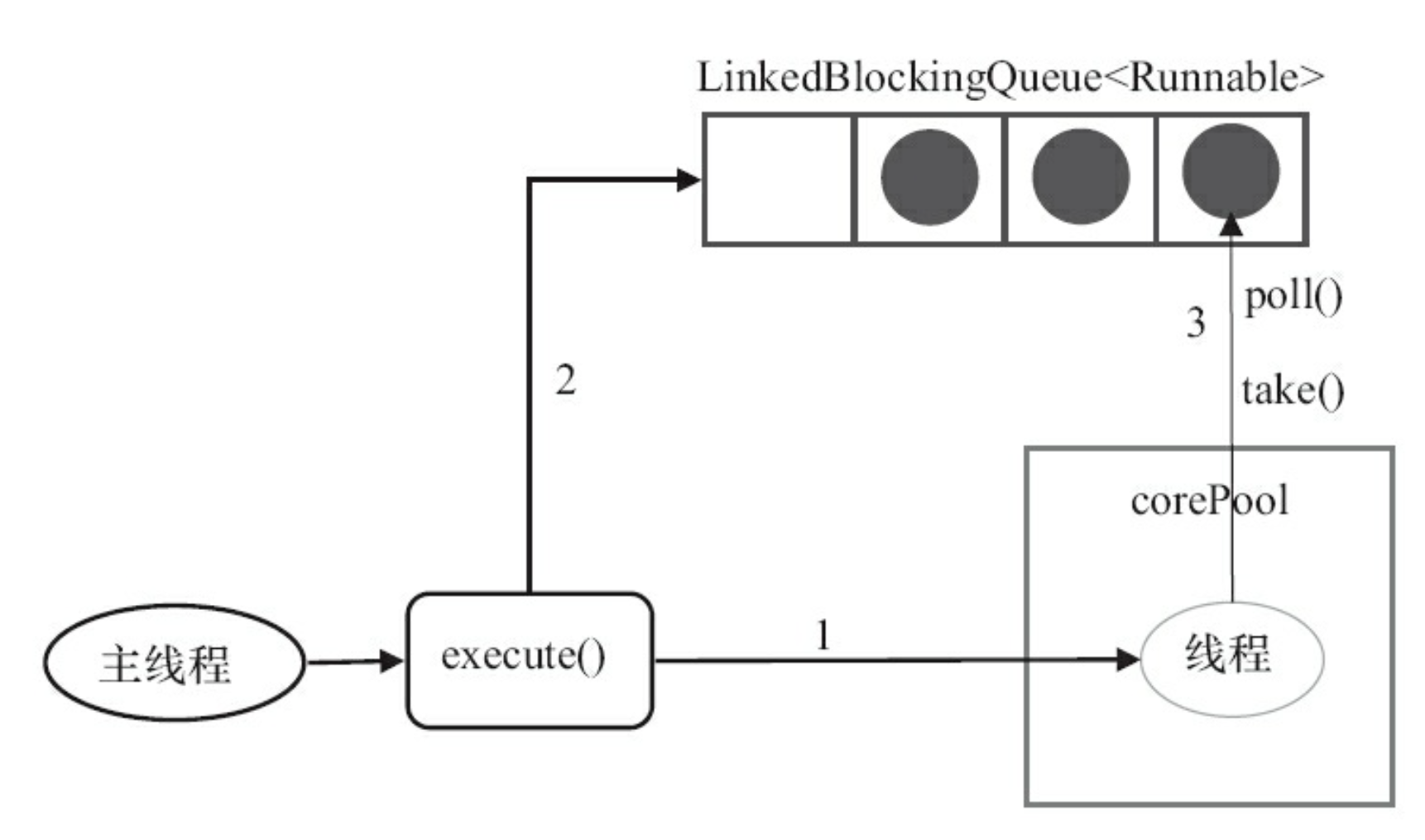
SingleThreadExecutor的execute()方法内部执行过程与注意事项可参考FixedThreadPool的。
3.CachedThreadPool
CachedThreadPool是根据需要创建新线程的线程池。
public static ExecutorService newCachedThreadPool() {

        return new ThreadPoolExecutor(0, Integer.MAX_VALUE, //coolPoolSize为0,maxinumPoolSize为Integer.MAX_VALUE

                                      60L, TimeUnit.SECONDS, //空闲线程的等待时间,空闲60s后被终止

                                      new SynchronousQueue<Runnable>()); //工作队列

    }
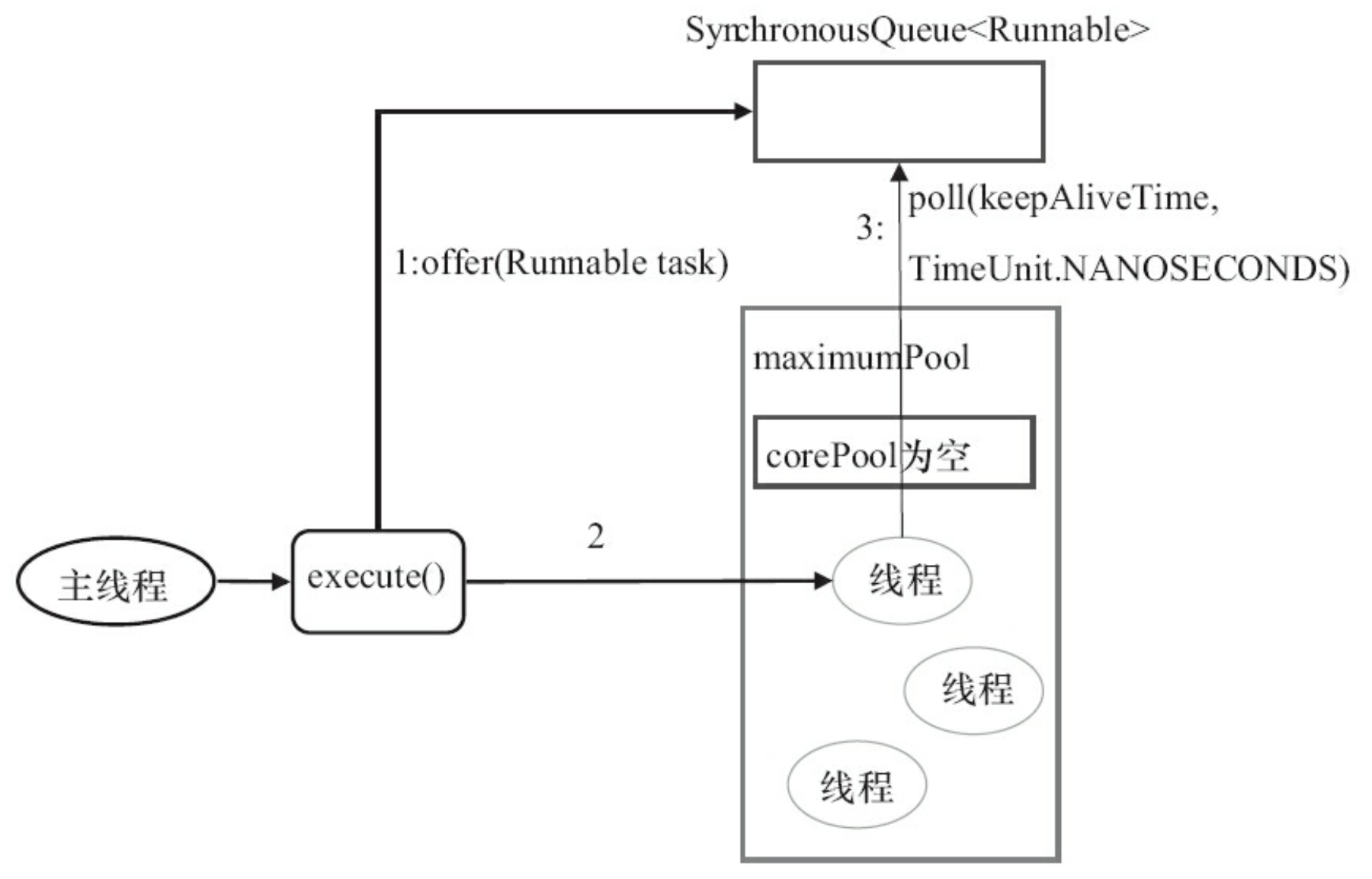
CachedThreadPool的execute()方法的内部运行过程
当新任务被提交时,主线程将任务插入到工作队列中(SynchronousQueue的offer()方法),如果线程池有空闲线程在等待任务,新任务交给空闲线程处理。
如果线程池中没有在等待任务的空闲线程,创建新线程执行任务
线程执行完任务后,等待60s(SynchronousQueue.poll(60, TimeUnit.SECONDS)方法),如果没有等待新任务,线程终止
SynchronousQueue是一个没有容量的BlockingQueue。每一个插入操作必须等待另一个线程的移除操作。
CachedThreadPool使用SynchronousQueue,把主线程提交的任务传递给空闲线程。
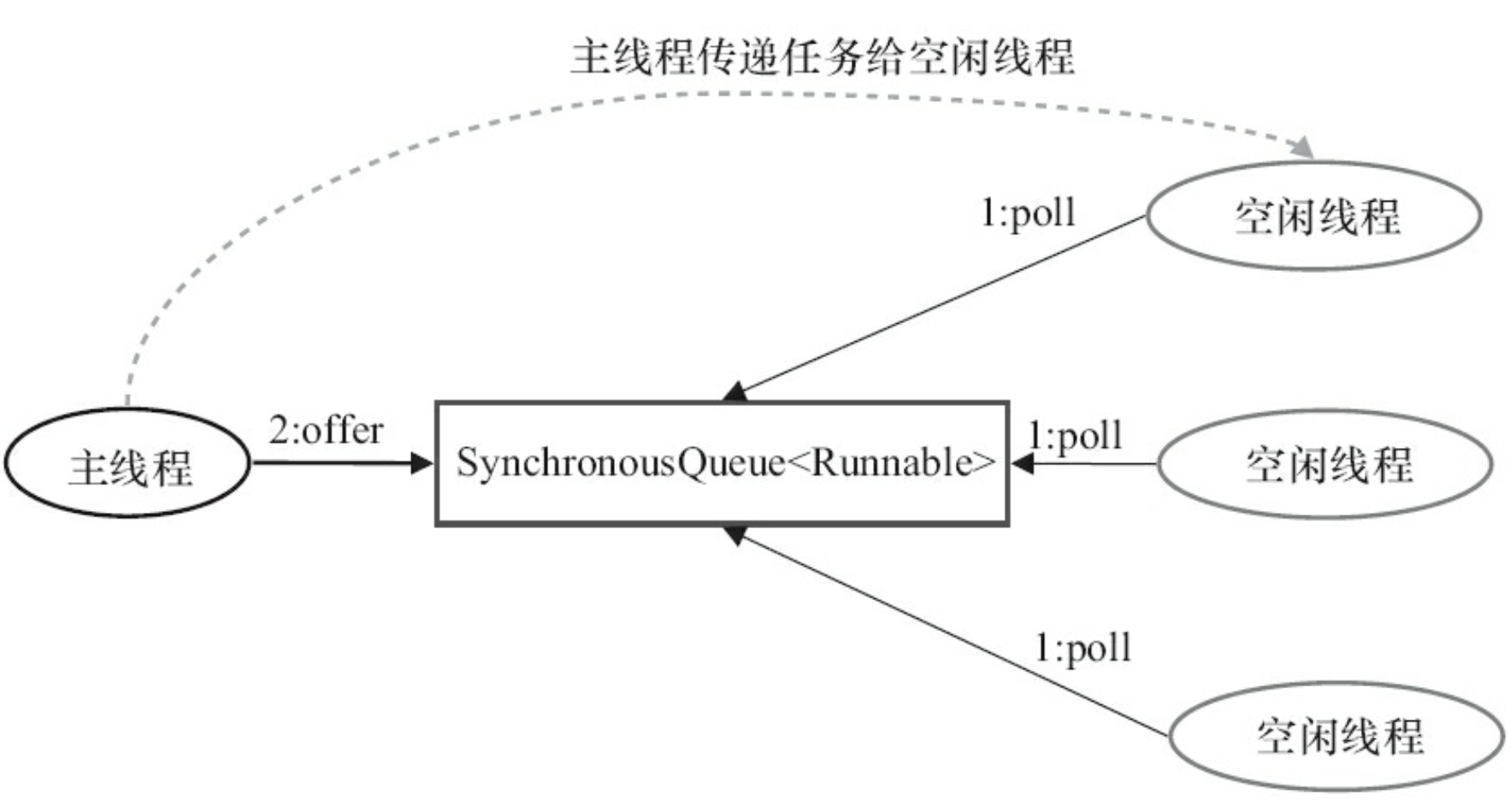
注意点:
CachedThreadPool的线程池是无解的,没有限制数量,如果主线程提交任务的速度高于线程处理任务的速度,将不断创建新线程。
极端情况下,会因创建过多线程耗尽CPU和内存。
ScheduledThreadPoolExecutor
ScheduledThreadPoolExecutor主要用于定时任务(定期执行,给定延迟后执行)
执行方式
1.scheduleAtFixedRate
任务按照固定周期执行,比如设定每10分钟执行一次,第8分钟时候执行了第一次,后续执行时间点为第18分钟,第28分钟,第38分钟
public ScheduledFuture<?> scheduleAtFixedRate(Runnable command, //任务

                                                  long initialDelay, //初始延迟

                                                  long period, //任务执行周期

                                                  TimeUnit unit)
2.scheduleWithFixedDelay
任务按照固定延迟执行,比如设定延迟时间为10是分钟,第8分钟时候执行了第一次,任务执行完成后,再等待10分钟,执行下一次。如果任务执行了2分钟,则下一次为第20分钟
public ScheduledFuture<?> scheduleWithFixedDelay(Runnable command,//任务

                                                     long initialDelay, //初始延迟

                                                     long delay, //任务执行延迟

                                                     TimeUnit unit)
实现原理
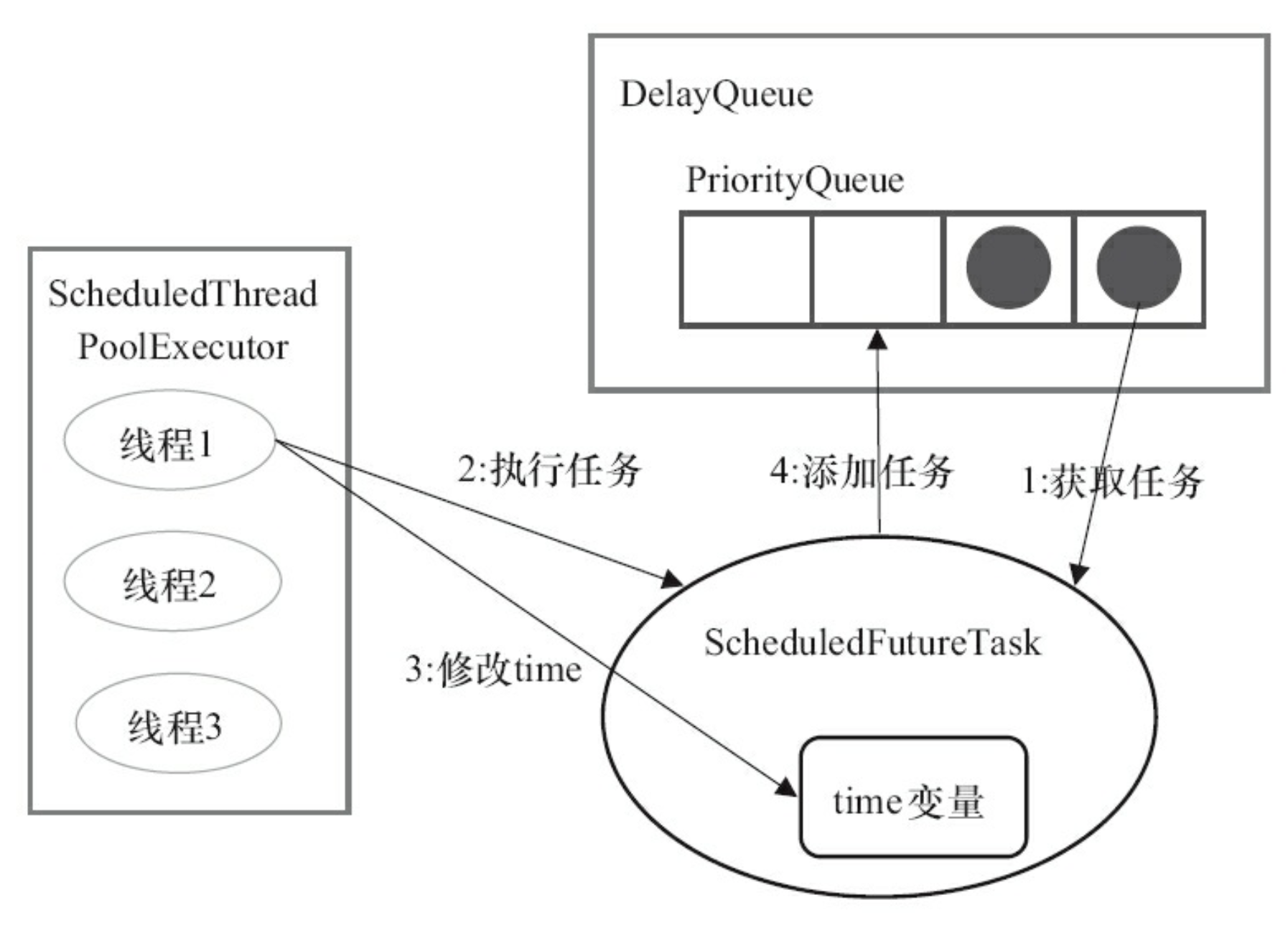
数据结构
ScheduledThreadPoolExecutor:定时任务执行器
DelayQueue:使用DelayQueue作为任务队列,保存待调度的任务,任务按照执行的时间点排序。DelayQueue内部是用PriorityQueue实现。
ScheduledFutureTask:待调度任务。
ScheduledFutureTask的成员变量:
time:任务将被执行的具体时间
sequenceNumber:任务序号,time相同时,序号小的先执行
period:任务执行的间隔周期
运行机制
ScheduledThreadPoolExecutor内部运行过程
线程从DelayQueue中获取到到期的ScheduledFutureTask,到期是指time大于等于当前时间。
执行任务ScheduledFutureTask
修改ScheduledFutureTask的time为下次要执行的时间,放回到DelayQueue中
【Java并发】Executor框架的更多相关文章
- 构建自己的Java并发模型框架
Java的多线程特性为构建高性能的应用提供了极大的方便,可是也带来了不少的麻烦.线程间同步.数据一致性等烦琐的问题须要细心的考虑,一不小心就会出现一些微妙的,难以调试的错误. 另外.应用逻辑和线程逻辑 ...
- 构建Java并发模型框架
Java的多线程特性为构建高性能的应用提供了极大的方便,但是也带来了不少的麻烦.线程间同步.数据一致性等烦琐的问题需要细心的考虑,一不小心就会出现一些微妙的,难以调试的错误.另外,应用逻辑和线程逻辑纠 ...
- Java并发模型框架
构建Java并发模型框架 Java的多线程特性为构建高性能的应用提供了极大的方便,但是也带来了不少的麻烦.线程间同步.数据一致性等烦琐的问题需要细心的考虑,一不小心就会出现一些微妙的,难以调试的错误. ...
- Java的Executor框架和线程池实现原理
Java的Executor框架 1,Executor接口 public interface Executor { void execute(Runnable command); } Executor接 ...
- JAVA的Executor框架
Executor框架分离了任务的创建和执行.JAVA SE5的java.util.concurrent包中的执行器(Executor)管理Thread对象,从而简化了并发编程.Executor引入了一 ...
- Java并发基础框架AbstractQueuedSynchronizer初探(ReentrantLock的实现分析)
AbstractQueuedSynchronizer是实现Java并发类库的一个基础框架,Java中的各种锁(RenentrantLock, ReentrantReadWriteLock)以及同步工具 ...
- java并发编程框架 Executor ExecutorService invokeall
首先介绍两个重要的接口,Executor和ExecutorService,定义如下: public interface Executor { void execute(Runnable command ...
- JAVA并发-Executor
结构 类继承图: 上面的各个接口/类的关系和作用: Executor 执行器接口,也是最顶层的抽象核心接口, 分离了任务和任务的执行. ExecutorService 在Executor的基础上提供了 ...
- Java并发包下锁学习第二篇Java并发基础框架-队列同步器介绍
Java并发包下锁学习第二篇队列同步器 还记得在第一篇文章中,讲到的locks包下的类结果图吗?如下图: 从图中,我们可以看到AbstractQueuedSynchronizer这个类很重要(在本 ...
- Java的Executor框架和线程池实现原理(转)
ExecutorService接口继承自Executor接口,定义了终止.提交,执行任务.跟踪任务返回结果等方法 1,execute(Runnable command):履行Ruannable类型的任 ...
随机推荐
- hdu 4055(经典问题)
总是不能正确的将一个大问题变成子问题,而且又找不到状态转移方程. 直接导致这题想了5个小时最后还是无果... 谨记! Number String Time Limit: 10000/5000 MS ( ...
- SDN开发过程中遇到的一些问题总结
我用的是ryu控制器,用Mininet作为网络系统平台. 当启动控制器的时候如果提示:unsupported version 0x1. if possible, set the switch to u ...
- oracle的order by decode根据文字自定义排序的例子
oracle的order by decode根据文字自定义排序的例子: order by decode(t.title, '当前生效预警', 1, '今日即将生效', 2, '明日预计生效', 3, ...
- spring定时器的cronexpression表达式
转自:https://www.cnblogs.com/yaowen/p/3779284.html 相关配置: import com.alibaba.dubbo.config.annotation.Se ...
- [转]python-元类
转载于:刘羽冲 两句话掌握python最难知识点——元类 千万不要被所谓“元类是99%的python程序员不会用到的特性”这类的说辞吓住.因为每个中国人,都是天生的元类使用者 学懂元类,你只需要知道两 ...
- Tornado源码浅析
初识tornado 经典的hello world 案例: import tornado.ioloop import tornado.web class MainHandler(tornado.web. ...
- java中的printf
转载自: http://www.cnblogs.com/healthy-tree/archive/2012/08/07/2626665.html http://www.cnblogs.com/Tank ...
- Chomsky_hierarchy
Grammar Languages Automaton Production rules (constraints) Type-0 Recursively enumerable Turing ma ...
- DES加密原理
DES加密步奏: 1.初始化两个字符串,一个为指定的秘钥,一个为初始化向量,要求是8个字符. 2.加密:秘钥.向量.需加密的字符串传换成byte[]类型: 声明加密标准类,DESCryptoServi ...
- 剑指Offer——斐波那契数列
题目描述: 大家都知道斐波那契数列,现在要求输入一个整数n,请你输出斐波那契数列的第n项.n<=39 分析: 递归解法肯定相当耗时. 因为当n=4时,程序是这样子递归运算的:Fibonacci( ...