
Render OpenCascade Geometry Surfaces in OpenSceneGraph
在OpenSceneGraph中绘制OpenCascade的曲面
Render OpenCascade Geometry Surfaces in OpenSceneGraph
摘要Abstract:本文对OpenCascade中的几何曲面数据进行简要说明,并结合OpenSceneGraph将这些曲面显示。
关键字Key Words:OpenCascade、OpenSceneGraph、Geometry Surface、NURBS
一、引言 Introduction
《BRep Format Description White Paper》中对OpenCascade的几何数据结构进行了详细说明。BRep文件中用到的曲面总共有11种:
1.Plane 平面;
2.Cylinder 圆柱面;
3.Cone 圆锥面;
4.Sphere 球面;
5.Torus 圆环面;
6.Linear Extrusion 线性拉伸面;
7.Revolution Surface 旋转曲面;
8.Bezier Surface 贝塞尔面;
9.B-Spline Surface B样条曲面;
10.Rectangle Trim Surface 矩形裁剪曲面;
11.Offset Surface 偏移曲面;
曲面的几何数据类都有一个共同的基类Geom_Surface,类图如下所示:
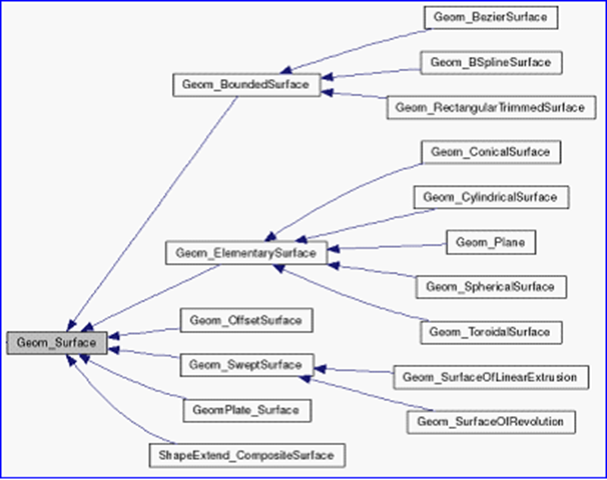
Figure 1.1 Geometry Surface class diagram
抽象基类Geom_Surface有几个纯虚函数Bounds()、Value()等,可用来计算曲面上的点。类图如下所示:
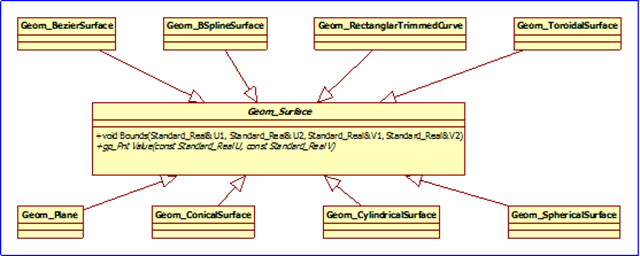
Figure 1.2 Geom_Surface class diagram
与另一几何内核sgCore中的几何的概念一致,几何(geometry)是用参数方程对曲线曲面精确表示的。
每种曲面都对纯虚函数进行实现,使计算曲面上点的方式统一。
曲线C(u)是单参数的矢值函数,它是由直线段到三维欧几里得空间的映射。曲面是关于两个参数u和v的矢值函数,它表示由uv平面上的二维区域R到三维欧几里得空间的映射。把曲面表示成双参数的形式为:

它的参数方程为:
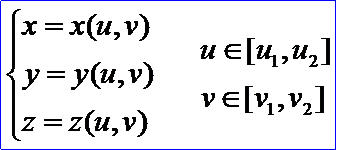
u,v参数形成了一个参数平面,参数的变化区间在参数平面上构成一个矩形区域。正常情况下,参数域内的点(u,v)与曲面上的点r(u,v)是一一对应的映射关系。
给定一个具体的曲面方程,称之为给定了一个曲面的参数化。它既决定了所表示的曲面的形状,也决定了该曲面上的点与其参数域内的点的一种对应关系。同样地,曲面的参数化不是唯一的。
曲面双参数u,v的变化范围往往取为单位正方形,即u∈[0,1],v∈[0,1]。这样讨论曲面方程时,即简单、方便,又不失一般性。
二、程序示例 Code Example
使用函数Value(u, v)根据参数计算出曲面上的点,将点分u,v方向连成线,可以绘制出曲面的线框模型。程序如下所示:
/*

*    Copyright (c) 2013 eryar All Rights Reserved.

*

*        File    : Main.cpp

*        Author  : eryar@163.com

*        Date    : 2013-08-11 10:36

*        Version : V1.0

*

*    Description : Draw OpenCascade Geometry Surfaces in OpenSceneGraph.

*

*/

// OpenSceneGraph

#include <osgDB/ReadFile>

#include <osgViewer/Viewer>

#include <osgGA/StateSetManipulator>

#include <osgViewer/ViewerEventHandlers>

#pragma comment(lib, "osgd.lib")

#pragma comment(lib, "osgDBd.lib")

#pragma comment(lib, "osgGAd.lib")

#pragma comment(lib, "osgViewerd.lib")

// OpenCascade

#define WNT

#include <TColgp_Array2OfPnt.hxx>

#include <TColStd_HArray1OfInteger.hxx>

#include <TColGeom_Array2OfBezierSurface.hxx>

#include <GeomConvert_CompBezierSurfacesToBSplineSurface.hxx>

#include <Geom_Surface.hxx>

#include <Geom_BezierSurface.hxx>

#include <Geom_BSplineSurface.hxx>

#include <Geom_ConicalSurface.hxx>

#include <Geom_CylindricalSurface.hxx>

#include <Geom_Plane.hxx>

#include <Geom_ToroidalSurface.hxx>

#include <Geom_SphericalSurface.hxx>

#pragma comment(lib, "TKernel.lib")

#pragma comment(lib, "TKMath.lib")

#pragma comment(lib, "TKG3d.lib")

#pragma comment(lib, "TKGeomBase.lib")

// Approximation Delta.

const double APPROXIMATION_DELTA = 0.1;

/**

* @breif Build geometry surface.

*/

osg::Node* buildSurface(const Geom_Surface& surface)

{

    osg::ref_ptr<osg::Geode> geode = new osg::Geode();

    gp_Pnt point;

    Standard_Real uFirst = 0.0;

    Standard_Real vFirst = 0.0;

    Standard_Real uLast = 0.0;

    Standard_Real vLast = 0.0;

    surface.Bounds(uFirst, uLast, vFirst, vLast);

    Precision::IsNegativeInfinite(uFirst) ? uFirst = -1.0 : uFirst;

    Precision::IsInfinite(uLast) ? uLast = 1.0 : uLast;

    Precision::IsNegativeInfinite(vFirst) ? vFirst = -1.0 : vFirst;

    Precision::IsInfinite(vLast) ? vLast = 1.0 : vLast;

    // Approximation in v direction.

    for (Standard_Real u = uFirst; u <= uLast; u += APPROXIMATION_DELTA)

    {

        osg::ref_ptr<osg::Geometry> linesGeom = new osg::Geometry();

        osg::ref_ptr<osg::Vec3Array> pointsVec = new osg::Vec3Array();

        for (Standard_Real v = vFirst; v <= vLast; v += APPROXIMATION_DELTA)

        {

            point = surface.Value(u, v);

            pointsVec->push_back(osg::Vec3(point.X(), point.Y(), point.Z()));

        }

        // Set the colors.

        osg::ref_ptr<osg::Vec4Array> colors = new osg::Vec4Array;

        colors->push_back(osg::Vec4(1.0f, 1.0f, 0.0f, 0.0f));

        linesGeom->setColorArray(colors.get());

        linesGeom->setColorBinding(osg::Geometry::BIND_OVERALL);

        // Set the normal in the same way of color.

        osg::ref_ptr<osg::Vec3Array> normals = new osg::Vec3Array;

        normals->push_back(osg::Vec3(0.0f, -1.0f, 0.0f));

        linesGeom->setNormalArray(normals.get());

        linesGeom->setNormalBinding(osg::Geometry::BIND_OVERALL);

        // Set vertex array.

        linesGeom->setVertexArray(pointsVec);

        linesGeom->addPrimitiveSet(new osg::DrawArrays(osg::PrimitiveSet::LINE_STRIP, , pointsVec->size()));

        geode->addDrawable(linesGeom.get());

    }

    // Approximation in u direction.

    for (Standard_Real v = vFirst; v <= vLast; v += APPROXIMATION_DELTA)

    {

        osg::ref_ptr<osg::Geometry> linesGeom = new osg::Geometry();

        osg::ref_ptr<osg::Vec3Array> pointsVec = new osg::Vec3Array();

        for (Standard_Real u = vFirst; u <= uLast; u += APPROXIMATION_DELTA)

        {

            point = surface.Value(u, v);

            pointsVec->push_back(osg::Vec3(point.X(), point.Y(), point.Z()));

        }

        // Set the colors.

        osg::ref_ptr<osg::Vec4Array> colors = new osg::Vec4Array;

        colors->push_back(osg::Vec4(1.0f, 1.0f, 0.0f, 0.0f));

        linesGeom->setColorArray(colors.get());

        linesGeom->setColorBinding(osg::Geometry::BIND_OVERALL);

        // Set the normal in the same way of color.

        osg::ref_ptr<osg::Vec3Array> normals = new osg::Vec3Array;

        normals->push_back(osg::Vec3(0.0f, -1.0f, 0.0f));

        linesGeom->setNormalArray(normals.get());

        linesGeom->setNormalBinding(osg::Geometry::BIND_OVERALL);

        // Set vertex array.

        linesGeom->setVertexArray(pointsVec);

        linesGeom->addPrimitiveSet(new osg::DrawArrays(osg::PrimitiveSet::LINE_STRIP, , pointsVec->size()));

        geode->addDrawable(linesGeom.get());

    }

    return geode.release();

}

/**

* @breif Test geometry surfaces of OpenCascade.

*/

osg::Node* buildScene(void)

{

    osg::ref_ptr<osg::Group> root = new osg::Group();

    // Test Plane.

    Geom_Plane plane(gp::XOY());

    root->addChild(buildSurface(plane));

    // Test Bezier Surface and B-Spline Surface.

    TColgp_Array2OfPnt array1(,,,);

    TColgp_Array2OfPnt array2(,,,);

    TColgp_Array2OfPnt array3(,,,);

    TColgp_Array2OfPnt array4(,,,);

    array1.SetValue(,,gp_Pnt(,,));

    array1.SetValue(,,gp_Pnt(,,));

    array1.SetValue(,,gp_Pnt(,,));

    array1.SetValue(,,gp_Pnt(,,));

    array1.SetValue(,,gp_Pnt(,,));

    array1.SetValue(,,gp_Pnt(,,));

    array1.SetValue(,,gp_Pnt(,,));

    array1.SetValue(,,gp_Pnt(,,));

    array1.SetValue(,,gp_Pnt(,,));

    array2.SetValue(,,gp_Pnt(,,));

    array2.SetValue(,,gp_Pnt(,,));

    array2.SetValue(,,gp_Pnt(,,));

    array2.SetValue(,,gp_Pnt(,,));

    array2.SetValue(,,gp_Pnt(,,));

    array2.SetValue(,,gp_Pnt(,,));

    array2.SetValue(,,gp_Pnt(,,));

    array2.SetValue(,,gp_Pnt(,,));

    array2.SetValue(,,gp_Pnt(,,));

    array3.SetValue(,,gp_Pnt(,,));

    array3.SetValue(,,gp_Pnt(,,));

    array3.SetValue(,,gp_Pnt(,,));

    array3.SetValue(,,gp_Pnt(,,));

    array3.SetValue(,,gp_Pnt(,,));

    array3.SetValue(,,gp_Pnt(,,));

    array3.SetValue(,,gp_Pnt(,,));

    array3.SetValue(,,gp_Pnt(,,));

    array3.SetValue(,,gp_Pnt(,,));

    array4.SetValue(,,gp_Pnt(,,));

    array4.SetValue(,,gp_Pnt(,,));

    array4.SetValue(,,gp_Pnt(,,));

    array4.SetValue(,,gp_Pnt(,,));

    array4.SetValue(,,gp_Pnt(,,));

    array4.SetValue(,,gp_Pnt(,,));

    array4.SetValue(,,gp_Pnt(,,));

    array4.SetValue(,,gp_Pnt(,,));

    array4.SetValue(,,gp_Pnt(,,));

    Geom_BezierSurface BZ1(array1);

    Geom_BezierSurface BZ2(array2);

    Geom_BezierSurface BZ3(array3);

    Geom_BezierSurface BZ4(array4);

    root->addChild(buildSurface(BZ1));

    root->addChild(buildSurface(BZ2));

    root->addChild(buildSurface(BZ3));

    root->addChild(buildSurface(BZ4));

    Handle_Geom_BezierSurface BS1 = new Geom_BezierSurface(array1);

    Handle_Geom_BezierSurface BS2 = new Geom_BezierSurface(array2);

    Handle_Geom_BezierSurface BS3 = new Geom_BezierSurface(array3);

    Handle_Geom_BezierSurface BS4 = new Geom_BezierSurface(array4);

    TColGeom_Array2OfBezierSurface bezierarray(,,,);

    bezierarray.SetValue(,,BS1);

    bezierarray.SetValue(,,BS2);

    bezierarray.SetValue(,,BS3);

    bezierarray.SetValue(,,BS4);

    GeomConvert_CompBezierSurfacesToBSplineSurface BB (bezierarray);

    if (BB.IsDone())

    {

        Geom_BSplineSurface BSPLSURF(

            BB.Poles()->Array2(),

            BB.UKnots()->Array1(),

            BB.VKnots()->Array1(),

            BB.UMultiplicities()->Array1(),

            BB.VMultiplicities()->Array1(),

            BB.UDegree(),

            BB.VDegree() );

        BSPLSURF.Translate(gp_Vec(,,));

        root->addChild(buildSurface(BSPLSURF));

    }

    // Test Spherical Surface.

    Geom_SphericalSurface sphericalSurface(gp::XOY(), 1.0);

    sphericalSurface.Translate(gp_Vec(2.5, 0.0, 0.0));

    root->addChild(buildSurface(sphericalSurface));

    // Test Conical Surface.

    Geom_ConicalSurface conicalSurface(gp::XOY(), M_PI/, 1.0);

    conicalSurface.Translate(gp_Vec(5.0, 0.0, 0.0));

    root->addChild(buildSurface(conicalSurface));

    // Test Cylindrical Surface.

    Geom_CylindricalSurface cylindricalSurface(gp::XOY(), 1.0);

    cylindricalSurface.Translate(gp_Vec(8.0, 0.0, 0.0));

    root->addChild(buildSurface(cylindricalSurface));

    // Test Toroidal Surface.

    Geom_ToroidalSurface toroidalSurface(gp::XOY(), 1.0, 0.2);

    toroidalSurface.Translate(gp_Vec(11.0, 0.0, 0.0));

    root->addChild(buildSurface(toroidalSurface));

    return root.release();

}

int main(int argc, char* argv[])

{

    osgViewer::Viewer myViewer;

    myViewer.setSceneData(buildScene());

    myViewer.addEventHandler(new osgGA::StateSetManipulator(myViewer.getCamera()->getOrCreateStateSet()));

    myViewer.addEventHandler(new osgViewer::StatsHandler);

    myViewer.addEventHandler(new osgViewer::WindowSizeHandler);

    return myViewer.run();

}
程序效果如下图所示:
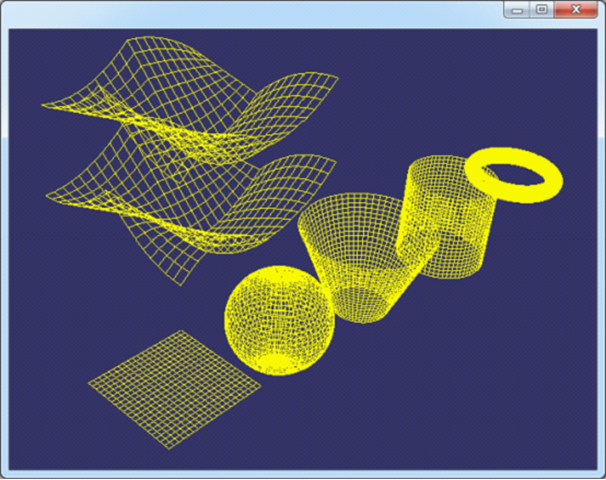
Figure 2.1 OpenCascade Geometry Surfaces in OpenSceneGraph
三、结论 Conclusion
根据OpenCascade中的几何曲面的函数Value(u, v)可以计算出曲面上的点。分u方向和v方向分别绘制曲面上的点,并将之连接成线,即可以表示出曲面的线框模型。因为这样的模型没有面的信息,所以不能有光照效果、材质效果等。要有光照、材质的信息,必须将曲面进行三角剖分。相关的剖分算法有Delaunay三角剖分等。
PDF Version: Draw OpenCascade Geometry Surfaces in OpenSceneGraph
Render OpenCascade Geometry Surfaces in OpenSceneGraph的更多相关文章
- Render OpenCascade Geometry Curves in OpenSceneGraph
在OpenSceneGraph中绘制OpenCascade的曲线 Render OpenCascade Geometry Curves in OpenSceneGraph eryar@163.com ...
- OpenCascade Shape Representation in OpenSceneGraph
OpenCascade Shape Representation in OpenSceneGraph eryar@163.com 摘要Abstract:本文通过程序实例,将OpenCascade中的拓 ...
- Opencascade、OpenGL和OpenSceneGraph的区别与联系
OpenGL只是三维显示 Openscenegraph基于场景图的概念,它提供一个在OpenGL之上的面向对象的框架,从而能把开发者从实现和优化底层图形的调用中解脱出来 Opencascade更适合算 ...
- OpenCASCADE Linear Extrusion Surface
OpenCASCADE Linear Extrusion Surface eryar@163.com Abstract. OpenCASCADE linear extrusion surface is ...
- Polynomial Library in OpenCascade
Polynomial Library in OpenCascade eryar@163.com 摘要Abstract:分析幂基曲线即多项式曲线在OpenCascade中的计算方法,以及利用OpenSc ...
- Representation Data in OpenCascade BRep
Representation Data in OpenCascade BRep eryar@163.com 摘要Abstract:现在的显示器大多数是光栅显示器,即可以看做一个像素的矩阵.在光栅显示器 ...
- Open Cascade 转化为OpenSceneGraph中的Mesh
#include <osgDB/ReadFile> #include <osgViewer/Viewer> #include <osgGA/StateSetManipul ...
- OpenCASCADE Data Exchange - 3D PDF
OpenCASCADE Data Exchange - 3D PDF eryar@163.com Abstract. Today most 3D engineering model data are ...
- Visualize Surface by Delaunay Triangulator
Visualize Surface by Delaunay Triangulator eryar@163.com Abstract. Delaunay Triangulation is the cor ...
随机推荐
- 深度解析Java8 – AbstractQueuedSynchronizer的实现分析(上)
本文首发在infoQ :www.infoq.com/cn/articles/jdk1.8-abstractqueuedsynchronizer 前言: Java中的FutureTask作为可异步执行任 ...
- (期望)A Dangerous Maze(Light OJ 1027)
http://www.lightoj.com/volume_showproblem.php?problem=1027 You are in a maze; seeing n doors in fron ...
- GetRelevantAnimTimeRemainingFraction节点Bug
初始设置: 动画状态机: MoveStop->Idle的条件: 使用该节点的目的: 在动画蓝图的过渡条件中使用该节点,保证上一个状态的动作完成后进入下一个动作.需求是MoveStop动作完成后才 ...
- Bookstore project using XAMPP 详细配置 Part 2
2. Implementation of MySQL database in “phpMyAdmin” 1) Create database named “tbl_book” 2) I changed ...
- android 连接蓝牙扫码枪,程序崩溃之onConfigurationChanged
当android手机通过蓝牙连接扫码枪时,程序崩溃的原因之一是:键盘弹出或隐藏,触发程序走了onDestory->onCreate的生命周期,从而可能使得页面的某些初始化数据被清除了. 解决方法 ...
- 关于FluentNhibernate数据库连接配置,请教
在用FluentNHibernate映射数据库,出现这个问题,一天多了也没解决,求各位大神支招 问题是与map对应的表已成功创建,出错的地方是最后的 .BuildSessionFactory(); ...
- 在CentOS上搭建最^1024基本的Nginx反向服务器
昨天有过去的同事突然问我,他在CentOS7上试验搭建反向服务器死活不成功.现将最简单的搭建步骤分享下: 0. 环境介绍 本次搭建的集群包括以下服务器 192.168.1.107:nginx反向服务器 ...
- windows下与linux下安装redis及redis扩展
1. Redis的介绍 Redis是一个开源的使用ANSI C语言编写.支持网络.可基于内存亦可持久化的日志型.Key-Value数据库,并提供多种语言的API.从2010年3月15日起 ...
- diff详解,读懂diff结果
1.概述 本文将要讨论的是diff命令,diff用来比较两个文件.当然文件比较的工具很多,windows系统下面就有不错的工具可以使用,例如常用的Beyond Compare,WinMerge都是图形 ...
- 记一次Redis和NetMQ的测试
Redis是一个高速缓存K-V数据库,而NetMQ是ZeroMQ的C#实现版本,两者是完全不同的东西. 最近做游戏服务器的时候想到,如果选择一个组件来做服务器间通信的话,ZeroMQ绝对是一个不错的选 ...