
【分布式锁】06-Zookeeper实现分布式锁:可重入锁源码分析
前言
前面已经讲解了Redis的客户端Redission是怎么实现分布式锁的,大多都深入到源码级别。
在分布式系统中,常见的分布式锁实现方案还有Zookeeper,接下来会深入研究Zookeeper是如何来实现分布式锁的。
Zookeeper初识
文件系统
Zookeeper维护一个类似文件系统的数据结构
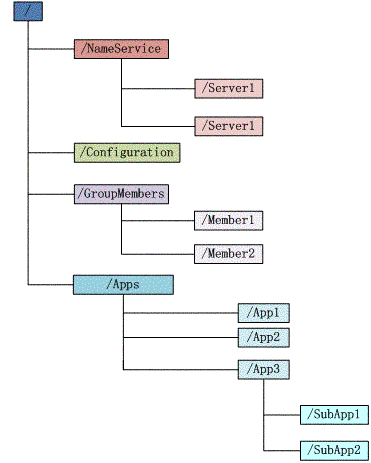 image.png
每个子目录项如NameService都被称为znoed,和文件系统一样,我们能够自由的增加、删除znode,在znode下增加、删除子znode,唯一不同的在于znode是可以存储数据的。
有4种类型的znode
PERSISTENT--持久化目录节点客户端与zookeeper断开连接后,该节点依旧存在
PERSISTENT_SEQUENTIAL-持久化顺序编号目录节点客户端与zookeeper断开连接后,该节点依旧存在,只是Zookeeper给该节点名称进行顺序编号
EPHEMERAL-临时目录节点客户端与zookeeper断开连接后,该节点被删除
EPHEMERAL_SEQUENTIAL-临时顺序编号目录节点客户端与zookeeper断开连接后,该节点被删除,只是Zookeeper给该节点名称进行顺序编号
通知机制
客户端注册监听它关心的目录节点,当目录节点发生变化(数据改变、被删除、子目录节点增加删除)等,zookeeper会通知客户端。
分布式锁
有了zookeeper的一致性文件系统,锁的问题变得容易。锁服务可以分为两类,一个是保持独占,另一个是控制时序。
对于第一类,我们将zookeeper上的一个znode看作是一把锁,通过create znode的方式来实现。所有客户端都去创建 /distribute_lock 节点,最终成功创建的那个客户端也即拥有了这把锁。厕所有言:来也冲冲,去也冲冲,用完删除掉自己创建的distribute_lock 节点就释放出锁。
对于第二类, /distribute_lock 已经预先存在,所有客户端在它下面创建临时顺序编号目录节点,和选master一样,编号最小的获得锁,用完删除自己创建的znode节点。
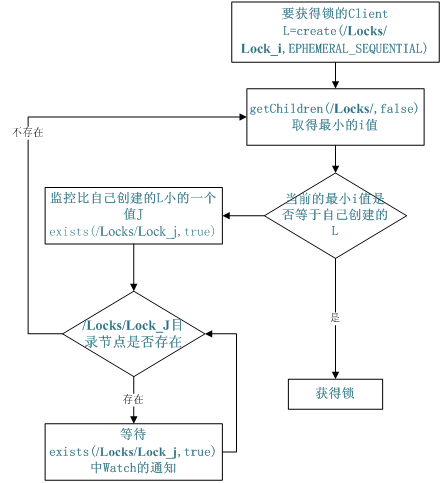 image.png
注明:以上内容参考 https://www.cnblogs.com/dream-to-pku/p/9513188.html
Curator框架初识
Curator是Netflix公司开源的一套Zookeeper客户端框架。目前已经作为Apache的顶级项目出现,是最流行的Zookeeper客户端之一。
我们看下Apache Curator官网的介绍:
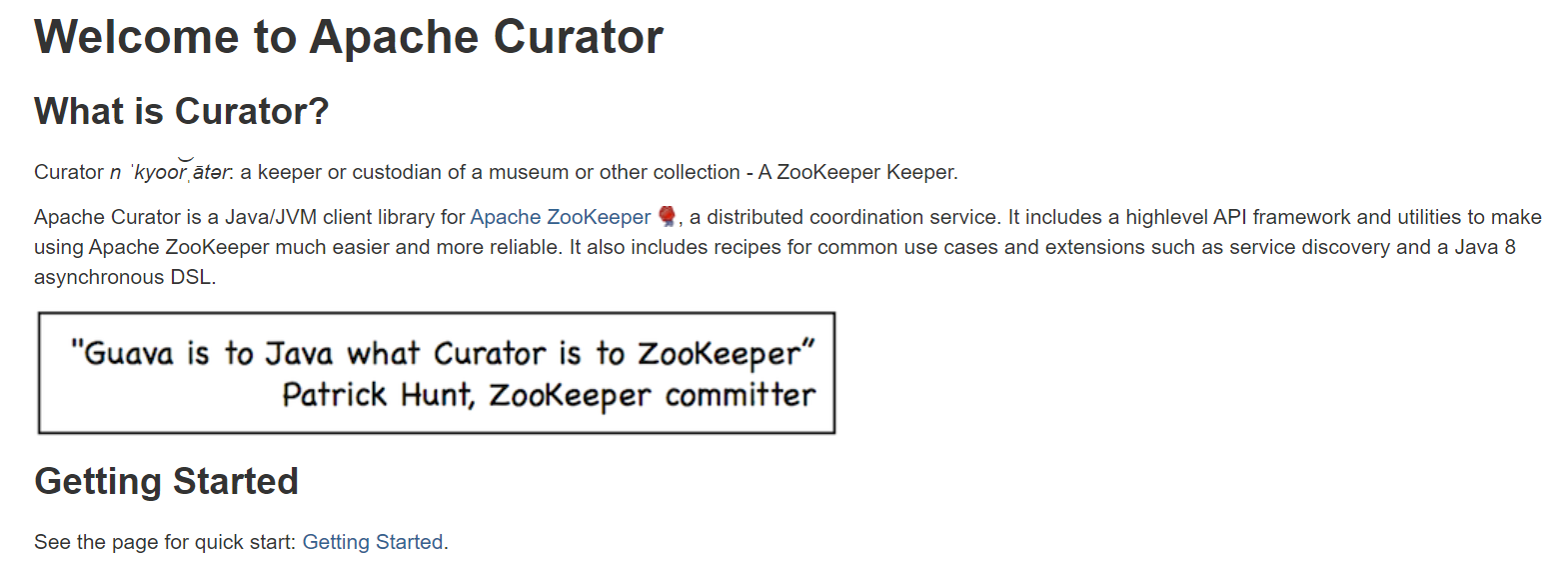 image.png
接着看下quick start中关于分布式锁相关的内容
地址为:http://curator.apache.org/getting-started.html
InterProcessMutex lock = new InterProcessMutex(client, lockPath);

if ( lock.acquire(maxWait, waitUnit) )

{

    try

    {

        // do some work inside of the critical section here

    }

    finally

    {

        lock.release();

    }

}
使用很简单,使用InterProcessMutex类,使用其中的acquire()方法,就可以获取一个分布式锁了。
Curator分布式锁使用示例
启动两个线程t1和t2去争夺锁,拿到锁的线程会占用5秒。运行多次可以观察到,有时是t1先拿到锁而t2等待,有时又会反过来。Curator会用我们提供的lock路径的结点作为全局锁,这个结点的数据类似这种格式:[_c_64e0811f-9475-44ca-aa36-c1db65ae5350-lock-00000000001],每次获得锁时会生成这种串,释放锁时清空数据。
接下来看看加锁的示例:
public class Application {

    private static final String ZK_ADDRESS = "192.20.38.58:2181";

    private static final String ZK_LOCK_PATH = "/locks/lock_01";

    public static void main(String[] args) throws InterruptedException {

        CuratorFramework client = CuratorFrameworkFactory.newClient(

                ZK_ADDRESS,

                new RetryNTimes(10, 5000)

        );

        client.start();

        System.out.println("zk client start successfully!");

        Thread t1 = new Thread(() -> {

            doWithLock(client);

        }, "t1");

        Thread t2 = new Thread(() -> {

            doWithLock(client);

        }, "t2");

        t1.start();

        t2.start();

    }

    private static void doWithLock(CuratorFramework client) {

        InterProcessMutex lock = new InterProcessMutex(client, ZK_LOCK_PATH);

        try {

            if (lock.acquire(10 * 1000, TimeUnit.SECONDS)) {

                System.out.println(Thread.currentThread().getName() + " hold lock");

                Thread.sleep(5000L);

                System.out.println(Thread.currentThread().getName() + " release lock");

            }

        } catch (Exception e) {

            e.printStackTrace();

        } finally {

            try {

                lock.release();

            } catch (Exception e) {

                e.printStackTrace();

            }

        }

    }

}
运行结果:
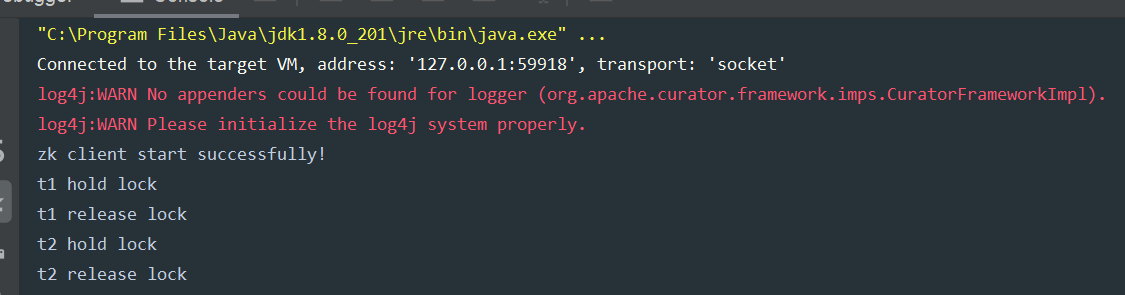 image.png
Curator 加锁实现原理
直接看Curator加锁的代码:
public class InterProcessMutex implements InterProcessLock, Revocable<InterProcessMutex> {

    private final ConcurrentMap<Thread, LockData>   threadData = Maps.newConcurrentMap();

     private static class LockData

    {

        final Thread        owningThread;

        final String        lockPath;

        final AtomicInteger lockCount = new AtomicInteger(1);

        private LockData(Thread owningThread, String lockPath)

        {

            this.owningThread = owningThread;

            this.lockPath = lockPath;

        }

    }

    @Override

    public boolean acquire(long time, TimeUnit unit) throws Exception

    {

        return internalLock(time, unit);

    }

     private boolean internalLock(long time, TimeUnit unit) throws Exception

    {

        /*

           Note on concurrency: a given lockData instance

           can be only acted on by a single thread so locking isn't necessary

        */

        Thread          currentThread = Thread.currentThread();

        LockData        lockData = threadData.get(currentThread);

        if ( lockData != null )

        {

            // re-entering

            lockData.lockCount.incrementAndGet();

            return true;

        }

        String lockPath = internals.attemptLock(time, unit, getLockNodeBytes());

        if ( lockPath != null )

        {

            LockData        newLockData = new LockData(currentThread, lockPath);

            threadData.put(currentThread, newLockData);

            return true;

        }

        return false;

    }

}
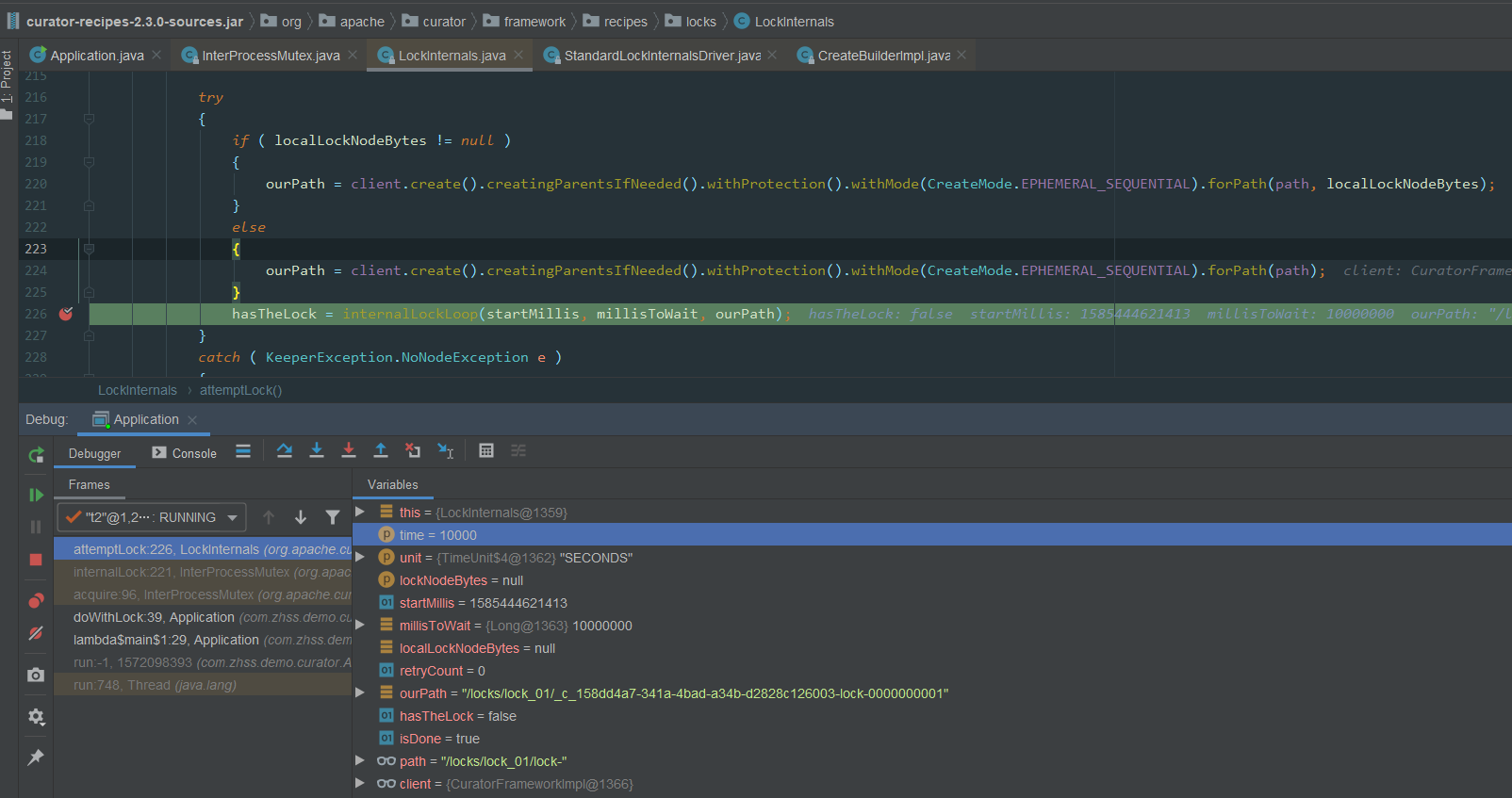
直接看internalLock()方法,首先是获取当前线程,然后查看当前线程是否在一个concurrentHashMap中,这里是重入锁的实现,如果当前已经已经获取了锁,那么这个线程获取锁的次数再+1
如果没有获取锁,那么就是用attemptLock()方法去尝试获取锁,如果lockPath不为空,说明获取锁成功,并将当前线程放入到map中。
接下来看看核心的加锁逻辑attemptLock()方法:
入参:time : 获取锁等待的时间unit:时间单位lockNodeBytes:默认为null
public class LockInternals {

    String attemptLock(long time, TimeUnit unit, byte[] lockNodeBytes) throws Exception

    {

        final long      startMillis = System.currentTimeMillis();

        final Long      millisToWait = (unit != null) ? unit.toMillis(time) : null;

        final byte[]    localLockNodeBytes = (revocable.get() != null) ? new byte[0] : lockNodeBytes;

        int             retryCount = 0;

        String          ourPath = null;

        boolean         hasTheLock = false;

        boolean         isDone = false;

        while ( !isDone )

        {

            isDone = true;

            try

            {

                if ( localLockNodeBytes != null )

                {

                    ourPath = client.create().creatingParentsIfNeeded().withProtection().withMode(CreateMode.EPHEMERAL_SEQUENTIAL).forPath(path, localLockNodeBytes);

                }

                else

                {

                    ourPath = client.create().creatingParentsIfNeeded().withProtection().withMode(CreateMode.EPHEMERAL_SEQUENTIAL).forPath(path);

                }

                hasTheLock = internalLockLoop(startMillis, millisToWait, ourPath);

            }

            catch ( KeeperException.NoNodeException e )

            {

                // gets thrown by StandardLockInternalsDriver when it can't find the lock node

                // this can happen when the session expires, etc. So, if the retry allows, just try it all again

                if ( client.getZookeeperClient().getRetryPolicy().allowRetry(retryCount++, System.currentTimeMillis() - startMillis, RetryLoop.getDefaultRetrySleeper()) )

                {

                    isDone = false;

                }

                else

                {

                    throw e;

                }

            }

        }

        if ( hasTheLock )

        {

            return ourPath;

        }

        return null;

    }

}
ourPath = client.create().creatingParentsIfNeeded().withProtection().withMode(CreateMode.EPHEMERAL_SEQUENTIAL).forPath(path);
使用的临时顺序节点,首先他是临时节点,如果当前这台机器如果自己宕机的话,他创建的这个临时节点就会自动消失,如果有获取锁的客户端宕机了,zk可以保证锁会自动释放的
创建的数据结构类似于:
客户端A获取锁的代码,生成的ourPath=xxxx01
客户端B获取锁的代码,生成的ourPath=xxxx02
查看Zookeeper中/locks/lock_01下所有临时节点数据:
 PS:01/02的图没有截到,这里又跑了一次截图所示 03/04 的顺序节点在ZK中的显示
接着重点看interalLockLoop()的逻辑:
public class LockInternals {

    private boolean internalLockLoop(long startMillis, Long millisToWait, String ourPath) throws Exception

    {

        boolean     haveTheLock = false;

        boolean     doDelete = false;

        try

        {

            if ( revocable.get() != null )

            {

                client.getData().usingWatcher(revocableWatcher).forPath(ourPath);

            }

            while ( (client.getState() == CuratorFrameworkState.STARTED) && !haveTheLock )

            {

                List<String>        children = getSortedChildren();

                String              sequenceNodeName = ourPath.substring(basePath.length() + 1); // +1 to include the slash

                PredicateResults    predicateResults = driver.getsTheLock(client, children, sequenceNodeName, maxLeases);

                if ( predicateResults.getsTheLock() )

                {

                    haveTheLock = true;

                }

                else

                {

                    String  previousSequencePath = basePath + "/" + predicateResults.getPathToWatch();

                    synchronized(this)

                    {

                        Stat stat = client.checkExists().usingWatcher(watcher).forPath(previousSequencePath);

                        if ( stat != null )

                        {

                            if ( millisToWait != null )

                            {

                                millisToWait -= (System.currentTimeMillis() - startMillis);

                                startMillis = System.currentTimeMillis();

                                if ( millisToWait <= 0 )

                                {

                                    doDelete = true;    // timed out - delete our node

                                    break;

                                }

                                wait(millisToWait);

                            }

                            else

                            {

                                wait();

                            }

                        }

                    }

                    // else it may have been deleted (i.e. lock released). Try to acquire again

                }

            }

        }

           // 省略部分代码

        return haveTheLock;

    }

}
重点看while循环中的逻辑
首先是获取锁的逻辑:
- 获取
/locks/lock_01下排好序的znode节点,上面看图已经知道,会有xxx01和xxx02两个节点 - 调用
getsTheLock()方法获取锁,其中maxLeases为1,默认只能一个线程获取锁 - 定位到
StandardLockInternalsDriver.getsTheLock()方法,其中代码核心如下:int ourIndex = children.indexOf(sequenceNodeName);boolean getsTheLock = ourIndex < maxLeases; - 上面
sequenceNodeName参数为xxx01的全路径名,然后查看在排好序的children列表中是否为第一个元素,如果是第一个元素,返回的ourIndex=0,此时则认为获取锁成功 - 如果为有序列表中的第一个元素,那么
predicateResults.getsTheLock()为true,获取锁的标志位havaTheLock为true,直接返回获取锁成功
然后是获取锁失败的逻辑:
获取锁失败的核心代码:
String  previousSequencePath = basePath + "/" + predicateResults.getPathToWatch();

synchronized(this)

{

    Stat stat = client.checkExists().usingWatcher(watcher).forPath(previousSequencePath);

    if ( stat != null )

    {

        if ( millisToWait != null )

        {

            millisToWait -= (System.currentTimeMillis() - startMillis);

            startMillis = System.currentTimeMillis();

            if ( millisToWait <= 0 )

            {

                doDelete = true;    // timed out - delete our node

                break;

            }

            wait(millisToWait);

        }

        else

        {

            wait();

        }

    }

}
- 针对上一个节点添加监听器
- 如果加锁有过期时间,到了过期时间后直接break退出循环
- 当前线程处于wait()状态,等待上一个线程释放锁
Curator 释放锁实现原理
释放锁其实很简单,直接删除当前临时节点,因为下一个节点监听了上一个节点信息,所以上一个节点删除后,当前节点就会被唤醒重新获取锁。
private void deleteOurPath(String ourPath) throws Exception

{

    try

    {

        client.delete().guaranteed().forPath(ourPath);

    }

    catch ( KeeperException.NoNodeException e )

    {

        // ignore - already deleted (possibly expired session, etc.)

    }

}
总结
一张图总结:

04_Zookeeper分布式锁实现原理.jpg
原图可查看我的分享:
https://www.processon.com/view/link/5e80508de4b06b85300175d2
【分布式锁】06-Zookeeper实现分布式锁:可重入锁源码分析的更多相关文章
- ZooKeeper 分布式锁 Curator 源码 01:可重入锁
前言 一般工作中常用的分布式锁,就是基于 Redis 和 ZooKeeper,前面已经介绍完了 Redisson 锁相关的源码,下面一起看看基于 ZooKeeper 的锁.也就是 Curator 这个 ...
- Redis分布式锁—Redisson+RLock可重入锁实现篇
前言 平时的工作中,由于生产环境中的项目是需要部署在多台服务器中的,所以经常会面临解决分布式场景下数据一致性的问题,那么就需要引入分布式锁来解决这一问题. 针对分布式锁的实现,目前比较常用的就如下几种 ...
- java高并发系列 - 第12天JUC:ReentrantLock重入锁
java高并发系列 - 第12天JUC:ReentrantLock重入锁 本篇文章开始将juc中常用的一些类,估计会有十来篇. synchronized的局限性 synchronized是java内置 ...
- Java可重入锁如何避免死锁
本文由https://bbs.csdn.net/topics/390939500和https://zhidao.baidu.com/question/1946051090515119908.html启 ...
- java线程的同步控制--重入锁ReentrantLock
我们常用的synchronized关键字是一种最简单的线程同步控制方法,它决定了一个线程是否可以访问临界区资源.同时Object.wait() 和Object.notify()方法起到了线程等待和通知 ...
- 通俗易懂 悲观锁、乐观锁、可重入锁、自旋锁、偏向锁、轻量/重量级锁、读写锁、各种锁及其Java实现!
网上关于Java中锁的话题可以说资料相当丰富,但相关内容总感觉是一大串术语的罗列,让人云里雾里,读完就忘.本文希望能为Java新人做一篇通俗易懂的整合,旨在消除对各种各样锁的术语的恐惧感,对每种锁的底 ...
- 写文章 通俗易懂 悲观锁、乐观锁、可重入锁、自旋锁、偏向锁、轻量/重量级锁、读写锁、各种锁及其Java实现!
网上关于Java中锁的话题可以说资料相当丰富,但相关内容总感觉是一大串术语的罗列,让人云里雾里,读完就忘.本文希望能为Java新人做一篇通俗易懂的整合,旨在消除对各种各样锁的术语的恐惧感,对每种锁的底 ...
- Java 可重入锁的那些事(一)
本文主要包含的内容:可重入锁(ReedtrantLock).公平锁.非公平锁.可重入性.同步队列.CAS等概念的理解 显式锁 上一篇文章提到的synchronized关键字为隐式锁,会自动获取和自动释 ...
- ZooKeeper 分布式锁 Curator 源码 02:可重入锁重复加锁和锁释放
ZooKeeper 分布式锁 Curator 源码 02:可重入锁重复加锁和锁释放 前言 加锁逻辑已经介绍完毕,那当一个线程重复加锁是如何处理的呢? 锁重入 在上一小节中,可以看到加锁的过程,再回头看 ...
- ZooKeeper 分布式锁 Curator 源码 03:可重入锁并发加锁
前言 在了解了加锁和锁重入之后,最需要了解的还是在分布式场景下或者多线程并发加锁是如何处理的? 并发加锁 先来看结果,在多线程对 /locks/lock_01 加锁时,是在后面又创建了新的临时节点. ...
随机推荐
- 手把手教你利用Jenkins持续集成iOS项目
前言 众所周知,现在App的竞争已经到了用户体验为王,质量为上的白热化阶段.用户们都是很挑剔的.如果一个公司的推广团队好不容易砸了重金推广了一个APP,好不容易有了一些用户,由于一次线上的bug导致一 ...
- Soulwail
XMLHttpRequest 属性解读 首先在 Chrome console 下创建一个 XMLHttpRequest 实例对象 xhr.如下所示: inherit 试运行一下代码. var xhr ...
- <pre>标签的使用
做做笔记.碰见了一个网站,显示代码的时候自带语法高亮,这很新鲜.它的代码被pre标签包裹,原本以为pre标签下的所有的内容会以文本原来的样式输出,特意查了查发现它依然支持html标签. 先来个菜鸟教程 ...
- 【Git】按照git提交ID导出修改的代码
#!/bin/bash IFS=$'\n' #conf start commid id startCommitId=030cd2bf4e3694fe3a3b6f069556c4ea91a9858d l ...
- c++中的 const 关键字
知识回顾:C语言中 const const 修饰的变量是 只读的,本质上还是变量:(只读变量:可以通过指针修改只读变量中的值) const 修饰的局部变量在栈上分配空间: const 修饰的全局变量在 ...
- 一篇文章带您读懂Map集合(源码分析)
今天要分享的Java集合是Map,主要是针对它的常见实现类HashMap进行讲解(jdk1.8) 什么是Map核心方法源码剖析1.文档注释2.成员变量3.构造方法4.put()5.get() 什么是M ...
- py基础之数据类型及基本语法
'''python中有五种数据类型,分别是整数.浮点数.字符串.布尔值.空值'''a = 1b = 2.0c = 'hello,world'print (a,b,c)#a是整数,b是浮点数,c是字符串 ...
- SAP CRM Transaction处理中的权限控制
当试图打开一个Opportunity时, 系统会进行如下一系列的权限检查: 1. 检查Authorization object CRM_ORD_OP: 此处会检查当前user的partner func ...
- 快速排序python实现总结
背景:数据结构与算法是IT相关的工程师一直以来的基础考察重点,很多经典书籍都是用c++或者java来实现,出于对python编码效率的喜爱,于是取search了一下python的快排实现,发现大家写的 ...
- MySQL敏感数据加密及解密
大数据时代的到来,数据成为企业最重要的资产之一,数据加密的也是保护数据资产的重要手段.本文主要在结合学习通过MySQL函数及Python加密方法来演示数据加密的一些简单方式. 1. 准备工作 为了便于 ...