
卡耐基梅隆大学(CMU)元学习和元强化学习课程 | Elements of Meta-Learning
Goals for the lecture:
Introduction & overview of the key methods and developments.
[Good starting point for you to start reading and understanding papers!]
原文链接:

@
Probabilistic Graphical Models | Elements of Meta-Learning
01 Intro to Meta-Learning
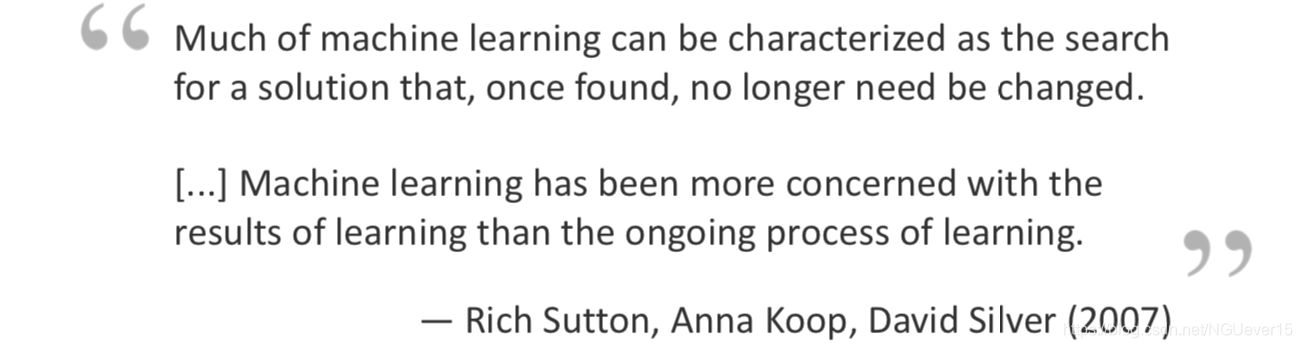
Motivation and some examples
When is standard machine learning not enough?
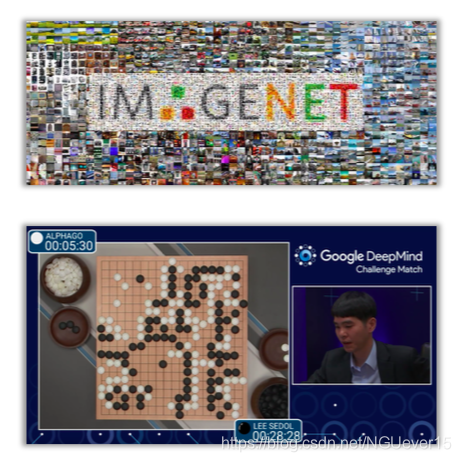
Standard ML finally works for well-defined, stationary tasks.
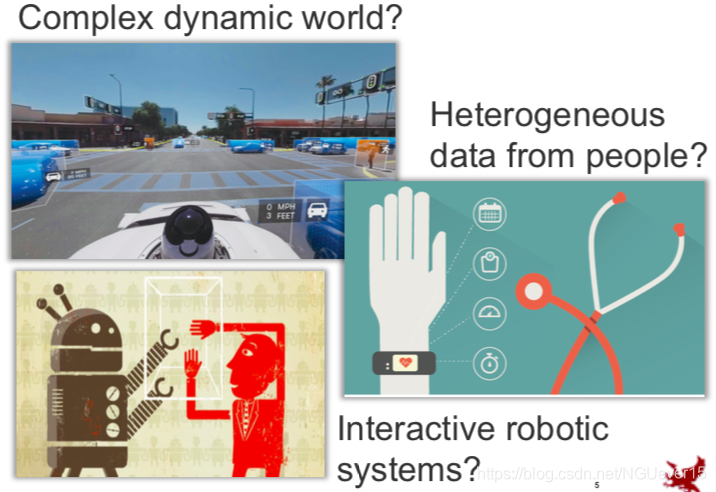
But how about the complex dynamic world, heterogeneous data from people and the interactive robotic systems?
General formulation and probabilistic view
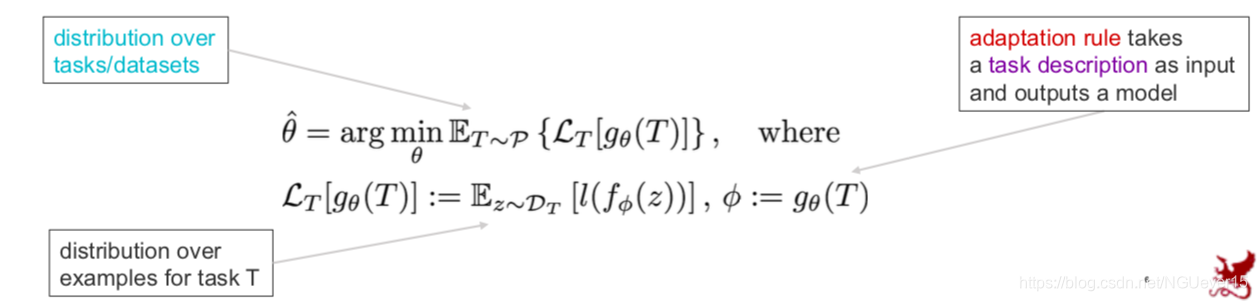
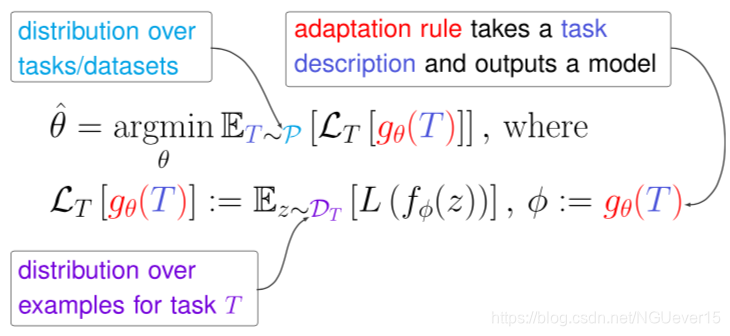
What is meta-learning?
Standard learning: Given a distribution over examples (single task), learn a function that minimizes the loss:

Learning-to-learn: Given a distribution over tasks, output an adaptation rule that can be used at test time to generalize from a task description
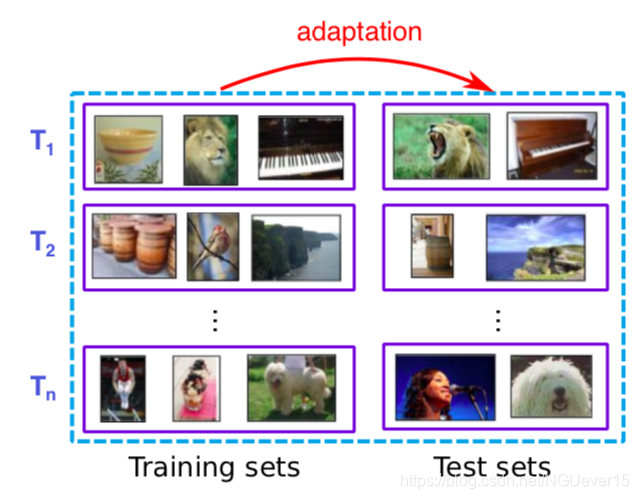
A Toy Example: Few-shot Image Classification
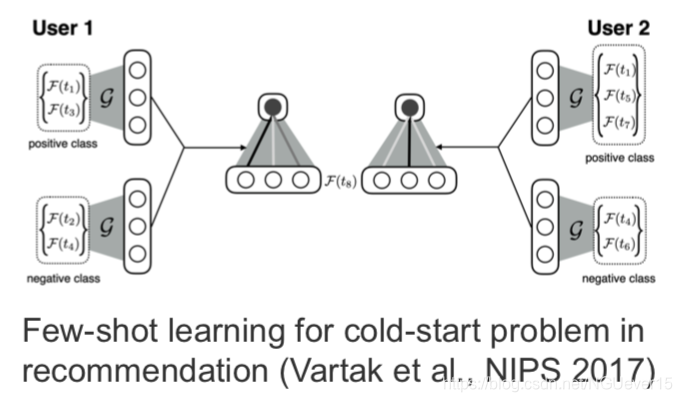
Other (practical) Examples of Few-shot Learning
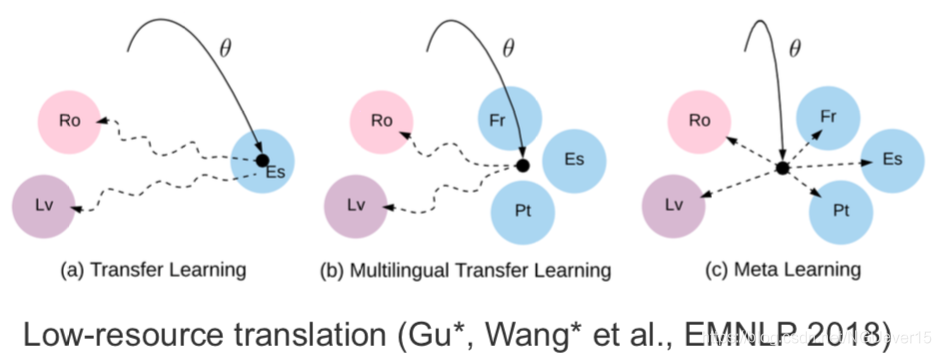
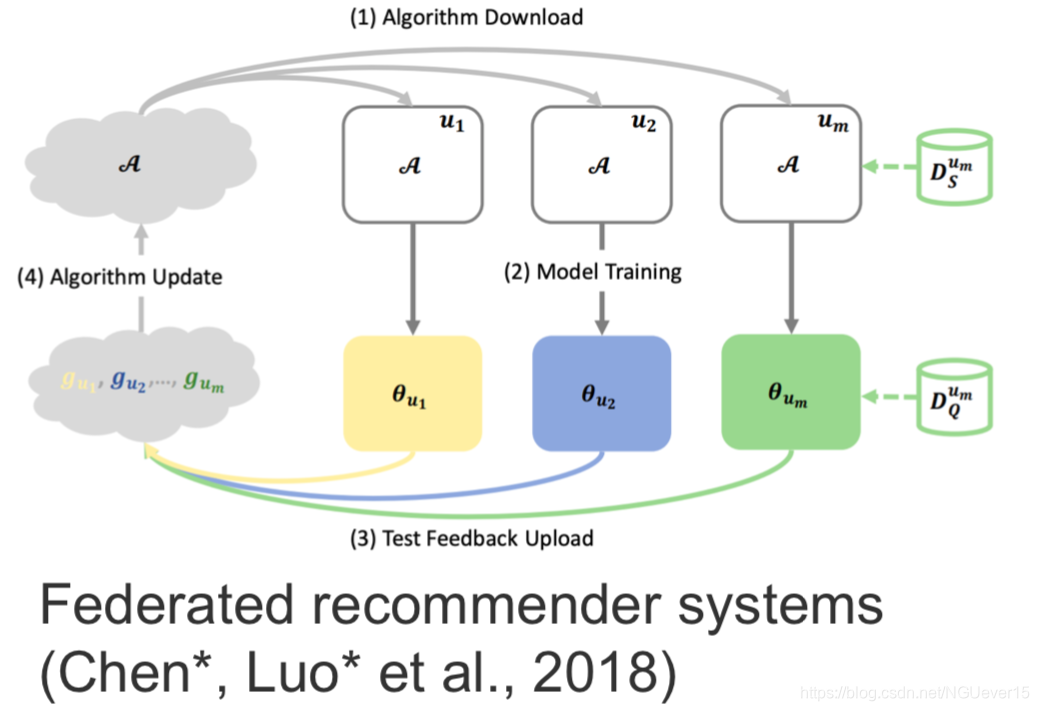
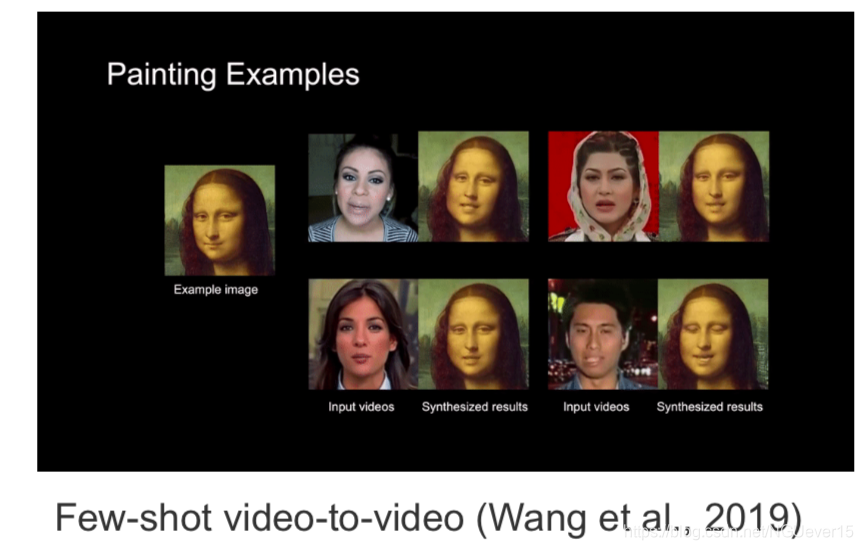
Gradient-based and other types of meta-learning
Model-agnostic Meta-learning (MAML) 与模型无关的元学习
- Start with a common model initialization \(\theta\)
- Given a new task \(T_i\) , adapt the model using a gradient step:

- Meta-training is learning a shared initialization for all tasks:

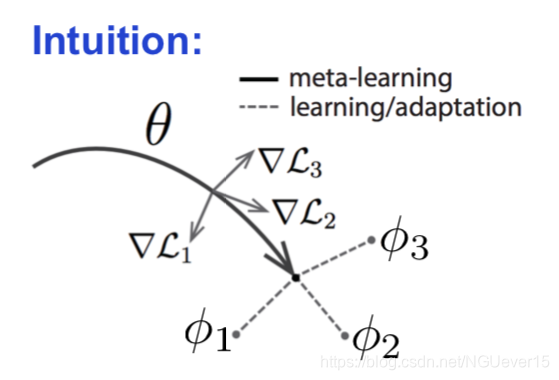
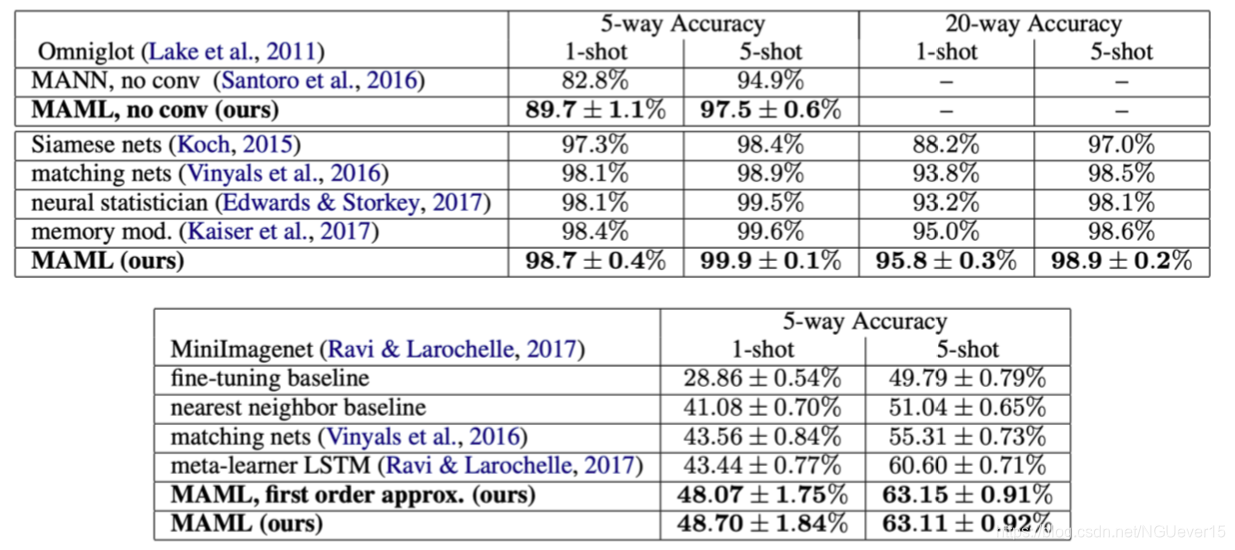
Does MAML Work?
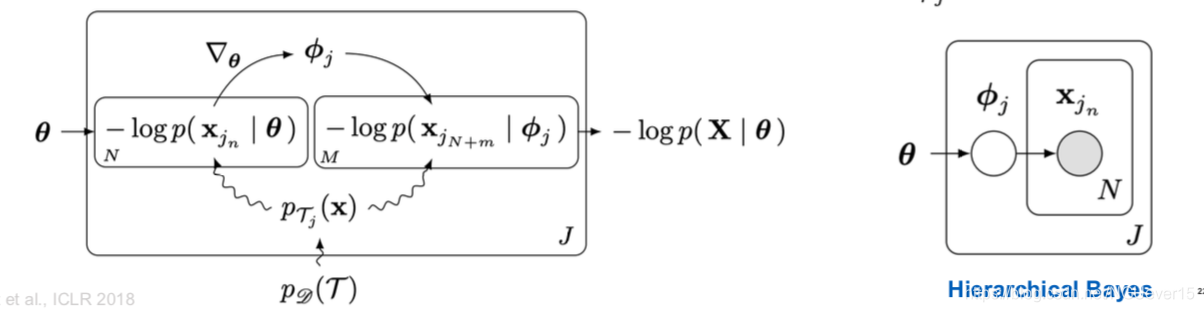
MAML from a Probabilistic Standpoint
Training points: 
testing points:
MAML with log-likelihood loss对数似然损失:

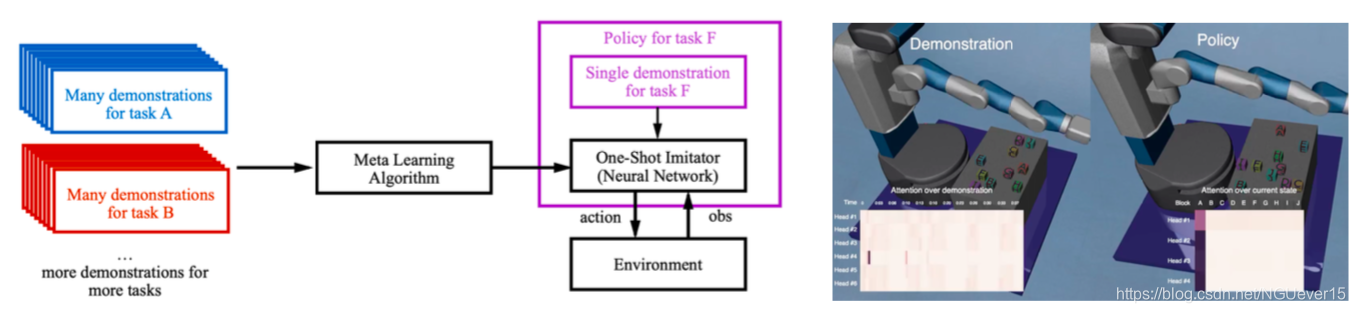
One More Example: One-shot Imitation Learning 模仿学习
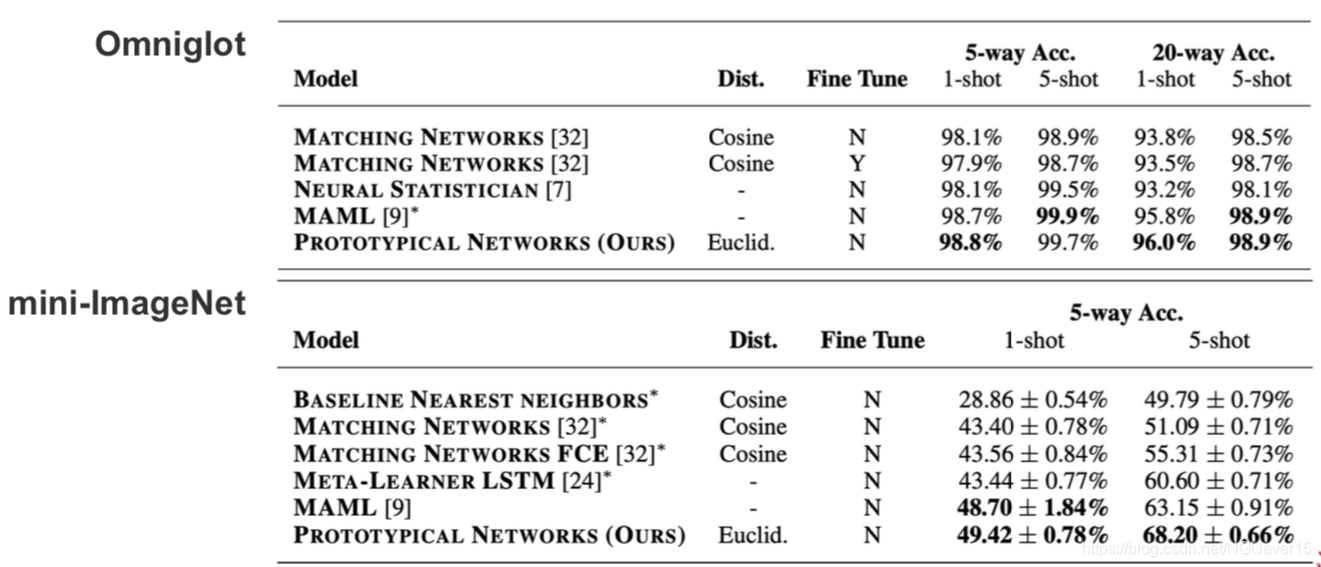
Prototype-based Meta-learning
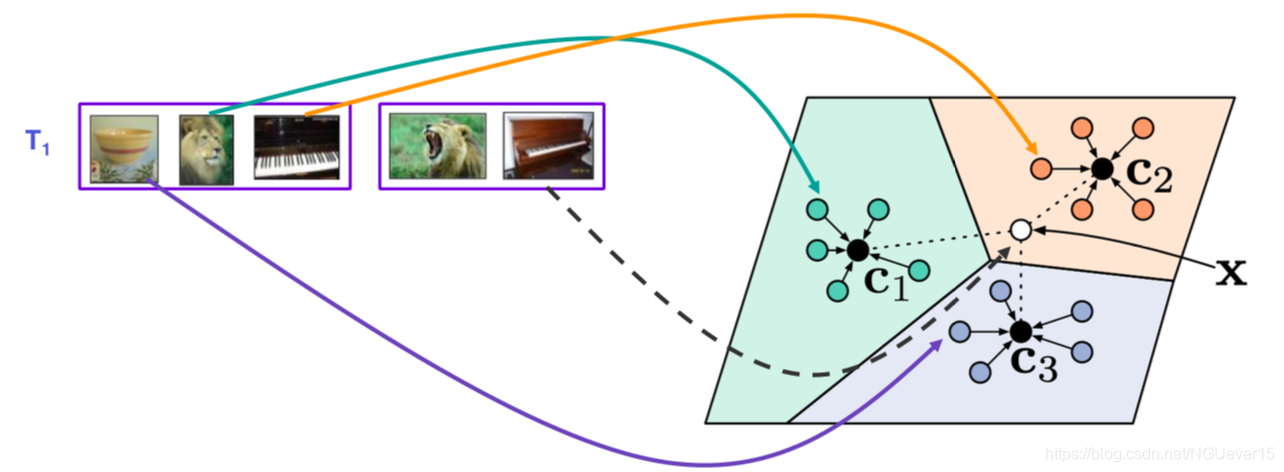
Prototypes:
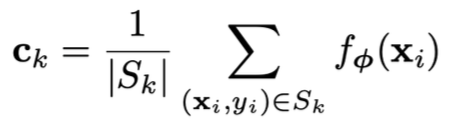
Predictive distribution:

Does Prototype-based Meta-learning Work?
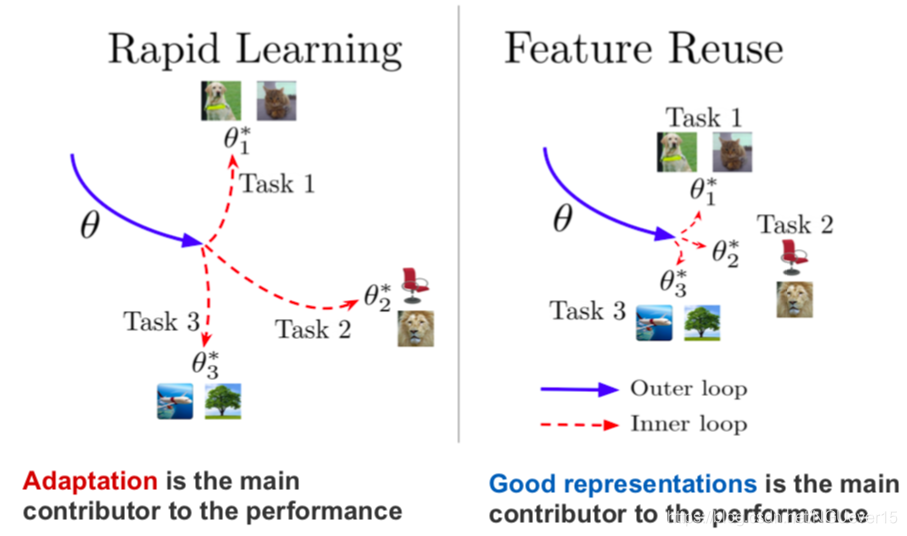
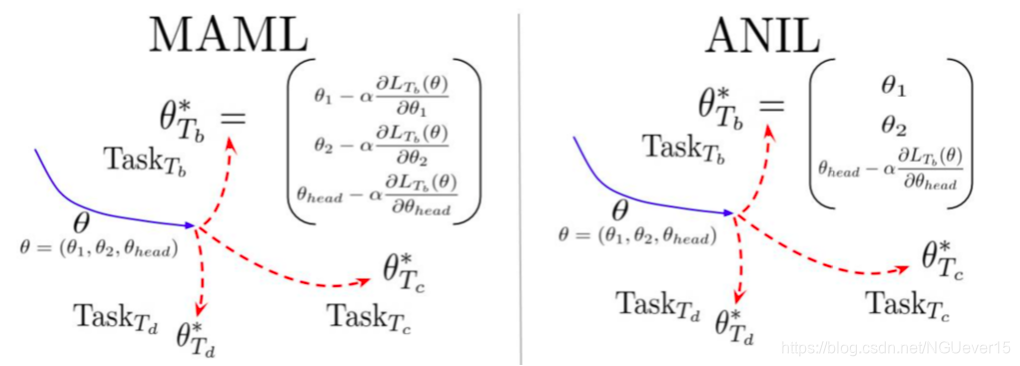
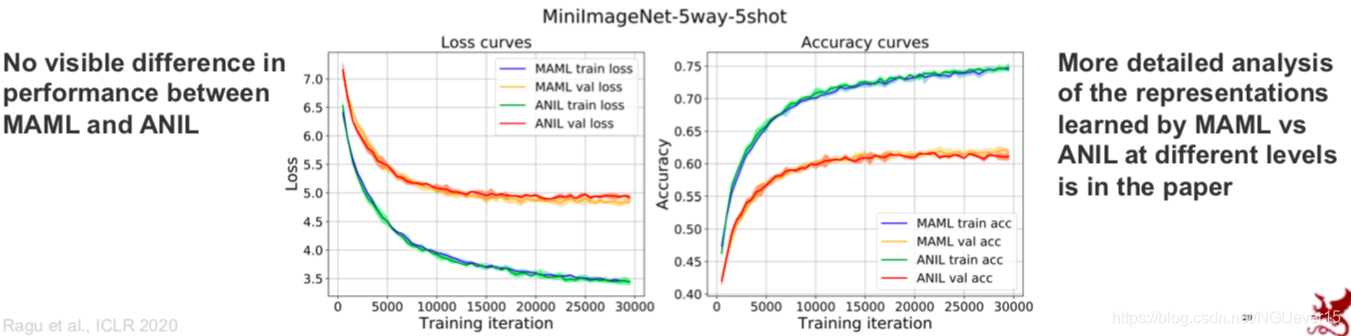
Rapid Learning or Feature Reuse 特征重用
Neural processes and relation of meta-learning to GPs
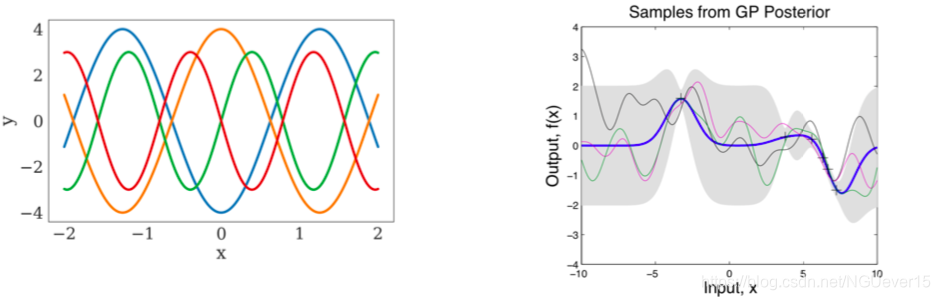
Drawing parallels between meta-learning and GPs
In few-shot learning:
- Learn to identify functions that generated the data from just a few examples.
- The function class and the adaptation rule encapsulate our prior knowledge.
Recall Gaussian Processes (GPs): 高斯过程
- Given a few (x, y) pairs, we can compute the predictive mean and variance.
- Our prior knowledge is encapsulated in the kernel function.
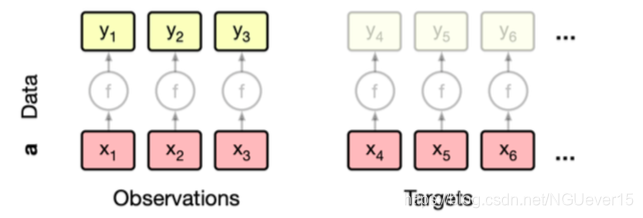
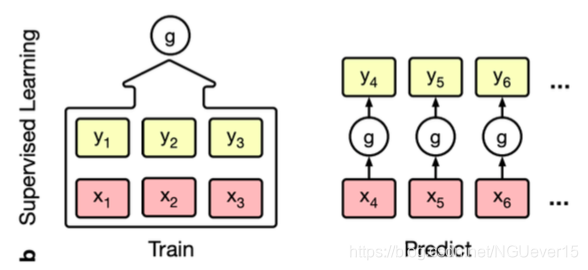
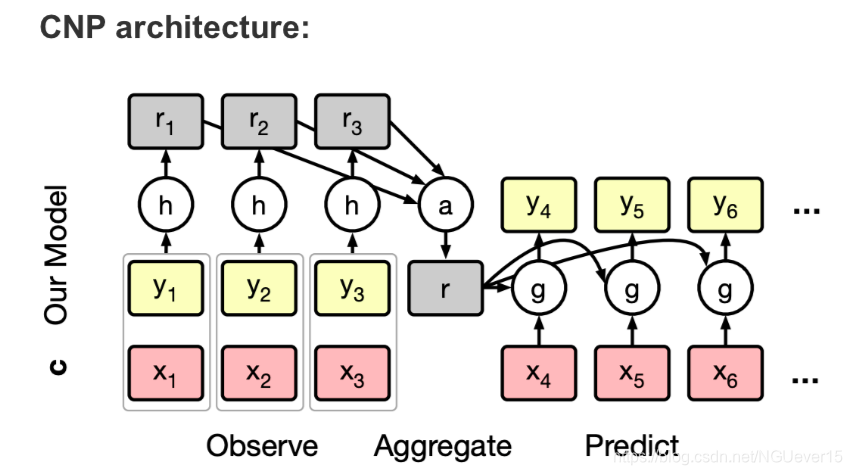
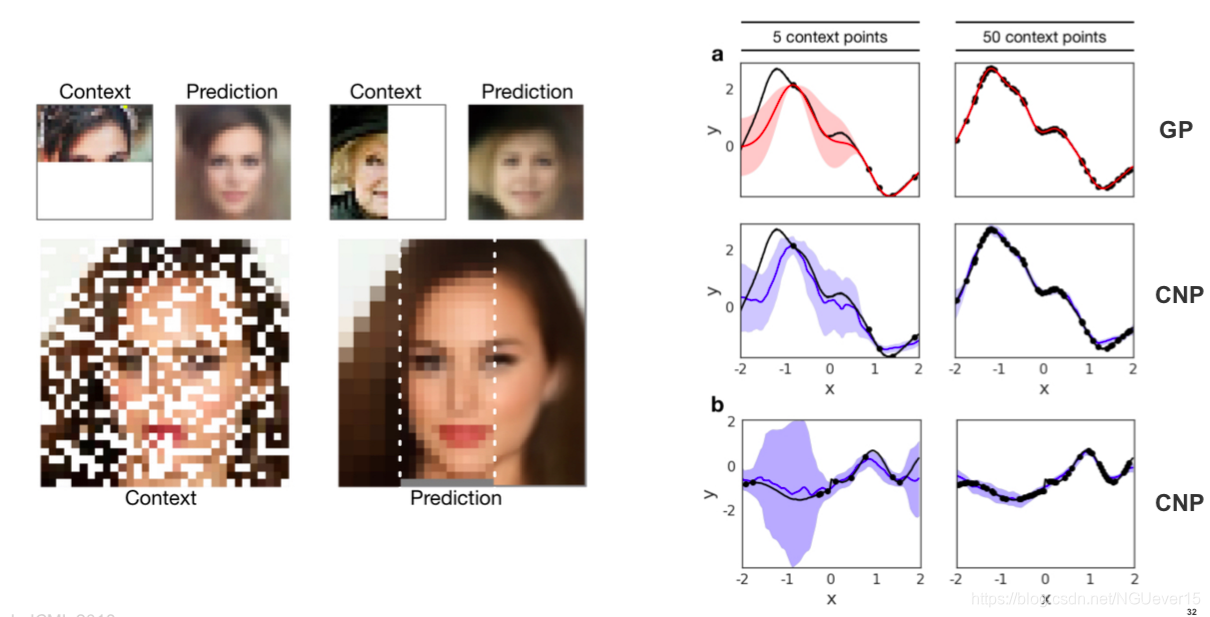
Conditional Neural Processes 条件神经过程
On software packages for meta-learning
A lot of research code releases (code is fragile and sometimes broken)
A few notable libraries that implement a few specific methods:
- Torchmeta (https://github.com/tristandeleu/pytorch-meta)
- Learn2learn (https://github.com/learnables/learn2learn)
- Higher (https://github.com/facebookresearch/higher)

Takeaways
- Many real-world scenarios require building adaptive systems and cannot be solved using “learn-once” standard ML approach.
- Learning-to-learn (or meta-learning) attempts extend ML to rich multitask scenarios—instead of learning a function, learn a learning algorithm.
- Two families of widely popular methods:
- Gradient-based meta-learning (MAML and such)
- Prototype-based meta-learning (Protonets, Neural Processes, ...)
- Many hybrids, extensions, improvements (CAIVA, MetaSGD, ...)
- Is it about adaptation or learning good representations? Still unclear and depends on the task; having good representations might be enough.
- Meta-learning can be used as a mechanism for causal discovery.因果发现 (See Bengio et al., 2019.)
02 Elements of Meta-RL
What is meta-RL and why does it make sense?
Recall the definition of learning-to-learn
Standard learning: Given a distribution over examples (single task), learn a function that minimizes the loss:

Learning-to-learn: Given a distribution over tasks, output an adaptation rule that can be used at test time to generalize from a task description

Meta reinforcement learning (RL): Given a distribution over environments, train a policy update rule that can solve new environments given only limited or no initial experience.
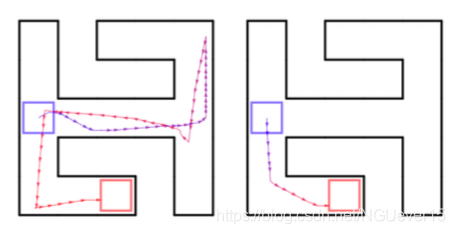
Meta-learning for RL
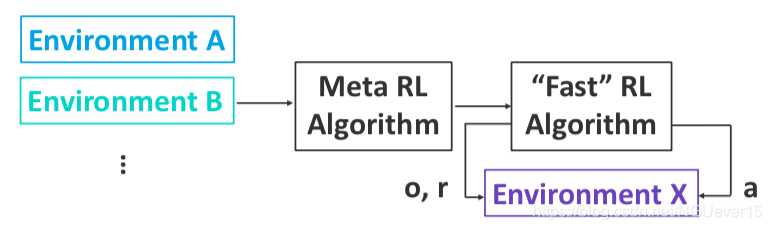
On-policy and off-policy meta-RL
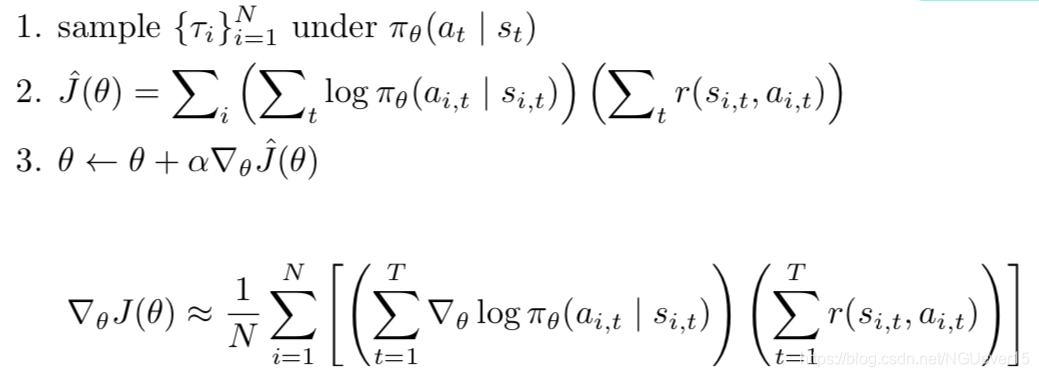
On-policy RL: Quick Recap 符合策略的RL:快速回顾
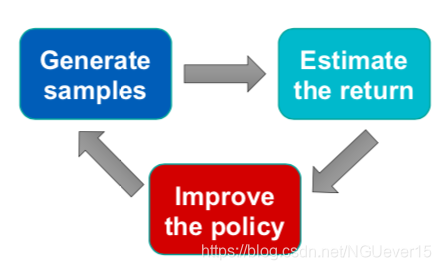
REINFORCE algorithm:
On-policy Meta-RL: MAML (again!)
- Start with a common policy initialization \(\theta\)
- Given a new task \(T_i\) , collect data using initial policy, then adapt using a gradient step:
- Meta-training is learning a shared initialization for all tasks:
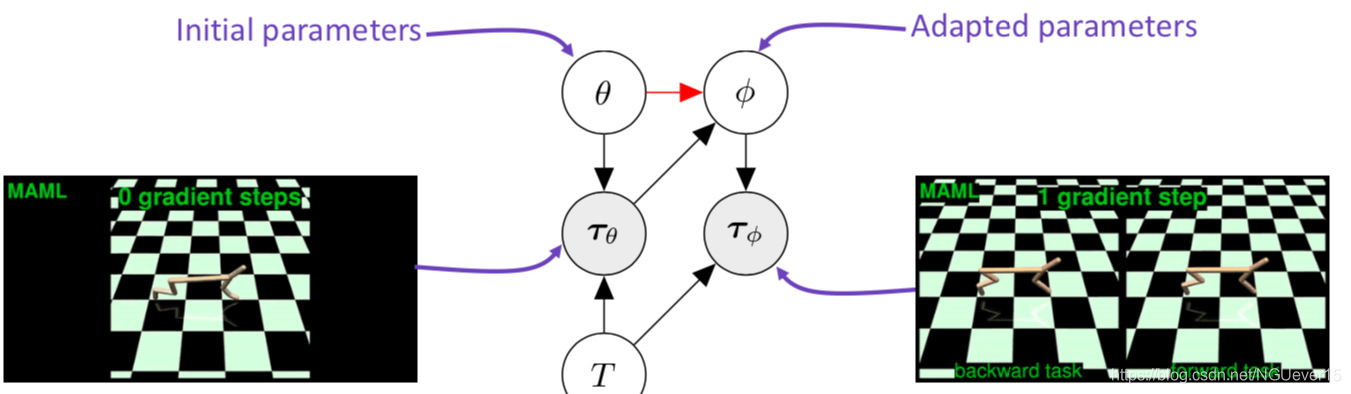
Adaptation as Inference 适应推理
Treat policy parameters, tasks, and all trajectories as random variables随机变量
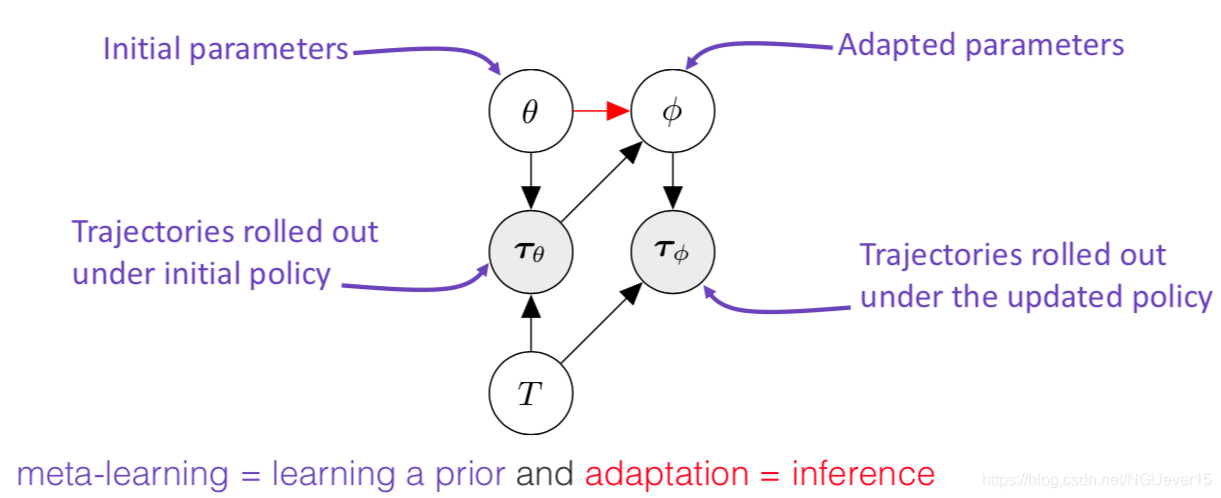
meta-learning = learning a prior and adaptation = inference
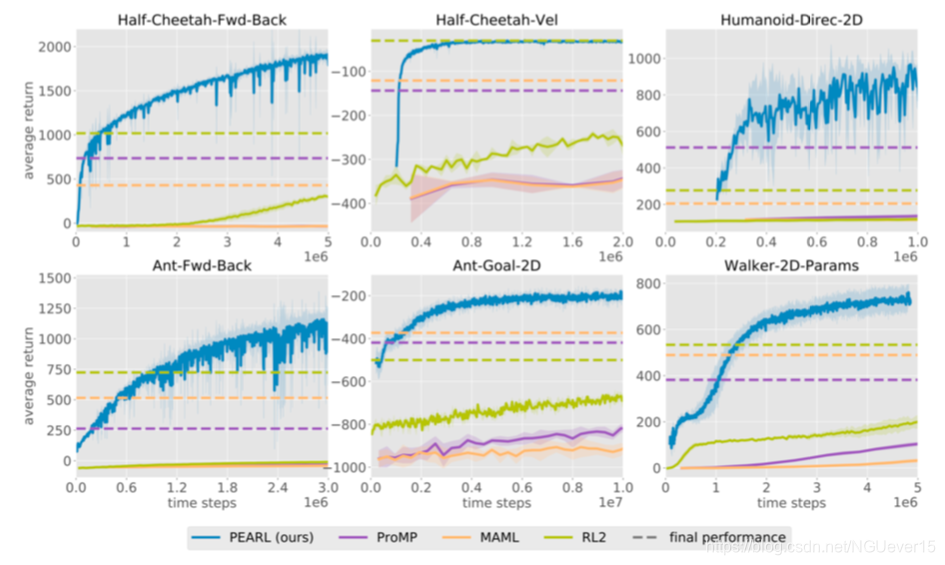
Off-policy meta-RL: PEARL
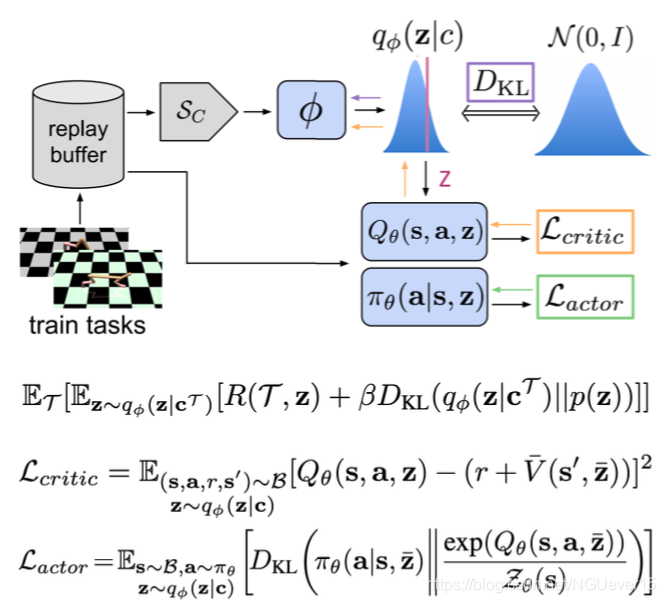
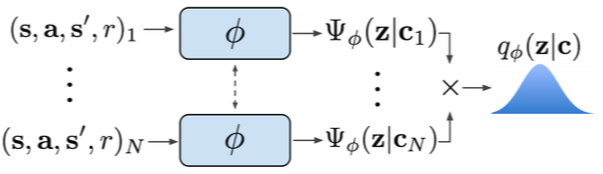
Key points:
- Infer latent representations z of each task from the trajectory data.
- The inference networkq is decoupled from the policy, which enables off-policy learning.
- All objectives involve the inference and policy networks.
Adaptation in nonstationary environments 不稳定环境
Classical few-shot learning setup:
- The tasks are i.i.d. samples from some underlying distribution.
- Given a new task, we get to interact with it before adapting.
- What if we are in a nonstationary environment (i.e. changing over time)? Can we still use meta-learning?
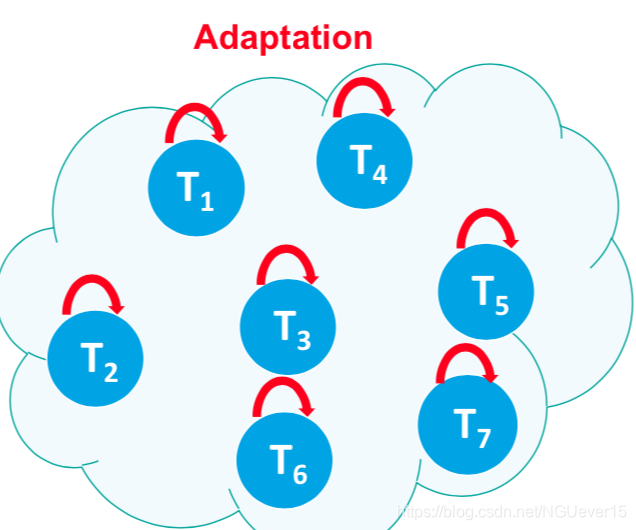
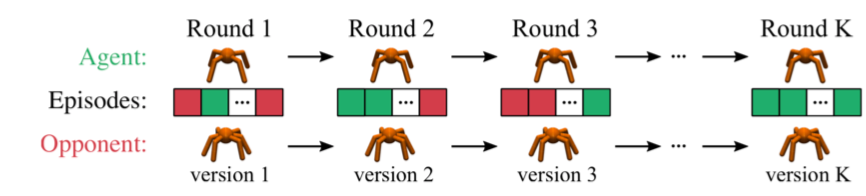
Example: adaptation to a learning opponent
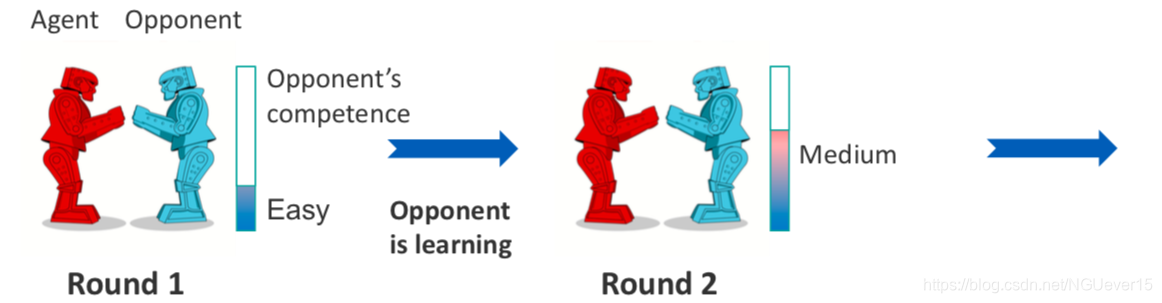 Each new round is a new task. Nonstationary environment is a sequence of tasks.
Continuous adaptation setup:
- The tasks are sequentially dependent.
- meta-learn to exploit dependencies
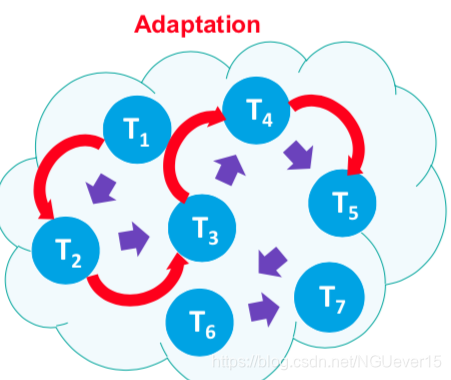
Continuous adaptation
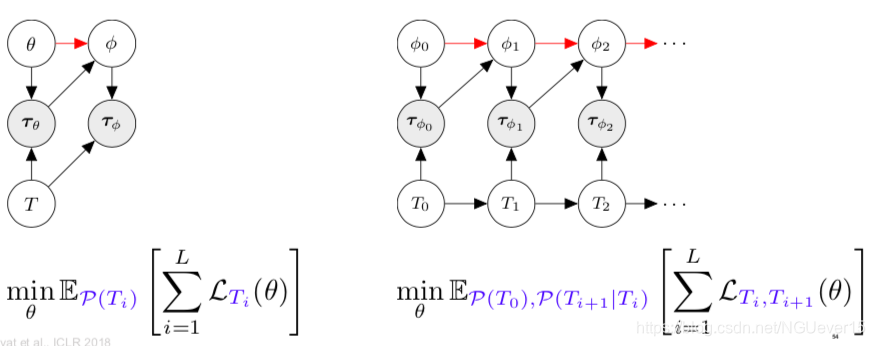
Treat policy parameters, tasks, and all trajectories as random variables
RoboSumo: a multiagent competitive env
an agent competes vs. an opponent, the opponent’s behavior changes over time
Takeaways
- Learning-to-learn (or meta-learning) setup is particularly suitable for multi-task reinforcement learning
- Both on-policy and off-policy RL can be “upgraded” to meta-RL:
- On-policy meta-RL is directly enabled by MAML
- Decoupling task inference and policy learning enables off-policy methods
- Is it about fast adaptation or learning good multitask representations? (See discussion in Meta-Q-Learning: https://arxiv.org/abs/1910.00125)
- Probabilistic view of meta-learning allows to use meta-learning ideas beyond distributions of i.i.d. tasks, e.g., continuous adaptation.
- Very active area of research.
卡耐基梅隆大学(CMU)元学习和元强化学习课程 | Elements of Meta-Learning的更多相关文章
- 李飞飞确认将离职!谷歌云AI总帅换人,卡耐基·梅隆老教授接棒
https://mp.weixin.qq.com/s/i1uwZALu1BcOq0jAMvPdBw 看点:李飞飞正式回归斯坦福,新任谷歌云AI总帅还是个教授,不过这次是全职. 智东西9月11日凌晨消息 ...
- 知乎:在卡内基梅隆大学 (Carnegie Mellon University) 就读是怎样一番体验?
转自:http://www.zhihu.com/question/24295398 知乎 Yu Zhang 知乎搜索 首页 话题 发现 消息 调查类问题名校就读体验修改 在卡内基梅隆大学 (Car ...
- 卡内基梅隆大学软件工程研究所先后制定用于评价软件系统成熟度的模型CMM和CMMI
SEI(美国卡内基梅隆大学软件工程研究所(Software Engineering Institute, SEI))开发的CMM模型有: 用于软件的(SW-CMM;SW代表'software即软件') ...
- 洛谷P3389 高斯消元 / 高斯消元+线性基学习笔记
高斯消元 其实开始只是想搞下线性基,,,后来发现线性基和高斯消元的关系挺密切就一块儿在这儿写了好了QwQ 先港高斯消元趴? 这个算法并不难理解啊?就会矩阵运算就过去了鸭,,, 算了都专门为此写个题解还 ...
- 【敬业福bug】支付宝五福卡敬业福太难求 被炒至200元
016年央视春晚官方独家互动合作伙伴--支付宝,正式上线春晚红包玩法集福卡活动. 用户新加入10个支付宝好友,就可以获成3张福卡.剩下2张须要支付宝好友之间相互赠送.交换,终于集齐5张福卡就有机会平分 ...
- 【转载】 准人工智能分享Deep Mind报告 ——AI“元强化学习”
原文地址: https://www.sohu.com/a/231895305_200424 ------------------------------------------------------ ...
- (@WhiteTaken)设计模式学习——享元模式
继续学习享元模式... 乍一看到享元的名字,一头雾水,学习了以后才觉得,这个名字确实比较适合这个模式. 享元,即共享对象的意思. 举个例子,如果制作一个五子棋的游戏,如果每次落子都实例化一个对象的话, ...
- 大学启示录I 浅谈大学生的学习与就业
教育触感 最近看了一些书,有了一些思考,以下纯属博主脑子被抽YY的一些无关大雅的思考,如有雷同,纯属巧合.. 现实总是令人遗憾的,我们当中太多人已经习惯于沿着那一成不变的"典型成功道路&qu ...
- python学习(十)元类
python 可以通过`type`函数创建类,也可通过type判断数据类型 import socket from io import StringIO import sys class TypeCla ...
随机推荐
- django JsonResponse返回中文时显示unicode编码(\u67e5\u8be2)
django JsonResponse返回中文时显示unicode编码(\u67e5\u8be2) 关注公众号"轻松学编程"了解更多. 原因 这个unicode编码,是python ...
- Spark: JAVA_HOME is not set
在Spark项目,sbin目录下的spark-config.sh文件下,最后添加JAVA_HOME的索引. 即可.
- dst_output发包
不管是收到报文转发还是本机发送报文,最后都会调用dst_output /* Output packet to network from transport. */ static inline int ...
- Electron 的断点续下载
最近用 Electron 做了个壁纸程序,需要断点续下载,在这里记录一下. HTTP断点下载相关的报文 Accept-Ranges 告诉客户端服务器是否支持断点续传,服务器返回 Content-Ran ...
- day92:flask:flask简介&基本运行&路由&HTTP请求和响应
目录 1.Flask简介 2.关于使用flask之前的准备 3.flask的基本运行 4.flask加载配置 5.传递路由参数(没有限定类型) 6.传递路由参数(通过路由转换器限定路由参数的类型) 7 ...
- To the Max(动态规划)
Description Given a two-dimensional array of positive and negative integers, a sub-rectangle is any ...
- Elasticsearch 国内镜像下载站
镜像地址:https://thans.cn/mirror/elasticsearch.html 支持 5.0.0~7.3.1 各个平台的各个版本. 本文章转载他人.
- Integer 错误的加锁
多线程同时访问一个Integer加锁的问题,程序运行和想要的结果相差甚远,让我百思不得其解,就下来研究了一下: 在进行多线程同步时,加锁是保证线程安全的重要手段之一.synchronized是大多数程 ...
- Hash算法——加密解密说明
MD5 pmd5-md5加密解密 加密类型识别工具 hash-identifier
- [原题复现+审计][RoarCTF 2019]Easy Calc(http协议走私、php字符串解析漏洞)
简介 原题复现: 考察知识点:http协议走私.php字符串解析漏洞 线上平台:https://buuoj.cn(北京联合大学公开的CTF平台) 榆林学院内可使用信安协会内部的CTF训练平台找到 ...