
Hibernate性能优化之EHCache缓存
像Hibernate这种ORM框架,相较于JDBC操作,需要有更复杂的机制来实现映射、对象状态管理等,因此在性能和效率上有一定的损耗。
在保证避免映射产生低效的SQL操作外,缓存是提升Hibernate的关键之一。
加入缓存可以避免数据库调用带来的连接创建与销毁、数据打包拆包、SQL执行、网络传输,良好的缓存机制和合理的缓存模式能带来性能的极大提升,EHCache就提供了这种良好的缓存机制。
在考虑给系统加入缓存进行优化前,复用SessionFactory是Hibernate优化最优先、最基础的性能优化方法,参考上一篇《Hibernate性能优化之SessionFactory重用》。
Hibernate的缓存机制
缓存的级别一般分为三种,每一种缓存的范围更大:
事务级缓存:Hibernate中称为一级缓存,在一个Session中共享缓存对象;
应用级缓存:Hibernate中称为二级缓存,在一个SessionFactory中共享缓存对象,SessionFactory在整个应用范围内重用;
分布式缓存:部署为单独的实例,如Redis、Memcache等。
Hibernate的按以下方式进行缓存:
当Hibernate根据ID访问数据对象的时候,首先从Session一级缓存中查;
查不到,如果配置了二级缓存,那么从二级缓存中查;
如果都查不到,再查询数据库,把结果按照ID放入到缓存删除、更新、增加数据的时候,同时更新缓存。
Hibernate默认不启用二级缓存,EHCache是Hibernate中的二级缓存插件,使用Hibernate的系统可以直接使用EHCache缓存。
为什么要直接使用EHCache
回头来看那句话:良好的缓存机制和合理的缓存模式能带来性能的极大提升。
Hibernate的缓存模式是什么?
根据ID来缓存对象,也就是Session的get、load操作时。
这种缓存模式的弊端有两点:
1、应用场景太单一,系统中大量的列表式查询缓存起不到作用;
2、一些系统中通过ThreadLocal在线程中重用Session,每个线程可能需要大量处理不用的业务逻辑,缓存命中率很低;如果不重用Session,一般的场景缓存命中率更低。
既然EHCache已经提供了良好的缓存机制,结合自己系统的业务来优化缓存模式才是最佳的。
如何使用EHCache
EHCache是Hibernate中的二级缓存插件,使用Hibernate的系统可以直接使用EHCache缓存,不需要再添加其他jar包。
新建EHCache配置文件,具体的配置含义可以查手册:
<ehcache xmlns:xsi="http://www.w3.org/2001/XMLSchema-instance"

   xsi:noNamespaceSchemaLocation="ehcache.xsd">

  <diskStore path="java.io.tmpdir"/>

  <defaultCache

    maxElementsInMemory="10000"

    maxElementsOnDisk="0"

    eternal="true"

    overflowToDisk="true"

    diskPersistent="false"

    timeToIdleSeconds="0"

    timeToLiveSeconds="0"

    diskSpoolBufferSizeMB="50"

    diskExpiryThreadIntervalSeconds="120"

    memoryStoreEvictionPolicy="LFU"

    />

  <cache name="restCache"

    maxElementsInMemory="100"

    maxElementsOnDisk="0"

    eternal="false"

    overflowToDisk="false"

    diskPersistent="false"

    timeToIdleSeconds="119"

    timeToLiveSeconds="119"

    diskSpoolBufferSizeMB="50"

    diskExpiryThreadIntervalSeconds="120"

    memoryStoreEvictionPolicy="FIFO"

    />

</ehcache>
EHCache的一个优点是线程安全的,适合多线程的使用场景,能简化开发人员的使用。
因此我写了一个单例模式,避免每次在方法里写getCache,这个类也涵盖了EHCache的基本使用:
public class EHCacheFactory {

    private final CacheManager manager;

    private final Cache cache;

    private EHCacheFactory() {

        manager = CacheManager.create(getClass().getResource("/ehcache.xml"));

        cache = manager.getCache("restCache");

    }

    public Element getCache(String strKey) {

        return EHCacheFactory.getInstance().getCache().get(strKey);

    }

    public void setCache(String strKey, String strVal) {

        EHCacheFactory.getInstance().getCache().put(new Element(strKey, strVal));

    }

    public Cache getCache() {

        return cache;

    }

    private static class SingletonHolder {

        private final static EHCacheFactory INSTANCE = new EHCacheFactory();

    }

    public static EHCacheFactory getInstance() {

        return SingletonHolder.INSTANCE;

    }

}
我的系统是JAVA REST,在需要缓冲的REST接口中加入了EHCache缓存,通过URL参数作为缓存键值,REST接口返回的json数据作为缓存值,这种缓存模式非常适合REST。
使用ab进行了简单的性能测试:
在一个简答查询接口中,性能提升一倍;
在一个略复杂接口中,执行4、5个查询,加入缓存后性能提升20倍。
介绍在Hibernate中使用查询缓存、一级缓存、二级缓存,
整合Spring在HibernateTemplate中使用查询缓存。
EhCache是Hibernate的二级缓存技术之一,可以把查询出来的数据存储在内存或者磁盘,节省下次同样查询语句再次查询数据库,大幅减轻数据库压力;
EhCache的使用注意点
当用Hibernate的方式修改表数据(save,update,delete等等),这时EhCache会自动把缓存中关于此表的所有缓存全部删除掉(这样能达到同步)。但对于数据经常修改的表来说,可能就失去缓存的意义了(不能减轻数据库压力);
在比较少更新表数据的情况下,EhCache一般要使用在比较少执行write操作的表(包括update,insert,delete等)[Hibernate的二级缓存也都是这样];对并发要求不是很严格的情况下,两台机子中的缓存是不能实时同步的;
首先要在hibernate.cfg.xml配置文件中添加配置,在hibernate.cfg.xml中的mapping标签上面加以下内容:
<!--  Hibernate 3.3 and higher -->

<!--

<property name="hibernate.cache.region.factory_class">net.sf.ehcache.hibernate.EhCacheRegionFactory</property>

<property name="hibernate.cache.region.factory_class">net.sf.ehcache.hibernate.SingletonEhCacheRegionFactory</property>

-->

<!-- hibernate3.0-3.2 cache config-->

<!--

<property name="hibernate.cache.region.factory_class">net.sf.ehcache.hibernate.EhCacheProvider</property>

-->

<property name="hibernate.cache.provider_class">net.sf.ehcache.hibernate.SingletonEhCacheProvider</property>

<!-- Enable Second-Level Cache and Query Cache Settings -->

<property name="hibernate.cache.use_second_level_cache">true</property>

<property name="hibernate.cache.use_query_cache">true</property>
如果你是整合在spring配置文件中,那么你得配置你的applicationContext.xml中相关SessionFactory的配置
<prop key="hibernate.cache.use_query_cache">true</prop>

<prop key="hibernate.cache.use_second_level_cache">true</prop>

<prop key="hibernate.cache.provider_class">org.hibernate.cache.EhCacheProvider</prop>
然后在hibernate.cfg.xml配置文件中加入使用缓存的属性
<!-- class-cache config -->

<class-cache class="com.hoo.hibernate.entity.User" usage="read-write" />
当然你也可以在User.hbm.xml映射文件需要Cache的配置class节点下,加入类似如下格式信息:
<class name="com.hoo.hibernate.entity.User" table="USER" lazy="false">

<cache usage="transactional|read-write|nonstrict-read-write|read-only" />
注意:cache节点元素应紧跟class元素
关于选择缓存策略依据:
ehcache不支持transactional,其他三种可以支持。
read- only:无需修改, 可以对其进行只读缓存,注意:在此策略下,如果直接修改数据库,即使能够看到前台显示效果,但是将对象修改至cache中会报error,cache不会发生作用。另:删除记录会报错,因为不能在read-only模式的对象从cache中删除。
read-write:需要更新数据,那么使用读/写缓存比较合适,前提:数据库不可以为serializable transaction isolation level(序列化事务隔离级别)
nonstrict-read-write:只偶尔需要更新数据(也就是说,两个事务同时更新同一记录的情况很不常见),也不需要十分严格的事务隔离,那么比较适合使用非严格读/写缓存策略。
如果你使用的注解方式,没有User.hbm.xml,那么你也可以用注解方式配置缓存
@Cache(usage = CacheConcurrencyStrategy.READ_WRITE)

public class User implements Serializable {

}
在Dao层使用cache,代码如下
Session s = HibernateSessionFactory.getSession();

Criteria c = s.createCriteria(User.class);

c.setCacheable(true);//这句必须要有

System.out.println("第一次读取");

List<User> users = c.list();

System.out.println(users.size());

HibernateSessionFactory.closeSession();

s = HibernateSessionFactory.getSession();

c = s.createCriteria(User.class);

c.setCacheable(true);//这句必须要有

System.out.println("第二次读取");

users = c.list();

System.out.println(users.size());

HibernateSessionFactory.closeSession();
你会发现第二次查询没有打印sql语句,而是直接使用缓存中的对象。
如果你的Hibernate和Spring整合在一起,那么你可以用HibernateTemplate来设置cache
getHibernateTemplate().setCacheQueries(true);

return getHibernateTemplate().find("from User");
当你整合Spring时,如果你的HibernateTemplate模板配置在Spring的Ioc容器中,那么你可以这样启用query cache
<bean id="hibernateTemplate" class="org.springframework.orm.hibernate3.HibernateTemplate">

    <property name="sessionFactory">

       <ref bean="sessionFactory" />

    </property>

    <property name="cacheQueries">

       <value>true</value>

    </property>

</bean>
此后,你在dao模块中注入sessionFactory的地方都注入hibernateTemplate即可。
以上讲到的都是Spring和Hibernate的配置,下面主要结合上面使用的ehcache,来完成ehcache.xml的配置。如果你没有配置ehcache,默认情况下使用defaultCache的配置。
<cache name="com.hoo.hibernate.entity.User" maxElementsInMemory="10000" eternal="false" timeToIdleSeconds="300" timeToLiveSeconds="600" overflowToDisk="true" />

<!--

hbm文件查找cache方法名的策略:如果不指定hbm文件中的region="ehcache.xml中的name的属性值",则使用name名为com.hoo.hibernate.entity.User的cache,如果不存在与类名匹配的cache名称,则用 defaultCache。

如果User包含set集合,则需要另行指定其cache

例如User包含citySet集合,则需要

添加如下配置到ehcache.xml中

-->

<cache name="com.hoo.hibernate.entity.citySet"

maxElementsInMemory="10000" eternal="false" timeToIdleSeconds="300"

timeToLiveSeconds="600" overflowToDisk="true" />
如果你使用了Hibernate的查询缓存,需要在ehcache.xml中加入下面的配置
<cache name="org.hibernate.cache.UpdateTimestampsCache"

    maxElementsInMemory="5000"

    eternal="true"

    overflowToDisk="true" />

<cache name="org.hibernate.cache.StandardQueryCache"

    maxElementsInMemory="10000"

    eternal="false"

    timeToLiveSeconds="120"

    overflowToDisk="true" />
调试时候使用log4j的log4j.logger.org.hibernate.cache=debug,更方便看到ehcache的操作过程,主要用于调试过程,实际应用发布时候,请注释掉,以免影响性能。
使用ehcache,打印sql语句是正常的,因为query cache设置为true将会创建两个缓存区域:一个用于保存查询结果集 (org.hibernate.cache.StandardQueryCache); 另一个则用于保存最近查询的一系列表的时间戳(org.hibernate.cache.UpdateTimestampsCache)。请注意:在查询缓存中,它并不缓存结果集中所包含的实体的确切状态;它只缓存这些实体的标识符属性的值、以及各值类型的结果。需要将打印sql语句与最近的cache内 容相比较,将不同之处修改到cache中,所以查询缓存通常会和二级缓存一起使用。
二级缓存是属于SessionFactory级别的缓存机制,是属于进程范围的缓存。一级缓存是Session级别的缓存,是属于事务范围的缓存,由Hibernate管理,一般无需进行干预。
Hibernate支持以下的第三方的缓存框架:
| Cache | Interface | Supported strategies | ||
|---|---|---|---|---|
| HashTable (testing only) |
|
|||
| EHCache |
|
|||
| OSCache |
|
|||
| SwarmCache |
|
|||
| JBoss Cache 1.x |
|
|||
| JBoss Cache 2.x |
|
2、下载第三方ehcache.jar
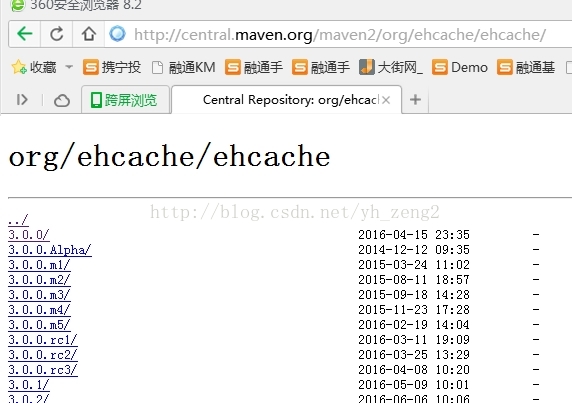
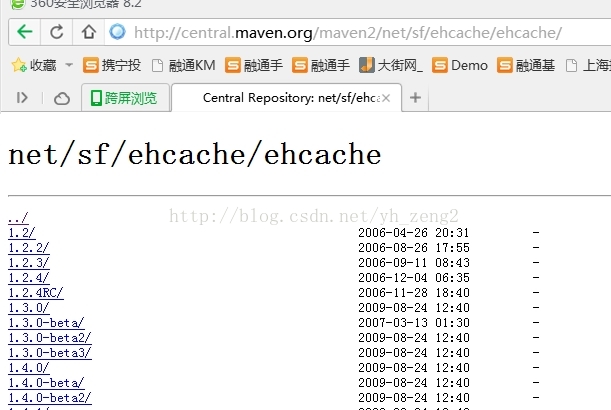
ehcache.jar包的话,有两种,一种是org.ehcache,另一种是net.sf.ehache。Hibernate集成的是net.sf.ehcache!!所以应该下载net.sf.ehcache。如果使用org.ehcache的jar包,hibernate是不支持的!!
下载下来的jar包,需要放到项目当中,在本案例,是放到SSHWebProject项目的WebRoot/WEB-INF/lib目录下,需要注意的是,ehcache.jar包依赖commons-logging.jar,你还得看看你项目中有没有commons-logging.jar!!
3、开启hibernate的二级缓存
想是否使用hibernate.cfg.xml配置文件,会导致配置使用二级缓存的方式不一样,一般是由于项目集成了Spring框架,所以配置二级缓存的话,
就分以下两种情况:
1)项目有hibernate.cfg.xml
1-1)开启Hibernate缓存二级缓存功能
修改hibernate.cfg.xml,添加以下内容
Users.hbm.xml,添加以下内容:
2)集成了Spring框架之后,没有hibenate.cfg.mlx文件
1-1)开启Hibernate缓存二级缓存功能
修改applicationContext.xml文件,在sessionFactory Bean中添加以下hibernateProperties,如下:
1-2)配置哪些实体类的对象需要存放到二级缓存
本案例中,以edu.po.Users用户对象为例子,对应的实体映射文件为Users.hbm.xml。
在hbm文件(实体映射文件)中配置
Users.hbm.xml,添加以下内容:
<cache usage="read-write"/>
4、配置ehcache.xml文件
将ehcache.jar包中的ehcache-failsafe.xml 改名为 ehcache.xml 放入 src,因为hibernate默认找classpath*:ehcache.xml
本案例,对<diskStore>和<defaultCache>进行修改,如下
<diskStore path="d:/EhCacheData"/>
<!--

   maxElementsInMemory: 内存中最大对象数量 ,超过数量,数据会被缓存到硬盘

   eternal:缓存的对象是否有有效期(即是否永久存在)。如果为true,timeouts属性被忽略

   timeToIdleSeconds:缓存的对象在过期前的空闲时间,单位秒

   timeToLiveSeconds:存活时间,对象不管是否使用,到了时间回收,单位秒

   overflowToDisk:当内存中缓存对象数量达到 maxElementsInMemory 限制时,是否可以写到硬盘

   maxElementsOnDisk:硬盘缓存最大对象数量

   diskPersistent:在java虚拟机(JVM)重启或停掉的时候,是否持久化磁盘缓存,默认是false

   diskExpiryThreadIntervalSeconds:清除磁盘缓存中过期对象的监听线程的运行间隔,默认是120秒

   memoryStoreEvictionPolicy:当内存缓存的对象数量达到最大,有新的对象要加入的时候,

                                                                移除缓存中对象的策略。默认是LRU,可选的有LFU和FIFO

-->

<defaultCache

        maxElementsInMemory="10000"

        eternal="false"

        timeToIdleSeconds="120"

        timeToLiveSeconds="120"

        overflowToDisk="true"

        diskPersistent="true"

        diskExpiryThreadIntervalSeconds="120"

        memoryStoreEvictionPolicy="LRU"

        />
5、demo
SpringBeanUtils.java:
package utils;

import org.apache.log4j.Logger;

import org.hibernate.SessionFactory;

import org.springframework.context.ApplicationContext;

import org.springframework.context.support.FileSystemXmlApplicationContext;

/**

 * Title: SpringBeanUtils.java

 * Description: 获取Spring的Bean实例对象的工具类

 * @author yh.zeng

 * @date 2017-6-27

 */

public class SpringBeanUtils {

    private static Logger logger = Logger.getLogger(SpringBeanUtils.class);

    static String filePath ="WebRoot/WEB-INF/applicationContext.xml";

    static  ApplicationContext CONTEXT ;

    static{

        try{

            CONTEXT = new FileSystemXmlApplicationContext(filePath);

        }catch(Exception e){

            logger.error(StringUtils.getExceptionMessage(e));

        }

    }

    /**

     * 获取Bean

     * @param uniqueIdentifier Bean的唯一标识,可以是ID也可以是name

     * @return

     */

    public static Object getBean(String uniqueIdentifier){

        return CONTEXT.getBean(uniqueIdentifier);

    }

    /**

     * 获取SessionFacotry对象

     * @param uniqueIdentifier  SessionFactory Bean的唯一标识,可以是ID也可以是name

     * @return

     */

    public static SessionFactory getSessionFactory(String uniqueIdentifier){

        return (SessionFactory) CONTEXT.getBean(uniqueIdentifier);

    }

    public static String getFilePath() {

        return filePath;

    }

    public static void setFilePath(String filePath) {

        SpringBeanUtils.filePath = filePath;

        CONTEXT = new FileSystemXmlApplicationContext(filePath);

    }

}
HibernateEhCacheTest.java:
注意:查询缓存和查看Cache(缓存)统计信息的功能,需要做另外配置,见博客Hibernate开启查询缓存、Hibernate开启收集缓存统计信息
项目demo: https://github.com/zengyh/SSHWebProject.git
参考:在Spring、Hibernate中使用Ehcache缓存
Hibernate性能优化之EHCache缓存的更多相关文章
- Hibernate 性能优化之二级缓存
二级缓存是一个共享缓存,在二级缓存中存放的数据是共享数据特性 修改不能特别频繁 数据可以公开二级缓存在sessionFactory中,因为sessionFactory本身是线程安全,所 ...
- Hibernate 性能优化之一级缓存
1.一级缓存的生命周期 一级缓存在session中存放,只要打开session,一级缓存就存在了,当session关闭的时候,一级缓存就不存在了 2.一级缓存是依赖于谁存在的 ...
- Hibernate 性能优化之查询缓存
查询缓存是建立在二级缓存基础之上的,所以与二级缓存特性相似,是共享的,适合修改不是很频繁的数据 查询缓存不是默认开启的,需要设置 1.在cfg文件中配置 <property name= ...
- [MySQL性能优化系列]提高缓存命中率
1. 背景 通常情况下,能用一条sql语句完成的查询,我们尽量不用多次查询完成.因为,查询次数越多,通信开销越大.但是,分多次查询,有可能提高缓存命中率.到底使用一个复合查询还是多个独立查询,需要根据 ...
- 8.Hibernate性能优化
性能优化 1.注意session.clear() 的运用,尤其在不断分页的时候 a) 在一个大集合中进行遍历,遍历msg,取出其中额含有敏感字样的对象 b) 另外一种形式的内存泄漏( //面试题:Ja ...
- 第七章 Hibernate性能优化
一对一关联 实体类关系 一对多 多对多 一对一 Hibernate提供了两种映射一对一关联关系的方式:按照外键映射和按照主键映射.下面以员工账号和员工档案表为例,介绍这两种映射方式,并使用这两种映射方 ...
- SQL性能优化前期准备-清除缓存、开启IO统计
文章来至:https://www.cnblogs.com/Ren_Lei/p/5669662.html 如果需要进行SQl Server下的SQL性能优化,需要准备以下内容: 一.SQL查询分析器设置 ...
- 秋色园QBlog技术原理解析:性能优化篇:缓存总有失效时,构造持续的缓存方案(十四)
转载自:http://www.cyqdata.com/qblog/article-detail-38993 文章回顾: 1: 秋色园QBlog技术原理解析:开篇:整体认识(一) --介绍整体文件夹和文 ...
- OpenStack入门篇(五)之KVM性能优化及IO缓存介绍
1.KVM的性能优化,介绍CPU,内存,IO性能优化 KVM CPU-->qemu进行模拟ring 3-->用户应用 (用户态,用户空间)ring 0-->操作系统 (内核态,内核空 ...
随机推荐
- multi-voltage design apr
在先进制程中,为了降低芯片功耗,经常会采用 muti-voltage design,在一颗芯片内部划分出多个 power domain,不同 domain 采用不同的电压,有时候还会将其中某些 pow ...
- Centos7 安装Nodejs
使用EPEL安装 EPEL(Extra Packages for Enterprise Linux)企业版Linux的额外软件包,是Fedora小组维护的一个软件仓库项目,为RHEL/CentOS提供 ...
- JS兼容各个浏览器的本地图片上传即时预览效果
JS兼容各个浏览器的本地图片上传即时预览效果 很早以前 在工作曾经碰到这么一个需求,当时也是纠结了很久,也是google了很久,没有碰到合适的demo,今天特意研究了下这方面的的问题,所以也就做了个简 ...
- jqgrid 将列头设置为超链接或按钮
有时,需要将某个列头设置为超链接或按钮,点击超链接或按钮能够跳转至其他页面(或执行一个事件操作). 可以把 label 值设置成一个a标签或button 代码如下: colModel: [{ labe ...
- Dsu on Tree
这个属于一种技巧,可以解决类似于子树询问无修改可离线的问题,一些点分治的问题也可以用Dsu on Tree解决,并且常数较小,代码复杂度低,很具有可写性. 整体上的意思就是继承重儿子的信息,暴力修改轻 ...
- 20155209林虹宇Exp4 恶意代码分析
Exp4 恶意代码分析 系统运行监控 使用schtasks指令监控系统运行 新建一个txt文件,然后将txt文件另存为一个bat格式文件 在bat格式文件里输入以下信息 然后使用管理员权限打开cmd, ...
- wordpress必装的插件 wp最常用的十个插件
wordpress是世界上著名的博客系统,简称wp.一般新安装完wordpress以后,往往需要首先安装一些插件,这样才可以使用wordpress的更多功能.wp最常用的十个插件有哪些呢,可能根据每个 ...
- python基础学习1-流程控制和判断
python for循环和 if流程控制用法 Ages=22 for i in range(10): inputAges = int(input("输入年龄")) if input ...
- JavaScript快速入门-ECMAScript运算符
1.逻辑运算符 逻辑与:&&(and) 逻辑或:||(or) 逻辑非:!(not) 逻辑 AND 运算符(&&) 逻辑 AND 运算的运算数可以是任何类型的,不止是 B ...
- 《深入浅出NodeJS》mindmap
接触NodeJS有快两年了,但因为和我的工作内容关系不大,所以一直没有系统的学习.最近终于有空能系统地了解学习一下这门技术,于是买了一本朴灵老师的<深入浅出NodeJS>仔细研读.这本书内 ...