
bzoj3336 Uva10572 Black and White
题目描述:

数据范围:2<=n,m<=8
题解:
很明显需要状压。但是怎么压不知道,压什么不知道。
然后从条件下手。
条件1要求黑色在一起白色在一起,记录轮廓线很容易做到。
条件2要求不能出现$2*2$的同色方格。我们还需要再记录当前位置的左上角。
所以这道题的轮廓线长这样。
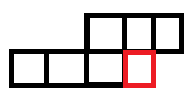
丑图。
我们需要确定一个顺序记录哪几块互相联通。由于轮廓线奇特的形状我决定这样标号。
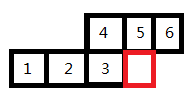
如果编号相同但是并不互相联通我们可以知道他俩不同颜色。
为了颜色我们决定记录某个块的颜色,这样可以得到所有颜色。
于是这道题表中存的就是$1$号颜色+所有状态。
为了方便调试我用了十进制。
每次调用时都要解压,处理后压缩放回去。
由于第一行和第一列找不到长这样的轮廓线,我们可以搜出第一行所有状态,处理第一列时直接枚举黑色/白色。
接下来就是精彩的特判环节。
(这一部分针对处于中心部位的一干普通点)
以填黑色为例。
如果这里不能填黑:
1.输入要求白色。
2.拐角处已经有三个黑块。
3.要考虑到上图中红块填上后$5$号块就不再与不定颜色相邻,我们不能把$5$号块憋死我们要判断$5$号是否有与之联通的好朋友在轮廓线上。
类似围棋中的气。
如果没有而且$5$号是白的,那么就不能填黑!
等等好像是错的。
如果红块已经到$(n,m-1)$或者是$(n,m)$,而且轮廓线上其他都是黑的,我们可以放黑色。
所以这又是个特判。
4.对于3我们考虑的是上下断开,能否出现左右断开?
当然可能。
但是只能在最后一行出现。
所以统计答案时要填回去看一眼。
真 恶心。
深思熟虑后糊上去的代码:
#include<cstdio>

#include<cstring>

#include<algorithm>

using namespace std;

#define N 15

#define ll long long

int T,n,m,k,a[N][N];

char ch[N][N];

ll bas[N],ans;

struct Map

{

    int hed[],cnt[];

    struct EG

    {

        int nxt;

        ll to,w;

    }e[2][];

    void ae(int f,ll t,ll w)

    {

        e[++cnt[k]][k].to = t;

        e[cnt[k]][k].nxt = hed[f];

        e[cnt[k]][k].w = w;

        hed[f] = cnt[k];

    }

    void push(ll u,ll w)

    {

        for(int j=hed[u%];j;j=e[j][k].nxt)

            if(e[j][k].to==u)

            {

                e[j][k].w += w;

                return ;

            }

        ae(u%,u,w);

    }

    void clear()

    {

        cnt[k] = ;

        memset(hed,,sizeof(hed));

    }

}mp;

int col[N],grp[N],tmp[N],las[N];

ll zip()

{

    ll ret = ;

    for(int i=;i<=m+;i++)ret=*(ret+grp[i]);

    return ret+col[];

}

void upz(ll u)

{

    memset(tmp,-,sizeof(tmp));

    tmp[]=u%;u/=;

    for(int i=m+;i>=;i--,u/=)grp[i]=u%;

    for(int i=;i<=m+;i++)

        if(tmp[grp[i]]==-)tmp[grp[i]]=tmp[grp[i-]]^;

    for(int i=;i<=m+;i++)

        col[i]=tmp[grp[i]];

}

void shake()//get the express

{

    memset(tmp,,sizeof(tmp));

    for(int cnt=,i=;i<=m+;i++)

        if(!tmp[grp[i]])tmp[grp[i]]=++cnt;

    for(int i=;i<=m+;i++)grp[i]=tmp[grp[i]];

}

bool find_friend(int now,int beg,int ens)

{

    int cnt = ;

    for(int i=beg;i<=ens;i++)

        if(grp[i]==now)cnt++;

    return cnt>;

}

bool ck1()

{

    for(int i=;i<=m;i++)

        if(col[i]+a[][i]==)return ;

    return ;

}

bool ck2()

{

    int cnt = ;

    for(int i=;i<=m;i++)

        cnt+=(col[i]!=col[i-]);

    return cnt<=;

}

int ck3(int c)

{

    if(col[m-]==col[m]&&col[m]==col[m+]&&col[m+]==c)return ;

    int c0 = col[m],ret=;

    for(int i=;i<=m+;i++)las[i]=grp[i];

    col[m] = c;grp[m] = m+;

    if(col[m-]==c)

    {

        int kg = grp[m-];

        for(int i=;i<=m+;i++)if(grp[i]==kg)grp[i]=m+;

    }

    if(col[m+]==c)

    {

        int kg = grp[m+];

        for(int i=;i<=m+;i++)if(grp[i]==kg)grp[i]=m+;

    }

    shake();

    for(int i=;i<=m+;i++)if(grp[i]>)ret = ;

    for(int i=;i<=m+;i++)grp[i] = las[i];

    if(col[m-]==c)

    {

        int kg = grp[m-];

        for(int i=;i<=m+;i++)if(grp[i]==kg)grp[i]=m+;

    }

    if(col[m+]==c)

    {

        int kg = grp[m+];

        for(int i=;i<=m+;i++)if(grp[i]==kg)grp[i]=m+;

    }

    shake();

    for(int i=;i<=m+;i++)if(grp[i]>)ret = ;

    for(int i=;i<=m+;i++)grp[i]=las[i];

    col[m] = c0;

    return ret;

}

void PushF()

{

    for(int i=;i<(<<m);i++)

    {

        for(int j=;j<=m;j++)col[j]=(i>>(j-))&;

        if(!ck1())continue;

        if(!ck2())continue;

        grp[]=;

        for(int j=;j<=m+;j++)if(col[j]==col[j-])grp[j]=grp[j-];else grp[j]=grp[j-]+;

        mp.push(zip(),);

    }

}

bool check_b(int i,int j)

{

    if(a[i][j]==)return ;

    if(col[j-]==&&col[j]==&&col[j+]==)return ;

    if((i!=n||j!=m)&&(i!=n||j!=m-))

        if(col[j+]==&&!find_friend(grp[j+],j+,m+)&&!find_friend(grp[j+],,j-))

            return ;

    return ;

}

bool check_w(int i,int j)

{

    if(a[i][j]==)return ;

    if(col[j-]==&&col[j]==&&col[j+]==)return ;

    if((i!=n||j!=m)&&(i!=n||j!=m-))

        if(col[j+]==&&!find_friend(grp[j+],j+,m+)&&!find_friend(grp[j+],,j-))

            return ;

    return ;

}

int main()

{

//    freopen("tt.in","r",stdin);

    scanf("%d",&T);

    bas[]=;

    for(int i=;i<=;i++)bas[i] = *bas[i-];

    while(T--)

    {

        scanf("%d%d",&n,&m);

        for(int i=;i<=n;i++)

        {

            scanf("%s",ch[i]+);

            for(int j=;j<=m;j++)

            {

                if(ch[i][j]=='o')a[i][j]=;

                else if(ch[i][j]=='#')a[i][j]=;

                else a[i][j]=;

            }

        }

        ans=,k=,mp.clear();

        PushF();

        for(int i=;i<=n;i++)

        {

            k^=;mp.clear();

            for(int j=;j<=mp.cnt[!k];j++)

            {

                ll now = mp.e[j][!k].to,val = mp.e[j][!k].w;

                upz(now);

                for(int o=m+;o>=;o--)grp[o]=grp[o-],col[o]=col[o-];

                for(int q=;q<=m+;q++)las[q]=grp[q];

                if(a[i][]!=)//black

                {

                    if(col[]==)

                    {

                        col[]=,grp[]=grp[];

                        shake();

                        mp.push(zip(),val);

                    }else

                    {

                        if(find_friend(grp[],,m+))

                        {

                            col[]=,grp[]=m+;

                            shake();

                            mp.push(zip(),val);

                        }else if(i==n&&m==)

                        {

                            col[]=,grp[]=m+;

                            shake();

                            mp.push(zip(),val);

                        }

                    }

                }

                for(int q=;q<=m+;q++)grp[q]=las[q];

                if(a[i][]!=)//white

                {

                    if(col[]==)

                    {

                        col[]=,grp[]=grp[];

                        shake();

                        mp.push(zip(),val);

                    }else

                    {

                        if(find_friend(grp[],,m+))

                        {

                            col[]=,grp[]=m+;

                            shake();

                            mp.push(zip(),val);

                        }else if(i==n&&m==)

                        {

                            col[]=,grp[]=m+;

                            shake();

                            mp.push(zip(),val);

                        }

                    }

                }

            }

            for(int j=;j<=m;j++)

            {

                k^=,mp.clear();

                for(int o=;o<=mp.cnt[!k];o++)

                {

                    ll now = mp.e[o][!k].to,val = mp.e[o][!k].w;

                    upz(now);int c0 = col[j];

                    if(i==n&&j==m)

                    {

                        if(n==&&m==)

                        {

                            if(col[]==col[])

                            {

                                if((a[n][m]==||a[n][m]!=col[])&&col[]==col[])

                                    ans+=val*ck3(col[]^);

                                else if((a[n][m]==||a[n][m]==col[])&&col[]!=col[])

                                    ans+=val*ck3(col[]);

                            }else

                            {

                                if(a[n][m]==)ans+=val*(ck3()+ck3());

                                else ans+=val*ck3(a[n][m]);

                            }

                        }else

                        {

                            if(col[m-]==col[m+])

                            {

                                if(a[n][m]==||a[n][m]==col[m-])

                                    ans+=val*ck3(col[m-]);

                            }else

                            {

                                if(a[n][m]==)ans+=val*(ck3()+ck3());

                                else ans+=val*ck3(a[n][m]);

                            }

                        }

                        continue;

                    }

                    if(check_b(i,j))//black

                    {

                        col[j]=;grp[j]=m+;

                        for(int q=;q<=m+;q++)las[q]=grp[q];

                        if(col[j-]==)

                        {

                            int kg = grp[j-];

                            for(int q=;q<=m+;q++)if(grp[q]==kg)grp[q]=m+;

                        }

                        if(col[j+]==)

                        {

                            int kg = grp[j+];

                            for(int q=;q<=m+;q++)if(grp[q]==kg)grp[q]=m+;

                        }

                        shake();

                        if(i==n&&j==m)ans+=val;

                        mp.push(zip(),val);

                        for(int q=;q<=m+;q++)grp[q]=las[q];

                    }

                    col[j] = c0;

                    if(check_w(i,j))//white

                    {

                        col[j]=;grp[j]=m+;

                        if(col[j-]==)

                        {

                            int kg = grp[j-];

                            for(int q=;q<=m+;q++)if(grp[q]==kg)grp[q]=m+;

                        }

                        if(col[j+]==)

                        {

                            int kg = grp[j+];

                            for(int q=;q<=m+;q++)if(grp[q]==kg)grp[q]=m+;

                        }

                        shake();

                        if(i==n&&j==m)ans+=val;

                        mp.push(zip(),val);

                    }

                }

            }

        }

        printf("%lld\n",ans);

    }

    return ;

}
bzoj3336 Uva10572 Black and White的更多相关文章
- BZOJ3336: Uva10572 Black and White(插头Dp)
解题思路: 分类讨论即可. 代码(懒得删Debug了): #include<map> #include<cstdio> #include<vector> #incl ...
- bzoj AC倒序
Search GO 说明:输入题号直接进入相应题目,如需搜索含数字的题目,请在关键词前加单引号 Problem ID Title Source AC Submit Y 1000 A+B Problem ...
- imshow() displays a white image for a grey image
Matlab expects images of type double to be in the 0..1 range and images that are uint8 in the 0..255 ...
- ural 2063. Black and White
2063. Black and White Time limit: 1.0 secondMemory limit: 64 MB Let’s play a game. You are given a r ...
- 彩色照片转换为黑白照片(Color image converted to black and white picture)
This blog will be talking about the color image converted to black and white picture. The project st ...
- HDU 5113 Black And White 回溯+剪枝
题目链接: http://acm.hdu.edu.cn/showproblem.php?pid=5113 Black And White Time Limit: 2000/2000 MS (Java/ ...
- SCU3185 Black and white(二分图最大点权独立集)
题目大概说有几个黑色.白色矩阵,问能选出黑白不相交的矩形面积和的最大值. 建二分图,黑色矩阵为X部的点,白色为Y部,XY的点权都为其矩阵面积,如果有个黑白矩阵相交则它们之间有一条边,那样问题就是要从这 ...
- White Rectangles[HDU1510]
White Rectangles Time Limit: 2000/1000 MS (Java/Others) Memory Limit: 65536/32768 K (Java/Others) ...
- nVIDIA SDK White Paper ----Vertex Texture Fetch Water
http://blog.csdn.net/soilwork/article/details/713842 nVIDIA SDK White Paper ----Vertex Texture Fetch ...
随机推荐
- dijkstra算法的应用(poj2387)+堆优化【还没学C艹很尴尬,不理解的先不写了,未完,待续...】
一题非常简单的最短路题目,但是我就是很撒比的错在了,1.初始化:2.判断重边 堆优化,使用优先队列的堆优化:复杂度:O(ElogE); #include <stdio.h> #includ ...
- hdoj1827
图的强连通,缩点,求个入度为0的点的数量,和入度为0的点集里面最小的花费和. //很死板的题,模板题的一样的- #include<cstdio> #include<queue> ...
- Hibernate中表与表之间的关联一对多,级联保存和级联删除
1:Hibernate的一对多操作(重点) 一对多映射配置 第一步:创建两个实体类:客户和联系人(例)以客户为一,联系人为多: package com.yinfu.entity; public cla ...
- A. Banana (2017 ACM-ICPC 亚洲区(乌鲁木齐赛区)网络赛)
题目大意是有一堆猴子,然后每个猴子都有自己喜欢的香蕉类型,然后香蕉会在指定的位置,问每个猴子能不能在每个地方吃到自己喜欢的香蕉. 其实直接暴力即可(因为最大最大最大是50) 上代码: #include ...
- Git如何克隆Gitlab?Git本地仓库如何上传Gitlab?
首先确保本机已经安装上Git,其次确认可以正常访问Gitlab服务器 环境: Git:Centos 7.x 192.168.126.138 Gitlab: Centos7.x 192.168.126 ...
- springboot修改项目不需要重启服务器
一.spring-boot-devtools 在pom中直接引入依赖 <dependency> <groupId>org.springframework.boot ...
- SpringBoot | 问题 | 注解方式下无法发现Bean
在排除注解的问题后,考虑扫描类的位置, [SpringBoot项目的Bean装配默认规则是根据Application类所在的包位置从上往下扫描! “Application类”是指SpringBoot项 ...
- The Django Book学习笔记 04 模板
如果使用这种方法制作文章肯定不是一个好方法,尽管它便于你理解是怎么工作的. def current_datetime(request): now = datetime.datetime.now() h ...
- ssh密钥的分发之一:ssh-copy-id
ssh密钥的分发 我们在使用客户端账号对主机记性管理的时候,可以分为以下两种情况: .第一种情况,直接使用root账号: 优点:使用root账号密钥分发简单,指令执行简单 缺点:不安全 .第二种情况, ...
- git部分指令
git stash #会把所有未提交的修改(包括暂存的和非暂存的)都保存起来,用于后续恢复当前工作目录 git stach pop #恢复之前缓存的工作目录 切换分支: git checkout de ...