
Spring Boot -- 启动流程分析之ApplicationContext 中
上一节我们已经分析到AbsractApplicationContext类refresh方法中的postProcessBeanFactory方法,在分析registerBeanPostProcessors之前我们先介绍一下Spring 的钩子接口。
@Override

    public void refresh() throws BeansException, IllegalStateException {

        synchronized (this.startupShutdownMonitor) {

            // Prepare this context for refreshing.

            prepareRefresh();

            // Tell the subclass to refresh the internal bean factory.

            ConfigurableListableBeanFactory beanFactory = obtainFreshBeanFactory();

            // Prepare the bean factory for use in this context.

            prepareBeanFactory(beanFactory);

            try {

                // Allows post-processing of the bean factory in context subclasses.

                postProcessBeanFactory(beanFactory);

                // Invoke factory processors registered as beans in the context.

                invokeBeanFactoryPostProcessors(beanFactory);

                // Register bean processors that intercept bean creation.

                registerBeanPostProcessors(beanFactory);

                // Initialize message source for this context.

                initMessageSource();

                // Initialize event multicaster for this context.

                initApplicationEventMulticaster();

                // Initialize other special beans in specific context subclasses.

                onRefresh();

                // Check for listener beans and register them.

                registerListeners();

                // Instantiate all remaining (non-lazy-init) singletons.

                finishBeanFactoryInitialization(beanFactory);

                // Last step: publish corresponding event.

                finishRefresh();

            }

            catch (BeansException ex) {

                if (logger.isWarnEnabled()) {

                    logger.warn("Exception encountered during context initialization - " +

                            "cancelling refresh attempt: " + ex);

                }

                // Destroy already created singletons to avoid dangling resources.

                destroyBeans();

                // Reset 'active' flag.

                cancelRefresh(ex);

                // Propagate exception to caller.

                throw ex;

            }

            finally {

                // Reset common introspection caches in Spring's core, since we

                // might not ever need metadata for singleton beans anymore...

                resetCommonCaches();

            }

        }

    }
一、钩子接口介绍
Spring 提供了非常多的扩展接口,官方将这些接口称之为钩子,这些钩子会在特定的时间被回调,以此来增强 Spring 功能,众多优秀的框架也是通过扩展这些接口,来实现自身特定的功能,如 SpringBoot、mybatis 等。
二、Aware接口
Aware从字面的意思理解就是"知道"、“感知”的意思,是用来获取Spring内部对象的接口。Aware自身是一个顶级接口,它有一系列子接口,在一个 Bean 中实现这些子接口并重写里面的 set 方法后,Spring 容器启动时,就会回调该 set 方法,而相应的对象会通过方法参数传递进去。我们以其中的 ApplicationContextAware 接口为例。
2.1、ApplicationContextAware
大部分 Aware 系列接口都有一个规律,它们以对象名称为前缀,获取的就是该对象,所以 ApplicationContextAware 获取的对象是 ApplicationContext 。
public interface ApplicationContextAware extends Aware {

    /**

     * Set the ApplicationContext that this object runs in.

     * Normally this call will be used to initialize the object.

     * <p>Invoked after population of normal bean properties but before an init callback such

     * as {@link org.springframework.beans.factory.InitializingBean#afterPropertiesSet()}

     * or a custom init-method. Invoked after {@link ResourceLoaderAware#setResourceLoader},

     * {@link ApplicationEventPublisherAware#setApplicationEventPublisher} and

     * {@link MessageSourceAware}, if applicable.

     * @param applicationContext the ApplicationContext object to be used by this object

     * @throws ApplicationContextException in case of context initialization errors

     * @throws BeansException if thrown by application context methods

     * @see org.springframework.beans.factory.BeanInitializationException

     */

    void setApplicationContext(ApplicationContext applicationContext) throws BeansException;

}
ApplicationContextAware 源码非常简单,其继承了 Aware 接口,并定义一个 set 方法,参数就是 ApplicationContext 对象,当然,其它系列的 Aware 接口也是类似的定义。其具体使用方式如下:
package com.goldwind.spring;

import lombok.Data;

import lombok.extern.slf4j.Slf4j;

import org.springframework.beans.BeansException;

import org.springframework.context.ApplicationContext;

import org.springframework.context.ApplicationContextAware;

import org.springframework.stereotype.Component;

@Data

@Slf4j

@Component

public class AwareTest implements ApplicationContextAware {

    /*

     * 保存应用上下文

     */

    private ApplicationContext applicationContext;

    @Override

    public void setApplicationContext(ApplicationContext applicationContext) throws BeansException {

        this.applicationContext = applicationContext;

        //输出所有BeanDefinition name

        for(String name:applicationContext.getBeanDefinitionNames()) {

            log.info(name);

        }

    }

}
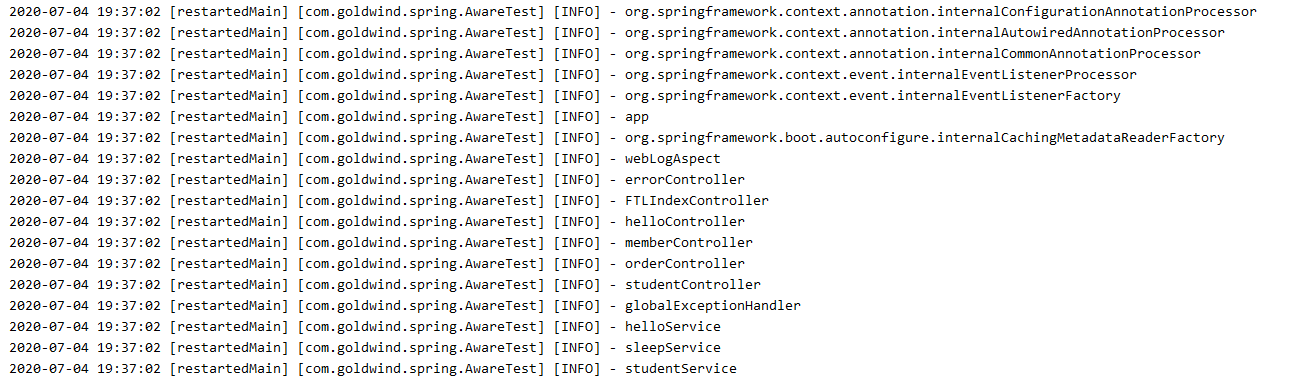
在 Spring 启动过程中,会回调 setApplicationContext 方法,并传入 ApplicationContext 对象,之后就可对该对象进行操作。我们获取到ApplicationContext对象,并将所有BeanDefinition名称输出:
其它系列的 Aware 接口也是如此使用。具体的调用时机会在后面详细介绍。
以下是几种常用的 Aware 接口:
- BeanFactoryAware:获取 BeanFactory 对象,它是基础的容器接口。
- BeanNameAware:获取 Bean 的名称。
- EnvironmentAware:获取 Environment 对象,它表示整个的运行时环境,可以设置和获取配置属性。
- ApplicationEventPublisherAware:获取 ApplicationEventPublisher 对象,它是用来发布事件的。
- ResourceLoaderAware:获取 ResourceLoader 对象,它是获取资源的工具。
三、InitializingBean, DisposableBean
3.1、InitializingBean
InitializingBean 是一个可以在 Bean 的生命周期执行自定义操作的接口,凡是实现该接口的 Bean,在初始化阶段都可以执行自定义的操作。
public interface InitializingBean {

    /**

     * Invoked by the containing {@code BeanFactory} after it has set all bean properties

     * and satisfied {@link BeanFactoryAware}, {@code ApplicationContextAware} etc.

     * <p>This method allows the bean instance to perform validation of its overall

     * configuration and final initialization when all bean properties have been set.

     * @throws Exception in the event of misconfiguration (such as failure to set an

     * essential property) or if initialization fails for any other reason

     */

    void afterPropertiesSet() throws Exception;

}
从 InitializingBean 源码中可以看出它有一个 afterPropertiesSet 方法,当一个 Bean 实现该接口时,在 Bean 的初始化阶段,会回调 afterPropertiesSet 方法,其初始化阶段具体指 Bean 设置完属性之后。
3.2、DisposableBean
同理,DisposableBean在Bean销毁时执行自定义的操作,必须资源的释放。
public interface DisposableBean {

    /**

     * Invoked by the containing {@code BeanFactory} on destruction of a bean.

     * @throws Exception in case of shutdown errors. Exceptions will get logged

     * but not rethrown to allow other beans to release their resources as well.

     */

    void destroy() throws Exception;

}
比如:
package com.goldwind.spring;

import lombok.Data;

import lombok.extern.slf4j.Slf4j;

import org.springframework.beans.factory.DisposableBean;

import org.springframework.beans.factory.InitializingBean;

import org.springframework.context.annotation.Configuration;

@Data

@Configuration

@Slf4j

public class BeanTest implements InitializingBean, DisposableBean {

    /*

     * 构造函数

     */

    public BeanTest(){

        log.info("New object...");

    }

    @Override

    public void destroy()  {

        log.info("Destroying ...");

    }

    @Override

    public void afterPropertiesSet() {

        log.info("Initializing ....");

    }

}

四、BeanPostProcessor、BeanFactoryPostProcessor
4.1、BeanPostProcessor
BeanPostProcessor 和 InitializingBean 有点类似,也是可以在 Bean 的生命周期执行自定义操作,一般称之为 Bean 的后置处理器,不同的是, BeanPostProcessor 可以在 Bean 初始化前、后执行自定义操作,且针对的目标也不同,InitializingBean 针对的是实现 InitializingBean 接口的 Bean,而 BeanPostProcessor 针对的是所有的 Bean。并且postProcessBeforeInitialization在对象创建之后,afterPropertiesSet之前执行,而postProcessAfterInitialization在afterPropertiesSet之后执行:
public interface BeanPostProcessor {

    // Bean 初始化前调用

    default Object postProcessBeforeInitialization(Object bean, String beanName) throws BeansException {

        return bean;

    }

    // Bean 初始化后调用

    default Object postProcessAfterInitialization(Object bean, String beanName) throws BeansException {

        return bean;

    }

}
所有的 Bean 在初始化前、后都会回调接口中的 postProcessBeforeInitialization 和 postProcessAfterInitialization 方法,入参是当前正在初始化的 Bean 对象和 BeanName。值得注意的是 Spring 内置了非常多的 BeanPostProcessor ,以此来完善自身功能,这部分会在后面文章深入讨论。
我们扩充我们的测试类AwareTest :
package com.goldwind.spring;

import lombok.Data;

import lombok.extern.slf4j.Slf4j;import org.springframework.beans.factory.config.BeanPostProcessor;

import org.springframework.context.ApplicationContext;

import org.springframework.context.ApplicationContextAware;

import org.springframework.stereotype.Component;

@Data

@Slf4j

@Component

public class AwareTest implements ApplicationContextAware, BeanPostProcessor {

    /*

     * 保存应用上下文

     */

    private ApplicationContext applicationContext;

    @Override

    public void setApplicationContext(ApplicationContext applicationContext) {

        this.applicationContext = applicationContext;

        //输出所有BeanDefinition name

        for(String name:applicationContext.getBeanDefinitionNames()) {

            log.info(name);

        }

    }

    @Override

    public Object postProcessBeforeInitialization(Object bean, String beanName)  {

        if(beanName.equals("beanTest")) {

        log.info("postProcessBeforeInitialization:" + beanName);

        }

        return bean;

    }

    @Override

    public Object postProcessAfterInitialization(Object bean, String beanName)  {

        if(beanName.equals("beanTest")) {

            log.info("postProcessAfterInitialization:" + beanName);

        }

        return bean;

    }

}
BeanTest :
package com.goldwind.spring;

import lombok.Data;

import lombok.extern.slf4j.Slf4j;

import org.springframework.beans.factory.BeanNameAware;

import org.springframework.beans.factory.DisposableBean;

import org.springframework.beans.factory.InitializingBean;

import org.springframework.context.annotation.Configuration;

@Data

@Configuration

@Slf4j

public class BeanTest implements InitializingBean, DisposableBean, BeanNameAware {

    /*

     * 保存当前bean name

     */

    private String beanName;

    /*

     * 构造函数

     */

    public BeanTest(){

        log.info("New object...");

    }

    @Override

    public void destroy()  {

        log.info("Destroying ...");

    }

    @Override

    public void afterPropertiesSet() {

        log.info("Initializing ....");

    }

    @Override

    public void setBeanName(String name) {

        this.beanName = name;

        log.info("Current bean name:" + name);

    }

}

可以看到beanTest对象先是被实例化出来,然后执行BeanPostProcessor的postProcessBeforeInitialization,再执行InitializingBean的afterPropertiesSet,最后执行BeanPostProcessor的postProcessAfterInitialization方法。而ApplicationContextAware的setApplicationContext方法执行时所有BeanDefinition都已加载,但还未实例化Bean
BeanPostProcessor 使用场景其实非常多,因为它可以获取正在初始化的 Bean 对象,然后可以对Bean 对象做一些定制化的操作,如:判断该 Bean 是否为某个特定对象、获取 Bean 的注解元数据等。事实上,Spring 内部也正是这样使用的,之前我们介绍的Spring Boot -- Spring AOP原理及简单实现手写AOP时也是利用了BeanPostProcessor的特性,我们对@Pointcut注解指定的Bean都进行了代理处理。
4.2、BeanFactoryPostProcessor
BeanFactoryPostProcessor 是 Bean 工厂的后置处理器,一般用来修改上下文中的 BeanDefinition,修改 Bean 的属性值。
public interface BeanFactoryPostProcessor {

    // 入参是一个 Bean 工厂:ConfigurableListableBeanFactory。该方法执行时,所有 BeanDefinition 都已被加载,但还未实例化 Bean。

    // 可以对其进行覆盖或添加属性,甚至可以用于初始化 Bean。

    void postProcessBeanFactory(ConfigurableListableBeanFactory beanFactory) throws BeansException;

}
BeanFactoryPostProcessor 源码非常简单,其提供了一个 postProcessBeanFactory 方法,当所有的 BeanDefinition 被加载时,该方法会被回调。值得注意的是,Spring 内置了许多 BeanFactoryPostProcessor 的实现,以此来完善自身功能。 这里,我们来实现一个自定义的 BeanFactoryPostProcessor:
package com.goldwind.spring;

import lombok.Data;

import lombok.extern.slf4j.Slf4j;import org.springframework.beans.factory.config.BeanDefinition;

import org.springframework.beans.factory.config.BeanFactoryPostProcessor;import org.springframework.beans.factory.config.ConfigurableListableBeanFactory;import org.springframework.stereotype.Component;

@Data

@Slf4j

@Component

public class AwareTest implements  BeanFactoryPostProcessor {

    @Override

    public void postProcessBeanFactory(ConfigurableListableBeanFactory beanFactory) {

        log.info("------------------------------------------postProcessBeanFactory-------------------------");

        String beanNames[] = beanFactory.getBeanDefinitionNames();

        for (String beanName : beanNames) {

            BeanDefinition beanDefinition = beanFactory.getBeanDefinition(beanName);

            log.info(beanDefinition.toString());

        }

    }

}
主要是通过 Bean 工厂获取所有的 BeanDefinition 。

可以看到,BeanDefinition 正确输出,里面是一些 Bean 的相关定义,如:是否懒加载、Bean 的 Class 以及 Bean 的属性等。
五、ImportSelector
参考文章:
[1]Spring(七)核心容器 - 钩子接口(转载)
Spring Boot -- 启动流程分析之ApplicationContext 中的更多相关文章
- Spring Boot启动流程分析
引言 早在15年的时候就开始用spring boot进行开发了,然而一直就只是用用,并没有深入去了解spring boot是以什么原理怎样工作的,说来也惭愧.今天让我们从spring boot启动开始 ...
- Spring MVC启动流程分析
本文是Spring MVC系列博客的第一篇,后续会汇总成贴子. Spring MVC是Spring系列框架中使用频率最高的部分.不管是Spring Boot还是传统的Spring项目,只要是Web项目 ...
- Spring Boot 启动原理分析
https://yq.aliyun.com/articles/6056 转 在spring boot里,很吸引人的一个特性是可以直接把应用打包成为一个jar/war,然后这个jar/war是可以直接启 ...
- Spring Boot(三):Spring Boot中的事件的使用 与Spring Boot启动流程(Event 事件 和 Listeners监听器)
前言:在讲述内容之前 希望大家对设计模式有所了解 即使你学会了本片的内容 也不知道什么时候去使用 或者为什么要这样去用 观察者模式: 观察者模式是一种对象行为模式.它定义对象间的一种一对多的依赖关系, ...
- Spring Boot启动流程详解(一)
环境 本文基于Spring Boot版本1.3.3, 使用了spring-boot-starter-web. 配置完成后,编写了代码如下: @SpringBootApplication public ...
- Spring Boot启动流程详解
注:本文转自http://zhaox.github.io/java/2016/03/22/spring-boot-start-flow 环境 本文基于Spring Boot版本1.3.3, 使用了sp ...
- Spring Boot启动流程
基础准备 1,BeanPostProcessor:这个接口的作用在于对于新构造的实例可以做一些自定义的修改.比如如何构造.属性值的修改.构造器的选择等等 2,BeanFactoryPostProces ...
- u-boot启动流程分析(1)_平台相关部分
转自:http://www.wowotech.net/u-boot/boot_flow_1.html 1. 前言 本文将结合u-boot的“board—>machine—>arch—> ...
- Uboot启动流程分析(三)
1.前言 在前面的文章Uboot启动流程分析(二)中,链接如下: https://www.cnblogs.com/Cqlismy/p/12002764.html 已经对_main函数的整个大体调用流程 ...
随机推荐
- Java 实现 蓝桥杯 生兔子问题
生兔子问题 有一对兔子,从出生后第四个月起每个月都生一对兔子,小兔子长到第四个月后每个月又生一对兔子.假如兔子都不死,计算第十个月兔子的总数? 分析: 四个月开始生兔子,则:F(N) = f(n-1) ...
- java计算时间从什么时候开始 为什么从1970年开始 java的时间为什么是一大串数字
Date date = new Date(0); System.out.println(date); 打印出来的结果: Thu Jan 01 08:00:00 CST 1970 也是1970 年 1 ...
- Java实现LeetCode_0026_RemoveDuplicatesFromSortedArray
package javaLeetCode.primary; public class RemoveDuplicatesFromSortedArray_26 { public static void m ...
- Java实现最优二叉查找树
1 问题描述 在了解最优二叉查找树之前,我们必须先了解何为二叉查找树? 引用自百度百科一段讲解: 二叉排序树(Binary Sort Tree)又称二叉查找树(Binary Search Tree), ...
- Java培训Day01——制作疫情地图(一)
一.前言 此次培训,是为期三天的网上培训.最终的目的是制作出疫情地图.首先我们来看看主要的讲课内容大纲. Day1 |-Java语法学习(个人感觉讲得还可以,主要围绕本次培训作出的讲解,没有像网上的基 ...
- 一口气说出9种分布式ID生成方式,面试官有点懵
一.为什么要用分布式ID? 在说分布式ID的具体实现之前,我们来简单分析一下为什么用分布式ID?分布式ID应该满足哪些特征? 1.1.什么是分布式ID? 拿MySQL数据库举个栗子:在我们业务数据量不 ...
- Cron表达式,springboot定时任务
详细请看这篇博客 参考:https://blog.csdn.net/belonghuang157405/article/details/83410197 Cron表达式是一个字符串,字符串以5或6个空 ...
- .Net Core微服务入门全纪录(一)——项目搭建
前言 写这篇博客主要目的是记录一下自己的学习过程,只能是简单入门级别的,因为水平有限就写到哪算哪吧,写的不对之处欢迎指正. 什么是微服务? 关于微服务的概念解释网上有很多... 个人理解,微服务是一种 ...
- .Net Core微服务入门全纪录(三)——Consul-服务注册与发现(下)
前言 上一篇[.Net Core微服务入门全纪录(二)--Consul-服务注册与发现(上)]已经成功将我们的服务注册到Consul中,接下来就该客户端通过Consul去做服务发现了. 服务发现 同样 ...
- Python在Linux下编译安装
[准备环境] Linux centos [前言] 1 linux下默认带Python,带的是2.7版本的 ,如果需要升级版本,需要把系统的自带的Python改名或者卸载,再次安装你所需要的Python ...