
Apollo源码阅读笔记(一)
Apollo源码阅读笔记(一)
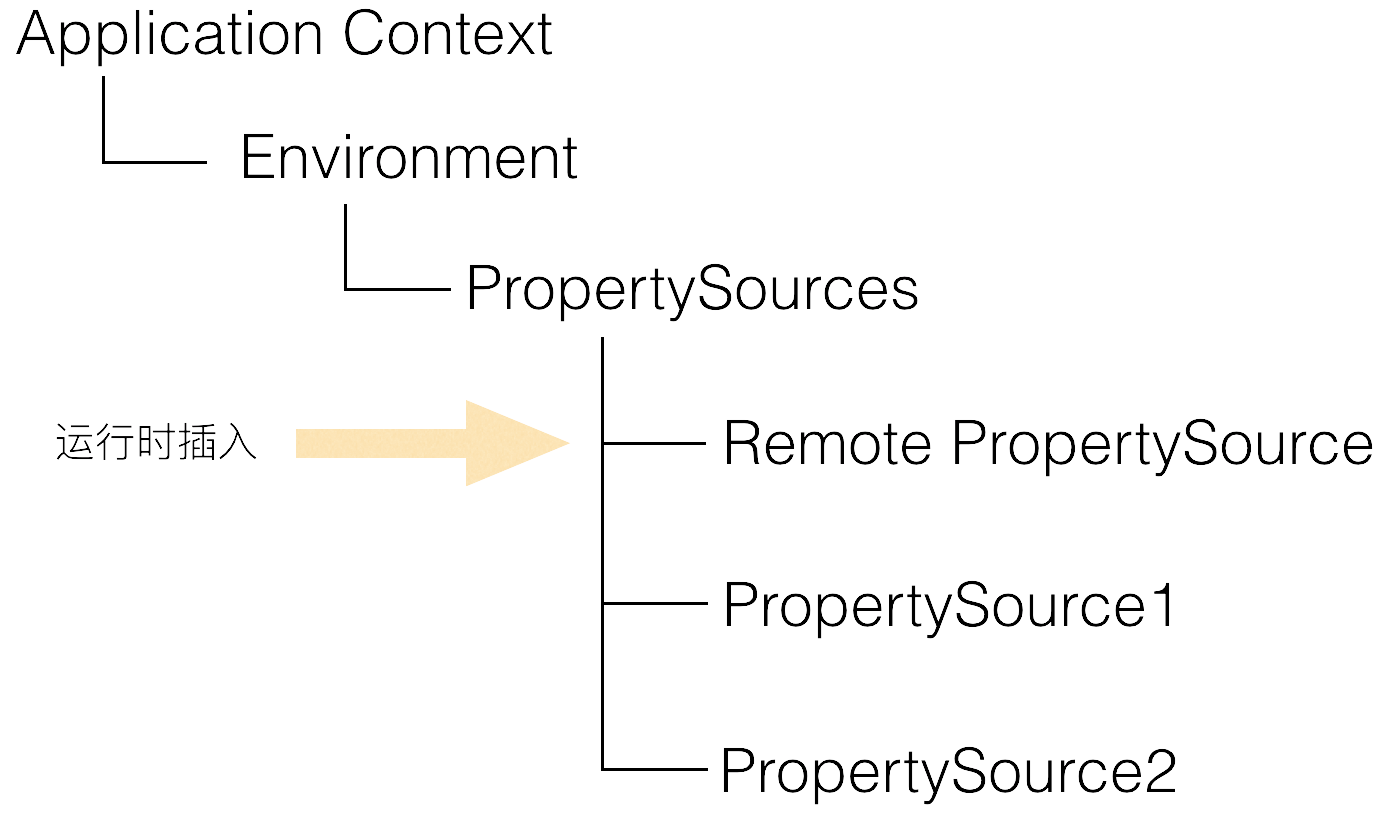
先来一张官方客户端设计图,方便我们了解客户端的整体思路。

我们在使用Apollo的时候,需要标记@EnableApolloConfig来告诉程序开启apollo配置,所以这里就以EnableApolloConfig为入口,来看下apollo客户端的实现逻辑。关于apollo的使用方法详见 这里
1. 入口 @EnableApolloConfig 注解
@EnableApolloConfig(value={"application","test-yejg"})
默认的namespace是application;
通过@EnableApolloConfig注解,引入了ApolloConfigRegistrar
public class ApolloConfigRegistrar implements ImportBeanDefinitionRegistrar {

  @Override

  public void registerBeanDefinitions(AnnotationMetadata importingClassMetadata, BeanDefinitionRegistry registry) {

    AnnotationAttributes attributes = AnnotationAttributes.fromMap(importingClassMetadata.getAnnotationAttributes(EnableApolloConfig.class.getName()));

    String[] namespaces = attributes.getStringArray("value");

    int order = attributes.getNumber("order");

	// 暂存需要关注的namespaces,后面在PropertySourcesProcessor中会把配置属性加载env中

    PropertySourcesProcessor.addNamespaces(Lists.newArrayList(namespaces), order);

    Map<String, Object> propertySourcesPlaceholderPropertyValues = new HashMap<>();

    // to make sure the default PropertySourcesPlaceholderConfigurer's priority is higher than PropertyPlaceholderConfigurer

    propertySourcesPlaceholderPropertyValues.put("order", 0);

    BeanRegistrationUtil.registerBeanDefinitionIfNotExists(registry, PropertySourcesPlaceholderConfigurer.class.getName(), PropertySourcesPlaceholderConfigurer.class, propertySourcesPlaceholderPropertyValues);

    BeanRegistrationUtil.registerBeanDefinitionIfNotExists(registry, PropertySourcesProcessor.class.getName(), PropertySourcesProcessor.class);

    BeanRegistrationUtil.registerBeanDefinitionIfNotExists(registry, ApolloAnnotationProcessor.class.getName(), ApolloAnnotationProcessor.class);

    BeanRegistrationUtil.registerBeanDefinitionIfNotExists(registry, SpringValueProcessor.class.getName(), SpringValueProcessor.class);

    BeanRegistrationUtil.registerBeanDefinitionIfNotExists(registry, SpringValueDefinitionProcessor.class.getName(), SpringValueDefinitionProcessor.class);

    BeanRegistrationUtil.registerBeanDefinitionIfNotExists(registry, ApolloJsonValueProcessor.class.getName(), ApolloJsonValueProcessor.class);

  }

}
注意上面代码中,通过PropertySourcesProcessor.addNamespaces暂存了namespaces,下面就先沿着 PropertySourcesProcessor来展开
2. 配置设置到environment的过程
PropertySourcesProcessor实现了BeanFactoryPostProcessor,并能获取到env
public class PropertySourcesProcessor implements BeanFactoryPostProcessor, EnvironmentAware, PriorityOrdered{

    ...

}
在Spring应用启动的时候
refresh() –> invokeBeanFactoryPostProcessors(beanFactory) –> PropertySourcesProcessor.postProcessBeanFactory
—> initializePropertySources();
—> initializeAutoUpdatePropertiesFeature(beanFactory);
就这样,Apollo的PropertySourcesProcessor就被调用起来了。
在它的postProcessBeanFactory方法中依次调用initializePropertySources和initializeAutoUpdatePropertiesFeature,先来看initializePropertySources做了啥事情:
将NAMESPACE_NAMES (Multimap<Integer, String>)排序;
遍历排序后的namespaces,依次调用 ConfigService.getConfig(namespace) 获取配置信息Config;
将config封装成ConfigPropertySource[Apollo的],保存到CompositePropertySource[spring-core的];
此composite名为 ApolloPropertySources
ConfigPropertySource继承自spring-core的EnumerablePropertySource
代码:composite.addPropertySource(XXX);
循环处理完 NAMESPACE_NAMES 之后,将其清空掉;
将前面循环处理好的compositePropertySource加入到env中;
加到env时,判断env中是否存在 ApolloBootstrapPropertySources是否存在,确保其在第一的位置,而前面循环处理得到的ApolloPropertySources紧随其后。
相关代码:
environment.getPropertySources().addAfter(“XXX source name”, composite);
environment.getPropertySources().addFirst(composite);
这部分的逻辑,其实就是佐证了Apollo的设计思路 。
盗用官方的一张图来简单说明这个流程:
Apollo源码阅读笔记(一)的更多相关文章
- Apollo源码阅读笔记(二)
Apollo源码阅读笔记(二) 前面 分析了apollo配置设置到Spring的environment的过程,此文继续PropertySourcesProcessor.postProcessBeanF ...
- CI框架源码阅读笔记5 基准测试 BenchMark.php
上一篇博客(CI框架源码阅读笔记4 引导文件CodeIgniter.php)中,我们已经看到:CI中核心流程的核心功能都是由不同的组件来完成的.这些组件类似于一个一个单独的模块,不同的模块完成不同的功 ...
- CI框架源码阅读笔记4 引导文件CodeIgniter.php
到了这里,终于进入CI框架的核心了.既然是“引导”文件,那么就是对用户的请求.参数等做相应的导向,让用户请求和数据流按照正确的线路各就各位.例如,用户的请求url: http://you.host.c ...
- CI框架源码阅读笔记3 全局函数Common.php
从本篇开始,将深入CI框架的内部,一步步去探索这个框架的实现.结构和设计. Common.php文件定义了一系列的全局函数(一般来说,全局函数具有最高的加载优先权,因此大多数的框架中BootStrap ...
- CI框架源码阅读笔记2 一切的入口 index.php
上一节(CI框架源码阅读笔记1 - 环境准备.基本术语和框架流程)中,我们提到了CI框架的基本流程,这里再次贴出流程图,以备参考: 作为CI框架的入口文件,源码阅读,自然由此开始.在源码阅读的过程中, ...
- 源码阅读笔记 - 1 MSVC2015中的std::sort
大约寒假开始的时候我就已经把std::sort的源码阅读完毕并理解其中的做法了,到了寒假结尾,姑且把它写出来 这是我的第一篇源码阅读笔记,以后会发更多的,包括算法和库实现,源码会按照我自己的代码风格格 ...
- Three.js源码阅读笔记-5
Core::Ray 该类用来表示空间中的“射线”,主要用来进行碰撞检测. THREE.Ray = function ( origin, direction ) { this.origin = ( or ...
- PHP源码阅读笔记一(explode和implode函数分析)
PHP源码阅读笔记一一.explode和implode函数array explode ( string separator, string string [, int limit] )此函数返回由字符 ...
- AQS源码阅读笔记(一)
AQS源码阅读笔记 先看下这个类张非常重要的一个静态内部类Node.如下: static final class Node { //表示当前节点以共享模式等待锁 static final Node S ...
随机推荐
- Reading | 《Python基础教程》第1次阅读
目录 一.基础知识 1.数和表达式 浮点除法和整数除法 负数整除和取余 圆整 乘方运算 2.变量名 3.获取用户输入 4.模块 5.让脚本像普通程序一样 6.字符串 单.双引号 引号的转义 字符串拼接 ...
- 计算机网络一:OSI七层、TCP/IP五层与TCP/IP四层
一.OSI网络七层
- 转 Master-Worker模式 并行程序设计模式--Master-Worker模式
简介 Master-Worker模式是常用的并行设计模式.它的核心思想是,系统有两个进程协议工作:Master进程和Worker进程.Master进程负责接收和分配任务,Worker进程负责处理子任务 ...
- delphi如何在form显示出来后处理指定的事件(例如自动登录)
最近写一个delphi客户端,遇到一个自动登录问题,已经解决了思路如下: 1.在Form的oncreate事件中读取用户配置文件,检查及处理是否保存了用户密码,是否自动登录,如果需要自动登录, 自动登 ...
- vscode 集成 cygwin 的注意事项
vscode 集成 cygwin vscode 现在是我的主力开发编辑器,它自带 terminal 不需要我各种切换,我还想要在 windows 下执行一些简单的 .sh 文件.所以,我希望有一款工具 ...
- https网页加载http资源导致的页面报错及解决方案
https是当下的网站的主流趋势,甚至像苹果这样的大公司,则完全要求用户必须使用https地址. 然而对于以前http链接来说,我们往往就存在一个兼容性问题,因为你不可能一下就全部切换过去,应该在很长 ...
- vue 自学笔记(1)
从to do list 开始 一: 安装 1: 导入cdn <script src="https://cdn.bootcss.com/vue/2.6.10/vue.min.js& ...
- python itchat+机器人web api实现个人微信机器人
模块 itchat 功能 实现微信回复机器人(调用图灵机器人api) 代码 #!/usr/bin/env python3 # -*- coding: utf-8 -*- #Author:Eric im ...
- Python加密与解密
前言 据记载,公元前400年,古希腊人发明了置换密码.1881年世界上的第一个电话 保密专利出现.在第二次世界大战期间,德国军方启用“恩尼格玛”密码机, 密码学在战争中起着非常重要的作用. 随着信息化 ...
- [EXP]Drupal < 8.5.11 / < 8.6.10 - RESTful Web Services unserialize() Remote Command Execution (Metasploit)
## # This module requires Metasploit: https://metasploit.com/download # Current source: https://gith ...