
springboot:使用异步注解@Async的前世今生
在前边的文章中,和小伙伴一起认识了异步执行的好处,以及如何进行异步开发,对,就是使用@Async注解,在使用异步注解@Async的过程中也存在一些坑,不过通过正确的打开方式也可以很好的避免,今天想和大家分享下@Async的原理,开始前先温习下之前的文章哦,
springboot:使用异步注解@Async获取执行结果的坑
springboot:嵌套使用异步注解@Async还会异步执行吗
一、引言
在前边说到在使用@Async的时候,在一个类中两个@Async的方法嵌套使用会导致异步失败,下面把场景重现下,
AsyncContoller.java
package com.example.myDemo.controller;

import com.example.myDemo.service.AsyncService;

import org.springframework.beans.factory.annotation.Autowired;

import org.springframework.stereotype.Controller;

import org.springframework.web.bind.annotation.GetMapping;

import org.springframework.web.bind.annotation.ResponseBody;

import java.util.concurrent.ExecutionException;

@Controller

public class AsyncController {

    @Autowired

    private AsyncService asyncService;

    @GetMapping("/aysnc")

    @ResponseBody

    public String asyncMethod(){

        try {

            Long start=System.currentTimeMillis();

            //调用method3方法,该方法中嵌套了一个异步方法

            String str3=asyncService.method3().get();

            Long end=System.currentTimeMillis();

            System.out.println("执行时长:"+(end-start));

        } catch (ExecutionException | InterruptedException e) {

            e.printStackTrace();

        }

        return "hello @Async";

    }

}
下面是method3方法
package com.example.myDemo.service;

import org.springframework.scheduling.annotation.Async;

import org.springframework.scheduling.annotation.AsyncResult;

import org.springframework.stereotype.Service;

import java.util.concurrent.Future;

@Service

@Async

public class AsyncService {

    /**

     * 第一个异步方法,睡眠10s返回字符串

     *

     * @return

     */

    public Future<String> method() {

        try {

            Thread.sleep(10 * 1000);

        } catch (InterruptedException e) {

            e.printStackTrace();

        }

        return new AsyncResult("I am method");

    }

    /**

     * 第三个异步方法,在该异步方法中调用了另外一个异步方法

     * @return

     */

    public Future<String> method3(){

        try{
            //睡眠10s

            Thread.sleep(10*1000);

            System.out.println(this);
            //method方法也是睡眠10s

            this.method();

        }catch (InterruptedException e) {

            e.printStackTrace();

        }

        return new AsyncResult<>("two async method");

    }

}
上面便是method3方法,以及嵌套在method3方法中的method方法,这两个方法体上均没有标注@Async,只是在这个类上使用了@Async注解,那么该类中的所有方法都是异步的。
执行结果如下,
2022-04-30 15:29:47.711  INFO 16836 --- [nio-8080-exec-1] o.s.web.servlet.DispatcherServlet        : Completed initialization in 4 ms

com.example.myDemo.service.AsyncService@7e316231

执行时长:20028
从上面可以看到整个方法的执行时长是20多秒,那么就说明这种同一个类中的嵌套调用,@Async是失效的。
二、解决方式
1、把嵌套方法抽到另一个类中
这种方式就是把嵌套的异步方法method抽取到另外一个类中,下面我们来看下,
OtherService.java
package com.example.myDemo.service;

import org.springframework.scheduling.annotation.Async;

import org.springframework.scheduling.annotation.AsyncResult;

import org.springframework.stereotype.Service;

import java.util.concurrent.Future;

@Service

@Async

public class OtherAsyncService {

    public Future<String> method() {

        try {

            Thread.sleep(10 * 1000);

        } catch (InterruptedException e) {

            e.printStackTrace();

        }

        return new AsyncResult("I am method");

    }

}
那么AsyncService.java则变成下面的样子
package com.example.myDemo.service;

import org.springframework.beans.factory.annotation.Autowired;

import org.springframework.scheduling.annotation.Async;

import org.springframework.scheduling.annotation.AsyncResult;

import org.springframework.stereotype.Service;

import java.util.concurrent.Future;

@Service

@Async

public class AsyncService {

    //注入OtherService

    @Autowired

    private OtherAsyncService otherAsyncService;

    /**

     * 第三个异步方法,在该异步方法中调用了另外一个异步方法

     * @return

     */

    public Future<String> method3(){

        try{

            Thread.sleep(10*1000);

            System.out.println(this);

           //调用OtherAsyncService的method方法

            otherAsyncService.method();

        }catch (InterruptedException e) {

            e.printStackTrace();

        }

        return new AsyncResult<>("two async method");

    }

}
下面看执行的结果,
2022-04-30 15:44:18.914  INFO 16768 --- [nio-8080-exec-1] o.s.web.servlet.DispatcherServlet        : Completed initialization in 5 ms

com.example.myDemo.service.AsyncService@689927ef

执行时长:10016
执行时长10s多点,符合预期。
2、自己注入自己
这种方式很有意思,我斗胆给它取名为“自己注入自己”,在AsyncService类中注入一个AsyncService的实例,如下
package com.example.myDemo.service;

import org.springframework.beans.factory.annotation.Autowired;

import org.springframework.scheduling.annotation.Async;

import org.springframework.scheduling.annotation.AsyncResult;

import org.springframework.stereotype.Service;

import java.util.concurrent.Future;

@Service

@Async

public class AsyncService {

   //这里注入的是AsyncService的实例
    @Lazy

    @Autowired

    private AsyncService otherAsyncService;

    /**

     * 第一个异步方法,睡眠10s返回字符串

     *

     * @return

     */

    public Future<String> method() {

        try {

            Thread.sleep(10 * 1000);

        } catch (InterruptedException e) {

            e.printStackTrace();

        }

        return new AsyncResult("I am method");

    }

    /**

     * 第三个异步方法,在该异步方法中调用了另外一个异步方法

     * @return

     */

    public Future<String> method3(){

        try{

            Thread.sleep(10*1000);

            System.out.println(this);

            otherAsyncService.method();

        }catch (InterruptedException e) {

            e.printStackTrace();

        }

        return new AsyncResult<>("two async method");

    }

}
小伙伴们注意,我是在AsyncService类中又注入了一个AsyncService的实例,在method3方法中调用的是AsyncSerevice的方法method,要区别于下面的调用方式
this.method();
下面看下执行结果,
2022-04-30 15:55:30.635  INFO 9788 --- [nio-8080-exec-1] o.s.web.servlet.DispatcherServlet        : Completed initialization in 5 ms

com.example.myDemo.service.AsyncService@2ac186f8

执行时长:10015
好了,我们看到执行时长为10s多点,也就是说异步是生效的,在这种方式中要注意注入的对象必须添加@Lazy注解,否则启动会报错哦。
三、原理揭秘
上面已经把嵌套使用的误区和解决方式已经总结完了,下面到了要揭开@Async面纱的时候了,最好的方式是debug,看下面@Async的debug的过程
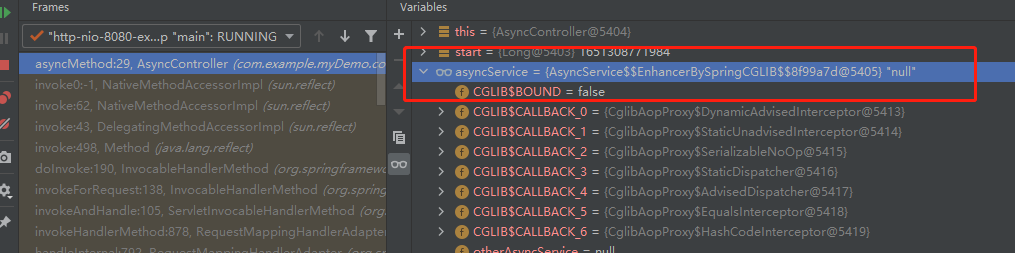
可以看到在AsyncController中asyncService是一个代理对象,且使用的方式是cglib,那么也就是会把其中的方法进行代理,类似下面的代码
before();

method3();

after();
也就是对method3进行了代理,这里的代理指的是把mthod3方法封装成一个task,交给线程池去执行,那么在method3中的this.method()这句调用,也就是普通调用了,是同步的,为什么这样说,因为这里的this代表的是AsyncService这个实例对象,

但是如果换成"自己注入自己的方式",例如下图,
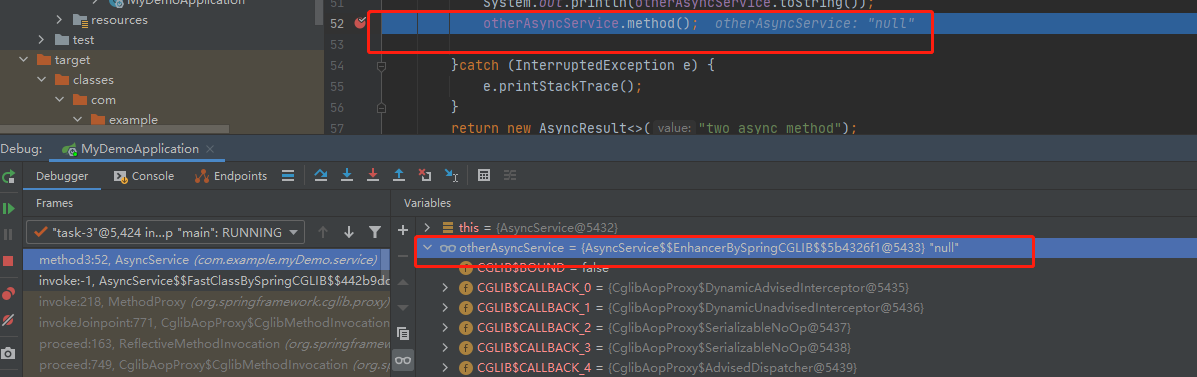
可以看到还是一个AsyncService的cglib代理对象,所以完美解决了嵌套调用的问题。
四、总结
本文分析了@Async注解的实现原理及如何使用正确使用嵌套调用,
1、@Async注解底层使用的是代理,标记为@Async所在的类在实际调用时是一个代理类;
2、合理使用@Async方法的嵌套,可以把嵌套方法抽到另外一个类中;
3、如果在本类中使用嵌套方法,那么需要自己注入自己,切记加上@Lazy注解;
推荐阅读
springboot:使用异步注解@Async获取执行结果的坑
springboot:嵌套使用异步注解@Async还会异步执行吗

springboot:使用异步注解@Async的前世今生的更多相关文章
- springboot:使用异步注解@Async的那些坑
springboot:使用异步注解@Async的那些坑 一.引言 在java后端开发中经常会碰到处理多个任务的情况,比如一个方法中要调用多个请求,然后把多个请求的结果合并后统一返回,一般情况下调用其他 ...
- springboot:嵌套使用异步注解@Async还会异步执行吗
一.引言 在前边的文章<[springboot:使用异步注解@Async的那些坑>中介绍了使用@Async注解获取任务执行结果的错误用法,今天来分享下另外一种常见的错误. 二.代码演示 下 ...
- Spring中异步注解@Async的使用、原理及使用时可能导致的问题
前言 其实最近都在研究事务相关的内容,之所以写这么一篇文章是因为前面写了一篇关于循环依赖的文章: <面试必杀技,讲一讲Spring中的循环依赖> 然后,很多同学碰到了下面这个问题,添加了S ...
- springboot之异步调用@Async
原文:http://www.cnblogs.com/xuwenjin/p/8858050.html 引言: 在Java应用中,绝大多数情况下都是通过同步的方式来实现交互处理的:但是在处理与第三方系统交 ...
- springboot:异步调用@Async
在后端开发中经常遇到一些耗时或者第三方系统调用的情况,我们知道Java程序一般的执行流程是顺序执行(不考虑多线程并发的情况),但是顺序执行的效率肯定是无法达到我们的预期的,这时就期望可以并行执行,常规 ...
- 关于Dubbo和Spring异步注解@Async的冲突
项目中难免会有异步处理的需求,像异步记录日志啦,异步发送邮件啦,而Dubbo又是现在主流的分布式框架,所有异步+Dubbo的组合是再所难免的 但博主是实践中发现Dubbo的服务并不能很好的跟Sprin ...
- Java中异步注解@Async的陷阱
或许,你在Java后端添加异步过程时会这样处理,然后摇摇大摆.灰溜溜地闪,而实际的运行结果却并不是我们期望的那样.那么,现在就将试验结果记录如下,以便少走弯路. (一)在Controller层的公开接 ...
- SpringBoot使用异步线程池实现生产环境批量数据推送
前言 SpringBoot使用异步线程池: 1.编写线程池配置类,自定义一个线程池: 2.定义一个异步服务: 3.使用@Async注解指向定义的线程池: 这里以我工作中使用过的一个案例来做描述,我所在 ...
- @Async异步注解与SpringBoot结合使用
当你在service层需要启动异步线程去执行某些分支任务,又不希望显式使用Thread等线程相关类,只想专注于实现业务逻辑代码开发,可以使用@Async异步注解. 1. 使用@Async 异步注解 C ...
随机推荐
- 什么是Java序列化,如何实现Java序列化?或者请解释Serializable接口的作用?
象序列化的目标是将对象保存到磁盘中,或允许在网络中直接传输对象,对象序列化机制允许把内存中的Java对象转换成平台无关的二进制流,从而允许把这种二进制流持久保存在磁盘上,通过网络将这种二进制流传输到另 ...
- SpringBoot和SpringCloud?
SpringBoot是Spring推出用于解决传统框架配置文件冗余,装配组件繁杂的基于Maven的解决方案,旨在快速搭建单个微服务而SpringCloud专注于解决各个微服务之间的协调与配置,服务之间 ...
- java中的四种引用类型
为什么需要引用: Java的内存回收不需要程序员负责,JVM会在必要时启动Java GC完成垃圾回收. Java以便我们控制对象的生存周期,提供给了我们四种引用方式,引用强度从强到弱分别为:强引用.软 ...
- Vue Avoided redundant navigation to current location Error
这个报错的根源就是vue-router组件,错误内容翻译一下是: Avoided redundant navigation to current location === 避免冗余导航到当前位置 这个 ...
- Linux分区问题
一.基本分区的作用及其大小 /boot分区: 存放引导文件和Linux内核文件等. 引导文件:判断启动哪一个操作系统或启动哪个内核. 内核:管理硬件和软件资源,程序与硬件之间的桥梁. 分区大小:100 ...
- Day05 - Flex 实现可伸缩的图片墙 中文指南
Day05 - Flex 实现可伸缩的图片墙 中文指南 作者:liyuechun 简介:JavaScript30 是 Wes Bos 推出的一个 30 天挑战.项目免费提供了 30 个视频教程.30 ...
- H5活动全屏滚动页面在安卓智能电视TV调试
前段时间公司做一个线上活动,在电视上商品促销.产品的要求是每个商品介绍刚好满一屏,按下遥控器向下键可以整屏切换.这种功能如果实在PC端,实现起来非常容易,引用jQuery插件就能实现.但是在安卓智能电 ...
- 【网易云信】H5 容器技术方案
Native 开发原生应用是手机操作系统厂商(目前主要是苹果的 iOS 和 Google 的 Android)对外界提供的标准化的开发模式,他们对于 Native 开发提供了一套标准化实现和优化方案. ...
- 设计模式-观察者模式Observe的实现
using System.Collections; using System.Collections.Generic; using UnityEngine; /// <summary> / ...
- java中如何创建自定义异常Create Custom Exception
9.创建自定义异常 Create Custom Exception 马克-to-win:我们可以创建自己的异常:checked或unchecked异常都可以, 规则如前面我们所介绍,反正如果是chec ...