
Python基础 数据类型 (字符串、列表、字典、元组、集合、堆、栈、树)
数据类型有整型、布尔、字符串、列表、字典、元组、集合、堆、栈和树。
1.整型:
整型就是数字
数字表示
python2
64位机器,范围-2^63~2^63-1
超出上述范围,python自动转化为long(长整型)
注:long(长整型)数字末尾有一个L
python3
- 所有整型都是int,没有long(长整型)
整型除法
- python2:只能保留整数位
- python3:可以保留所有内容
 十进制:

     200

 二进制:

   01010101010101
二进制转十进制:
0010 0111
        1 * 2**0 + 1 * 2**1 + 1* 2**2 + 1 * 2**5 = 39

十进制转二进制:
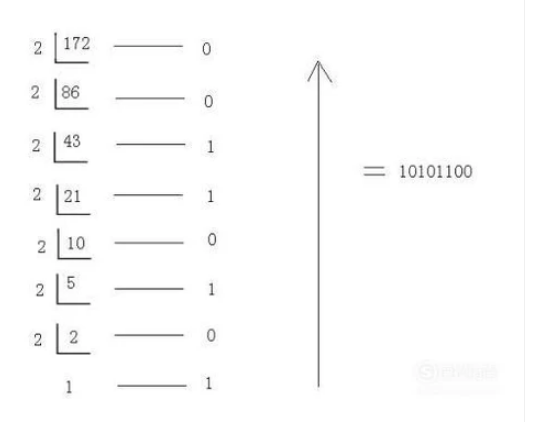

     bin():其他进制转换成二进制 0b101

     oct():其他进制转换成八进制 0o7

     int():其他进制转换成十进制 10  (num,base=10)

     hex():其他进制转换成十六进制 0x13

     进制之间转换必须通过十进制再进行转换
十进制转其他进制,直接用内置函数强转,其他进制转十进制就麻烦一点
 a = '0b01011101'

 ret = int(a,base=2)   #这里的base的值必须和进制数相同

 print(ret)
 将ip = '192.168.12.79' 中的每个十进制转换成二进制:

 再将二进制转换成十进制

 lst = []

 lst1 = []

 ip = '192.168.12.79'

 for i in ip.split('.'):

     ret = bin(int(i))

     ret1 = lst.append(ret)

 for i in lst:

     i = i.replace('0b','')

     if len(i) == 8:

         lst1.append(i)

     else:

         i = i.replace(i,''*(8-len(i))+i)

         lst1.append(i)

 ret2 = ','.join(lst1).replace(',','')

 # print(ret2)  # 11000000101010000000110001001111

 ret3 = int(ret2,base=2)

 print(ret3)
查看二进制的有效位数:
 int

 i = 1000

 print(i.bit_length())

 结果: 10
2.bool布尔:
True
False

布尔值为False的情况:
非零即True:数字0
非空即True:''、[]、{}、()、None

3.字符串(不可变类型):
字符串源码:
1 class str(basestring):

  2     """

  3     str(object='') -> string

  4

  5     Return a nice string representation of the object.

  6     If the argument is a string, the return value is the same object.

  7     """

  8     def capitalize(self):

  9         """ 首字母变大写 """

 10         """

 11         S.capitalize() -> string

 12

 13         Return a copy of the string S with only its first character

 14         capitalized.

 15         """

 16         return ""

 17

 18     def center(self, width, fillchar=None):

 19         """ 内容居中,width:总长度;fillchar:空白处填充内容,默认无 """

 20         """

 21         S.center(width[, fillchar]) -> string

 22

 23         Return S centered in a string of length width. Padding is

 24         done using the specified fill character (default is a space)

 25         """

 26         return ""

 27

 28     def count(self, sub, start=None, end=None):

 29         """ 子序列个数 """

 30         """

 31         S.count(sub[, start[, end]]) -> int

 32

 33         Return the number of non-overlapping occurrences of substring sub in

 34         string S[start:end].  Optional arguments start and end are interpreted

 35         as in slice notation.

 36         """

 37         return 0

 38

 39     def decode(self, encoding=None, errors=None):

 40         """ 解码 """

 41         """

 42         S.decode([encoding[,errors]]) -> object

 43

 44         Decodes S using the codec registered for encoding. encoding defaults

 45         to the default encoding. errors may be given to set a different error

 46         handling scheme. Default is 'strict' meaning that encoding errors raise

 47         a UnicodeDecodeError. Other possible values are 'ignore' and 'replace'

 48         as well as any other name registered with codecs.register_error that is

 49         able to handle UnicodeDecodeErrors.

 50         """

 51         return object()

 52

 53     def encode(self, encoding=None, errors=None):

 54         """ 编码,针对unicode """

 55         """

 56         S.encode([encoding[,errors]]) -> object

 57

 58         Encodes S using the codec registered for encoding. encoding defaults

 59         to the default encoding. errors may be given to set a different error

 60         handling scheme. Default is 'strict' meaning that encoding errors raise

 61         a UnicodeEncodeError. Other possible values are 'ignore', 'replace' and

 62         'xmlcharrefreplace' as well as any other name registered with

 63         codecs.register_error that is able to handle UnicodeEncodeErrors.

 64         """

 65         return object()

 66

 67     def endswith(self, suffix, start=None, end=None):

 68         """ 是否以 xxx 结束 """

 69         """

 70         S.endswith(suffix[, start[, end]]) -> bool

 71

 72         Return True if S ends with the specified suffix, False otherwise.

 73         With optional start, test S beginning at that position.

 74         With optional end, stop comparing S at that position.

 75         suffix can also be a tuple of strings to try.

 76         """

 77         return False

 78

 79     def expandtabs(self, tabsize=None):

 80         """ 将tab转换成空格,默认一个tab转换成8个空格 """

 81         """

 82         S.expandtabs([tabsize]) -> string

 83

 84         Return a copy of S where all tab characters are expanded using spaces.

 85         If tabsize is not given, a tab size of 8 characters is assumed.

 86         """

 87         return ""

 88

 89     def find(self, sub, start=None, end=None):

 90         """ 子序列位置,如果没找到,则返回-1  """

 91         """

 92         S.find(sub [,start [,end]]) -> int

 93

 94         Return the lowest index in S where substring sub is found,

 95         such that sub is contained within S[start:end].  Optional

 96         arguments start and end are interpreted as in slice notation.

 97

 98         Return -1 on failure.

 99         """

100         return 0

101

102     def format(*args, **kwargs): # known special case of str.format

103         """ 字符串格式化,动态参数,将函数式编程时细说 """

104         """

105         S.format(*args, **kwargs) -> string

106

107         Return a formatted version of S, using substitutions from args and kwargs.

108         The substitutions are identified by braces ('{' and '}').

109         """

110         pass

111

112     def index(self, sub, start=None, end=None):

113            """ 寻找子序列位置,如果没找到,则异常 """

114         S.index(sub [,start [,end]]) -> int

115

116         Like S.find() but raise ValueError when the substring is not found.

117         """

118         return 0

119

120     def isalnum(self):

121         """ 是否是字母和数字 """

122         """

123         S.isalnum() -> bool

124

125         Return True if all characters in S are alphanumeric

126         and there is at least one character in S, False otherwise.

127         """

128         return False

129

130     def isalpha(self):

131         """ 是否是字母 """

132         """

133         S.isalpha() -> bool

134

135         Return True if all characters in S are alphabetic

136         and there is at least one character in S, False otherwise.

137         """

138         return False

139

140     def isdigit(self):

141         """ 是否是数字 """

142         """

143         S.isdigit() -> bool

144

145         Return True if all characters in S are digits

146         and there is at least one character in S, False otherwise.

147         """

148         return False

149

150     def islower(self):

151         """ 是否小写 """

152         """

153         S.islower() -> bool

154

155         Return True if all cased characters in S are lowercase and there is

156         at least one cased character in S, False otherwise.

157         """

158         return False

159

160     def isspace(self):

161         """

162         S.isspace() -> bool

163

164         Return True if all characters in S are whitespace

165         and there is at least one character in S, False otherwise.

166         """

167         return False

168

169     def istitle(self):

170         """

171         S.istitle() -> bool

172

173         Return True if S is a titlecased string and there is at least one

174         character in S, i.e. uppercase characters may only follow uncased

175         characters and lowercase characters only cased ones. Return False

176         otherwise.

177         """

178         return False

179

180     def isupper(self):

181         """

182         S.isupper() -> bool

183

184         Return True if all cased characters in S are uppercase and there is

185         at least one cased character in S, False otherwise.

186         """

187         return False

188

189     def join(self, iterable):

190         """ 连接 """

191         """

192         S.join(iterable) -> string

193

194         Return a string which is the concatenation of the strings in the

195         iterable.  The separator between elements is S.

196         """

197         return ""

198

199     def ljust(self, width, fillchar=None):

200         """ 内容左对齐,右侧填充 """

201         """

202         S.ljust(width[, fillchar]) -> string

203

204         Return S left-justified in a string of length width. Padding is

205         done using the specified fill character (default is a space).

206         """

207         return ""

208

209     def lower(self):

210         """ 变小写 """

211         """

212         S.lower() -> string

213

214         Return a copy of the string S converted to lowercase.

215         """

216         return ""

217

218     def lstrip(self, chars=None):

219         """ 移除左侧空白 """

220         """

221         S.lstrip([chars]) -> string or unicode

222

223         Return a copy of the string S with leading whitespace removed.

224         If chars is given and not None, remove characters in chars instead.

225         If chars is unicode, S will be converted to unicode before stripping

226         """

227         return ""

228

229     def partition(self, sep):

230         """ 分割,前,中,后三部分 """

231         """

232         S.partition(sep) -> (head, sep, tail)

233

234         Search for the separator sep in S, and return the part before it,

235         the separator itself, and the part after it.  If the separator is not

236         found, return S and two empty strings.

237         """

238         pass

239

240     def replace(self, old, new, count=None):

241         """ 替换 """

242         """

243         S.replace(old, new[, count]) -> string

244

245         Return a copy of string S with all occurrences of substring

246         old replaced by new.  If the optional argument count is

247         given, only the first count occurrences are replaced.

248         """

249         return ""

250

251     def rfind(self, sub, start=None, end=None):

252         """

253         S.rfind(sub [,start [,end]]) -> int

254

255         Return the highest index in S where substring sub is found,

256         such that sub is contained within S[start:end].  Optional

257         arguments start and end are interpreted as in slice notation.

258

259         Return -1 on failure.

260         """

261         return 0

262

263     def rindex(self, sub, start=None, end=None):

264         """

265         S.rindex(sub [,start [,end]]) -> int

266

267         Like S.rfind() but raise ValueError when the substring is not found.

268         """

269         return 0

270

271     def rjust(self, width, fillchar=None):

272         """

273         S.rjust(width[, fillchar]) -> string

274

275         Return S right-justified in a string of length width. Padding is

276         done using the specified fill character (default is a space)

277         """

278         return ""

279

280     def rpartition(self, sep):

281         """

282         S.rpartition(sep) -> (head, sep, tail)

283

284         Search for the separator sep in S, starting at the end of S, and return

285         the part before it, the separator itself, and the part after it.  If the

286         separator is not found, return two empty strings and S.

287         """

288         pass

289

290     def rsplit(self, sep=None, maxsplit=None):

291         """

292         S.rsplit([sep [,maxsplit]]) -> list of strings

293

294         Return a list of the words in the string S, using sep as the

295         delimiter string, starting at the end of the string and working

296         to the front.  If maxsplit is given, at most maxsplit splits are

297         done. If sep is not specified or is None, any whitespace string

298         is a separator.

299         """

300         return []

301

302     def rstrip(self, chars=None):

303         """

304         S.rstrip([chars]) -> string or unicode

305

306         Return a copy of the string S with trailing whitespace removed.

307         If chars is given and not None, remove characters in chars instead.

308         If chars is unicode, S will be converted to unicode before stripping

309         """

310         return ""

311

312     def split(self, sep=None, maxsplit=None):

313         """ 分割, maxsplit最多分割几次 """

314         """

315         S.split([sep [,maxsplit]]) -> list of strings

316

317         Return a list of the words in the string S, using sep as the

318         delimiter string.  If maxsplit is given, at most maxsplit

319         splits are done. If sep is not specified or is None, any

320         whitespace string is a separator and empty strings are removed

321         from the result.

322         """

323         return []

324

325     def splitlines(self, keepends=False):

326         """ 根据换行分割 """

327         """

328         S.splitlines(keepends=False) -> list of strings

329

330         Return a list of the lines in S, breaking at line boundaries.

331         Line breaks are not included in the resulting list unless keepends

332         is given and true.

333         """

334         return []

335

336     def startswith(self, prefix, start=None, end=None):

337         """ 是否起始 """

338         """

339         S.startswith(prefix[, start[, end]]) -> bool

340

341         Return True if S starts with the specified prefix, False otherwise.

342         With optional start, test S beginning at that position.

343         With optional end, stop comparing S at that position.

344         prefix can also be a tuple of strings to try.

345         """

346         return False

347

348     def strip(self, chars=None):

349         """ 移除两段空白 """

350         """

351         S.strip([chars]) -> string or unicode

352

353         Return a copy of the string S with leading and trailing

354         whitespace removed.

355         If chars is given and not None, remove characters in chars instead.

356         If chars is unicode, S will be converted to unicode before stripping

357         """

358         return ""

359

360     def swapcase(self):

361         """ 大写变小写,小写变大写 """

362         """

363         S.swapcase() -> string

364

365         Return a copy of the string S with uppercase characters

366         converted to lowercase and vice versa.

367         """

368         return ""

369

370     def title(self):

371         """

372         S.title() -> string

373

374         Return a titlecased version of S, i.e. words start with uppercase

375         characters, all remaining cased characters have lowercase.

376         """

377         return ""

378

379     def translate(self, table, deletechars=None):

380         """

381         转换,需要先做一个对应表,最后一个表示删除字符集合

382         intab = "aeiou"

383         outtab = ""

384         trantab = maketrans(intab, outtab)

385         str = "this is string example....wow!!!"

386         print str.translate(trantab, 'xm')

387         """

388

389         """

390         S.translate(table [,deletechars]) -> string

391

392         Return a copy of the string S, where all characters occurring

393         in the optional argument deletechars are removed, and the

394         remaining characters have been mapped through the given

395         translation table, which must be a string of length 256 or None.

396         If the table argument is None, no translation is applied and

397         the operation simply removes the characters in deletechars.

398         """

399         return ""

400

401     def upper(self):

402         """

403         S.upper() -> string

404

405         Return a copy of the string S converted to uppercase.

406         """

407         return ""

408

409     def zfill(self, width):

410         """方法返回指定长度的字符串,原字符串右对齐,前面填充0。"""

411         """

412         S.zfill(width) -> string

413

414         Pad a numeric string S with zeros on the left, to fill a field

415         of the specified width.  The string S is never truncated.

416         """

417         return ""

418

419     def _formatter_field_name_split(self, *args, **kwargs): # real signature unknown

420         pass

421

422     def _formatter_parser(self, *args, **kwargs): # real signature unknown

423         pass

424

425     def __add__(self, y):

426         """ x.__add__(y) <==> x+y """

427         pass

428

429     def __contains__(self, y):

430         """ x.__contains__(y) <==> y in x """

431         pass

432

433     def __eq__(self, y):

434         """ x.__eq__(y) <==> x==y """

435         pass

436

437     def __format__(self, format_spec):

438         """

439         S.__format__(format_spec) -> string

440

441         Return a formatted version of S as described by format_spec.

442         """

443         return ""

444

445     def __getattribute__(self, name):

446         """ x.__getattribute__('name') <==> x.name """

447         pass

448

449     def __getitem__(self, y):

450         """ x.__getitem__(y) <==> x[y] """

451         pass

452

453     def __getnewargs__(self, *args, **kwargs): # real signature unknown

454         pass

455

456     def __getslice__(self, i, j):

457         """

458         x.__getslice__(i, j) <==> x[i:j]

459

460                    Use of negative indices is not supported.

461         """

462         pass

463

464     def __ge__(self, y):

465         """ x.__ge__(y) <==> x>=y """

466         pass

467

468     def __gt__(self, y):

469         """ x.__gt__(y) <==> x>y """

470         pass

471

472     def __hash__(self):

473         """ x.__hash__() <==> hash(x) """

474         pass

475

476     def __init__(self, string=''): # known special case of str.__init__

477         """

478         str(object='') -> string

479

480         Return a nice string representation of the object.

481         If the argument is a string, the return value is the same object.

482         # (copied from class doc)

483         """

484         pass

485

486     def __len__(self):

487         """ x.__len__() <==> len(x) """

488         pass

489

490     def __le__(self, y):

491         """ x.__le__(y) <==> x<=y """

492         pass

493

494     def __lt__(self, y):

495         """ x.__lt__(y) <==> x<y """

496         pass

497

498     def __mod__(self, y):

499         """ x.__mod__(y) <==> x%y """

500         pass

501

502     def __mul__(self, n):

503         """ x.__mul__(n) <==> x*n """

504         pass

505

506     @staticmethod # known case of __new__

507     def __new__(S, *more):

508         """ T.__new__(S, ...) -> a new object with type S, a subtype of T """

509         pass

510

511     def __ne__(self, y):

512         """ x.__ne__(y) <==> x!=y """

513         pass

514

515     def __repr__(self):

516         """ x.__repr__() <==> repr(x) """

517         pass

518

519     def __rmod__(self, y):

520         """ x.__rmod__(y) <==> y%x """

521         pass

522

523     def __rmul__(self, n):

524         """ x.__rmul__(n) <==> n*x """

525         pass

526

527     def __sizeof__(self):

528         """ S.__sizeof__() -> size of S in memory, in bytes """

529         pass

530

531     def __str__(self):

532         """ x.__str__() <==> str(x) """

533         pass
4.列表(可变类型)
 class list(object):

     """

     list() -> new empty list

     list(iterable) -> new list initialized from iterable's items

     """

     def append(self, p_object): # real signature unknown; restored from __doc__

         """ L.append(object) -- append object to end """

         pass

     def count(self, value): # real signature unknown; restored from __doc__

         """ L.count(value) -> integer -- return number of occurrences of value """

         return 0

     def extend(self, iterable): # real signature unknown; restored from __doc__

         """ L.extend(iterable) -- extend list by appending elements from the iterable """

         pass

     def index(self, value, start=None, stop=None): # real signature unknown; restored from __doc__

         """

         L.index(value, [start, [stop]]) -> integer -- return first index of value.

         Raises ValueError if the value is not present.

         """

         return 0

     def insert(self, index, p_object): # real signature unknown; restored from __doc__

         """ L.insert(index, object) -- insert object before index """

         pass

     def pop(self, index=None): # real signature unknown; restored from __doc__

         """

         L.pop([index]) -> item -- remove and return item at index (default last).

         Raises IndexError if list is empty or index is out of range.

         """

         pass

     def remove(self, value): # real signature unknown; restored from __doc__

         """

         L.remove(value) -- remove first occurrence of value.

         Raises ValueError if the value is not present.

         """

         pass

     def reverse(self): # real signature unknown; restored from __doc__

         """ L.reverse() -- reverse *IN PLACE* """

         pass

     def sort(self, cmp=None, key=None, reverse=False): # real signature unknown; restored from __doc__

         """

         L.sort(cmp=None, key=None, reverse=False) -- stable sort *IN PLACE*;

         cmp(x, y) -> -1, 0, 1

         """

         pass

     def __add__(self, y): # real signature unknown; restored from __doc__

         """ x.__add__(y) <==> x+y """

         pass

     def __contains__(self, y): # real signature unknown; restored from __doc__

         """ x.__contains__(y) <==> y in x """

         pass

     def __delitem__(self, y): # real signature unknown; restored from __doc__

         """ x.__delitem__(y) <==> del x[y] """

         pass

     def __delslice__(self, i, j): # real signature unknown; restored from __doc__

         """

         x.__delslice__(i, j) <==> del x[i:j]

                    Use of negative indices is not supported.

         """

         pass

     def __eq__(self, y): # real signature unknown; restored from __doc__

         """ x.__eq__(y) <==> x==y """

         pass

     def __getattribute__(self, name): # real signature unknown; restored from __doc__

         """ x.__getattribute__('name') <==> x.name """

         pass

     def __getitem__(self, y): # real signature unknown; restored from __doc__

         """ x.__getitem__(y) <==> x[y] """

         pass

     def __getslice__(self, i, j): # real signature unknown; restored from __doc__

         """

         x.__getslice__(i, j) <==> x[i:j]

                    Use of negative indices is not supported.

         """

         pass

     def __ge__(self, y): # real signature unknown; restored from __doc__

         """ x.__ge__(y) <==> x>=y """

         pass

     def __gt__(self, y): # real signature unknown; restored from __doc__

         """ x.__gt__(y) <==> x>y """

         pass

     def __iadd__(self, y): # real signature unknown; restored from __doc__

         """ x.__iadd__(y) <==> x+=y """

         pass

     def __imul__(self, y): # real signature unknown; restored from __doc__

         """ x.__imul__(y) <==> x*=y """

         pass

     def __init__(self, seq=()): # known special case of list.__init__

         """

         list() -> new empty list

         list(iterable) -> new list initialized from iterable's items

         # (copied from class doc)

         """

         pass

     def __iter__(self): # real signature unknown; restored from __doc__

         """ x.__iter__() <==> iter(x) """

         pass

     def __len__(self): # real signature unknown; restored from __doc__

         """ x.__len__() <==> len(x) """

         pass

     def __le__(self, y): # real signature unknown; restored from __doc__

         """ x.__le__(y) <==> x<=y """

         pass

     def __lt__(self, y): # real signature unknown; restored from __doc__

         """ x.__lt__(y) <==> x<y """

         pass

     def __mul__(self, n): # real signature unknown; restored from __doc__

         """ x.__mul__(n) <==> x*n """

         pass

     @staticmethod # known case of __new__

     def __new__(S, *more): # real signature unknown; restored from __doc__

         """ T.__new__(S, ...) -> a new object with type S, a subtype of T """

         pass

     def __ne__(self, y): # real signature unknown; restored from __doc__

         """ x.__ne__(y) <==> x!=y """

         pass

     def __repr__(self): # real signature unknown; restored from __doc__

         """ x.__repr__() <==> repr(x) """

         pass

     def __reversed__(self): # real signature unknown; restored from __doc__

         """ L.__reversed__() -- return a reverse iterator over the list """

         pass

     def __rmul__(self, n): # real signature unknown; restored from __doc__

         """ x.__rmul__(n) <==> n*x """

         pass

     def __setitem__(self, i, y): # real signature unknown; restored from __doc__

         """ x.__setitem__(i, y) <==> x[i]=y """

         pass

     def __setslice__(self, i, j, y): # real signature unknown; restored from __doc__

         """

         x.__setslice__(i, j, y) <==> x[i:j]=y

                    Use  of negative indices is not supported.

         """

         pass

     def __sizeof__(self): # real signature unknown; restored from __doc__

         """ L.__sizeof__() -- size of L in memory, in bytes """

         pass

     __hash__ = None
- 公共
- 索引
- 切片
- 步长
- 修改
- 删除 del
- for
- len
- 独有
- append
- insert
- pop
- remove
- clear
- 列表嵌套
5.元组 (不可变类型)
公共
- 索引
- 切片
- 步长
- for
- len
独有功能(无)
元组嵌套
6. 栈
 class Stack(object):

     """

     后进先出

     """

     def __init__(self):

         self.data_list = []

     def push(self, val):

         """

         向栈中压入一个数据(入栈)

         :param val:

         :return:

         """

         self.data_list.append(val)

     def pop(self):

         """

         从栈中拿走一个数据(出栈)

         :return:

         """

         return self.data_list.pop()
class Stack(object):

    def __init__(self,):

        self.list = []

    def push(self):

        num = int(input('>>>'))

        for i in range(num):

            self.list.append(i)

        for item in self.list:

            print(item)

    def out(self):

        for i in range(len(self.list)):

            ret = self.list.pop()

            print('stack_out:',ret)

s1 = Stack()

s1.push()

s1.out()
7. 队列
 from collections import deque

 class Queue(object):

     def __init__(self,):

         self.list = []

     def push(self):

         num = int(input('>>>'))

         for i in range(num+1):

             self.list.append(i)

         for item in self.list:

             print(item)

     def out(self):

         v = deque(self.list)  #列表

         for i in range(len(self.list)):

             ret = v.popleft()

             print(ret)

 q = Queue()

 q.push()

 q.out()
8. 返回值判断
无返回值:
    append
    insert
    remove

仅有返回值
    strip
    split
    join
    replace
    upper
    lower

    get
    keys
    values
    items
有返回值+修改数据
    pop
Python基础 数据类型 (字符串、列表、字典、元组、集合、堆、栈、树)的更多相关文章
- python之字符串,列表,字典,元组,集合内置方法总结
目录 数字类型的内置方法 整型/浮点型 字符串类型的内置方法 列表的内置方法 字典的内置方法 元组的内置方法 集合类型内置方法 布尔类型 数据类型总结 数字类型的内置方法 整型/浮点型 加 + 减 - ...
- Python基础数据类型之列表和元组
一.列表 list 列表是python中的基础数据类型之一,其他语言中也有类似于列表的数据类型,比如js中叫数组,他是以[]括起来,每个元素以逗号隔开,而且他里面可以存放各种数据类型比如: li ...
- python基本数据类型之列表和元组
python基本数据类型之列表与元组 python中list与tuple都是可以遍历类型.不同的是,list是可以修改的,而元组属于不可变类型,不能修改. 列表和元组中的元素可以是任意类型,并且同一个 ...
- Python基础数据类型-字符串(string)
Python基础数据类型-字符串(string) 作者:尹正杰 版权声明:原创作品,谢绝转载!否则将追究法律责任. 本篇博客使用的是Python3.6版本,以及以后分享的每一篇都是Python3.x版 ...
- Python基础学习四 列表、元组、字典、集合
列表list,用中括号“[ ]”表示 1.任意对象的有序集合 列表是一组任意类型的值,按照一定顺序组合而成的 2.通过偏移读取 组成列表的值叫做元素(Elements).每一个元素被标识一个索引,第一 ...
- python -- 结构数据类型(列表、元组、集合、字典)
一.列表 列表表示一组有序的元素,这些元素可以是数字.字符串,也可以是另一个列表. # ----------------------------------------# 列表(list):一组有序的 ...
- Python基本数据类型之列表、元组、字典、集合及其魔法
列表 1.列表可存放任何东西,并且可修改 2.列表有序 3.列表支持索引与切片 4.支持for,while循环,所以列表为可迭代对象 5支持in操作,判断元素是否在列表中 6可多重索引嵌套列表 7.字 ...
- PYTHON常用数据类型(列表,元组,字典)
一.数字 1.整形:就是整数. 2.浮点型:就是小数. 3.布尔型:True或者是False,python里严格区分格式,空格缩进或者是大小写. 4.运算符有+ – * / ()%(求模运算取余数)* ...
- 第八篇Python基本数据类型之列表、元组与字典
列表 写在最前,必须要会的:append(),extend(),insert(),索引,切片,循环 list 是一个类,是个对象 列表用 方括号[]括起来的,[]内以逗号分割每个元素,列表中的元素可 ...
- python 基础学习3 列表和元组 、字符串
作为小白,坚持每日写学习记录,是督促坚持学习的动力, 今天主要是学习 列表和元组,列表是可以修改的,元组是不可变的.列表和元组的索引都是从0开始 列表可以修改, 可以对列表进行赋值,修改移除等各种方法 ...
随机推荐
- CentOS7.3托管磁盘虚拟机扩容数据磁盘
随着托管磁盘的上线,虚拟机支持的单块磁盘容量从1TB到达了4TB,客户对单块磁盘容量的需求量也会变的很大. 操作之前需要重点查看: 由于扩容磁盘的操作非同小可,一旦哪一步出现问题,就会导致分区损坏,数 ...
- Udp 网络字节序
1.网络上的数据是一个字节一个字节的串行传递的. 2.字节序,规定,在内存里存储时,低字节在前称为小端,高字节在前称为大端,(现在主流系统都是小端的) 3.网络字节序,如果先传高字节,则是大端传输:如 ...
- C语言数据结构-链式队列的实现-初始化、销毁、清空、长度、队列头元素、插入、删除、显示操作
1.数据结构-链式队列的实现-C语言 typedef struct QNode { int data; struct QNode *next; }QNode,*QueuePtr; typedef st ...
- 条目七《如果容器中包含了通过new操作创建的指针,切记在容器对象析构前将指针delete掉》
如果容器中包含了通过new操作创建的指针,切记在容器对象析构前将指针delete掉 在STL中容器是智能的,可以在容器销毁时自动调用容器里对象的析构函数来销毁容器存储的对象. STL的容器虽然比较智能 ...
- 《Andrew Ng深度学习》笔记2
神经网络基础 1.图计算 计算时有两种方法:正向传播和反向传播.正向传播是从底层到顶层的计算过程,逐步推出所求公式.反向传播是从顶层到底层,从已知的式子求出因变量的影响关系. 在这里用到的反向传播算法 ...
- (C/C++) 基本排序法
C++ Class 宣告 class Sort{ private: void Merge(int *arr, int front, int mid, int end); int Partition(i ...
- Qt 学习之路 2(58):编辑数据库外键
Qt 学习之路 2(58):编辑数据库外键(skip) 豆子 2013年7月12日 Qt 学习之路 2 13条评论 前面几章我们介绍了如何对数据库进行操作以及如何使用图形界面展示数据库数据.本章我们将 ...
- @staticmethod 和@classmethod区别
python中@classmethod @staticmethod区别 Python中3种方式定义类方法, 常规方式, @classmethod修饰方式, @staticmethod修饰方式. cla ...
- JavaWeb学习笔记(十二)—— JDBC的基本使用
一.JDBC概述 1.1 数据库驱动 这里的驱动的概念和平时听到的那种驱动的概念是一样的,比如平时购买的声卡,网卡直接插到计算机上面是不能用的,必须要安装相应的驱动程序之后才能够使用声卡和网卡,同样道 ...
- 洛谷 P3233 [HNOI2014]世界树(虚树+dp)
题面 luogu 题解 数据范围已经告诉我们是虚树了,考虑如何在虚树上面\(dp\) 以下摘自hzwer博客: 构建虚树以后两遍dp处理出虚树上每个点最近的议事处 然后枚举虚树上每一条边,考虑其对两端 ...