
Data Management Technology(1) -- Introduction
1.Database concepts
(1)Data & Information
Information
- Is any kind of event that affects the state of a dynamic system
- Is the message (utterance or expression) being conveyed
- Is an ordered sequence of symbols that can be interpreted as a message
As sensory input: Often be viewed as a type of input to an organism or system
Can be recorded and transmitted
Data
Definition
- values of a qualitative or quantitative variables, belonging to a set of items
- Used to record information
- Is the carrier of Information
Data type and Data value
- Data Type: the way values of the data can be stored in computer system
- Data Value: records the meaning of information
Data & Information
Data on its own carries no meaning
Data must be interpreted to take on a meaning, so that the information can be revealed
Data is the lower level of abstraction; is the carrier of information
Information is the interpretation of data
(2)Data Processing VS Data Management
Main categories of Data Manipulation
Data Management: Database
Data Processing: Computer program
Data Transmission: Computer Network
Tasks of Data Management
Data Storage: Organize the data and store them into the storage device such as hard disk;
Data Maintenance: Insert new value, delete invalid data or modify old data;
Data Query & Data statistic: Retrieve information from the data storage
Application Requirements
store the data for a long period of time
- large amounts (100s of GB)
- protect against crashes
- protect against unauthorized use
allow users to query/update:
allow several (100s, 1000s) users to access the data simultaneously
allow administrators to change the schema
Trying Without a DBMS
Storing data: file system is limited
- size less than 4 GB (on 32 bits machines)
- when system crashes we may loose data
- password-based authorization insufficient
Query/update:
- need to write a new C++/Java program for every new query
- need to worry about performance
Concurrency: limited protection
- need to worry about interfering with other users
- need to offer different views to different users (e.g. registrar, students, professors)
Schema change:
- entails changing file formats
- need to rewrite virtually all applications
Schema Versus Data
schema: describes how data is to be structured
defined at set-up time
rarely changes
also called “meta data”
data is actual “instance” of database, changes rapidly
vs. types and variables in programming languages
DBMS
Data Definition Language – DDL
- Easy to define schema
Data Manipulation Language - DML
- query language
Storage management
- Retrieve data from disk automatically for you
Transaction Management
- concurrency control
- recovery
Automate a lot of boring/mundane operations on data
- so that we don’t have to program over and over
- so that we can write complex data manipulations in just a few lines, so that we can concentrate on app logics
Make execution very fast
- so that it scales up to very large data sets
Make concurrent access/modification possible
- so that many users can use the data at the same time
Building an Application with a DBMS
Requirements modeling (conceptual, pictures)
- Decide what entities should be part of the application and how they should be linked.
Schema design and implementation
- Decide on a set of tables, attributes.
- Define the tables in the database system.
- Populate database (insert tuples).
Write application programs using the DBMS
- way easier now that the data management is taken care of.
Querying a Database(查询数据库)
Database Technology
Started from 1960’s
Is an important branch of CS
- Programming language
- OS
- DB
- Network
Is the main component of computer infrastructure
Main Functions of DBMS
Data Definition数据定义
- Provides Data Definition Language to define schema of database
Data Manipulation数据操作
- Provides Data Manipulation Language to manipulate data in database: RETRIEVE, INSERT, DELETE, MODIFY
Database operation
- Security
- Integrity
- Concurrency
- recovery
Toolsets
- Data loader
- Monitor
- Performance tuning tools
(3)Database
- Efficient, convenient, and safe multi-user storage of massive amounts of well organized persistent data
(4)Database Management System
- A Software System that manages database
- Buy, install, set up for particular application
(5)Database System
DBS, information systems that based on database
Consists of database, DBMS, application, and users
硬件<OS<DBMS<App development tools<Database system
2.Development of DB tech
Stages
(1)Manual processing
- Data stored in punched-cards
- Data managed by hand
- No data sharing
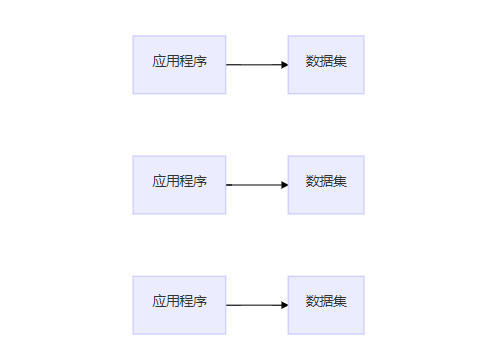
(2)File system
- Data stored in files
- Use OS IO interface to access data
- Measures taken to accelerate the data access
- Primary data-program independence
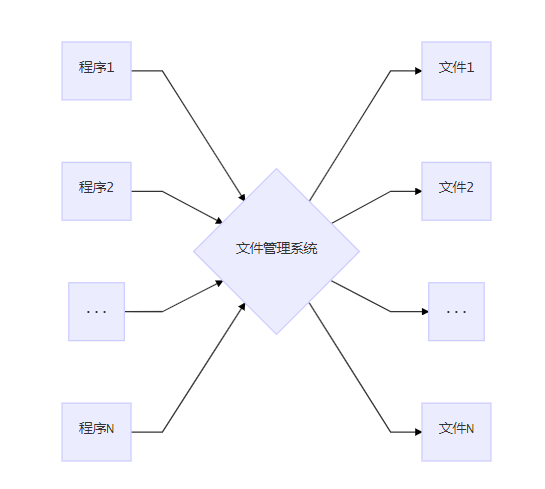
Drawbacks of file systems
Program-Data Dependence
- All programs maintain metadata for each file they use
Data Redundancy (Duplication of data)
- Different systems/programs have separate copies of the same data
- Multiple file formats, duplication of information in different files
- Requires space, effort and result in loss of data & metadata integrity
Limited Data Sharing
- No centralized control of data
- Each application has its own private files & users has little chance to share data outside their own applications
Lengthy Development Times
- For each new application programmers must design their own file formats & descriptions from scratch
Excessive Program Maintenance
- 80% of information systems budget
Difficulty in accessing data
- Need to write a new program to carry out each new task
Integrity problems
- Integrity constraints
- Hard to add new constraints or change existing ones
(3)Database
Main advantages compared to file systems:
data sharing
Less data redundancy
Data- program Independence
Convenient program interface
Efficient data access
Data integrity and data security
Concurrency management
…
Database advantages
Structured data storage
- Organize the data and link them together by their inner relations
- Automatically manage the data relationship
Data sharing
- One copy of data for many applications
- Allow many users to access data simultaneously
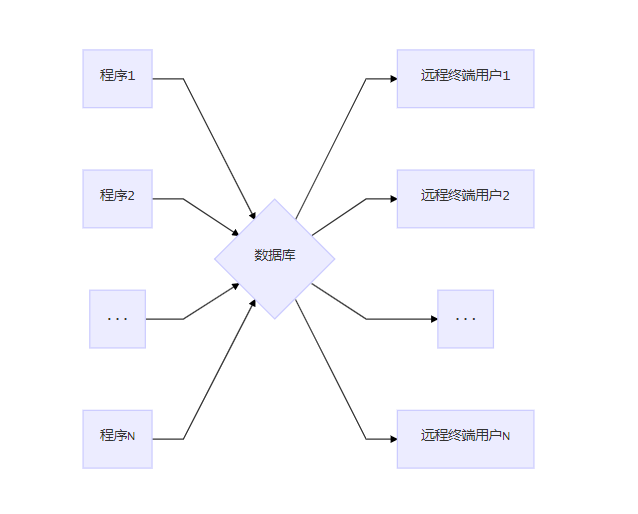
Less data redundancy
- 共享数据(对应关系变成表格关系)
Data integrity
- Automatically check the input value of certain data items, according to the data integrity rules
Concurrency并发性
- Isolate the concurrent accesses
- Prevent the dirty use of data
- The modification that may jeopardize the integrity of data
3.Database Architecture
(1)Database Architecture (physical architecture)
The architecture of a database systems is greatly influenced by the underlying computer system on which the database is running:
- Centralized集中的
- Client-server客户端-服务器
- Parallel (multi-processor)并行(多处理器)
- Distributed分布式
(2)Database Users
Users are differentiated by the way they expect to interact with the system
- Application programmers – interact with system through DML calls
- Sophisticated users – form requests in a database query language
- Specialized users – write specialized database applications that do not fit into the traditional data processing framework
- Naive users – invoke one of the permanent application programs that have been written previously. Examples, people accessing database over the web, bank tellers, clerical staff
(3)Database Administrator
Coordinates all the activities of the database system; the database administrator has a good understanding of the enterprise’s information resources and needs.
Database administrator’s duties include:
- Schema definition
- Storage structure and access method definition
- Schema and physical organization modification
- Granting user authority to access the database
- Specifying integrity constraints
- Acting as liaison with users
- Monitoring performance and responding to changes in requirements
Data Management Technology(1) -- Introduction的更多相关文章
- Data Management Technology(5) -- Recovery
Recovery Types of Failures Wrong data entry Prevent by having constraints in the database Fix with d ...
- Data Management Technology(3) -- SQL
SQL is a very-high-level language, in which the programmer is able to avoid specifying a lot of data ...
- Data Management Technology(2) -- Data Model
1.Data Model Model Is the abstraction of real world Reveal the essence of objects, help people to lo ...
- Data Management Technology(4) -- 关系数据库理论
规范化问题的提出 在规范化理论出现以前,层次和网状数据库的设计只是遵循其模型本身固有的原则,而无具体的理论依据可言,因而带有盲目性,可能在以后的运行和使用中发生许多预想不到的问题. 在关系数据库系统中 ...
- Building Applications with Force.com and VisualForce(Dev401)(十六):Data Management: Introduction to Upsert
Dev401-017:Data Management: Introduction to Upsert Module Objectives1.Define upsert.2.Define externa ...
- MySQL vs. MongoDB: Choosing a Data Management Solution
原文地址:http://www.javacodegeeks.com/2015/07/mysql-vs-mongodb.html 1. Introduction It would be fair to ...
- [Windows Azure] Data Management and Business Analytics
http://www.windowsazure.com/en-us/develop/net/fundamentals/cloud-storage/ Managing and analyzing dat ...
- Intel Active Management Technology
http://en.wikipedia.org/wiki/Intel_Active_Management_Technology Intel Active Management Technology F ...
- Data Management and Data Management Tools
Data Management ObjectivesBy the end o this module, you should understand the fundamentals of data m ...
随机推荐
- Git很麻烦?只要掌握这几个命令,轻松将代码提交远程仓库
在上一章节,跟大家介绍了拉取代码的操作,简单暴力.这一章节要介绍的是如何将现有的项目,直接提交到仓库. 现在,如果大家有一个项目要提交到GitHub仓库,安装上一张的方法,需要先在GitHub上建一个 ...
- mysql数据库排坑过程
刚安装mysql后想通过navicat来连接mysql,发现报错 1251这个错误,不慌.这个很简单. 首先通过cmd进入mysql. 然后修改密码规则 ALTER USER 'root'@'loca ...
- Java编译时常量和运行时常量
Java编译时常量和运行时常量 编译期常量指的就是程序在编译时就能确定这个常量的具体值. 非编译期常量就是程序在运行时才能确定常量的值,因此也称为运行时常量. 在Java中,编译期常量指的是用fina ...
- Ubuntu 创建 Pycharm 桌面快捷方式
1. 安装 Pycharm,我的运行目录是: /opt/pycharm-/bin 2. 在 /usr/share/applications/ 下创建文件 pycharm.desktop [Deskto ...
- Python-xlwt库的基本使用
安装xlwt库 pip install xlwt 基本使用 ①创建工作簿 wa = xlwt.Workbook() ②添加工作表 添加“class”工作表 b = wa.add_sheet('clas ...
- 设计模式之单例模式(Java)
单例模式 问题 多线程操作同一对象保证对象的一致性 解决思路 只有一次实例化过程,产生一个实例化对象,并提供返回该对象的方法. 单例模式的分类 1 饿汉式 在加载类的时候就产生实例对象 public ...
- 大数据-hadoop-MapReduce计算流程
MapReduce计算流程 1 首先是通过程序员所编写的MR程序通过命令行本地提交或者IDE远程提交 2 一个MR程序就是一个Job,Job信息会给Resourcemanger,向Resourcem ...
- angular cli 使用echarts
1.安装库 npm install typings echarts --global npm install ngx-echarts --save npm install @types/echarts ...
- 团队项目之Scrum7
小组:BLACK PANDA 时间:2019.11.27 每天举行站立式会议 提供当天站立式会议照片一张 2 昨天已完成的工作 2 内容展示 根据三大板块进行分类: 电影. 音乐以及摄影 今天计划完成 ...
- redis cluster集群动态伸缩--删除主从节点
目标:从集群中剔除一组主从(5007,5008) 经过上一节增加5007,5008主从服务节点后,目前集群的情况是这样的: b3363a81c3c59d57143cd3323481259c044e66 ...