
servlet源码查看
1,下载源码,点击此处可下载
2,创建web项目
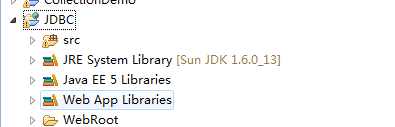
我这里以jdbc这个web项目为例讲解

在javaee libraries中有个javaee.jar包,选中它-->右击--》Properties

找到你下载的jar包
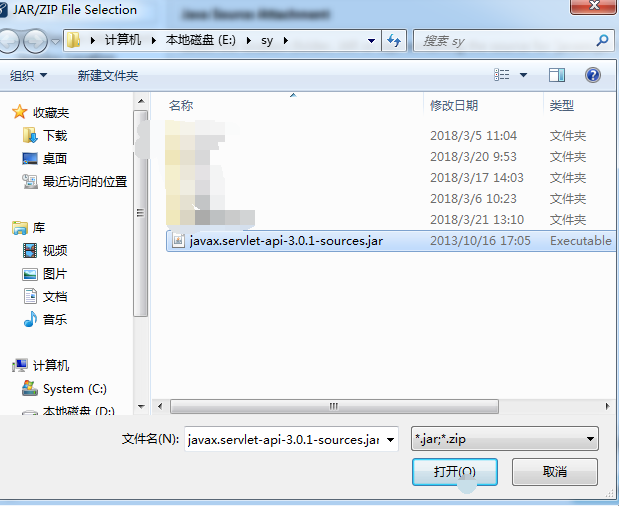
打开---apply 即可】
在任意一个.java文件中,编写servlet,按住ctrl键,鼠标单击类(或接口)名,即可查看源码
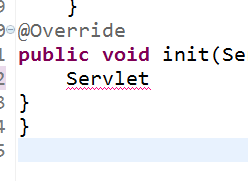
下面是servlet完整源码
/*

 * DO NOT ALTER OR REMOVE COPYRIGHT NOTICES OR THIS HEADER.

 *

 * Copyright (c) 1997-2010 Oracle and/or its affiliates. All rights reserved.

 *

 * The contents of this file are subject to the terms of either the GNU

 * General Public License Version 2 only ("GPL") or the Common Development

 * and Distribution License("CDDL") (collectively, the "License").  You

 * may not use this file except in compliance with the License.  You can

 * obtain a copy of the License at

 * https://glassfish.dev.java.net/public/CDDL+GPL_1_1.html

 * or packager/legal/LICENSE.txt.  See the License for the specific

 * language governing permissions and limitations under the License.

 *

 * When distributing the software, include this License Header Notice in each

 * file and include the License file at packager/legal/LICENSE.txt.

 *

 * GPL Classpath Exception:

 * Oracle designates this particular file as subject to the "Classpath"

 * exception as provided by Oracle in the GPL Version 2 section of the License

 * file that accompanied this code.

 *

 * Modifications:

 * If applicable, add the following below the License Header, with the fields

 * enclosed by brackets [] replaced by your own identifying information:

 * "Portions Copyright [year] [name of copyright owner]"

 *

 * Contributor(s):

 * If you wish your version of this file to be governed by only the CDDL or

 * only the GPL Version 2, indicate your decision by adding "[Contributor]

 * elects to include this software in this distribution under the [CDDL or GPL

 * Version 2] license."  If you don't indicate a single choice of license, a

 * recipient has the option to distribute your version of this file under

 * either the CDDL, the GPL Version 2 or to extend the choice of license to

 * its licensees as provided above.  However, if you add GPL Version 2 code

 * and therefore, elected the GPL Version 2 license, then the option applies

 * only if the new code is made subject to such option by the copyright

 * holder.

 *

 *

 * This file incorporates work covered by the following copyright and

 * permission notice:

 *

 * Copyright 2004 The Apache Software Foundation

 *

 * Licensed under the Apache License, Version 2.0 (the "License");

 * you may not use this file except in compliance with the License.

 * You may obtain a copy of the License at

 *

 *     http://www.apache.org/licenses/LICENSE-2.0

 *

 * Unless required by applicable law or agreed to in writing, software

 * distributed under the License is distributed on an "AS IS" BASIS,

 * WITHOUT WARRANTIES OR CONDITIONS OF ANY KIND, either express or implied.

 * See the License for the specific language governing permissions and

 * limitations under the License.

 */

package javax.servlet;

import java.io.IOException;

/**

 * Defines methods that all servlets must implement.

 *

 * <p>A servlet is a small Java program that runs within a Web server.

 * Servlets receive and respond to requests from Web clients,

 * usually across HTTP, the HyperText Transfer Protocol.

 *

 * <p>To implement this interface, you can write a generic servlet

 * that extends

 * <code>javax.servlet.GenericServlet</code> or an HTTP servlet that

 * extends <code>javax.servlet.http.HttpServlet</code>.

 *

 * <p>This interface defines methods to initialize a servlet,

 * to service requests, and to remove a servlet from the server.

 * These are known as life-cycle methods and are called in the

 * following sequence:

 * <ol>

 * <li>The servlet is constructed, then initialized with the <code>init</code> method.

 * <li>Any calls from clients to the <code>service</code> method are handled.

 * <li>The servlet is taken out of service, then destroyed with the

 * <code>destroy</code> method, then garbage collected and finalized.

 * </ol>

 *

 * <p>In addition to the life-cycle methods, this interface

 * provides the <code>getServletConfig</code> method, which the servlet

 * can use to get any startup information, and the <code>getServletInfo</code>

 * method, which allows the servlet to return basic information about itself,

 * such as author, version, and copyright.

 *

 * @author     Various

 *

 * @see     GenericServlet

 * @see     javax.servlet.http.HttpServlet

 *

 */

public interface Servlet {

    /**

     * Called by the servlet container to indicate to a servlet that the

     * servlet is being placed into service.

     *

     * <p>The servlet container calls the <code>init</code>

     * method exactly once after instantiating the servlet.

     * The <code>init</code> method must complete successfully

     * before the servlet can receive any requests.

     *

     * <p>The servlet container cannot place the servlet into service

     * if the <code>init</code> method

     * <ol>

     * <li>Throws a <code>ServletException</code>

     * <li>Does not return within a time period defined by the Web server

     * </ol>

     *

     *

     * @param config            a <code>ServletConfig</code> object

     *                    containing the servlet's

     *                     configuration and initialization parameters

     *

     * @exception ServletException     if an exception has occurred that

     *                    interferes with the servlet's normal

     *                    operation

     *

     * @see                 UnavailableException

     * @see                 #getServletConfig

     *

     */

    public void init(ServletConfig config) throws ServletException;

    /**

     *

     * Returns a {@link ServletConfig} object, which contains

     * initialization and startup parameters for this servlet.

     * The <code>ServletConfig</code> object returned is the one

     * passed to the <code>init</code> method.

     *

     * <p>Implementations of this interface are responsible for storing the

     * <code>ServletConfig</code> object so that this

     * method can return it. The {@link GenericServlet}

     * class, which implements this interface, already does this.

     *

     * @return        the <code>ServletConfig</code> object

     *            that initializes this servlet

     *

     * @see         #init

     *

     */

    public ServletConfig getServletConfig();

    /**

     * Called by the servlet container to allow the servlet to respond to

     * a request.

     *

     * <p>This method is only called after the servlet's <code>init()</code>

     * method has completed successfully.

     *

     * <p>  The status code of the response always should be set for a servlet

     * that throws or sends an error.

     *

     *

     * <p>Servlets typically run inside multithreaded servlet containers

     * that can handle multiple requests concurrently. Developers must

     * be aware to synchronize access to any shared resources such as files,

     * network connections, and as well as the servlet's class and instance

     * variables.

     * More information on multithreaded programming in Java is available in

     * <a href="http://java.sun.com/Series/Tutorial/java/threads/multithreaded.html">

     * the Java tutorial on multi-threaded programming</a>.

     *

     *

     * @param req     the <code>ServletRequest</code> object that contains

     *            the client's request

     *

     * @param res     the <code>ServletResponse</code> object that contains

     *            the servlet's response

     *

     * @exception ServletException     if an exception occurs that interferes

     *                    with the servlet's normal operation

     *

     * @exception IOException         if an input or output exception occurs

     *

     */

    public void service(ServletRequest req, ServletResponse res)

    throws ServletException, IOException;

    /**

     * Returns information about the servlet, such

     * as author, version, and copyright.

     *

     * <p>The string that this method returns should

     * be plain text and not markup of any kind (such as HTML, XML,

     * etc.).

     *

     * @return         a <code>String</code> containing servlet information

     *

     */

    public String getServletInfo();

    /**

     *

     * Called by the servlet container to indicate to a servlet that the

     * servlet is being taken out of service.  This method is

     * only called once all threads within the servlet's

     * <code>service</code> method have exited or after a timeout

     * period has passed. After the servlet container calls this

     * method, it will not call the <code>service</code> method again

     * on this servlet.

     *

     * <p>This method gives the servlet an opportunity

     * to clean up any resources that are being held (for example, memory,

     * file handles, threads) and make sure that any persistent state is

     * synchronized with the servlet's current state in memory.

     *

     */

    public void destroy();

}
servlet源码查看的更多相关文章
- Eclipse查看Servlet源码
Eclipse查看Servlet源码 @(Java) 1.servlet-api 和 javax.servlet-api的区别 在正式查看Servlet源码前,我们首先要分清楚上述两个jar包的区别. ...
- android 网络_网络源码查看器
xml设计 <?xml version="1.0"?> -<LinearLayout tools:context=".MainActivity" ...
- Servlet源码初探
年底,公司的事情告一段落,就来捣鼓一下这个Servlet源码,为下一步的spingmvc源码初探做准备 1.Servlet接口 public interface Servlet { void init ...
- qml源码查看
已5.4为例说明: QtQuick源码查看: 地址:Qt\Qt5.4.1\5.4\Src\qtdeclarative\src\quick\items Qt control源码查看: 地址:\Qt\Qt ...
- httpServlet,GenericServlet,Servlet源码分析
httpServlet源码: /* * Licensed to the Apache Software Foundation (ASF) under one or more * contribut ...
- idea导入jdk源码查看(xjl456852原创)
idea添加了jdk环境后,却无法查看jdk源码,只能通过idea自带的反编译查看,看起来有些不爽. 下面来说一下如何设置,导入jdk源码,查看时通过源码查看jdk. 1.点击菜单 File -> ...
- Android 网络图片查看器与网页源码查看器
在AndroidManifest.xml里面先添加访问网络的权限: <uses-permission android:name="android.permission.INTERNET ...
- IDE:Eclipse查看Servlet源码
一.源码下载 1.打开tomcat官网:http://tomcat.apache.org/ , 点击右侧下载菜单(以tomcat-7为例)进入下载页面:http://tomcat.apache. ...
- springboot 2.1.3.RELEASE添加filter,servlet源码学习
Servlet规范中,通过ServeltContext来注册Filter.Servlet,这里分析Filter,Servlet是相同逻辑 springboot2.0中,我们通过 FilterRegis ...
随机推荐
- Java中为什么字段不能被重写
官方说法: 在一个类中,一个具有相同名称的字段隐藏了父类的父类的领域,即使他们的类型是不同的.在子类中,父类中的字段是不能用简单的名称引用.相反,该字段必须通过超级访问.一般来说,我们不建议隐藏字段, ...
- Python基础-week06 面向对象编程基础
一.面向对象编程 1.面向过程 与 面向对象编程 面向过程的程序设计: 核心是 过程二字,过程指的是解决问题的步骤,即先干什么再干什么......面向过程的设计就好比精心设计好一条流水线,是一种机械式 ...
- 设计模式之迭代器模式 Iterator
代码实现 public interface MyIterator { void first(); //将游标指向第一个元素 void next(); //将游标指向下一个元素 boolean hasN ...
- PAT——乙级1012
1012 数字分类 (20 point(s)) 给定一系列正整数,请按要求对数字进行分类,并输出以下 5 个数字: A1 = 能被 5 整除的数字中所有偶数的和: A2 = 将被 5 除后 ...
- 在数组中寻找出现次数大于N/K的数
给定一个int[]数组,给定一个整数k,打印所有出现次数大于N/k的数,没有的话,给出提示信息. === 核心思想:一次在数组中删除K个不同的数,不停的删除,直到剩下的数的种类不足K就停止删除,那么如 ...
- Spring整合hibernate -SessionFactory
本文目录 1 本文采用 hibernate4 整合 Spring3.1 2 把Spring获取datasource通过class="org.springframework.orm.hibe ...
- schema.xml属性概念
# schema 定义逻辑库 checkSQLschema 当该值设置为 true 时,如果我们执行语句**select * from TESTDB.travelrecord;**则 MyCat 会 ...
- 商城商品购买数量增减的完美JS效果
近期在开发一个地方O2O租书项目,使用ASP.NET MVC技术,其中在图书详情页,用户可以输入借阅的数量,这里使用了js来控制数量的增减和校验. 数量一定是数字 点击增减按钮的时候要能自动加1或减1 ...
- 【转】 [Unity3D]手机3D游戏开发:场景切换与数据存储(PlayerPrefs 类的介绍与使用)
http://blog.csdn.net/pleasecallmewhy/article/details/8543181 在Unity中的数据存储和iOS中字典的存储基本相同,是通过关键字实现数据存储 ...
- 【转】unity 移动物体到指定位置的四种方法
http://blog.csdn.net/lcy0221/article/details/44040739 方法1:使用Vector3.MoveTowards </pre><pre ...