
spring aop 源码分析(二) 代理方法的执行过程分析
在上一篇aop源码分析时,我们已经分析了一个bean被代理的详细过程,参考:https://www.cnblogs.com/yangxiaohui227/p/13266014.html
本次主要是分析目标方法的执行过程: 测试代码在git : https://gitee.com/yangxioahui/aopdemo.git
主要代码如下:
public interface Calc {

    Integer add(int num1,int num2);

}

@Component

public class MyMath implements Calc {

   public Integer add(int num1,int num2){

        return num1+num2;

    }

}

@Aspect

@Component

public class MyAspectJ {

    @Pointcut(" execution(* com.yang.xiao.hui.aop.MyMath.*(..))")

    private void pointcut(){}

    @Before(value = "pointcut()")

    public void before(JoinPoint joinPoint){

        System.out.println("before。。。。。");

    }

    @After(value = "pointcut()")

    public void after(JoinPoint joinPoint){

        System.out.println("after。。。。");

    }

    @AfterReturning(value = "pointcut()")

    public void afterReturning(){

        System.out.println("afterReturning。。。");

    }

    @AfterThrowing(value = "pointcut()")

    public void afterThrowing(JoinPoint joinPoint){

        System.out.println("afterThrowing。。。。");

    }

    @Around(value ="pointcut()")

    public void around(ProceedingJoinPoint joinPoint){

        System.out.println("around-before。。。。");

        try {

            Object proceed = joinPoint.proceed();

            System.out.println("around-after_return。。。");

        } catch (Throwable throwable) {

            System.out.println("around-throw。。。"+throwable.getMessage());

        }

        System.out.println("around-after。。。");

    }

}

@Configuration

@ComponentScan("com.yang.xiao.hui.aop")

@EnableAspectJAutoProxy()

public class App

{

    public static void main( String[] args )

    {

        ApplicationContext ctx = new AnnotationConfigApplicationContext(App.class);

        Calc myMath = (Calc)ctx.getBean("myMath");

        myMath.add(3,5);

        System.out.println(ctx.getBean("myMath").getClass());

    }

}
测试: MyMath 类的add 方法执行过程,debug 调试:


上一篇源码分析,我们已经分析过,最终会被JdkDynamicAopProxy 的invoke方法调用,下面分析下该方法:
@Override

    @Nullable

    public Object invoke(Object proxy, Method method, Object[] args) throws Throwable {

        Object oldProxy = null;

        boolean setProxyContext = false;

        TargetSource targetSource = this.advised.targetSource; //里面封装了被代理对象,也就是MyMath

        Object target = null; //被代理对象

        try {

            if (!this.equalsDefined && AopUtils.isEqualsMethod(method)) { //处理equals方法

                // The target does not implement the equals(Object) method itself.

                return equals(args[0]);

            }

            else if (!this.hashCodeDefined && AopUtils.isHashCodeMethod(method)) { //处理Hashcode 方法

                // The target does not implement the hashCode() method itself.

                return hashCode();

            }

            else if (method.getDeclaringClass() == DecoratingProxy.class) {//显然,我们的方法定义所在的类是Calc

                // There is only getDecoratedClass() declared -> dispatch to proxy config.

                return AopProxyUtils.ultimateTargetClass(this.advised);

            }
         //this.advised.opaque 这个值是说代理类能否强转为Advised,flase是可以强转,在代理对象创建源码时分析过了,代理对象确实实现了Advised接口
              //method.getDeclaringClass().isInterface()  我们的目标方法定义所在类是Calc,确实是一个接口,但该接口没有实现Advised,所以下面方法不会进入


            else if (!this.advised.opaque && method.getDeclaringClass().isInterface() &&

                    method.getDeclaringClass().isAssignableFrom(Advised.class)) {

                // Service invocations on ProxyConfig with the proxy config...

                return AopUtils.invokeJoinpointUsingReflection(this.advised, method, args);    //这里是直接反射调用方法: method.invoke(target, args);

            }

            Object retVal;

            if (this.advised.exposeProxy) {  //@EnableAspectJAutoProxy 注解的一个属性,为true时,就会将代理对象

                // Make invocation available if necessary.

                oldProxy = AopContext.setCurrentProxy(proxy);//将当前的代理对象存到ThreadLocal中

                setProxyContext = true;

            }

            // Get as late as possible to minimize the time we "own" the target,

            // in case it comes from a pool.

            target = targetSource.getTarget(); //获取被代理类的实例,在这里是MyMath的实例

            Class<?> targetClass = (target != null ? target.getClass() : null); //在这里是com.yang.xiao.hui.aop.MyMath

            // Get the interception chain for this method. 将advisors封装成MethodInterceptor,在代理对象源码的博客介绍过,@before等注解标注的方法会被封装成advisor,所以这里取出来,封装一下,下面会详细分析该方法

            List<Object> chain = this.advised.getInterceptorsAndDynamicInterceptionAdvice(method, targetClass);

            // Check whether we have any advice. If we don't, we can fallback on direct

            // reflective invocation of the target, and avoid creating a MethodInvocation.

            if (chain.isEmpty()) {

                // We can skip creating a MethodInvocation: just invoke the target directly

                // Note that the final invoker must be an InvokerInterceptor so we know it does

                // nothing but a reflective operation on the target, and no hot swapping or fancy proxying.

                Object[] argsToUse = AopProxyUtils.adaptArgumentsIfNecessary(method, args); //如果没有拦截器,获取实际参数,反射调用目标方法就行了

                retVal = AopUtils.invokeJoinpointUsingReflection(target, method, argsToUse); ////这里是直接反射调用方法: method.invoke(target, args);

            }

            else {

                // We need to create a method invocation...

                MethodInvocation invocation =

                        new ReflectiveMethodInvocation(proxy, target, method, args, targetClass, chain);  //反射创建一个方法执行器,这里后续会分析,用到了责任链模式

                // Proceed to the joinpoint through the interceptor chain.

                retVal = invocation.proceed();//开始调用责任链

            }

            // Massage return value if necessary.

            Class<?> returnType = method.getReturnType(); //获取方法返回值类型

            if (retVal != null && retVal == target &&

                    returnType != Object.class && returnType.isInstance(proxy) &&

                    !RawTargetAccess.class.isAssignableFrom(method.getDeclaringClass())) { //特殊情况,责任链调用的返回值就是被代理对象(target),而方法的返回类型要求的是代理对象Proxy,这样就将代理对象返回去就可以了

                // Special case: it returned "this" and the return type of the method

                // is type-compatible. Note that we can't help if the target sets

                // a reference to itself in another returned object.

                retVal = proxy;

            }

            else if (retVal == null && returnType != Void.TYPE && returnType.isPrimitive()) { //如果方法的返回类型不是void,并且是基本类型,那么,如果执行调用后,拿到的返回值是空,就抛异常

                throw new AopInvocationException(

                        "Null return value from advice does not match primitive return type for: " + method);

            }

            return retVal;//返回得到的结果

        }

        finally {

            if (target != null && !targetSource.isStatic()) { //如果目标代理对象不为空,同时每次调用targetSource.getTarget()返回的对象不同,也就是非单例的情况下需要释放目标对象

                // Must have come from TargetSource.

                targetSource.releaseTarget(target);

            }

            if (setProxyContext) {

                // Restore old proxy.

                AopContext.setCurrentProxy(oldProxy); //方法调用完毕,将ThreadLocal中的代理对象设置回之前的那个

            }

        }

    }
//通过上面的分析,目标方法在执行时,主要分两步,取得拦截链,调用拦截链:
先分析: List<Object> chain = this.advised.getInterceptorsAndDynamicInterceptionAdvice(method, targetClass); 其中AdvisedSupport: advised拥有被代理对象和advisors,在代理对象创建源码分析时,有分析过

下面分析获取chain的过程:
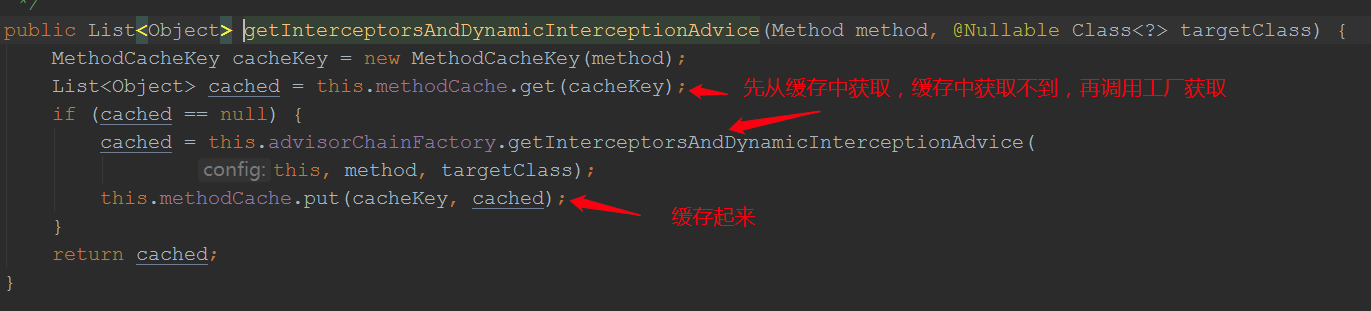
@Override

    public List<Object> getInterceptorsAndDynamicInterceptionAdvice(

            Advised config, Method method, @Nullable Class<?> targetClass) {

        // This is somewhat tricky... We have to process introductions first,

        // but we need to preserve order in the ultimate list.

        AdvisorAdapterRegistry registry = GlobalAdvisorAdapterRegistry.getInstance();

        Advisor[] advisors = config.getAdvisors();  // config 就是AdvisedSupport,它拥有advisors,在代理对象创建过程中分析过

        List<Object> interceptorList = new ArrayList<>(advisors.length); //要将advisor转成方法拦截器,才能起到拦截的作用

        Class<?> actualClass = (targetClass != null ? targetClass : method.getDeclaringClass());//被代理类

        Boolean hasIntroductions = null;

        for (Advisor advisor : advisors) {

            if (advisor instanceof PointcutAdvisor) { //根据advisor的类型不一样,转成MethodInterceptor 逻辑也不一样

                // Add it conditionally.

                PointcutAdvisor pointcutAdvisor = (PointcutAdvisor) advisor;
           //config.isPreFiltered()都是返回true,代表advisors是否已经是过滤过的了
                if (config.isPreFiltered() || pointcutAdvisor.getPointcut().getClassFilter().matches(actualClass)) {//主要通过切入点表达式再次校验目标类是否需要被切入

                    MethodMatcher mm = pointcutAdvisor.getPointcut().getMethodMatcher();// 如果根据切入点表达式判断了类需要被切入,那之后就要判断方法是否需要切入,因为一个类有很多方法,并不是所有方法都需要被切入

                    boolean match;

                    if (mm instanceof IntroductionAwareMethodMatcher) { //根据方法匹配器的类型,使用不同发匹配方式

                        if (hasIntroductions == null) {

                            hasIntroductions = hasMatchingIntroductions(advisors, actualClass);

                        }

                        match = ((IntroductionAwareMethodMatcher) mm).matches(method, actualClass, hasIntroductions);

                    }

                    else {

                        match = mm.matches(method, actualClass);

                    }

                    if (match) {

                        MethodInterceptor[] interceptors = registry.getInterceptors(advisor); //如果advisor 匹配上了,那就要封装成方法拦截器

                        if (mm.isRuntime()) { /mm的类型主要有2种,一种是动态方法匹配器,永远返回true,一种是静态方法匹配器,永远返回false

                            // Creating a new object instance in the getInterceptors() method

                            // isn't a problem as we normally cache created chains.

                            for (MethodInterceptor interceptor : interceptors) {

                                interceptorList.add(new InterceptorAndDynamicMethodMatcher(interceptor, mm)); //这里做了一个简单的封装

                            }

                        }

                        else {

                            interceptorList.addAll(Arrays.asList(interceptors));  //将所有符合要求的interceptors 存起来

                        }

                    }

                }

            }

            else if (advisor instanceof IntroductionAdvisor) { //逻辑跟之前分析的差不多

                IntroductionAdvisor ia = (IntroductionAdvisor) advisor;

                if (config.isPreFiltered() || ia.getClassFilter().matches(actualClass)) {

                    Interceptor[] interceptors = registry.getInterceptors(advisor);

                    interceptorList.addAll(Arrays.asList(interceptors));

                }

            }

            else {

                Interceptor[] interceptors = registry.getInterceptors(advisor);

                interceptorList.addAll(Arrays.asList(interceptors));

            }

        }

        return interceptorList;

    }
上面的方法主要是根据advisor的类型,使用不同的方法匹配器,看看目标的方法是否可以使用该advisor,是的话,就封装成MethodInterceptor,看看封装的逻辑:registry.getInterceptors(advisor);
@Override

    public MethodInterceptor[] getInterceptors(Advisor advisor) throws UnknownAdviceTypeException {

        List<MethodInterceptor> interceptors = new ArrayList<>(3);

        Advice advice = advisor.getAdvice();

        if (advice instanceof MethodInterceptor) {

            interceptors.add((MethodInterceptor) advice);

        }

        for (AdvisorAdapter adapter : this.adapters) { //三种适配器: MethodBeforeAdviceAdapter/ AfterReturningAdviceAdapter/ThrowsAdviceAdapter 看看哪个匹配上,就用哪一种适配器来封装成拦截器

            if (adapter.supportsAdvice(advice))

                interceptors.add(adapter.getInterceptor(advisor));

            }

        }

        if (interceptors.isEmpty()) {

            throw new UnknownAdviceTypeException(advisor.getAdvice());

        }

        return interceptors.toArray(new MethodInterceptor[0]);

    }
//advisor封装成interceptor的一个例子:

拦截器链获取分析完毕了,那么,我们接下来分析下,责任链的执行:

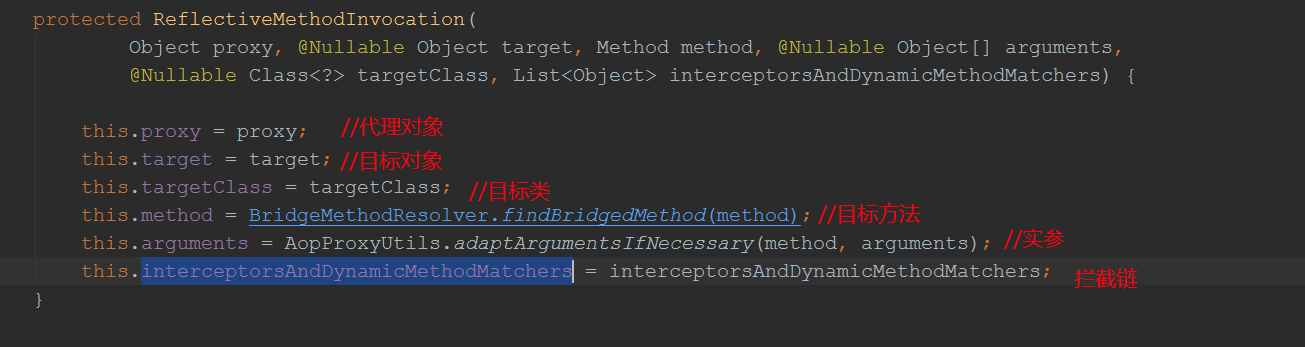
之后我们看看:invocation.proceed();
public Object proceed() throws Throwable {
         //刚开始currentInterceptorIndex=-1

        // We start with an index of -1 and increment early.

        if (this.currentInterceptorIndex == this.interceptorsAndDynamicMethodMatchers.size() - 1) { //如果最后一个拦截器执行完毕后,就直接反射调用目标方法

            return invokeJoinpoint(); //method.invoke(target, args);

        }

        Object interceptorOrInterceptionAdvice =

                this.interceptorsAndDynamicMethodMatchers.get(++this.currentInterceptorIndex); //获取其中一个拦截器

        if (interceptorOrInterceptionAdvice instanceof InterceptorAndDynamicMethodMatcher) { //判断拦截器是不是动态匹配方法的

            // Evaluate dynamic method matcher here: static part will already have

            // been evaluated and found to match.

            InterceptorAndDynamicMethodMatcher dm =

                    (InterceptorAndDynamicMethodMatcher) interceptorOrInterceptionAdvice;

            Class<?> targetClass = (this.targetClass != null ? this.targetClass : this.method.getDeclaringClass());

            if (dm.methodMatcher.matches(this.method, targetClass, this.arguments)) { //动态拦截器,执行时才去匹配

                return dm.interceptor.invoke(this); //匹配得上,就调用拦截方法

            }

            else {

                // Dynamic matching failed.

                // Skip this interceptor and invoke the next in the chain.

                return proceed();//匹配失败,就调用下一个

            }

        }

        else {

            // It's an interceptor, so we just invoke it: The pointcut will have

            // been evaluated statically before this object was constructed.

            return ((MethodInterceptor) interceptorOrInterceptionAdvice).invoke(this); //如果是静态的匹配的,就直接调用目标方法

        }

    }
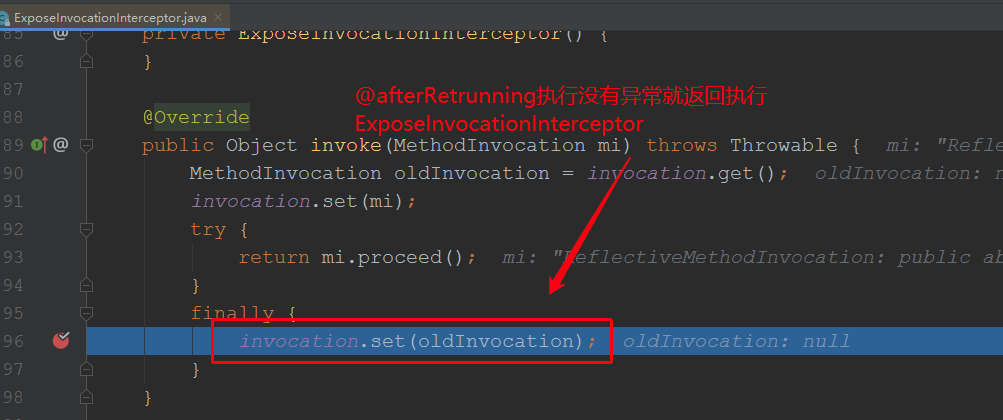
debug调试调用过程:
先看看我们的链条都有哪些:

总共有六个拦截器:
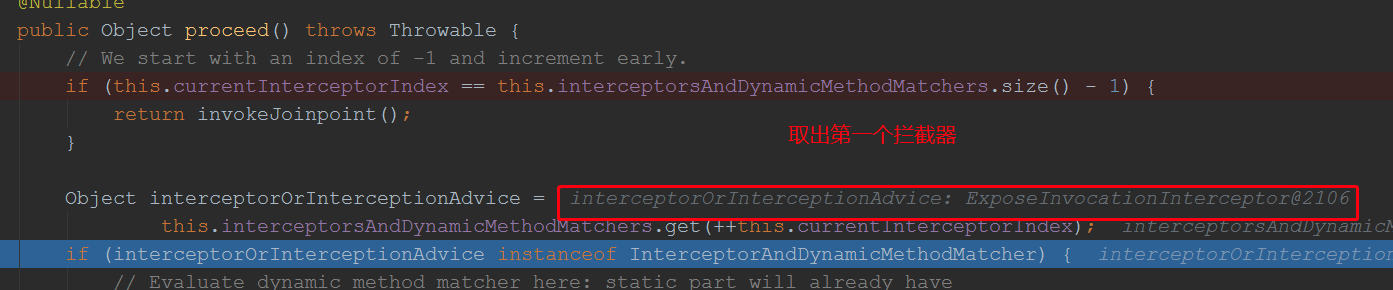
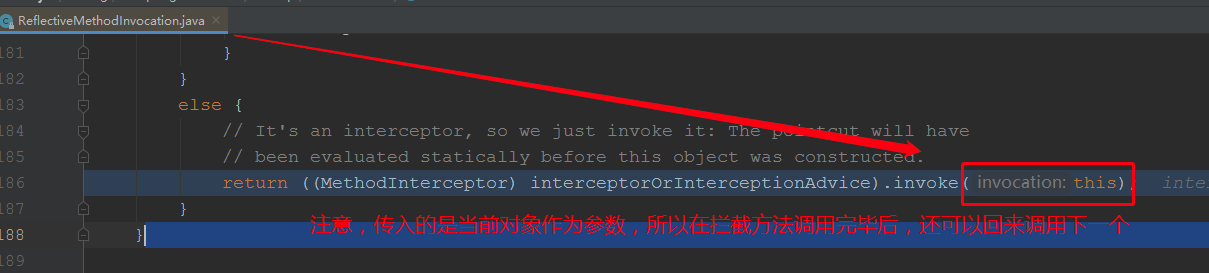
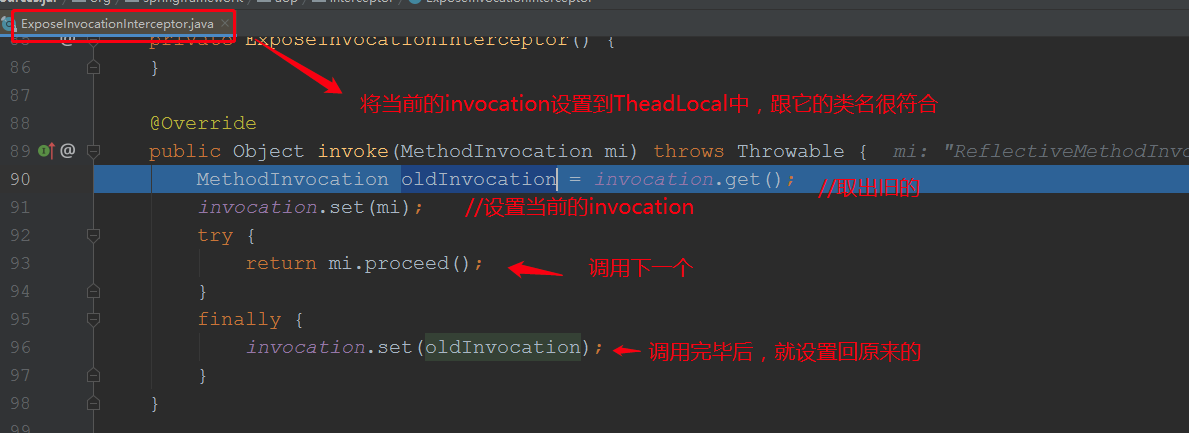
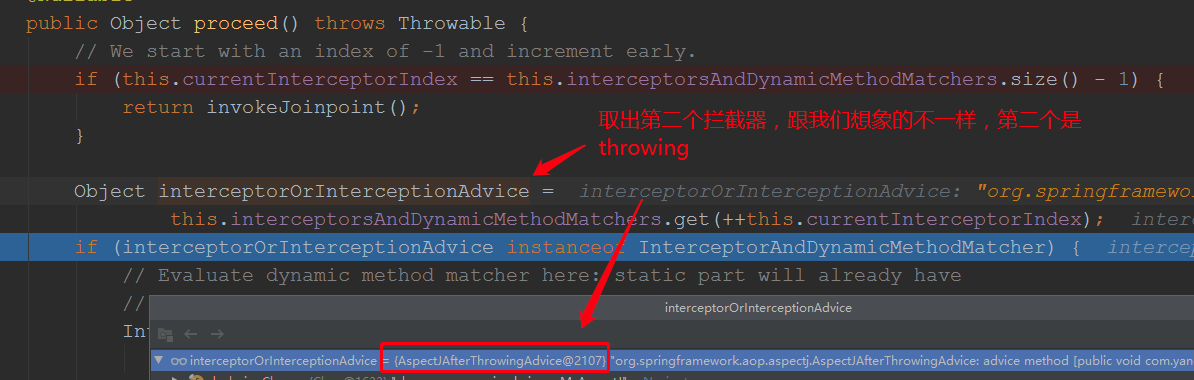
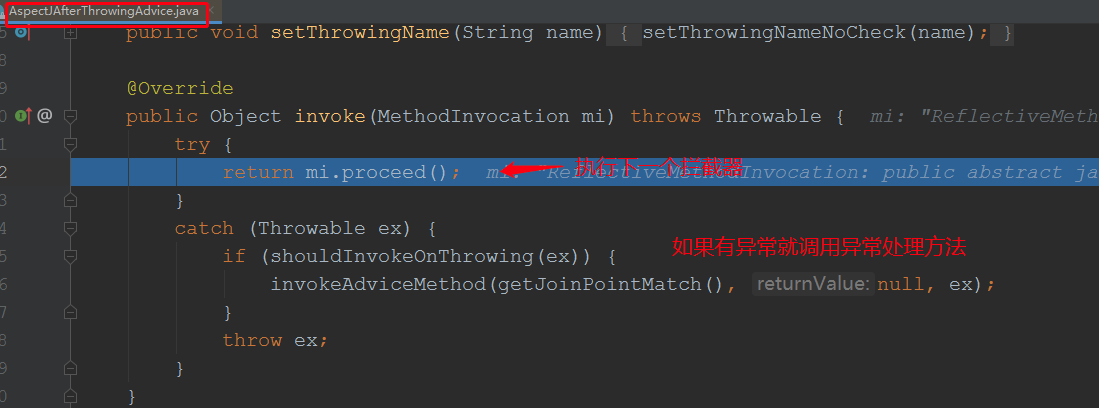
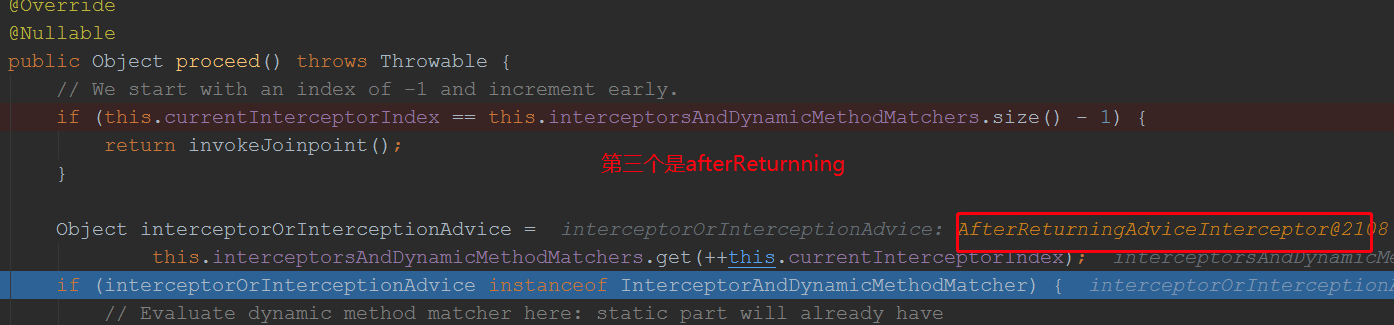
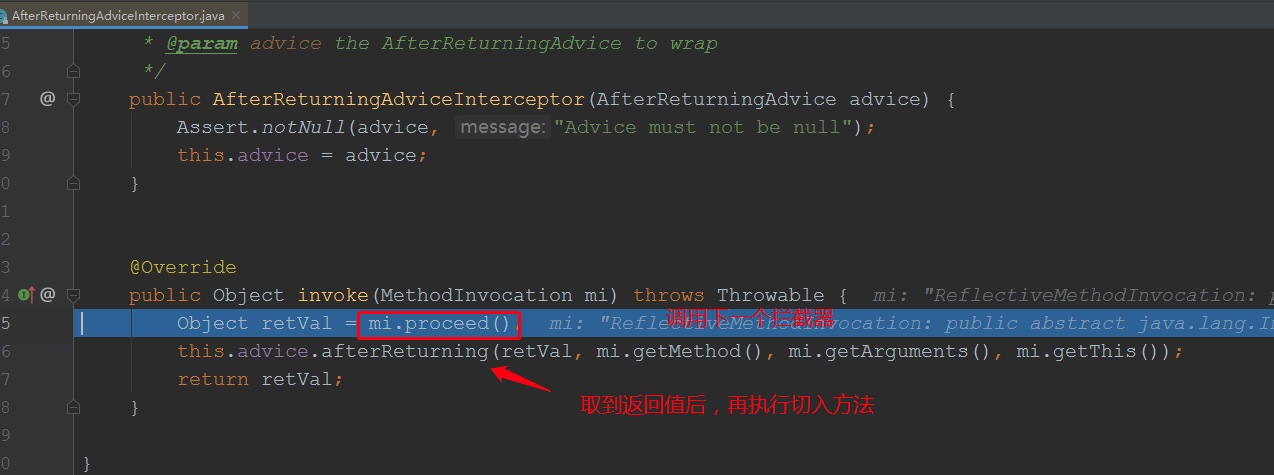
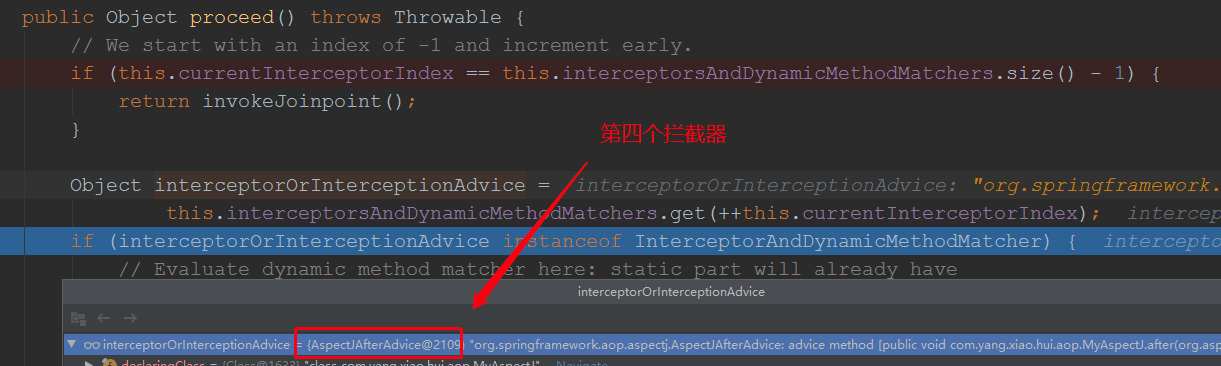
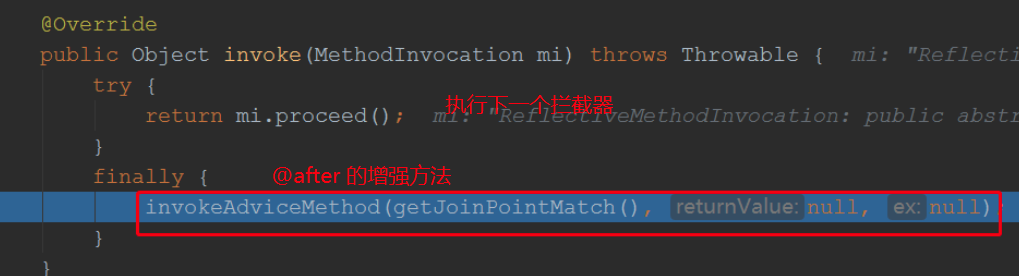

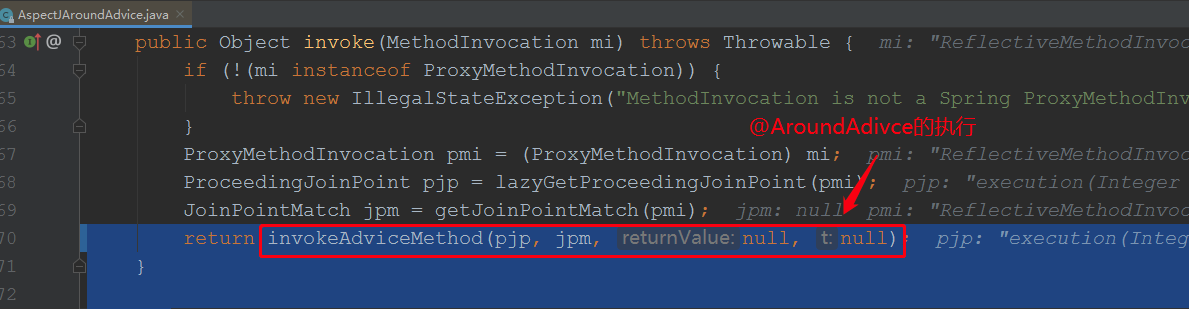

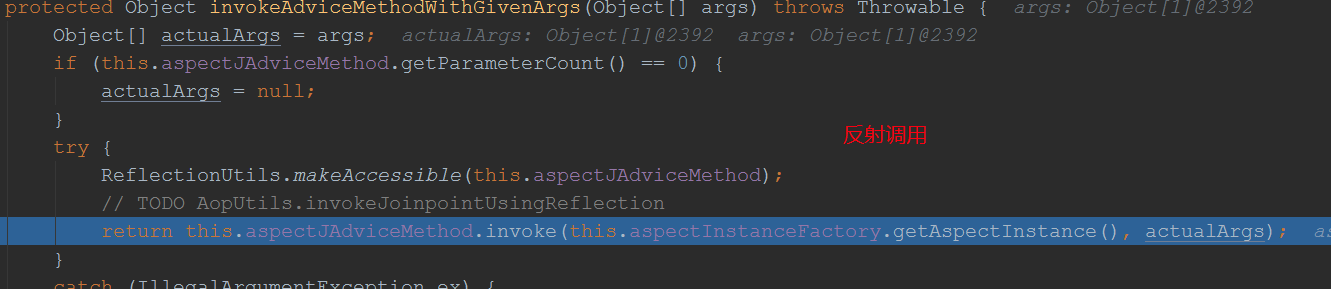


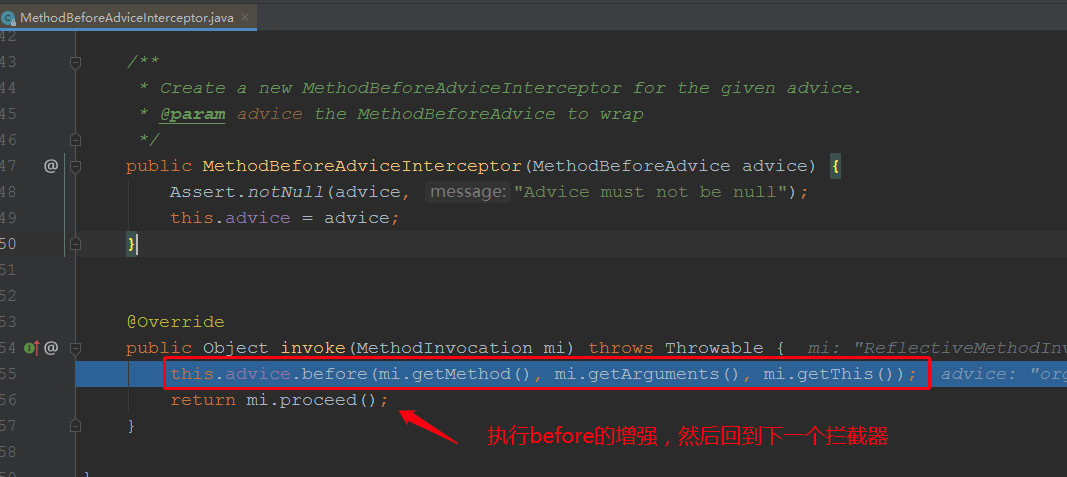


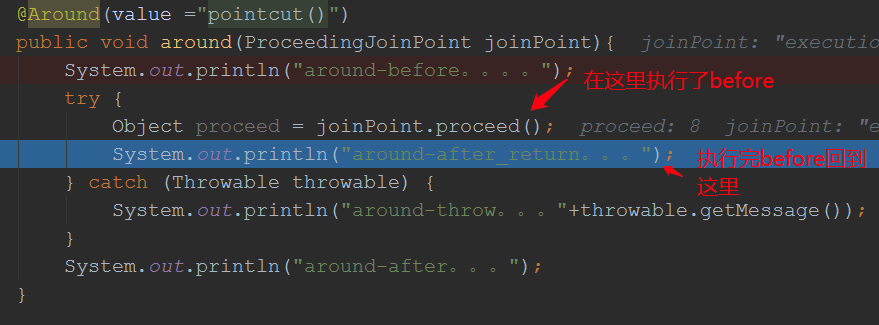
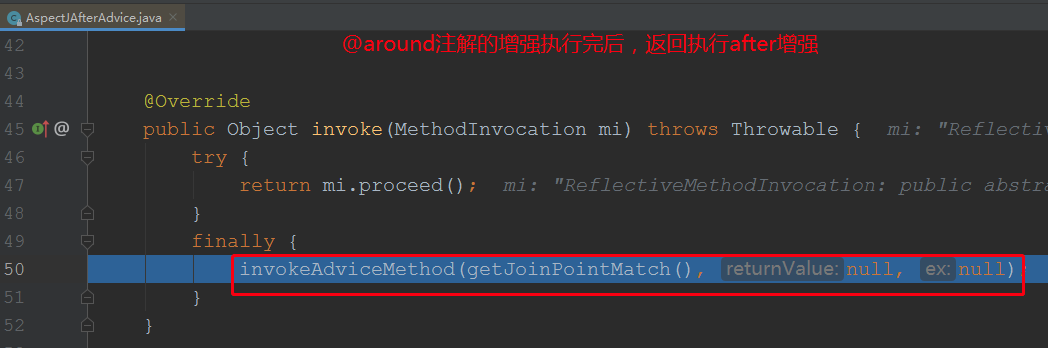


最后总结:

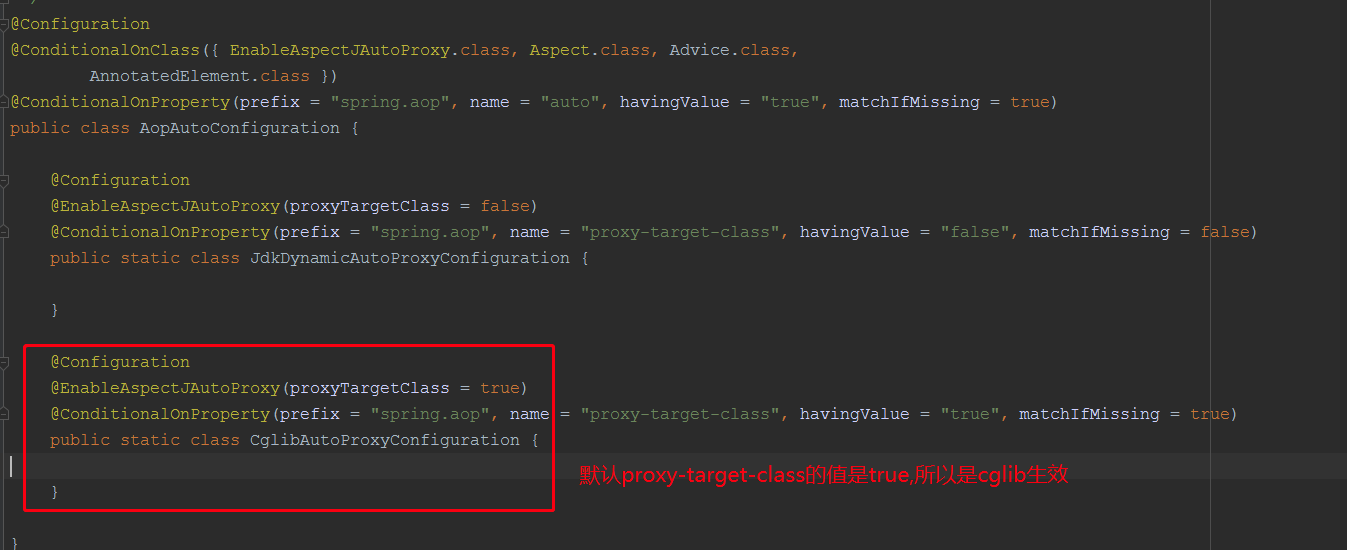
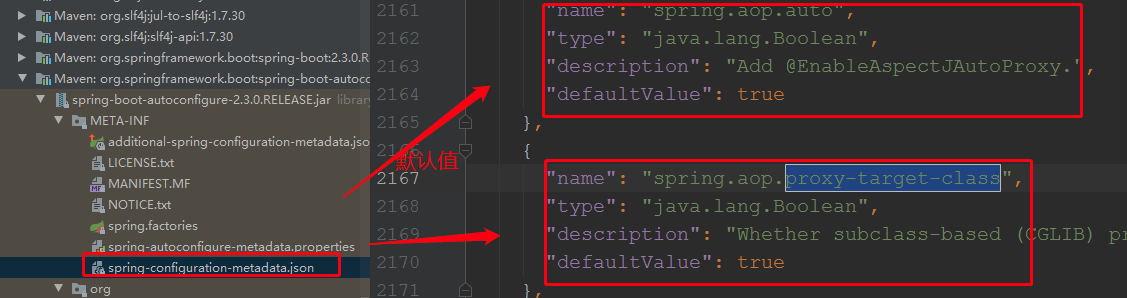
springboot对aop的自动装配机制:我们在springboot项目中,没有自己给启动类贴上@EnableAspectJAutoProxy 注解,aop一样生效,原理是有个配置类:
默认值如下:
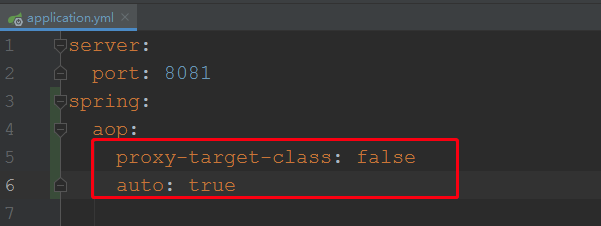
我们可以在yml中配置相应的属性:
spring aop 源码分析(二) 代理方法的执行过程分析的更多相关文章
- Spring AOP 源码分析 - 创建代理对象
1.简介 在上一篇文章中,我分析了 Spring 是如何为目标 bean 筛选合适的通知器的.现在通知器选好了,接下来就要通过代理的方式将通知器(Advisor)所持有的通知(Advice)织入到 b ...
- Spring AOP 源码分析 - 拦截器链的执行过程
1.简介 本篇文章是 AOP 源码分析系列文章的最后一篇文章,在前面的两篇文章中,我分别介绍了 Spring AOP 是如何为目标 bean 筛选合适的通知器,以及如何创建代理对象的过程.现在我们的得 ...
- 5.2 Spring5源码--Spring AOP源码分析二
目标: 1. 什么是AOP, 什么是AspectJ 2. 什么是Spring AOP 3. Spring AOP注解版实现原理 4. Spring AOP切面原理解析 一. 认识AOP及其使用 详见博 ...
- 5.2 spring5源码--spring AOP源码分析二--切面的配置方式
目标: 1. 什么是AOP, 什么是AspectJ 2. 什么是Spring AOP 3. Spring AOP注解版实现原理 4. Spring AOP切面原理解析 一. 认识AOP及其使用 详见博 ...
- Spring AOP 源码分析 - 筛选合适的通知器
1.简介 从本篇文章开始,我将会对 Spring AOP 部分的源码进行分析.本文是 Spring AOP 源码分析系列文章的第二篇,本文主要分析 Spring AOP 是如何为目标 bean 筛选出 ...
- Spring AOP 源码分析系列文章导读
1. 简介 前一段时间,我学习了 Spring IOC 容器方面的源码,并写了数篇文章对此进行讲解.在写完 Spring IOC 容器源码分析系列文章中的最后一篇后,没敢懈怠,趁热打铁,花了3天时间阅 ...
- Spring AOP源码分析(三):基于JDK动态代理和CGLIB创建代理对象的实现原理
AOP代理对象的创建 AOP相关的代理对象的创建主要在applyBeanPostProcessorsBeforeInstantiation方法实现: protected Object applyBea ...
- spring AOP源码分析(三)
在上一篇文章 spring AOP源码分析(二)中,我们已经知道如何生成一个代理对象了,那么当代理对象调用代理方法时,增强行为也就是拦截器是如何发挥作用的呢?接下来我们将介绍JDK动态代理和cglib ...
- spring aop 源码分析(三) @Scope注解创建代理对象
一.源码环境的搭建: @Component @Scope(scopeName = ConfigurableBeanFactory.SCOPE_SINGLETON,proxyMode = ScopedP ...
随机推荐
- Serializers组件详解
Serializers组件 使用背景 因为每个语言都有自己的数据类型,不同语言要想数据传输,就必须指定一种各种语言通用的数据类型,如json,xml等等 序列化器允许把像查询集和模型实例这样的复杂数据 ...
- PHP - 读取EXCEL内容 存入数据库
<?php //设置请求头 header("Content-Type:text/html;charset=utf8"); header("Access-Contro ...
- Java开发环境搭建的准备工作
Java开发环境搭建的准备工作 网络配置(修改hosts) 什么时候需要 比如我们在安装homeBrew的时候会遇到 curl: (7) Failed to connect to raw.github ...
- 教你如何在linux操作系统下玩【俄罗斯方块】高清+语音教程
主讲人小冰QQ:986945193 新浪微博:http://weibo.com/mcxiaobing 百度贴吧:忆驹家族小冰 腾讯微博:http://t.qq.com/q986945193 高清视频 ...
- unity5打包机制下,一种资源打ab和资源管理的方案
unity5打包机制下,一种资源打ab和资源管理的方案.1.打ab: 1.设置平台 2.清楚所有资源的assetbundlename: string[] abNameArr = AssetDataba ...
- laravel5Eloquent模型与数据表的创建
下面是有关管理员模型与表的创建 生成模型时同时生成数据库迁移文件 在生成的迁移文件中添加字段 运行命令行生成数据表 命令进行混合运用 生成工厂文件,数据填充文件 工厂模型代码 数据填充文件代码 数据填 ...
- SSM框架之mybatis极速入门!
- 不支持原子性的 Redis 事务也叫事务吗?
文章收录在 GitHub JavaKeeper ,N线互联网开发必备技能兵器谱 假设现在有这样一个业务,用户获取的某些数据来自第三方接口信息,为避免频繁请求第三方接口,我们往往会加一层缓存,缓存肯定要 ...
- Mysql优化概述及其压力测试工具
衡量指标 TPS:Transactions Per Second (每秒传输的事物处理个数) ,这是指服务器每秒处理的事物数,支持事物的存储引擎如Innodb等特有的一个性能指标; QPS:Queri ...
- 为什么选择H5游戏开发定制?
为什么选择H5游戏开发定制? 随着微信H5游戏推广带来的显著效果,越来越多的商家已经加入到游戏营销的队伍中来, 对H5小游戏有了解的商家都知道,[模板游戏]的价格往往低于[定制游戏]的价格,可是为什么 ...