
activiti主要组件解析
Activiti内部实现中,各主要部件关系

对外,提供Service服务,它是无状态的。
这些Service包括:
- protected RepositoryService repositoryService = new RepositoryServiceImpl();
- protected RuntimeService runtimeService = new RuntimeServiceImpl();
- protected HistoryService historyService = new HistoryServiceImpl();
- protected IdentityService identityService = new IdentityServiceImpl();
- protected TaskService taskService = new TaskServiceImpl();
- protected FormService formService = new FormServiceImpl();
- protected ManagementService managementService = new ManagementServiceImpl();
对service提供的服务,基本上每一个需要执行具体任务的方法,都有一个对应的Command实现与之对应。
- 一般来说,一个Command对应一个完整事物;
- 调用Command之前,都会经过CommandInterceptor,这个在初始化时就确定了,如:LogInterceptor >> CommandContextInterceptor >> CommandInvoker
如果Command不涉及节点相关内容,而是直接对数据库进行操作,则直接关联DB,入DbSqlSession的缓存;
否则,一般会通过ExecutionEntity来完成具体的操作,这里,封装了一些基本的原子操作,它们都是AtomicOperation的接口实现:
流程实例类:
- AtomicOperationProcessStart
- AtomicOperationProcessStartInitial
- AtomicOperationProcessEnd
流程活动类:
- AtomicOperationActivityStart
- AtomicOperationActivityExecute
- AtomicOperationActivityEnd
流程活动流转类:
- AtomicOperationTransitionNotifyListenerEnd
- AtomicOperationTransitionDestroyScope
- AtomicOperationTransitionNotifyListenerTake
- AtomicOperationTransitionCreateScope
- AtomicOperationTransitionNotifyListenerStart
流程执行树清理类:
- AtomicOperationDeleteCascade
- AtomicOperationDeleteCascadeFireActivityEnd
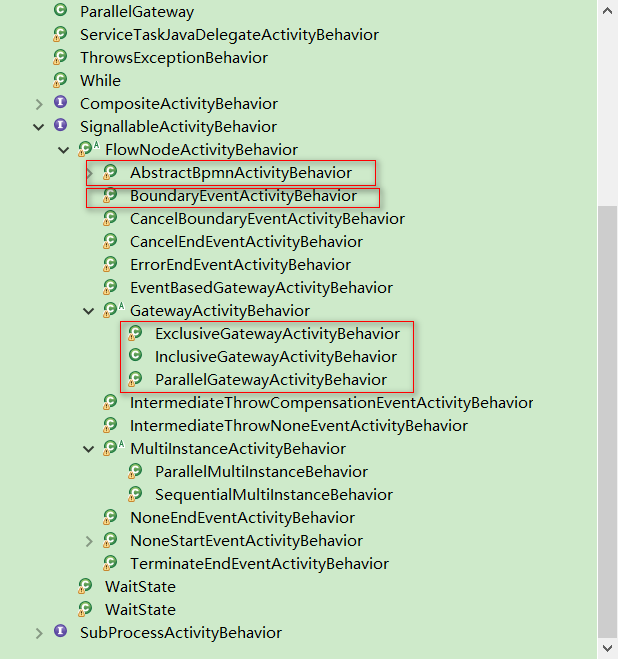
其中,活动执行时,具体动作是由ActivityBehavior的实现类来决定的:
关于默认ID生成器
Activiti的默认生成器是DbIdGenerator,实际是一次从数据库中取一块数据,然后慢慢用,用完后再取。
/**

 * @author Tom Baeyens

 */

public class DbIdGenerator implements IdGenerator {

  protected int idBlockSize;

  protected long nextId = 0;

  protected long lastId = -1;

  protected CommandExecutor commandExecutor;

  protected CommandConfig commandConfig;

  public synchronized String getNextId() {

    if (lastId<nextId) {

      getNewBlock();

    }

    long _nextId = nextId++;

    return Long.toString(_nextId);

  }

  protected synchronized void getNewBlock() {

    IdBlock idBlock = commandExecutor.execute(commandConfig, new GetNextIdBlockCmd(idBlockSize));

    this.nextId = idBlock.getNextId();

    this.lastId = idBlock.getLastId();

  }
- 在ProcessEngineConfiguration中定义的块默认大小100;
- 在ProcessEngineComfigurationImpl中,完成初始化:
  // id generator /////////////////////////////////////////////////////////////

  protected void initIdGenerator() {

    if (idGenerator==null) {

      CommandExecutor idGeneratorCommandExecutor = null;

      if (idGeneratorDataSource!=null) {

        ProcessEngineConfigurationImpl processEngineConfiguration = new StandaloneProcessEngineConfiguration();

        processEngineConfiguration.setDataSource(idGeneratorDataSource);

        processEngineConfiguration.setDatabaseSchemaUpdate(DB_SCHEMA_UPDATE_FALSE);

        processEngineConfiguration.init();

        idGeneratorCommandExecutor = processEngineConfiguration.getCommandExecutor();

      } else if (idGeneratorDataSourceJndiName!=null) {

        ProcessEngineConfigurationImpl processEngineConfiguration = new StandaloneProcessEngineConfiguration();

        processEngineConfiguration.setDataSourceJndiName(idGeneratorDataSourceJndiName);

        processEngineConfiguration.setDatabaseSchemaUpdate(DB_SCHEMA_UPDATE_FALSE);

        processEngineConfiguration.init();

        idGeneratorCommandExecutor = processEngineConfiguration.getCommandExecutor();

      } else {

        idGeneratorCommandExecutor = getCommandExecutor();

      }

      DbIdGenerator dbIdGenerator = new DbIdGenerator();

      dbIdGenerator.setIdBlockSize(idBlockSize);

      dbIdGenerator.setCommandExecutor(idGeneratorCommandExecutor);

      dbIdGenerator.setCommandConfig(getDefaultCommandConfig().transactionRequiresNew());

      idGenerator = dbIdGenerator;

    }

  }
注意:此处对getNextId()方法加了synchronize关键字,它在单机部署下,确定不会出现网上分析的什么ID重复问题。
关于task的start_time_字段取值问题
在TaskEntity中:
  /** creates and initializes a new persistent task. */

  public static TaskEntity createAndInsert(ActivityExecution execution) {

    TaskEntity task = create();

    task.insert((ExecutionEntity) execution);

    return task;

  }

  public void insert(ExecutionEntity execution) {

    CommandContext commandContext = Context.getCommandContext();

    DbSqlSession dbSqlSession = commandContext.getDbSqlSession();

    dbSqlSession.insert(this);

    if(execution != null) {

      execution.addTask(this);

    }

    commandContext.getHistoryManager().recordTaskCreated(this, execution);

  }

/*

* 。。。。

*/

  /**  Creates a new task.  Embedded state and create time will be initialized.

   * But this task still will have to be persisted. See {@link #insert(ExecutionEntity)}. */

  public static TaskEntity create() {

    TaskEntity task = new TaskEntity();

    task.isIdentityLinksInitialized = true;

    task.createTime = ClockUtil.getCurrentTime();

    return task;

  }
由此知道,活动的时间是由ClockUtil.getCurrentTime()决定的。再来看看CockUtil的源码:
/**

 * @author Joram Barrez

 */

public class ClockUtil {

  private volatile static Date CURRENT_TIME = null;

  public static void setCurrentTime(Date currentTime) {

    ClockUtil.CURRENT_TIME = currentTime;

  }

  public static void reset() {

    ClockUtil.CURRENT_TIME = null;

  }

  public static Date getCurrentTime() {

    if (CURRENT_TIME != null) {

      return CURRENT_TIME;

    }

    return new Date();

  }

}
注意:
因为可能多线程情况,而且只有set,不会执行类似++,--这样的操作,所以这里用volatile关键字完全满足需要。
默认实现在分布式中问题
在上面介绍了DbIdGenerator以及ClockUtil之后,可以清楚明白他们的原理,那么在分布式部署中,如果还是使用这种默认的实现而不加以改善,会出现什么问题。
1.DbIdGenerator的getNextId()/getNewBlock()两个方法,在分布式主机中,synchronize不能顺利实现锁控制;
2.ClockUtil严重依赖容器所在服务器时间,但是分布式主机的时间不可能达到完全的同步;
3.在分布式主机中,对同一个任务,可以同时执行,因为他们都是DbSqlSession缓存,不会立马入库;也就是说,可能存在一个任务被同时自行两次的情况。
对1,2两点分析,基本上是确定会存在的,至于第三点,限于猜想,不知道实际是否有相关的解决策略,目前对activiti关于此处的设置猜想还没有完全弄清楚。
其实之所以那么在乎任务Id以及任务执行时间,主要是在流程跟踪图中,需要根据有序的历史任务结果集模仿重现走过的路径,而做到有序,这两个要素是非常关键的。
对分布式应用,如果同库,那ID的生成问题都会是一个问题,常见的解决方式是把他扔给数据库去解决,比如一个序列、一个类似序列的自定义函数等都是不错的选择。
当然,放到DB中以后,那么频繁访问数据库,activiti中设计的blocksize也就基本失效了,这个也算是衡量的结果吧。
实际问题分析
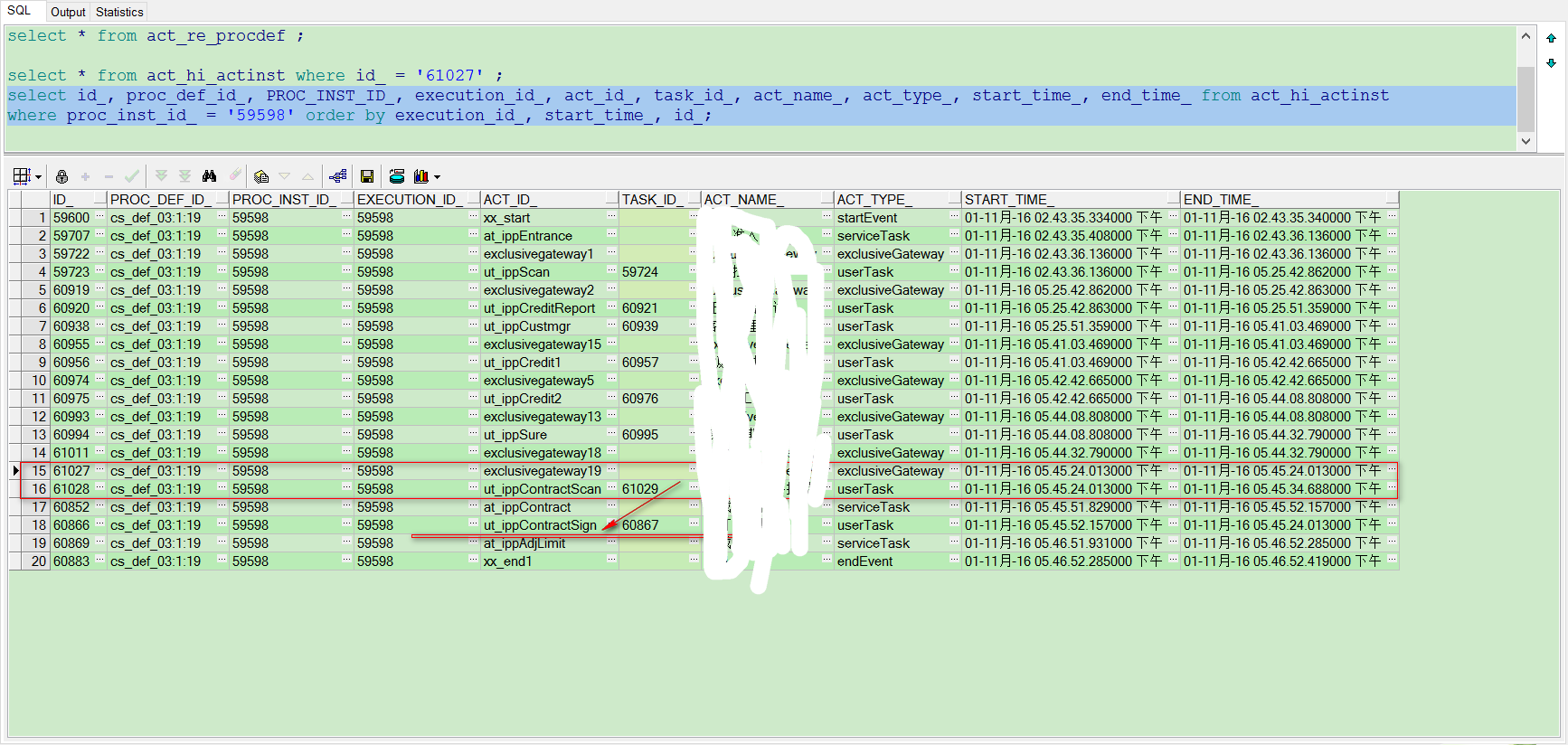
上述数据,是在生产上出现的问题数据,环境是为了负载均衡做了两个应用Server,同时连接一个DB;
从数据可以分析出“活动节点会在双机中运行”;
61011(A) >> 60852(B) >> 60866(B) >> 61022(A) >> 61028(A) >> 60889(B) >> 60893(B)
A机器上的61011执行完毕以后,事件如何转到B机器上的60852,这个还不明白,待解决!!
activiti主要组件解析的更多相关文章
- .NetCore中的日志(1)日志组件解析
.NetCore中的日志(1)日志组件解析 0x00 问题的产生 日志记录功能在开发中很常用,可以记录程序运行的细节,也可以记录用户的行为.在之前开发时我一般都是用自己写的小工具来记录日志,输出目标包 ...
- Ext 常用组件解析
Ext 常用组件解析 Panel 定义&常用属性 //1.使用initComponent Ext.define('MySecurity.view.resource.ResourcePanel' ...
- Ionic 常用组件解析
Ionic 常用组件解析 $ionicModal(弹出窗口): //创建一个窗口 //此处注意目录的起始位置为app $ionicModal.fromTemplateUrl('app/security ...
- React Native组件(三)Text组件解析
相关文章 React Native探索系列 React Native组件系列 前言 此前介绍了最基本的View组件,接下来就是最常用的Text组件,对于Text组件的一些常用属性,这篇文章会给出简单的 ...
- 2016.11.25 activiti的配置文件解析
参考来自activiti的用户手册. activiti的配置文件解析 1.processEngine的配置 注意,单独创建流程引擎与spring方式创建流程引擎是不一样的,区别在于:process ...
- React Native组件解析(二)之Text
React Native组件解析(二)之Text 1. 概述 Text组件对应于iOS的UILabel,Android的TextView,用来显示文本.但是Text组件的内部使用的并不是flexbox ...
- SpringMVC组件解析
SpringMVC组件解析 1. 前端控制器:DispatcherServlet 用户请求到达前端控制器,它就相当于 MVC 模式中的 C,DispatcherServlet 是整个流程控制的中心,由 ...
- Sprign-mvc系列之Spring快速入门 什么是sprign-mvc spring-mvc的作用及其基本使用+组件解析+注解解析
Spring-mvc 什么是SpringMvc SpringMvc是一种基于java的实现Mvc设计模式的请求驱动类型的轻量级web框架,属于SpringFrameWork的后续产品,已经融合在Spr ...
- 跨平台的.NET邮件协议MailKit组件解析
发起的.NET Core开源组织号召,进展的速度是我自己也没有想到的,很多园友都积极参与(虽然有些人诚心砸场子,要是以我以前的宝脾气,这会应该被我打住院了吧,不过幸好是少数,做一件事总有人说好,也有人 ...
随机推荐
- OneZero第四周——预完成功能点统计
本周OneZero将完成“统计”功能. 功能点统计如下: 1.主页单击记录,进入修改界面,修改记录. 2.主页长按记录,出现删除按钮,删除记录. 3.全部记录按分类进行饼图显示. 4.全部记录按分类进 ...
- 解决Ubuntu14.04下sublime无法输入中文
原帖地址: (简书作者) http://www.jianshu.com/p/bf05fb3a4709 前言 sublime很好用,但是ubuntu14.04 下不能输入中文,这是一个很大的问题.不知道 ...
- 如何用Delphi开发网游外挂
1.动作式,所谓动作式,就是指用API发命令给窗口或API控制鼠标.键盘等,使游戏里的人物进行流动或者攻击,最早以前的“石器”外挂就是这种方式.2.本地修改式,这种外挂跟传统上的一些游戏修改器没有两样 ...
- .net 生成html文件后压缩成zip文件并下载
这里只做一个简单的实例 public ActionResult Index() { string path = Server.MapPath("/test/");//文件输出目录 ...
- Nastya and a Wardrobe CodeForces - 992C(规律)
写一下二叉树 推一下公式就出来了, 注意取模时的输出形式 #include <bits/stdc++.h> #define mem(a, b) memset(a, b, sizeof(a ...
- oracle 查看临时表空间temp 的使用情况以及扩展表空间
SELECT D.TABLESPACE_NAME,SPACE "SUM_SPACE(M)",BLOCKS SUM_BLOCKS, USED_SPACE )/SPACE*,) &qu ...
- POJ2125 Destroying The Graph
题目链接:ヾ(≧∇≦*)ゝ 大致题意: 给出一个有向图D=(V,E).对于每个点U,定义两种操作a(u),b(u) 操作a(u):删除点U的所有出边,即属于E,操作花费为Ca(u). 操作b(u):删 ...
- AtCoder Grand Contest 006
AtCoder Grand Contest 006 吐槽 这套题要改个名字,叫神仙结论题大赛 A - Prefix and Suffix 翻译 给定两个串,求满足前缀是\(S\),后缀是\(T\),并 ...
- 解题:SDOI 2017 硬币游戏
题面 板板的生成函数做法太神仙了,我跑了 朴素的做法是建立AC自动机变成图上的随机游走问题 来仔细考虑一下转移,把状态分成非结尾状态和结尾状态.在一个非结尾状态后补一个串是一定能到达目标串的,但是如果 ...
- Hbuild开发App入门
http://ask.dcloud.net.cn/article/89建议必看网站 http://www.html5plus.org/doc/h5p.html API下载地址