
线程状态及各状态下与锁和CPU的关系
线程的状态
Thread.State枚举类型中定义了线程的六种状态:NEW,RUNNABLE,BLOCKED,WAITING,TIMED_WAITING和TERMINATED。
线程在某一时刻只能拥有一种状态,但是在线程的整个生命周期,线程的状态会发生变化。
public enum State {

        NEW,

        RUNNABLE,

        BLOCKED,

        WAITING,

        TIMED_WAITING,

        TERMINATED;

    }
各状态的说明
NEW
NEW状态是线程已经被创建,但还没调用start()。此时的线程是不可运行的,CPU将不会为其分配时间。
RUNNABLE
当新创建的线程调用了start(),线程便进入了RUNNABLE状态。
RUNNABLE状态是指可以获得CPU运行时间的状态,如果线程在此状态下,线程有两种子状态,一种是等待CPU时间,另一种是获得了CPU时间在执行代码。
BLOCKED
BLOCKED状态是线程无法获取对象锁时的状态。此状态下线程会阻塞,当线程成功获取到锁,线程将切换为RUNNABLE状态。
BLOCKED状态无法获得CPU运行时间。
WAITING
WAITING状态是指是指线程在执行过程中,主动出让自己CPU运行时间,让其他线程先执行,自己等待其它线程的特定操作后再恢复执行。
TIMED_WAITING
TIMED_WAITING和WAITING状态相似,TIMED_WAITING增加了时间限制,其实没有外部信号,在等待时间超时后,线程也会恢复。
TERMINATED
TERMINATED是线程的终止态,当线程执行完自己的任务,或在执行任务中发生了异常,线程都会进入TERMINATED,表示线程已经到了生命周期的末尾。
下图是关于线程间各状态切换的过程及发生状态切换的一些条件。
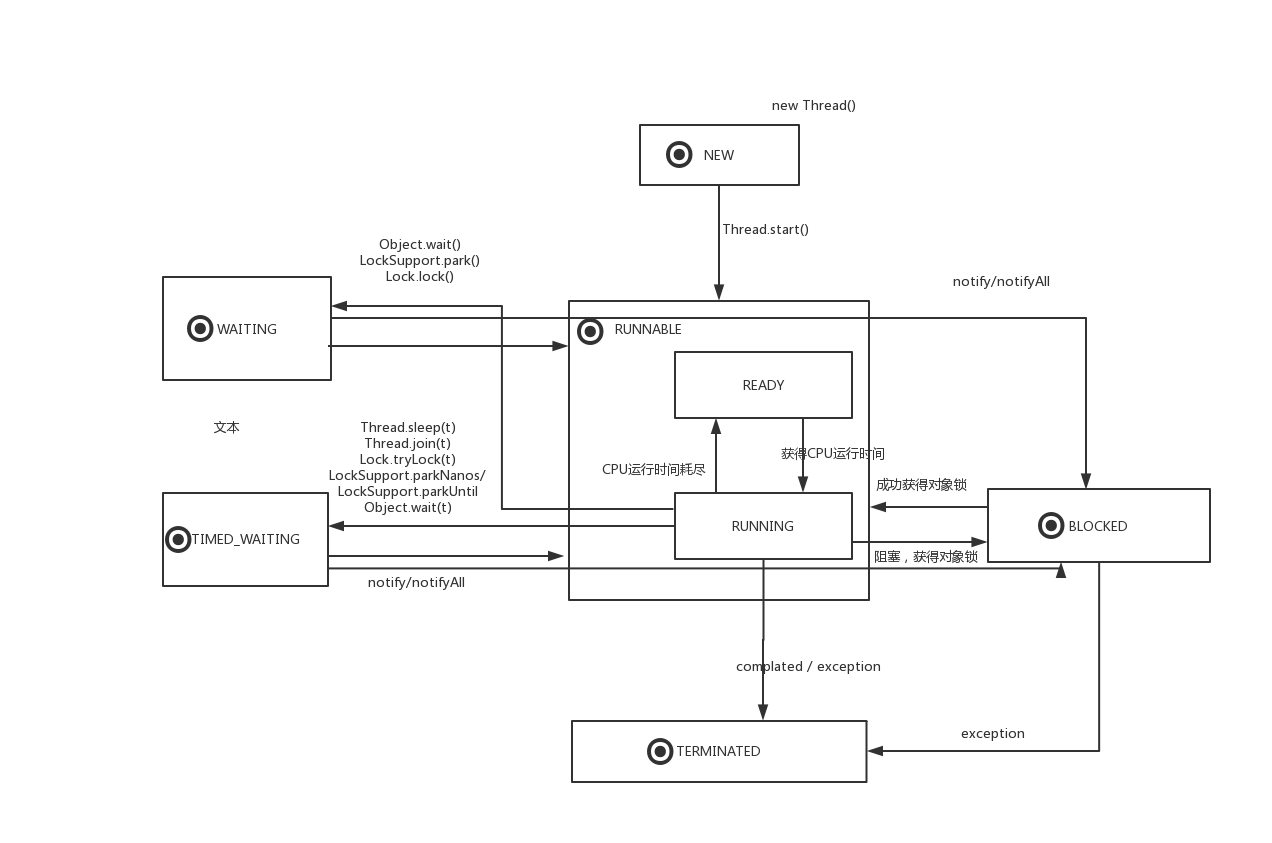
| 操作 | 操作前线程状态 | 操作后线程状态 | 是否出让CPU时间 | 是否需要先持有对象锁 | 是否释放对象锁 |
|---|---|---|---|---|---|
| new Thread() | 无 | NEW | 否 | 否 | 否 |
| Thread.start() | NEW | RUNNABLE | 否 | 否 | 否 |
| synchronized能得到对象锁 | RUNNABLE | RUNNABLE | 否 | 否 | 否 |
| synchronized无法得到对象锁 | RUNNABLE | BLOCKED | 是 | 否 | 否 |
| Thread.join() | RUNNABLE | WAITING | 是 | 否 | 否 |
| Thread.join(t) | RUNNABLE | TIMED_WAITING | 是 | 否 | 否 |
| Thread.sleep(t) | RUNNABLE | TIMED_WAITING | 是 | 否 | 否 |
| Object.wait() | RUNNABLE | WAITING | 是 | 是 | 是 |
| Object.wait(t) | RUNNABLE | TIMED_WAITING | 是 | 是 | 是 |
| Object.notify() / Object.notifyAll() | RUNNABLE | RUNNABLE | 否 | 是 | 否 |
| Lock.lock() | RUNNABLE | WAITING | 是 | 否 | 否 |
| Lock.tryLock(t) | RUNNABLE | TIMED_WAITING | 是 | 否 | 否 |
| LockSupport.park() | RUNNABLE | WAITING | 是 | 否 | 否 |
| LockSupport.parkNanos(t)/LockSupport.parkUntil(t) | RUNNABLE | TIMED_WAITING | 是 | 否 | 否 |
| 执行结束/执行异常 | RUNNABLE | TERMINATED | 是 | 否 | 否 |
以下是一些测试代码,可以运行下清晰的了解到状态。
各状态切换测试:
public class ThreadStateTest {

    public static void main(String[] args){

        threadStateNew();

        workingThread();

        threadStateTerminate();

        threadBlockedByLock();

        threadBlockedBySynchronized();

        threadSleep();

        threadWait();

        threadTimedWait();

    }

    private static void threadStateNew(){

        System.out.println("--------------------------");

        System.out.print("Never Start Thread State:");

        Thread thread = new Thread(()->{

        }, "Thread Never Start");

        //print NEW

        System.out.println(thread.getState());

        System.out.println("--------------------------");

    }

    private static void workingThread(){

        System.out.println("--------------------------");

        Thread thread = new Thread(()->{

           for(int i=0; i<100; i++){

               doSomeElse();

           }

        });

        thread.start();

        doSomeElse();

        //print RUNNABLE

        System.out.println("Working Thread State:" + thread.getState());

        System.out.println("--------------------------");

    }

    private static void threadStateTerminate(){

        System.out.println("--------------------------");

        System.out.print("Finish Job Thread State:");

        Thread thread = new Thread(()->{

        }, "Thread Finish Job");

        thread.start();

        try {

            //Main Thread Will Wait util this thread finished job

            thread.join();

        } catch (InterruptedException e) {

            e.printStackTrace();

        }

        //print TERMINATED

        System.out.println(thread.getState());

        System.out.println("--------------------------");

    }

    private static void threadBlockedByLock(){

        System.out.println("--------------------------");

        System.out.print("Thread State Blocked By Lock:");

        ReentrantLock lock = new ReentrantLock();

        Thread thread = new Thread(()->{

                lock.lock();

        }, "Blocked Thread");

        lock.lock();

        thread.start();

        doSomeElse();

        //print WAITING

        System.out.println(thread.getState());

        lock.unlock();

        System.out.println("--------------------------");

    }

    private static void threadBlockedBySynchronized(){

        System.out.println("--------------------------");

        System.out.print("Thread Blocked By Synchronized:");

        Thread thread = new Thread(()->{

            synchronized (ThreadStateTest.class){

            }

        }, "Blocked by Synchronized Thread");

        synchronized (ThreadStateTest.class){

            thread.start();

            doSomeElse();

            //print BLOCKED

            System.out.println(thread.getState());

        }

        System.out.println("--------------------------");

    }

    private static void threadSleep(){

        System.out.println("--------------------------");

        System.out.print("Sleeping Thread:");

        Thread thread = new Thread(()->{

            try {

                Thread.sleep(10000);

            } catch (InterruptedException e) {

                e.printStackTrace();

            }

        }, "Thread sleep");

        thread.start();

        doSomeElse();

        //print TIMED_WAITING

        System.out.println(thread.getState());

        System.out.println("--------------------------");

    }

    private static void threadWait(){

        System.out.println("--------------------------");

        System.out.print("Thread Waiting:");

        Object lock = new Object();

        Thread threadA = new Thread(()->{

            synchronized (lock){

                try {

                    lock.wait();

                    for(int i=0; i<100; i++){

                        doSomeElse();

                    }

                } catch (InterruptedException e) {

                    e.printStackTrace();

                }

            }

        }, "Thread Waiting");

        Thread threadB = new Thread(()->{

            synchronized (lock){

                //print WAITING

                System.out.println("Before Notify, Thread A State:" + threadA.getState());

                lock.notify();

                //print BLOCKED

                System.out.println("After Notify, Thread A State:" + threadA.getState());

            }

        });

        threadA.start();

        doSomeElse();

        threadB.start();

        try {

            threadB.join();

        } catch (InterruptedException e) {

            e.printStackTrace();

        }

        //print RUNNABLE

        System.out.println("After Thread B finish job, Thread A State:" + threadA.getState());

        System.out.println("--------------------------");

    }

    private static void threadTimedWait(){

        System.out.println("--------------------------");

        System.out.print("Thread Waiting:");

        Object lock = new Object();

        Thread threadA = new Thread(()->{

            synchronized (lock){

                try {

                    lock.wait(1000);

                    for(int i=0; i<100; i++){

                        doSomeElse();

                    }

                } catch (InterruptedException e) {

                    e.printStackTrace();

                }

            }

        }, "Thread Waiting");

        Thread threadB = new Thread(()->{

            synchronized (lock){

                //print TIMED_WAITING

                System.out.println("Before Notify, Thread A State:" + threadA.getState());

                lock.notify();

                //print BLOCKED

                System.out.println("After Notify, Thread A State:" + threadA.getState());

            }

        });

        threadA.start();

        doSomeElse();

        threadB.start();

        try {

            threadB.join();

        } catch (InterruptedException e) {

            e.printStackTrace();

        }

        //print RUNNABLE

        System.out.println("After Thread B finish job, Thread A State:" + threadA.getState());

        System.out.println("--------------------------");

    }

    /**

     * take some times, let the thread get cpu time

     */

    private static void doSomeElse(){

        double meanless = 0d;

        for(int i=0; i<10000; i++){

            meanless += Math.random();

        }

    }

}
CPU时间运行测试:
public class ThreadCPUTimeTest {

    public static void main(String[] args) {

        testBlockedThreadCPUTime();

    }

    protected static void testBlockedThreadCPUTime() {

        Object lock = new Object();

        Thread threadA = new Thread(() -> {

            synchronized (lock) {

                doSomethingElse();

            }

        }, "ThreadA: Blocked because of synchronized");

        Thread threadB = new Thread(() -> {

            synchronized (lock) {

                try {

                    threadA.start();

                    Thread.sleep(100000);

                } catch (InterruptedException e) {

                    e.printStackTrace();

                }

            }

        }, "ThreadB: With Monitor But Sleep");

        threadB.start();

        //Main Thread Executing Job

        for (int i = 0; i < 100000; i++) {

            doSomethingElse();

        }

    }

    private static void doSomethingElse() {

        double meanless = 0d;

        for (int i = 0; i < 10000; i++) {

            meanless += Math.random();

        }

    }

}
用VISUALVM可以统计CPU时间:

详细代码可以GitHub
线程状态及各状态下与锁和CPU的关系的更多相关文章
- java 线程的几种状态
java thread的运行周期中, 有几种状态, 在 java.lang.Thread.State 中有详细定义和说明: NEW 状态是指线程刚创建, 尚未启动 RUNNABLE 状态是线程正在正常 ...
- 在java中怎样实现多线程?线程的4种状态
一.在java中怎样实现多线程? extends Thread implement Runnable 方法一:继承 Thread 类,覆盖方法 run(),我们在创建的 Thread 类的子类中重写 ...
- Java线程Thread的状态解析以及状态转换分析 多线程中篇(七)
线程与操作系统中线程(进程)的概念同根同源,尽管千差万别. 操作系统中有状态以及状态的切换,Java线程中照样也有. State 在Thread类中有内部类 枚举State,用于抽象描述Java线程的 ...
- 透彻讲解,Java线程的6种状态及切换
Java中线程的状态分为6种. 1. 初始(NEW):新创建了一个线程对象,但还没有调用start()方法.2. 运行(RUNNABLE):Java线程中将就绪(ready)和运行中(running) ...
- Java线程的5种状态及切换(透彻讲解)-京东面试
一.Thread的几个重要方法: 我们先了解一下Thread的几个重要方法. a.start()方法,开始执行该线程:b.stop()方法,强制结束该线程执行:c.join方法,等待该线程结束.d.s ...
- 【转】java 线程的几种状态
java thread的运行周期中, 有几种状态, 在 java.lang.Thread.State 中有详细定义和说明: NEW 状态是指线程刚创建, 尚未启动 RUNNABLE 状态是线程正在正常 ...
- 线程的几种状态转换<转>
线程在一定条件下,状态会发生变化.线程一共有以下几种状态: 1.新建状态(New):新创建了一个线程对象. 2.就绪状态(Runnable):线程对象创建后,其他线程调用了该对象的start()方法. ...
- Java 多线程 线程的五种状态,线程 Sleep, Wait, notify, notifyAll
一.先来看看Thread类里面都有哪几种状态,在Thread.class中可以找到这个枚举,它定义了线程的相关状态: public enum State { NEW, RUNNABLE, BLOCKE ...
- Java线程基础知识(状态、共享与协作)
1.基础概念 CPU核心数和线程数的关系 核心数:线程数=1:1 ;使用了超线程技术后---> 1:2 CPU时间片轮转机制 又称RR调度,会导致上下文切换 什么是进程和线程 进程:程序运行资源 ...
随机推荐
- Jmeter 压力测试笔记(1)--服务器迁移失败
近期,公司服务器因技术架构升级等原因需要迁移,在经过开发,运维DBA,测试多部门进行联合讨论后,制定出了迁移方案.迁移前也对APP应用进行了各种测试,并没有发现问题. 凌晨2点开始迁移,5点完成迁移. ...
- MTK Android Framework用SystemProperties通过JNI调用访问系统属性
1.导包 import android.os.SystemProperties; 2. Android SystemProperties设置/读取 #设置 Systemproperties.set(n ...
- hadoop(九)启动|关闭集群(完全分布式六)|11
前置章节:hadoop集群namenode启动ssh免密登录(hadoop完全分布式五)|11 集群启动 配置workers(3.x之前是slaves), 删除localhost,添加102/103/ ...
- 【docker】为docker下的php容器安装php-redis扩展【编译安装】
使用docker安装的PHPFPM容器没有Redis扩展,需要安装一下扩展. 首先进入docker的PHPFPM容器 $ docker exec -it myphpfpm /bin/bash 依次执行 ...
- editplus 怎么替换为换行
到editplus 的搜索 菜单中,选择替换,记住 这边如果是简单的一些 通用字符 替换可以直接替换,如果是一些特殊的字符 那必须选择 替换框左下中间的 “正则表达式”,即把这个“正则表达式” 前边的 ...
- java课程设计之--Elasticsearch篇
一.团队课程设计博客链接 https://www.cnblogs.com/Rasang/p/12169899.html 二.个人负责模块或任务说明 2.1Elasticsearch简介 Elastic ...
- Cyclic Nacklace 杭电3746
CC always becomes very depressed at the end of this month, he has checked his credit card yesterday, ...
- Cucumber(4)——jenkins的集成
目录 回顾 必备知识 集成方法 回顾 在上几节中,关于cucumber的知识我已经全部的介绍完了,但是近期,jenkins大行其道,在工作上面能为我们节省大量的时间. 所以在本节中,我会介绍cucum ...
- vue2.x学习笔记(八)
接着前面的内容:https://www.cnblogs.com/yanggb/p/12577433.html. 列表渲染 vue提供了一个[v-for]指令用于列表渲染(循环). 用[v-for]指令 ...
- 排序算法代码实现-Java
前言 为了准备面试,从2月开始将排序算法认认真真得刷了一遍,通过看书看视频,实践打代码,还有一部分的leetcode题,自己感觉也有点进步,将笔记记录总结发出来. 冒泡排序 该排序就是一种像泡泡浮到水 ...