
Solr4.8.0源码分析(19)之缓存机制(二)
Solr4.8.0源码分析(19)之缓存机制(二)
前文<Solr4.8.0源码分析(18)之缓存机制(一)>介绍了Solr缓存的生命周期,重点介绍了Solr缓存的warn过程。本节将更深入的来介绍下Solr的四种缓存类型,以及两种SolrCache接口实现类。
1、SolrCache接口实现类
前文已经提到SolrCache有两种接口实现类:solr.search.LRUCache 和 solr.search.LRUCache。 那么两者具体有啥区别呢?
1.1 solr.search.LRUCache
LRUCache具有以下几个参数:
- size:cache中可保存的最大的项数,默认是1024
- initialSize:cache初始化时的大小,默认是1024
- autowarmCount:当切换SolrIndexSearcher时,可以对新生成的SolrIndexSearcher做autowarm(预热)处理。autowarmCount表示从旧的SolrIndexSearcher中取多少项来在新的SolrIndexSearcher中被重新生成,如何重新生成由CacheRegenerator实现。在4.0版本可以指定为已有cache项数的百分比,以便能更好的平衡autowarm的开销及效果。如果不指定该参数,则表示不做autowarm处理。
实现上,LRUCache直接使用LinkedHashMap来缓存数据,由initialSize来限定cache的大小,淘汰策略也是使用LinkedHashMap的内置的LRU方式,读写操作都是对map的全局锁,所以并发性效果方面稍差。而对cache的get与put操作其实质上也就是对LinkedHashMap的put与get操作。
     map = new LinkedHashMap<K,V>(initialSize, 0.75f, true) {

         @Override

         protected boolean removeEldestEntry(Map.Entry eldest) {

           if (size() > limit) {

             // increment evictions regardless of state.

             // this doesn't need to be synchronized because it will

             // only be called in the context of a higher level synchronized block.

             evictions++;

             stats.evictions.incrementAndGet();

             return true;

           }

           return false;

         }

       };
对cache的get与put操作其实质上也就是对LinkedHashMap的put与get操作。
   @Override

   public V put(K key, V value) {

     synchronized (map) {

       if (getState() == State.LIVE) {

         stats.inserts.incrementAndGet();  //Cache累计插入数目

       }

       // increment local inserts regardless of state???

       // it does make it more consistent with the current size...

       inserts++;  //当前cache的插入数目

       return map.put(key,value);

     }

   }

   @Override

   public V get(K key) {

     synchronized (map) {

       V val = map.get(key);

       if (getState() == State.LIVE) {

         // only increment lookups and hits if we are live.

         lookups++;    //当前cache的查询数目

         stats.lookups.incrementAndGet();  //Cache累计查询数目

         if (val!=null) {

           hits++;

           stats.hits.incrementAndGet();

         }

       }

       return val;

     }

   }
1.2 solr.search.FastLRUCache
在配置方面,FastLRUCache除了需要LRUCache的参数,还可有选择性的指定下面的参数:
- minSize:当cache达到它的最大数,淘汰策略使其降到minSize大小,默认是0.9*size。
- acceptableSize:当淘汰数据时,期望能降到minSize,但可能会做不到,则可勉为其难的降到acceptableSize,默认是0.95*size。
- cleanupThread:相比LRUCache是在put操作中同步进行淘汰工作,FastLRUCache可选择由独立的线程来做,也就是配置cleanupThread的时候。当cache大小很大时,每一次的淘汰数据就可能会花费较长时间,这对于提供查询请求的线程来说就不太合适,由独立的后台线程来做就很有必要。
实现上,FastLRUCache内部使用了ConcurrentLRUCache来缓存数据,它是个加了LRU淘汰策略的ConcurrentHashMap,所以其并发性要好很多,这也是多数Java版Cache的极典型实现。
cache = new ConcurrentLRUCache<>(limit, minLimit, acceptableLimit, initialSize, newThread, false, null);
2. 缓存类型
2.1 filterCache
filterCache存储了无序的lucene document id集合,该cache有3种用途:
- filterCache存储了filter queries(“fq”参数)得到的document id集合结果。Solr中的query参数有两种,即q和fq。如果fq存在,Solr是先查询fq(因为fq可以多个,所以多个fq查询是个取结果交集的过程),之后将fq结果和q结果取并。在这一过程中,filterCache就是key为单个fq(类型为Query),value为document id集合(类型为DocSet)的cache。对于fq为range query来说,filterCache表现出其有价值的一面。
- 另外一个最为重要的例外场景,在Solr中如果设置,useFilterForSortedQuery=true,filterCache不为空,且带有sort的排序查询,将会进入如下代码块:
 if ((flags & (GET_SCORES|NO_CHECK_FILTERCACHE))==0 && useFilterForSortedQuery && cmd.getSort() != null && filterCache != null) {

       useFilterCache=true;

       SortField[] sfields = cmd.getSort().getSort();

       for (SortField sf : sfields) {

         if (sf.getType() == SortField.SCORE) {

           useFilterCache=false;

           break;

         }

       }

     }

     // disable useFilterCache optimization temporarily

     if (useFilterCache) {

       // now actually use the filter cache.

       // for large filters that match few documents, this may be

       // slower than simply re-executing the query.

       if (out.docSet == null) {//在DocSet方法中将会把Query的结果也Cache到filterCache中。

         out.docSet = getDocSet(cmd.getQuery(),cmd.getFilter());

         DocSet bigFilt = getDocSet(cmd.getFilterList());//fq不为空将Cache结果到filterCache中。

         if (bigFilt != null) out.docSet = out.docSet.intersection(bigFilt);//返回2个结果集合的交集

       }

       // todo: there could be a sortDocSet that could take a list of

       // the filters instead of anding them first...

       // perhaps there should be a multi-docset-iterator

       superset = sortDocSet(out.docSet,cmd.getSort(),supersetMaxDoc);//排序

       out.docList = superset.subset(cmd.getOffset(),cmd.getLen());//返回len 大小的结果集合
- filterCache还可用于facet查询,facet查询中各facet的计数是通过对满足query条件的document id集合(可涉及到filterCache)的处理得到的。因为统计各facet计数可能会涉及到所有的doc id,所以filterCache的大小需要能容下索引的文档数。这一部分暂未学习到。
- 对于是否使用filterCache及如何配置filterCache大小,需要根据应用特点、统计、效果、经验等各方面来评估。对于使用fq、facet的应用,对filterCache的调优是很有必要的。
2.2 queryResultCache
queryResultCache对Query的结果进行缓存,主要在SolrIndexSearcher类的getDocListC()方法中被使用,主要缓存具有 QueryResultKey的结果集。也就是说具有相同QueryResultKey的查询都可以命中cache,所以我们看看 QueryResultKey的equals方法如何判断怎么才算相同QueryResultKey:
   @Override

   public boolean equals(Object o) {

     if (o==this) return true;

     if (!(o instanceof QueryResultKey)) return false;

     QueryResultKey other = (QueryResultKey)o;

     // fast check of the whole hash code... most hash tables will only use

     // some of the bits, so if this is a hash collision, it's still likely

     // that the full cached hash code will be different.

     if (this.hc != other.hc) return false;

     // check for the thing most likely to be different (and the fastest things)

     // first.

     if (this.sfields.length != other.sfields.length) return false;

     if (!this.query.equals(other.query)) return false;

     if (!unorderedCompare(this.filters, other.filters)) return false;

     for (int i=0; i<sfields.length; i++) {

       SortField sf1 = this.sfields[i];

       SortField sf2 = other.sfields[i];

       if (!sf1.equals(sf2)) return false;

     }

     return true;

   }
由以上代码可以看出,如果要命中一个queryResultCache,需要满足query、filterquery sortFiled一致才行。
因为查询参数是有start和rows的,所以某个QueryResultKey可能命中了cache,但start和rows却不在cache的document id set范围内。当然,document id set是越大命中的概率越大,但这也会很浪费内存,这就需要个参数:queryResultWindowSize来指定document id set的大小。Solr中默认取值为50,可配置,WIKI上的解释很深简单明了:
 <!-- An optimization for use with the queryResultCache.  When a search

          is requested, a superset of the requested number of document ids

          are collected.  For example, of a search for a particular query

          requests matching documents 10 through 19, and queryWindowSize is 50,

          then documents 0 through 50 will be collected and cached.  Any further

          requests in that range can be satisfied via the cache.

     -->

     <queryResultWindowSize>50</queryResultWindowSize>
       // If we are going to generate the result, bump up to the

       // next resultWindowSize for better caching.

       if ((flags & NO_SET_QCACHE) == 0) {

         // handle 0 special case as well as avoid idiv in the common case.

         if (maxDocRequested < queryResultWindowSize) {

           supersetMaxDoc=queryResultWindowSize;

         } else {

           supersetMaxDoc = ((maxDocRequested -1)/queryResultWindowSize + 1)*queryResultWindowSize;

           if (supersetMaxDoc < 0) supersetMaxDoc=maxDocRequested;

         }

       } else {

         key = null;  // we won't be caching the result

       }
同样的queryResultCache在预热的时候也是根据queryResultWindowSize大小进行预热的。
相比filterCache来说,queryResultCache内存使用上要更少一些,但它的效果如何就很难说。就索引数据来说,通常我们只是在索引上存储应用主键id,再从数据库等数据源获取其他需要的字段。这使得查询过程变成,首先通过solr得到document id set,再由Solr得到应用id集合,最后从外部数据源得到完成的查询结果。如果对查询结果正确性没有苛刻的要求,可以在Solr之外独立的缓存完整的查询结果(定时作废),这时queryResultCache就不是很有必要,否则可以考虑使用queryResultCache。当然,如果发现在queryResultCache生命周期内,query重合度很低,也不是很有必要开着它。
2.3 documentCache
Solr的查询主要分为两步,第一步根据查询条件获取ids,第二步根据id获取相应的具体id集合。相比于queryResultCache和filterCache存储的是键为query,值为ids这样的结构(第一步),documentCache存储的是建为id,值为具体的域(第二步)。但是实际上documentCache的缓存效果并不明显,相比于第二步,Solr的查询费时主要集中在第一步上,而且在进行commit的时候documentCache都会清零。所以对于一个commit比较频率的solr来说,documentCache的效果并不大。但是如果使用documentCache,就尽可能开大些,至少要大过<max_results> * <max_concurrent_queries>,否则因为cache的淘汰,一次请求期间还需要重新获取document一次。也要注意document中存储的字段的多少,避免大量的内存消耗。
private final SolrCache<Integer,Document> documentCache;
2.4 fieldvalueCache
fieldvalueCache 缓存在facet组件使用情况下对multiValued=true的域相关计数进行Cache,一般那些多值域采用facet查询一定要开启该Cache,主要缓存(参考UnInvertedField 的实现):
- maxTermCounts 最大Term数目
- numTermsInField 该Field有多少个Term
- bigTerms 存储那些Term docFreq 大于threshold的term
- tnums 一个记录 term和何其Nums的二维数组
- 每次FacetComponent执行process方法–>SimpleFacets.getFacetCounts()–>getFacetFieldCounts()–>getTermCounts(facetValue)–>UnInvertedField.getUnInvertedField(field, searcher);展开看该方法
 public static UnInvertedField getUnInvertedField(String field, SolrIndexSearcher searcher) throws IOException {

     SolrCache cache = searcher.getFieldValueCache();

     if (cache == null) {

       return new UnInvertedField(field, searcher);//直接返回

     }

     UnInvertedField uif = (UnInvertedField)cache.get(field);

     if (uif == null) {//第一次初始化该域对应的UnInvertedField

       synchronized (cache) {

         uif = (UnInvertedField)cache.get(field);

         if (uif == null) {

           uif = new UnInvertedField(field, searcher);

           cache.put(field, uif);

         }

       }

     }

     return uif;

   }
3. Cache的命中监控
可以在SolrAdmin的插件页面中对cache进行监控。
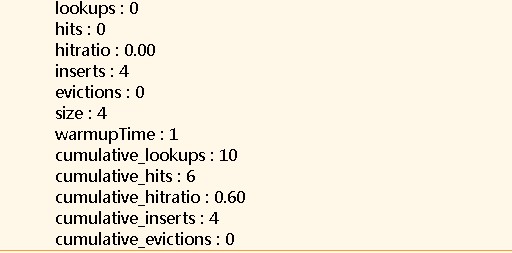
其中 lookups 为当前cache 查询数, hitratio 为当前cache命中率,inserts为当前cache插入数,evictions从cache中踢出来的数据个数,size 为当前cache缓存数, warmuptime为当前cache预热所消耗时间,而已cumulative都为该类型Cache累计的查询,命中,命中率,插入、踢出的数目。
总结:
本节主要介绍了Solr的几种缓存类型以及两种缓存实现接口,最后介绍了如何监控缓存的方法,由于目前学习的较浅,更深的缓存知识将在以后再深入介绍。
Solr4.8.0源码分析(19)之缓存机制(二)的更多相关文章
- Solr4.8.0源码分析(18)之缓存机制(一)
Solr4.8.0源码分析(18)之缓存机制(一) 前文在介绍commit的时候具体介绍了getSearcher()的实现,并提到了Solr的预热warn.那么本文开始将详细来学习下Solr的缓存机制 ...
- Solr4.8.0源码分析(25)之SolrCloud的Split流程
Solr4.8.0源码分析(25)之SolrCloud的Split流程(一) 题记:昨天有位网友问我SolrCloud的split的机制是如何的,这个还真不知道,所以今天抽空去看了Split的原理,大 ...
- Solr4.8.0源码分析(24)之SolrCloud的Recovery策略(五)
Solr4.8.0源码分析(24)之SolrCloud的Recovery策略(五) 题记:关于SolrCloud的Recovery策略已经写了四篇了,这篇应该是系统介绍Recovery策略的最后一篇了 ...
- Solr4.8.0源码分析(23)之SolrCloud的Recovery策略(四)
Solr4.8.0源码分析(23)之SolrCloud的Recovery策略(四) 题记:本来计划的SolrCloud的Recovery策略的文章是3篇的,但是没想到Recovery的内容蛮多的,前面 ...
- Solr4.8.0源码分析(22)之SolrCloud的Recovery策略(三)
Solr4.8.0源码分析(22)之SolrCloud的Recovery策略(三) 本文是SolrCloud的Recovery策略系列的第三篇文章,前面两篇主要介绍了Recovery的总体流程,以及P ...
- Solr4.8.0源码分析(21)之SolrCloud的Recovery策略(二)
Solr4.8.0源码分析(21)之SolrCloud的Recovery策略(二) 题记: 前文<Solr4.8.0源码分析(20)之SolrCloud的Recovery策略(一)>中提 ...
- Solr4.8.0源码分析(20)之SolrCloud的Recovery策略(一)
Solr4.8.0源码分析(20)之SolrCloud的Recovery策略(一) 题记: 我们在使用SolrCloud中会经常发现会有备份的shard出现状态Recoverying,这就表明Solr ...
- Solr4.8.0源码分析(14)之SolrCloud索引深入(1)
Solr4.8.0源码分析(14) 之 SolrCloud索引深入(1) 上一章节<Solr In Action 笔记(4) 之 SolrCloud分布式索引基础>简要学习了SolrClo ...
- Solr4.8.0源码分析(15) 之 SolrCloud索引深入(2)
Solr4.8.0源码分析(15) 之 SolrCloud索引深入(2) 上一节主要介绍了SolrCloud分布式索引的整体流程图以及索引链的实现,那么本节开始将分别介绍三个索引过程即LogUpdat ...
随机推荐
- 低版本Xcode 出现could not find developer disk image问题
解决Xcode在ipad/iphone9.2系统真机测试时出现could not find developer disk image问题,只要拷贝这个文件(链接: http://pan.baidu.c ...
- Java自动装箱和自动拆箱操作
1.Java数据类型 在介绍Java的自动装箱和拆箱之前,我们先来了解一下Java的基本数据类型. 在Java中,数据类型可以分为两大种,Primitive Type(基本类型)和Reference ...
- js输入框只能输入数字和小数点
<input name="number" onKeyPress="if (event.keyCode!=46 && (event.keyCode&l ...
- ok6410 u-boot-2012.04.01移植六完善MLC NAND支持
继ok6410 u-boot-2012.04.01移植四.五后,开发板基本已支持MLC NAND,支持DM9000.但是通过NAND命令更新u-boot到NAND,还存在问题,需要根据u-boot的n ...
- gridview添加header
gridview是不能添加header的,这里的解决方法是将listview改造成gridview使用,功能很好用,唯一的缺点是列数不能自适应 示例代码下载地址http://pan.baidu.com ...
- Python访问sqlite3数据库取得dictionary的正路!
[引子] 很多人都知道,Python里是内置了很好用的sqlite3的.但这个库有个缺陷,在执行fetchall()/fetchone()等方法后,得到的是一个tuple.以前吧,做自己的小项目,tu ...
- 国都企信通短信平台发送手机短信的python脚本一例
一年前,由于工作需要,给以色列的同事解释一下国都短信平台的短信发送格式,本来不懂python的我硬着头皮写了一个sample,比较粗,能用,但不优美,希望以后学会python能改得像我同事写的那么优雅 ...
- 对话框 自定义 IOS风格 包青天
activity private void showDialog1() { message = "您输入的邮箱后缀不是公司邮箱地址\n将导致您的借款审核不通过,请重新 ...
- C#解leetcode 106. Construct Binary Tree from Inorder and Postorder Traversal
Given inorder and postorder traversal of a tree, construct the binary tree. Note:You may assume that ...
- Volley框架使用(POST)
需要在MyApplication(继承Application)中配置; public static RequestQueue requestQueue; @Override public void o ...