
POJ 3009:Curling 2.0 推箱子
| Time Limit: 1000MS | Memory Limit: 65536K | |
| Total Submissions: 14090 | Accepted: 5887 |
Description
On Planet MM-21, after their Olympic games this year, curling is getting popular. But the rules are somewhat different from ours. The game is played on an ice game board on which a square mesh is marked. They use only a single stone. The purpose of the game
is to lead the stone from the start to the goal with the minimum number of moves.
Fig. 1 shows an example of a game board. Some squares may be occupied with blocks. There are two special squares namely the start and the goal, which are not occupied with blocks. (These two squares are distinct.) Once the stone begins to move, it will proceed
until it hits a block. In order to bring the stone to the goal, you may have to stop the stone by hitting it against a block, and throw again.

Fig. 1: Example of board (S: start, G: goal)
The movement of the stone obeys the following rules:
- At the beginning, the stone stands still at the start square.
- The movements of the stone are restricted to x and y directions. Diagonal moves are prohibited.
- When the stone stands still, you can make it moving by throwing it. You may throw it to any direction unless it is blocked immediately(Fig. 2(a)).
- Once thrown, the stone keeps moving to the same direction until one of the following occurs:
- The stone hits a block (Fig. 2(b), (c)).
- The stone stops at the square next to the block it hit.
- The block disappears.
- The stone gets out of the board.
- The game ends in failure.
- The stone reaches the goal square.
- The stone stops there and the game ends in success.
- The stone hits a block (Fig. 2(b), (c)).
- You cannot throw the stone more than 10 times in a game. If the stone does not reach the goal in 10 moves, the game ends in failure.
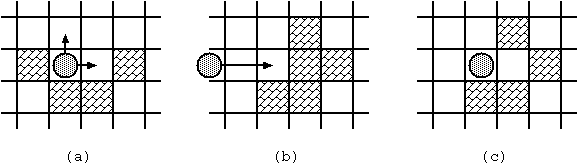
Fig. 2: Stone movements
Under the rules, we would like to know whether the stone at the start can reach the goal and, if yes, the minimum number of moves required.
With the initial configuration shown in Fig. 1, 4 moves are required to bring the stone from the start to the goal. The route is shown in Fig. 3(a). Notice when the stone reaches the goal, the board configuration has changed as in Fig. 3(b).
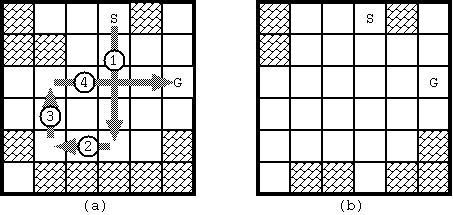
Fig. 3: The solution for Fig. D-1 and the final board configuration
Input
The input is a sequence of datasets. The end of the input is indicated by a line containing two zeros separated by a space. The number of datasets never exceeds 100.
Each dataset is formatted as follows.
the width(=w) and the height(=h) of the board
First row of the board
...
h-th row of the board
The width and the height of the board satisfy: 2 <= w <= 20, 1 <= h <= 20.
Each line consists of w decimal numbers delimited by a space. The number describes the status of the corresponding square.
0 vacant square 1 block 2 start position 3 goal position
The dataset for Fig. D-1 is as follows:
6 6
1 0 0 2 1 0
1 1 0 0 0 0
0 0 0 0 0 3
0 0 0 0 0 0
1 0 0 0 0 1
0 1 1 1 1 1
Output
For each dataset, print a line having a decimal integer indicating the minimum number of moves along a route from the start to the goal. If there are no such routes, print -1 instead. Each line should not have any character other than this number.
Sample Input
2 1

3 2

6 6

1 0 0 2 1 0

1 1 0 0 0 0

0 0 0 0 0 3

0 0 0 0 0 0

1 0 0 0 0 1

0 1 1 1 1 1

6 1

1 1 2 1 1 3

6 1

1 0 2 1 1 3

12 1

2 0 1 1 1 1 1 1 1 1 1 3

13 1

2 0 1 1 1 1 1 1 1 1 1 1 3

0 0
Sample Output
1

4

-1

4

10

-1
冰球,我更喜欢把它叫推箱子。题意就是它这个箱子能够上下左右四个方向推。碰到边界就跑出去,碰到障碍物停止。之后碰到的障碍物就会在地图上消失。问从S開始经过几步能够达到E。超过10步的话就输出-1。
深搜,自己觉得还是比較简单。毕竟模拟一遍,也不须要弄什么算法。
代码:
#include <iostream>

#include <algorithm>

#include <cmath>

#include <vector>

#include <string>

#include <cstring>

#pragma warning(disable:4996)

using namespace std;

#define up 0

#define down 1

#define left 2

#define right 3

int value[25][25];

int row,col,flag,tui_x,tui_y,result,result_zuizhong;

bool can_tui(int x_r,int y_r,int dir)

{

	if(dir==up||dir==down)

	{

		int i,j;

		if(dir==up)

		{

			if(value[x_r-1][y_r]==1)

				return false;

			for(i=1;i<x_r;i++)

			{

				if(value[i][y_r])

					return true;

			}

			return false;

		}

		else

		{

			if(value[x_r+1][y_r]==1)

				return false;

			for(i=x_r+1;i<=row;i++)

			{

				if(value[i][y_r])

					return true;

			}

			return false;

		}

	}

	else

	{

		int i,j;

		if(dir==left)

		{

			if(value[x_r][y_r-1]==1)

				return false;

			for(i=1;i<y_r;i++)

			{

				if(value[x_r][i])

					return true;

			}

			return false;

		}

		else

		{

			if(value[x_r][y_r+1]==1)

				return false;

			for(i=y_r+1;i<=col;i++)

			{

				if(value[x_r][i])

					return true;

			}

			return false;

		}

	}

}

void tui(int x_r,int y_r,int dir)

{

	int i,j;

	if(dir==up)

	{

		for(i=x_r-1;i>=1;i--)

		{

			if(value[i][y_r]==1)

			{

				tui_x=i+1;

				tui_y=y_r;

				return;

			}

			if(value[i][y_r]==3)

			{

				tui_x=i;

				tui_y=y_r;

				return;

			}

		}

	}

	else if(dir==down)

	{

		for(i=x_r+1;i<=row;i++)

		{

			if(value[i][y_r]==1)

			{

				tui_x=i-1;

				tui_y=y_r;

				return;

			}

			if(value[i][y_r]==3)

			{

				tui_x=i;

				tui_y=y_r;

				return;

			}

		}

	}

	else if(dir==left)

	{

		for(i=y_r-1;i>=1;i--)

		{

			if(value[x_r][i]==1)

			{

				tui_x=x_r;

				tui_y=i+1;

				return;

			}

			if(value[x_r][i]==3)

			{

				tui_x=x_r;

				tui_y=i;

				return;

			}

		}

	}

	else

	{

		for(i=y_r+1;i<=col;i++)

		{

			if(value[x_r][i]==1)

			{

				tui_x=x_r;

				tui_y=i-1;

				return;

			}

			if(value[x_r][i]==3)

			{

				tui_x=x_r;

				tui_y=i;

				return;

			}

		}

	}

}

void dfs(int x_r,int y_r,int step,int dir)

{

	if(step>11)

		return;

	if(value[x_r][y_r]==3)

	{

		flag=1;

		result=min(result,step);

		return;

	}

	if(dir==up)

	{

		value[x_r-1][y_r]=0;

	}

	else if(dir==down)

	{

		value[x_r+1][y_r]=0;

	}

	else if(dir==left)

	{

		value[x_r][y_r-1]=0;

	}

	else if(dir==right)

	{

		value[x_r][y_r+1]=0;

	}

	if(can_tui(x_r,y_r,up))

	{

		tui(x_r,y_r,up);

		int temp_x=tui_x;

		int temp_y=tui_y;

		dfs(temp_x,temp_y,step+1,up);

	}

	if(can_tui(x_r,y_r,left))

	{

		tui(x_r,y_r,left);

		int temp_x=tui_x;

		int temp_y=tui_y;

		dfs(temp_x,temp_y,step+1,left);

	}

	if(can_tui(x_r,y_r,down))

	{

		tui(x_r,y_r,down);

		int temp_x=tui_x;

		int temp_y=tui_y;

		dfs(temp_x,temp_y,step+1,down);

	}

	if(can_tui(x_r,y_r,right))

	{

		tui(x_r,y_r,right);

		int temp_x=tui_x;

		int temp_y=tui_y;

		dfs(temp_x,temp_y,step+1,right);

	}

	if(dir==up)

	{

		value[x_r-1][y_r]=1;

	}

	else if(dir==down)

	{

		value[x_r+1][y_r]=1;

	}

	else if(dir==left)

	{

		value[x_r][y_r-1]=1;

	}

	else if(dir==right)

	{

		value[x_r][y_r+1]=1;

	}

}

void solve()

{

	int i,j;

	for(i=row;i>=1;i--)

	{

		for(j=col;j>=1;j--)

		{

			if(value[i][j]==2)

			{

				value[i][j]=0;

				result=11;

				dfs(i,j,0,-1);

				if(flag)

				{

					result_zuizhong =min(result,result_zuizhong);

				}

				return;

			}

		}

	}

}

int main()

{

	int i,j;

	while(cin>>col>>row)

	{

		if(col+row==0)

			break;

		flag=0;

		result_zuizhong=11;

		memset(value,0,sizeof(value));

		for(i=1;i<=row;i++)

		{

			for(j=1;j<=col;j++)

			{

				cin>>value[i][j];

			}

		}

		solve();

		if(result_zuizhong==11)

			cout<<-1<<endl;

		else

			cout<<result_zuizhong<<endl;

	}

	return 0;

}
POJ 3009:Curling 2.0 推箱子的更多相关文章
- POJ 3009 Curling 2.0【带回溯DFS】
POJ 3009 题意: 给出一个w*h的地图,其中0代表空地,1代表障碍物,2代表起点,3代表终点,每次行动可以走多个方格,每次只能向附近一格不是障碍物的方向行动,直到碰到障碍物才停下来,此时障碍物 ...
- poj 3009 Curling 2.0 (dfs )
Curling 2.0 Time Limit: 1000MS Memory Limit: 65536K Total Submissions: 11879 Accepted: 5028 Desc ...
- poj 3009 Curling 2.0
题目来源:http://poj.org/problem?id=3009 一道深搜题目,与一般搜索不同的是,目标得一直往一个方向走,直到出界或者遇到阻碍才换方向. 1 #include<iostr ...
- POJ 3009 Curling 2.0(DFS + 模拟)
题目链接:http://poj.org/problem?id=3009 题意: 题目很复杂,直接抽象化解释了.给你一个w * h的矩形格子,其中有包含一个数字“2”和一个数字“3”,剩下的格子由“0” ...
- POJ 3009 Curling 2.0 {深度优先搜索}
原题 $On Planet MM-21, after their Olympic games this year, curling is getting popular. But the rules ...
- POJ 3009 Curling 2.0 回溯,dfs 难度:0
http://poj.org/problem?id=3009 如果目前起点紧挨着终点,可以直接向终点滚(终点不算障碍) #include <cstdio> #include <cst ...
- poj 3009 Curling 2.0( dfs )
题目:http://poj.org/problem?id=3009 参考博客:http://www.cnblogs.com/LK1994/ #include <iostream> #inc ...
- 【POJ】3009 Curling 2.0 ——DFS
Curling 2.0 Time Limit: 1000MS Memory Limit: 65536K Total Submissions: 11432 Accepted: 4831 Desc ...
- 【原创】poj ----- 3009 curling 2 解题报告
题目地址: http://poj.org/problem?id=3009 题目内容: Curling 2.0 Time Limit: 1000MS Memory Limit: 65536K Tot ...
随机推荐
- uva 10154 - Weights and Measures【dp】qi
题意:uva 10154 - Weights and Measures 题意:有一些乌龟有一定的体重和力量,求摞起来的最大高度.力量必须承受其上面包含自己的所有的重量. 分析:先按其能举起来的力量从小 ...
- SW-DP (Serial Wire Debug Port) Analyzer plugin for the Saleae Logic
SW-DP (Serial Wire Debug Port) Analyzer plugin for the Saleae Logic The SW-DP protocol is described ...
- Timer triggered DMA transfer - Delay between requesting the DMA transfer
Hello, I'm working with a STM32F407 controller board. Right now, I want to trigger a DMA transfer ...
- IAR EWARM __iar_program_start, __iar_data_init3, __iar_copy_init3, __iar_zero_init3
#include <stdint.h> // The type of a pointer into the init table. typedef void const * table_p ...
- poj1050最大子矩阵和
这篇是看了别人的报告写的,就当是屡屡思路好了. 题目大意.给定一个n阶矩阵(方阵),每一个元素中存在一个数字.任务就是求出一个最大的子矩阵使得矩阵元素之间的和是最大的. n=100; 1.矩阵A[m] ...
- [Asp.net core]使用Polly网络请求异常重试
摘要 在网络传输过程中,不能保证所有的请求都能正确的被服务端接受或者处理,那么进行简单的重试可以进行简单的补救.比如现在大部分支付功能,在支付成功之后,需要回调我们网站的接口,并且要求我们的接口给一个 ...
- 使用jQuery和Bootstrap实现多层、自适应模态窗口
本篇实践一个多层模态窗口,而且是自适应的. 点击页面上的一个按钮,弹出第一层自适应模态窗口. 在第一层模态窗口内包含一个按钮,点击该按钮弹出第二层模态窗口,弹出的第二层模态窗口会挡住第一层模态窗口,即 ...
- Android 程序目录介绍
还是回到 Eclipse 中,首先展开 HelloWorld 项目,你会看到如图 1.17 所示的目录结构. 图 1.17 一开始看到这么多陌生的东西,你一定会感到有点头晕吧.别担心,我现在就对上 ...
- Linux学习9-CentOS搭建nginx环境
前言 之前我们搭建网站的时候,把war包放到tomcat下就能运行起来了,为什么部署上线的时候,又用到了nginx呢? nginx可以做多台服务器的负载均衡,当用户非常少的时候,可以用一台服务直接部署 ...
- localhost,127.0.0.1 和 本机IP 三者的区别
localhost.127.0.0.1和本机IP的区别如下: 1.首先 localhost 是一个域名,在过去它指向 127.0.0.1 这个IP地址.在操作系统支持 ipv6 后,它同时还指向ipv ...