
Event Recommendation Engine Challenge分步解析第二步
一、请知晓
本文是基于Event Recommendation Engine Challenge分步解析第一步,需要读者先阅读上篇文章解析
二、用户相似度计算
第二步:计算用户相似度信息
由于用到:users.csv,我们先看看其内容(看前10行)
import pandas as pd

df_users = pd.read_csv('users.csv')

df_users.head(10)
结果如下,有国家,有地区:
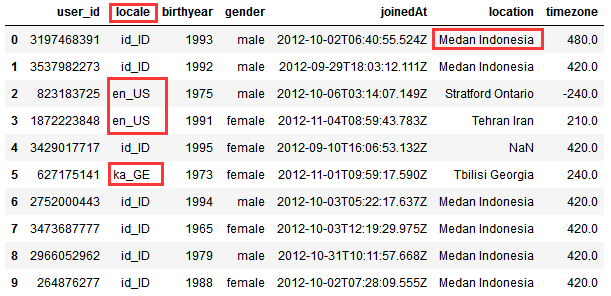
我们使用locale和pycountry模块来将字符串转换成数值:
locale.locale_alias字典
import locale

locale.locale_alias

下面我们来看看如何对users.csv的信息列进行处理,转换成数值型
1) locale列处理
import locale

from collections import defaultdict

localeIdMap = defaultdict(int)

for i, l in enumerate(locale.locale_alias.keys()):

    localeIdMap[l] = i + 1

for each in localeIdMap:

    print(each, '\t', localeIdMap[each])
代码示例结果:
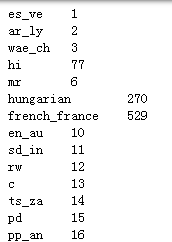
所以传给localeIdMap一个locale的字符串,就可以将其转换成数值型,如果传入的字符串不在localeIdMap的key中,则返回0,这也就体现了defaultdict(int)的作用
print(localeIdMap['en_GB'.lower()])

print(localeIdMap['en_US'.lower()])

print(localeIdMap['id_ID'.lower()])

print(localeIdMap['ka_GE'.lower()])
代码示例结果:

2)birthyear列处理
该列处理比较简单,存在就直接转换成数值,不存在就用0填充
def getBirthYearInt(birthYear):

    try:

        return 0 if birthYear=="None" else int(birthYear)

    except:

        return 0

print(getBirthYearInt(1992))

print(getBirthYearInt(None))
代码示例结果:

3)gender列处理:male转换为1, female转换为2,空值用0填充
from collections import defaultdict

genderIdMap = defaultdict(int, {'male':1, 'female':2})

print(genderIdMap['male'])

print(genderIdMap['female'])

print(genderIdMap[None])
代码示例结果:

4)joinedAt列处理
我们发现该列信息有些共性特点:
import pandas as pd

df_users = pd.read_csv('users.csv')

df_users['joinedAt']
代码示例结果:
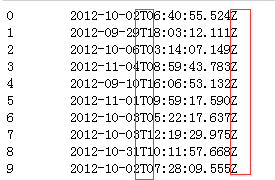
我们发现该列要么是None,要么是上面的时间字符串,均有T在中间和S在尾部,根据这个共性我们用datetime模块,提取时间信息:
import datetime

def getJoinedYearMonth(dateString):

    try:

        dttm = datetime.datetime.strptime(dateString, "%Y-%m-%dT%H:%M:%S.%fZ")

        return "".join( [str(dttm.year), str(dttm.month)] )

    except:

        return 0

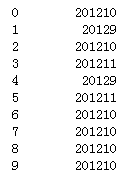
df_users['joinedAt'].map(getJoinedYearMonth)
代码示例结果(这里要注意dateString为None的情况,也就是说dateString必须符合后面的格式才行,所以这里加了try,但是except的返回值并不代表用0值填充合适)
5)location列处理
我们来看看users.csv中location列信息(前20行):
df_users['location']
代码示例结果:
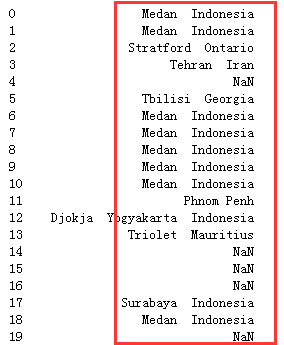
我们使用pycountry模块来将此列转换为数值型,pycountry.countries是个迭代器:
import pycountry

for i, c in enumerate(pycountry.countries):

    print(i, c)
代码示例结果:

import pycountry

from collections import defaultdict

countryIdMap = defaultdict(int)

for i, c in enumerate(pycountry.countries):

    countryIdMap[c.name.lower()] = i + 1

for each in countryIdMap:

    print(each, '\t', countryIdMap[each])
代码示例结果:
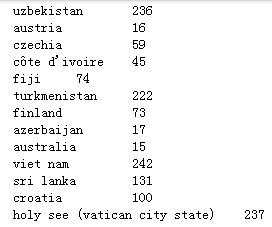
然后看看对location列是如何转换成数值型的:
import pycountry

from collections import defaultdict

countryIdMap = defaultdict(int)

for i, c in enumerate(pycountry.countries):

    countryIdMap[c.name.lower()] = i + 1

def getCountryId(location):

    if (isinstance( location, str)) and len(location.strip()) > 0 and location.rfind('  ') > -1:

        return countryIdMap[ location[location.rindex('  ') + 2: ].lower() ]

    else:

        return 0

print(getCountryId('San Dimas  California'))

print(getCountryId('Jogjakarta  Indonesia'))
代码示例结果:

也就是location是字符串,不为空,并且从右边查询连续两个空格的索引大于-1,也就是存在两个连续空格,就获得两个空格后面的字符串,并转换为数值ID
6)timezone列处理:比较简单,存在值就转换为int型,不存在用0填充
def getTimezoneInt(timezone):

    try:

        return int(timezone)

    except:

        return 0

print(getTimezoneInt(-240))#-240

print(getTimezoneInt(240))

print(getTimezoneInt(None))
7)将上面处理的1-6列进行归一化
self.userMatrix矩阵的处理中归一化使用了sklearn.preprocessing.normalize()函数,归一化后方便计算两个user的相似度
这里只计算Event Recommendation Engine Challenge分步解析第一步中的uniqueUserPairs,他们因为同一个event事件关联起来了,有联系
计算相关性用到了scipy.spatial.distance.correlation(u, v) #计算向量u和v之间的相关系数(pearson correlation coefficient, Centered Cosine)
8)第二步完整代码
from collections import defaultdict

import locale, pycountry

import scipy.sparse as ss

import scipy.io as sio

import itertools

#import cPickle

#From python3, cPickle has beed replaced by _pickle

import _pickle as cPickle

import scipy.spatial.distance as ssd

import datetime

from sklearn.preprocessing import normalize

class ProgramEntities:

    """

    我们只关心train和test中出现的user和event,因此重点处理这部分关联数据,

    经过统计:train和test中总共3391个users和13418个events

    """

    def __init__(self):

        #统计训练集中有多少独立的用户的events

        uniqueUsers = set()#uniqueUsers保存总共多少个用户:3391个

        uniqueEvents = set()#uniqueEvents保存总共多少个events:13418个

        eventsForUser = defaultdict(set)#字典eventsForUser保存了每个user:所对应的event

        usersForEvent = defaultdict(set)#字典usersForEvent保存了每个event:哪些user点击

        for filename in ['train.csv', 'test.csv']:

            f = open(filename)

            f.readline()#跳过第一行

            for line in f:

                cols = line.strip().split(',')

                uniqueUsers.add( cols[0] )

                uniqueEvents.add( cols[1] )

                eventsForUser[cols[0]].add( cols[1] )

                usersForEvent[cols[1]].add( cols[0] )

            f.close()

        self.userEventScores = ss.dok_matrix( ( len(uniqueUsers), len(uniqueEvents) ) )

        self.userIndex = dict()

        self.eventIndex = dict()

        for i, u in enumerate(uniqueUsers):

            self.userIndex[u] = i

        for i, e in enumerate(uniqueEvents):

            self.eventIndex[e] = i

        ftrain = open('train.csv')

        ftrain.readline()

        for line in ftrain:

            cols = line.strip().split(',')

            i = self.userIndex[ cols[0] ]

            j = self.eventIndex[ cols[1] ]

            self.userEventScores[i, j] = int( cols[4] ) - int( cols[5] )

        ftrain.close()

        sio.mmwrite('PE_userEventScores', self.userEventScores)

        #为了防止不必要的计算,我们找出来所有关联的用户或者关联的event

        #所谓关联用户指的是至少在同一个event上有行为的用户user pair

        #关联的event指的是至少同一个user有行为的event pair

        self.uniqueUserPairs = set()

        self.uniqueEventPairs = set()

        for event in uniqueEvents:

            users = usersForEvent[event]

            if len(users) > 2:

                self.uniqueUserPairs.update( itertools.combinations(users, 2) )

        for user in uniqueUsers:

            events = eventsForUser[user]

            if len(events) > 2:

                self.uniqueEventPairs.update( itertools.combinations(events, 2) )

        #rint(self.userIndex)

        cPickle.dump( self.userIndex, open('PE_userIndex.pkl', 'wb'))

        cPickle.dump( self.eventIndex, open('PE_eventIndex.pkl', 'wb') )

#数据清洗类

class DataCleaner:

    def __init__(self):

        #一些字符串转数值的方法

        #载入locale

        self.localeIdMap = defaultdict(int)

        for i, l in enumerate(locale.locale_alias.keys()):

            self.localeIdMap[l] = i + 1

        #载入country

        self.countryIdMap = defaultdict(int)

        ctryIdx = defaultdict(int)

        for i, c in enumerate(pycountry.countries):

            self.countryIdMap[c.name.lower()] = i + 1

            if c.name.lower() == 'usa':

                ctryIdx['US'] = i

            if c.name.lower() == 'canada':

                ctryIdx['CA'] = i

        for cc in ctryIdx.keys():

            for s in pycountry.subdivisions.get(country_code=cc):

                self.countryIdMap[s.name.lower()] = ctryIdx[cc] + 1

        self.genderIdMap = defaultdict(int, {'male':1, 'female':2})

    #处理LocaleId

    def getLocaleId(self, locstr):

        #这样因为localeIdMap是defaultdict(int),如果key中没有locstr.lower(),就会返回默认int 0

        return self.localeIdMap[ locstr.lower() ]

    #处理birthyear

    def getBirthYearInt(self, birthYear):

        try:

            return 0 if birthYear == 'None' else int(birthYear)

        except:

            return 0

    #性别处理

    def getGenderId(self, genderStr):

        return self.genderIdMap[genderStr]

    #joinedAt

    def getJoinedYearMonth(self, dateString):

        dttm = datetime.datetime.strptime(dateString, "%Y-%m-%dT%H:%M:%S.%fZ")

        return "".join( [str(dttm.year), str(dttm.month) ] )

    #处理location

    def getCountryId(self, location):

        if (isinstance( location, str)) and len(location.strip()) > 0 and location.rfind('  ') > -1:

            return self.countryIdMap[ location[location.rindex('  ') + 2: ].lower() ]

        else:

            return 0

    #处理timezone

    def getTimezoneInt(self, timezone):

        try:

            return int(timezone)

        except:

            return 0

class Users:

    """

    构建user/user相似度矩阵

    """

    def __init__(self, programEntities, sim=ssd.correlation):#spatial.distance.correlation(u, v) #计算向量u和v之间的相关系数

        cleaner = DataCleaner()

        nusers = len(programEntities.userIndex.keys())#3391

        #print(nusers)

        fin = open('users.csv')

        colnames = fin.readline().strip().split(',') #7列特征

        self.userMatrix = ss.dok_matrix( (nusers, len(colnames)-1 ) )#构建稀疏矩阵

        for line in fin:

            cols = line.strip().split(',')

            #只考虑train.csv中出现的用户,这一行是作者注释上的,但是我不是很理解

            #userIndex包含了train和test的所有用户,为何说只考虑train.csv中出现的用户

            if cols[0] in programEntities.userIndex:

                i = programEntities.userIndex[ cols[0] ]#获取user:对应的index

                self.userMatrix[i, 0] = cleaner.getLocaleId( cols[1] )#locale

                self.userMatrix[i, 1] = cleaner.getBirthYearInt( cols[2] )#birthyear,空值0填充

                self.userMatrix[i, 2] = cleaner.getGenderId( cols[3] )#处理性别

                self.userMatrix[i, 3] = cleaner.getJoinedYearMonth( cols[4] )#处理joinedAt列

                self.userMatrix[i, 4] = cleaner.getCountryId( cols[5] )#处理location

                self.userMatrix[i, 5] = cleaner.getTimezoneInt( cols[6] )#处理timezone

        fin.close()

        #归一化矩阵

        self.userMatrix = normalize(self.userMatrix, norm='l1', axis=0, copy=False)

        sio.mmwrite('US_userMatrix', self.userMatrix)

        #计算用户相似度矩阵,之后会用到

        self.userSimMatrix = ss.dok_matrix( (nusers, nusers) )#(3391,3391)

        for i in range(0, nusers):

            self.userSimMatrix[i, i] = 1.0

        for u1, u2 in programEntities.uniqueUserPairs:

            i = programEntities.userIndex[u1]

            j = programEntities.userIndex[u2]

            if (i, j) not in self.userSimMatrix:

                #print(self.userMatrix.getrow(i).todense()) 如[[0.00028123,0.00029847,0.00043592,0.00035208,0,0.00032346]]

                #print(self.userMatrix.getrow(j).todense()) 如[[0.00028123,0.00029742,0.00043592,0.00035208,0,-0.00032346]]

                usim = sim(self.userMatrix.getrow(i).todense(),self.userMatrix.getrow(j).todense())

                self.userSimMatrix[i, j] = usim

                self.userSimMatrix[j, i] = usim

        sio.mmwrite('US_userSimMatrix', self.userSimMatrix)

print('第1步:统计user和event相关信息...')

pe = ProgramEntities()

print('第1步完成...\n')

print('第2步:计算用户相似度信息,并用矩阵形式存储...')

Users(pe)

print('第2步完成...\n')
针对该步使用的变量作简单介绍:
self.userMatrix:user稀疏矩阵,shape为(3391,6),3391为train和test中出现的所有user,6列为users.csv中后面user的6列信息,并且已经做了数值转换和归一化
self.userSimMatrix:用户相似度稀疏矩阵,shape为(3391,3391),这里只计算了分步解析第一步中uniqueUserPairs,我们只需要计算出对同一个event有响应的用户之间的相似度,uniqueUserPairs保存了这样的UserPair
import pandas as pd

round(pd.DataFrame(userSimMatrix))
代码示例结果:
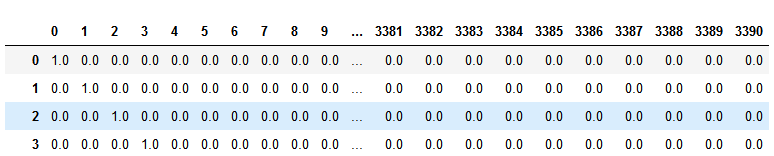
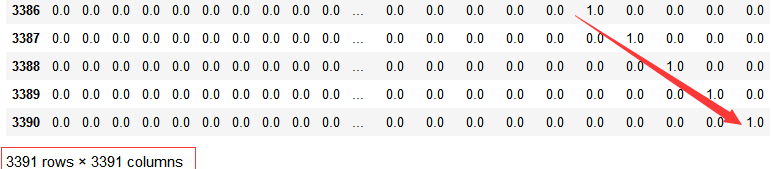
userSimMatrix:用户相似度稀疏矩阵,同一个event有响应的用户之间的相似度
至此,第二步完成,哪里有不明白的请留言
我们继续看Event Recommendation Engine Challenge分步解析第三步
Event Recommendation Engine Challenge分步解析第二步的更多相关文章
- Event Recommendation Engine Challenge分步解析第七步
一.请知晓 本文是基于: Event Recommendation Engine Challenge分步解析第一步 Event Recommendation Engine Challenge分步解析第 ...
- Event Recommendation Engine Challenge分步解析第六步
一.请知晓 本文是基于: Event Recommendation Engine Challenge分步解析第一步 Event Recommendation Engine Challenge分步解析第 ...
- Event Recommendation Engine Challenge分步解析第五步
一.请知晓 本文是基于: Event Recommendation Engine Challenge分步解析第一步 Event Recommendation Engine Challenge分步解析第 ...
- Event Recommendation Engine Challenge分步解析第四步
一.请知晓 本文是基于: Event Recommendation Engine Challenge分步解析第一步 Event Recommendation Engine Challenge分步解析第 ...
- Event Recommendation Engine Challenge分步解析第一步
一.简介 此项目来自kaggle:https://www.kaggle.com/c/event-recommendation-engine-challenge/ 数据集的下载需要账号,并且需要手机验证 ...
- Event Recommendation Engine Challenge分步解析第三步
一.请知晓 本文是基于: Event Recommendation Engine Challenge分步解析第一步 Event Recommendation Engine Challenge分步解析第 ...
- (转) Quick Guide to Build a Recommendation Engine in Python
本文转自:http://www.analyticsvidhya.com/blog/2016/06/quick-guide-build-recommendation-engine-python/ Int ...
- 卷积神经网络 cnnff.m程序 中的前向传播算法 数据 分步解析
最近在学习卷积神经网络,哎,真的是一头雾水!最后决定从阅读CNN程序下手! 程序来源于GitHub的DeepLearnToolbox 由于确实缺乏理论基础,所以,先从程序的数据流入手,虽然对高手来讲, ...
- Comprehensive Guide to build a Recommendation Engine from scratch (in Python) / 从0开始搭建推荐系统
https://www.analyticsvidhya.com/blog/2018/06/comprehensive-guide-recommendation-engine-python/, 一篇详细 ...
随机推荐
- UVA 690 Pipeline Scheduling
https://vjudge.net/problem/UVA-690 题目 你有一台包含5个工作单元的计算机,还有10个完全相同的程序需要执行.每个程序需要$n(n<20)$个时间片来执行,可以 ...
- eolinker——添加项目成员
https://help.eolinker.com/account/?target=/md/workspace/team 在工作空间的主页面,而不是接口的主页面这个一定要注意,邀请方式有两种,根据自己 ...
- POJ 1125-Stockbroker Grapevine-最短路
裸最短路 /*--------------------------------------------------------------------------------------*/ // H ...
- springboot使用redis
1.pom文件中引入 spring-boot-starter-redis <dependency> <groupId>org.springframework.boot</ ...
- POJ 1966 Cable TV Network (算竞进阶习题)
拆点+网络流 拆点建图应该是很常见的套路了..一张无向图不联通,那么肯定有两个点不联通,但是我们不知道这两个点是什么. 所以我们枚举所有点,并把每个点拆成入点和出点,每次把枚举的两个点的入点作为s和t ...
- HDOJ 5666//快速积,推公式
题目:http://acm.hdu.edu.cn/showproblem.php?pid=5666 题意:给一条直线x+y=q,在(0,0)往x+y=q上面的整数点连线,x+y=q与x,y轴截成的三角 ...
- SpringMVC 拦截器使用说明
spring-content.xml <!-- 配置用于session验证的拦截器 --> <!-- 如果有多个拦截器满足拦截处理的要求,则依据配置的先后顺序来执行 --> & ...
- 【CodeForces 717C】Potions Homework
BUPT 2017 summer training (for 16) #1G 题意 每个人有一个懒惰值,每个任务有个难度,一开始每个人的任务和懒惰值都为\(a_i\),完成任务时间是懒惰值乘以难度,现 ...
- P3723 [AH2017/HNOI2017]礼物
题目链接:[AH2017/HNOI2017]礼物 题意: 两个环x, y 长度都为n k可取 0 ~ n - 1 c可取任意值 求 ∑ ( x[i] - y[(i + k) % n + 1] ...
- BZOJ4695 最假女选手(势能线段树)
BZOJ题目传送门 终于体会到初步掌握势能分析思想的重要性了. 一开始看题,感觉套路还是很一般啊qwq.直接在线段树上维护最大值和最小值,每次递归更新的时候,如果不能完全覆盖就暴力递归下去.挺好写的欸 ...