
Map 知识整理
首先是HashMap的学习,理解散列的概念以及相关的实现,并且会学习HashMap的源码,理解为什么HashMap的速度如此之快。
声明:参考到的资料在下方列出。
1.《Java编程思想》 作者BruceEckel
2.http://liujiacai.net/blog/2015/09/03/java-hashmap/#%E5%93%88%E5%B8%8C%E8%A1%A8%EF%BC%88hash-table%EF%BC%89
3.提前需要理解红黑树的知识,可以参考文章(写的非常的详细):
http://www.cnblogs.com/skywang12345/p/3245399.html
一、优先级队列(这个知识点跟本文主题关系不大,但是整理记录一下,所以放在这里了)
直接上例子:
 import java.util.PriorityQueue;

 public class ToDoList extends PriorityQueue<ToDoList.TodoItem>{

     /**

      *

      */

     private static final long serialVersionUID = 1L;

     static class TodoItem implements Comparable<TodoItem> {

         private char primary;

         private int secondary;

         private String item;

         public TodoItem (String td, char pri, int sec) {

             this.item = td;

             this.primary = pri;

             this.secondary = sec;

         }

         @Override

         public int compareTo(TodoItem arg) {

             if (primary > arg.primary) {

                 return +1;

             }

             if (primary == arg.primary) {

                 if (secondary > arg.secondary) {

                     return +1;

                 } else if (secondary == arg.secondary){

                     return 0;

                 }

             }

             return -1;

         }

         public String toString() {

             return Character.toString(primary) + secondary + ": " + item;

         }

     }

     public void add(String td, char pri, int sec) {

         super.add(new TodoItem(td, pri, sec));

     }

     public static void main(String[] args) {

         ToDoList toDoList = new ToDoList();

         toDoList.add("Empty trash", 'C', 4);

         toDoList.add("Feed dog", 'A', 2);

         toDoList.add("Mow lawn", 'B', 7);

         toDoList.add("Water lawn", 'A', 1);

         while (!toDoList.isEmpty()) {

             System.out.println(toDoList.remove());

         }

     }

 }
我们可以看到,各项是如何按照我们给定的顺序进行排列的。
二、理解Map
Map的实现类有很多:
HashMap:(结构组成:数组+链表+红黑树)无序
TreeMap:基于红黑树的实现,使用红黑树的好处是能够使得树具有不错的平衡性。同时它是有序的,有序(但是按默认顺充,不能指定)
LinkedHashMap:有序的,它是Hash表和链表的实现,并且依靠着双向链表保证了迭代顺序是插入的顺序。
ConcurrentHashMap(一种线程安全的Map,不涉及同步加锁)、无序 .etc.
最常用的是HashMap,它的性能非常棒。至于如何棒,棒到什么程度,慢慢听我说。
性能是映射表的一个重要问题。我们使用散列码,可以代替缓慢的线性搜索,来提高HashMap的速度。散列码是相对唯一的,用以代表对象的int值(因为hashCode()是Object的方法,所以任何对象都可以生成散列码)。那么什么是散列码呢?在Map中,是通过散列来查找另一个对象的。它将键的信息保存在数组里(因为存储、查找元素最快的数据结构是数组),而数组的下角标就是hashCode()生成的散列码。数组的元素里存储的是键值得list。(为什么是list呢?因为数组的大小是不可变的,当Map存储的量很大时,key的数量肯定会超过数组的范围,因此用的list)。之后,取得list后,遍历其中的元素,用equal()进行比较,最后得到我们的key。
总结查询一个值的过程。首先,计算散列码,然后使用散列码查询数组,之后,对数组中保存的list遍历,用equals()方法进行线程的查询。这就是散列的原理,HashMap如此之快的原因。
使用HashMap存储我们的对象时,必须重写equals()和hasCode().同时有以下几个注意点。
正确的equals()方法必须满足下面5额条件‘:
1.自反性。对于任意x, x.equals(x)一定返回true;
2.对称性。对任意x,y, 如果x.equals(y)返回true,那么,y.equals(x)也返回true;
3.传递性。对任意x,y,z, 如果x.equals(y)返回true,y.equals(z)返回true,那么,x.equals(z)也返回true;
4.一致性。对任意x,y,如果对象中用于等价比较的信息没有改变,那么无论调用x.equals(y)多少次,结果必须一致,全是true,或全是false;
5.对任何不是null的x,x.equlas(null)一定是false。
注意的是,默认的Object.equlas()只是比较对象的地址。
下面说说hashCode的设计。
最重要的因素是:无论何时,对同一个对象调用hashCode()都应该生成同样的值。同时,散列码要速度快,并且有意义。
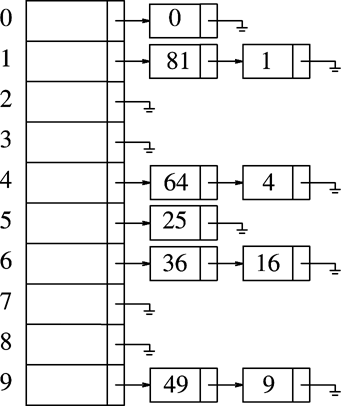
我在这里上个图,大家可以更好的理解散列冲突的解决之道。(
图片出处:http://liujiacai.net/blog/2015/09/03/java-hashmap/#%E5%93%88%E5%B8%8C%E8%A1%A8%EF%BC%88hash-table%EF%BC%89)
左侧竖列为数组,数组角标就是哈希码,每个元素内,是个单向链表,用于解决数据冲突问题。
三、HashMap源码分析
源码版本是JDK1.8
1.初始化
 /**

      * Constructs an empty <tt>HashMap</tt> with the specified initial

      * capacity and load factor.

      *

      * @param  initialCapacity the initial capacity

      * @param  loadFactor      the load factor

      * @throws IllegalArgumentException if the initial capacity is negative

      *         or the load factor is nonpositive

      */

     public HashMap(int initialCapacity, float loadFactor) {

         if (initialCapacity < 0)

             throw new IllegalArgumentException("Illegal initial capacity: " +

                                                initialCapacity);

         if (initialCapacity > MAXIMUM_CAPACITY)

             initialCapacity = MAXIMUM_CAPACITY;

         if (loadFactor <= 0 || Float.isNaN(loadFactor))

             throw new IllegalArgumentException("Illegal load factor: " +

                                                loadFactor);

         this.loadFactor = loadFactor;

         this.threshold = tableSizeFor(initialCapacity);

     }

     /**

      * Constructs an empty <tt>HashMap</tt> with the specified initial

      * capacity and the default load factor (0.75).

      *

      * @param  initialCapacity the initial capacity.

      * @throws IllegalArgumentException if the initial capacity is negative.

      */

     public HashMap(int initialCapacity) {

         this(initialCapacity, DEFAULT_LOAD_FACTOR);

     }

     /**

      * Constructs an empty <tt>HashMap</tt> with the default initial capacity

      * (16) and the default load factor (0.75).

      */

     public HashMap() {

         this.loadFactor = DEFAULT_LOAD_FACTOR; // all other fields defaulted

     }
HashMap()的构造方法有三个。
第一个构造方法,需要传入容器大小值和负载因子。这个负载因子代表的是现有的容量size占容器size的比率,当超过这个设定的比率(默认是0.75)时,容器会自动扩容。
第二个构造方法(推荐使用),将容器大小传进去,这样我们根据业务量,给定一个合理大小的容器,可以避免以后,容量的扩容,提高效率。
第三个,不多说了,以前自己经常这么用,现在不了。
2.put()
这个是肯定用到的了,放值,之后取值。
     /**

      * Associates the specified value with the specified key in this map.

      * If the map previously contained a mapping for the key, the old

      * value is replaced.

      *

      * @param key key with which the specified value is to be associated

      * @param value value to be associated with the specified key

      * @return the previous value associated with <tt>key</tt>, or

      *         <tt>null</tt> if there was no mapping for <tt>key</tt>.

      *         (A <tt>null</tt> return can also indicate that the map

      *         previously associated <tt>null</tt> with <tt>key</tt>.)

      */

     public V put(K key, V value) {

         return putVal(hash(key), key, value, false, true);

     }
     /**

      * Computes key.hashCode() and spreads (XORs) higher bits of hash

      * to lower.  Because the table uses power-of-two masking, sets of

      * hashes that vary only in bits above the current mask will

      * always collide. (Among known examples are sets of Float keys

      * holding consecutive whole numbers in small tables.)  So we

      * apply a transform that spreads the impact of higher bits

      * downward. There is a tradeoff between speed, utility, and

      * quality of bit-spreading. Because many common sets of hashes

      * are already reasonably distributed (so don't benefit from

      * spreading), and because we use trees to handle large sets of

      * collisions in bins, we just XOR some shifted bits in the

      * cheapest possible way to reduce systematic lossage, as well as

      * to incorporate impact of the highest bits that would otherwise

      * never be used in index calculations because of table bounds.

      */

     static final int hash(Object key) {

         int h;

         return (key == null) ? 0 : (h = key.hashCode()) ^ (h >>> 16);

     }
hash()算法,key不为null时,取【key的哈希值】与【其右移16位的数值】的异或运算。
算法为什么是这样?里面的道理我就不知道了,肯定是经过大量数学运算,得到的这个算法。(我对象总说我是文科的。。。)
     /**

      * Implements Map.put and related methods

      *

      * @param hash hash for key

      * @param key the key

      * @param value the value to put

      * @param onlyIfAbsent if true, don't change existing value

      * @param evict if false, the table is in creation mode.

      * @return previous value, or null if none

      */

     final V putVal(int hash, K key, V value, boolean onlyIfAbsent,

                    boolean evict) {

         Node<K,V>[] tab; Node<K,V> p; int n, i;
           // 判断节点数组是否为空,如果为空,初始化节点数组。

         if ((tab = table) == null || (n = tab.length) == 0)

             n = (tab = resize()).length;
           // 判断数组中的某个元素是否为空,如果为空,初始化,创建一个新的Node

         if ((p = tab[i = (n - 1) & hash]) == null)

             tab[i] = newNode(hash, key, value, null);

         else {

             Node<K,V> e; K k;
               // 判断传进来的key值是否已经存在。通过hash值和key值得两重比较来判断
               // 如果key已经存在,存储的Node信息不变

             if (p.hash == hash &&

                 ((k = p.key) == key || (key != null && key.equals(k))))

                 e = p;
               // 如果是TreeNode实例,就将key存入红黑树中保存。

             else if (p instanceof TreeNode)

                 e = ((TreeNode<K,V>)p).putTreeVal(this, tab, hash, key, value);

             else {
                   // 如果是Node实例,那么将创建一个TreeNode用于管理key的信息。
                   // 我猜想,如果用单项链表的话,查找key时,还是线性查找,可以通过Red black tree,将性能提升。

                 for (int binCount = 0; ; ++binCount) {

                     if ((e = p.next) == null) {

                         p.next = newNode(hash, key, value, null);

                         if (binCount >= TREEIFY_THRESHOLD - 1) // -1 for 1st

                             treeifyBin(tab, hash);

                         break;

                     }

                     if (e.hash == hash &&

                         ((k = e.key) == key || (key != null && key.equals(k))))

                         break;

                     p = e;

                 }

             }

             if (e != null) { // existing mapping for key

                 V oldValue = e.value;

                 if (!onlyIfAbsent || oldValue == null)

                     e.value = value;

                 afterNodeAccess(e);

                 return oldValue;

             }

         }

         ++modCount;

         if (++size > threshold)

             resize();

         afterNodeInsertion(evict);

         return null;

     }
上面分析,每个分支的目的,至于每一行的具体代码,以及里面算法的实现,无法简短的说清楚,有兴趣的话,可以自己查阅资料。
 /**

          * Tree version of putVal.

          */

         final TreeNode<K,V> putTreeVal(HashMap<K,V> map, Node<K,V>[] tab,

                                        int h, K k, V v) {

             Class<?> kc = null;

             boolean searched = false;

             TreeNode<K,V> root = (parent != null) ? root() : this;
               // 往树结构中插入节点
               // 遍历节点。代码中是红黑树算法具体代码实现。

             for (TreeNode<K,V> p = root;;) {

                 int dir, ph; K pk;

                 if ((ph = p.hash) > h)

                     dir = -1;

                 else if (ph < h)

                     dir = 1;

                 else if ((pk = p.key) == k || (k != null && k.equals(pk)))

                     return p;

                 else if ((kc == null &&

                           (kc = comparableClassFor(k)) == null) ||

                          (dir = compareComparables(kc, k, pk)) == 0) {

                     if (!searched) {

                         TreeNode<K,V> q, ch;

                         searched = true;

                         if (((ch = p.left) != null &&

                              (q = ch.find(h, k, kc)) != null) ||

                             ((ch = p.right) != null &&

                              (q = ch.find(h, k, kc)) != null))

                             return q;

                     }

                     dir = tieBreakOrder(k, pk);

                 }

                 TreeNode<K,V> xp = p;

                 if ((p = (dir <= 0) ? p.left : p.right) == null) {

                     Node<K,V> xpn = xp.next;

                     TreeNode<K,V> x = map.newTreeNode(h, k, v, xpn);

                     if (dir <= 0)

                         xp.left = x;

                     else

                         xp.right = x;

                     xp.next = x;

                     x.parent = x.prev = xp;

                     if (xpn != null)

                         ((TreeNode<K,V>)xpn).prev = x;

                     moveRootToFront(tab, balanceInsertion(root, x));

                     return null;

                 }

             }

         }
。。。
其他的代码先不分析了。
文章暂时就简要的写到这里吧。有很多细节地方讲解的不到位,只是说明了一个大致的实现思路。里面算法的具体操作实现,以后遇到再做总结。
不足的地方,望前辈指正。
谢过!!!
Map 知识整理的更多相关文章
- Spring Ioc知识整理
Ioc知识整理(一): IoC (Inversion of Control) 控制反转. 1.bean的别名 我们每个bean元素都有一个id属性,用于唯一标识实例化的一个类,其实name属性也可用来 ...
- 【OGG】OGG基础知识整理
[OGG]OGG基础知识整理 一.GoldenGate介绍 GoldenGate软件是一种基于日志的结构化数据复制软件.GoldenGate 能够实现大量交易数据的实时捕捉.变换和投递,实现源数据库与 ...
- ES6知识整理(4)--数组的扩展
最近工作比较忙,基本每天都会加班到很晚.处理一些客户端兼容问题以及提升用户体验的优化.也将近一周没更文了,现在继续es6的学习总结. 上篇回顾 ES6知识整理(三)--函数的扩展 扩展运算符 形式是3 ...
- js事件(Event)知识整理
事件(Event)知识整理,本文由网上资料整理而来,需要的朋友可以参考下 鼠标事件 鼠标移动到目标元素上的那一刻,首先触发mouseover 之后如果光标继续在元素上移动,则不断触发mousemo ...
- Kali Linux渗透基础知识整理(四):维持访问
Kali Linux渗透基础知识整理系列文章回顾 维持访问 在获得了目标系统的访问权之后,攻击者需要进一步维持这一访问权限.使用木马程序.后门程序和rootkit来达到这一目的.维持访问是一种艺术形式 ...
- Kali Linux渗透基础知识整理(二)漏洞扫描
Kali Linux渗透基础知识整理系列文章回顾 漏洞扫描 网络流量 Nmap Hping3 Nessus whatweb DirBuster joomscan WPScan 网络流量 网络流量就是网 ...
- wifi基础知识整理
转自 :http://blog.chinaunix.net/uid-9525959-id-3326047.html WIFI基本知识整理 这里对wifi的802.11协议中比较常见的知识做一个基本的总 ...
- 数据库知识整理<一>
关系型数据库知识整理: 一,关系型数据库管理系统简介: 1.1使用数据库的原因: 降低存储数据的冗余度 提高数据的一致性 可以建立数据库所遵循的标准 储存数据可以共享 便于维护数据的完整性 能够实现数 ...
- 【转载】UML类图知识整理
原文:UML类图知识整理 UML类图 UML,进阶必备专业技能,看不懂UML就会看不懂那些优秀的资料. 这里简单整理 类之间的关系 泛化关系(generalization) 泛化(generalize ...
随机推荐
- .NetCore发布到Centos docker
将.netcore mvc项目发布到centos7的docker中.环境 vmware14+Centos7+docker-ce 1.使用vs将.netcoremvc项目发布到本地,修改发布后的目录 名 ...
- Docker安装websphere(四)
在Docker容器里安装webshpere <!--前提:已经安装好了docker,能够正常使用.--> (1)docker安装websphere(需要账号和密码登录,不挂载数据卷) 获取 ...
- SpringWeb项目常用注解简单介绍
注解分为两类: 一类是使用Bean,即是把已经在xml文件中配置好的Bean拿来用,完成属性.方法的组装:比如@Autowired , @Resource,可以通过byTYPE(@Autowired) ...
- Ubuntu server 网络配置中遇到的问题
Ubuntu server 网络配置中遇到的问题 图片中ip地址有可能和文字不符,请不要在意太多,知道原理即可 - 1.首先就是要配置ip地址 vim /etc/network/interfaces ...
- Cracking The Coding Interview5.1
//You are given two 32-bit numbers, N and M, and two bit positions, i and j. Write a method to set a ...
- Cracking The Coding Interview 4.1
//Implement a function to check if a tree is balanced. For the purposes of this question, a balanced ...
- Androi开发 ---Fragment片段布局案例
效果图: 1.MainActivity.java package com.example.android_activity; import android.app.Activity; import a ...
- 20165214 实验一 Java开发环境的熟悉
20165214 实验一 Java开发环境的熟悉 一.实验报告封面 课程:Java程序设计 班级:1652班 姓名:朱文远 学号:20165214 指导教师:娄嘉鹏 实验日期:2018年4月2日 实验 ...
- L253 Valentine's Day
Are you ready for Valentine's Day, my fellow stargazers? Not sure if you know this, but the astrolog ...
- dos命令:网络相关命令
网络相关命令 一.Arp命令 1.介绍 显示和修改地址解析协议(ARP)使用的“IP 到物理”地址转换表. 2.语法 ARP -s inet_addr eth_addr [if_addr] ARP ...