
Pi和e的积分
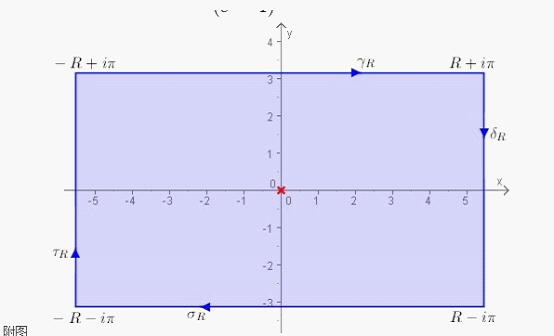
第一个积分的解答:
第二个积分的另一种求法:
来自:http://math.stackexchange.com/questions/324647/integrate-int-01x-x1-xx-1-sin-pi-xdx
http://math.stackexchange.com/questions/958624/prove-that-int-01-sin-pi-xxx1-x1-x-dx-frac-pi-e24
[Torsten Carleman][1] $[2]$ proved in 1922 that
> $$
\sum_{n=1}^\infty\left(a_1a_2\cdots a_n\right)^{1/n} < e\sum_{n=1}^\infty a_n,
$$
where $a_n \geq 0$, $n=1,2,\dots$, and $0 < \sum_{n=1}^\infty a_n < \infty$. Thenceforth, this result is known as [Carleman's inequality][2]. There exists a number of refined versions of Carleman's original work $[3, 6]$. It has turned out that the following generalization is – from our point of view – important, which is proved by Yang $[7]$:
$$
\sum_{n=1}^\infty\left(a_1a_2\cdots a_n\right)^{1/n} < e\sum_{n=1}^\infty \left(1-\sum_{k=1}^6 \frac{b_k}{(n+1)^k}\right)a_n,
$$
with $b_1 = 1/2, b_2 = 1/24, b_3 = 1/48, b_4 = 73/5670, b_5 = 11/1280, b_6 = 1945/580608$.
On the last page of his paper, Yang $[7]$ conjectured that if
$$
\left(1+\frac{1}{x}\right)^x = e\left(1-\sum_{n=1}^\infty \frac{b_n}{(x+1)^n}\right), \quad x>0,
$$
then $b_n > 0$, $n=1,2,\dots.$ In fact, the constants $b_4$ and $b_6$ are not corrent in Yang's work, the correct values are $b_4 = 73/5760$ and $b_6 = 3625/580608$. Later, this conjecture was proved and discussed by Yang $[8]$, Gylletberg and Ping $[4]$, and Yue $[9]$. They are using the recurrence
$$
b_1 = \frac12, \quad b_n = \frac{1}{n}\left(\frac{1}{n+1} - \sum_{k=0}^{n-2} \frac{b_{n-k-1}}{k+2} \right), \quad n = 2,3,\dots.
$$
The recurrence is given in a somewhat more compact form in Finch's manuscript $[3]$, as the following:
> $$
b_0 = -1, \quad b_n = -\frac{1}{n}\sum_{k=1}^{n} \frac{b_{n-k}}{k+1}, \quad n = 1,2,\dots.
$$
The first ten values of the sequence are listed in the next table.
\begin{array} {|r|r|}
\hline
b_0 & -1 \\ \hline b_1 & 1/2 \\ \hline b_2 & 1/24 \\ \hline b_3 & 1/48 \\ \hline b_4 & 73/5760 \\ \hline b_5 & 11/1280 \\ \hline b_6 & 3625/580608 \\ \hline b_7 & 5525/1161216 \\ \hline b_8 & 5233001/1393459200 \\ \hline b_9 & 1212281/398131200 \\ \hline b_{10} & 927777937/367873228800 \\
\hline
\end{array}
The numerators are recorded as [A249276][3], and the denominators as [A249277][4] in the [OEIS][5]. I've calculated the $b_n$ sequence in the range $n=0,\dots,32$, the elements are listed [here][6].
The following theorem is proved in general in the paper by Hu and Mortici $[5]$, and for the special cases $n=0$ and $n=1$ in the paper by Alzer and Berg $[1]$.
For all integer $n \geq 0$, we have
> $$
\int_0^1 x^n\sin\left(\pi x\right)x^x\left(1-x\right)^{1-x}\,dx = b_{n+2}\pi e.
$$
The special case $n=0$ answers my question.
----------
**References**
1. H. Alzer, C. Berg, [*Some classes of completely monotonic functions*][7], Annales Academiæ Scientiarum Fennicæ Mathematica, 27, 2002, 445–460. ([pdf][8])
2. T. Carleman, [*Sur les fonctions quasi-analytiques*][9], Comptes rendus du Ve Congres des Mathematiciens Scandinaves, Helsinki (Helsingfors), 1922, 181–196.
3. S. Finch, [*Carleman's Inequality*][10], manuscript, 2013.
4. M. Gyllenberg, Y. Ping, [*On a conjecture by Yang*][11], Journal of Mathematical Analysis and Applications, 264(2), 2001, 687–690.
5. Y. Hu, C. Mortici, [*On the coefficients of an expansion of $(1+1/x)^x$ related to Carleman's inequality*][12], manuscript, arXiv:1401.2236, 2014.
6. M. Johansson, L.-E. Persson, A. Wedestig, [*Carleman's inequality - History, proofs and some new generalizations*][13], Journal of Inequalities in Pure and Applied Mathematics, 4(3), 2003.
7. X. Yang, [*On Carleman’s inequality*][14], Journal of Mathematical Analysis and Applications, 253(2), 2001, 691–694.
8. X. Yang, [*Approximations for constant $e$ and Their Applications*][15], Journal of Mathematical Analysis and Applications, 262(2), 2001, 651–659.
9. H. Yue, [*A Strengthened Carleman’s Inequality*][16], Communications in Mathematical Analysis, 1(2), 2006, 115–119. ([pdf][17])
----------
**Related**
This answer is related to the following stackexchange questions:
- [On the search for an explicit form of a particular integral][18]
- [Two curious “identities” on $x^x, e$, and $\pi$][19]
- [Evaluating an integral using real methods][20]
[1]: https://en.wikipedia.org/wiki/Torsten_Carleman
[2]: http://mathworld.wolfram.com/CarlemansInequality.html
[3]: http://oeis.org/A249276
[4]: http://oeis.org/A249277
[5]: http://oeis.org/
[6]: http://mathb.in/145272?key=677ade0f6738b4bc973f3955937b952544a82225
[7]: http://www.acadsci.fi/mathematica/Vol27/alzer.html
[8]: http://www.acadsci.fi/mathematica/Vol27/alzer.pdf
[9]: https://www.researchgate.net/publication/247679096_Sur_les_functions_quasi-analytiques
[10]: https://oeis.org/A219245/a219245.pdf
[11]: http://www.sciencedirect.com/science/article/pii/S0022247X01977029
[12]: https://arxiv.org/abs/1401.2236
[13]: https://www.researchgate.net/publication/237246073_Carleman%27s_inequality-history_proofs_and_some_new_generalizations
[14]: http://www.sciencedirect.com/science/article/pii/S0022247X00971555
[15]: http://www.sciencedirect.com/science/article/pii/S0022247X01975924
[16]: http://math-res-pub.org/cma/1/2/strengthened-carleman%E2%80%99s-inequality
[17]: https://www.ripublication.com/cma_files/cmav1n2_6.pdf
[18]: https://mathoverflow.net/questions/215816/on-the-search-for-an-explicit-form-of-a-particular-integral
[19]: https://math.stackexchange.com/questions/242587/two-curious-identities-on-xx-e-and-pi
[20]: https://mathoverflow.net/questions/226870/evaluating-an-integral-using-real-methods
This is something I am absolutely cautious to share, but I feel the need unveil anyway. I have lost some will to believe this is a significant result due to doubts expressed by other mathematicians who I have corresponded with, so this led me to construe this might not be important after all. I have read about these integrals supposedly popping up in the work of Ramanujan, though I have found no reliable source, and Bruce Berndt still has yet to get back to me.:/
This project started when I was curious what parametrizations would be needed to encapsulate impressive information about the following integrals:
\begin{align}
&\int_0^1 \sin(\pi x) x^x(1-x)^{1-x} \, dx &= \frac{\pi e}{24} \\
&\int_0^1 \frac{\sin(\pi x)}{x^x(1-x)^{1-x}}\, dx &= \frac{\pi }{e} \\
&\int_0^1 \frac{\sin(\pi x)}{x(1-x)}\frac{1}{x^x(1-x)^{1-x}}\, dx &= 2\pi
\end{align}
However, as it turns out, I was able to show they are related via the following theorem.
$\textbf{Theorem}$ For $m, q \in \mathbb{Z}$, and $m+q+1 \geq 0$,
$$ \int_0^1 x^m \sin\left(\pi q x \right) \left(x^x (1-x)^{1-x}\right)^q\ dx = (-1)^{q+1} \frac{d_{m+q+1}(q)}{(m+q+2)!_\mathbb{P}} \pi e^{q}$$
where $d_n(q)$ is a primitive polynomial of $\mathbb{Z}[x]$ of degree $n$, and $ n!_\mathbb{P}$ is the Bhargava factorial over the set of primes.
In addition, these rational numbers satisfy a neat recurrence relation, of which Carleman's inequality is a [special case][1] of:
$$\frac{d_{n}(q)}{(n+1)!_\mathbb{P}} = -\frac{q}{n} \sum_{k=1}^n \frac{d_{n-k}(q)}{(n-k+1)!_\mathbb{P}} \frac{1}{k+1}; \; d_0(q) = -1,\; \text{if} \,(q=0).$$
Using these results, we can unlock a whole class of crazy stuff:
\begin{align*}\sum_{j=1}^n A_j(1-\alpha_j)^{q\left(1-\frac{1}{\alpha_j}\right)}&= (-1)^q\int_0^1 \frac{\sin\left(\pi q x \right)}{\pi x} \frac{\left[x^x\left(1-x\right)^{1-x}\right]^q}{x^q} \prod_{j=1}^n \frac{1}{1-\alpha_j x}\ dx,
\end{align*}
\begin{align*}
A_j = \prod_{k=1, k\neq j}^n \frac{\alpha_j}{\alpha_j-\alpha_k}, \quad \alpha_j \in (0,1).
\end{align*}
Here are some special values:
\begin{align}
&\int_0^1 \frac{\sin\left( \pi x \right)}{ (1-x)\left[x^x\left(1-x\right)^{1-x}\right]} \ dx = \pi \quad \quad &\int_0^1 \frac{\sin\left( \pi x \right)}{(1-x^2)\left[x^x\left(1-x\right)^{1-x}\right]} \ dx &= \frac{5\pi}{8}
\end{align}
I don't want to reveal too much anyway. Enjoy!
[1]: http://www.people.fas.harvard.edu/~sfinch/csolve/crl.pdf
The Ramanujan Cos/Cosh Identity is stated [here](http://mathworld.wolfram.com/RamanujanCosCoshIdentity.html) as
$$\left[1+2\sum_{n=1}^{\infty}\frac{\cos n\theta}{\cosh n\pi}\right]^{-2}+
\left[1+2\sum_{n=1}^{\infty}\frac{\cosh n\theta}{\cosh n\pi}\right]^{-2}=
\frac{2\Gamma^4\left(\frac34\right)}{\pi}$$
Then there is a line:
> Equating coefficients of $\theta^0$, $\theta^4$, and $\theta^8$ gives
> some amazing identities for the hyperbolic secant.
Those identities are given [here](http://mathworld.wolfram.com/HyperbolicSecant.html).
So I have two questions:
1. How do we get those formulas from the Cos/Cosh identity?
2. Are there similar identities? (similar to Cos/cosh identity)
It will be helpful to start from an explanation of the origin and the proof of the Ramanujan identity. These are hidden (not very deeply) in the theory of elliptic functions.
Indeed, Jacobi elliptic function $\operatorname{dn}(z,k)$ [has Fourier series](http://dlmf.nist.gov/22.11)
$$\operatorname{dn}(z,k)=\frac{\pi}{2K}\left[1+2\sum_{n=1}^{\infty}\frac{\cos n\pi\frac{z}{K}}{\cosh n \pi \frac{K'}{K}}\right],$$
where $K(k)$ denotes complete elliptic integral and $K'(k)=K(\sqrt{1-k^2})$ the complementary one. The Ramanujan Cos/Cosh identity is thus equivalent to showing that
$$\operatorname{dn}^{-2}\left(\frac{K_1}{\pi}\theta,k_1\right)+\operatorname{dn}^{-2}\left(\frac{iK_1}{\pi}\theta,k_1\right)=\frac{8\Gamma^4\left(\frac34\right)K_1^2}{\pi^3},\tag{1}$$
where $k_1=\frac{1}{\sqrt2}$ is the first [elliptic integral singular value](http://mathworld.wolfram.com/EllipticIntegralSingularValue.html) and $K_1:=K(k_1)=K'(k_1)$.
The right hand side of (1) is independent on $\theta$ and is readily shown to be equal to $2$ using e.g. formula (3) from the [same page](http://mathworld.wolfram.com/EllipticIntegralSingularValue.html). Therefore it remains to show that for any $\sigma\in\mathbb{C}$ one has
$$\operatorname{dn}^{-2}\left(\sigma,k_1\right)+\operatorname{dn}^{-2}\left(i\sigma,k_1\right)=2.$$
I leave this last point to you as an exercise (hint: use [Jacobi's imaginary transformation](http://mathworld.wolfram.com/JacobisImaginaryTransformation.html)).
----------
Hopefully it is now clear that one can construct many generalizations of Ramanujan identity. Such constructions would involve two basic ingredients:
- Fourier series of elliptic functions,
- elliptic integral singular values.
Indeed, pick your favorite identity satisfied by the elliptic functions. The first ingredient will transform them into trigonometric series. The second one will allow to replace the elliptic modulus by algebraic numbers and the corresponding half-periods by misteriously-looking combinations of gamma functions of rational arguments.
----------
P.S. The first question is just Taylor expansion in $\theta$ (for instance, set $\theta=0$ in the Ramanujan identity and see what happens).
I am Brian Diaz, and I am new to the math.stackexchange community.
I have been struggling with attempting to find a closed form of the following series:
$$ \varphi(\theta) = 1 + 2\sum_{n=1}^{\infty} \frac{\cosh(n\theta)}{\cosh(n\pi)} $$
Admittedly, I attempted to convert it to a "workable integral", but to no avail. Heck, in the process of converting it to an integral, I am not even sure interchanging the sum and the integral was valid. Nevertheless, this was my result.
$$\frac{1}{\pi}\int_{-\infty}^{\infty} \frac{\sin(x)}{\cosh(\theta) - \cos(x)} \frac{1}{\cosh(x)}dx $$
This was derived from a problem Ramanujan was working. For those who are interested in the source, you can visit http://mathworld.wolfram.com/RamanujanCosCoshIdentity.html. Note: Even if it does not have a closed form, I am still interested in valuable insight to the problem. In addition, I have been reported by my professor to consider applying residue theory, though he his not so sure what the result would be.
Thank you so much for your support, and I hope you do have a blessed day!
The closed form involves Jacobi elliptic function $\operatorname{dn}(z,k)$, which has [Fourier series](http://dlmf.nist.gov/22.11)
$$\operatorname{dn}(z,k)=\frac{\pi}{2K}\left[1+2\sum_{n=1}^{\infty}\frac{\cos n\pi\frac{z}{K}}{\cosh n \pi \frac{K'}{K}}\right],$$
where $K(k)$ denotes complete elliptic integral and $K'(k)=K(\sqrt{1-k^2})$ the complementary one.
Now if we denote $k_1=\frac{1}{\sqrt2}$ the first [elliptic integral singular value](http://mathworld.wolfram.com/EllipticIntegralSingularValue.html) and
$$K_1:=K(k_1)=K'(k_1)=\frac{\Gamma^2\left(\frac14\right)}{4\sqrt{\pi}},$$
the sum can be expressed as
$$\boxed{\displaystyle \quad \varphi\left(\theta\right):=1+2\sum_{n=1}^{\infty}\frac{\cosh n\theta}{\cosh n \pi}=\frac{2K_1}{\pi}\,\operatorname{dn}\left(\frac{iK_1\theta}{\pi},k_1\right)\quad}$$
**P.S.** To check the answer with Mathematica, note that the latter uses $k^2$ instead of $k$ in the arguments of $\mathrm{EllipticK[}\cdot\mathrm{]}$ and $\mathrm{JacobiDN[}z,\cdot\mathrm{]}$. For example, $K_1$ is evaluated with $\mathrm{EllipticK[}\frac12\mathrm{]}$.
**P.P.S** This transforms the proof of Ramanujan cos/cosh identity into a one-line calculation involving [Jacobi imaginary transformation](http://mathworld.wolfram.com/JacobisImaginaryTransformation.html) for $\operatorname{dn}(z,k)$, as explained [here](https://math.stackexchange.com/a/955420/73025).
Rather than relying on the consequences of Schanuel's conjecture, I set about using the same ideas Apery had used to construct integer arguments converging fast enough to show $\zeta(3)$ is irrational in a form Beukers had introduced. I'm sure someone out there can crack what I have so far.
I will be using the following facts:
>**Theorem 1**: Suppose the complex-valued function $$\begin{align}
f{(z)} = \begin{cases}
-\left(\frac{1}{e}(1-z)^{1-\frac{1}{z}} \right)^q, & z\neq 0 \\
-1, & z = 0
\end{cases}
\end{align}$$ has a power series with positive radius of convergence of the form
$$f(z) = \sum_{n=0}^\infty b_n(q) z^n$$
Then
$$b_n(q) = -\frac{q}{n} \sum_{k=1}^n \frac{b_{n-k}(q)}{k+1}, \quad b_0(q) = -1$$
Note that $b_n(q)$ is a polynomial of degree $n$.
>**Theorem 2**: Let $m,q \in \mathbb{Z}$ and $m+q+1 \geq 0$; then $$\int_0^1 x^m \sin(\pi q x) \left(x^x (1-x)^{1-x}\right)^q \ dx = (-1)^{q+1} \pi e^q b_{m+q+1}(q)$$
The above can be shown by applying contour integration and residue theorem to the above function.
> **Theorem 3**: For $n \in \mathbb{N} \cup \{0\}$, $\mathbb{P}$ be the set of primes, and let $$(n+1)!_\mathbb{P} = \prod_{p \in \mathbb{P}} p ^{\sum_{k\geq 0} \left\lfloor \frac{n}{(p-1)p^k} \right\rfloor}$$
> Then, for integer $q$, $(n+1)!_\mathbb{P} \cdot b_n(q)$ is an integer for $n \geq 0$.
This factorial like function is borrowed from Manjul Bhargava's work on the general factorial function.
>**Theorem 4** Let $n \in \mathbb{N} \cup \{0\}$; then $$(n+1)!_\mathbb{P}\sim e^{n(C-\gamma+o(1))}n^n$$ where $C = \sum_{p \in \mathbb{P}} \frac{\ln p }{(p-1)^2}$ and $\gamma$ is the Euler-Mascheroni constant.
If we let $P_n(x)$ be a polynomial of degree $n$ with integer coefficients and let $$I_n = \int_0^1 P_n(x) \left( \sin(\pi q x) \left( x^x (1-x)^{1-x}\right)^q -1\right) \ dx$$
We have the following inequality, in the form of Dirichlet's irrationality criterion,
$$0 < \left|C_n \pi e^q - D_n \right| = \left|(n+q+2)!_\mathbb{P} (n+1) I_n \right|$$
where $C_n, D_n \in \mathbb{Z}$. Of course, we can apply Theorem 4, and have something more familiar to work with.
>Question: Can we construct a polynomial $P_n(x)$ such that, for large $n$, $$\left|(n+q+2)!_\mathbb{P} (n+1) I_n \right| \to 0 \text{?}$$
If there does exist one, then, for $q \geq -2, q \neq 0$, the number $\pi e^q$ is irrational. Letting $q = 1, -1$, and the result follows.
I've been at this problem for some time, with no further progress. Frankly, I don't know what to do at all. If it helps, I've considered the shifted Legendre polynomials, as Beukers had done, though to no avail.
Most of what I've seen regarding the nature of constructing a polynomial is that it belongs to the family of *orthogonal polynomials*.
God bless.
This isn't really an answer as much as it is an "expanded" comment.
Consider, for integer $a$, $$P_n(x) = \frac{1}{n!} \frac{d^n}{d x^n} x^n (1-ax)^n = \sum_{m=0}^n \binom{n}{m} \binom{n+m}{m} (-ax)^m$$
Given $$I_n = \int_0^1 P_n(x) \left( \sin(\pi q x) (x^x(1-x)^{1-x})^q - 1\right) \ dx$$
We have
$$I_n \leq \int_0^1 P_n(x) \left( \sin(\pi q x) a_q - 1\right) \ dx$$ where $a_q = \max_{x\in (0,1)}\{(x^x(1-x)^{1-x})^q\}$. Furthermore, we have
$$\left|\int_0^1 P_n(x) \left( \sin(\pi q x) a_q - 1\right) \ dx \right|= \left|\int_0^1 \frac{1}{n!} \frac{d^n}{d x^n} x^n (1-ax)^n\left( \sin(\pi q x) a_q - 1\right) \ dx\right|$$
$$= \left|\frac{1}{a^{n+1}n!} \int_{(0,1)\cup(1,a)} \frac{d^n}{d x^n} x^n (1-x)^n\left( \sin\left(\frac{\pi q x}{a}\right) a_q - 1\right) \ dx\right| $$
$$\leq \left|\left(\frac{\pi q}{4a^2}\right)^n \frac{a_q}{n! a}+\frac{1}{n!a^{n+1}}\int_1^a \frac{d^n}{d x^n} x^n (1-x)^n\left( \sin\left(\frac{\pi q x}{a}\right) a_q - 1\right) \ dx\right| $$
Let $$S_n = \int_1^a \left( \sin\left(\frac{\pi q x}{a}\right) a_q - 1\right)\frac{d^n}{d x^n} x^n (1-x)^n \ dx$$
So that we have
$$ = \left|\left(\frac{\pi q}{4a^2}\right)^n \frac{a_q}{n! a}+\frac{S_n}{n!a^{n+1}}\right|$$
Now, observing the bound in question, applying Theorem 4, and letting $A = C - \gamma + o(1)$, we have
$$\left| (n+q+2)!_\mathbb{P} (n+1) I_n \right|<\left|e^{An} e^{q+1} n^n \left(1+\frac{q+1}{n}\right)^n \left(1+\frac{q+1}{n}\right)^{q+1}n^{q+1}(n+1)\left(\left(\frac{\pi q}{4a^2}\right)^n \frac{a_q}{n! a}+\frac{S_n}{n!a^{n+1}}\right) \right| $$
If we ignore the $S_n$ term, we have that
$$\left| e^{q+1} \frac{n^n}{e^n n!} \left(1+\frac{q+1}{n}\right)^n \left(1+\frac{q+1}{n}\right)^{q+1}\frac{n^{q+1}(n+1)}{b^n}\left(\frac{e^{A+1}\pi bq}{4a^2}\right)^n \frac{a_q}{a} \right|$$
where $b > 1 $. If we consider $a$ such that $ a^2 > \frac{e^{A+1}\pi bq}{4}$, and applying Stirling's approximation to the left-most term (-ish), for large $n$, then the whole expression above tends to $0$. Now, it is left to consider the $S_n$ term, though I have a bad feeling about it. :/
来源:https://mathoverflow.net/questions/226875/proving-the-irrationality-of-pi-e-and-pi-e
Pi和e的积分的更多相关文章
- 计算 $\dps{\int_0^\infty\frac{\sin^2x}{x^2}dx=\frac{\pi}{2}}$
计算 $\dps{\int_0^\infty\frac{\sin^2x}{x^2}dx=\frac{\pi}{2}}$. 由分部积分, $$\bee\label{1}\bea \int_0^\inft ...
- simulink pi的方法产生锁相环
pi方法就是比例积分方法,关于pi方法介绍参考http://www.elecfans.com/dianzichangshi/20120909287851.html 锁相环pi方法原理参考http:// ...
- CSDN markdown 编辑器 第四篇 LaTex语法
Latex是为了写数学公式的. 嗯-但实际这样的语言的作用是为了排版的.数学公式仅仅是他的附加属性. 可是markdown引入这个全然是为了写公式.其它的Latex语法不支持. CSDN markdo ...
- matlab 向量场线积分
syms t x y z F x=cos(t); y=sin(t); z=*sin(t)^-; F=[x^*y , (/)*x^,x*y ] ; %场函数 V=[diff(x,t),diff(y,t) ...
- PID控制算法
PID控制算法 四轴如何起飞的原理 四轴飞行器的螺旋桨与空气发生相对运动,产生了向上的升力,当升力大于四轴的重力时四轴就可以起飞了. 四轴飞行器飞行过程中如何保持水平: 我们先假设一种理想状况:四个电 ...
- [实变函数]5.5 Riemann 积分和 Lebesgue 积分
1 记号: 一元函数 $f$ 在 $[a,b]$ 上的 (1)Riemann 积分: $\dps{(R)\int_a^b f(x)\rd x}$; (2)Lebesgue 积分: $\dps{(L)\ ...
- [实变函数]5.6 Lebesgue 积分的几何意义 $\bullet$ Fubini 定理
1 本节推广数学分析中的 Fubini 定理. 为此, 先引入 (1)(从低到高) 对 $A\subset \bbR^p, B\subset\bbR^q$, $$\bex A\times B=\sed ...
- HDU 3668 Volume (数学,积分)
题意:求图中交叉圆柱体的体积! 析:大体思路很明确,把两个圆柱的体积加起来 减去中间公共部分的即可!第一步首先得想到公共部分是一个怎样的图形.这个在高数下册例题中有讲到! 中间实线部分就是第一卦限内的 ...
- HDU 2493 Timer 数学(二分+积分)
传送门:http://acm.hdu.edu.cn/showproblem.php?pid=2493 题意:给你一个圆锥,水平放置,圆锥中心轴与地面平行,将圆锥装满水,在圆锥某一表面开一个小洞,流出来 ...
随机推荐
- js—数组那些事儿
数组维度升级 创建一维数组 //创建一维数组 var a=[]; var b=new Array(); var c=[1,2,'w']; var d=[1,2,[1,2]]; 创建二维数组 var c ...
- Linux部署.NetCore站点 使用Supervisor进行托管部署
前言 之前终于在Linux上部署好了.NetCore站点,但是这个站点非常“脆弱”.当我的ssh连接关闭或者我想在当前连接执行其他命令时候就必须关闭dotnet站点的执行程序.这显然不是我想要达到的效 ...
- 医院信息集成平台(ESB)实施、建设方案
医院信息集成平台(ESB)实施.建设方案 基于中立.标准.开放的IT架构和数据标准,打造插拔式医院应用生态. 解决方案 基于ESB集成总线,构建医院信息化建设顶层设计. ...
- C#中的WinFrom技术实现串口通讯助手(附源码)
C#中的WinFrom技术实现串口通讯助手(附源码) 实现的功能: 1.实现自动加载可用串口. 2.打开串口,并且使用C#状态栏显示串口的状态. 3.实现了串口的接收数据和发送数据功能. 4.串口 ...
- nodejs爬虫--抓取CSDN某用户全部文章
最近正在学习node.js,就像搞一些东西来玩玩,于是这个简单的爬虫就诞生了. 准备工作 node.js爬虫肯定要先安装node.js环境 创建一个文件夹 在该文件夹打开命令行,执行npm init初 ...
- 常用 PostgreSQL 脚本
数据定义 数据库 -- 创建数据库 -- https://www.postgresql.org/docs/current/static/multibyte.html -- database_name, ...
- VB程序去nag
VB程序去nag 我遇到的vb的nag情况是程序一开始就跳出一个nag,汇编代码如下 push AfKayAs_.004067D4 call <jmp.&MSVBVM50.#100> ...
- IntelliJ IDEA 更新
一. 下载最新版本的idea 1. 官网下载,官网地址:http://www.jetbrains.com/idea/download/#section=windows 2. 百度网盘直接下载:http ...
- python——面向对象,继承
"""继承:子类继承父类1.单继承,多继承2. 子类调用或重用父类的同名属性和方法3. 多层4.私有属性和私有方法class 类名(object<父类>)&q ...
- 软考复习之UML设计篇
UML统一建模语言 构件图:描述系统的物理结构,它可以用来显示程序代码如何分解成模块 部署图:描述系统中硬件和软件的物理结构,它描述构成系统架构的软件构件,处理器和设备 用例图:描述系统与外部系统及用 ...