
Java String类源码
String类的签名(JDK 8):
public final class String implements java.io.Serializable, Comparable<String>, CharSequence { }
String是不可变类,即String对象也是不可变对象。
这意味着当修改一个String对象的内容时,JVM不会改变原来的对象,而是生成一个新的String对象。
一、CharSequence 接口
CharSequence API 解释,CharSequence的实例是一个包含“一个或者多个字符值(char values)”的可读序列。这个接口的功能就是对不同种类的字符序列提供统一的只读访问。
CharSequence的实现类有String,StringBuffer,StringBuilder等。
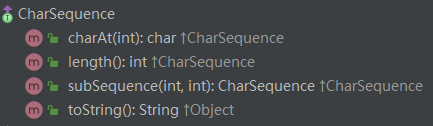
CharSequence接口要求实现的方法如下:

二、String类的字段
2.1 private final char value[];
存储组成字符串值的字符数组value,也是不可变的。
2.2 private int hash;
缓存String实例的hash值
2.3 private static final long serialVersionUID = -6849794470754667710L;
这个没太懂,注释解释如下:
use serialVersionUID from JDK 1.0.2 for interoperability(互操作性)
2.4 private static final ObjectStreamField[] serialPersistentFields =new ObjectStreamField[0];
注释解释:Class String is special cased within the Serialization Stream Protocol
StackOverflow上有讨论:why String in java does not override readObject?
Strings, arrays and enums are special cases in serialization, and are not serialized through readObject/writeObject like other Objects are.
Java中,字符串、数组和枚举在序列化方面是特殊的类,他们没有像其他对象一样通过readObject/writeObject进行序列化。
2.5 public static final Comparator<String> CASE_INSENSITIVE_ORDER= new CaseInsensitiveComparator();
CaseInsensitiveComparator类是一个String类中自己实现的比较器类。
这个比较器对象通过compareToIgnoreCase对String对象进行排序的比较器。compareToIgnoreCase是String类中方法,功能是按字典顺序比较两个字符串,忽略大小写差异。返回正值,0,或者负值。
该比较器是可序列化的。
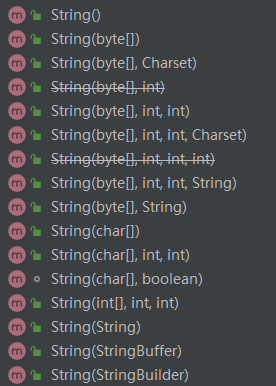
三、构造函数
划线的表示本版JDK中已经被抛弃的。
四、源自CharSequence接口的方法
这些方法功能很明确,实现也并不复杂。
五、源自Comparable的方法
public int compareTo(String anotherString)
按字典顺序比较两个字符串(上面有个字段也与比较有关,但与这个函数没有关系),这个是大小写敏感的,而且返回值也不是简单地以正负值表示比较结果。
直接上源码:
public int compareTo(String anotherString) {

        int len1 = value.length;

        int len2 = anotherString.value.length;

        int lim = Math.min(len1, len2);

        char v1[] = value;

        char v2[] = anotherString.value;

        int k = 0;

        while (k < lim) {

            char c1 = v1[k];

            char c2 = v2[k];

            if (c1 != c2) {

                return c1 - c2;

            }

            k++;

        }

        return len1 - len2;

    }
当String 的equals方法返回true时,该方法返回0.
至于字典序到底怎么算大小,可以总结一下:
小写字母>大写字母;同大小写,越靠字母表后面越大。
ps:看完这个源码,我产生了疑惑,同一个类的不同实例竟然可以相互访问各自的private成员!!??
是的,确实可以!!
六、其它重要方法
1、substring()——public String substring(int beginIndex);
public String substring(int beginIndex) {

        if (beginIndex < 0) {

            throw new StringIndexOutOfBoundsException(beginIndex);

        }

        int subLen = value.length - beginIndex;

        if (subLen < 0) {

            throw new StringIndexOutOfBoundsException(subLen);

        }

        return (beginIndex == 0) ? this : new String(value, beginIndex, subLen);

    }
sublen是索要生成的子串的长度,这个函数生成的子字符串为从内部的value字符数组中索引为beginIndex处到末尾处字符组成的字符串。
如果beginIndex为0,则返回字符串本身;
如果beginIndex不为0,则返回new String(value, beginIndex, subLen)
下面上构造函数String(char value[], int offset, int count)源码:
public String(char value[], int offset, int count) {

        if (offset < 0) {

            throw new StringIndexOutOfBoundsException(offset);

        }

        if (count <= 0) {

            if (count < 0) {

                throw new StringIndexOutOfBoundsException(count);

            }

            if (offset <= value.length) {

                this.value = "".value;

                return;

            }

        }

        // Note: offset or count might be near -1>>>1.

        if (offset > value.length - count) {

            throw new StringIndexOutOfBoundsException(offset + count);

        }

        this.value = Arrays.copyOfRange(value, offset, offset+count);

    }
方法最后返回的是Arrays.copyOfRange(value, offset, offset+count),继续跟踪:
public static char[] copyOfRange(char[] original, int from, int to) {

        int newLength = to - from;

        if (newLength < 0)

            throw new IllegalArgumentException(from + " > " + to);

        char[] copy = new char[newLength];

        System.arraycopy(original, from, copy, 0,

                         Math.min(original.length - from, newLength));

        return copy;

}
System.arraycopy()方法是一个native方法,它将指定源数组src中的数组从指定位置srcPos开始复制到目标数组dest的指定位置destPos,而length是所复制的长度。
public static native void arraycopy(Object src, int srcPos,

                                    Object dest, int destPos, int length)
newLength是要复制的长度,copy是根据这个长度新建的char数组。这个copy将作为新建子串的value值。
2、substring()——public String substring(int beginIndex, int endIndex)
public String substring(int beginIndex, int endIndex) {

        if (beginIndex < 0) {

            throw new StringIndexOutOfBoundsException(beginIndex);

        }

        if (endIndex > value.length) {

            throw new StringIndexOutOfBoundsException(endIndex);

        }

        int subLen = endIndex - beginIndex;

        if (subLen < 0) {

            throw new StringIndexOutOfBoundsException(subLen);

        }

        return ((beginIndex == 0) && (endIndex == value.length)) ? this

                : new String(value, beginIndex, subLen);

    }
基本一样,subLen是根据endIndex和beginIndex得到的子串长度,需要注意endindex索引处的字符不包含在子串中。
Java String类源码的更多相关文章
- java.lang.String 类源码解读
String类定义实现了java.io.Serializable, Comparable<String>, CharSequence 三个接口:并且为final修饰. public fin ...
- Java Properties类源码分析
一.Properties类介绍 java.util.Properties继承自java.util.Hashtable,从jdk1.1版本开始,Properties的实现基本上就没有什么大的变动.从ht ...
- String 类源码分析
String 源码分析 String 类代表字符序列,Java 中所有的字符串字面量都作为此类的实例. String 对象是不可变的,它们的值在创建之后就不能改变,因此 String 是线程安全的. ...
- java String部分源码解析
String类型的成员变量 /** String的属性值 */ private final char value[]; /** The offset is the first index of the ...
- java Character类源码分析
一.使用 构建Character对象: public class CharTest { public static void main(String[] args) { Character c1 = ...
- String类源码分析(JDK1.7)
以下学习根据JDK1.7String类源代码做注释 public final class String implements java.io.Serializable, Comparable<S ...
- String类源码分析
1.String类注释说明 /** * The {@code String} class represents character strings. All * string literals in ...
- String类源码解析
1. String是使用char[]数组来存储的,并且String值在创建之后就不可以改变了.char[]数组的定义为: /** The value is used for character sto ...
- Java集合---Array类源码解析
Java集合---Array类源码解析 ---转自:牛奶.不加糖 一.Arrays.sort()数组排序 Java Arrays中提供了对所有类型的排序.其中主要分为Prim ...
随机推荐
- super关键字和调用父类构造方法
表示父类对象的默认引用 如果子类要调用父类被覆盖的实例方法,可用super作为调用者调用父类被覆盖的实例方法. 使用super调用父类方法 使用super调用父类的构造方法 调用构造方法 本类中调用另 ...
- SQL连接查询基础知识点
什么是连接 连接(join)查询是基于多个表中的关联字段将数据行拼接到一起,可以同时返回多个表中的数据. 下面以两个表为例子,举例说明一下不同的连接. SELECT * FROM products i ...
- DLL:操作数据库和表
1. 操作数据库 C(Create 创建) R(Retrieve 查询) U(Update 更新) D(Delete 删除) (1) 查询数据库 1) 查询所有数据库名称 SHOW DATABASES ...
- Colab 实用教程
Google Colab 是什么? Google Colab 是一个免费的云服务,现在它还支持免费的 GPU! 你可以: 提高你的 Python 语言的编码技能. 使用 Keras.TensorFlo ...
- 关于springboot访问html页面讨论
一.springboot项目无法直接访问static和templates文件夹html Spring Boot 默认将 /** 所有访问映射到以下目录: classpath:/static class ...
- Qt数据库编程_基本
QtSql模块提供了一个平台无关且数据库无关的访问SQL数据库的接口. Qt中的每个数据库连接用一个QSqlDatabase对象来表示:Qt使用不同driver来和各种不同数据库的API进行通讯. Q ...
- 【C++】插值函数代码分析学习
插值函数代码分析学习,用的CImage类load图像. // Imagejoint.cpp : 定义控制台应用程序的入口点. // #include "stdafx.h" #inc ...
- 阶段5 3.微服务项目【学成在线】_day04 页面静态化_19-页面静态化-模板管理-模板存储
因为没有界面,所以手动的通过操作数据库的方式来存储 比如说要存一个轮播图的模板 把自增的_id去掉 先用测试程序把文件存储到gridFS得到一个gridId,然后拿着这个文件的id 这样就添加好了这一 ...
- ElasticSearch——集群搭建
1.准备 1.1.组件 JDK:1.8版本及以上: ElasticSearch:6.2.4版本: 1.2.服务器 3台服务器 2.安装 2.1.下载解压 wget https://artifacts. ...
- Laravel核心代码学习
原文地址:https://github.com/kevinyan815/Learning_Laravel_Kernel