
Shiro源码分析之Subject和SecurityManager
Subject
毫无疑问,Subject是Shiro最重要的一个概念。
“Subject”只是一个安全术语,意味着应用程序用户的特定于安全性的“视图”。Shiro Subject实例代表单个应用程序用户的安全状态和相关操作。
创建
初次创建是在AbstractShiroFilter#doFilterInternal方法中:
final Subject subject = createSubject(request, response);
protected WebSubject createSubject(ServletRequest request, ServletResponse response) {

    return new WebSubject.Builder(getSecurityManager(), request, response).buildWebSubject();

}
创建的时候传入安全管理器,Subject.Builder是这样操作的:
public Builder(SecurityManager securityManager) {

    if (securityManager == null) {

        throw new NullPointerException("SecurityManager method argument cannot be null.");

    }

    this.securityManager = securityManager;

    this.subjectContext = newSubjectContextInstance();

    if (this.subjectContext == null) {

        throw new IllegalStateException("Subject instance returned from 'newSubjectContextInstance' " +

                "cannot be null.");

    }

    this.subjectContext.setSecurityManager(securityManager);

}

public Subject buildSubject() {

    return this.securityManager.createSubject(this.subjectContext);

}
这个安全管理器还是我们指定的那个DefaultWebSecurityManager,一路传过去的。这个subjectContext参数是一个DefaultSubjectContext,子接口中的Builder覆盖了父类的方法,实际赋予的是一个DefaultWebSubjectContext。
protected Subject doCreateSubject(SubjectContext context) {

    return getSubjectFactory().createSubject(context);

}
subjectFactory是安全管理器DefaultWebSecurityManager中默认的DefaultWebSubjectFactory:
public DefaultWebSecurityManager() {

    super();

    ((DefaultSubjectDAO) this.subjectDAO).setSessionStorageEvaluator(new DefaultWebSessionStorageEvaluator());

    this.sessionMode = HTTP_SESSION_MODE;

    setSubjectFactory(new DefaultWebSubjectFactory());

    setRememberMeManager(new CookieRememberMeManager());

    setSessionManager(new ServletContainerSessionManager());

}
最终的创建又回到:
public class DefaultWebSubjectFactory extends DefaultSubjectFactory {

    public DefaultWebSubjectFactory() {

        super();

    }

    public Subject createSubject(SubjectContext context) {

        if (!(context instanceof WebSubjectContext)) {

            return super.createSubject(context);

        }

        WebSubjectContext wsc = (WebSubjectContext) context;

        SecurityManager securityManager = wsc.resolveSecurityManager();

        Session session = wsc.resolveSession();

        boolean sessionEnabled = wsc.isSessionCreationEnabled();

        PrincipalCollection principals = wsc.resolvePrincipals();

        boolean authenticated = wsc.resolveAuthenticated();

        String host = wsc.resolveHost();

        ServletRequest request = wsc.resolveServletRequest();

        ServletResponse response = wsc.resolveServletResponse();

        return new WebDelegatingSubject(principals, authenticated, host, session, sessionEnabled,

                request, response, securityManager);

    }

    //......

}
根据相关属性new出来一个WebDelegatingSubject。
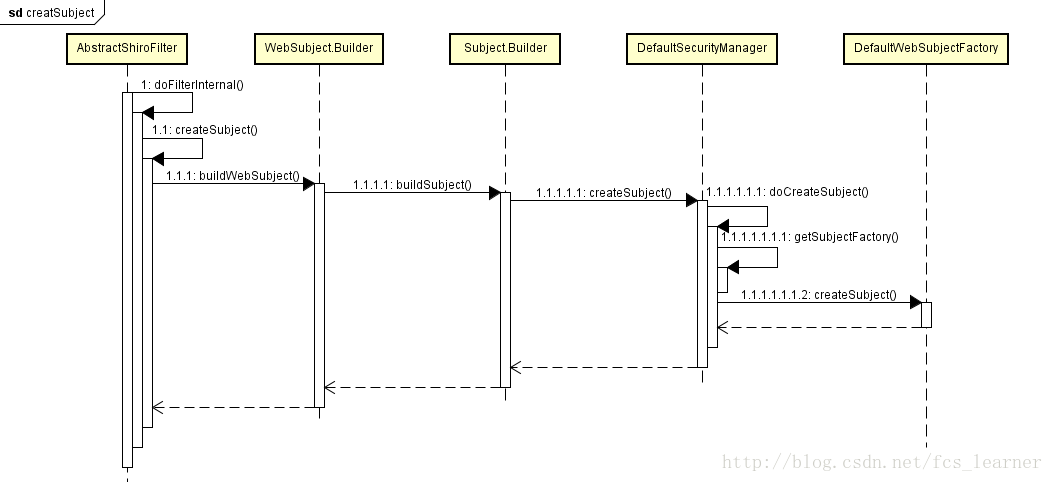
shiro中很多都是这样的继承和组合关系:
DefaultSecurityManager -> DefaultSubjectFactory -> DelegatingSubject
DefaultWebSecurityManager -> DefaultWebSubjectFactory -> WebDelegatingSubject
再回到创建的方法:
final Subject subject = createSubject(request, response);

//noinspection unchecked

subject.execute(new Callable() {

    public Object call() throws Exception {

        updateSessionLastAccessTime(request, response);

        executeChain(request, response, chain);

        return null;

    }

});
这个execute方法是在DelegatingSubject中实现的:
public <V> V execute(Callable<V> callable) throws ExecutionException {

    Callable<V> associated = associateWith(callable);

    try {

        return associated.call();

    } catch (Throwable t) {

        throw new ExecutionException(t);

    }

}

public <V> Callable<V> associateWith(Callable<V> callable) {

    return new SubjectCallable<V>(this, callable);

}
SubjectCallable首先构造了一个ThreadState:
public SubjectCallable(Subject subject, Callable<V> delegate) {

    this(new SubjectThreadState(subject), delegate);

}
associated.call()调用ThreadState.bind():
public V call() throws Exception {

    try {

        threadState.bind();

        return doCall(this.callable);

    } finally {

        threadState.restore();

    }

}
SubjectThreadState的bind方法:
public void bind() {

    SecurityManager securityManager = this.securityManager;

    if ( securityManager == null ) {

        //try just in case the constructor didn't find one at the time:

        securityManager = ThreadContext.getSecurityManager();

    }

    this.originalResources = ThreadContext.getResources();

    ThreadContext.remove();

    ThreadContext.bind(this.subject);

    if (securityManager != null) {

        ThreadContext.bind(securityManager);

    }

}
这样就妥妥地把当前subject和线程绑定到了一起(还有securityManager)。
在这里遇到一个问题,记录下:
https://www.oschina.net/question/2275855_2273492
其实这只是每次进入核心过滤器时默认为我们创建的一个Subject,当调用subject.login方法之后会再次创建一个Subject,后面登录部分会做详细介绍。
获取
Subject subject = SecurityUtils.getSubject();
public static Subject getSubject() {

    Subject subject = ThreadContext.getSubject();

    if (subject == null) {

        subject = (new Subject.Builder()).buildSubject();

        ThreadContext.bind(subject);

    }

    return subject;

}
绑定是通过ThreadContext,获取当然也是从其取。
public abstract class ThreadContext {

    private static final Logger log = LoggerFactory.getLogger(ThreadContext.class);

    public static final String SECURITY_MANAGER_KEY = ThreadContext.class.getName() + "_SECURITY_MANAGER_KEY";

    public static final String SUBJECT_KEY = ThreadContext.class.getName() + "_SUBJECT_KEY";

    private static final ThreadLocal<Map<Object, Object>> resources = new InheritableThreadLocalMap<Map<Object, Object>>();

    private static Object getValue(Object key) {

        return resources.get().get(key);

    }

    public static Object get(Object key) {

        Object value = getValue(key);

        return value;

    }

    public static Subject getSubject() {

        return (Subject) get(SUBJECT_KEY);

    }

}
最终是到ThreadLocal中拿,不过这个ThreadLocal是 InheritableThreadLocalMap 类型的(继承自InheritableThreadLocal)。
每个线程都有一个Map
SecurityManager
<!-- 安全管理器 -->

<bean id="securityManager" class="org.apache.shiro.web.mgt.DefaultWebSecurityManager">

    <property name="realm" ref="casRealm" />

    <property name="sessionManager" ref="sessionManager" />

    <property name="cacheManager" ref="shiroCacheManager" />

    <!-- <property name="rememberMeManager" ref="rememberMeManager" />  -->

</bean>

<bean id="sessionManager" class="org.apache.shiro.web.session.mgt.ServletContainerSessionManager"/>
public interface SecurityManager extends Authenticator, Authorizer, SessionManager {
Subject login(Subject subject, AuthenticationToken authenticationToken) throws AuthenticationException;
void logout(Subject subject);
Subject createSubject(SubjectContext context);
}安全管理器继承了Authenticator, Authorizer, SessionManager三个接口。自顶向下第一个抽象类是CachingSecurityManager,接着是RealmSecurityManager,后面是AuthenticatingSecurityManager,AuthorizingSecurityManager,SessionsSecurityManager。
然后才是DefaultSecurityManager,DefaultWebSecurityManager。
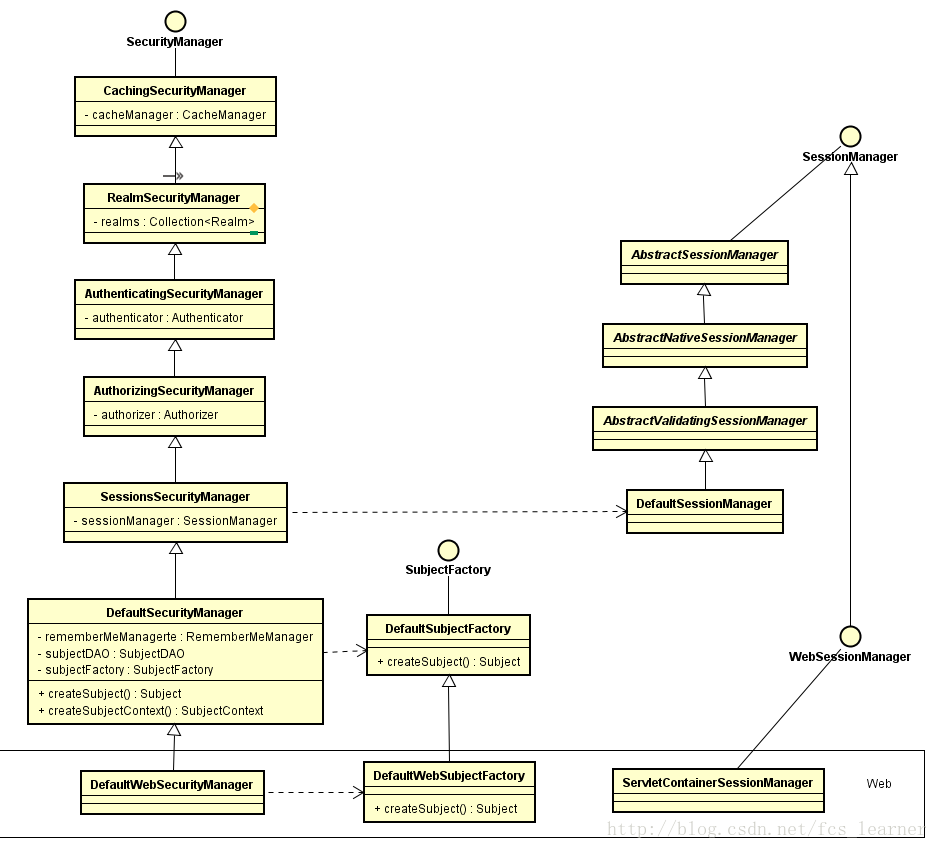
由于是web项目,我们指定了DefaultWebSecurityManager,在构造器中会为我们设置相匹配的属性(都是和web相关的):
public DefaultWebSecurityManager() {

    super();

    ((DefaultSubjectDAO) this.subjectDAO).setSessionStorageEvaluator(new DefaultWebSessionStorageEvaluator());

    this.sessionMode = HTTP_SESSION_MODE;

    setSubjectFactory(new DefaultWebSubjectFactory());

    setRememberMeManager(new CookieRememberMeManager());

    setSessionManager(new ServletContainerSessionManager());

}
SessionsSecurityManager持有一个sessionManager对象,对sessionManager接口的实现是转移到这个对象上来的:
public abstract class SessionsSecurityManager extends AuthorizingSecurityManager {

    private SessionManager sessionManager;

    public SessionsSecurityManager() {

        super();

        this.sessionManager = new DefaultSessionManager();

        applyCacheManagerToSessionManager();

    }

}
AuthenticatingSecurityManager,AuthorizingSecurityManager类似,这两个抽象管理器在无参构造函数中创建了默认的对象:
public abstract class AuthorizingSecurityManager extends AuthenticatingSecurityManager {

    private Authorizer authorizer;

    public AuthorizingSecurityManager() {

        super();

        this.authorizer = new ModularRealmAuthorizer();

    }

}

public abstract class AuthenticatingSecurityManager extends RealmSecurityManager {

    private Authenticator authenticator;

    public AuthenticatingSecurityManager() {

        super();

        this.authenticator = new ModularRealmAuthenticator();

    }

}
所以这个安全管理器几乎承担了所有的操作,然后转移到具体的对象。它的层次结构非常清晰,职责分明。对Subject所有操作最终都会转移到SecurityManager。
Shiro源码分析之Subject和SecurityManager的更多相关文章
- Shiro源码分析之SecurityManager对象获取
目录 SecurityManager获取过程 1.SecurityManager接口介绍 2.SecurityManager实例化时序图 3.源码分析 4.总结 @ 上篇文章Shiro源码分析之获 ...
- Shiro 源码分析
http://my.oschina.net/huangyong/blog/215153 Shiro 是一个非常优秀的开源项目,源码非常值得学习与研究. 我想尝试做一次 不一样 的源码分析:源码分析不再 ...
- Shiro源码分析
1.入口类:AbstractAuthenticator 用户输入的登录信息经过其authenticate方法: public final AuthenticationInfo authenticate ...
- Shiro源码分析-初始化-Realm
在上一篇介绍SecurityManager的初始化过程中,也有realm的粗略介绍. realm的概念在安全领域随处可见: 各种中间件的realm.spring security的realm.shir ...
- Shiro入门学习之shi.ini实现认证及源码分析(二)
一.Shiro.ini文件 1.文件说明 ①ini(InitializationFile)初始文件:Window系统文件扩展名 ②Shiro使用时可以连接数据库,也可以不连接数据库(可以使用shiro ...
- 源码分析shiro认证授权流程
1. shiro介绍 Apache Shiro是一个强大易用的Java安全框架,提供了认证.授权.加密和会话管理等功能: 认证 - 用户身份识别,常被称为用户“登录”: 授权 - 访问控制: 密码加密 ...
- shiro实现无状态的会话,带源码分析
转载请在页首明显处注明作者与出处 朱小杰 http://www.cnblogs.com/zhuxiaojie/p/7809767.html 一:说明 在网上都找不到相关的信息,还是翻了大半天 ...
- Shiro源码解析-Session篇
上一篇Shiro源码解析-登录篇中提到了在登录验证成功后有对session的处理,但未详细分析,本文对此部分源码详细分析下. 1. 分析切入点:DefaultSecurityManger的login方 ...
- spark源码分析以及优化
第一章.spark源码分析之RDD四种依赖关系 一.RDD四种依赖关系 RDD四种依赖关系,分别是 ShuffleDependency.PrunDependency.RangeDependency和O ...
随机推荐
- 11.nginx upload module + python django 后台 实现视频上传与切片
1.需求:支持视频上传并切片,支持通过m3u8文件播放 2.视频切片的上一节已经谈过,这一节主要是视频上传的处理 第一步:upload-module模块安装 -----------首先下载upload ...
- 【BZOJ3191】【JLOI2013】卡牌游戏 [DP]
卡牌游戏 Time Limit: 10 Sec Memory Limit: 128 MB[Submit][Status][Discuss] Description N个人坐成一圈玩游戏.一开始我 ...
- 汕头市队赛SRM 20 T1魔法弹
T1 背景 “主角光环已经不能忍啦!” 被最强控制AP博丽灵梦虐了很长一段时间之后,众人决定联合反抗. 魂魄妖梦:“野怪好像被抢光了?” 十六夜咲夜:“没事,我们人多.” 然后当然是以失败告终了. 八 ...
- js 的function为什么可以添加属性
(1) function person(){ this.name = 'Tom'; } (2) function person(){} person.name = 'Tom'; (3) functio ...
- GPU硬件加速
现代浏览器大都可以利用GPU来加速页面渲染.每个人都痴迷于60桢每秒的顺滑动画.在GPU的众多特性之中,它可以存储一定数量的纹理(一个矩形的像素点集合)并且高效地操作这些纹理(比如进行特定的移动.缩放 ...
- 基于Android的简单聊天工具-服务器端
1.数据库用的mysql,一共有3张表,一张用户表user.一张朋友列表friend和一张消息表message. 1 User table 用户表 uid 主键自动生成 userName 昵称 use ...
- python基础===python os.path模块
os.path.abspath(path) #返回绝对路径 os.path.basename(path) #返回文件名 os.path.commonprefix(list) #返回list(多个路径) ...
- mac os x 把reids nignx mongodb做成随机启动吧
~/Library/LaunchAgents 由用户自己定义的任务项 /Library/LaunchAgents 由管理员为用户定义的任务项 /Library/LaunchDaemons 由管理员定义 ...
- Java初次见面
1.Java语言特点(运行环境JRE[操作系统,api,dll]): a.跨平台:Java自带的虚拟机很好地实现了跨平台性.Java源程序代码经过编译后生成二进制的字节码是与平台无关的,但是可被Jav ...
- echarts3.0版本断点连线的处理
项目应用到echarts图表组件.官网的demo中出现空数据会断开.经过跟踪调试.修改echarts.js以下代码即可实现断点连线功能(需要将空数据处理成'-'.这样才能均值): for (var ...