
[转帖]L4LB for Kubernetes: Theory and Practice with Cilium+BGP+ECMP
http://arthurchiao.art/blog/k8s-l4lb/
Published at 2020-04-10 | Last Update 2020-08-22
- 1. Problem Definition
- 2. Requirement Analysis
- 3. A L4LB Solution
- 4 Configurations
- 5. More Thoughts
- 6. Similar Works
- 7 Summary
As networking engineers that are responsible for on-premises Kubernetes clusters, you may be throwned a practical business need: exposing services inside a Kubernetes cluster to the outside (e.g. to another Kubernetes cluster or lagacy infra). As shown in the picture below:
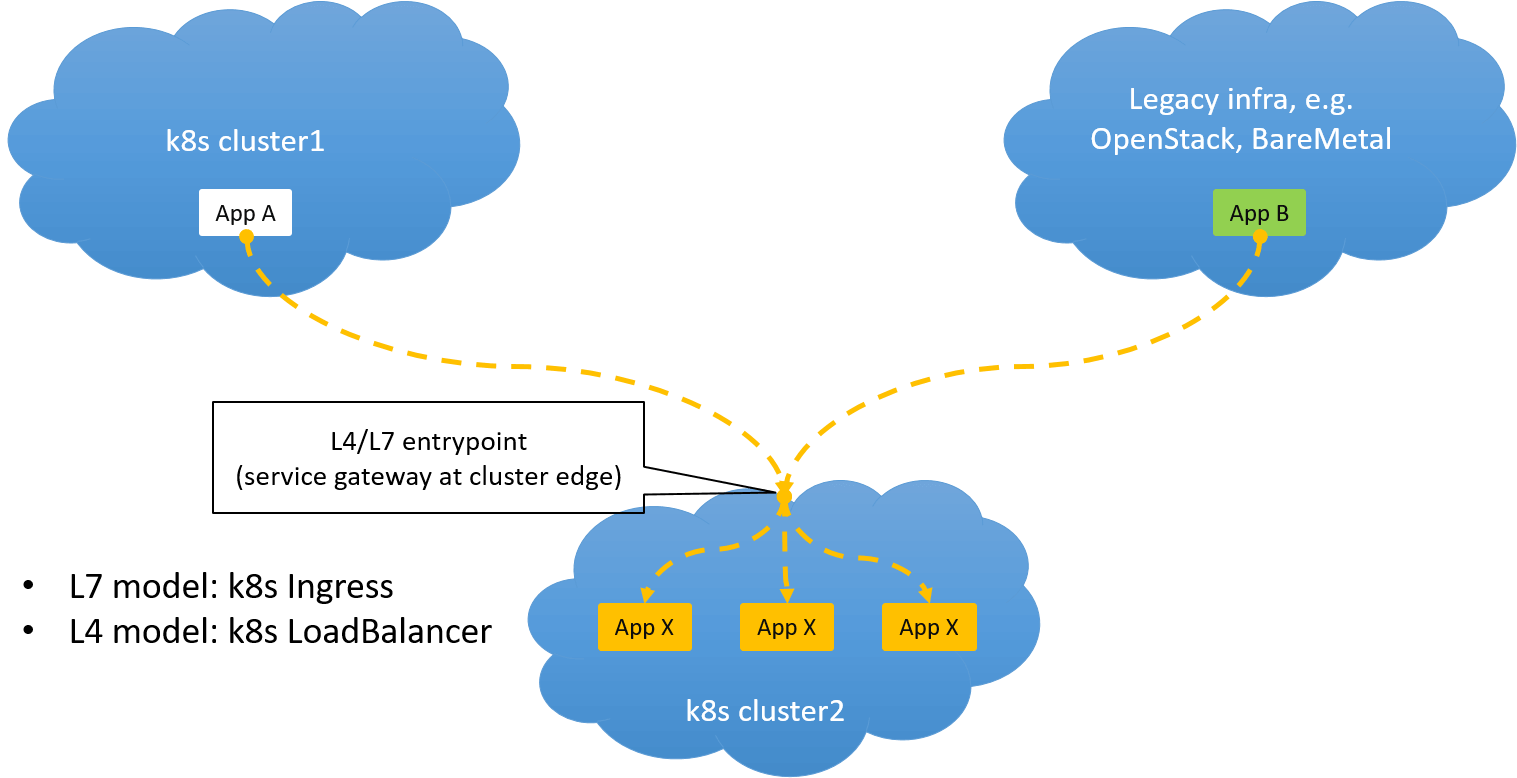
Fig. 0.1 Exposing a Kubernetes service to outside world
Kubernetes provides two models for this scenario:
- Ingress: for exposing services via layer 7
- LoadBalancer: for exposing services via layer 4
But, it leaves the implementations to each vendor. For example, if you are on AWS, it provides ALB and ELB, each for layer 7 and layer 4.
This post reasons about the design of the latter one, and provides a simple implementation by combining open source softwares.
1. Problem Definition
Suppose you deployed several DNS servers (pods) inside a Kubernetes cluster, intended for providing corp-wide DNS service.
Now the question is: how would your legacy applications (e.g. running in bare metal or VM) or applications in other Kubernetes clusters access this DNS service? As depicted in Fig 1.1:
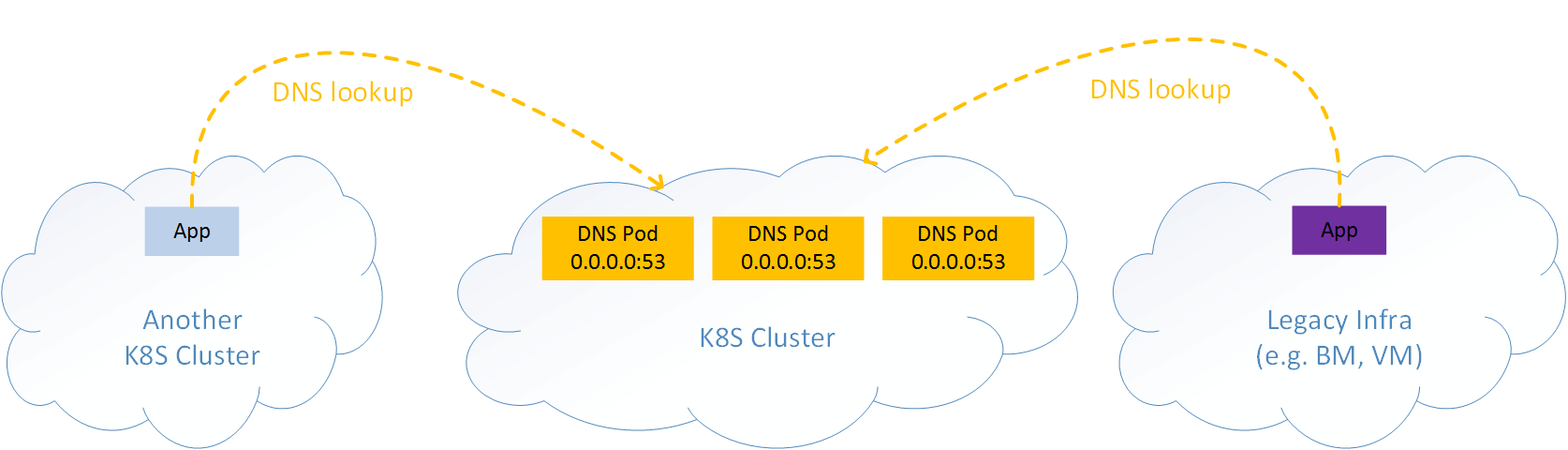
Fig. 1.1 Exposing DNS service in a Kubernetes cluster to outside world
Some tips:
- DNS provides service with UDP (or TCP) port
53(thus layer 4). - DNS pod is stateless, here “stateless” means all instances are identical and active, rather than active-backup or master-slave.
2. Requirement Analysis
2.1 L4LB Model
At first glance, it seems that the classic layer 4 load balancer (L4LB) model could be used to address this problem, that is:
- Assign a VIP to the DNS cluster, all clients access the service by VIP.
- Forward traffic from VIP to a specific backend with load balancing algorithms.
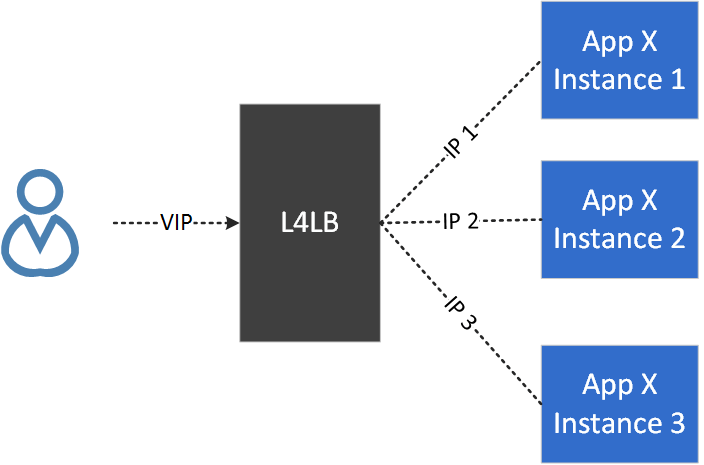
Fig. 2.1 The classic L4LB model
2.2 Special Considerations
Well, this’s on the right way, but lacks some important aspects.
First, our backends (Kubernetes pods) are very dynamic and subject to frequent changes: kinds of failures (or internal scheduling) may trigger Kubernetes to kill or reschedule a pod. This may happen frequently;
Secondly, the IP address of a Pod is not immutable. In comparison, traditional L4LBs favor fixed IP backends, they just pull in or pull out existing backends by health check status.
Thirdly, backends may be scaled up/down according to capacity plans, these backend changes should be timely reflected on L4LB, and be transparent to your users/clients without human interventions (some kind of service discovery).
This makes the L4LB a very unique role:
- On the one hand, it must be reachable from the outside world (while most Kubernetes resources couldn’t be).
- On the other hand, it falls into a Kubernetes cluster - as it must listen to Kubernetes resource changes in order to update its forwarding rules (from VIP to backends).
2.3 Technical Requirements Summary
Now we summarize the above into following technical needs:
- Persistent/invariant L4 entrypoint for accessing a Kubernetes service from the outside world: the entrypoint, e.g. VIP, should be unique and invariant, hiding backend changes from users/clients.
- Load balancing: load balance requests between multiple backends.
- Reactive to backend changes: responsive to backend changes, e.g. instances scale up/down.
For production ready, it also involves the 4th requirement:
\ 4. High availability: both software and hardwares (if there are).
In this article, we show such a (simple) design/implementation for on-premises bare metal kubernetes clusters.
3. A L4LB Solution
This post assumes the underlying physical network is a Spine-Leaf architecture (physical network topology only impacts ECMP in this post).
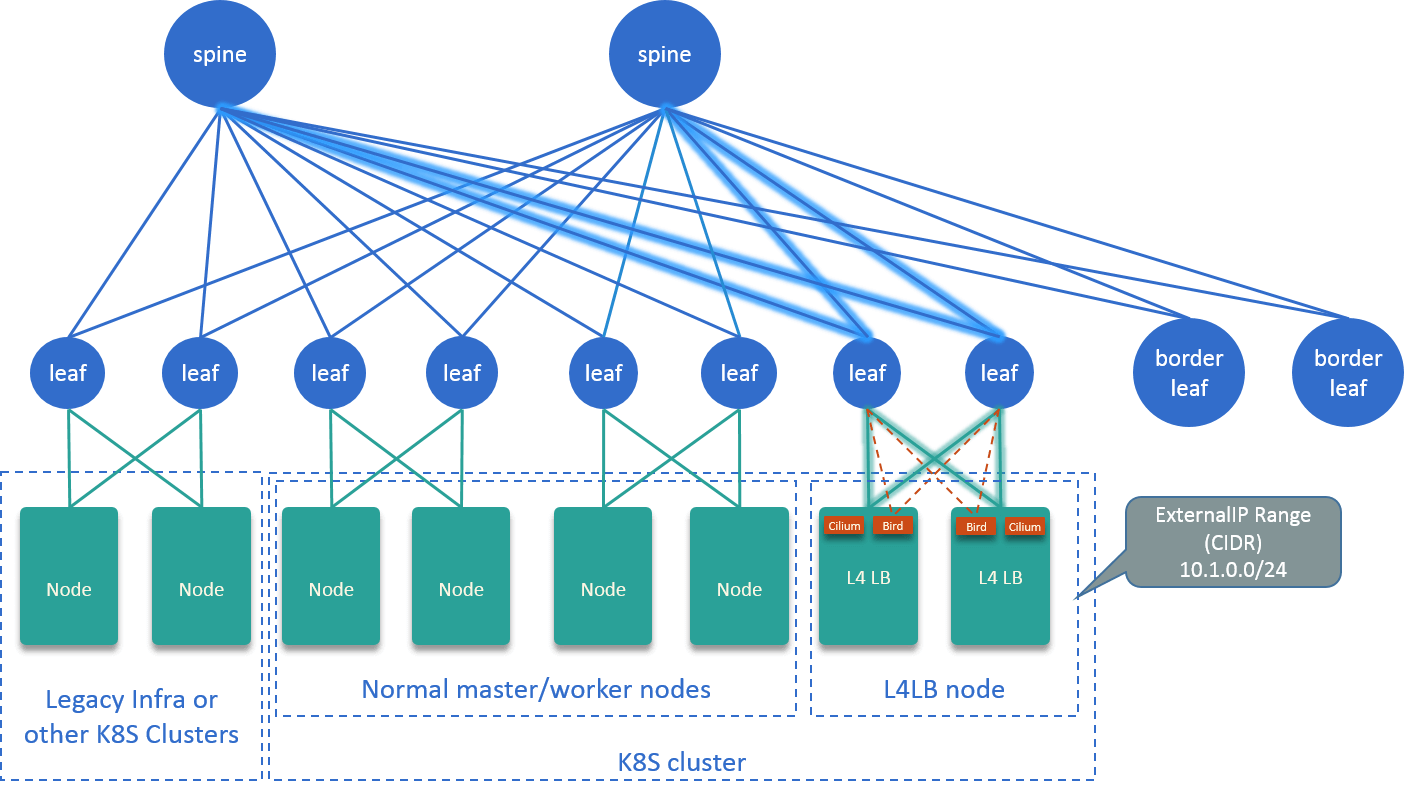
Fig. 3.1 Topology of our L4LB solution
The overall design is depicted in Fig 3.1:
- Dedicate several nodes as L4LB nodes.
- Running a BGP agent on each L4LB node, announcing a specific CIDR to datacenter network, e.g.
10.1.0.0/24. IPs in this CIDR will be used as VIPs, also called ExternalIPs in K8s. - Running a Cilium agent on each L4LB node, which listens to Kubernetes resources (especially Services with externalIPs), and generates BPF rules for forwarding packets to backend pods.
- Glue VIP CIDR and Cilium agent in the kernel with a dummy device on each L4LB node.
- Enable ECMP on physical networks.
Traffic path when accessing the example service from the outside world:
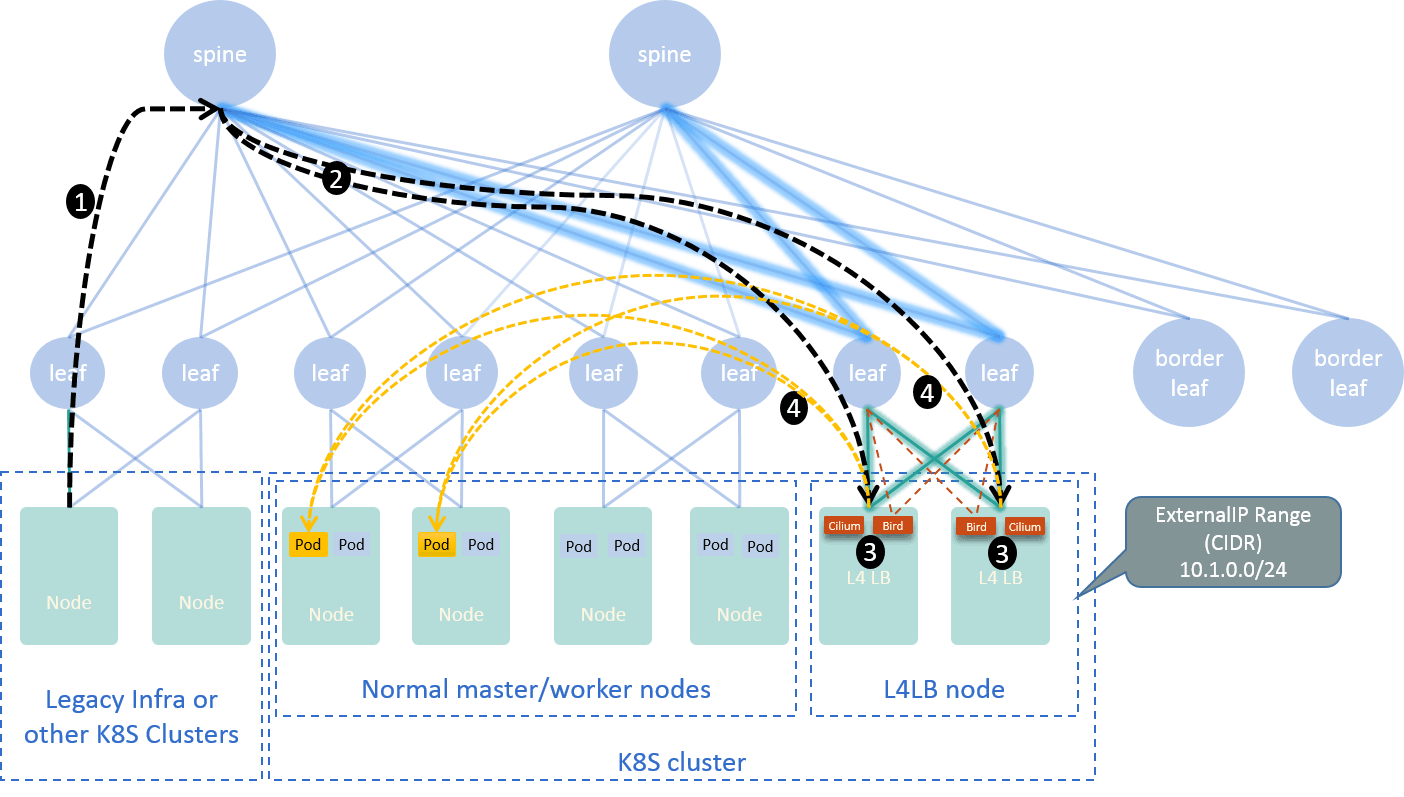
Fig. 3.2 Traffic path when accessing example service from outside of Kubernetes cluster
Where, the four numbered steps in the graph are:
- Client packets -> physical network (spine)
- Spine -> L4LB node, via ECMP
- In-kernel routing (glue layer)
- L4LB -> Backend pods, with Cilium load balancing
Details explained below. Let’s see how it meets the 4 requirements listed in Section 2.3.
3.1. BIRD - BGP agent
L4LB nodes run bird as BGP agent.
When bird announces a CIDR (e.g. 10.1.0.0/24) to the data center network, all subsequent packets with destination IPs within this CIDR (e.g. 10.1.0.2) will be routed to this node.
If not familiar with BGP announcement, you could simply think of it as broadcasting something like "CIDR 10.1.0.0/24 is at host XXX" to the physical network. When routers receive this message, they will install it into their routing tables.
This solves the 1st requirement: persistent/invariant (L4) entrypoint.
3.2. Cilium - Networking agent
cilium-agent on L4LB node will listen to Kubernetes apiserver, and generate BPF rules for Kubernetes ExternalIP services to forward traffic from VIPs (which are held by L4LB nodes) to backend pods.
This solves the 2nd and 3rd requirement: load balancing and timely react to backend changes.
3.3. ECMP - Physical link HA
With ECMP (Equal Cost Multiple Path) enabled, we could have multiple L4LB nodes announcing the same CIDR, HW routers will load balancing those packets to our L4LB nodes (glowing links in Fig 3.1 & Fig 3.2).
Besides, there is another BGP optimization option called Bidirectional Forwarding Detection (BFD), enable it between routers and bird will accelerate routes convergence inside the entire network.
Thus, we solved the 4th requirement: high availability.
3.4 Glue In-kernel Processing
Till now, packets with destination IPs within CIDR (VIPs) will arrive our L4LB nodes, and cilium-agent will generate forwarding rules for those VIPs.
But one part is still missing: there are no rules in the kernel to redirect those packets into cilium-agent’s processing scope. So without additional work, those packets will be dropped inside kernel, instead of be forwarded to backends by Cilium BPF rules, as shown in Fig 3.3:
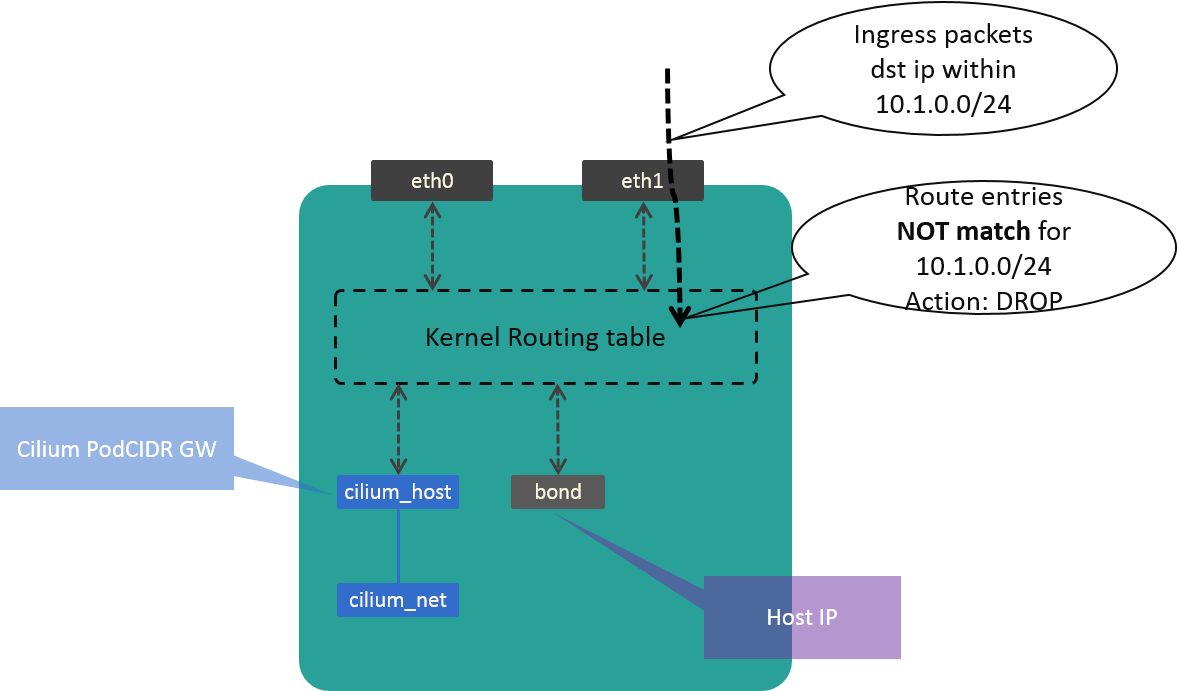
Fig. 3.3 Packets dropped in kernel due to no routing rules
So we need some glue work to fill the gap. Our solution is create a dummy device, which holds the first IP in our CIDR.
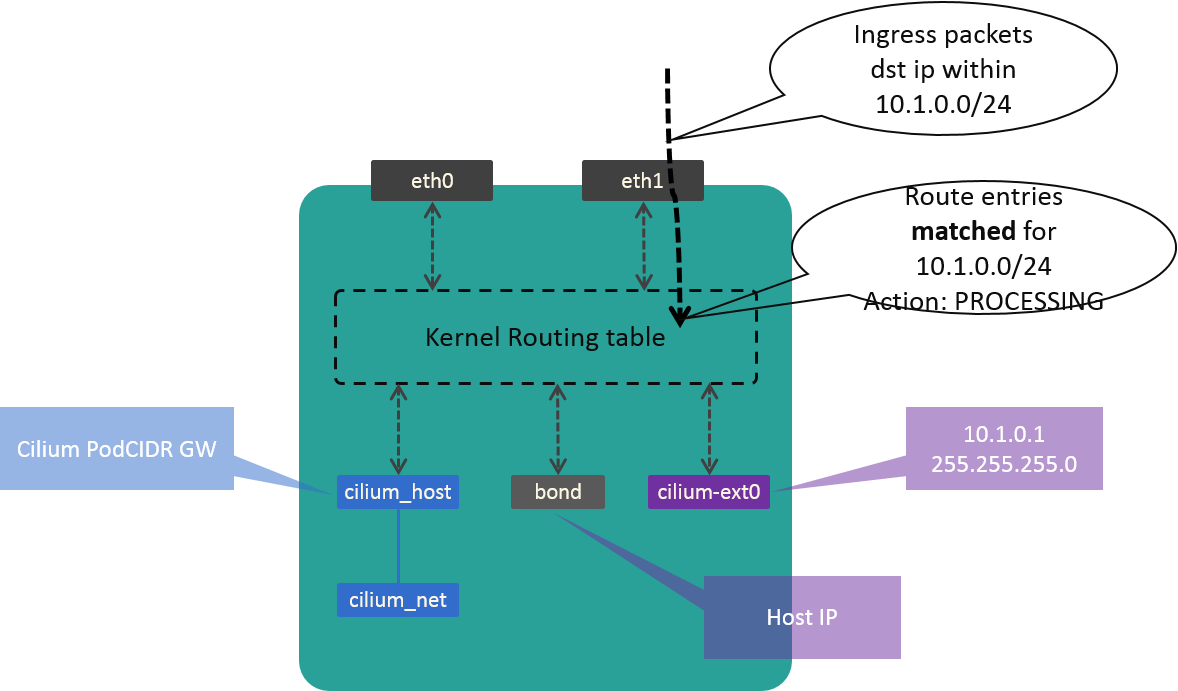
Fig. 3.4 Traffic process in kernel after add dummy device
4 Configurations
System info:
- Centos:
7.2 - Kernel:
4.18+ - BIRD:
2.x - Cilium:
1.7+
Beside, this post assume the Kubernetes cluster uses direct routing for Pod networking. (While adjust Cilium configurations will also make this scheme work for non-direct-routing cases, that’s beyond the scope of this post).
4.1 Create and configure dummy device
Install:
$ modprobe --ignore-install dummy

$ ip link set name cilium-ext0 dev dummy0
Configure it to survive host reboot:
$ cat ifcfg-cilium-ext0

DEVICE=cilium-ext0

IPADDR=10.1.0.1

NETMASK=255.255.255.0

ONBOOT=yes

TYPE=Ethernet

NM_CONTROLLED=no

$ cat ./modprobe.d/dummy.conf

install dummy /sbin/modprobe --ignore-install dummy; ip link set name cilium-ext0 dev dummy0

$ cat ./modules-load.d/dummy.conf

# Load dummy.ko at boot

dummy

$ cp ifcfg-cilium-ext0          /etc/sysconfig/network-scripts/

$ cp modprobe.d/dummy.conf      /etc/modprobe.d/dummy.conf

$ cp modules-load.d/dummy.conf  /etc/modules-load.d/dummy.conf
Enable changes:
$ systemctl restart network

$ ifconfig cilium-ext0

cilium-ext0: flags=4163<UP,BROADCAST,RUNNING,MULTICAST>  mtu 1500

              inet 10.1.0.1  netmask 255.255.255.0  broadcast 10.1.0.255

              ...

$ route -n

Kernel IP routing table

Destination     Gateway     Genmask         Flags Metric Ref    Use Iface

...

10.1.0.1        0.0.0.0     255.255.255.0   U     0      0        0 cilium-ext0
4.2 bird
This involves BGP configurations for the bird software, as well as HW routers. Configurations may vary a lot according to the BGP schemes you choose, the latter is beyond the scope of this post. Refer to some get started docs, such as the one we wrote: Cilium documentation: Using BIRD to run BGP.
For bird, add following configurations to /etc/bird.conf,
protocol static {

        ipv4;                   # Again, IPv4 channel with default options

        ...

        route 10.1.0.0/24 via "cilium-ext0";

}
Restart bird and verify changes are applied:
$ systemctl restart bird

$ birdc show route

BIRD 2.0.5 ready.

Table master4:

...

10.1.0.0/24         unicast [static1 2020-03-18] * (200)

     dev cilium-ext0
4.3 cilium-agent
Normal installation according official documents, as long as the agent could listen to kubernetes apiserver.
Two kinds of load balancing mechanisms:
4.3.1 NAT: to be specific, SNAT
Configurations:
kube-proxy-replacement=probenode-port-mode=snat(default)
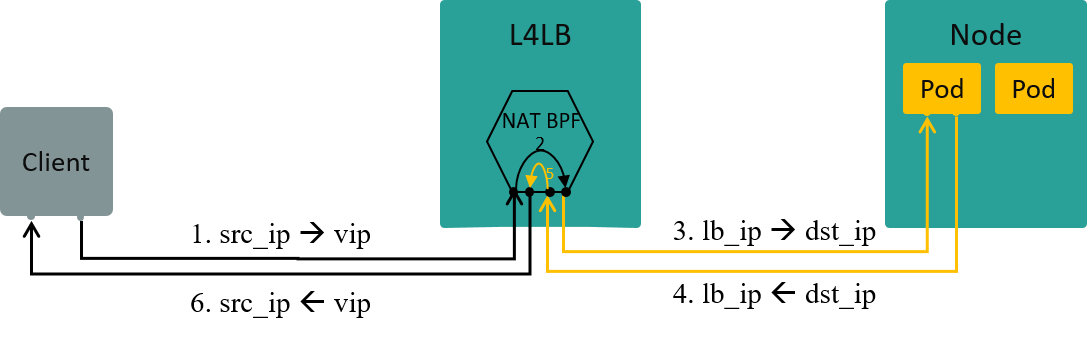
Fig. Traffic path in NAT mode
4.3.2 DSR: direct server return
Configurations:
kube-proxy-replacement=probenode-port-mode=dsr
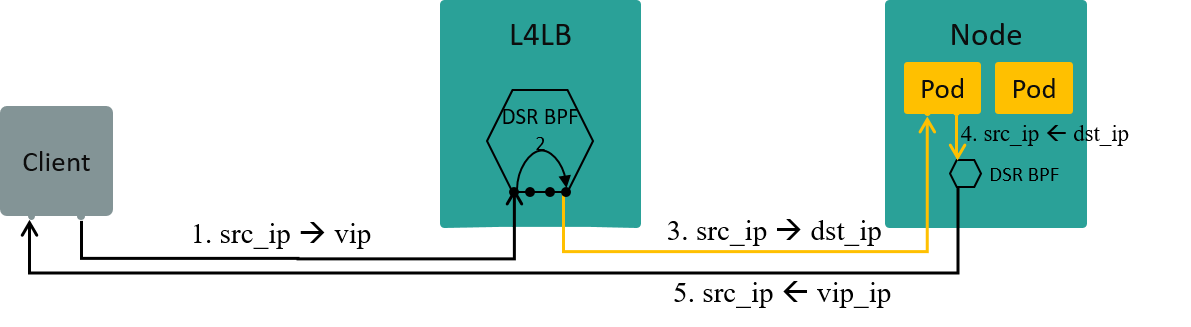
Fig. Traffic path in DSR mode
Note that if using DSR mode, both L4LB and worker nodes needs to be configured as DSR.
4.4 ECMP
ECMP needs to be configured on physical routers.
BFD should be configured both on physical routers and bird. Refer to Cilium documentation: Using BIRD to run BGP.
If everything is ok, you should see something like this on your routers:
ROUTER# show ip route 10.1.0.0

...

10.1.0.0/24, ubest/mbest: 2/0

    *via 10.4.1.7, [200/0], 13w6d, bgp-65418, internal, tag 65418

    *via 10.4.1.8, [200/0], 12w4d, bgp-65418, internal, tag 65418
4.5 Verification
For nothing but laziness, I will use my handy nginx service instead of deploying a real DNS service - but the effect is much the same, we will verify our scheme by accessing the nginx from layer 4.
4.5.1 On Master Node
On Kubernetes master, create a service with externalIPs=10.1.0.2:
$ cat cilium-smoke.yaml

apiVersion: v1

kind: Service

metadata:

  name: nginx

  labels:

    app: nginx

spec:

  externalIPs:

  - 10.1.0.2

  ports:

  - port: 80

    name: cilium-smoke

  selector:

    app: nginx

---

apiVersion: apps/v1

kind: StatefulSet

metadata:

  name: cilium-smoke

spec:

  serviceName: "nginx"

  replicas: 1

  selector:

    matchLabels:

      app: nginx

  template:

    metadata:

      labels:

        app: nginx

    spec:

      containers:

      - name: nginx

        image: library/nginx-slim:0.8

        ports:

        - containerPort: 80

          name: cilium-smoke

$ kubectl create -f cilium-smoke.yaml
Check our service’s information:
$ kubectl get svc

$ k get svc

NAME    TYPE           CLUSTER-IP   EXTERNAL-IP   PORT(S)  AGE

...

nginx   LoadBalancer   10.x.x.x     10.1.0.2      80/TCP   2m
As can be seen, it is LoadBalancer type, and has an external IP 10.1.0.2.
4.5.2 On L4LB Node
Execute following command inside cilium-agent pod:
$ cilium service list

...

62   10.1.0.2:53    ExternalIPs    1 => 192.168.1.234:53

                                   2 => 192.168.2.172:53
TODO: more BPF info on L4LB node.
iproute2on my current L4LB node is too old, which prohibits my further investigation. You could refer to my previous post Cilium Network Topology and Traffic Path on AWS if intersted.
4.5.3 On test node
On a node which is outside of Kubernetes cluster, test our externalIP service with VIP+Port:
$ telnet 10.1.0.2 80

Trying 10.1.0.2...

Connected to 10.1.0.2.

Escape character is '^]'.
Successful!
5. More Thoughts
5.1 Pros & Cons
5.1.1 Pros
- Simple, straight forward, ease of understanding
- Ease of management of ExternalIPs: manage CIDR instead of distinct IPs, less BGP announcements
- Ease of security rule managements for BGP filtering
5.1.2 Cons
- ECMP hard limits: 16 nodes.
- All traffic goes through L4LB nodes, make them the potential bottleneck (e.g. BW, CPU processing).
No failover in case of L4LB node downs.
Currently, if one L4LB node downs, traffic will be rehashed to other L4LB nodes by HW switches via ECMP. However, in the current implementation, all the these traffic will be disruppted as other L4LB nodes could not correctly handle this (no failover). Failover could be achieved with either of:
- Session replication: sync connection/session info among all L4LB nodes, so if one node down, the connection could be handled by other nodes (almost) transparently. LVS supports this features as an experiment.
- Consistent hashing: another way to achieve failover, and recent L4LB solutions favor this fashion, e.g. Facebook Katran, Google Maglev, Github GLB. Cilium currently (
v1.8.2) lacks this feature.
5.2 Decoupling of BGP agent and networking agent
It’s important to understand that, in this L4LB scheme, there are no couplings between BGP agent and host network agent, that is,
- You could transparently replace
birdwith another BGP agent, e.g.quagga(but you need to concern whether they support the features you would like, e.g. ECMP, BFD). - You could also transparently replace
cilium-agentwith other networking agents for Kubernetes worker nodes, e.g.kube-proxy.
5.3 The Hidden CLOS Architecture
Fig. 3.2 Traffic path when accessing example service from outside of Kubernetes cluster
If think of each TOR pair and corresponding L4LB nodes as an integral entity, Fig 3.2 could be re-depicted as Fig 5.1:
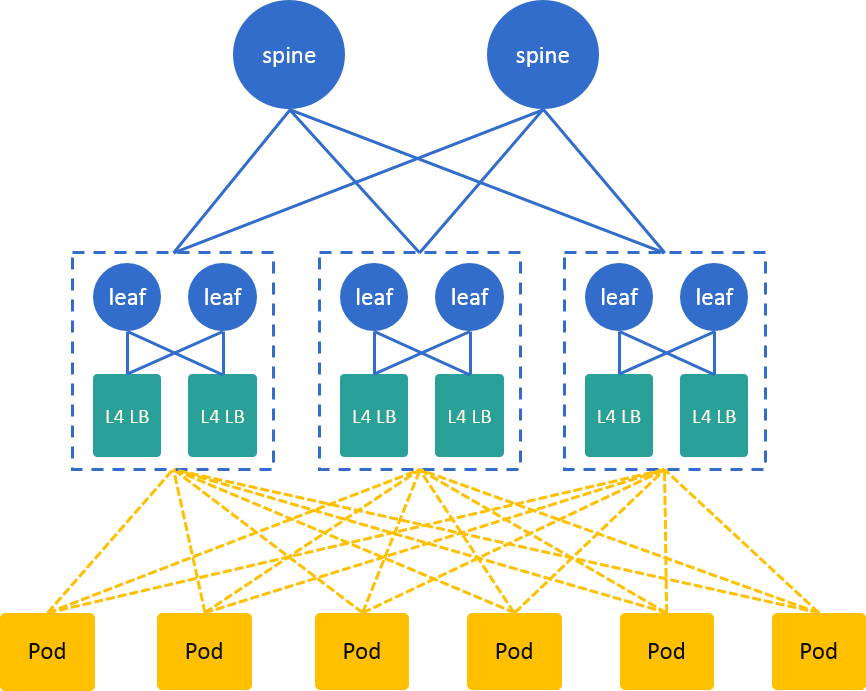
Fig. 5.1 The Hidden CLOS architecture
which is a CLOS network.
Interesting!
5.4 Ingress vs LoadBalancer
Ingress provides persistent L7 entrypoints for accessing services inside Kubernetes cluster from outside world. For example,
- App A:
https://<ingress addr>/app-a/ - App B:
https://<ingress addr>/app-b/ - App C:
https://<ingress addr>/app-c/
Have you wondered how to design an Ingress solution?
If your Ingress is deployed inside Kubernetes cluster, then itself must have a persistent L4 entrypoint, namely the <ingress addr> in the above example.
Combining the L4LB solution in this post and something like Istio Gateway, you will get a workable Ingress.
6. Similar Works
6.1 MetalLB
MetalLB is similar with this in that it:
- Announce VIP via BGP
- Forward/load-balancing to backends with node agent
Difference from the one in this post:
- BGP agent announces distinct IPs instead of CIDR
- No dedicated L4LB nodes
- Forward/load-balancing to backends via kube-proxy (recently supported Cilium)
Problem may faced: more BGP announcements, more routing entries, more difficult for filtering BGP announcements.
6.2 Katran
Katran is a general purpose L4LB from Facebook, also based on BGP + BPF.
6.3 Kube-proxy + BGP
As mentioned in 5.2, replace Cilium with kube-proxy could also achieve this goal. Differences including:
- Forwarding rules on L4LB node will be based on iptables or LVS instead of BPF
- Performance degrades (maybe)
7 Summary
This post analyzed the technical requirements of L4LB for Kubernetes clusters, and realized a simple one based on Cilium+BGP+ECMP.
[转帖]L4LB for Kubernetes: Theory and Practice with Cilium+BGP+ECMP的更多相关文章
- Java theory and practice
This content is part of the series: Java theory and practice A brief history of garbage collection A ...
- [转帖] kubeadm搭建kubernetes集群
http://www.bladewan.com/2018/01/02/kubernetes_install/ 学习中 kubernetes V1.9安装(附离线安装包和离线镜像) 2018-01-0 ...
- OVS ARP Responder – Theory and Practice
Prefix In the GRE tunnels post I’ve explained how overlay networks are used for connectivity and ten ...
- Java theory and practice: Thread pools and work queues--reference
Why thread pools? Many server applications, such as Web servers, database servers, file servers, or ...
- Organic Solar Cells - Theory and Practice
renewable engergy: Wind solar Tidal Wave Ocean Bio Etc. How much energy we gonna need as following y ...
- Theory And Practice
实践出真知,建议不要一味地看Backbone源码和网上解析,自己动手实践吧少年们! 我是一个简单的简直无可救药的小栗子~ ——Silun Wang 我的几个小问题: 1. Rocket介绍没有Todo ...
- linux netfilter nat2
linux netfilter nat1 后面在上传
- 容器中的诊断与分析3——live diagnosis——lldb
windows下,我们对于.net程序发生Crash,资源泄露,死锁等问题的分析,有神器windbg .net core程序运行在linux上时,该怎么进行对对Core Dump文件进行分析呢?今天介 ...
- (转) [it-ebooks]电子书列表
[it-ebooks]电子书列表 [2014]: Learning Objective-C by Developing iPhone Games || Leverage Xcode and Obj ...
- 分布式系统理论进阶 - Raft、Zab
引言 <分布式系统理论进阶 - Paxos>介绍了一致性协议Paxos,今天我们来学习另外两个常见的一致性协议——Raft和Zab.通过与Paxos对比,了解Raft和Zab的核心思想.加 ...
随机推荐
- 从零玩转Websocket实时通讯服务之前后端分离版本
前言 公司项目需要用到消息提示,那么WebSocket它来了经过我面向百度的学习,废话不多说直接开干. 后端搭建 一.依赖导入 <dependency> <groupId>or ...
- STM32CubeMX教程6 TIM 通用定时器 - 生成PWM波
1.准备材料 开发板(STM32F407G-DISC1) ST-LINK/V2驱动 STM32CubeMX软件(Version 6.10.0) keil µVision5 IDE(MDK-Arm) 逻 ...
- 为什么Java中“1000==1000”为false,而”100==100“为true?
在日常编程中,我们经常遇到一些看似简单却隐藏着复杂逻辑的问题. 比如,你是否想过为什么在 Java 中表达式1000==1000会返回 false,而 100==100 却返回 true 呢? Int ...
- VSCode C++开发环境配置:CMake 调试配置 launch.json
相关内容 VSCode C++开发环境配置: LLVM clang clangd 安装 cmake sudo apt install cmake 安装 VSCode 插件 CMake CMakeToo ...
- JS模块化编程规范1——require.js
目录 1. 概述 2. 详论 2.1. 定义 2.2. 调用 2.3. 入口 3. 结果 4. 参考 1. 概述 require.js是各种网络APP中非常常见的JS依赖库,它其实不仅仅是个模块加载器 ...
- 执行计划缓存,Prepared Statement性能跃升的秘密
摘要:一起看一下GaussDB(for MySQL)是如何对执行计划进行缓存并加速Prepared Statement性能的. 本文分享自华为云社区<执行计划缓存,Prepared Statem ...
- 华为云媒体査勇:华为云在视频AI转码领域的技术实践
摘要:为大家介绍华为云媒体处理服务在视频AI转码领域的一些技术实践. 随着5G的落地和消费终端的不断升级,消费环节对视频画质的要求也越来越高,为了给消费者带来更清晰.更逼真和更具沉浸感的观感体验,对云 ...
- 一分钟带你了解Huawei LiteOS组件开发指南
摘要:本文将基于Huawei LiteOS系统,从组件定义开始带你走进组件开发指南. 本文分享自华为云社区<一分钟带你了解Huawei LiteOS之组件开发指南>,作者: Lionlac ...
- 火山引擎 DataTester 科普:A/B 实验常见名词解释
DataTester 是字节跳动在 2019 年正式通过火山引擎数智平台推出的对外服务的 A/B 实验工具,它基于先进的底层算法,提供科学分流能力,提供智能的统计引擎,实验结果可靠有效,助力业务决策. ...
- HDU - 1560:DNA sequence ( 迭代加深搜索基础题 )
Problem Description The twenty-first century is a biology-technology developing century. We know tha ...