
【初探Spring】------Spring IOC(三):初始化过程---Resource定位
我们知道Spring的IoC起到了一个容器的作用,其中装得都是各种各样的Bean。同时在我们刚刚开始学习Spring的时候都是通过xml文件来定义Bean,Spring会某种方式加载这些xml文件,然后根据这些信息绑定整个系统的对象,最终组装成一个可用的基于轻量级容器的应用系统。
Spring IoC容器整体可以划分为两个阶段,容器启动阶段,Bean实例化阶段。其中容器启动阶段主要包括加载配置信息、解析配置信息,装备到BeanDefinition中以及其他后置处理,而Bean实例化阶段主要包括实例化对象,装配依赖,生命周期管理已经注册回调。下面LZ先介绍容器的启动阶段的第一步,即定位配置文件。
我们使用编程方式使用DefaultListableBeanFactory时,首先是需要定义一个Resource来定位容器使用的BeanDefinition。
ClassPathResource resource = new ClassPathResource("bean.xml");
通过这个代码,就意味着Spring会在类路径中去寻找bean.xml并解析为BeanDefinition信息。当然这个Resource并不能直接被使用,他需要被BeanDefinitionReader进行解析处理(这是后面的内容了)。
对于各种applicationContext,如FileSystemXmlApplicationContext、ClassPathXmlApplicationContext等等,我们从这些类名就可以看到他们提供了那些Resource的读入功能。下面我们以FileSystemXmlApplicationContext为例来阐述Spring IoC容器的Resource定位。
先看FileSystemXmlApplicationContext继承体系结构:
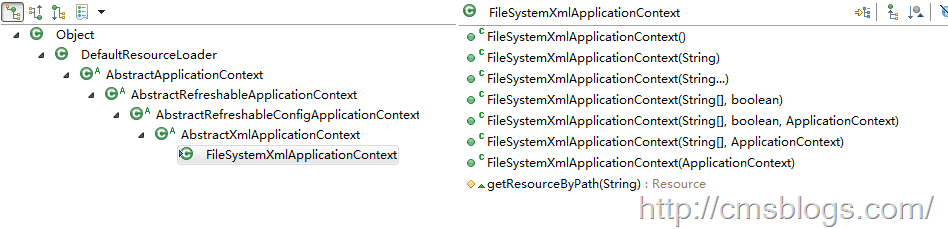
从图中可以看出FileSystemXMLApplicationContext继承了DefaultResourceLoader,具备了Resource定义的BeanDefinition的能力,其源代码如下:
public class FileSystemXmlApplicationContext extends AbstractXmlApplicationContext {

    /**

     * 默认构造函数

     */

    public FileSystemXmlApplicationContext() {

    }

    public FileSystemXmlApplicationContext(ApplicationContext parent) {

        super(parent);

    }

    public FileSystemXmlApplicationContext(String configLocation) throws BeansException {

        this(new String[] {configLocation}, true, null);

    }

    public FileSystemXmlApplicationContext(String... configLocations) throws BeansException {

        this(configLocations, true, null);

    }

    public FileSystemXmlApplicationContext(String[] configLocations, ApplicationContext parent) throws BeansException {

        this(configLocations, true, parent);

    }

    public FileSystemXmlApplicationContext(String[] configLocations, boolean refresh) throws BeansException {

        this(configLocations, refresh, null);

    }

    //核心构造器

    public FileSystemXmlApplicationContext(String[] configLocations, boolean refresh, ApplicationContext parent)

            throws BeansException {

        super(parent);

        setConfigLocations(configLocations);

        if (refresh) {

            refresh();

        }

    }

    //通过构造一个FileSystemResource对象来得到一个在文件系统中定位的BeanDefinition

    //采用模板方法设计模式,具体的实现用子类来完成

    protected Resource getResourceByPath(String path) {

        if (path != null && path.startsWith("/")) {

            path = path.substring(1);

        }

        return new FileSystemResource(path);

    }

}
AbstractApplicationContext中的refresh()方法是IoC容器初始化的入口,也就是说IoC容器的初始化是通过refresh()方法来完成整个调用过程的。在核心构造器中就对refresh进行调用,通过它来启动IoC容器的初始化工作。getResourceByPath为一个模板方法,通过构造一个FileSystemResource对象来得到一个在文件系统中定位的BeanDEfinition。getResourceByPath的调用关系如下(部分):
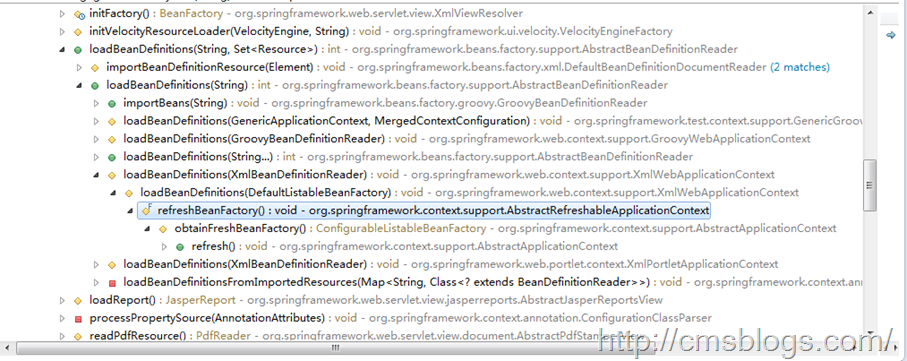
refresh为初始化IoC容器的入口,但是具体的资源定位还是在XmlBeanDefinitionReader读入BeanDefinition时完成,loadBeanDefinitions() 加载BeanDefinition的载入。
protected final void refreshBeanFactory() throws BeansException {

        //判断是否已经创建了BeanFactory,如果创建了则销毁关闭该BeanFactory

        if (hasBeanFactory()) {

            destroyBeans();

            closeBeanFactory();

        }

        try {

            //创建DefaultListableBeanFactory实例对象

            DefaultListableBeanFactory beanFactory = createBeanFactory();

            beanFactory.setSerializationId(getId());

            customizeBeanFactory(beanFactory);

            //加载BeanDefinition信息

            loadBeanDefinitions(beanFactory);

            synchronized (this.beanFactoryMonitor) {

                this.beanFactory = beanFactory;

            }

        }

        catch (IOException ex) {

            throw new ApplicationContextException("I/O error parsing bean definition source for " + getDisplayName(), ex);

        }

    }
DefaultListableBeanFactory作为BeanFactory默认实现类,其重要性不言而喻,而createBeanFactory()则返回该实例对象。
protected DefaultListableBeanFactory createBeanFactory() {

        return new DefaultListableBeanFactory(getInternalParentBeanFactory());

    }
loadBeanDefinition方法加载BeanDefinition信息,BeanDefinition就是在这里定义的。AbstractRefreshableApplicationContext对loadBeanDefinitions仅仅只是定义了一个抽象的方法,真正的实现类为其子类AbstractXmlApplicationContext来实现:
AbstractRefreshableApplicationContext:
protected abstract void loadBeanDefinitions(DefaultListableBeanFactory beanFactory)

            throws BeansException, IOException;
AbstractXmlApplicationContext:
protected void loadBeanDefinitions(DefaultListableBeanFactory beanFactory) throws BeansException, IOException {

        //创建bean的读取器(Reader),即XmlBeanDefinitionReader,并通过回调设置到容器中

        XmlBeanDefinitionReader beanDefinitionReader = new XmlBeanDefinitionReader(beanFactory);

        //

        beanDefinitionReader.setEnvironment(getEnvironment());

        //为Bean读取器设置Spring资源加载器

        beanDefinitionReader.setResourceLoader(this);

        //为Bean读取器设置SAX xml解析器

        beanDefinitionReader.setEntityResolver(new ResourceEntityResolver(this));

        //

        initBeanDefinitionReader(beanDefinitionReader);

        //Bean读取器真正实现的地方

        loadBeanDefinitions(beanDefinitionReader);

    }
程序首先首先创建一个Reader,在前面就提到过,每一类资源都对应着一个BeanDefinitionReader,BeanDefinitionReader提供统一的转换规则;然后设置Reader,最后调用loadBeanDefinition,该loadBeanDefinition才是读取器真正实现的地方:
protected void loadBeanDefinitions(XmlBeanDefinitionReader reader) throws BeansException, IOException {

        //获取Bean定义资源的定位

        Resource[] configResources = getConfigResources();

        if (configResources != null) {

            reader.loadBeanDefinitions(configResources);

        }

        //获取Bean定义资源的路径。在FileSystemXMLApplicationContext中通过setConfigLocations可以配置Bean资源定位的路径

        String[] configLocations = getConfigLocations();

        if (configLocations != null) {

            reader.loadBeanDefinitions(configLocations);

        }

    }
首先通过getConfigResources()获取Bean定义的资源定位,如果不为null则调用loadBeanDefinitions方法来读取Bean定义资源的定位。
loadBeanDefinitions是中的方法:
public int loadBeanDefinitions(String... locations) throws BeanDefinitionStoreException {

        Assert.notNull(locations, "Location array must not be null");

        int counter = 0;

        for (String location : locations) {

            counter += loadBeanDefinitions(location);

        }

        return counter;

    }
继续:
public int loadBeanDefinitions(String location) throws BeanDefinitionStoreException {

        return loadBeanDefinitions(location, null);

    }
再继续:
public int loadBeanDefinitions(String location, Set<Resource> actualResources) throws BeanDefinitionStoreException {

        //获取ResourceLoader资源加载器

        ResourceLoader resourceLoader = getResourceLoader();

        if (resourceLoader == null) {

            throw new BeanDefinitionStoreException(

                    "Cannot import bean definitions from location [" + location + "]: no ResourceLoader available");

        }

        //

        if (resourceLoader instanceof ResourcePatternResolver) {

            try {

                //调用DefaultResourceLoader的getResourceByPath完成具体的Resource定位

                Resource[] resources = ((ResourcePatternResolver) resourceLoader).getResources(location);

                int loadCount = loadBeanDefinitions(resources);

                if (actualResources != null) {

                    for (Resource resource : resources) {

                        actualResources.add(resource);

                    }

                }

                if (logger.isDebugEnabled()) {

                    logger.debug("Loaded " + loadCount + " bean definitions from location pattern [" + location + "]");

                }

                return loadCount;

            }

            catch (IOException ex) {

                throw new BeanDefinitionStoreException(

                        "Could not resolve bean definition resource pattern [" + location + "]", ex);

            }

        }

        else {

            //调用DefaultResourceLoader的getResourceByPath完成具体的Resource定位

            Resource resource = resourceLoader.getResource(location);

            int loadCount = loadBeanDefinitions(resource);

            if (actualResources != null) {

                actualResources.add(resource);

            }

            if (logger.isDebugEnabled()) {

                logger.debug("Loaded " + loadCount + " bean definitions from location [" + location + "]");

            }

            return loadCount;

        }

    }
在这段源代码中通过调用DefaultResourceLoader的getResource方法:
public Resource getResource(String location) {

        Assert.notNull(location, "Location must not be null");

        if (location.startsWith("/")) {

            return getResourceByPath(location);

        }

        //处理带有classPath标识的Resource

        else if (location.startsWith(CLASSPATH_URL_PREFIX)) {

            return new ClassPathResource(location.substring(CLASSPATH_URL_PREFIX.length()), getClassLoader());

        }

        else {

            try {

                //处理URL资源

                URL url = new URL(location);

                return new UrlResource(url);

            }

            catch (MalformedURLException ex) {

                return getResourceByPath(location);

            }

        }

    }
在getResource方法中我们可以清晰地看到Resource资源的定位。这里可以清晰地看到getResourceByPath方法的调用,getResourceByPath方法的具体实现有子类来完成,在FileSystemXmlApplicationContext实现如下:
protected Resource getResourceByPath(String path) {

        if (path != null && path.startsWith("/")) {

            path = path.substring(1);

        }

        return new FileSystemResource(path);

    }
这样代码就回到了博客开初的FileSystemXmlApplicationContext 中来了,它提供了FileSystemResource 来完成从文件系统得到配置文件的资源定义。当然这仅仅只是Spring IoC容器定位资源的一种逻辑,我们可以根据这个步骤来查看Spring提供的各种资源的定位,如ClassPathResource、URLResource等等。下图是ResourceLoader的继承关系:
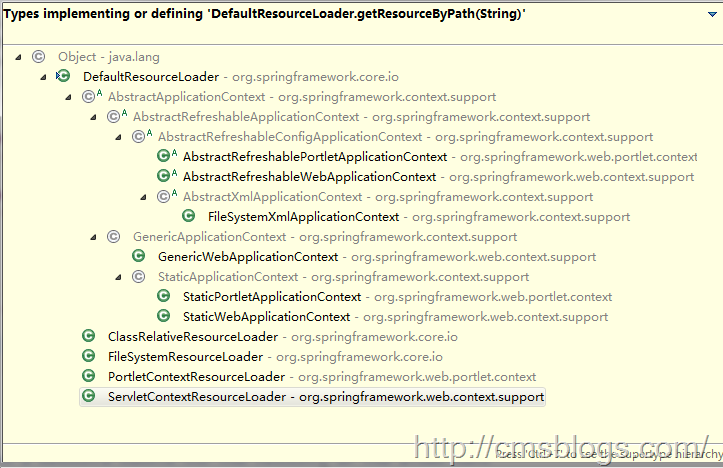
这里就差不多分析了Spring IoC容器初始化过程资源的定位,在BeanDefinition定位完成的基础上,就可以通过返回的Resource对象来进行BeanDefinition的载入、解析了。
下篇博客将探索Spring IoC容器初始化过程的解析,Spring Resource体系结构会在后面详细讲解。
参考文献
1、《Spring技术内幕 深入解析Spring架构与设计原理》--第二版
3、【Spring】IOC核心源码学习(二):容器初始化过程
【初探Spring】------Spring IOC(三):初始化过程---Resource定位的更多相关文章
- Spring之IOC容器初始化过程
Ioc容器的初始化是由refresh()方法来启动的,这个方法标志着Ioc容器的正式启动. 具体来说这个启动过程包括三个基本过程: 1.BeanDifinition的Resource定位 2.Bean ...
- Spring Boot IoC 容器初始化过程
1. 加载 ApplicationContextInializer & ApplicationListener 2. 初始化环境 ConfigurableEnvironment & 加 ...
- Spring IoC容器初始化过程学习
IoC容器是什么?IoC文英全称Inversion of Control,即控制反转,我么可以这么理解IoC容器: 把某些业务对象的的控制权交给一个平台或者框架来同一管理,这个同一管理的平台可以称为I ...
- 十二、Spring之IOC容器初始化
Spring之IOC容器初始化 前言 在前面我们分析了最底层的IOC容器BeanFactory,接着简单分析了高级形态的容器ApplicationContext,在ApplicationContext ...
- spring internalTransactionAdvisor 事务 advisor 初始化过程
spring internalTransactionAdvisor 事务 advisor 初始化过程:
- Spring源码解析二:IOC容器初始化过程详解
IOC容器初始化分为三个步骤,分别是: 1.Resource定位,即BeanDefinition的资源定位. 2.BeanDefinition的载入 3.向IOC容器注册BeanDefinition ...
- spring源码学习之路---深度分析IOC容器初始化过程(四)
作者:zuoxiaolong8810(左潇龙),转载请注明出处,特别说明:本博文来自博主原博客,为保证新博客中博文的完整性,特复制到此留存,如需转载请注明新博客地址即可. 最近由于工作和生活,学习耽搁 ...
- Spring Ioc 容器初始化过程
IOC 是如何工作的? 通过 ApplicationContext 创建 Spring 容器,容器读取配置文件 "/beans.xml" 并管理定义的 Bean 实例对象. 通 ...
- 挖坟之Spring.NET IOC容器初始化
因查找ht项目中一个久未解决spring内部异常,翻了一段时间源码.以此文总结springIOC,容器初始化过程. 语言背景是C#.网上有一些基于java的spring源码分析文档,大而乱,乱而不全, ...
随机推荐
- .NET Core中的认证管理解析
.NET Core中的认证管理解析 0x00 问题来源 在新建.NET Core的Web项目时选择“使用个人用户账户”就可以创建一个带有用户和权限管理的项目,已经准备好了用户注册.登录等很多页面,也可 ...
- python核心编程第二版练习题答案
2-5 #写一个while循环,输出整型为0~10 a=0while a<11: print a a+=1 #写一个for循环重复以上操作 for i in range(11): print i ...
- 我们是怎么做Code Review的
前几天看了<Code Review 程序员的寄望与哀伤>,想到我们团队开展Code Review也有2年了,结果还算比较满意,有些经验应该可以和大家一起分享.探讨.我们为什么要推行Code ...
- POCO Controller 你这么厉害,ASP.NET vNext 知道吗?
写在前面 阅读目录: POCO 是什么? 为什么会有 POJO? POJO 的意义 POJO 与 PO.VO 的区别 POJO 的扩展 POCO VS DTO Controller 是什么? 关于 P ...
- 23种设计模式--观察者模式-Observer Pattern
一.观察者模式的介绍 观察者模式从字面的意思上理解,肯定有两个对象一个是观察者,另外一个是被观察者,观察者模式就是当被观察者发生改变得时候发送通知给观察者,当然这个观察者可以是多个对象,在项 ...
- .NET平台开源项目速览(13)机器学习组件Accord.NET框架功能介绍
Accord.NET Framework是在AForge.NET项目的基础上封装和进一步开发而来.因为AForge.NET更注重与一些底层和广度,而Accord.NET Framework更注重与机器 ...
- 深入.NET平台和C#编程总结大全
对于初学者的你,等到你把这个看完之后就更清楚地认知.NET和C#编程了,好了废话不多说,开始吧! ...
- js闭包 和 prototype
function test(){ var p=200; function q(){ return p++; } return q; } var s = test(); alert(s()); aler ...
- Javascript高性能编程-提高Dom访问速度
在浏览器中对于Dom的操作和普通的脚本的操作处于两个不同的dll中,两个dll的交互是比较耗时的,优化对Dom的操作可以提高脚本的执行速度.下面是对如何优化的一些总结: 将需要多次操作的节点存储在一个 ...
- SpringMVC视图解析器
SpringMVC视图解析器 前言 在前一篇博客中讲了SpringMVC的Controller控制器,在这篇博客中将接着介绍一下SpringMVC视 图解析器.当我们对SpringMVC控制的资源发起 ...