
JAVA核心技术I---JAVA基础知识(映射Map)
一:映射Map分类
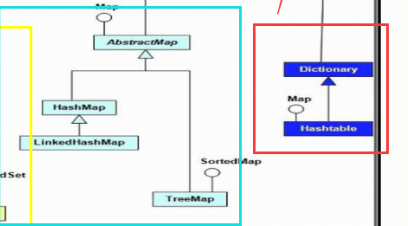
二:Hashtable(同步,慢,数据量小)
–K-V对,K和V都不允许为null

–同步,多线程安全

–无序的

–适合小数据量

–主要方法:clear, contains/containsValue, containsKey, get,

put,remove, size
(一)基本使用方法
        Hashtable<Integer,String> ht=new Hashtable<Integer,String>();

        //ht.put(1, null);    //编译不报错  运行时报错

        //ht.put(null, "das");

        ht.put(, "adad");

        ht.put(, "adsdad");

        ht.put(, "adadge");

        //进行判断是否含有数据

        System.out.println(ht.contains("adad"));

        System.out.println(ht.containsValue("adad"));    //contains和containsValue一样

        System.out.println(ht.containsKey());

        //进行数据获取

        System.out.println(ht.get());

        //进行更新

        ht.put(, "");    //按照键,更新值

        //进行移除

        System.out.println(ht.containsKey());

        ht.remove();

        System.out.println(ht.containsKey());

        //获取大小

        System.out.println(ht.size());
true

true

true

adadge

true

false
(二)遍历方法
    public static void traverseByEntry(Hashtable<Integer,String> ht){

        long startTime = System.nanoTime();

        System.out.println("=======Entry迭代器遍历=======");

        Integer key;

        String value;

        Iterator<Entry<Integer,String>> iter=ht.entrySet().iterator();

        while(iter.hasNext()) {

            Map.Entry<Integer, String> ent= iter.next();

            key = ent.getKey();

            value=ent.getValue();

            System.out.println(key+":"+value);

        }

        long endTime = System.nanoTime();

        long duration = endTime - startTime;

        System.out.println(duration + "纳秒");

    }
    public static void traverseByKeySet(Hashtable<Integer,String> ht){

        long startTime = System.nanoTime();

        System.out.println("=======KeySet迭代器遍历=======");

        Integer key;

        String value;

        Iterator<Integer> iter=ht.keySet().iterator();

        while(iter.hasNext()) {

            key = iter.next();

            value=ht.get(key);

            System.out.println(key+":"+value);

        }

        long endTime = System.nanoTime();

        long duration = endTime - startTime;

        System.out.println(duration + "纳秒");

    }
    //Enumeration只在Hashtable中用到了,后面废弃不用

    public static void traverseByKeyEnumeration(Hashtable<Integer,String> ht){

        long startTime = System.nanoTime();

        System.out.println("=======KeyEnumeration迭代器遍历=======");

        Integer key;

        String value;

        Enumeration<Integer> keys=ht.keys();    //一次性获取所有的key值,

        while(keys.hasMoreElements()) {

            key = keys.nextElement();

            // 获取value

            value = ht.get(key);

            //System.out.println("Key:" + key + ", Value:" + value);

        }

        long endTime = System.nanoTime();

        long duration = endTime - startTime;

        System.out.println(duration + "纳秒");

    }
(三)性能测试:数据量越大,差距越小
        for(int i=;i<;i++)

        {

            ht.put(i, "aaa");

        }

        //进行遍历

        traverseByEntry(ht);

        traverseByKeySet(ht);

        traverseByKeyEnumeration(ht);
=======Entry迭代器遍历=======

13470233纳秒

=======KeySet迭代器遍历=======

8841551纳秒

=======KeyEnumeration迭代器遍历=======

4933705纳秒
三:HashMap(不支持同步,快,数据量大)
–K-V对,K和V都允许为nul

–不同步,多线程不安全

    Map m = Collections.synchronizedMap(new HashMap(...));

–无序的

–主要方法:clear, containsValue, containsKey, get, put,remove, size
(一)基本使用方法一致
        HashMap<Integer,String> hm =new  HashMap<Integer,String>();

        hm.put(, null);

        hm.put(null, "abc");

        hm.put(, "aaa");

        hm.put(, "bbb");

        hm.put(, "ccc");

        System.out.println(hm.containsValue("aaa"));

        System.out.println(hm.containsKey());

        System.out.println(hm.get());

        hm.put(, "ddd");  //更新覆盖ccc

        System.out.println(hm.get());

        hm.remove();

        System.out.println("size: " + hm.size());

        hm.clear();

        System.out.println("size: " + hm.size());
(二)遍历方法除了没有Enumeration,其他一致
    public static void traverseByEntry(HashMap<Integer,String> ht)

    {

        long startTime = System.nanoTime();

        System.out.println("============Entry迭代器遍历==============");

        Integer key;

        String value;

        Iterator<Entry<Integer, String>> iter = ht.entrySet().iterator();

        while(iter.hasNext()) {

            Map.Entry<Integer, String> entry = iter.next();

            // 获取key

            key = entry.getKey();

            // 获取value

            value = entry.getValue();

            //System.out.println("Key:" + key + ", Value:" + value);

        }

        long endTime = System.nanoTime();

        long duration = endTime - startTime;

        System.out.println(duration + "纳秒");

    }
traverseByEntry
    public static void traverseByKeySet(HashMap<Integer,String> ht)

    {

        long startTime = System.nanoTime();

        System.out.println("============KeySet迭代器遍历==============");

        Integer key;

        String value;

        Iterator<Integer> iter = ht.keySet().iterator();

        while(iter.hasNext()) {

            key = iter.next();

            // 获取value

            value = ht.get(key);

            //System.out.println("Key:" + key + ", Value:" + value);

        }

        long endTime = System.nanoTime();

        long duration = endTime - startTime;

        System.out.println(duration + "纳秒");

    }
traverseByKeySet
四:Properties (同步,文件形式,数据量小)
–继承于Hashtable

–可以将K-V对保存在文件

–适用于数据量少的配置文件

–继承自Hashtable的方法:clear, contains/containsValue, containsKey,

get, put,remove, size

–从文件加载的load方法, 写入到文件中的store方法

–获取属性 getProperty ,设置属性setProperty
(一)使用方法
import java.io.BufferedInputStream;

import java.io.File;

import java.io.FileInputStream;

import java.io.FileOutputStream;

import java.io.IOException;

import java.io.InputStream;

import java.io.OutputStream;

import java.util.Enumeration;

import java.util.Properties;

//关于Properties类常用的操作

public class PropertiesTest {

    //根据Key读取Value

    public static String GetValueByKey(String filePath, String key) {

        Properties pps = new Properties();

        try {

            InputStream in = new BufferedInputStream (new FileInputStream(filePath));

            pps.load(in); //所有的K-V对都加载了

            String value = pps.getProperty(key);

            //System.out.println(key + " = " + value);

            return value;

        }catch (IOException e) {

            e.printStackTrace();

            return null;

        }

    }

    //读取Properties的全部信息

    public static void GetAllProperties(String filePath) throws IOException {

        Properties pps = new Properties();

        InputStream in = new BufferedInputStream(new FileInputStream(filePath));

        pps.load(in); //所有的K-V对都加载了

        Enumeration en = pps.propertyNames(); //得到配置文件的名字

        while(en.hasMoreElements()) {

            String strKey = (String) en.nextElement();

            String strValue = pps.getProperty(strKey);

            //System.out.println(strKey + "=" + strValue);

        }

    }

    //写入Properties信息

    public static void WriteProperties (String filePath, String pKey, String pValue) throws IOException {

        File file = new File(filePath);

        if(!file.exists())

        {

            file.createNewFile();

        }

        Properties pps = new Properties();

        InputStream in = new FileInputStream(filePath);

        //从输入流中读取属性列表(键和元素对)

        pps.load(in);  //先加载原来的文件键值对,在其基础上进行设置,再写入

        //调用 Hashtable 的方法 put。使用 getProperty 方法提供并行性。

        //强制要求为属性的键和值使用字符串。返回值是 Hashtable 调用 put 的结果。

        OutputStream out = new FileOutputStream(filePath);

        pps.setProperty(pKey, pValue);

        //以适合使用 load 方法加载到 Properties 表中的格式,

        //将此 Properties 表中的属性列表(键和元素对)写入输出流

        pps.store(out, "Update " + pKey + " name");

        out.close();

    }

    public static void main(String [] args) throws IOException{

        System.out.println("写入Test.properties================");

        WriteProperties("Test.properties","name", "");

        System.out.println("加载Test.properties================");

        GetAllProperties("Test.properties");

        System.out.println("从Test.properties加载================");

        String value = GetValueByKey("Test.properties", "name");

        System.out.println("name is " + value);

    }

}
五:LinkedHashMap和TreeMap
LinkedHashMap

–基于双向链表的维持插入顺序的HashMap

TreeMap

–基于红黑树的Map,可以根据key的自然排序或者compareTo方法进行排序输出
import java.util.LinkedHashMap;

import java.util.Iterator;

import java.util.Map;

import java.util.Map.Entry;

public class LinkedHashMapTest {

    public static void main(String[] args) {

        LinkedHashMap<Integer,String> hm =new  LinkedHashMap<Integer,String>();

        hm.put(, null);

        hm.put(null, "abc");

        hm.put(, "aaa");

        hm.put(, "bbb");

        hm.put(, "ccc");

        System.out.println(hm.containsValue("aaa"));

        System.out.println(hm.containsKey());

        System.out.println(hm.get());

        hm.put(, "ddd");  //更新覆盖ccc

        System.out.println(hm.get());

        hm.remove();

        System.out.println("size: " + hm.size());

        //hm.clear();

        //System.out.println("size: " + hm.size());

        System.out.println("遍历开始==================");

        Integer key;

        String value;

        Iterator<Entry<Integer, String>> iter = hm.entrySet().iterator();

        while(iter.hasNext()) {

            Map.Entry<Integer, String> entry = iter.next();

            // 获取key

            key = entry.getKey();

            // 获取value

            value = entry.getValue();

            System.out.println("Key:" + key + ", Value:" + value);

        }

        System.out.println("遍历结束==================");

        LinkedHashMap<Integer,String> hm2 =new  LinkedHashMap<Integer,String>();

        for(int i=;i<;i++)

        {

            hm2.put(i, "aaa");

        }

        traverseByEntry(hm2);

        traverseByKeySet(hm2);

    }

    public static void traverseByEntry(LinkedHashMap<Integer,String> ht)

    {

        long startTime = System.nanoTime();

        System.out.println("============Entry迭代器遍历==============");

        Integer key;

        String value;

        Iterator<Entry<Integer, String>> iter = ht.entrySet().iterator();

        while(iter.hasNext()) {

            Map.Entry<Integer, String> entry = iter.next();

            // 获取key

            key = entry.getKey();

            // 获取value

            value = entry.getValue();

            //System.out.println("Key:" + key + ", Value:" + value);

        }

        long endTime = System.nanoTime();

        long duration = endTime - startTime;

        System.out.println(duration + "纳秒");

    }

    public static void traverseByKeySet(LinkedHashMap<Integer,String> ht)

    {

        long startTime = System.nanoTime();

        System.out.println("============KeySet迭代器遍历==============");

        Integer key;

        String value;

        Iterator<Integer> iter = ht.keySet().iterator();

        while(iter.hasNext()) {

            key = iter.next();

            // 获取value

            value = ht.get(key);

            //System.out.println("Key:" + key + ", Value:" + value);

        }

        long endTime = System.nanoTime();

        long duration = endTime - startTime;

        System.out.println(duration + "纳秒");

    }

}
LinkedHashMapTest
import java.util.TreeMap;

import java.util.Iterator;

import java.util.Map;

import java.util.Map.Entry;

public class TreeMapTest {

    public static void main(String[] args) {

        TreeMap<Integer,String> hm =new  TreeMap<Integer,String>();

        hm.put(, null);

        //hm.put(null, "abc");  编译没错,运行报空指针异常

        hm.put(, "aaa");

        hm.put(, "bbb");

        hm.put(, "ccc");

        System.out.println(hm.containsValue("aaa"));

        System.out.println(hm.containsKey());

        System.out.println(hm.get());

        hm.put(, "ddd");  //更新覆盖ccc

        System.out.println(hm.get());

        //hm.remove(2);

        System.out.println("size: " + hm.size());

        //hm.clear();

        //System.out.println("size: " + hm.size());

        System.out.println("遍历开始==================");

        Integer key;

        String value;

        Iterator<Entry<Integer, String>> iter = hm.entrySet().iterator();

        while(iter.hasNext()) {

            Map.Entry<Integer, String> entry = iter.next();

            // 获取key

            key = entry.getKey();

            // 获取value

            value = entry.getValue();

            System.out.println("Key:" + key + ", Value:" + value);

        }

        System.out.println("遍历结束==================");

        TreeMap<Integer,String> hm2 =new  TreeMap<Integer,String>();

        for(int i=;i<;i++)

        {

            hm2.put(i, "aaa");

        }

        traverseByEntry(hm2);

        traverseByKeySet(hm2);

    }

    public static void traverseByEntry(TreeMap<Integer,String> ht)

    {

        long startTime = System.nanoTime();

        System.out.println("============Entry迭代器遍历==============");

        Integer key;

        String value;

        Iterator<Entry<Integer, String>> iter = ht.entrySet().iterator();

        while(iter.hasNext()) {

            Map.Entry<Integer, String> entry = iter.next();

            // 获取key

            key = entry.getKey();

            // 获取value

            value = entry.getValue();

            //System.out.println("Key:" + key + ", Value:" + value);

        }

        long endTime = System.nanoTime();

        long duration = endTime - startTime;

        System.out.println(duration + "纳秒");

    }

    public static void traverseByKeySet(TreeMap<Integer,String> ht)

    {

        long startTime = System.nanoTime();

        System.out.println("============KeySet迭代器遍历==============");

        Integer key;

        String value;

        Iterator<Integer> iter = ht.keySet().iterator();

        while(iter.hasNext()) {

            key = iter.next();

            // 获取value

            value = ht.get(key);

            //System.out.println("Key:" + key + ", Value:" + value);

        }

        long endTime = System.nanoTime();

        long duration = endTime - startTime;

        System.out.println(duration + "纳秒");

    }

}
TreeMapTest
六:总结
–HashMap是最常用的映射结构

–如需要排序,考虑LinkedHashMap和TreeMap

–如需要将K-V存储为文件,可采用Properties类
JAVA核心技术I---JAVA基础知识(映射Map)的更多相关文章
- 《Java核心技术·卷Ⅰ:基础知识(原版10》学习笔记 第5章 继承
<Java核心技术·卷Ⅰ:基础知识(原版10>学习笔记 第5章 继承 目录 <Java核心技术·卷Ⅰ:基础知识(原版10>学习笔记 第5章 继承 5.1 类.超类和子类 5.1 ...
- Java核心技术 卷1 基础知识-第一天
基本数据类型 java是一种强数据类的的语言 共有8种基本数据类型 其中: 整型4种 int(4字节) short(2字节) long(8字节) byte(1字节) java中整型的范围与机器无关 长 ...
- [Java面试三]JavaWeb基础知识总结.
1.web服务器与HTTP协议 Web服务器 l WEB,在英语中web即表示网页的意思,它用于表示Internet主机上供外界访问的资源. l Internet上供外界访问的Web资源分为: • 静 ...
- Java中浮点数的基础知识
偶然查看Math.round的JDK public static int round(float a) { if (a != 0x1.fffffep-2f) // greatest float val ...
- JAVA面试题相关基础知识
1.面向对象的特征有哪些方面 ①抽象: 抽象就是忽略一个主题中与当前目标无关的那些方面,以便更充分地注意与当前目标有关的方面.抽象并不打算了解全部问题,而只是选择其中的一部分,暂时不用部分细节 ...
- Java学习之旅基础知识篇:数据类型及流程控制
经过开篇对Java运行机制及相关环境搭建,本篇主要讨论Java程序开发的基础知识点,我简单的梳理一下.在讲解数据类型之前,我顺便提及一下Java注释:单行注释.多行注释以及文档注释,这里重点强调文档注 ...
- java 程序运行的基础知识【Java bytecode】
聊聊文字,写一篇关于 java 基础知识的博文. JVM 线程栈 到 函数运行 每一个JVM线程来说启动的时候都会创建一个私有的线程栈.一个jvm线程栈用来存储栈帧,jvm线程栈和C语言中的栈很类似, ...
- Java学习1——计算机基础知识
本文包含了一些计算机基础知识:计算机组成:Windows常用快捷键:DOS常用命令:计算机语言发展史.
- Java学习之旅基础知识篇:面向对象之封装、继承及多态
Java是一种面向对象设计的高级语言,支持继承.封装和多态三大基本特征,首先我们从面向对象两大概念:类和对象(也称为实例)谈起.来看看最基本的类定义语法: /*命名规则: *类名(首字母大写,多个单词 ...
- Java Script 学习笔记 -- 基础知识
Java script 概述 java Script 的简介 JavaScript一种直译式脚本语言,是一种动态类型.弱类型.基于原型的语言,内置支持类型.它的解释器被称为JavaScript引擎,为 ...
随机推荐
- linux shell系列9 统计用户的权限
#!/bin/bash #set -x host=`hostname` ip=`ifconfig $(ip a|grep eth|head -n1|awk -F: '{print $2}') |gre ...
- BZOJ1014[JSOI2008]火星人——非旋转treap+二分答案+hash
题目描述 火星人最近研究了一种操作:求一个字串两个后缀的公共前缀.比方说,有这样一个字符串:madamimadam,我们将这个字符串的各个字符予以标号:序号: 1 2 3 4 5 6 7 8 9 10 ...
- Paths on a Grid POJ - 1942 组合数学 (组合数的快速计算)
题意:格路问题 没什么难度 难点在于如何快速计算相对较大的组合数 思路:运用手写计算组合数的方式进行计算 如c(8,3) 如果手算就是 8*7*6/(3*2*1)这样可以很快得解出 计算代码为: ...
- SQL循环语句 详解
SQL循环语句 declare @i int set @i=1 while @i<30 begin insert into test (userid) values(@i) set @i=@i+ ...
- MySQL免安装版,遇到MSVCR120.dll文件丢失错误的解决方案
下载 VC redist packages for x64,下载完成,点击运行即可.
- 「CF838B」 Diverging Directions
B. Diverging Directions 题意 给出一个n个点2n-2条边的有向图.n-1条指向远离根方向的边形成一棵树,还有n-1条从非根节点指向根节点的边. q次操作,1修改第x条边权值为y ...
- HDU6341 Let Sudoku Rotate (杭电多校4J)
给一个由4*4个4*4的小格组成数独,这些数独是由一个块逆时针旋转得来的,所以要还原的话就模拟出顺时针的过程,先把里面的字母转化成数字,然后从第一个块开始枚举,每个dfs和之前枚举的已经满足条件的块, ...
- django pymysql
此处django版本为1.11.13 设置setting.py DATABASES = { 'default': { 'ENGINE': 'django.db.backends.mysql', 'NA ...
- poj 1733 Parity game(带权并查集+离散化)
题目链接:http://poj.org/problem?id=1733 题目大意:有一个很长很长含有01的字符串,长度可达1000000000,首先告诉你字符串的长度n,再给一个m,表示给你m条信息, ...
- 关于angular1与angular2的应用区别
angular1.0的这些繁杂的api,还有它的执行速度,运行效率,学习曲线,都被人吐槽,最近一直在用ng1,实在很想吐槽. 最近写ng2的项目,写了一些ng2基础的应用(包括angular-cli, ...