
区块链——java实现
简述
本文主要的内容试一次关于区块链的作业,本次作业中有很多地方和实际的区块链不符合,比如hash,本文实现的区块链只是用了区块本身的hash并没去区分,头部和数据部分。仅供参考学习。
介绍
内容有点儿多,详情看pdf吧。


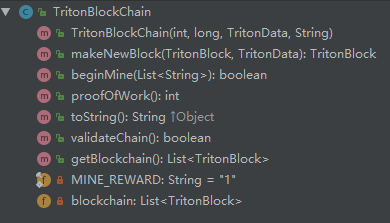
以上三个类分别为 存储数据的类,区块类,区块链的实现类
TritonData主要存储的交易(事件)的记录
TritonBlock 主要字段有上一个区块的hash和本区块的hash值
TritonBlockChain 将所有区块组织成区块链
注意:在hash的过程中我使用的是自己写的hash函数(因为作业要求呀),实际在使用的使用请使用比较好的如sha-256等函数。
具体实现
TritonData
 import java.util.ArrayList;

 import java.util.LinkedList;

 import java.util.List;

 public class TritonData {

     private List<String> transactions;

     private int proofId;

     /**

      * Triton Data Constructor

      */

     public TritonData() {

         transactions = new ArrayList<String>();

         proofId = 1;

     }

     /*Constructor if specific values are specified*/

     public TritonData(int proofId, List<String> transactions) {

         this.transactions = transactions;

         this.proofId = proofId;

     }

     /*Get transactions*/

     public List<String> getTransactions() {

         return transactions;

     }

     /*Get proofId*/

     public int getProofId() {

         return proofId;

     }

     /*Print the data block*/

     public String toString() {

         StringBuilder sb = new StringBuilder();

         sb.append("DATA Start--------------------------------\n");

         sb.append("Proof of work:" + proofId + "\n");

         for (int i = 0; i < transactions.size(); ++i) {

             sb.append("Transaction " + i + "\n");

             sb.append("Transaction Content:" + transactions.get(i) + "\n");

         }

         sb.append("DATA End --------------------------------\n\n");

         return sb.toString();

     }

 }
TritonBlock
 import java.math.BigInteger;

 public class TritonBlock {

     /*Class variables, all the attributes of the block*/

     private int index;

     private long timestamp;

     private TritonData data;

     private String prev_hash;

     private String self_hash;

     /*Constructor, builds a block with passed in variables, then creates a hash for curr block*/

     public TritonBlock(int index, long timestamp, TritonData data, String prev_hash) {

         this.index = index;

         this.timestamp = timestamp;

         this.data = data;

         this.prev_hash = prev_hash;

         this.self_hash = hashBlock();

     }

     //使用CRC variant方式

     private String hashBlock() {

 //        BigInteger bigInteger=new BigInteger()

         BigInteger bigInteger = new BigInteger("0");

         for (String s : data.getTransactions()) {

             char[] arr = s.toCharArray();

             for (char c : arr) {

                 bigInteger = bigInteger.add(BigInteger.valueOf(c & 0xf8000000));

             }

         }

         bigInteger = bigInteger.add(BigInteger.valueOf(timestamp));

         bigInteger = bigInteger.add(BigInteger.valueOf(index));

         char[] arr = prev_hash.toCharArray();

         for (char c : arr) {

             bigInteger = bigInteger.add(BigInteger.valueOf(c & 0xf8000000));

         }

         return bigInteger.toString(16);

     }

     /*Get index*/

     public int getIndex() {

         return index;

     }

     /*Get timestamp*/

     public long getTimestamp() {

         return timestamp;

     }

     /*Get data block*/

     public TritonData getData() {

         return data;

     }

     /*Get previous hash*/

     public String getPrev_hash() {

         return prev_hash;

     }

     /*Get current hash*/

     public String getSelf_hash() {

         return self_hash;

     }

     /*Print the block*/

     public String toString() {

         StringBuilder sb = new StringBuilder();

         sb.append("TritonBlock " + index + "\n");

         sb.append("Index: " + index + "\n");

         sb.append("Timestamp: " + timestamp + "\n");

         sb.append("Prev Hash: " + prev_hash + "\n");

         sb.append("Hash: " + self_hash + "\n");

         sb.append(data.toString());

         return sb.toString();

     }

 }
TritonBlockChain
 import java.util.*;

 public class TritonBlockChain {

     private static final String MINE_REWARD = "1";

     /*Blockchain clas variable*/

     private List<TritonBlock> blockchain;

     /*Constructor, takes in genesis block data to start the blockchain*/

     public TritonBlockChain(int index, long timestamp, TritonData data, String prev_hash) {

         blockchain = new ArrayList<TritonBlock>();

         blockchain.add(new TritonBlock(index, timestamp, data, prev_hash));

     }

     /*Makes the next block after the proof of work from mining is finished*/

     public TritonBlock makeNewBlock(TritonBlock lastBlock, TritonData newData) {

         return new TritonBlock(lastBlock.getIndex() + 1,

                 System.currentTimeMillis(), newData, lastBlock.getPrev_hash());

     }

     /*Mines the transaction and creates the block to add to the blockchain*/

     public boolean beginMine(List<String> curTransactions) {

         if (curTransactions.isEmpty()) {

             return false;

         }

         int proofId = proofOfWork();

         curTransactions.add("Triton coined earned: " + MINE_REWARD);

 //      TritonData(int proofId, List<String> transactions)

         TritonData newData = new TritonData(proofId, curTransactions);

         TritonBlock lastBlock = blockchain.get(blockchain.size() - 1);

         TritonBlock newBlock = new TritonBlock(lastBlock.getIndex() + 1,

                 System.currentTimeMillis(), newData, lastBlock.getSelf_hash());

         blockchain.add(newBlock);

         return true;

     }

     /*Simple proof of work algorithm to prove cpu usage was used to mine block*/

     public int proofOfWork() {

         TritonBlock tb = blockchain.get(blockchain.size() - 1);

         int lastProofId = tb.getData().getProofId();

         //use loop

         int temp = Math.max(lastProofId, 13);

         ++temp;

         while (true) {

             if (temp % 13 == 0 && temp % lastProofId == 0) {

                 return temp;

             }

             ++temp;

         }

     }

     /*Prints current blockchain*/

     public String toString() {

         StringBuilder sb = new StringBuilder();

         sb.append("~~~~~~~~~~~~~~~~~~~~~~~~~~~~~~~~~\n" +

                 "T R I T O N B L O C K C H A I N\n" +

                 "~~~~~~~~~~~~~~~~~~~~~~~~~~~~~~~~~\n\n");

         for (TritonBlock tb : blockchain) {

             sb.append(tb.toString());

         }

         return sb.toString();

     }

     /*Validates each block in the chain looking for any hash pointer descrepancies, which can point to a tampering problem*/

     public boolean validateChain() {

         for (int i = 1; i < blockchain.size(); ++i) {

             TritonBlock preBlock = blockchain.get(i - 1);

             TritonBlock cntBlock = blockchain.get(i);

             if (!cntBlock.getPrev_hash().equals(preBlock.getSelf_hash())) {

                 return false;

             }

         }

         return true;

     }

     /*Get blockchain*/

     public List<TritonBlock> getBlockchain() {

         return blockchain;

     }

 }
测试
 import java.io.BufferedReader;

 import java.io.IOException;

 import java.io.InputStreamReader;

 import java.util.ArrayList;

 import java.util.List;

 import java.io.FileReader;

 import java.util.Random;

 import java.util.StringTokenizer;

 /*Sets up server, manages blockchains, takes in and acts on user input*/

 public class TritonMiner {

     private static final int BLOCK_SIZE = 2;

     public static void main(String[] args) throws IOException {

         /*Initialize the local blockchain*/

         long timestamp = System.currentTimeMillis();

         /*Created local blockchain and added genesis block*/

         TritonBlockChain blockchain = new TritonBlockChain(0, timestamp, new TritonData(), "0");

         /*Represents the queue for all transactions*/

         //read in trascatipn and put in transcation queue

         List<String> transaction_queue = new ArrayList<String>();

         loadTranscation(transaction_queue, "transaction/transaction_1.txt");

         List<String> currentTransaction = new ArrayList<String>();

         for (int i = 0; i < transaction_queue.size(); i++) {

             currentTransaction.add(transaction_queue.get(i));

             if (currentTransaction.size() == BLOCK_SIZE) {

                 //mine

                 blockchain.beginMine(new ArrayList<>(currentTransaction));

                 //reintilize

                 currentTransaction.clear();

             }

         }

         /*Print blockchain*/

         System.out.println(blockchain.toString());

         /*Validate the blockchain Mine*/

         System.out.println("This block chain is: "+blockchain.validateChain());

     }

     public static boolean loadTranscation(List<String> transaction_queue, String fname) {

         String line;

         BufferedReader inputStrem;

         StringTokenizer st;

         try {

             inputStrem = new BufferedReader(new FileReader(fname));

             while ((line = inputStrem.readLine()) != null) {

                 transaction_queue.add(line);

             }

         } catch (IOException e) {

             System.out.println (e.toString());

             System.out.println("Could not find file " + fname);

         }

         return true;

     }

 }
结果
~~~~~~~~~~~~~~~~~~~~~~~~~~~~~~~~~

T R I T O N B L O C K C H A I N

~~~~~~~~~~~~~~~~~~~~~~~~~~~~~~~~~

TritonBlock 0

Index: 0

Timestamp: 1541995814844

Prev Hash: 0

Hash: 167061cdfbc

DATA Start--------------------------------

Proof of work:1

DATA End --------------------------------

TritonBlock 1

Index: 1

Timestamp: 1541995814851

Prev Hash: 167061cdfbc

Hash: 167061cdfc4

DATA Start--------------------------------

Proof of work:26

Transaction 0

Transaction Content:mary bob 10$

Transaction 1

Transaction Content:mary bob 12$

Transaction 2

Transaction Content:Triton coined earned: 1

DATA End --------------------------------

TritonBlock 2

Index: 2

Timestamp: 1541995814851

Prev Hash: 167061cdfc4

Hash: 167061cdfc5

DATA Start--------------------------------

Proof of work:52

Transaction 0

Transaction Content:simon tian 3$

Transaction 1

Transaction Content:tian ming 3$

Transaction 2

Transaction Content:Triton coined earned: 1

DATA End --------------------------------

This block chain is: true
总结
通过做这个作业,我收获很多:
- 什么是挖矿,什么是矿工,他们如何挣钱。提供计算资源的人叫矿工,提供的机器叫矿机,挖矿就是通过记录交易来获取收益。
- 本次作业也给了很多hash函数可以自己选择,比如我使用的CRC variant就是一个比较简单的hash函数(我一般就是用取余哈哈)
- 通过自己的辛苦获得了大洋(很开心)
区块链——java实现的更多相关文章
- 以太坊区块链Java(EthereumJ)学习笔记:概述
本系列文章介绍以太坊区块链基于Java语言的解决方案.通过介绍EthereumJ定义的主要模块和Class,希望为大家学习和使用EthereumJ提供一些帮助. 整体架构 以太坊的Java解决方案主要 ...
- [币严BIZZAN区块链]Java生成ETH钱包助记词、私钥、地址
本文主要介绍在Java工程中如何生成ETH钱包的助记词.私钥.地址. 一.在之前创建的spring boot 项目中的 pom.xml文件中加入需要的依赖 <dependency> < ...
- 只用120行Java代码写一个自己的区块链
区块链是目前最热门的话题,广大读者都听说过比特币,或许还有智能合约,相信大家都非常想了解这一切是如何工作的.这篇文章就是帮助你使用 Java 语言来实现一个简单的区块链,用不到 120 行代码来揭示区 ...
- java开发区块链只需150行代码
本文目的是通过java实战开发教程理解区块链是什么.将通过实战入门学习,用Java自学开发一个很基本的区块链,并在此基础上能扩展如web框架应用等.这个基本的java区块链也实现简单的工作量证明系统. ...
- 【原】用Java编写第一个区块链(一)
写这篇随笔主要是尝试帮助自己了解如何学习区块链技术开发. [本文禁止任何形式的全文粘贴式转载,本文来自 zacky31 的随笔] 目标: 创建一个最基本的"区块链" 实现一个简单的 ...
- 【原】用Java编写第一个区块链(二)
这篇文章将去介绍如何使用区块链进行交易. [本文禁止任何形式的全文粘贴式转载,本文来自 zacky31 的随笔] 目标: 在上一篇文章中,我们已经创建了一个可信任的区块链.但是目前所创建的链中包含的有 ...
- 用Hyperledger Fabric(超级账本)来构建Java语言开发区块链的环境
面向 Java 开发人员的链代码简介 您或许听说过区块链,但可能不确定它对 Java™ 开发人员有何用.本教程将帮助大家解惑.我将分步展示如何使用 Hyperledger Fabric v0.6 来构 ...
- 用Java为Hyperledger Fabric(超级账本)开发区块链智能合约链代码之部署与运行示例代码
部署并运行 Java 链代码示例 您已经定义并启动了本地区块链网络,而且已构建 Java shim 客户端 JAR 并安装到本地 Maven 存储库中,现在已准备好在之前下载的 Hyperledger ...
- 用Java为Hyperledger Fabric(超级账本)编写区块链智能合约链代码
编写第一个 Java 链代码程序 在上一节中,您已经熟悉了如何构建.运行.部署和调用链代码,但尚未编写任何 Java 代码. 在本节中,将会使用 Eclipse IDE.一个用于 Eclipse 的 ...
随机推荐
- 【HANA系列】SAP HANA SQL从给定日期中获取年份
公众号:SAP Technical 本文作者:matinal 原文出处:http://www.cnblogs.com/SAPmatinal/ 原文链接:[HANA系列]SAP HANA SQL从给定日 ...
- 把CSV文件中的labels标签提取为json文件
需求: validationImages.csv文件是存储验证集数据名称和类别信息(labels)的文件, 要生成一个label和类别名一一对应且正序排列的json文件,代码如下: labels_di ...
- C++中map和unordered_map的用法
1. 简介 map和unordered_map都是c++中可以充当字典(key-value)来用的数据类型,但是其基本实现是不一样的. 2. map 对于map的底层原理,是通过红黑树(一种非严格意义 ...
- ideal中运行manven常用操作
ideal中对项目打包,输入命令如下图所示: clean install -Dmaven.test.skip=true
- JS小知识--获取当前日期的时间和上周五时间
获取当前日期的时间和上周五时间 var today=new Date();//获取当前时间var weekday=today.getDay();//获取星期几 var monday=new Da ...
- [转帖]CentOS 7安装并启动Google浏览器(★firecat亲测有效★)
CentOS 7安装并启动Google浏览器(★firecat亲测有效★) https://blog.csdn.net/libaineu2004/article/details/82821405 自己 ...
- MYSQL—第二部分(Linux版本的安装和数据表的操作)
Linux版本的安装(过于简单了) 安装: ? 1 yum install mysql-server 服务端启动 ? 1 mysql.server start 客户端连接 ? 1 2 3 4 5 6 ...
- CF 148D Bag of mice 题解
题面 这是我做的第一道概率DP题: 做完后发现没有后效性的DP是真的水: 在这里说主要是再捋顺一下思路: 设f[i][j]表示有i只白鼠,j只黑鼠是获胜的概率: 显然:f[i][0]=1; 然后分四种 ...
- 测试基础_<一>
1: 过程决定质量, 测试过程贯穿整个软件开发声明周期; 2: 测试过程和开发过程在整个开发周期相辅相成; 3: 测试过程是对整个开发过程的验证, 二者互相依赖 4: 测试过程是整个测试活动中一个至关 ...
- nohup重定向到其它的日志文件
如果使用nohup命令提交作业,那么在缺省情况下该作业的所有输出都被重定向到一个名为nohup.out的文件中,除非另外指定了输出文件: nohup command > myout.file 2 ...