
zookeeper 源码(二) session 和 处理事务请求
问题
- session 如何生成的?sessionId为什么不直接使用时间戳+单机名
- sessionid 关闭的时候的逻辑,sessionid 的维护是由各节点还是leader ?
会话相关
sessionid 生成
我们看一下session 管理类 SessionTrackerImpl。 它主要维护三个字段
    //根据 sessionid 存放的 session

    HashMap<Long, SessionImpl> sessionsById = new HashMap<Long, SessionImpl>();

    //key 是时间 ,用于根据下次会话超时时间点来归纳会话,便于进行会话管理和超时检查,(分桶策略容器)

    HashMap<Long, SessionSet> sessionSets = new HashMap<Long, SessionSet>();

    //key 是 sessionId , value 是过期时间

    ConcurrentHashMap<Long, Integer> sessionsWithTimeout;
其他的都是操作 session 的方法,我们看一下创建sessionId的过程,SessionImpl 类
    public static long initializeNextSession(long id) {

        long nextSid = 0;

        nextSid = (Time.currentElapsedTime() << 24) >>> 8;

        nextSid =  nextSid | (id <<56);

        return nextSid;

    }
得出的 sessionid前8位确定所在的机器,后56位使用当前时间的毫秒数表示进行随机。
session 管理
使用的是分桶策略,如下图所示。
以时间戳为节点,每个桶装这该时间点(过期的时间)的 session集合,然后有一个线程那桶里的多个session 进行检查,加入过期时间被延长,那么session 进行迁移到其他的桶,否则将被清理。
创建会话执行事务过程
创建会话之前我们要先知道zk服务器是如何和客户端连接的。上一篇文章结尾处,我们知道了处理与 客户端的连接主要是由 NIOServerCnxnFactory 来负责的。而真正处理的逻辑就在 run 方法。
    /**

     * 默认允许连接 60个客户端,

     * 这个(一个)线程会处理

     * - 来自客户端的连接

     * - 来自客户端的读

     * - 来自客户端的写

     *

     *

     */

    public void run() {

        //只要没有断开,循环一直进行

        //下面连接就是我们熟悉的 java NIO 的运用

        while (!ss.socket().isClosed()) {

            try {

                //select 方法一直就阻塞

                selector.select(1000);

                Set<SelectionKey> selected;

                //这里为什么要加锁呢?可能有多个线程

                synchronized (this) {

                    selected = selector.selectedKeys();

                }

                ArrayList<SelectionKey> selectedList = new ArrayList<SelectionKey>(

                        selected);

                Collections.shuffle(selectedList);

                for (SelectionKey k : selectedList) {

                    if ((k.readyOps() & SelectionKey.OP_ACCEPT) != 0) {

                        SocketChannel sc = ((ServerSocketChannel) k

                                .channel()).accept();

                        InetAddress ia = sc.socket().getInetAddress();

                        int cnxncount = getClientCnxnCount(ia);

                        //客户端可以保存 60 个连接

                        if (maxClientCnxns > 0 && cnxncount >= maxClientCnxns){

                            LOG.warn("Too many connections from " + ia

                                     + " - max is " + maxClientCnxns );

                            sc.close();

                        } else {

                            LOG.info("Accepted socket connection from "

                                     + sc.socket().getRemoteSocketAddress());

                            sc.configureBlocking(false);

                            SelectionKey sk = sc.register(selector,

                                    SelectionKey.OP_READ);

                            //创建连接,连接用 NIOServerCnxn这个类来维护

                            NIOServerCnxn cnxn = createConnection(sc, sk);

                            sk.attach(cnxn);

                            addCnxn(cnxn);

                        }

                    } else if ((k.readyOps() & (SelectionKey.OP_READ | SelectionKey.OP_WRITE)) != 0) {

                        //处理客户端读写操作,重点看 doIO 方法

                        NIOServerCnxn c = (NIOServerCnxn) k.attachment();

                        c.doIO(k);

                    } else {

                        if (LOG.isDebugEnabled()) {

                            LOG.debug("Unexpected ops in select "

                                      + k.readyOps());

                        }

                    }

                }

                selected.clear();

            } catch (RuntimeException e) {

                LOG.warn("Ignoring unexpected runtime exception", e);

            } catch (Exception e) {

                LOG.warn("Ignoring exception", e);

            }

        }

        closeAll();

        LOG.info("NIOServerCnxn factory exited run method");

    }
我们再来看一下 doIO这个方法 , 位于 NIOServerCnxn 内
    /**

     * Handles read/write IO on connection.

     */

    void doIO(SelectionKey k) throws InterruptedException {

        try {

            if (isSocketOpen() == false) {

                LOG.warn("trying to do i/o on a null socket for session:0x"

                         + Long.toHexString(sessionId));

                return;

            }

            //可读类型

            if (k.isReadable()) {

                int rc = sock.read(incomingBuffer);

                if (rc < 0) {

                    throw new EndOfStreamException(

                            "Unable to read additional data from client sessionid 0x"

                            + Long.toHexString(sessionId)

                            + ", likely client has closed socket");

                }

                if (incomingBuffer.remaining() == 0) {

                    boolean isPayload;

                    //读取下一个请求

                    if (incomingBuffer == lenBuffer) { // start of next request

                        //翻转缓存区,可读

                        incomingBuffer.flip();

                        //读取lenBuffer的前四个字节,当读取的是内容长度时则为true,否则为false

                        isPayload = readLength(k);

                        //清空缓存

                        incomingBuffer.clear();

                    } else {

                        // continuation

                        isPayload = true;

                    }

                    // isPayload 为 true ,表示buffer 里面是负载

                    if (isPayload) { // not the case for 4letterword

                        readPayload();

                    }

                    else {

                        // four letter words take care

                        // need not do anything else

                        return;

                    }

                }

            }

            //可写类型

            if (k.isWritable()) {

                // ZooLog.logTraceMessage(LOG,

                // ZooLog.CLIENT_DATA_PACKET_TRACE_MASK

                // "outgoingBuffers.size() = " +

                // outgoingBuffers.size());

                if (outgoingBuffers.size() > 0) {

                    // ZooLog.logTraceMessage(LOG,

                    // ZooLog.CLIENT_DATA_PACKET_TRACE_MASK,

                    // "sk " + k + " is valid: " +

                    // k.isValid());

                    /*

                     * This is going to reset the buffer position to 0 and the

                     * limit to the size of the buffer, so that we can fill it

                     * with data from the non-direct buffers that we need to

                     * send.

                     */

                    ByteBuffer directBuffer = factory.directBuffer;

                    directBuffer.clear();

                    for (ByteBuffer b : outgoingBuffers) {

                        if (directBuffer.remaining() < b.remaining()) {

                            /*

                             * When we call put later, if the directBuffer is to

                             * small to hold everything, nothing will be copied,

                             * so we've got to slice the buffer if it's too big.

                             */

                            b = (ByteBuffer) b.slice().limit(

                                    directBuffer.remaining());

                        }

                        /*

                         * put() is going to modify the positions of both

                         * buffers, put we don't want to change the position of

                         * the source buffers (we'll do that after the send, if

                         * needed), so we save and reset the position after the

                         * copy

                         */

                        int p = b.position();

                        directBuffer.put(b);

                        b.position(p);

                        if (directBuffer.remaining() == 0) {

                            break;

                        }

                    }

                    /*

                     * Do the flip: limit becomes position, position gets set to

                     * 0. This sets us up for the write.

                     */

                    directBuffer.flip();

                    int sent = sock.write(directBuffer);

                    ByteBuffer bb;

                    // Remove the buffers that we have sent

                    while (outgoingBuffers.size() > 0) {

                        bb = outgoingBuffers.peek();

                        if (bb == ServerCnxnFactory.closeConn) {

                            throw new CloseRequestException("close requested");

                        }

                        int left = bb.remaining() - sent;

                        if (left > 0) {

                            /*

                             * We only partially sent this buffer, so we update

                             * the position and exit the loop.

                             */

                            bb.position(bb.position() + sent);

                            break;

                        }

                        packetSent();

                        /* We've sent the whole buffer, so drop the buffer */

                        sent -= bb.remaining();

                        outgoingBuffers.remove();

                    }

                    // ZooLog.logTraceMessage(LOG,

                    // ZooLog.CLIENT_DATA_PACKET_TRACE_MASK, "after send,

                    // outgoingBuffers.size() = " + outgoingBuffers.size());

                }

                synchronized(this.factory){

                    if (outgoingBuffers.size() == 0) {

                        if (!initialized

                                && (sk.interestOps() & SelectionKey.OP_READ) == 0) {

                            throw new CloseRequestException("responded to info probe");

                        }

                        sk.interestOps(sk.interestOps()

                                & (~SelectionKey.OP_WRITE));

                    } else {

                        sk.interestOps(sk.interestOps()

                                | SelectionKey.OP_WRITE);

                    }

                }

            }

        } catch (CancelledKeyException e) {

            LOG.warn("CancelledKeyException causing close of session 0x"

                     + Long.toHexString(sessionId));

            if (LOG.isDebugEnabled()) {

                LOG.debug("CancelledKeyException stack trace", e);

            }

            close();

        } catch (CloseRequestException e) {

            // expecting close to log session closure

            close();

        } catch (EndOfStreamException e) {

            LOG.warn(e.getMessage());

            if (LOG.isDebugEnabled()) {

                LOG.debug("EndOfStreamException stack trace", e);

            }

            // expecting close to log session closure

            close();

        } catch (IOException e) {

            LOG.warn("Exception causing close of session 0x"

                     + Long.toHexString(sessionId) + ": " + e.getMessage());

            if (LOG.isDebugEnabled()) {

                LOG.debug("IOException stack trace", e);

            }

            close();

        }

    }

    /** Read the request payload (everything following the length prefix) */

    private void readPayload() throws IOException, InterruptedException {

        if (incomingBuffer.remaining() != 0) { // have we read length bytes?

            int rc = sock.read(incomingBuffer); // sock is non-blocking, so ok

            if (rc < 0) {

                throw new EndOfStreamException(

                        "Unable to read additional data from client sessionid 0x"

                        + Long.toHexString(sessionId)

                        + ", likely client has closed socket");

            }

        }

        if (incomingBuffer.remaining() == 0) { // have we read length bytes?

            packetReceived();

            incomingBuffer.flip();

            //执行读取负载的逻辑

            if (!initialized) {

                //非初始化

                readConnectRequest();

            } else {

                readRequest();

            }

            lenBuffer.clear();

            incomingBuffer = lenBuffer;

        }

    }

    其中我们看一下如何连接的,即上面的 readConnectRequest 方法

    private void readConnectRequest() throws IOException, InterruptedException {

        if (!isZKServerRunning()) {

            throw new IOException("ZooKeeperServer not running");

        }

        zkServer.processConnectRequest(this, incomingBuffer);

        initialized = true;

    }
于是我们到了ZookeeperServer 的 processConnectRequest 方法
   /**

    * 封装成一个 connectRequest

    * 提交请求到leader

    */

    public void processConnectRequest(ServerCnxn cnxn, ByteBuffer incomingBuffer) throws IOException {

        BinaryInputArchive bia = BinaryInputArchive.getArchive(new ByteBufferInputStream(incomingBuffer));

        ConnectRequest connReq = new ConnectRequest();

        connReq.deserialize(bia, "connect");

        if (LOG.isDebugEnabled()) {

            LOG.debug("Session establishment request from client "

                    + cnxn.getRemoteSocketAddress()

                    + " client's lastZxid is 0x"

                    + Long.toHexString(connReq.getLastZxidSeen()));

        }

        boolean readOnly = false;

        try {

            readOnly = bia.readBool("readOnly");

            cnxn.isOldClient = false;

        } catch (IOException e) {

            // this is ok -- just a packet from an old client which

            // doesn't contain readOnly field

            LOG.warn("Connection request from old client "

                    + cnxn.getRemoteSocketAddress()

                    + "; will be dropped if server is in r-o mode");

        }

        if (readOnly == false && this instanceof ReadOnlyZooKeeperServer) {

            String msg = "Refusing session request for not-read-only client "

                + cnxn.getRemoteSocketAddress();

            LOG.info(msg);

            throw new CloseRequestException(msg);

        }

        if (connReq.getLastZxidSeen() > zkDb.dataTree.lastProcessedZxid) {

            String msg = "Refusing session request for client "

                + cnxn.getRemoteSocketAddress()

                + " as it has seen zxid 0x"

                + Long.toHexString(connReq.getLastZxidSeen())

                + " our last zxid is 0x"

                + Long.toHexString(getZKDatabase().getDataTreeLastProcessedZxid())

                + " client must try another server";

            LOG.info(msg);

            throw new CloseRequestException(msg);

        }

        int sessionTimeout = connReq.getTimeOut();

        byte passwd[] = connReq.getPasswd();

        int minSessionTimeout = getMinSessionTimeout();

        if (sessionTimeout < minSessionTimeout) {

            sessionTimeout = minSessionTimeout;

        }

        int maxSessionTimeout = getMaxSessionTimeout();

        if (sessionTimeout > maxSessionTimeout) {

            sessionTimeout = maxSessionTimeout;

        }

        cnxn.setSessionTimeout(sessionTimeout);

        // We don't want to receive any packets until we are sure that the

        // session is setup

        cnxn.disableRecv();

        long sessionId = connReq.getSessionId();

        if (sessionId != 0) {

            long clientSessionId = connReq.getSessionId();

            LOG.info("Client attempting to renew session 0x"

                    + Long.toHexString(clientSessionId)

                    + " at " + cnxn.getRemoteSocketAddress());

            serverCnxnFactory.closeSession(sessionId);

            cnxn.setSessionId(sessionId);

            reopenSession(cnxn, sessionId, passwd, sessionTimeout);

        } else {

            LOG.info("Client attempting to establish new session at "

                    + cnxn.getRemoteSocketAddress());

            //真正执行请求的地方 : 创建 session,提交请求

            createSession(cnxn, passwd, sessionTimeout);

        }

    }

    long createSession(ServerCnxn cnxn, byte passwd[], int timeout) {

        long sessionId = sessionTracker.createSession(timeout);

        Random r = new Random(sessionId ^ superSecret);

        r.nextBytes(passwd);

        ByteBuffer to = ByteBuffer.allocate(4);

        to.putInt(timeout);

        cnxn.setSessionId(sessionId);

        //提交请求

        submitRequest(cnxn, sessionId, OpCode.createSession, 0, to, null);

        return sessionId;

    }

    /**

     * @param cnxn

     * @param sessionId

     * @param xid

     * @param bb

     */

    private void submitRequest(ServerCnxn cnxn, long sessionId, int type,

            int xid, ByteBuffer bb, List<Id> authInfo) {

        Request si = new Request(cnxn, sessionId, xid, type, bb, authInfo);

        submitRequest(si);

    }

    public void submitRequest(Request si) {

        if (firstProcessor == null) {

            synchronized (this) {

                try {

                    // Since all requests are passed to the request

                    // processor it should wait for setting up the request

                    // processor chain. The state will be updated to RUNNING

                    // after the setup.

                    // 在 startup 方法中直到初始化完成才得以接受请求

                    while (state == State.INITIAL) {

                        wait(1000);

                    }

                } catch (InterruptedException e) {

                    LOG.warn("Unexpected interruption", e);

                }

                if (firstProcessor == null || state != State.RUNNING) {

                    throw new RuntimeException("Not started");

                }

            }

        }

        try {

            //判断 session 是否还存活

            touch(si.cnxn);

            boolean validpacket = Request.isValid(si.type);

            if (validpacket) {

                //firstProcessor 开始执行

                firstProcessor.processRequest(si);

                if (si.cnxn != null) {

                    incInProcess();

                }

            } else {

                LOG.warn("Received packet at server of unknown type " + si.type);

                new UnimplementedRequestProcessor().processRequest(si);

            }

        } catch (MissingSessionException e) {

            if (LOG.isDebugEnabled()) {

                LOG.debug("Dropping request: " + e.getMessage());

            }

        } catch (RequestProcessorException e) {

            LOG.error("Unable to process request:" + e.getMessage(), e);

        }

    }
清楚了服务器与客户端的连接,知道了最终会到执行任务链上。
我们可以连接任意一台 zk服务器,进行事务请求,当follower接受到请求后它就会转发给leader ,而follower 和 leader 都是使用责任链进行处理来自客户端的请求的。
我们先来看一下follower 和 leader 责任链的流程。
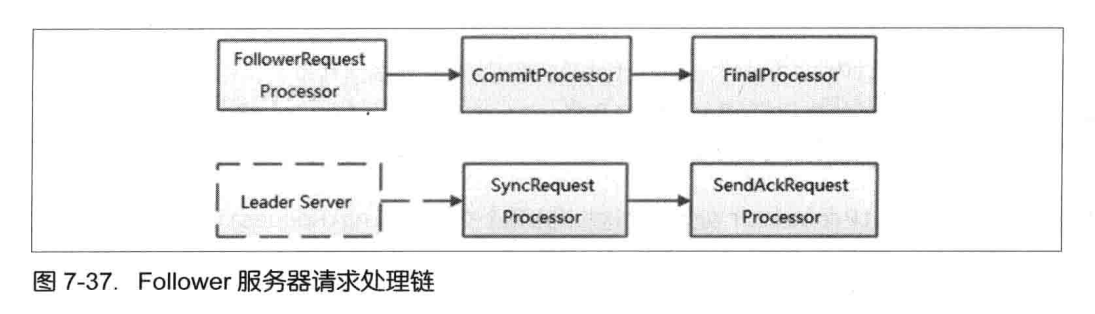
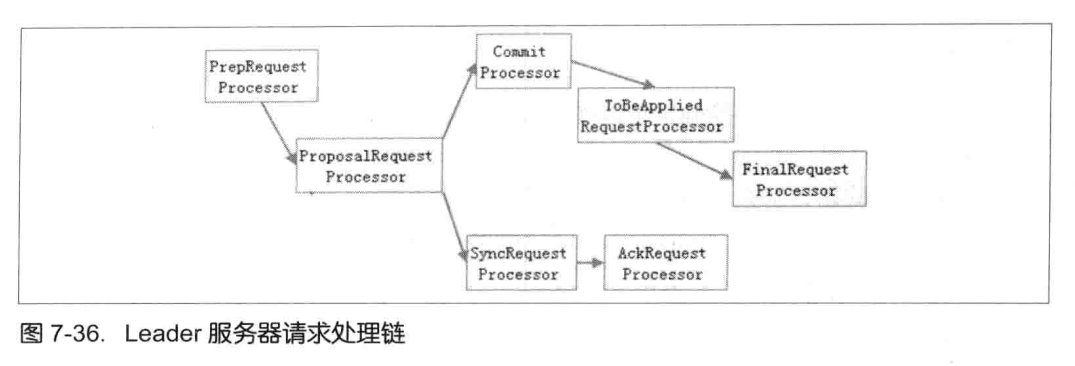
请求处理流程
会话创建请求
我们通过下面的图片先来了解整个过程
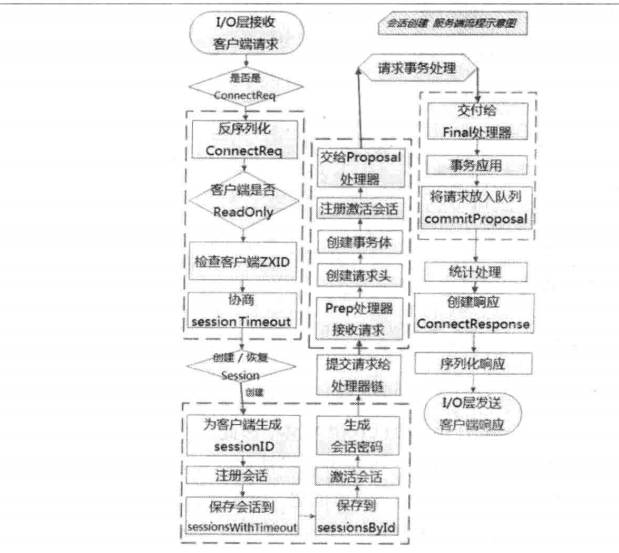
概括起来就是 :
- NIOServerCnxn 接受请求
- 协商 sessionTimeout ,创建 connectRequest
- 创建会话,生成 sessionId,注册会话和激活会话
- 交给 leader 的 PrepRequestProcessor
- 创建请求事务体 createSessionTxn
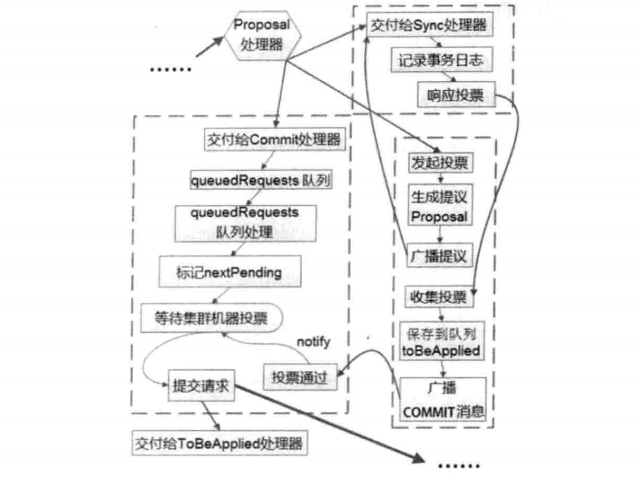
- 交给 ProposalRequestProcessor,接下来就会进入三个子流程
子流程如下 : - Sync流程,follower做好日志记录,同时返回 ACK 给leader
- Proposal流程,生成proposal ,广播提议,获得半数票后,请求加入到 toBeApplied 队列,广播commit 信息
- Commit流程,将请求交付给CommitProcessor 处理器,等待上阶段的投票结果,提交请求,交付给下一个处理器 : FinalRequestProcessor
- 到此三个子流程走完后,到了最后的阶段,事务应用,之前我们的议案只是应用在日志中,并没有在内存中生效,这阶段需要将请求应用在内存中。
这个就是整个会话创建请求的处理过程,当客户端发出事务请求时也是像处理会话创建一样的流程。
总结
这一篇主要讲了zk 创建session的策略和管理的逻辑,同时介绍了处理事务的过程。
zookeeper 源码(二) session 和 处理事务请求的更多相关文章
- zookeeper源码 — 二、集群启动—leader选举
上一篇介绍了zookeeper的单机启动,集群模式下启动和单机启动有相似的地方,但是也有各自的特点.集群模式的配置方式和单机模式也是不一样的,这一篇主要包含以下内容: 概念介绍:角色,服务器状态 服务 ...
- ZooKeeper源码阅读——client(二)
原创技术文章,转载请注明:转自http://newliferen.github.io/ 如何连接ZooKeeper集群 要想了解ZooKeeper客户端实现原理,首先需要关注一下客户端的使用方式, ...
- Zookeeper 源码(二)序列化组件 Jute
Zookeeper 源码(二)序列化组件 Jute 一.序列化组件 Jute 对于一个网络通信,首先需要解决的就是对数据的序列化和反序列化处理,在 ZooKeeper 中,使用了Jute 这一序列化组 ...
- zookeeper源码分析之五服务端(集群leader)处理请求流程
leader的实现类为LeaderZooKeeperServer,它间接继承自标准ZookeeperServer.它规定了请求到达leader时需要经历的路径: PrepRequestProcesso ...
- zookeeper源码分析之四服务端(单机)处理请求流程
上文: zookeeper源码分析之一服务端启动过程 中,我们介绍了zookeeper服务器的启动过程,其中单机是ZookeeperServer启动,集群使用QuorumPeer启动,那么这次我们分析 ...
- Zookeeper 源码(七)请求处理
Zookeeper 源码(七)请求处理 以单机启动为例讲解 Zookeeper 是如何处理请求的.先回顾一下单机时的请求处理链. // 单机包含 3 个请求链:PrepRequestProcessor ...
- Zookeeper 源码(六)Leader-Follower-Observer
Zookeeper 源码(六)Leader-Follower-Observer 上一节介绍了 Leader 选举的全过程,本节讲解一下 Leader-Follower-Observer 服务器的三种角 ...
- Zookeeper 源码(五)Leader 选举
Zookeeper 源码(五)Leader 选举 前面学习了 Zookeeper 服务端的相关细节,其中对于集群启动而言,很重要的一部分就是 Leader 选举,接着就开始深入学习 Leader 选举 ...
- Zookeeper 源码(四)Zookeeper 服务端源码
Zookeeper 源码(四)Zookeeper 服务端源码 Zookeeper 服务端的启动入口为 QuorumPeerMain public static void main(String[] a ...
- Zookeeper 源码(三)Zookeeper 客户端源码
Zookeeper 源码(三)Zookeeper 客户端源码 Zookeeper 客户端主要有以下几个重要的组件.客户端会话创建可以分为三个阶段:一是初始化阶段.二是会话创建阶段.三是响应处理阶段. ...
随机推荐
- JAVA 注解教程(五)注解的提取
注解与反射 注解通过反射获取.首先可以通过 Class 对象的 isAnnotationPresent() 方法判断它是否应用了某个注解 public boolean isAnnotationPres ...
- Error: Unexpected HTTP status 413 'Request Entity Too Large' on
由于nginx的client_max_body_size设置过小,默认上传的文件小于所要上传的文件大小,把这个值调大就可以了,我这里在配置文件的server下更改如下: server { client ...
- 解决问题:SVN重命名后,不允许提交
第一步:选中要修改的文件,右键,修改文件名称,具体操作如下图所示 第二步:提交,提交时,不要提交修改的文件,在上一层文件夹上提交
- linux异常 - unzip: 未找到命令
问题描述 unzip: Command Not Found 或 zip: Command Not Found 或unzip: 未找到命令 解决方法 如果是Ubuntu的的系统可以用下面的命令安装:su ...
- tp5.1 Auth类实现权限管理
了解来这么久权限控制权限的知识,却不知道如何写代码,网上的代码多数并没有多少完整的源码能提供参考.偶然看到官网的例子,现在终于也把源码的实现也弄得明白了一点. tp5框架的Auth类可以实现页面的访问 ...
- break continue goto
break:跳出本层循环:continue:结束本次循环,并不跳出循环:goto:转移到指定位置,无条件转移:
- Python基础与科学计算常用方法
Python基础与科学计算常用方法 本文使用的是Jupyter Notebook,Python3.你可以将代码直接复制到Jupyter Notebook中运行,以便更好的学习. 导入所需要的头文件 i ...
- 关于Javaweb的比较好用的jar包概述
(连接数据库之前首先要导入这个数据库的驱动jar包 例如mysql 为mysql-connector-java-5.1.46.jar) 关于连接数据库的数据库连接池c3p0 jar包: c3p0-0 ...
- SSH通道 Xshell
SSH是每一台Linux电脑的标准配置. SSH是一种网络协议,用于计算机之间的加密登录(安全的). 1. 登录远程主机 $ ssh user@host 2. SSH的默认端口是22, ...
- 「hdu 4845 」拯救大兵瑞恩 [CTSC 1999](状态压缩bfs & 分层图思想)
首先关于分层图思想详见2004的这个论文 https://wenku.baidu.com/view/dc57f205cc175527072208ad.html 这道题可以用状态压缩,我们对于每一把钥匙 ...