
spring remoting源码分析--Hessian分析
1. Caucho
1.1 概况
spring-remoting代码的情况如下:

本节近分析caucho模块。
1.2 分类
其中以hession为例,Hessian远程服务调用过程:
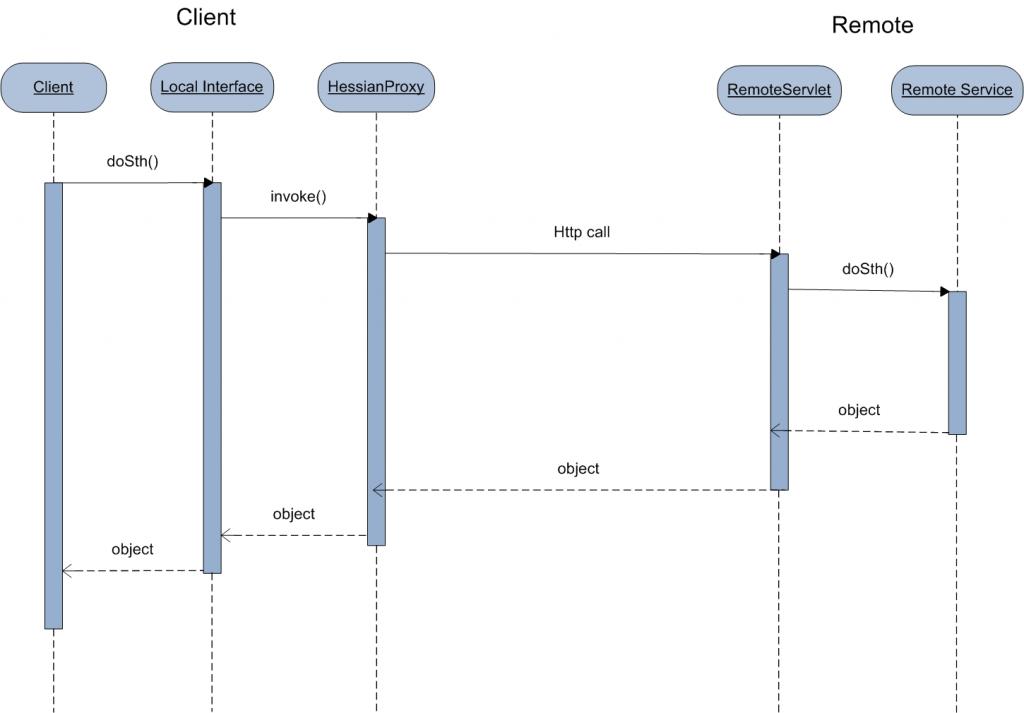
Hessian远程服务调用过程
1.2.1 客户端
BurlapProxyFactoryBean,BurlapClientInterceptor;
HessianProxyFactoryBean,HessianClientInterceptor;
HessianProxyFactoryBean继承自HessianClientInterceptor,间接封装了HessianProxyFactory。HessianProxyFactory是hessian的client实现类,
示例:
public interface Basic {

  public String hello();

}

import com.caucho.hessian.client.HessianProxyFactory;

public class BasicClient {

  public static void main(String []args)

    throws Exception

  {

    String url = "http://www.caucho.com/hessian/test/basic";

    HessianProxyFactory factory = new HessianProxyFactory();

    Basic basic = (Basic) factory.create(Basic.class, url);

    System.out.println("Hello: " + basic.hello());

  }

}
create方法如下:
/**

   * Creates a new proxy with the specified URL.  The returned object

   * is a proxy with the interface specified by api.

   *

   * <pre>

   * String url = "http://localhost:8080/ejb/hello");

   * HelloHome hello = (HelloHome) factory.create(HelloHome.class, url);

   * </pre>

   *

   * @param api the interface the proxy class needs to implement

   * @param url the URL where the client object is located.

   *

   * @return a proxy to the object with the specified interface.

   */

  public Object create(Class<?> api, URL url, ClassLoader loader)

  {

    if (api == null)

      throw new NullPointerException("api must not be null for HessianProxyFactory.create()");

    InvocationHandler handler = null;

    handler = new HessianProxy(url, this, api);

    return Proxy.newProxyInstance(loader,

                                  new Class[] { api,

                                                HessianRemoteObject.class },

                                  handler);

  }
其中HessianProxy实现了java的动态代理
/**

 * Proxy implementation for Hessian clients.  Applications will generally

 * use HessianProxyFactory to create proxy clients.

 */

public class HessianProxy implements InvocationHandler, Serializable {

  private static final Logger log

    = Logger.getLogger(HessianProxy.class.getName());

  protected HessianProxyFactory _factory;

  private WeakHashMap<Method,String> _mangleMap

    = new WeakHashMap<Method,String>();

  private Class<?> _type;

  private URL _url;

  /**

   * Protected constructor for subclassing

   */

  protected HessianProxy(URL url, HessianProxyFactory factory)

  {

    this(url, factory, null);

  }

  /**

   * Protected constructor for subclassing

   */

  protected HessianProxy(URL url,

                         HessianProxyFactory factory,

                         Class<?> type)

  {

    _factory = factory;

    _url = url;

    _type = type;

  }

}
最重要的invoke方法如下:
 /**

   * Handles the object invocation.

   *

   * @param proxy the proxy object to invoke

   * @param method the method to call

   * @param args the arguments to the proxy object

   */

  public Object invoke(Object proxy, Method method, Object []args)

    throws Throwable

  {

    String mangleName;

    synchronized (_mangleMap) {

      mangleName = _mangleMap.get(method);

    }

    if (mangleName == null) {

      String methodName = method.getName();

      Class<?> []params = method.getParameterTypes();

      // equals and hashCode are special cased

      if (methodName.equals("equals")

          && params.length == 1 && params[0].equals(Object.class)) {

        Object value = args[0];

        if (value == null || ! Proxy.isProxyClass(value.getClass()))

          return Boolean.FALSE;

        Object proxyHandler = Proxy.getInvocationHandler(value);

        if (! (proxyHandler instanceof HessianProxy))

          return Boolean.FALSE;

        HessianProxy handler = (HessianProxy) proxyHandler;

        return new Boolean(_url.equals(handler.getURL()));

      }

      else if (methodName.equals("hashCode") && params.length == 0)

        return new Integer(_url.hashCode());

      else if (methodName.equals("getHessianType"))

        return proxy.getClass().getInterfaces()[0].getName();

      else if (methodName.equals("getHessianURL"))

        return _url.toString();

      else if (methodName.equals("toString") && params.length == 0)

        return "HessianProxy[" + _url + "]";

      if (! _factory.isOverloadEnabled())

        mangleName = method.getName();

      else

        mangleName = mangleName(method);

      synchronized (_mangleMap) {

        _mangleMap.put(method, mangleName);

      }

    }

    InputStream is = null;

    HessianConnection conn = null;

    try {

      if (log.isLoggable(Level.FINER))

        log.finer("Hessian[" + _url + "] calling " + mangleName);

      conn = sendRequest(mangleName, args);

      is = getInputStream(conn);

      if (log.isLoggable(Level.FINEST)) {

        PrintWriter dbg = new PrintWriter(new LogWriter(log));

        HessianDebugInputStream dIs

          = new HessianDebugInputStream(is, dbg);

        dIs.startTop2();

        is = dIs;

      }

      AbstractHessianInput in;

      int code = is.read();

      if (code == 'H') {

        int major = is.read();

        int minor = is.read();

        in = _factory.getHessian2Input(is);

        Object value = in.readReply(method.getReturnType());

        return value;

      }

      else if (code == 'r') {

        int major = is.read();

        int minor = is.read();

        in = _factory.getHessianInput(is);

        in.startReplyBody();

        Object value = in.readObject(method.getReturnType());

        if (value instanceof InputStream) {

          value = new ResultInputStream(conn, is, in, (InputStream) value);

          is = null;

          conn = null;

        }

        else

          in.completeReply();

        return value;

      }

      else

        throw new HessianProtocolException("'" + (char) code + "' is an unknown code");

    } catch (HessianProtocolException e) {

      throw new HessianRuntimeException(e);

    } finally {

      try {

        if (is != null)

          is.close();

      } catch (Exception e) {

        log.log(Level.FINE, e.toString(), e);

      }

      try {

        if (conn != null)

          conn.destroy();

      } catch (Exception e) {

        log.log(Level.FINE, e.toString(), e);

      }

    }

  }
发送http请求
 /**

   * Sends the HTTP request to the Hessian connection.

   */

  protected HessianConnection sendRequest(String methodName, Object []args)

    throws IOException

  {

    HessianConnection conn = null;

    conn = _factory.getConnectionFactory().open(_url);

    boolean isValid = false;

    try {

      addRequestHeaders(conn);

      OutputStream os = null;

      try {

        os = conn.getOutputStream();

      } catch (Exception e) {

        throw new HessianRuntimeException(e);

      }

      if (log.isLoggable(Level.FINEST)) {

        PrintWriter dbg = new PrintWriter(new LogWriter(log));

        HessianDebugOutputStream dOs = new HessianDebugOutputStream(os, dbg);

        dOs.startTop2();

        os = dOs;

      }

      AbstractHessianOutput out = _factory.getHessianOutput(os);

      out.call(methodName, args);

      out.flush();

      conn.sendRequest();

      isValid = true;

      return conn;

    } finally {

      if (! isValid && conn != null)

        conn.destroy();

    }

  }
创建http连接代码
 /**

   * Opens a new or recycled connection to the HTTP server.

   */

  public HessianConnection open(URL url)

    throws IOException

  {

    if (log.isLoggable(Level.FINER))

      log.finer(this + " open(" + url + ")");

    URLConnection conn = url.openConnection();

    // HttpURLConnection httpConn = (HttpURLConnection) conn;

    // httpConn.setRequestMethod("POST");

    // conn.setDoInput(true);

    long connectTimeout = _proxyFactory.getConnectTimeout();

    if (connectTimeout >= 0)

      conn.setConnectTimeout((int) connectTimeout);

    conn.setDoOutput(true);

    long readTimeout = _proxyFactory.getReadTimeout();

    if (readTimeout > 0) {

      try {

        conn.setReadTimeout((int) readTimeout);

      } catch (Throwable e) {

      }

    }
1.2.2 服务器端
HessianExporter及其实现类HessianServiceExporter,SimpleHessianServiceExporter.
hessian服务端示例
package hessian.test;

import com.caucho.hessian.server.HessianServlet;

public class BasicService extends HessianServlet implements Basic {

  public String hello()

  {

    return "Hello, world";

  }

}
我们来看一下:
HessianServiceExporter
/**

 * Servlet-API-based HTTP request handler that exports the specified service bean

 * as Hessian service endpoint, accessible via a Hessian proxy.

 *

 * <p><b>Note:</b> Spring also provides an alternative version of this exporter,

 * for Sun's JRE 1.6 HTTP server: {@link SimpleHessianServiceExporter}.

 *

 * <p>Hessian is a slim, binary RPC protocol.

 * For information on Hessian, see the

 * <a href="http://www.caucho.com/hessian">Hessian website</a>.

 * <b>Note: As of Spring 4.0, this exporter requires Hessian 4.0 or above.</b>

 *

 * <p>Hessian services exported with this class can be accessed by

 * any Hessian client, as there isn't any special handling involved.

 *

 * @author Juergen Hoeller

 * @since 13.05.2003

 * @see HessianClientInterceptor

 * @see HessianProxyFactoryBean

 * @see org.springframework.remoting.httpinvoker.HttpInvokerServiceExporter

 * @see org.springframework.remoting.rmi.RmiServiceExporter

 */
处理客户端请求的方法:
/**

     * Processes the incoming Hessian request and creates a Hessian response.

     */

    @Override

    public void handleRequest(HttpServletRequest request, HttpServletResponse response)

            throws ServletException, IOException {

        if (!"POST".equals(request.getMethod())) {

            throw new HttpRequestMethodNotSupportedException(request.getMethod(),

                    new String[] {"POST"}, "HessianServiceExporter only supports POST requests");

        }

        response.setContentType(CONTENT_TYPE_HESSIAN);

        try {

          invoke(request.getInputStream(), response.getOutputStream());

        }

        catch (Throwable ex) {

          throw new NestedServletException("Hessian skeleton invocation failed", ex);

        }

    }
invoke调用
/**

     * Actually invoke the skeleton with the given streams.

     * @param skeleton the skeleton to invoke

     * @param inputStream the request stream

     * @param outputStream the response stream

     * @throws Throwable if invocation failed

     */

    protected void doInvoke(HessianSkeleton skeleton, InputStream inputStream, OutputStream outputStream)

            throws Throwable {

        ClassLoader originalClassLoader = overrideThreadContextClassLoader();

        try {

            InputStream isToUse = inputStream;

            OutputStream osToUse = outputStream;

            if (this.debugLogger != null && this.debugLogger.isDebugEnabled()) {

                PrintWriter debugWriter = new PrintWriter(new CommonsLogWriter(this.debugLogger));

                @SuppressWarnings("resource")

                HessianDebugInputStream dis = new HessianDebugInputStream(inputStream, debugWriter);

                @SuppressWarnings("resource")

                HessianDebugOutputStream dos = new HessianDebugOutputStream(outputStream, debugWriter);

                dis.startTop2();

                dos.startTop2();

                isToUse = dis;

                osToUse = dos;

            }

            if (!isToUse.markSupported()) {

                isToUse = new BufferedInputStream(isToUse);

                isToUse.mark(1);

            }

            int code = isToUse.read();

            int major;

            int minor;

            AbstractHessianInput in;

            AbstractHessianOutput out;

            if (code == 'H') {

                // Hessian 2.0 stream

                major = isToUse.read();

                minor = isToUse.read();

                if (major != 0x02) {

                    throw new IOException("Version " + major + "." + minor + " is not understood");

                }

                in = new Hessian2Input(isToUse);

                out = new Hessian2Output(osToUse);

                in.readCall();

            }

            else if (code == 'C') {

                // Hessian 2.0 call... for some reason not handled in HessianServlet!

                isToUse.reset();

                in = new Hessian2Input(isToUse);

                out = new Hessian2Output(osToUse);

                in.readCall();

            }

            else if (code == 'c') {

                // Hessian 1.0 call

                major = isToUse.read();

                minor = isToUse.read();

                in = new HessianInput(isToUse);

                if (major >= 2) {

                    out = new Hessian2Output(osToUse);

                }

                else {

                    out = new HessianOutput(osToUse);

                }

            }

            else {

                throw new IOException("Expected 'H'/'C' (Hessian 2.0) or 'c' (Hessian 1.0) in hessian input at " + code);

            }

            if (this.serializerFactory != null) {

                in.setSerializerFactory(this.serializerFactory);

                out.setSerializerFactory(this.serializerFactory);

            }

            if (this.remoteResolver != null) {

                in.setRemoteResolver(this.remoteResolver);

            }

            try {

                skeleton.invoke(in, out);

            }

            finally {

                try {

                    in.close();

                    isToUse.close();

                }

                catch (IOException ex) {

                    // ignore

                }

                try {

                    out.close();

                    osToUse.close();

                }

                catch (IOException ex) {

                    // ignore

                }

            }

        }

        finally {

            resetThreadContextClassLoader(originalClassLoader);

        }

    }
调用skeleton的invoke方法
/**

   * Invoke the object with the request from the input stream.

   *

   * @param in the Hessian input stream

   * @param out the Hessian output stream

   */

  public void invoke(Object service,

                     AbstractHessianInput in,

                     AbstractHessianOutput out)

    throws Exception

  {

    ServiceContext context = ServiceContext.getContext();

    // backward compatibility for some frameworks that don't read

    // the call type first

    in.skipOptionalCall();

    // Hessian 1.0 backward compatibility

    String header;

    while ((header = in.readHeader()) != null) {

      Object value = in.readObject();

      context.addHeader(header, value);

    }

    String methodName = in.readMethod();

    int argLength = in.readMethodArgLength();

    Method method;

    method = getMethod(methodName + "__" + argLength);

    if (method == null)

      method = getMethod(methodName);

    if (method != null) {

    }

    else if ("_hessian_getAttribute".equals(methodName)) {

      String attrName = in.readString();

      in.completeCall();

      String value = null;

      if ("java.api.class".equals(attrName))

        value = getAPIClassName();

      else if ("java.home.class".equals(attrName))

        value = getHomeClassName();

      else if ("java.object.class".equals(attrName))

        value = getObjectClassName();

      out.writeReply(value);

      out.close();

      return;

    }

    else if (method == null) {

      out.writeFault("NoSuchMethodException",

                     escapeMessage("The service has no method named: " + in.getMethod()),

                     null);

      out.close();

      return;

    }

    Class<?> []args = method.getParameterTypes();

    if (argLength != args.length && argLength >= 0) {

      out.writeFault("NoSuchMethod",

                     escapeMessage("method " + method + " argument length mismatch, received length=" + argLength),

                     null);

      out.close();

      return;

    }

    Object []values = new Object[args.length];

    for (int i = 0; i < args.length; i++) {

      // XXX: needs Marshal object

      values[i] = in.readObject(args[i]);

    }

    Object result = null;

    try {

      result = method.invoke(service, values);

    } catch (Exception e) {

      Throwable e1 = e;

      if (e1 instanceof InvocationTargetException)

        e1 = ((InvocationTargetException) e).getTargetException();

      log.log(Level.FINE, this + " " + e1.toString(), e1);

      out.writeFault("ServiceException",

                     escapeMessage(e1.getMessage()),

                     e1);

      out.close();

      return;

    }

    // The complete call needs to be after the invoke to handle a

    // trailing InputStream

    in.completeCall();

    out.writeReply(result);

    out.close();

  }
反射触发类的方法。
BurlapExporter及其实现类BurlapServiceExporter,SimpleBurlapServiceExporter,因已经depressed,故略。
1.3 小结
Spring封装了hessian客户端和服务端的通用代码,把实现者和调用者作为bean放到spring容器中管理,简化了开发。分析源码的过程中,发现在客户端使用了动态代理,在服务端使用反射,让我们加深了对java基础知识的理解。
spring remoting源码分析--Hessian分析的更多相关文章
- Spring系列(五):Spring AOP源码解析
一.@EnableAspectJAutoProxy注解 在主配置类中添加@EnableAspectJAutoProxy注解,开启aop支持,那么@EnableAspectJAutoProxy到底做了什 ...
- spring 事务源码赏析(一)
在本系列中,我们会分析:1.spring是如何开启事务的.2.spring是如何在不影响业务代码的情况下织入事务逻辑的.3.spirng事务是如何找到相应的的业务代码的.4.spring事务的传播行为 ...
- Spring Security 源码分析(四):Spring Social实现微信社交登录
社交登录又称作社会化登录(Social Login),是指网站的用户可以使用腾讯QQ.人人网.开心网.新浪微博.搜狐微博.腾讯微博.淘宝.豆瓣.MSN.Google等社会化媒体账号登录该网站. 前言 ...
- spring事务源码分析结合mybatis源码(一)
最近想提升,苦逼程序猿,想了想还是拿最熟悉,之前也一直想看但没看的spring源码来看吧,正好最近在弄事务这部分的东西,就看了下,同时写下随笔记录下,以备后查. spring tx源码分析 这里只分析 ...
- spring AOP源码分析(三)
在上一篇文章 spring AOP源码分析(二)中,我们已经知道如何生成一个代理对象了,那么当代理对象调用代理方法时,增强行为也就是拦截器是如何发挥作用的呢?接下来我们将介绍JDK动态代理和cglib ...
- Spring AOP 源码分析 - 拦截器链的执行过程
1.简介 本篇文章是 AOP 源码分析系列文章的最后一篇文章,在前面的两篇文章中,我分别介绍了 Spring AOP 是如何为目标 bean 筛选合适的通知器,以及如何创建代理对象的过程.现在我们的得 ...
- Spring AOP 源码分析 - 创建代理对象
1.简介 在上一篇文章中,我分析了 Spring 是如何为目标 bean 筛选合适的通知器的.现在通知器选好了,接下来就要通过代理的方式将通知器(Advisor)所持有的通知(Advice)织入到 b ...
- Spring AOP 源码分析 - 筛选合适的通知器
1.简介 从本篇文章开始,我将会对 Spring AOP 部分的源码进行分析.本文是 Spring AOP 源码分析系列文章的第二篇,本文主要分析 Spring AOP 是如何为目标 bean 筛选出 ...
- Spring AOP 源码分析系列文章导读
1. 简介 前一段时间,我学习了 Spring IOC 容器方面的源码,并写了数篇文章对此进行讲解.在写完 Spring IOC 容器源码分析系列文章中的最后一篇后,没敢懈怠,趁热打铁,花了3天时间阅 ...
随机推荐
- ImageView缩放选项
ImageView.ScaleType 将图片边界缩放到所在view边界时的缩放选项. Options for scaling the bounds of an image to the bounds ...
- VisualVM通过jstatd方式远程监控远程主机
配置好权限文件 [root@test bin]# cd $JAVA_HOME/bin [root@test bin]# vim jstatd.all.policy grant codebase &qu ...
- FragmentTabHost的基本用法
开通博客以来已经约莫1个月了.几次想提笔写写东西,但总是由于各种各样的原因并没有开始.现在,年假刚结束,项目也还没有开始,但最终促使我写这篇博客的是,看了一篇博友写的新年计划,说是要在新的一年中写50 ...
- EC笔记:第4部分:22、所有成员都应该是private的
EC笔记:第4部分:22.所有成员都应该是private的 更简单的访问 用户不用记得什么时候该带上括号,什么时候不用带上括号(因为很确定的就要带上括号) 访问限制 对于public的成员变量,我们可 ...
- PHP设计模式(三)抽象工厂模式(Abstract Factory For PHP)
一.什么是抽象工厂模式 抽象工厂模式的用意为:给客户端提供一个接口,可以创建多个产品族中的产品对象 ,而且使用抽象工厂模式还要满足以下条件: 系统中有多个产品族,而系统一次只可能消费其中一族产品. 同 ...
- App 审核由于 IPv6 网络问题被拒
昨天 提交App Store 的时候被拒了 We discovered one or more bugs in your app when reviewed on iPhone running iOS ...
- 通过squid 禁止访问/只允许访问指定 网址
安装 squid yum install squid -y 备份squid.conf cp squid.conf squid.conf-list vi squid.conf 输入: acl de ...
- WebAPI 2参数绑定方法
简单类型参数 Example 1: Sending a simple parameter in the Url [RoutePrefix("api/values")] public ...
- 第14章 Linux启动管理(1)_系统运行级别
1. CentOS 6.x 启动管理 (1)系统运行级别 ①运行级别 运行级别 含义 0 关机 1 单用户模式,可以想象为Windows的安全模式,主要用于系统修复.(但不是Linux的安全模式) 2 ...
- springMvc的日期转换之二
方式一:使用@InitBinder注解实现日期转换 前台页面: 后台打印: 方式二:处理多种日期格式类型之间的转换 采用方式:由于binder.registerCustomEditor(Date.cl ...