
python实现逻辑回归
首先得明确逻辑回归与线性回归不同,它是一种分类模型。而且是一种二分类模型。
首先我们需要知道sigmoid函数,其公式表达如下:
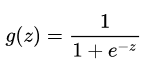
其函数曲线如下:
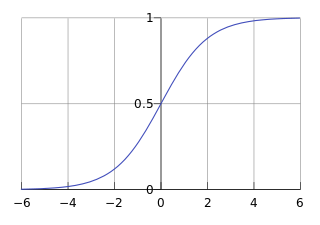
sigmoid函数有什么性质呢?
1、关于(0,0.5) 对称
2、值域范围在(0,1)之间
3、单调递增
4、光滑
5、中间较陡,两侧较平缓
6、其导数为g(z)(1-g(z)),即可以用原函数直接计算
于是逻辑回归的函数形式可以用以下公式表示:

其中θ表示权重参数,x表示输入。θTx为决策边界,就是该决策边界将不同类数据区分开来。
为什么使用sigmoid函数呢?
1、sigmoid函数本身的性质
2、推导而来
我们知道伯努利分布:
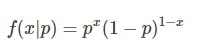
当x=1时,f(1|p) =p,当x=0时,f(0|p)=1-p
首先要明确伯努利分布也是指数族,指数族的一般表达式为:

由于:

则有:

所以:
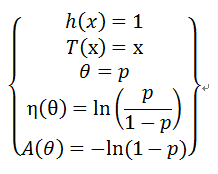
因为:
 则有:
则有:
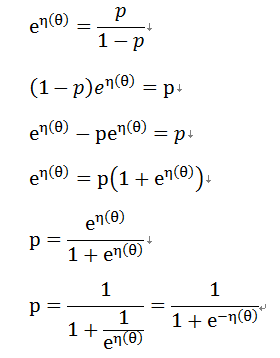
逻辑回归代价函数:

为什么这么定义呢?
以单个样本为例:

上面式子等价于:

当y=1时,其图像如下:
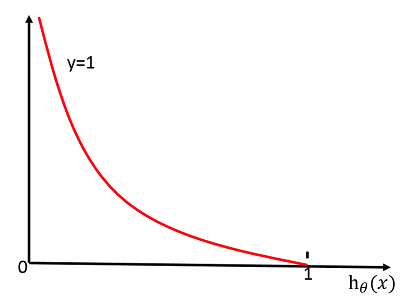
也就是说当hθ(x)的值越接近1,C(θ) 的值就越小。
同理当y=0时,其图像如下:
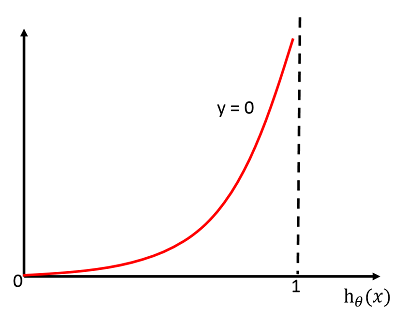
也就是说当hθ(x)的值越接近0,C(θ) 的值就越小。
这样就可以将不同类区分开来。
代价函数的倒数如下:

推导过程如下:
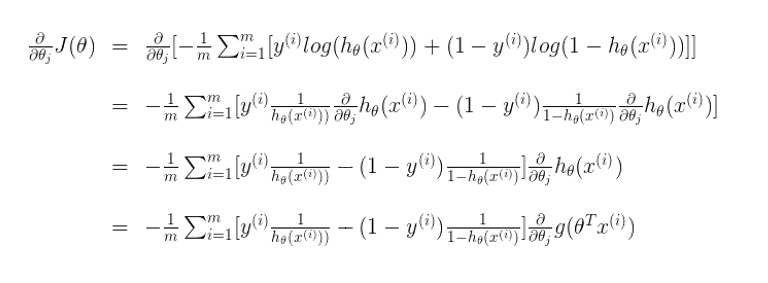
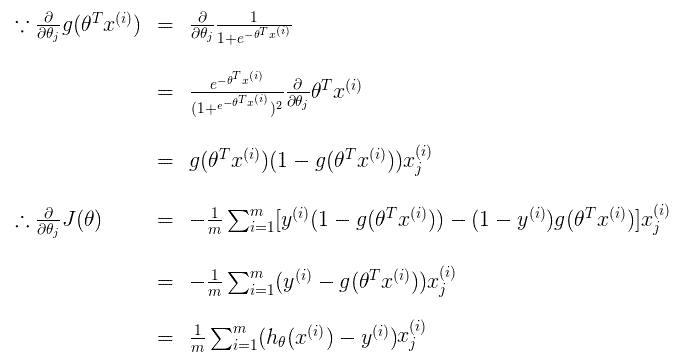
上面参考了:
https://blog.csdn.net/sun_wangdong/article/details/80780368
https://zhuanlan.zhihu.com/p/28415991
接下来就是代码实现了,代码来源: https://github.com/eriklindernoren/ML-From-Scratch
from __future__ import print_function, division

import numpy as np

import math

from mlfromscratch.utils import make_diagonal, Plot

from mlfromscratch.deep_learning.activation_functions import Sigmoid

class LogisticRegression():

    """ Logistic Regression classifier.

    Parameters:

    -----------

    learning_rate: float

        The step length that will be taken when following the negative gradient during

        training.

    gradient_descent: boolean

        True or false depending if gradient descent should be used when training. If

        false then we use batch optimization by least squares.

    """

    def __init__(self, learning_rate=.1, gradient_descent=True):

        self.param = None

        self.learning_rate = learning_rate

        self.gradient_descent = gradient_descent

        self.sigmoid = Sigmoid()

    def _initialize_parameters(self, X):

        n_features = np.shape(X)[1]

        # Initialize parameters between [-1/sqrt(N), 1/sqrt(N)]

        limit = 1 / math.sqrt(n_features)

        self.param = np.random.uniform(-limit, limit, (n_features,))

    def fit(self, X, y, n_iterations=4000):

        self._initialize_parameters(X)

        # Tune parameters for n iterations

        for i in range(n_iterations):

            # Make a new prediction

            y_pred = self.sigmoid(X.dot(self.param))

            if self.gradient_descent:

                # Move against the gradient of the loss function with

                # respect to the parameters to minimize the loss

                self.param -= self.learning_rate * -(y - y_pred).dot(X)

            else:

                # Make a diagonal matrix of the sigmoid gradient column vector

                diag_gradient = make_diagonal(self.sigmoid.gradient(X.dot(self.param)))

                # Batch opt:

                self.param = np.linalg.pinv(X.T.dot(diag_gradient).dot(X)).dot(X.T).dot(diag_gradient.dot(X).dot(self.param) + y - y_pred)

    def predict(self, X):

        y_pred = np.round(self.sigmoid(X.dot(self.param))).astype(int)

        return y_pred
说明:np.linalg.pinv()用于计算矩阵的pseudo-inverse(伪逆)。第一种方法求解使用随机梯度下降。
其中make_diagonal()函数如下:用于将向量转换为对角矩阵
def make_diagonal(x):

    """ Converts a vector into an diagonal matrix """

    m = np.zeros((len(x), len(x)))

    for i in range(len(m[0])):

        m[i, i] = x[i]

    return m
其中Sigmoid代码如下:
class Sigmoid():

    def __call__(self, x):

        return 1 / (1 + np.exp(-x))

    def gradient(self, x):

        return self.__call__(x) * (1 - self.__call__(x))
最后是主函数运行代码:
from __future__ import print_function

from sklearn import datasets

import numpy as np

import matplotlib.pyplot as plt

# Import helper functions

import sys

sys.path.append("/content/drive/My Drive/learn/ML-From-Scratch/")

from mlfromscratch.utils import make_diagonal, normalize, train_test_split, accuracy_score

from mlfromscratch.deep_learning.activation_functions import Sigmoid

from mlfromscratch.utils import Plot

from mlfromscratch.supervised_learning import LogisticRegression

def main():

    # Load dataset

    data = datasets.load_iris()

    X = normalize(data.data[data.target != 0])

    y = data.target[data.target != 0]

    y[y == 1] = 0

    y[y == 2] = 1

    X_train, X_test, y_train, y_test = train_test_split(X, y, test_size=0.33, seed=1)

    clf = LogisticRegression(gradient_descent=True)

    clf.fit(X_train, y_train)

    y_pred = clf.predict(X_test)

    accuracy = accuracy_score(y_test, y_pred)

    print ("Accuracy:", accuracy)

    # Reduce dimension to two using PCA and plot the results

    Plot().plot_in_2d(X_test, y_pred, title="Logistic Regression", accuracy=accuracy)

if __name__ == "__main__":

    main()
结果:
Accuracy: 0.9393939393939394

python实现逻辑回归的更多相关文章
- 机器学习_线性回归和逻辑回归_案例实战:Python实现逻辑回归与梯度下降策略_项目实战:使用逻辑回归判断信用卡欺诈检测
线性回归: 注:为偏置项,这一项的x的值假设为[1,1,1,1,1....] 注:为使似然函数越大,则需要最小二乘法函数越小越好 线性回归中为什么选用平方和作为误差函数?假设模型结果与测量值 误差满足 ...
- 机器学习之使用Python完成逻辑回归
一.任务基础 我们将建立一个逻辑回归模型来预测一个学生是否被大学录取.假设你是一个大学系的管理员,你想根据两次考试的结果来决定每个申请人的录取机会.你有以前的申请人的历史数据,你可以用它作为逻辑回归的 ...
- 吴裕雄 python 机器学习——逻辑回归
import numpy as np import matplotlib.pyplot as plt from matplotlib import cm from mpl_toolkits.mplot ...
- Python之逻辑回归模型来预测
建立一个逻辑回归模型来预测一个学生是否被录取. import numpy as np import pandas as pd import matplotlib.pyplot as plt impor ...
- python机器学习-逻辑回归
1.逻辑函数 假设数据集有n个独立的特征,x1到xn为样本的n个特征.常规的回归算法的目标是拟合出一个多项式函数,使得预测值与真实值的误差最小: 而我们希望这样的f(x)能够具有很好的逻辑判断性质,最 ...
- python机器学习——逻辑回归
我们知道感知器算法对于不能完全线性分割的数据是无能为力的,在这一篇将会介绍另一种非常有效的二分类模型--逻辑回归.在分类任务中,它被广泛使用 逻辑回归是一个分类模型,在实现之前我们先介绍几个概念: 几 ...
- Python使用逻辑回归估算OR值
第一种是统计学方法,需要用到 statsmodels包 statsmodels是统计和计量经济学的package,包含了用于参数评估和统计测试的实用工具 第二种是机器学习,需要使用sklearn中的L ...
- 用python实现逻辑回归
机器学习课程的一个实验,整理出来共享. 原理很简单,优化方法是用的梯度下降.后面有测试结果. # coding=utf-8 from math import exp import matplotlib ...
- Python之逻辑回归
代码: import numpy as np from sklearn import datasets from sklearn.linear_model import LogisticRegress ...
随机推荐
- vulnhub~MyExpense
最近有点忙,这几天的vulnhub断更了,今天试着做了一下myexpense,当然想要一帆风顺是不可能的,哪怕是有别人的steps 和walkthrough.所以就遇到的坑总结如下: 一般套路就是nm ...
- PTA数据结构与算法题目集(中文) 7-41PAT排名汇总 (25 分)
PTA数据结构与算法题目集(中文) 7-41PAT排名汇总 (25 分) 7-41 PAT排名汇总 (25 分) 计算机程序设计能力考试(Programming Ability Test,简称P ...
- Unity 游戏框架搭建 2019 (二十七、二十八)弃用的代码警告解决&弃用的代码删除
在前两篇,我们把所有的示例重头到尾整理了一遍. 当前的状态如下: 要做的事情: (完成) 备份:导出文件,并取一个合理的名字. 遗留问题: (完成) 第八个示例与之前的示例代码重复,功能重复. (完成 ...
- MTK Android Driver :Audio音频参数
音频参数集成(具体参数由硬件提供) 1.ring/key/mic/fmr/speech/sidetone/media/matv增益: \mediatek\custom\k9\cgen\inc\audi ...
- go 锁和sync包
一.什么是锁? sync.Mutex 是一个互斥锁,它的作用是守护在临界区入口来确保同一时间只能有一个线程进入临界区 在 sync 包中还有一个 RWMutex 锁:他能通过 RLock() 来允许同 ...
- 【django基础】django接口 异步ajax请求 导出数据库成excel表(包裹前端后端)
py文件: from django.utils.http import urlquote from rest_framework.views import APIView from django.sh ...
- 34.4 对象流 ObjectOutputStream ObjectInputStream
* 对象操作流:可以用于读写任意类型的对象 * ObjectOutputStream * writeObject * ObjectOutputStream(OutputStream out) * Ob ...
- scala_spark实践4
SparkStreaming中foreachRDD SparkStreaming是流式实时处理数据,就是将数据流按照定义的时间进行分割(就是“批处理”).每一个时间段内处理的都是一个RDD.而Spar ...
- android性能测试--CPU、内存
- Spring3.2 中 Bean 定义之基于 XML 配置方式的源码解析
Spring3.2 中 Bean 定义之基于 XML 配置方式的源码解析 本文简要介绍了基于 Spring 的 web project 的启动流程,详细分析了 Spring 框架将开发人员基于 XML ...