
自己动手编写spring IOC源码
前言:对于spring IOC概念不是很了解的朋友可以阅读我上一篇博客——轻松理解spring IOC(这两篇博客也是由于我的个人原因导致现在才发布,惭愧啊)。通过这篇博客的理解之后,相信大家会对spring的IOC概念会有进一步的理解。接下来我先预览一下本例中java的类图关系。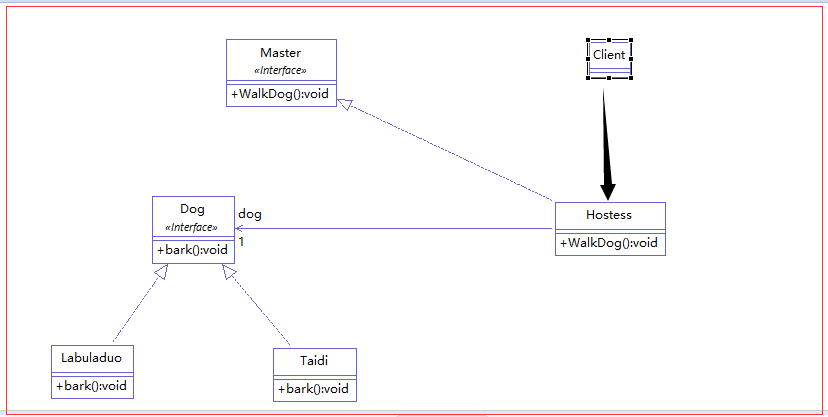
解析:我们有一个Master接口,接口中定义了一个WalkDog()遛狗的方法,Hostess是对这个接口的具体实现。然后我们有一个Dog接口,接口中有一个bark()方法,Labuladuo和Taidi是对其的实现。最后我们的程序入口Client类调用Hostess对象的WalkDog方法。
需求:Hostess对象遛狗需要一个狗对象,目前我们的类中有两个符合需求的对象,我们只要在配置文件中进行相关配置便可以指定我们的Hostess对象调用的是哪一个具体的Dog对象。
 public static void main(String[] args) {

         ApplicationContext context = new ClassPathXmlApplicationContext("applicationContext.xml");

         Master master = (Master)context.getBean("hostess");

         System.out.println();

         System.out.println();

         System.out.println();

         System.out.println("***********************************");

         master.WalkDog();

     }
解析:从main方法的前两句原spring的代码中我们可以猜想,spring框架中一定是定义了ApplicationContext这个接口,并且接口中定义了一个getBean()的方法,而ClassPathXmlApplicationContext类肯定是对其的实现。既然是我们自己动手写spring框架,我们把这个接口和类实现了也就可以了。
接口 ApplicationContext
 public interface ApplicationContext {

     public Object getBean(String beanid);

 }
实现类 ClassPathXmlApplicationContext
 package com;

 import java.io.File;

 import java.lang.reflect.Method;

 import org.dom4j.Document;

 import org.dom4j.DocumentException;

 import org.dom4j.Element;

 import org.dom4j.Node;

 import org.dom4j.io.SAXReader;

 public class ClassPathXmlApplicationContext implements ApplicationContext {

     private String fileName;

     public ClassPathXmlApplicationContext(String fileName){

         this.fileName = fileName;

     }

     @Override

     public Object getBean(String beanid) {

         //获取本类的当前目录

         String currentPath = this.getClass().getResource("").getPath().toString();

         SAXReader reader = new SAXReader();//DOM4J解释器

         Document doc = null;//xml文档本身

         Object obj = null;//目标表创建出来的实例

         try {

             doc = reader.read(  new File(currentPath+fileName)  );

             String xpath = "/beans/bean[@id='"+beanid+"']";

             Element beanNode = (Element) doc.selectSingleNode(xpath);

             String className = beanNode.attributeValue("class");

             obj = Class.forName(className).newInstance();

             Element propertyNode = (Element) beanNode.selectSingleNode("property");

             if(propertyNode!=null){

                 System.out.println("当前bean有属性需要注入");

                 String propertyName = propertyNode.attributeValue("name");

                 System.out.println("当前bean需要注入的属性为"+propertyName);

                 //拼接出注入方法

                 String setMethod = "set"+(propertyName.substring(0, 1)).toUpperCase()+propertyName.substring(1,propertyName.length());

                 System.out.println("自动调用注入方法"+setMethod);

                 String set_object_name = propertyNode.attributeValue("ref");

                 System.out.println("需要注入的对象名"+set_object_name);

                 Object di_object = getBean(set_object_name);

                 System.out.println("注入的对象实例"+di_object);

                 Method []methods = obj.getClass().getMethods();

                 for (Method m : methods) {

                     if(setMethod.equals(m.getName())  ) {

                         m.invoke(obj, di_object);

                         break;

                     }

                 }

             }else{

                 System.out.println("当前bean没有属性,无需注入直接结束");

             }

         } catch (Exception e) {

             e.printStackTrace();

         }

         return obj;

     }

 }
配置文件 applicationContext.xml
 <?xml version="1.0" encoding="UTF-8"?>

 <beans>

     <bean id="hostess" class="com.Hostess">

         <property name="dog" ref="Taidi_dog"></property>

     </bean>

     <bean id="Taidi_dog" class="com.Taidi"></bean>

     <bean id="Labuladuo_dog" class="com.Labuladuo"></bean>

 </beans>
解析:① 我们的applicationContext.xml文件主要是配置我们的java bean。这里我们自己写一份这样的文件通知我们自己的框架有哪些对象需要注入。
② 接口 ApplicationContext 这里我只是定义了一个方法就不多解释了。
③ 实现类 ClassPathXmlApplicationContext 主要是解析我们的xml文件然后构造实例的一个类。解析xml文件我们主要使用的是dom4j,获取各个节点和节点属性与属性值。创建对象则是通过反射的方式构造对象 [obj = Class.forName(className).newInstance();]。 在判断一个对象是否有属性需要注入则是使用递归算法对其一一注入。
最后: 我们来看一下运行结果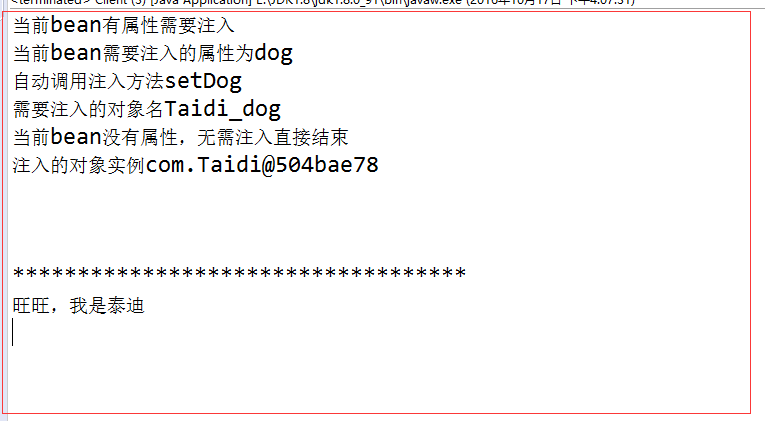
小结:我们自己手写的框架自然没有spring框架严谨,安全(不然它早倒闭了),不过spring的原理我们自己的也是大同小异的。通过源码级别的解读,相信大家已经可以熟练掌握IOC原理。
自己动手编写spring IOC源码的更多相关文章
- 深入Spring IOC源码之ResourceLoader
在<深入Spring IOC源码之Resource>中已经详细介绍了Spring中Resource的抽象,Resource接口有很多实现类,我们当然可以使用各自的构造函数创建符合需求的Re ...
- Spring IOC 源码之ResourceLoader
转载自http://www.blogjava.net/DLevin/archive/2012/12/01/392337.html 在<深入Spring IOC源码之Resource>中已经 ...
- Spring IOC 源码分析
Spring 最重要的概念是 IOC 和 AOP,本篇文章其实就是要带领大家来分析下 Spring 的 IOC 容器.既然大家平时都要用到 Spring,怎么可以不好好了解 Spring 呢?阅读本文 ...
- spring IoC源码分析 (3)Resource解析
引自 spring IoC源码分析 (3)Resource解析 定义好了Resource之后,看到XmlFactoryBean的构造函数 public XmlBeanFactory(Resource ...
- Spring IoC源码解析之invokeBeanFactoryPostProcessors
一.Bean工厂的后置处理器 Bean工厂的后置处理器:BeanFactoryPostProcessor(触发时机:bean定义注册之后bean实例化之前)和BeanDefinitionRegistr ...
- Spring IoC源码解析之getBean
一.实例化所有的非懒加载的单实例Bean 从org.springframework.context.support.AbstractApplicationContext#refresh方法开发,进入到 ...
- Spring系列(三):Spring IoC源码解析
一.Spring容器类继承图 二.容器前期准备 IoC源码解析入口: /** * @desc: ioc原理解析 启动 * @author: toby * @date: 2019/7/22 22:20 ...
- Spring IoC 源码分析 (基于注解) 之 包扫描
在上篇文章Spring IoC 源码分析 (基于注解) 一我们分析到,我们通过AnnotationConfigApplicationContext类传入一个包路径启动Spring之后,会首先初始化包扫 ...
- Spring Ioc源码分析系列--Ioc的基础知识准备
Spring Ioc源码分析系列--Ioc的基础知识准备 本系列文章代码基于Spring Framework 5.2.x Ioc的概念 在Spring里,Ioc的定义为The IoC Containe ...
随机推荐
- UI-初识君面之理论篇
一个好的app不光要用好的功能,还要有好的界面,这样内外兼修才算得上是一个好的App.其实跟人一样,不能只刷帅,要有内涵(看清楚哦,内涵不是指闷骚).不知不觉在园子里已经晃了八年,来深也八年了,.NE ...
- plist文件、NSUserDefault 对文件进行存储的类、json格式解析
========================== 文件操作 ========================== Δ一 .plist文件 .plist文件是一个属性字典数组的一个文件: .plis ...
- java中File类的使用
public class FileLei { public static void main(String[] args) throws IOException { //..表示上 ...
- 传统IT企业与互联网企业的一点思考
[注意前提]应当说,比较常用的管理策略并没有界线分明的优劣之分,只有适不适合企业的经营战略,团队文化,发展状况等. 之所以有传统IT企业与互联网企业的区别,主要的原因是两者所处的市场环境与经营思路造成 ...
- CentOS中的环境变量配置文件
CentOS的环境变量配置文件体系是一个层级体系,这与其他多用户应用系统配置文件是类似的,有全局的,有用户的,有shell的,另外不同层级有时类似继承关系.下面以PATH变量为例. 1.修改/etc/ ...
- 关于selenium RC的脚本开发
第一.需要录制脚本,找个我也不说了.就是在firefox下下载一个selenium-IDE并且安装. 第二.在工具里找到selenium-IDE点击运行. 第三.默认是红色按钮点击状态的,接下来随便你 ...
- THINKPHP源码学习--------文件上传类
TP图片上传类的理解 在做自己项目上传图片的时候一直都有用到TP的上传图片类,所以要进入源码探索一下. 文件目录:./THinkPHP/Library/Think/Upload.class.php n ...
- 【repost】document.write的用处
document.write的用处 document.write是JavaScript中对document.open所开启的文档流(document stream操作的API方法,它能够直接在文档流中 ...
- [LeetCode] Combinations 组合项
Given two integers n and k, return all possible combinations of k numbers out of 1 ... n. For exampl ...
- 使用ANTS Performance Profiler&ANTS Memory Profiler工具分析IIS进程内存和CPU占用过高问题
一.前言 最近一段时间,网站经常出现两个问题: 1.内存占用率一点点增高,直到将服务器内存占满. 2.访问某个页面时,页面响应过慢,CPU居高不下. 初步判断内存一点点增多可能是因为有未释放的资源一直 ...