
stringstream用法
1.头文件:#include<sstream>
2.stringstream是C++提供的串流(stream)物件,其中:
clear()重置流的标志状态;str()清空流的内存缓冲,重复使用内存消耗不再增加!
在使用stringstream时遇到的问题:
#include <cstdlib>

#include <iostream>

#include <sstream>

using namespace std;

int main(int argc, char * argv[])

{

    stringstream stream;

    int a,b;

    stream<<"80";

    stream>>a;

    stream<<"90";

    stream>>b;

    cout<<a<<endl;

    cout<<b<<endl;

    system("PAUSE ");

    return  EXIT_SUCCESS;

}
运行结果:

预期b为90,但是出现-858993460,这是由于stringstream重复使用时,没有清空导致的。
修改之后:
#include <cstdlib>

#include <iostream>

#include <sstream>

using namespace std;

int main(int argc, char * argv[])

{

    stringstream stream;

    int a,b;

    stream<<"80";

    stream>>a;

    stream.clear();

    stream<<"90";

    stream>>b;

    cout<<a<<endl;

    cout<<b<<endl;

    system("PAUSE ");

    return  EXIT_SUCCESS;

}
运行结果:
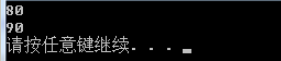
但是clear()仅仅清空标志位,并没有释放内存。
#include <cstdlib>

#include <iostream>

#include <sstream>

using namespace std;

int main(int argc, char * argv[])

{

    stringstream stream;

    int a,b;

    stream<<"80";

    stream>>a;

    stream.clear();

    cout<<"Size of stream = "<<stream.str().length()<<endl;

    stream<<"90";

    stream>>b;

    cout<<"Size of stream = "<<stream.str().length()<<endl;

    cout<<a<<endl;

    cout<<b<<endl;

    system("PAUSE ");

    return  EXIT_SUCCESS;

}
clear()之后,虽然结果正确了,但是stream占用的内存却没有释放!在实际的应用中,要是多次使用stringstream,每次都增加占用的内存。
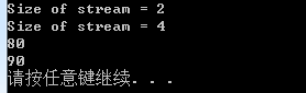
可以利用stringstream.str("")来清空stringstream。
void str ( const string & s ); // copies the content of string s to the string object associated with the string stream buffer. The function effectivelly calls rdbuf()->str(). Notice that setting a new string does not clear the error flags currently set in the stream object unless the member function clearis explicitly called.
#include <cstdlib>

#include <iostream>

#include <sstream>

using namespace std;

int main(int argc, char * argv[])

{

    stringstream stream;

    int a,b;

    stream<<"80";

    stream>>a;

    cout<<"Size of stream = "<<stream.str().length()<<endl;

    stream.clear();

    stream.str("");

    cout<<"Size of stream = "<<stream.str().length()<<endl;

    stream<<"90";

    stream>>b;

    cout<<"Size of stream = "<<stream.str().length()<<endl;

    cout<<a<<endl;

    cout<<b<<endl;

    system("PAUSE ");

    return  EXIT_SUCCESS;

}
运行结果:
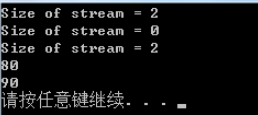
stringstream默认空格会直接分词!
題目:输入的第一行有一个数字 N 代表接下來有 N 行数字,每一行数字里有不固定个数的整数,打印每一行的总和。
输入:
3
1 2 3
20 17 23 54 77 60
111 222 333 444 555 666 777 888 999
输出:
6
251
4995
string s;

stringstream ss;

int n, i, sum, a;

cin >> n;

getline(cin, s); // 换行读取

for (i=0; i<n; i++)

{

getline(cin, s);

ss.clear();

ss.str(s);

sum=0;

while (1)

{

ss >> a;

if ( ss.fail() )
   break;

sum+=a;

}

cout << sum << endl;

}
本文主要介绍 C++ 中 stringstream 类的常见用法。
1 概述
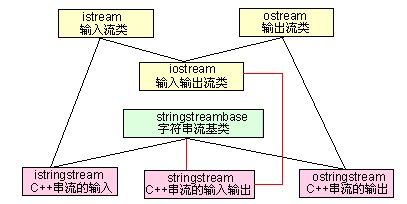
<sstream> 定义了三个类:istringstream、ostringstream 和 stringstream,分别用来进行流的输入、输出和输入输出操作。本文以 stringstream 为主,介绍流的输入和输出操作。
<sstream> 主要用来进行数据类型转换,由于 <sstream> 使用 string 对象来代替字符数组(snprintf方式),就避免缓冲区溢出的危险;而且,因为传入参数和目标对象的类型会被自动推导出来,所以不存在错误的格式化符的问题。简单说,相比c库的数据类型转换而言,<sstream> 更加安全、自动和直接。
2 代码示例
2.1 数据类型转换
这里展示一个代码示例,该示例介绍了将 int 类型转换为 string 类型的过程。示例代码(stringstream_test1.cpp)如下:
#include <string>

#include <sstream>

#include <iostream>

#include <stdio.h>

using namespace std;

int main()

{

    stringstream sstream;

    string strResult;

    int nValue = ;

    // 将int类型的值放入输入流中

    sstream << nValue;

    // 从sstream中抽取前面插入的int类型的值,赋给string类型

    sstream >> strResult;

    cout << "[cout]strResult is: " << strResult << endl;

    printf("[printf]strResult is: %s\n", strResult.c_str());

    return ;

}
编译并执行上述代码,结果如下:

2.2 多个字符串拼接
本示例介绍在 stringstream 中存放多个字符串,实现多个字符串拼接的目的(其实完全可以使用 string 类实现),同时,介绍 stringstream 的清空方法。
示例代码(stringstream_test2.cpp)如下:
#include <string>

#include <sstream>

#include <iostream>

using namespace std;

int main()

{

    stringstream sstream;

    // 将多个字符串放入 sstream 中

    sstream << "first" << " " << "string,";

    sstream << " second string";

    cout << "strResult is: " << sstream.str() << endl;

    // 清空 sstream

    sstream.str("");

    sstream << "third string";

    cout << "After clear, strResult is: " << sstream.str() << endl;

    return ;

}
编译并执行上述代码,结果如下:

从上述代码执行结果能够知道:
- 可以使用 str() 方法,将 stringstream 类型转换为 string 类型;
- 可以将多个字符串放入 stringstream 中,实现字符串的拼接目的;
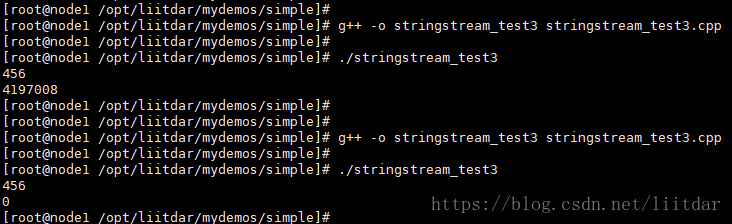
- 如果想清空 stringstream,必须使用 sstream.str(""); 方式;clear() 方法适用于进行多次数据类型转换的场景。详见示例2.3。
2.3 stringstream的清空
清空 stringstream 有两种方法:clear() 方法以及 str("") 方法,这两种方法有不同的使用场景。str("") 方法的使用场景,在上面的示例中已经介绍了,这里介绍 clear() 方法的使用场景。示例代码(stringstream_test3.cpp)如下:
#include <sstream>

#include <iostream>

using namespace std;

int main()

{

    stringstream sstream;

    int first, second;

    // 插入字符串

    sstream << "";

    // 转换为int类型

    sstream >> first;

    cout << first << endl;

    // 在进行多次类型转换前,必须先运行clear()

    sstream.clear();

    // 插入bool值

    sstream << true;

    // 转换为int类型

    sstream >> second;

    cout << second << endl;

    return ;

}
编译并执行上述代码,结果如下:

注意:在本示例涉及的场景下(多次数据类型转换),必须使用 clear() 方法清空 stringstream,不使用 clear() 方法或使用 str("") 方法,都不能得到数据类型转换的正确结果。下图分别是未使用 clear() 方法、使用 str("") 方法时的运行结果:
stringstream用法的更多相关文章
- C++ stringstream用法(转)
一直觉得C++ iostream的cout输出比起printf差了太多,今天查c++字符串拼接的时候偶然看到原来还有stringstream这个类,还是挺好用的,该类位于<sstream> ...
- [转]string和stringstream用法总结
转自:http://blog.csdn.net/xw20084898/article/details/21939811 作者:xw20084898 一.string string 是 C++ 提供的字 ...
- stringstream 用法
stringstream stringstream 是 C++ 提供的另一个字串型的串流(stream)物件,和之前学过的 iostream.fstream 有类似的操作方式.要使用 stringst ...
- string和stringstream用法总结
参考:http://blog.csdn.net/xw20084898/article/details/21939811
- STL用法总结
stringstream用法:对已有的运算符赋予多重含义,使同一个运算符作用于不同类型的数据导致不同类型的行为. stream << i 将i输入流中 stream >> ...
- c++之stringstream类的用法
简介: 今天利用opecv提取每一帧图片并保存到本地指定目录下的时,对于保存的每一帧的图片希望第几帧体现在图片名中, 这里便用到了stringstream类的将数字转化为字符串这一功能 C++ Str ...
- sstream头文件-getline 函数 和 stringstream函数 和string的常见用法
2017-08-12 19:50:50 writer:pprp getline函数可以读入一行的字符,不论有没有空格 第一个参数,流 第二个参数 ,将流读入的地方 第三个参数,当读到某个字符的时候停止 ...
- stringstream的用法
stringstream的基本用法 stringstream是字符串流.它将流与存储在内存中的string对象绑定起来. 在多种数据类型之间实现自动格式化. 1.stringstream对象的使用 # ...
- stringstream类的简介和用法
一.简介 <sstream>类库定义了三种类:istringstream,ostringstream,stringstream.分别用来进行流的输入,流的输出,输入输出操作.在此演示str ...
随机推荐
- Run Multiple Webpack Configs Sequentially
https://www.viget.com/articles/run-multiple-webpack-configs-sequentially/ const path = require('path ...
- NPOI - .NET Excel & Word操作组件
概要 NPOI 是 POI 项目的 .NET 版本.POI是一个开源的Java读写Excel.WORD等微软OLE2组件文档的项目. NPOI是构建在POI 3.x版本之上的,它可以在没有安装Offi ...
- NETTY框架的使用
一.Netty 简介 Netty 是基于 Java NIO 的异步事件驱动的网络应用框架,使用 Netty 可以快速开发网络应用,Netty 提供了高层次的抽象来简化 TCP 和 UDP 服务器的编程 ...
- jupyter安装小结
jupyter安装小结 更新时间:2016年03月13日 15:42:37 投稿:hebedich 我要评论 jupyter (之前的 ipython notebook )于我的最大意义在于 ...
- Bootstrap是什么意思?
Bootstrap是一组用于网站和网络应用程序开发的开源前端(所谓“前端”,指的是展现给最终用户的界面.与之对应的“后端”是在服务器上面运行的代码)框架,包括HTML.CSS及JavaScript的框 ...
- mysql在group by分组后查询第二条/第三条乃至每组中任意一条数据
昨天老板让我查询项目中(众筹),没人刚发起感召后,前三笔钱的入账时间和金额,这把大哥整懵逼了,group by在某些方面是好使,但这次不能为我所用了,获取第一笔进账是简单,可以用group by 直接 ...
- bzoj 3566: [SHOI2014]概率充电器 数学期望+换根dp
题意:给定一颗树,树上每个点通电概率为 $q[i]$%,每条边通电的概率为 $p[i]$%,求期望充入电的点的个数. 期望在任何时候都具有线性性,所以可以分别求每个点通电的概率(这种情况下期望=概率 ...
- [matlab工具箱] 曲线拟合Curve Fitting
——转载网络 我的matlab版本是 2016a 首先,工具箱如何打开呢? 在 apps 这个菜单项中,可以找到很多很多的应用,点击就可以打开具体的工具窗口 本文介绍的工具有以下这些: curve F ...
- Processing 2.1.1 无法使用video和movie问题解决方案
升级到2.1.1后,尝试着运行了一下sample中的video和movie,结果都报错,上网搜了一下,找到解决方法. 1. 首先来看movie的错误,如下: JNA: Callback org.gst ...
- Day11:Flex布局
参考: 来源:http://www.ruanyifeng.com/blog/2015/07/flex-grammar.html 网页布局是css的一个重点. 盒子模型 display属性 positi ...