
[LeetCode] Clone Graph 无向图的复制
Given a reference of a node in a connected undirected graph, return a deep copy (clone) of the graph. Each node in the graph contains a val (int) and a list (List[Node]) of its neighbors.
Example:
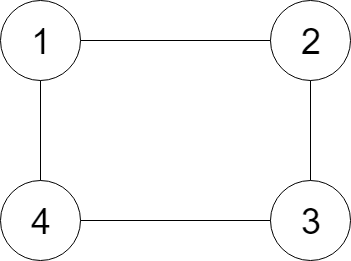
Input:

{"$id":"1","neighbors":[{"$id":"2","neighbors":[{"$ref":"1"},{"$id":"3","neighbors":[{"$ref":"2"},{"$id":"4","neighbors":[{"$ref":"3"},{"$ref":"1"}],"val":4}],"val":3}],"val":2},{"$ref":"4"}],"val":1}

Explanation:

Node 1's value is 1, and it has two neighbors: Node 2 and 4.

Node 2's value is 2, and it has two neighbors: Node 1 and 3.

Node 3's value is 3, and it has two neighbors: Node 2 and 4.

Node 4's value is 4, and it has two neighbors: Node 1 and 3.
Note:
- The number of nodes will be between 1 and 100.
- The undirected graph is a simple graph, which means no repeated edges and no self-loops in the graph.
- Since the graph is undirected, if node p has node q as neighbor, then node q must have node p as neighbor too.
- You must return the copy of the given node as a reference to the cloned graph.
这道无向图的复制问题和之前的 Copy List with Random Pointer 有些类似,那道题的难点是如何处理每个结点的随机指针,这道题目的难点在于如何处理每个结点的 neighbors,由于在深度拷贝每一个结点后,还要将其所有 neighbors 放到一个 vector 中,而如何避免重复拷贝呢?这道题好就好在所有结点值不同,所以我们可以使用 HashMap 来对应原图中的结点和新生成的克隆图中的结点。对于图的遍历的两大基本方法是深度优先搜索 DFS 和广度优先搜索 BFS,这里我们先使用深度优先搜索DFS来解答此题,在递归函数中,首先判空,然后再看当前的结点是否已经被克隆过了,若在 HashMap 中存在,则直接返回其映射结点。否则就克隆当前结点,并在 HashMap 中建立映射,然后遍历当前结点的所有 neihbor 结点,调用递归函数并且加到克隆结点的 neighbors 数组中即可,代码如下:
解法一:
class Solution {

public:

    Node* cloneGraph(Node* node) {

        unordered_map<Node*, Node*> m;

        return helper(node, m);

    }

    Node* helper(Node* node, unordered_map<Node*, Node*>& m) {

        if (!node) return NULL;

        if (m.count(node)) return m[node];

        Node *clone = new Node(node->val);

        m[node] = clone;

        for (Node *neighbor : node->neighbors) {

            clone->neighbors.push_back(helper(neighbor, m));

        }

        return clone;

    }

};
我们也可以使用 BFS 来遍历图,使用队列 queue 进行辅助,还是需要一个 HashMap 来建立原图结点和克隆结点之间的映射。先克隆当前结点,然后建立映射,并加入 queue 中,进行 while 循环。在循环中,取出队首结点,遍历其所有 neighbor 结点,若不在 HashMap 中,我们根据 neigbor 结点值克隆一个新 neighbor 结点,建立映射,并且排入 queue 中。然后将 neighbor 结点在 HashMap 中的映射结点加入到克隆结点的 neighbors 数组中即可,参见代码如下:
解法二:
class Solution {

public:

    Node* cloneGraph(Node* node) {

        if (!node) return NULL;

        unordered_map<Node*, Node*> m;

        queue<Node*> q{{node}};

        Node *clone = new Node(node->val);

        m[node] = clone;

        while (!q.empty()) {

            Node *t = q.front(); q.pop();

            for (Node *neighbor : t->neighbors) {

                if (!m.count(neighbor)) {

                    m[neighbor] = new Node(neighbor->val);

                    q.push(neighbor);

                }

                m[t]->neighbors.push_back(m[neighbor]);

            }

        }

        return clone;

    }

};
类似题目:
参考资料:
https://leetcode.com/problems/clone-graph/
https://leetcode.com/problems/clone-graph/discuss/42313/C%2B%2B-BFSDFS
https://leetcode.com/problems/clone-graph/discuss/42309/Depth-First-Simple-Java-Solution
LeetCode All in One 题目讲解汇总(持续更新中...)
[LeetCode] Clone Graph 无向图的复制的更多相关文章
- [LeetCode] Clone Graph 克隆无向图
Given a reference of a node in a connected undirected graph, return a deep copy (clone) of the graph ...
- LeetCode: Clone Graph 解题报告
Clone GraphClone an undirected graph. Each node in the graph contains a label and a list of its neig ...
- LeetCode:Clone Graph
题目如下:实现克隆图的算法 题目链接 Clone an undirected graph. Each node in the graph contains a label and a list of ...
- [leetcode]Clone Graph @ Python
原题地址:https://oj.leetcode.com/problems/clone-graph/ 题意:实现对一个图的深拷贝. 解题思路:由于遍历一个图有两种方式:bfs和dfs.所以深拷贝一个图 ...
- 133. Clone Graph(图的复制)
Given the head of a graph, return a deep copy (clone) of the graph. Each node in the graph contains ...
- [LeetCode]Copy List with Random Pointer &Clone Graph 复杂链表的复制&图的复制
/** * Definition for singly-linked list with a random pointer. * struct RandomListNode { * int label ...
- Leetcode之广度优先搜索(BFS)专题-133. 克隆图(Clone Graph)
Leetcode之广度优先搜索(BFS)专题-133. 克隆图(Clone Graph) BFS入门详解:Leetcode之广度优先搜索(BFS)专题-429. N叉树的层序遍历(N-ary Tree ...
- [LeetCode] Number of Connected Components in an Undirected Graph 无向图中的连通区域的个数
Given n nodes labeled from 0 to n - 1 and a list of undirected edges (each edge is a pair of nodes), ...
- 【LeetCode】133. Clone Graph (3 solutions)
Clone Graph Clone an undirected graph. Each node in the graph contains a label and a list of its nei ...
随机推荐
- ASP.NET Core 中文文档 第二章 指南(4.4)添加 Model
原文:Adding a model 作者:Rick Anderson 翻译:娄宇(Lyrics) 校对:许登洋(Seay).孟帅洋(书缘).姚阿勇(Mr.Yao).夏申斌 在这一节里,你将添加一些类来 ...
- HTML基本元素(四)
1.HTML框架 框架的作用就是把浏览器窗口划分成多个子窗口,而且每个子窗口都可以载入各自的HTML文档. *注意:html框架集与body同级,因此不能同时出现! 框架结构标签:<frames ...
- 阿里巴巴最新开源项目 - [HandyJSON] 在Swift中优雅地处理JSON
项目名称:HandyJSON 项目地址:https://github.com/alibaba/handyjson 背景 JSON是移动端开发常用的应用层数据交换协议.最常见的场景便是,客户端向服务端发 ...
- web 开发自动化grunt
现在web开发自动化已很流行,如何进行压缩文件,如何进行测试js是否正确,如何进行 检测html文件是否规范等等都可以通过web自动化技术进行实现,只要打一个命令即可. 本文主要是通过grunt进行实 ...
- 解决VS调试时断点不会命中
断点调试是VS中的一大利器,有了它我们可以快速定位到代码的问题所在.在某些情况下会导致设置了断点后程序无法在断点处停下,下面分4种情况来解决断点不会命中的问题 百度经验:jingyan.baidu.c ...
- Asp.NET MVC 使用 SignalR 实现推送功能二(Hubs 在线聊天室 获取保存用户信息)
简单介绍 关于SignalR的简单实用 请参考 Asp.NET MVC 使用 SignalR 实现推送功能一(Hubs 在线聊天室) 在上一篇中,我们只是介绍了简单的消息推送,今天我们来修改一下,实现 ...
- python学习笔记(基础二:注释、用户输入、格式化输出)
注释 单行:# 多行:上下各用3个连续单引号或双引号 3个引号除了多行注释,还可以打印多行 举例: msg = ''' name = "Alex Li" name2 = name ...
- 记录一次bug解决过程:可维护性和性能优化
一.总结 使用某些变量的地方在2次以上的,强烈建议使用枚举值来维护变量,日后方便扩展. 查数据库的方法调用,能合并就净量去合并. 二.Bug描述 枚举变量的维护以及方法使用: public class ...
- springmvc配置文件web.xml详解各方总结(转载)
Spring分为多个文件进行分别的配置,其中在servlet-name中如果没有指定init-param属性,那么系统自动寻找的spring配置文件为[servlet-name]-servlet.xm ...
- linux使用wkhtmltopdf报错error while loading shared libraries:
官网提示 linux需要这些动态库.depends on: zlib, fontconfig, freetype, X11 libs (libX11, libXext, libXrender) 在li ...