
memcached学习笔记——连接模型
文章链接:http://www.hcoding.com/?p=121
个人站点:JC&hcoding.com
memcached是什么呢?memcached是一个优秀的、高性能的内存缓存工具。
memcached具有以下的特点:
- 协议简单:memcached的服务器客户端通信并不使用复杂的MXL等格式,而是使用简单的基于文本的协议。
- 基于libevent的事件处理:libevent是个程序库,他将Linux 的epoll、BSD类操作系统的kqueue等时间处理功能封装成统一的接口。memcached使用这个libevent库,因此能在Linux、BSD、Solaris等操作系统上发挥其高性能。(libevent是什么)
- 内置内存存储方式:为了提高性能,memcached中保存的数据都存储在memcached内置的内存存储空间中。由于数据仅存在于内存中,因此重启memcached,重启操作系统会导致全部数据消失。另外,内容容量达到指定的值之后memcached回自动删除不适用的缓存。
- Memcached不互通信的分布式:memcached尽管是“分布式”缓存服务器,但服务器端并没有分布式功能。各个memcached不会互相通信以共享信息。他的分布式主要是通过客户端实现的。
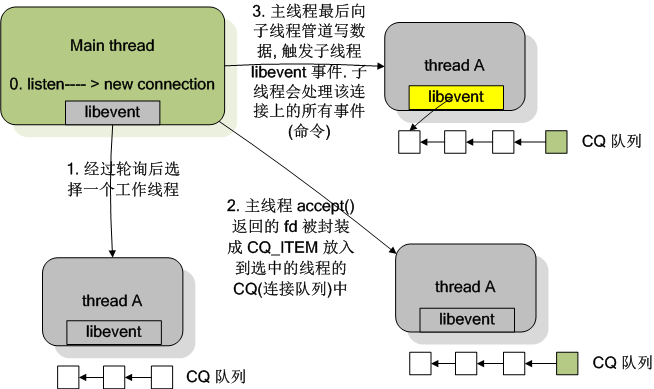
本文主要讲解memcached的连接模型,memcached由一条主线程(连接线程)监听连接,然后把成功的连接交给子线程(工作线程)处理读写操作。N条【启动memcached通过-t命令指定】子线程(工作线程)负责读写数据,一条子线程(工作线程)维护着多个连接。一个conn结构体对象对应着一个连接,主线程(连接线程)成功连接后,会把连接的内容赋值到一个conn结构体对象,并把这个conn结构体对象传递给一条子线程(工作线程)处理。
conn结构体:
 typedef struct conn conn;

 struct conn {

     int    sfd;

     sasl_conn_t *sasl_conn;

     // 连接状态

     enum conn_states  state;

     enum bin_substates substate;

     struct event event;

     short  ev_flags;

     // 刚刚出发的事件

     short  which;   /** which events were just triggered */

     // read buffer

     char   *rbuf;   /** buffer to read commands into */

     // 已经解析了一部分的命令, 指向已经解析结束的地方

     char   *rcurr;  /** but if we parsed some already, this is where we stopped */

     // rbuf 已分配的大小

     int    rsize;   /** total allocated size of rbuf */

     // 尚未解析的命令大小

     int    rbytes;  /** how much data, starting from rcur, do we have unparsed */

     // buffer to write

     char   *wbuf;

     // 指向已经返回的地方

     char   *wcurr;

     // 写大小

     int    wsize;

     // 尚未写的数据大小

     int    wbytes;

     /** which state to go into after finishing current write */

     // 当写回结束后需要即刻转变的状态

     enum conn_states  write_and_go;

     void   *write_and_free; /** free this memory after finishing writing */

     char   *ritem;  /** when we read in an item's value, it goes here */

     int    rlbytes;

     /* data for the nread state */

     /**

      * item is used to hold an item structure created after reading the command

      * line of set/add/replace commands, but before we finished reading the actual

      * data. The data is read into ITEM_data(item) to avoid extra copying.

      */

     // 指向当下需要完成的任务

     void   *item;     /* for commands set/add/replace  */

     /* data for the swallow state */

     int    sbytes;    /* how many bytes to swallow */

     /* data for the mwrite state */

     struct iovec *iov;

     int    iovsize;   /* number of elements allocated in iov[] */

     int    iovused;   /* number of elements used in iov[] */

     // msghdr 链表, 一个连接可能有多个 msghdr

     // 如果是 UDP, 需要为每一个 msghdr 填写一个 UDP 头部

     struct msghdr *msglist;

     int    msgsize;   /* number of elements allocated in msglist[] */

     int    msgused;   /* number of elements used in msglist[] */

     int    msgcurr;   /* element in msglist[] being transmitted now */

     int    msgbytes;  /* number of bytes in current msg */

     item   **ilist;   /* list of items to write out */

     int    isize;

     item   **icurr;

     // 记录任务数量

     int    ileft;

     char   **suffixlist;

     int    suffixsize;

     char   **suffixcurr;

     int    suffixleft;

     enum protocol protocol;   /* which protocol this connection speaks */

     enum network_transport transport; /* what transport is used by this connection */

     /* data for UDP clients */

     int    request_id; /* Incoming UDP request ID, if this is a UDP "connection" */

     struct sockaddr request_addr; /* Who sent the most recent request */

     socklen_t request_addr_size;

     unsigned char *hdrbuf; /* udp packet headers */

     int    hdrsize;   /* number of headers' worth of space is allocated */

     bool   noreply;   /* True if the reply should not be sent. */

     /* current stats command */

     struct {

         char *buffer;

         size_t size;

         size_t offset;

     } stats;

     /* Binary protocol stuff */

     /* This is where the binary header goes */

     protocol_binary_request_header binary_header;

     uint64_t cas; /* the cas to return */

     short cmd; /* current command being processed */

     // ? 不透明

     int opaque;

     int keylen;

     // 可见是一个链表

     conn   *next;     /* Used for generating a list of conn structures */

     // 指向服务于此连接的线程

     LIBEVENT_THREAD *thread; /* Pointer to the thread object serving this connection */

 };
 //memcached.c

 int main{

     // ......

     // 第一步:初始化主线程的事件机制

     /* initialize main thread libevent instance */

     // libevent 事件机制初始化

     main_base = event_init();

     // ......

     // 第二步:初始化 N 个 (初始值200,当连接超过200个的时候会往上递增) conn结构体对象

     // 空闲连接数组初始化

     conn_init();

     // ......

     // 第三步:启动工作线程

     /* start up worker threads if MT mode */

     thread_init(settings.num_threads, main_base);

     // ......

     // 第四步:初始化socket,绑定监听端口,为主线程的事件机制设置连接监听事件(event_set、event_add)

     /**

         memcached 有可配置的两种模式: unix 域套接字和 TCP/UDP, 允许客户端以两种方式向 memcached 发起请求. 客户端和服务器在同一个主机上的情况下可以用 unix 域套接字, 否则可以采用 TCP/UDP 的模式. 两种模式是不兼容的.

         以下的代码便是根据 settings.socketpath 的值来决定启用哪种方式.

     */

     /**

         第一种, unix 域套接字.

     */

     /* create unix mode sockets after dropping privileges */

     if (settings.socketpath != NULL) {

         errno = ;

         if (server_socket_unix(settings.socketpath,settings.access)) {

             vperror("failed to listen on UNIX socket: %s", settings.socketpath);

             exit(EX_OSERR);

         }

     }

     /**

         第二种, TCP/UDP.

     */

     /* create the listening socket, bind it, and init */

     if (settings.socketpath == NULL) {

         const char *portnumber_filename = getenv("MEMCACHED_PORT_FILENAME");

         char temp_portnumber_filename[PATH_MAX];

         FILE *portnumber_file = NULL;

         // 读取端口号文件

         if (portnumber_filename != NULL) {

             snprintf(temp_portnumber_filename,

                      sizeof(temp_portnumber_filename),

                      "%s.lck", portnumber_filename);

             portnumber_file = fopen(temp_portnumber_filename, "a");

             if (portnumber_file == NULL) {

                 fprintf(stderr, "Failed to open \"%s\": %s\n",

                         temp_portnumber_filename, strerror(errno));

             }

         }

         // TCP

         errno = ;

         if (settings.port && server_sockets(settings.port, tcp_transport,

                                            portnumber_file)) {

             vperror("failed to listen on TCP port %d", settings.port);

             exit(EX_OSERR);

         }

         /*

          * initialization order: first create the listening sockets

          * (may need root on low ports), then drop root if needed,

          * then daemonise if needed, then init libevent (in some cases

          * descriptors created by libevent wouldn't survive forking).

          */

         // UDP

         /* create the UDP listening socket and bind it */

         errno = ;

         if (settings.udpport && server_sockets(settings.udpport, udp_transport,

                                               portnumber_file)) {

             vperror("failed to listen on UDP port %d", settings.udpport);

             exit(EX_OSERR);

         }

         if (portnumber_file) {

             fclose(portnumber_file);

             rename(temp_portnumber_filename, portnumber_filename);

         }

     }

     // ......

     // 第五步:主线程进入事件循环

     /* enter the event loop */

     // 进入事件循环

     if (event_base_loop(main_base, ) != ) {

         retval = EXIT_FAILURE;

     }

     // ......

 }
LIBEVENT_THREAD 结构体:
 // 多个线程, 每个线程一个 event_base

 typedef struct {

     pthread_t thread_id;        /* unique ID of this thread */

     struct event_base *base;    /* libevent handle this thread uses */

     // event 结构体, 用于管道读写事件的监听

     struct event notify_event;  /* listen event for notify pipe */

     // 读写管道文件描述符

     int notify_receive_fd;      /* receiving end of notify pipe */

     int notify_send_fd;         /* sending end of notify pipe */

     // 线程的状态

     struct thread_stats stats;  /* Stats generated by this thread */

     // 这个线程需要处理的连接队列

     struct conn_queue *new_conn_queue; /* queue of new connections to handle */

     cache_t *suffix_cache;      /* suffix cache */

     uint8_t item_lock_type;     /* use fine-grained or global item lock */

 } LIBEVENT_THREAD;
第三步工作线程的详细启动过程:
 /*

  * thread.c

  *

  * 初始化线程子系统, 创建工作线程

  * Initializes the thread subsystem, creating various worker threads.

  *

  * nthreads  Number of worker event handler threads to spawn

  *   需准备的线程数

  * main_base Event base for main thread

  *   分发线程

  */

 void thread_init(int nthreads, struct event_base *main_base) {

     int         i;

     int         power;

     // 互斥量初始化

     pthread_mutex_init(&cache_lock, NULL);

     pthread_mutex_init(&stats_lock, NULL);

     pthread_mutex_init(&init_lock, NULL);

     //条件同步

     pthread_cond_init(&init_cond, NULL);

     pthread_mutex_init(&cqi_freelist_lock, NULL);

     cqi_freelist = NULL;

     /* Want a wide lock table, but don't waste memory */

     if (nthreads < ) {

         power = ;

     } else if (nthreads < ) {

         power = ;

     } else if (nthreads < ) {

         power = ;

     } else {

         // 2^13

         /* 8192 buckets, and central locks don't scale much past 5 threads */

         power = ;

     }

     // hashsize = 2^n

     item_lock_count = hashsize(power);

     item_locks = calloc(item_lock_count, sizeof(pthread_mutex_t));

     if (! item_locks) {

         perror("Can't allocate item locks");

         exit();

     }

     // 初始化

     for (i = ; i < item_lock_count; i++) {

         pthread_mutex_init(&item_locks[i], NULL);

     }

     //item_lock_type_key设置为线程的私有变量的key

     pthread_key_create(&item_lock_type_key, NULL);

     pthread_mutex_init(&item_global_lock, NULL);

     // LIBEVENT_THREAD 是结合 libevent 使用的结构体, event_base, 读写管道

     threads = calloc(nthreads, sizeof(LIBEVENT_THREAD));

     if (! threads) {

         perror("Can't allocate thread descriptors");

         exit();

     }

     // main_base 是分发任务的线程, 即主线程

     dispatcher_thread.base = main_base;

     dispatcher_thread.thread_id = pthread_self();

     // 管道, libevent 通知用的

     // 一个 LIBEVENT_THREAD 结构体对象对应由一条子线程维护

     // 子线程通过读管道来接收主线程的命令(例如主线程接收到新连接,会往子线程的读管道写入字符'c',子线程接收到命令就会做出相应的处理)

     for (i = ; i < nthreads; i++) {

         int fds[];

         if (pipe(fds)) {

             perror("Can't create notify pipe");

             exit();

         }

         // 读管道

         threads[i].notify_receive_fd = fds[];

         // 写管道

         threads[i].notify_send_fd = fds[];

         // 初始化线程信息数据结构, 其中就将 event 结构体的回调函数设置为 thread_libevent_process(),此时线程还没有创建

         setup_thread(&threads[i]);

         /* Reserve three fds for the libevent base, and two for the pipe */

         stats.reserved_fds += ;

     }

     /* Create threads after we've done all the libevent setup. */

     // 创建并初始化线程, 线程的代码都是 work_libevent()

     for (i = ; i < nthreads; i++) {

         // 调用 pthread_attr_init() 和 pthread_create() 来创建子线程

         // 子线程的函数入口 worker_libevent ,负责启动子线程的事件循环

         create_worker(worker_libevent, &threads[i]);

     }

     /* Wait for all the threads to set themselves up before returning. */

     pthread_mutex_lock(&init_lock);

     // wait_for_thread_registration() 是 pthread_cond_wait 的调用

     wait_for_thread_registration(nthreads);

     pthread_mutex_unlock(&init_lock);

 }

 /*

  * Set up a thread's information.

  */

  // 填充 LIBEVENT_THREAD 结构体, 其中包括:

  //     填充 struct event

  //     初始化线程工作队列

  //     初始化互斥量

  //     等

 static void setup_thread(LIBEVENT_THREAD *me) {

     // 子线程的事件机制,每条子线程都有一个事件机制

     me->base = event_init();

     if (! me->base) {

         fprintf(stderr, "Can't allocate event base\n");

         exit();

     }

     /* Listen for notifications from other threads */

     // 在线程数据结构初始化的时候, 为 me->notify_receive_fd 读管道注册读事件, 回调函数是 thread_libevent_process()

     // 为子线程的事件机制添加事件

     event_set(&me->notify_event, me->notify_receive_fd,

               EV_READ | EV_PERSIST, thread_libevent_process, me);

     event_base_set(me->base, &me->notify_event);

     if (event_add(&me->notify_event, ) == -) {

         fprintf(stderr, "Can't monitor libevent notify pipe\n");

         exit();

     }

     // ......

 }

 /*

  * Worker thread: main event loop

  * 线程函数入口, 启动事件循环

  */

 static void *worker_libevent(void *arg) {

     LIBEVENT_THREAD *me = arg;

     // ......

     // 进入事件循环

     event_base_loop(me->base, );

     return NULL;

 }
子线程读管道回调函数:
 /*

  * Processes an incoming "handle a new connection" item. This is called when

  * input arrives on the libevent wakeup pipe.

  *

  * 当管道有数据可读的时候会触发此函数的调用

  */

 static void thread_libevent_process(int fd, short which, void *arg) {

     LIBEVENT_THREAD *me = arg;

     CQ_ITEM *item;

     char buf[];

     if (read(fd, buf, ) != )

         if (settings.verbose > )

             fprintf(stderr, "Can't read from libevent pipe\n");

     switch (buf[]) {

     case 'c':

     // 表示主线程把一个新的连接分发给该子线程处理

     // 取出一个任务

     item = cq_pop(me->new_conn_queue);

     if (NULL != item) {

         // 为新的请求建立一个连接结构体. 连接其实已经建立, 这里只是为了填充连接结构体. 最关键的动作是在 libevent 中注册了事件, 回调函数是 event_handler()

         conn *c = conn_new(item->sfd, item->init_state, item->event_flags,

                            item->read_buffer_size, item->transport, me->base);

         if (c == NULL) {

             if (IS_UDP(item->transport)) {

                 fprintf(stderr, "Can't listen for events on UDP socket\n");

                 exit();

             } else {

                 if (settings.verbose > ) {

                     fprintf(stderr, "Can't listen for events on fd %d\n",

                         item->sfd);

                 }

                 close(item->sfd);

             }

         } else {

             c->thread = me;

         }

         cqi_free(item);

     }

         break;

     /* we were told to flip the lock type and report in */

     case 'l':

     me->item_lock_type = ITEM_LOCK_GRANULAR;

     register_thread_initialized();

         break;

     case 'g':

     me->item_lock_type = ITEM_LOCK_GLOBAL;

     register_thread_initialized();

         break;

     }

 }
第四步主要是初始化socket、绑定服务器端口和IP、为主线程事件机制添加监听连接事件:
 // memcached.c

 // server_sockets()->server_socket()

 static int server_socket(const char *interface,

                          int port,

                          enum network_transport transport,

                          FILE *portnumber_file) {

     // ......

     // getaddrinfo函数能够处理名字到地址以及服务到端口这两种转换,返回的是一个addrinfo的结构(列表)指针而不是一个地址清单。

     error= getaddrinfo(interface, port_buf, &hints, &ai);

     if (error != ) {

         if (error != EAI_SYSTEM)

           fprintf(stderr, "getaddrinfo(): %s\n", gai_strerror(error));

         else

           perror("getaddrinfo()");

         return ;

     }

     for (next= ai; next; next= next->ai_next) {

         conn *listen_conn_add;

         // new_socket() 申请了一个 UNIX 域套接字,通过调用socket()方法创建套接字,并设置把套接字为非阻塞

         if ((sfd = new_socket(next)) == -) {

             // ......

         }// if

         // ......

         // bind() 绑定源IP的端口

         if (bind(sfd, next->ai_addr, next->ai_addrlen) == -) {

             // ......

         } else {

             success++;

             // bind()调用成功后,调用listen()

             if (!IS_UDP(transport) && listen(sfd, settings.backlog) == -) {

                 // ......

             }

             // ......

         }

         // UDP 和 TCP 区分对待, UDP 没有连接概念, 只要绑定服务器之后, 直接读取 socket 就好了, 所以与它对应 conn 的初始状态应该为 conn_read; 而 TCP 对应的 conn 初始状态应该为 conn_listening

         if (IS_UDP(transport)) {

             // UDP

             int c;

             for (c = ; c < settings.num_threads_per_udp; c++) {

                 /* this is guaranteed to hit all threads because we round-robin */

                 // 分发新的连接到线程池中的一个线程中

                 dispatch_conn_new(sfd, conn_read, EV_READ | EV_PERSIST,

                                   UDP_READ_BUFFER_SIZE, transport);

             }

         } else {

             // TCP 要建立连接

             if (!(listen_conn_add = conn_new(sfd, conn_listening,

                                              EV_READ | EV_PERSIST, ,

                                              transport, main_base))) {

                 fprintf(stderr, "failed to create listening connection\n");

                 exit(EXIT_FAILURE);

             }

             // 放在头部, listen_conn 是头指针

             listen_conn_add->next = listen_conn;

             listen_conn = listen_conn_add;

         }

     }

     freeaddrinfo(ai);

     /* Return zero iff we detected no errors in starting up connections */

     return success == ;

 }

 // 填写 struct conn 结构体, 包括 struct conn 中的 event 结构, 并返回

 conn *conn_new(const int sfd, enum conn_states init_state,

                 const int event_flags,

                 const int read_buffer_size, enum network_transport transport,

                 struct event_base *base) {

     // c 指向一个新的 conn 空间

     // 可能是出于性能的考虑, memcached 预分配了若干个 struct conn 空间

     {

         /* data */

     };

     conn *c = conn_from_freelist();

     if (NULL == c) {

         // 可能分配失败了, 因为默认数量有限. 进行新的扩展,conn_init()中初始数量是200

         if (!(c = (conn *)calloc(, sizeof(conn)))) {

             fprintf(stderr, "calloc()\n");

             return NULL;

         }

         // ......

         // 填充conn结构体

     }// if

     // ......

     // libevent 操作: 设置事件, 设置回调函数 event_handler()

     event_set(&c->event, sfd, event_flags, event_handler, (void *)c);

     // libevent 操作:设置 c->event 的 event_base

     event_base_set(base, &c->event);

     c->ev_flags = event_flags;

     // libevent 操作: 添加事件

     if (event_add(&c->event, ) == -) {

         // ......

     }

     // ......

     return c;

 }
memcached学习笔记——连接模型的更多相关文章
- memcached学习笔记——存储命令源码分析上篇
原创文章,转载请标明,谢谢. 上一篇分析过memcached的连接模型,了解memcached是如何高效处理客户端连接,这一篇分析memcached源码中的process_update_command ...
- memcached学习笔记——存储命令源码分析下篇
上一篇回顾:<memcached学习笔记——存储命令源码分析上篇>通过分析memcached的存储命令源码的过程,了解了memcached如何解析文本命令和mencached的内存管理机制 ...
- Memcached 学习笔记(二)——ruby调用
Memcached 学习笔记(二)——ruby调用 上一节我们讲述了怎样安装memcached及memcached常用命令.这一节我们将通过ruby来调用memcached相关操作. 第一步,安装ru ...
- ArcGIS案例学习笔记2_2_模型构建器和山顶点提取批处理
ArcGIS案例学习笔记2_2_模型构建器和山顶点提取批处理 计划时间:第二天下午 背景:数据量大,工程大 目的:自动化,批处理,定制业务流程,不写程序 教程:Pdf/343 数据:chap8/ex5 ...
- Django:学习笔记(7)——模型进阶
Django:学习笔记(7)——模型进阶 模型的继承 我们在面向对象的编程中,一个很重要的的版块,就是类的继承.父类保存了所有子类共有的内容,子类通过继承它来减少冗余代码并进行灵活扩展. 在Djang ...
- Django:学习笔记(6)——模型
Django:学习笔记(6)——模型 快速上手 模型到底是什么呢?我们可以想,如果一张数据表的各个字段可以自动映射到一个类的各个属性,则每条记录对应这个类的一个对象.那我们通过类方法来操作对象(即表记 ...
- JVM学习笔记——内存模型篇
JVM学习笔记--内存模型篇 在本系列内容中我们会对JVM做一个系统的学习,本片将会介绍JVM的内存模型部分 我们会分为以下几部分进行介绍: 内存模型 乐观锁与悲观锁 synchronized优化 内 ...
- JUC学习笔记——共享模型之管程
JUC学习笔记--共享模型之管程 在本系列内容中我们会对JUC做一个系统的学习,本片将会介绍JUC的管程部分 我们会分为以下几部分进行介绍: 共享问题 共享问题解决方案 线程安全分析 Monitor ...
- JUC学习笔记——共享模型之内存
JUC学习笔记--共享模型之内存 在本系列内容中我们会对JUC做一个系统的学习,本片将会介绍JUC的内存部分 我们会分为以下几部分进行介绍: Java内存模型 可见性 模式之两阶段终止 模式之Balk ...
随机推荐
- quartz2.2.1-测试01
工程列表: (1)web.xml <?xml version="1.0" encoding="UTF-8"?> <web-app versio ...
- Ubuntu12.04 下搭建Java开发环境
1:下载 jdk-7u40-linux-i586.tar.gz. 2:解压安装. (1)创建jvm目录:sudo mkdir -p /usr/lib/jvm (2)sudo tar zxvf ./ j ...
- virtualbox端口转发
端口转发:setting->network->adapter:attached to NAT.port forwarding rules->name protocol ...
- Android ListView嵌套Button,Button事件覆盖item事件解决办法
方法就是修改item布局的xml文件: 在根布局里加上: android:descendantFocusability="blocksDescendants" 然后在按钮布局里加上 ...
- EF 接收OUTPUT参数的方法 How to Retrieve Stored Procedure Output Parameters in Entity Framework
原文地址:http://blogs.microsoft.co.il/gilf/2010/05/09/how-to-retrieve-stored-procedure-output-parameters ...
- zabbix discovery
preface(见面礼): 仅扫tcp端口: netstat -tnlp|egrep -i "$1"
- 自定义listView添加滑动删除功能
今天研究了一下android里面的手势,结合昨天学习的自定义View,做了一个自定义的listview,继承自listView,添加了条目的滑动手势操作,滑动后出现一个删除按钮,点击删除按钮,触发一个 ...
- 【MongoDB数据库】怎样安装、配置MongoDB
本blog以最简洁的方式记录了博主在折腾MongoDB过程中点点滴滴,当中包含下载MongoDB.配置环境变量.怎样启动MongoDBserver.怎样连接MongoDBserver以及怎样连接Mon ...
- oracle tkprof 工具详解
oracle tkprof 工具详解 今天是2013-09-26,进行tkprof工具使用学习,在此记录一下笔记: 一)查看需要跟踪会话信息: select s.sid,s.serial#,s.us ...
- 关于js中 document.body.scrollTop 不能返回正确值的原因
本来是为了通过document.body.scrollTop来获取浏览器垂直滚动条向下滚动的像素,但是不管滚动条在什么位置总是返回是0,造成这样的原因和html的头部声明有关,如果头部声明 为:< ...