
UITableView点击每个Cell,Cell的子内容的收放
关于点击TableviewCell的子内容收放问题,拿到它的第一个思路就是,
方法一:
运用UITableview本身的代理来处理相应的展开收起:
1.代理:- (void)tableView:(UITableView *)tableView didSelectRowAtIndexPath:(NSIndexPath *)indexPath
2. 需要声明一个全局BOOL变量isOpen,记录当前cell的状态(展开/收起),声明一个NSInterge类型selectedIndexRow,记录选择的cell的row,切记初始化相应的属性。
(ps:在网上看到很多文章都是这样,但是真的用的时候,发现,我们需要另外声明一个NSIndexPath类型的selectedIndex,或者用到时候自己运用记录的row生成也可,也许确实是我自己多此一举)
3.首先,我们需要理清自己需求的逻辑关系,什么时候展开/收起,展开收起时它的高度,个数等等有什么变化------->来进行代理,数据源方法的书写
下面也是展示tableview时的调用顺序
1>://返回cell个数
- (NSInteger)tableView:(UITableView *)tableView numberOfRowsInSection:(NSInteger)section
2>://返回每行的高度
- (CGFloat)tableView:(UITableView *)tableView heightForRowAtIndexPath:(NSIndexPath *)indexPath
3>://请求数据元代理为tableView插入需要的cell
- (UITableViewCell *)tableView:(UITableView *)tableView cellForRowAtIndexPath:(NSIndexPath *)indexPath
4>://监听点击的cell
- (void)tableView:(UITableView *)tableView didSelectRowAtIndexPath:(NSIndexPath *)indexPath
代码:
#pragma mark --------- UITableViewDelegate && UITableViewDataSource -----
-(NSInteger)tableView:(UITableView *)tableView numberOfRowsInSection:(NSInteger)section
{
return self.scoreDataArray.count;//根据自己的具体需要返回
}
//计算高度---根据需求,动态计算内容的高度
-(CGFloat)tableView:(UITableView *)tableView heightForRowAtIndexPath:(NSIndexPath *)indexPath
{
//indexPath.row == selectedIndex.row &&
NSLog(@"heightForRow %ld",(long)selectedIndex.row);
if (indexPath.row == selectedIndex.row && selectedIndex != nil)
{
if (isOpen == YES)
{
//内部内容直接忽略即可
YunGangScoreData *data = [[YunGangScoreData alloc] init];
//data = self.scoreDataArray[indexPath.row];
data = self.scoreDataArray[selectedIndex.row];
if (data.detailTypeArray.count>0)
{
self.cellHeight = 60+data.detailTypeArray.count*40;
return self.cellHeight;
}
return 60;
}
else
{
return 60;
}
}
return 60;
}
-(UITableViewCell *)tableView:(UITableView *)tableView cellForRowAtIndexPath:(NSIndexPath *)indexPath
{
//indexPath.row == selectedIndex.row &&
NSLog(@"cellForRow %ld",(long)selectedIndex.row);
if (indexPath.row == selectedIndex.row && selectedIndex != nil)
{//内部内容直接忽略即可
//如果是展开
if (isOpen == YES)
{
YunGangScoreTableViewCell *cell = [tableView dequeueReusableCellWithIdentifier:@"YunGangScoreTableViewCell"];
cell.selectionStyle = UITableViewCellSelectionStyleNone;
cell.data = self.scoreDataArray[selectedIndex.row];
cell.isOpen = YES;
return cell;
}
else
{//收起
YunGangScoreTableViewCell *cell = [tableView dequeueReusableCellWithIdentifier:@"YunGangScoreTableViewCell"];
cell.selectionStyle = UITableViewCellSelectionStyleNone;
cell.data = self.scoreDataArray[selectedIndex.row];
cell.isOpen = NO;
return cell;
}
}
else//不是自身
{
YunGangScoreTableViewCell *cell = [tableView dequeueReusableCellWithIdentifier:@"YunGangScoreTableViewCell"];
cell.selectionStyle = UITableViewCellSelectionStyleNone;
cell.data = self.scoreDataArray[indexPath.row];
cell.isOpen = NO;
return cell;
}
}
-(void)tableView:(UITableView *)tableView didSelectRowAtIndexPath:(NSIndexPath *)indexPath
{
//将索引加到数组中
NSArray *indexPaths = [NSArray arrayWithObject:indexPath];
//判断选中不同row状态时候
//我自己加上的,看好多文章没有,可能我错了,selectedIndex = indexPath;
NSLog(@"%ld",(long)selectedIndex.row);
if (selectedIndex != nil && indexPath.row == selectedIndex.row)
{//将选中的和所有索引都加进数组中
// indexPaths = [NSArray arrayWithObjects:indexPath,selectedIndex, nil];
isOpen = !isOpen;
}
else if (selectedIndex != nil && indexPath.row != selectedIndex.row)
{
indexPaths = [NSArray arrayWithObjects:indexPath, selectedIndex,nil];
isOpen = YES;
}
//记下选中的索引
selectedIndex = indexPath;
//刷新
[tableView reloadRowsAtIndexPaths:indexPaths withRowAnimation:UITableViewRowAnimationFade];
}
大致运用的就这些内容,自己看着调试下。。。
方法二: 我试了上面方法,发现可能出现刷新等问题,也就换了下面的
这里用section当做第一个cell,然后加载view到section上,添加手势来作为点击事件,展开的内容加载cell(第二个)
直接上代码:
1.声明属性:
//cell收放,以及记录cell的selectedIndex
NSMutableDictionary *_showDic;//用来判断分组展开与收缩的
int index;
2.用section的个数来展示未点击时的tableview内容
3计算点击每个section之后展开的cell的个数
4.这里自己根据需求,以及返回的内容来计算点开后的cell应该拥有的高度
5.加载点击之后的cell内容,同时传递点击的那个section的数据信息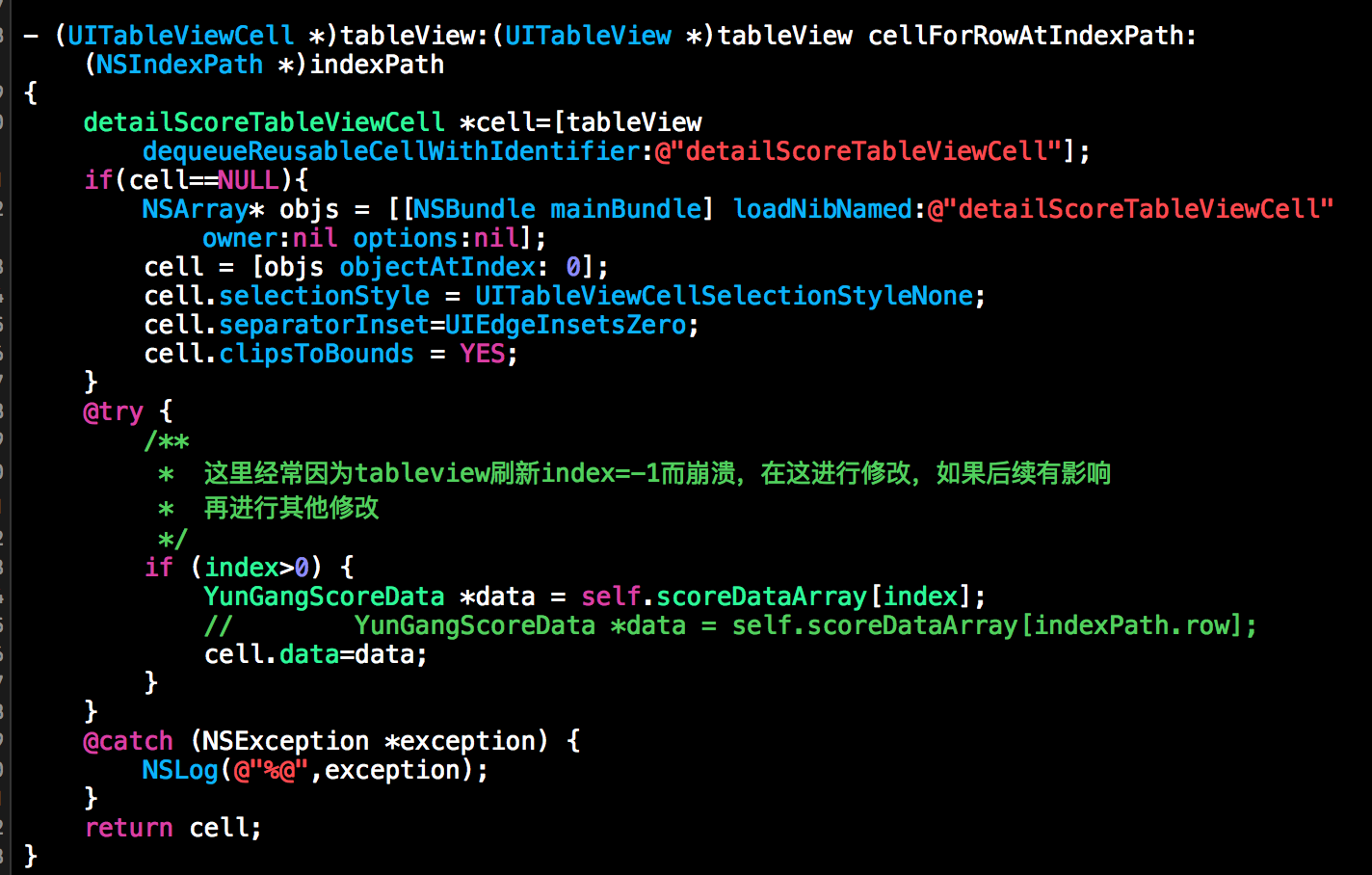
这里刷新数据是只刷新点开一个情况,如果点开多个,数据改变应该是下面,而在cell里面赋值则不需要了

6.根据需要计算每一个section需要的高度(我这里最后一个有需要)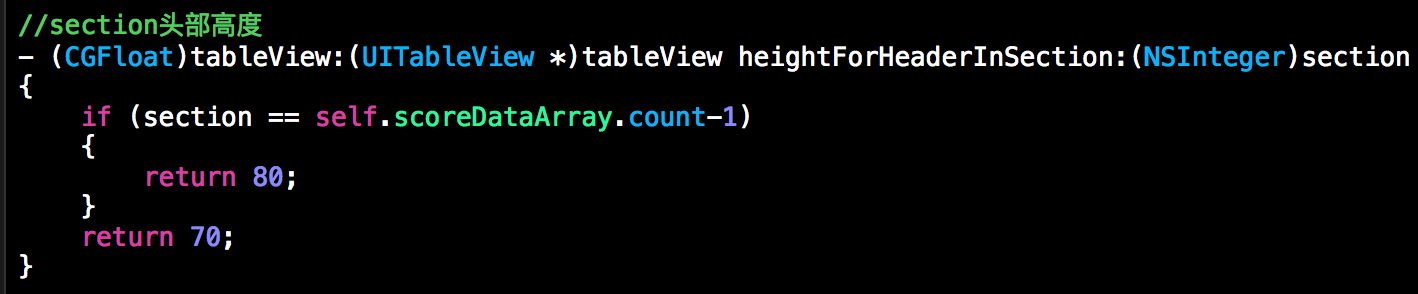
7.加载每个section的内容,需要注意,这里加载的view继承
UITableViewHeaderFooterView
-(UIView *)tableView:(UITableView *)tableView viewForHeaderInSection:(NSInteger)section
{
NSArray* objs = [[NSBundle mainBundle] loadNibNamed:@"YunGangScoreTableViewCell" owner:nil options:nil];
YunGangScoreTableViewCell* cell = [objs objectAtIndex: 0];
if (self.scoreDataArray.count>0)
{//确保有数据
YunGangScoreData *data = self.scoreDataArray[section];
cell.data = data;
}
// 单击的 Recognizer ,收缩分组cell
cell.tag = section;
UITapGestureRecognizer *singleRecognizer = [[UITapGestureRecognizer alloc] initWithTarget:self action:@selector(SingleTap1:)];
singleRecognizer.numberOfTapsRequired = 1; //点击的次数 =1:单击
[singleRecognizer setNumberOfTouchesRequired:1];//1个手指操作
[cell addGestureRecognizer:singleRecognizer];//添加一个手势监测;
return cell;
}
同时,为了适配问题,我们需要在自定义的view中改变这个view的frame

8.点击手势的事件以及处理

9,需要注意的是,每次请求数据,刷新tableview的时候,需要清空_showDic

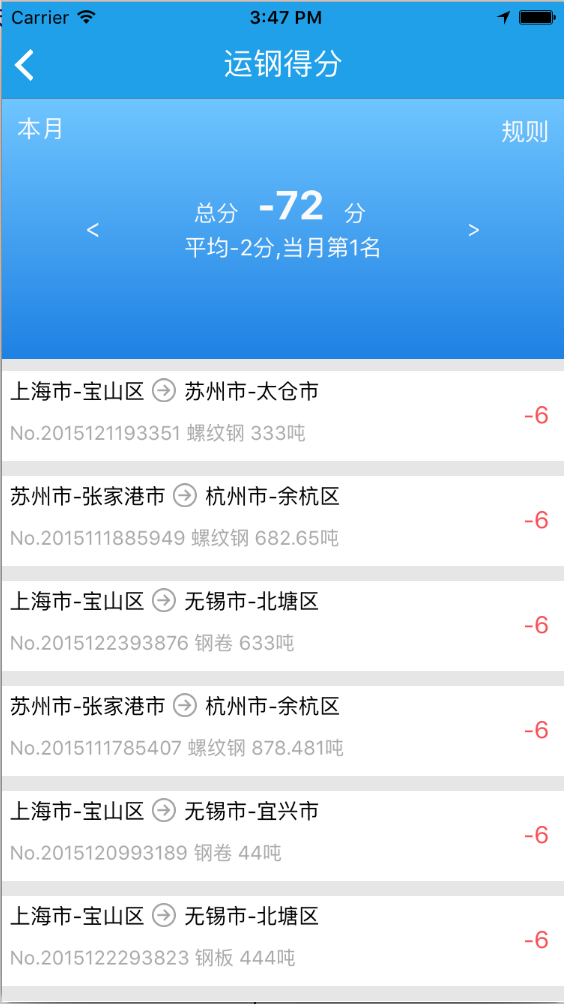
其他的内容,就自己根据需要添加修改就可以了,两种方法经过测试,第一种展示都没问题,刷新之后貌似存在混乱,如果需要使用就要好好修改下,第二种方法,测试可以使用,不存在什么大问题,满足需求,下面把效果图贴上:

UITableView点击每个Cell,Cell的子内容的收放的更多相关文章
- UITableview中怎么找到每个cell
一个朋友问我:我在每个cell中都添加了两个按钮(记为btnA和btnB),点击btnA时,对应的cell中添加一个子控件,再点击btnB时,对应的cell中的子控件就移除,怎么做到? 百度了一下,发 ...
- 手势响应 ,避免点击多个cell同时响应同一手势多次,只响应第一个cell
http://www.cnblogs.com/wfwenchao/articles/3700205.html UIView除了负责展示内容给用户外还负责响应用户事件.本章主要介绍UIView用户交互相 ...
- IOS之UI -- UITableView -- 2 -- 等高的Cell
内容大纲: 1.纯代码 添加子控件 2.Autolayout纯代码 -- Masonry框架的使用 3.自定义等高的cell -- storyboard的使用(更加简单) 4.静态cell 等高的Ce ...
- UI学习笔记---第十一天UITableView表视图高级-自定义cell
自定义cell,多类型cell混合使用,cell自适应高度 自定义cell就是创建一个UITableViewCell的子类 把cell上的空间创建都封装在子类中,简化viewController中的代 ...
- iOS - UITableView中有两种重用Cell的方法
UITableView中有两种重用Cell的方法: - (id)dequeueReusableCellWithIdentifier:(NSString *)identifier; - (id)dequ ...
- iOS UITableView点击按钮滚到顶部
#import <UIKit/UIKit.h> @interface AppDelegate : UIResponder <UIApplicationDelegate> @pr ...
- 在 cell 中获取 textFlied内容的使用
当您读到这里时,建议先下载demo,不懂再参考博客.在iOS项目开发中,容易遇到各种个人信息填写.比如微信中设置个人信息,等.这种方式是进行控制器跳转,代理或者block传值,这种比较容易,符合常规的 ...
- [RN] React Native中使用 react-native-scrollable-tab-view嵌套在ScrollView里,导致 子内容 在安卓上无法显示
React Native中使用 react-native-scrollable-tab-view嵌套在ScrollView里,导致 子内容 在安卓上无法显示 问题: 0.9.0 或 0.8.0 版本的 ...
- 点击每个li输出里面的内容(前端很常问的面试题之一)
点击每个li输出里面的内容(前端很常问的面试题之一) 前端 面试 JavaScript <!DOCTYPE html> <html lang="en"> & ...
随机推荐
- MVC5在Mono上的各种坑
买了Macbook后,各种事情的纠缠,都没好好地用过OSX系统. 果断的装上了xcode和mono,还有monodevelop. 然后把项目移植到mono上运行,各种问题. 然后第一个问题来了 权限不 ...
- C#与C++的发展历程第一 - 由C#3.0起
俗话说学以致用,本系列的出发点就在于总结C#和C++的一些新特性,并给出实例说明这些新特性的使用场景.前几篇文章将以C#的新特性为纲领,并同时介绍C++中相似的功能的新特性,最后一篇文章将总结之前几篇 ...
- Android下/data/data/<package_name>/files读写权限
今天将更新模块拿到android上面测试的时候,发现在创建writablepath.."upd/"目录的时候出现Permission Denied提示BTW:我使用的是lfs来创建 ...
- ABP(现代ASP.NET样板开发框架)系列之22、ABP展现层——导航栏设置
点这里进入ABP系列文章总目录 基于DDD的现代ASP.NET开发框架--ABP系列之22.ABP展现层——导航栏设置 ABP是“ASP.NET Boilerplate Project (ASP.NE ...
- ABP源码分析二十一:Feature
Feature是什么?Feature就是对function的分类方法,其与function的关系就比如Role和User的关系一样. ABP中Feature具有以下属性: 其中最重要的属性是name, ...
- WCF学习之旅—基于ServiceDebug的异常处理(十七)
WCF学习之旅—WCF中传统的异常处理(十六) 二.基于ServiceDebug的异常处理 从前面的示例中,可以看到客户端捕获了异常,这是我们处理异常的前提.为了有利于我们进行有效的调试,WCF提供了 ...
- PHP 高级编程(1/5) - 编码规范及文档编写
PHP 高级程序设计学习笔记20140612 软件开发中的一个重要环节就是文档编写.他可以帮助未来的程序维护人员和使用者理解你在开发时的思路.也便于日后重新查看代码时不至于无从下手.文档还有一个重要的 ...
- dom addeventlistener与id 绑定事件的区别
文档中有写. //addEventListener() 方法用于向指定元素添加事件句柄. //提示: 使用 removeEventListener() 方法来移除 addEventListener() ...
- Vue1.0 的技术栈
vuejs概述 Vue.js是用于构建交互式的Web界面的库.它提供了MVVM数据绑定和一个可组合的组件系统,具有简单.灵活的API. 结合node.js 可以实现前后端开发从物理上的分离.使前端负责 ...
- ASP.NET MVC5+EF6+EasyUI 后台管理系统(18)-权限管理系统-表数据
系列目录 这一节,我们插入数据来看看数据流,让各位同学,知道这个权限表交互是怎么一个流程,免得大家后天雾里来雾里去首先我再解释一些表,SysUser和SysRole表不用解释了. SysRoleSys ...