
java.util.ConcurrentModificationException异常;java.util.ConcurrentModificationException实战
写代码遇到这个问题,很多博客文章都是在反复的强调理论,而没有对应的实例,所以这里从实例出发,后研究理论:
一、错误产生情况
1 、字符型
(1)添加
 public static void main(String[] args) {

        List<String> stringList = new ArrayList<String>();

        stringList.add("张三毛");

        stringList.add("李四");

        stringList.add("王五");

        stringList.add("钱二");

        if (stringList!=null) {

            if (!stringList.equals(Collections.EMPTY_LIST.isEmpty())){

                for (String s : stringList) {

                    stringList.add("赵大");

                }

            }

        }

        System.out.println(stringList);

 }
报错

改写为如下即可:
  public static void main(String[] args) {

         List<String> stringList = new ArrayList<String>();

         stringList.add("张三毛");

         stringList.add("李四");

         stringList.add("王五");

         stringList.add("钱二");

         if (stringList != null) {

             if (!stringList.equals(Collections.EMPTY_LIST.isEmpty())) {

                 stringList.add("赵大");

                 Iterator<String> it = stringList.iterator();

                 while (it.hasNext()) {

                       it.next();

                 }

             }

         }

         System.out.println(stringList);

     }
打印出结果:

然后我们打印其next,就会发现其循环就是通过it.next()方法将数据添加进去的
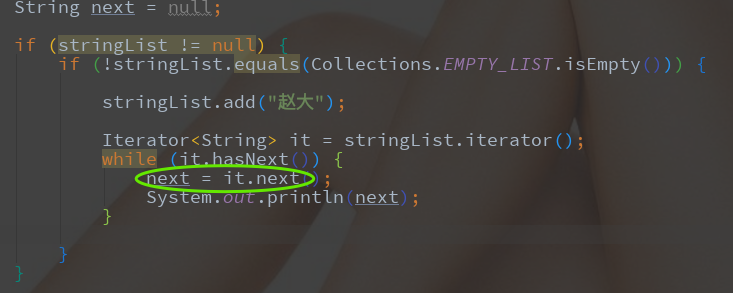
打印:
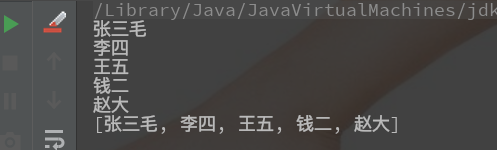
(2)、删除
错误写法:
   private static String key = "钱二";

     public static void main(String[] args) {

         List<String> stringList = new ArrayList<String>();

         stringList.add("张三毛");

         stringList.add("李四");

         stringList.add("王五");

         stringList.add("钱二");

         if (stringList != null) {

             if (!stringList.equals(Collections.EMPTY_LIST.isEmpty())) {

                 for (String s : stringList) {

                     if (key.equals(s)){

                         stringList.remove(s);

                     }

                 }

             }

         }

         System.out.println(stringList);

     }
报错:

改写为:
  private static String key = "钱二";

     public static void main(String[] args) {

         List<String> stringList = new ArrayList<String>();

         stringList.add("张三毛");

         stringList.add("李四");

         stringList.add("王五");

         stringList.add("钱二");

         if (stringList != null) {

             if (!stringList.equals(Collections.EMPTY_LIST.isEmpty())) {

                 Iterator<String> it = stringList.iterator();

                 while (it.hasNext()) {

                     String next = it.next();

                     if (key.equals(next)) {

                         it.remove();

                     }

                 }

             }

         }

         System.out.println(stringList);

     }
结果:

2、整形
正确添加:
 public class ConcurrentBaseApplication {

     private static String key = "钱二";

     public static void main(String[] args) {

         List<Integer> integerList = new ArrayList<Integer>();

         integerList.add(1);

         integerList.add(2);

         integerList.add(3);

         integerList.add(4);

         Integer next=0;

         if (integerList != null) {

             if (!integerList.equals(Collections.EMPTY_LIST.isEmpty())) {

                 integerList.add(5);

                 Iterator<Integer> it = integerList.iterator();

                 while (it.hasNext()) {

                     next = it.next();

                     System.out.println(next);

                 }

             }

         }

         System.out.println(integerList);

     }

 }
结果:
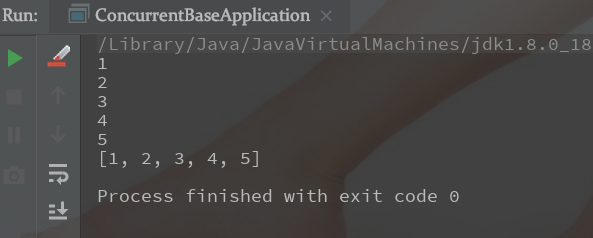
正确删除:
 public class ConcurrentBaseApplication {

     public static void main(String[] args) {

         List<Integer> integerList = new ArrayList<Integer>();

         integerList.add(1);

         integerList.add(2);

         integerList.add(3);

         integerList.add(4);

         if (integerList != null) {

             if (!integerList.equals(Collections.EMPTY_LIST.isEmpty())) {

                 Iterator<Integer> it = integerList.iterator();

                 while (it.hasNext()) {

                     Integer  next = it.next();

                     if("2".equals(next.toString())){

                        it.remove();

                     }

                 }

             }

         }

         System.out.println(integerList);

     }

 }
结果:

(3) 实体类
创建实体类
Student
package com.north.big.penguin.pojo;

import java.io.Serializable;

/**

 * @author liuyangos8888

 */

public class Student implements Serializable {

    /**

     * 姓名

     */

    private String name;

    /**

     * 年龄

     */

    private String age;

    /**

     * 标识

     */

    private String id;

    public Student() {

    }

    public Student(String name, String age, String id) {

        this.name = name;

        this.age = age;

        this.id = id;

    }

    public String getName() {

        return name;

    }

    public void setName(String name) {

        this.name = name;

    }

    public String getAge() {

        return age;

    }

    public void setAge(String age) {

        this.age = age;

    }

    public String getId() {

        return id;

    }

    public void setId(String id) {

        this.id = id;

    }

    @Override

    public String toString() {

        return "Student{" +

                "name='" + name + '\'' +

                ", age='" + age + '\'' +

                ", id='" + id + '\'' +

                '}';

    }

}
正确的添加:
 public class ConcurrentBaseApplication {

     public static void main(String[] args) {

         List<Student> students = new ArrayList<Student>();

         Student student1 = new Student();

         student1.setName("李雷");

         student1.setAge("13");

         student1.setId(UUID.randomUUID().toString());

         Student student2 = new Student();

         student2.setName("韩梅梅");

         student2.setAge("14");

         student2.setId(UUID.randomUUID().toString());

         Student student3 = new Student();

         student3.setName("李华");

         student3.setAge("15");

         student3.setId(UUID.randomUUID().toString());

         students.add(student1);

         students.add(student2);

         students.add(student3);

         if (students != null) {

             if (!students.equals(Collections.EMPTY_LIST.isEmpty())) {

                 Student student4 = new Student();

                 student4.setName("小明");

                 student4.setAge("16");

                 student4.setId(UUID.randomUUID().toString());

                 Iterator<Student> it = students.iterator();

                 while (it.hasNext()) {

                     // 添加学生

                     Student  next = it.next();

                 }

             }

         }

         System.out.println(students);

     }

 }
结果:

正确的删除:
 public class ConcurrentBaseApplication {

     public static void main(String[] args) {

         List<Student> students = new ArrayList<Student>();

         Student student1 = new Student();

         student1.setName("李雷");

         student1.setAge("13");

         student1.setId(UUID.randomUUID().toString());

         Student student2 = new Student();

         student2.setName("韩梅梅");

         student2.setAge("14");

         student2.setId(UUID.randomUUID().toString());

         Student student3 = new Student();

         student3.setName("李华");

         student3.setAge("15");

         student3.setId(UUID.randomUUID().toString());

         students.add(student1);

         students.add(student2);

         students.add(student3);

         if (students != null) {

             if (!students.equals(Collections.EMPTY_LIST.isEmpty())) {

                 Student student4 = new Student();

                 student4.setName("小明");

                 student4.setAge("16");

                 student4.setId(UUID.randomUUID().toString());

                 Iterator<Student> it = students.iterator();

                 while (it.hasNext()) {

                     // 添加学生

                     Student  next = it.next();

                     Integer integerAge = Integer.valueOf(next.getAge());

                     if(integerAge>14){

                         it.remove();

                     }

                 }

             }

         }

         System.out.println(students);

     }

 }
结果:

结果集:
[Student{name='李雷', age='13', id='617e914f-ed33-472d-bbbd-1a6bf5ef5901'}, Student{name='韩梅梅', age='14', id='cb804e43-4846-4fc6-84c8-9e4a6b17d7f1'}]
二、原理补充
继承关系图
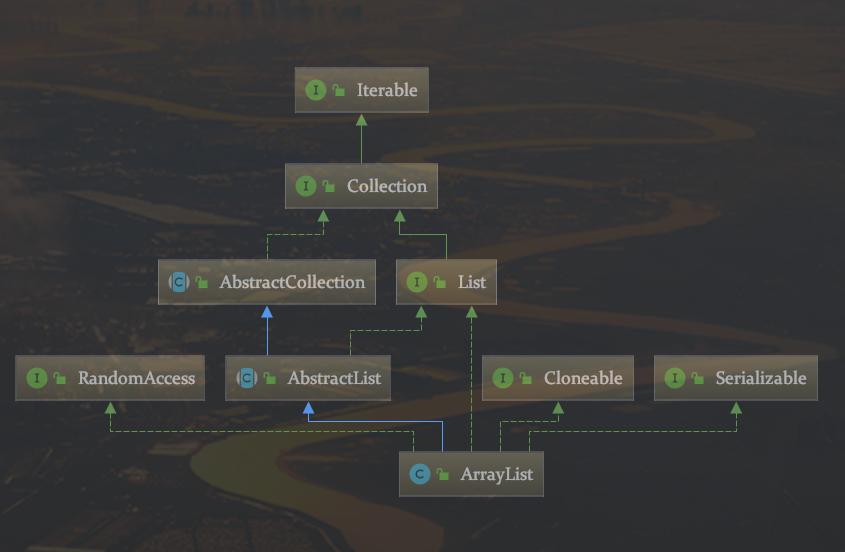
根据错误我们知道是Itr出错了
根据添加class,可以看到它跟ArrayList的关系
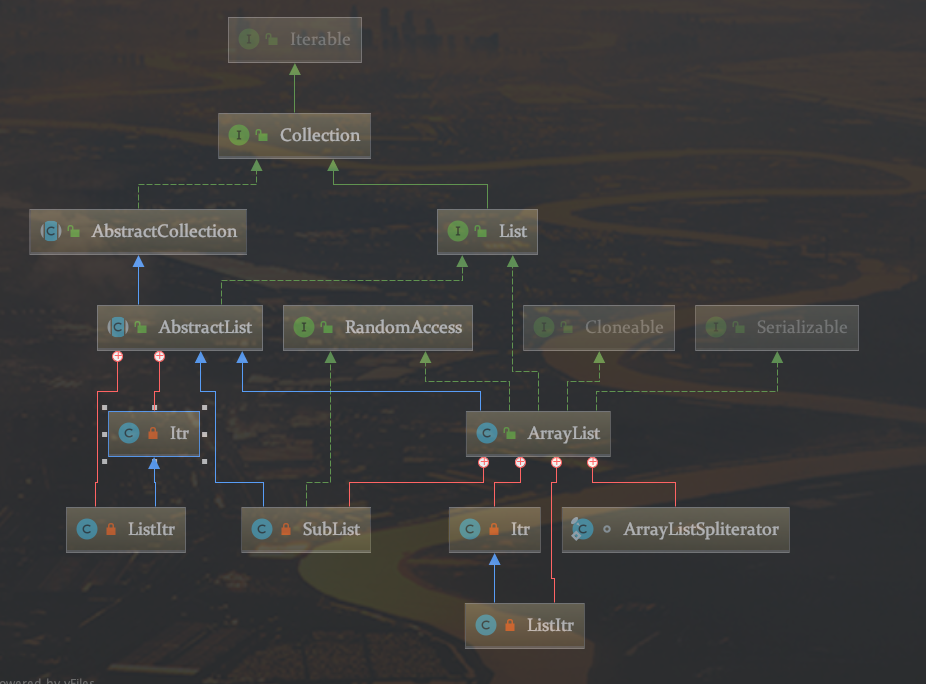
Itr是一个内部类,还实现了Iterator
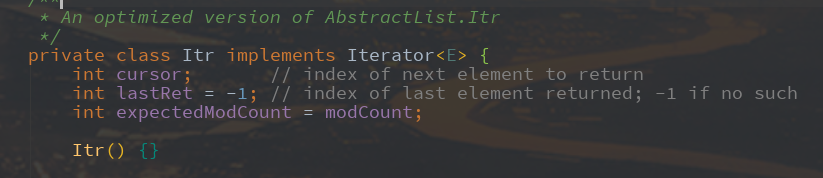
其源码
 /**

      * An optimized version of AbstractList.Itr

      */

     private class Itr implements Iterator<E> {

         int cursor;       // index of next element to return

         int lastRet = -1; // index of last element returned; -1 if no such

         int expectedModCount = modCount;

         Itr() {}

         public boolean hasNext() {

             return cursor != size;

         }

         @SuppressWarnings("unchecked")

         public E next() {

             checkForComodification();

             int i = cursor;

             if (i >= size)

                 throw new NoSuchElementException();

             Object[] elementData = ArrayList.this.elementData;

             if (i >= elementData.length)

                 throw new ConcurrentModificationException();

             cursor = i + 1;

             return (E) elementData[lastRet = i];

         }

         public void remove() {

             if (lastRet < 0)

                 throw new IllegalStateException();

             checkForComodification();

             try {

                 ArrayList.this.remove(lastRet);

                 cursor = lastRet;

                 lastRet = -1;

                 expectedModCount = modCount;

             } catch (IndexOutOfBoundsException ex) {

                 throw new ConcurrentModificationException();

             }

         }

         @Override

         @SuppressWarnings("unchecked")

         public void forEachRemaining(Consumer<? super E> consumer) {

             Objects.requireNonNull(consumer);

             final int size = ArrayList.this.size;

             int i = cursor;

             if (i >= size) {

                 return;

             }

             final Object[] elementData = ArrayList.this.elementData;

             if (i >= elementData.length) {

                 throw new ConcurrentModificationException();

             }

             while (i != size && modCount == expectedModCount) {

                 consumer.accept((E) elementData[i++]);

             }

             // update once at end of iteration to reduce heap write traffic

             cursor = i;

             lastRet = i - 1;

             checkForComodification();

         }

         final void checkForComodification() {

             if (modCount != expectedModCount)

                 throw new ConcurrentModificationException();

         }

     }
想要调用iteror转化ArrayList就要找iterator方法
Itr参数解析
| 参数 | 含义 |
| cursor | 一个索引,代表下一个要访问的元素的索引 |
| astRet | 表示上一个访问的元素的索引 |
| expectedModCount | 表示修改次数的 |
| modCount | 表示对List的修改次数 |
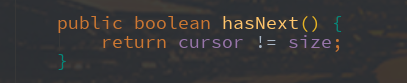
其方法主要是hasNext()和next()两个方法,

用其判断是否还有元素未被访问,代码中
while(iter.hasNext()){
}
如果下一个访问的元素下标不等于ArrayList的大小,就表示有元素需要访问,这个很容易理解,如果下一个访问元素的下标等于ArrayList的大小,则肯定到达末尾了。
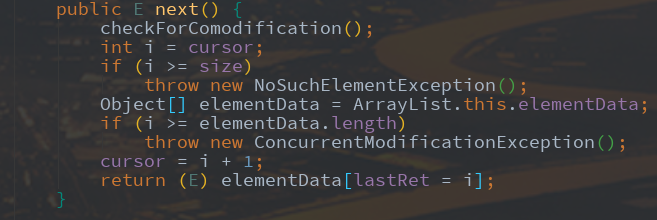
首先在next()方法中会调用checkForComodification()方法,然后根据cursor的值获取到元素,接着将cursor的值赋给lastRet,并对cursor的值进行加1操作。初始时,cursor为0,lastRet为-1,那么调用一次之后,cursor的值为1,lastRet的值为0。注意此时,modCount为0,expectedModCount也为0。
当判断当前元素的值是否为2,若为2,则调用list.remove()方法来删除该元素。
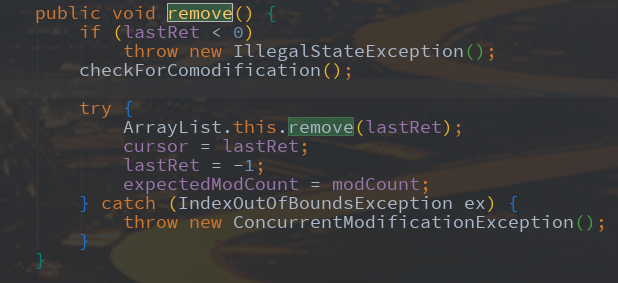
ArrayList中的remove
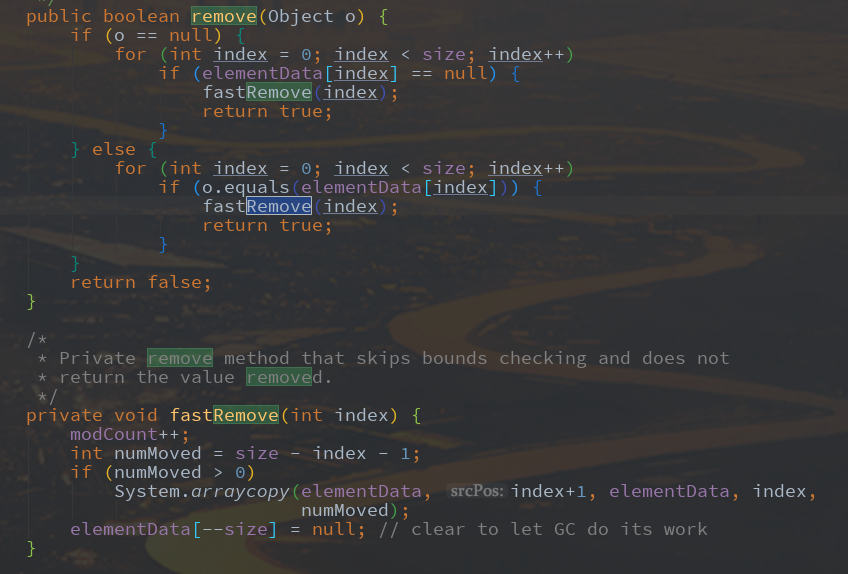
通过remove方法删除元素最终是调用的fastRemove()方法,在fastRemove()方法中,首先对modCount进行加1操作(因为对集合修改了一次),然后接下来就是删除元素的操作,最后将size进行减1操作,并将引用置为null以方便垃圾收集器进行回收工作。
执行完删除操作后,继续while循环,调用hasNext方法()判断,由于此时cursor为1,而size为0,那么返回true,所以继续执行while循环,然后继续调用iterator的next()方法.
如果modCount不等于expectedModCount,则抛出ConcurrentModificationException异常。
此时modCount为1,而expectedModCount为0,因此程序就抛出了ConcurrentModificationException异常。
java.util.ConcurrentModificationException异常;java.util.ConcurrentModificationException实战的更多相关文章
- java.io.InvalidClassException 异常解决, 实现Serializable接口的注意事项
解决方案: 在类中显式指定 private static final long serialVersionUID = 42L; 类实现序列化接口, 进行序列化反序列化的时候, 抛出 java.io.I ...
- java集合--java.util.ConcurrentModificationException异常
ConcurrentModificationException 异常:并发修改异常,当方法检测到对象的并发修改,但不允许这种修改时,抛出此异常.一个线程对collection集合迭代,另一个线程对Co ...
- java.util.ConcurrentModificationException 异常问题详解
环境:JDK 1.8.0_111 在Java开发过程中,使用iterator遍历集合的同时对集合进行修改就会出现java.util.ConcurrentModificationException异常, ...
- java.util.ConcurrentModificationException异常原因及解决方法
在java语言中,ArrayList是一个很常用的类,在编程中经常要对ArrayList进行删除操作,在使用remove方法对ArrayList进行删除操作时,报java.util.Concurren ...
- java.util.ConcurrentModificationException异常分析
Java在操作ArrayList.HashMap.TreeMap等容器类时,遇到了java.util.ConcurrentModificationException异常.以ArrayList为例,如下 ...
- java.util.ConcurrentModificationException 异常解决的方法及原理
近期在修程序的bug,发现后台抛出下面异常: Exception in thread "main" java.util.ConcurrentModificationExceptio ...
- java foreach循环抛出异常java.util.ConcurrentModificationException
代码如下: for (Iterator<String> iter = list.iterator(); iter.hasNext(); ) { if (Integer.parseInt(i ...
- java.util.ConcurrentModificationException(如何避免ConcurrentModificationException)
java.util.ConcurrentModificationException is a very common exception when working with java collecti ...
- Java ConcurrentModificationException异常原因和解决方法
Java ConcurrentModificationException异常原因和解决方法 在前面一篇文章中提到,对Vector.ArrayList在迭代的时候如果同时对其进行修改就会抛出java.u ...
随机推荐
- Linux性能优化实战学习笔记:第三十四讲
一.上节回顾 上一节,我带你学习了 Linux 网络的基础原理.简单回顾一下,Linux 网络根据 TCP/IP模型,构建其网络协议栈.TCP/IP 模型由应用层.传输层.网络层.网络接口层等四层组成 ...
- Linux性能优化实战学习笔记:第五十六讲
一.上节回顾 上一节,我带你一起梳理了,性能问题分析的一般步骤.先带你简单回顾一下. 我们可以从系统资源瓶颈和应用程序瓶颈,这两个角度来分析性能问题的根源. 从系统资源瓶颈的角度来说,USE 法是最为 ...
- loj 2135 「ZJOI2015」幻想乡战略游戏 - 动态点分治
题目传送门 传送门 题目大意 给定一棵树,初始点权都为0,要求支持: 修改点权 询问带权重心 询问带权重心就在点分树上跑一下就行了.(枚举跳哪个子树更优) 剩下都是基础点分治. 学了一下11-dime ...
- Zuul整合Swagger,使用ZuulFilter解决下游服务context-path
问题起因:使用Zuul网关服务,需要整合下游系统的swagger,但是下游服务存在context-path配置,无法正确跳转,最后使用ZuulFilter解决. 1.Zuul整合下游swagger 首 ...
- java json解析(转)
转自:https://www.cnblogs.com/sunnywindycloudy/p/8343013.html 给服务端发送请求后,服务端会返回一连串的数据,这些数据在大部分情况下都是XML格式 ...
- 关于wepy小程序图片显示问题
如果图片资源在本地,用background-image 是无法找到本地资源的,只能通过image标签用src进行引入: 图片资源在服务器上,用背景图片和image进行引入,在安卓真机上测试是没有问题的 ...
- 订单1:n支付单 设计讨论
方法一:订单1:1支付单,下单时生成1订单,并生成1支付单(这个支付单是微信需要的相关信息),设置超时时间2小时,如果订单超时,则提示用户,订单已超时,重新下单即可: 方法二:订单1:N支付单,下单时 ...
- C# SqlServer Ado.net参数化查询插入null数据
DateTime? dt=null; if (dt.HasValue) { cmd.Parameters.AddWithValue("@CreateDateTime", dt); ...
- 2019-11-29-浅谈-Windows-桌面端触摸架构演进
原文:2019-11-29-浅谈-Windows-桌面端触摸架构演进 title author date CreateTime categories 浅谈 Windows 桌面端触摸架构演进 lind ...
- loadrunner11 您不具有该 Vuser 类型的许可证. 请与 HP Software 联系以更新许可证.
您不具有该 Vuser 类型的许可证. 请与 HP Software 联系以更新许可证. 在loadrunner11 执行发生报错: 打开loadrunner软件首页,点击配置-->loadru ...